Co-Authoring the Surface: Narrative Translation in Prosthetic Design.
Mark Unterberger
The Thing That Should Not Be.
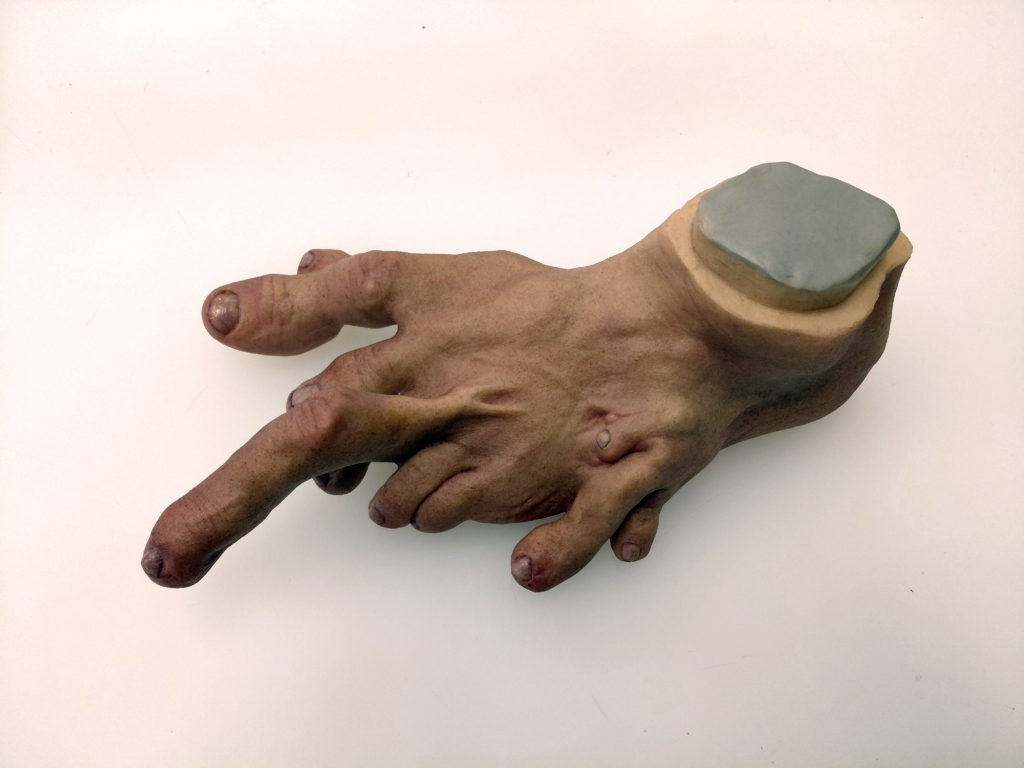
The central artifact is The Thing That Should Not Be.
This is not a clinical prosthesis covering…. it’s far from functional.
It is a conceptual artifact.
The form is familiar—but altered.
Polydactyly creates something recognizably human, but slightly off and just beyond what feels familiar.
It suggests transformation and agency.
This object is not proposing a solution.
It is making an argument. That prosthetic surfaces can carry narrative,
hold ambiguity, and exist beyond realism or neutrality.
2025 – Urethane, Acrylic, Plaster, Silicone, Oil and Wax-Based Clay
This work explores expressive prosthetic surfaces as vessels for storytelling and empathy. Drawing from a story shared by my collaborator Ryan Halter, a lower-leg amputee, tattoo artist, and kindred spirit, I reimagine the prosthetic as a narrative site where lived experience is translated into material form. The work interprets his story not as data to be represented, but as meaning to be felt, as an exchange of care between maker and wearer, father and father, body and body.
Hospital Bob.
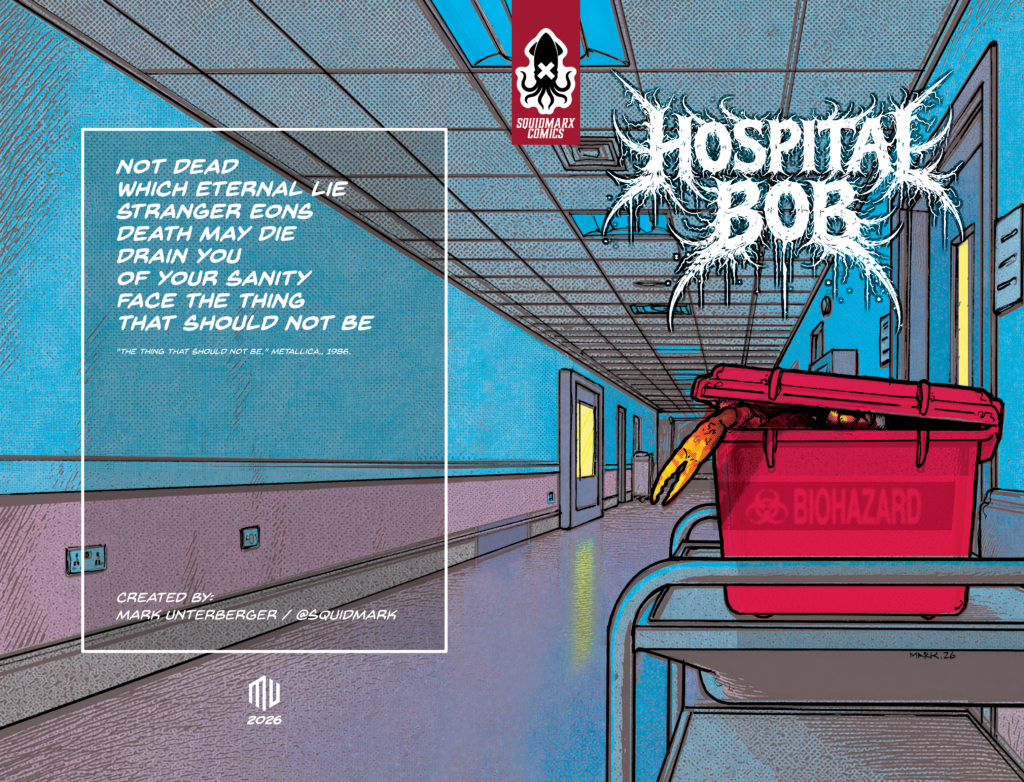
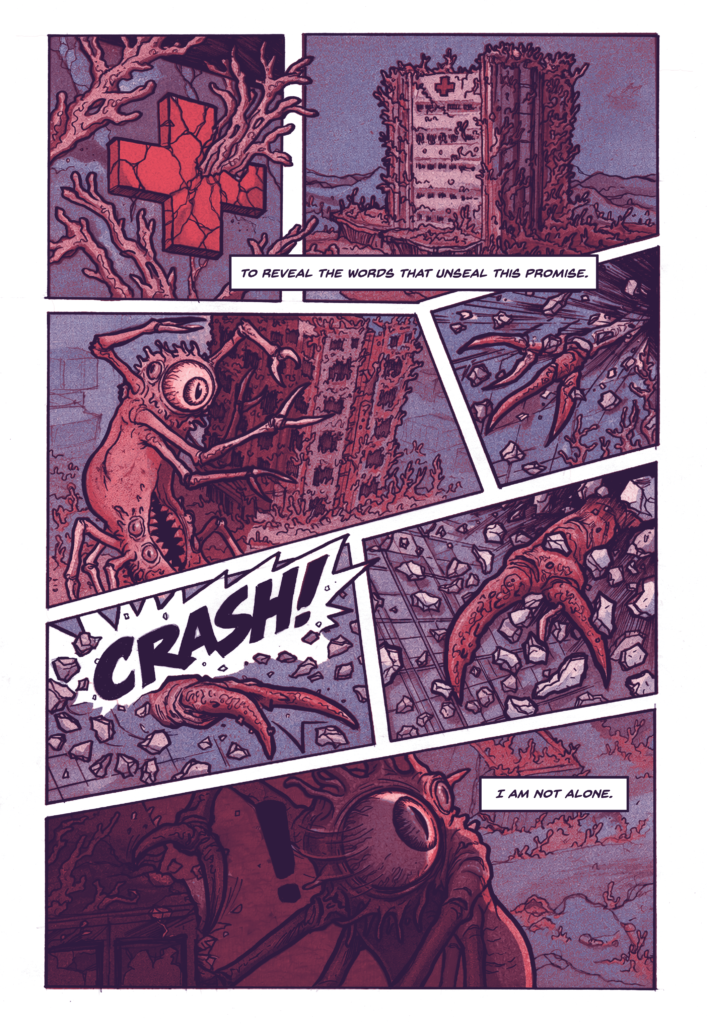
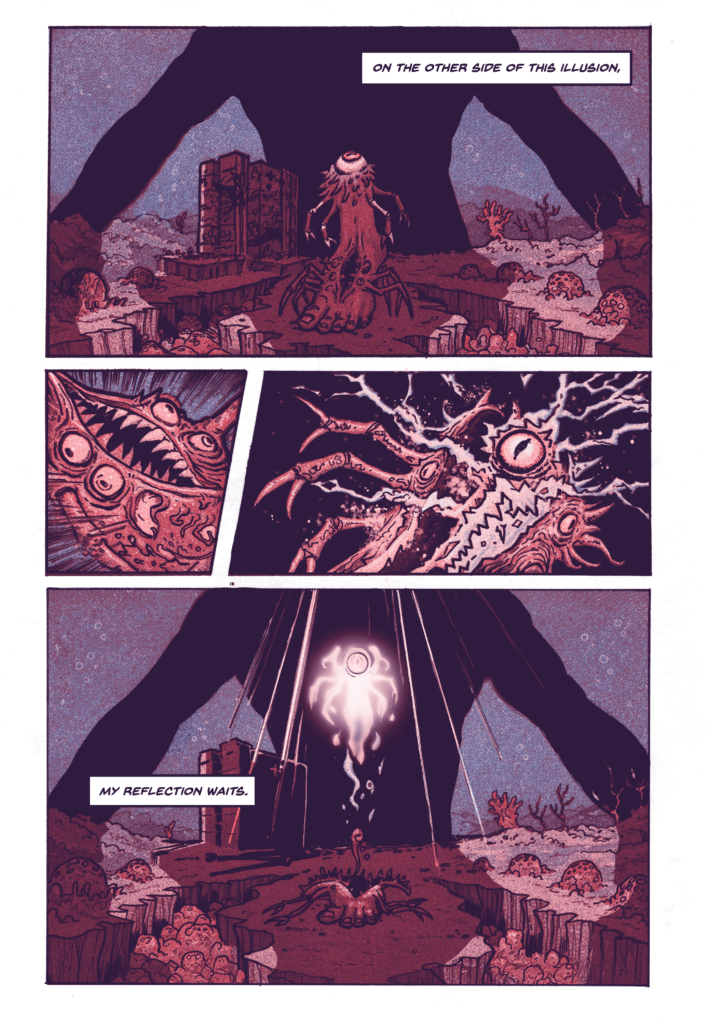
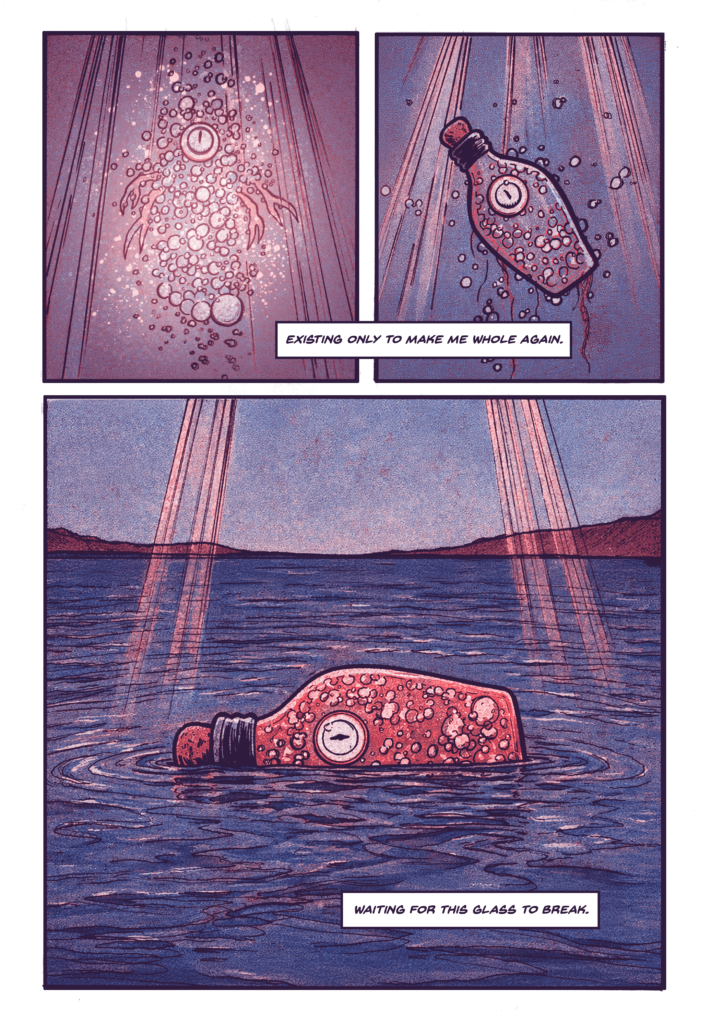
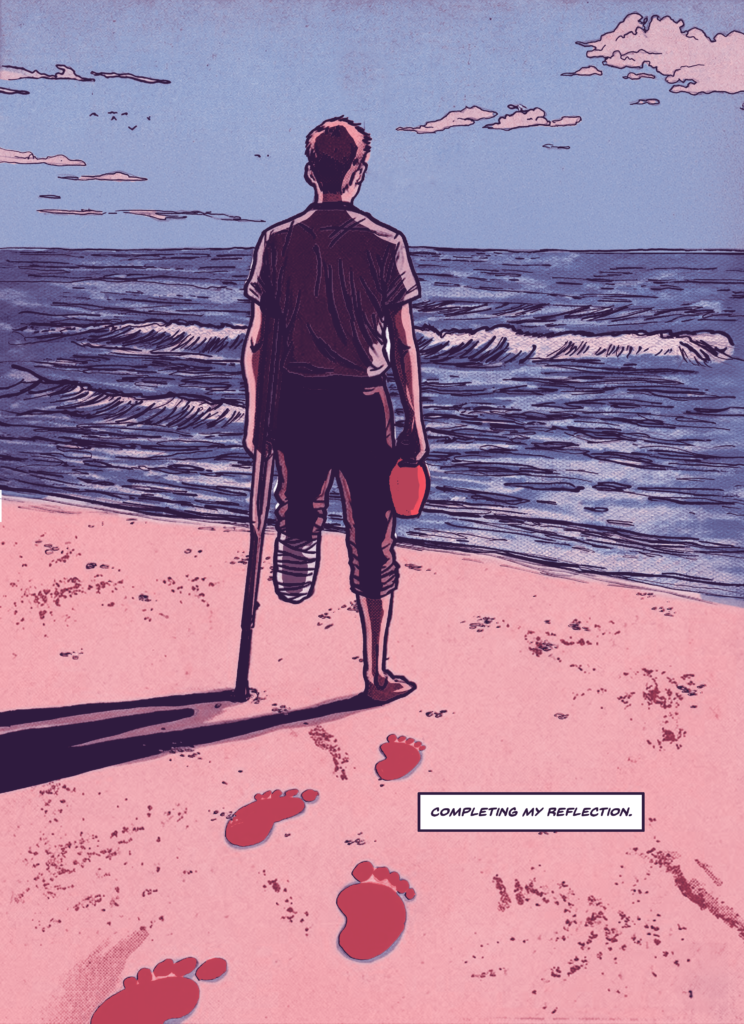
While I worked on the conceptual prosthetic artifacts, drawing and image-making had become incredibly fertile for me.
It opened a different kind of space, more fluid and more capable of holding ambiguity and multiple interpretations at once.
So going forward with my research, rather than replacing the material work or repeating it, I began to expand the process, to find a way for another modality, a complement, and something new and challenging.
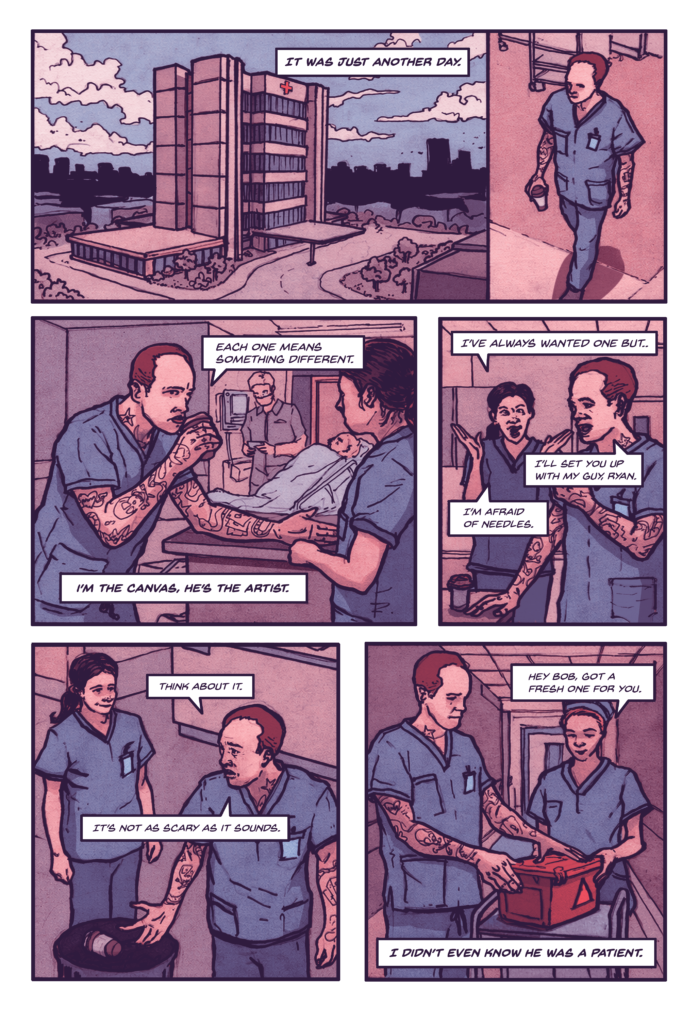
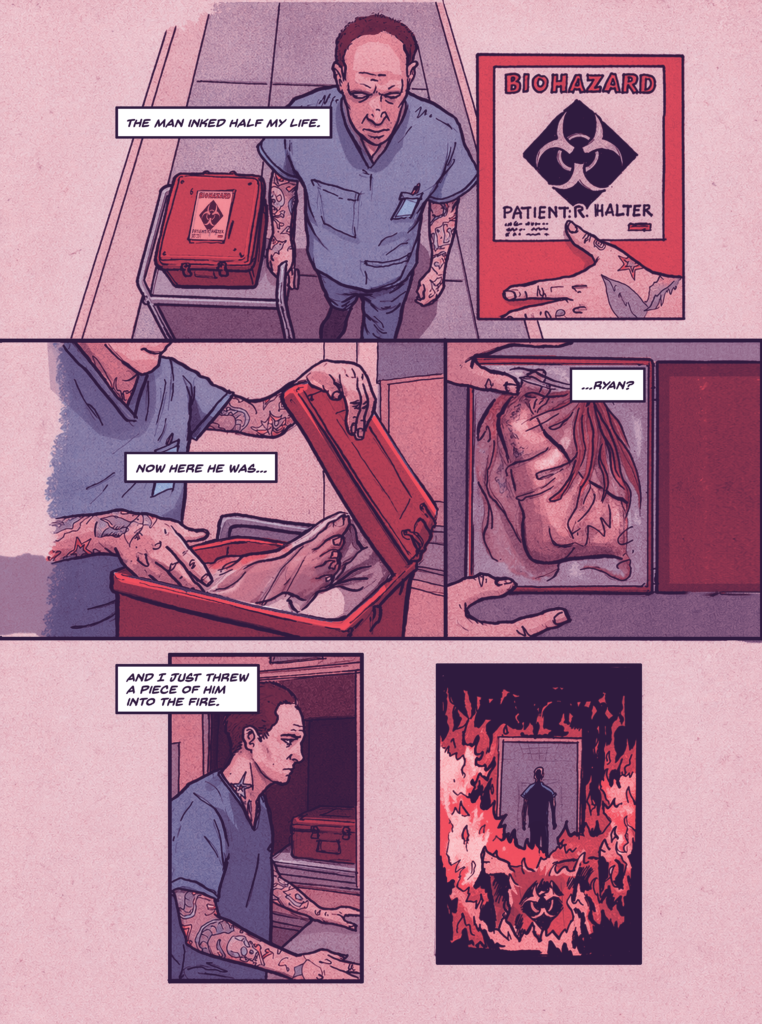
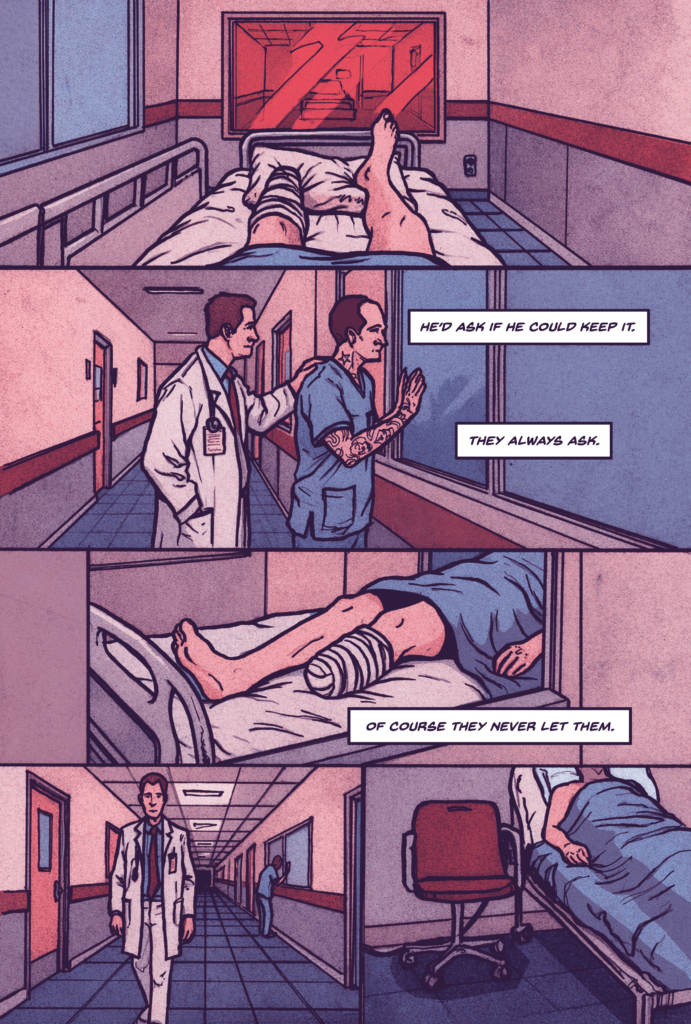
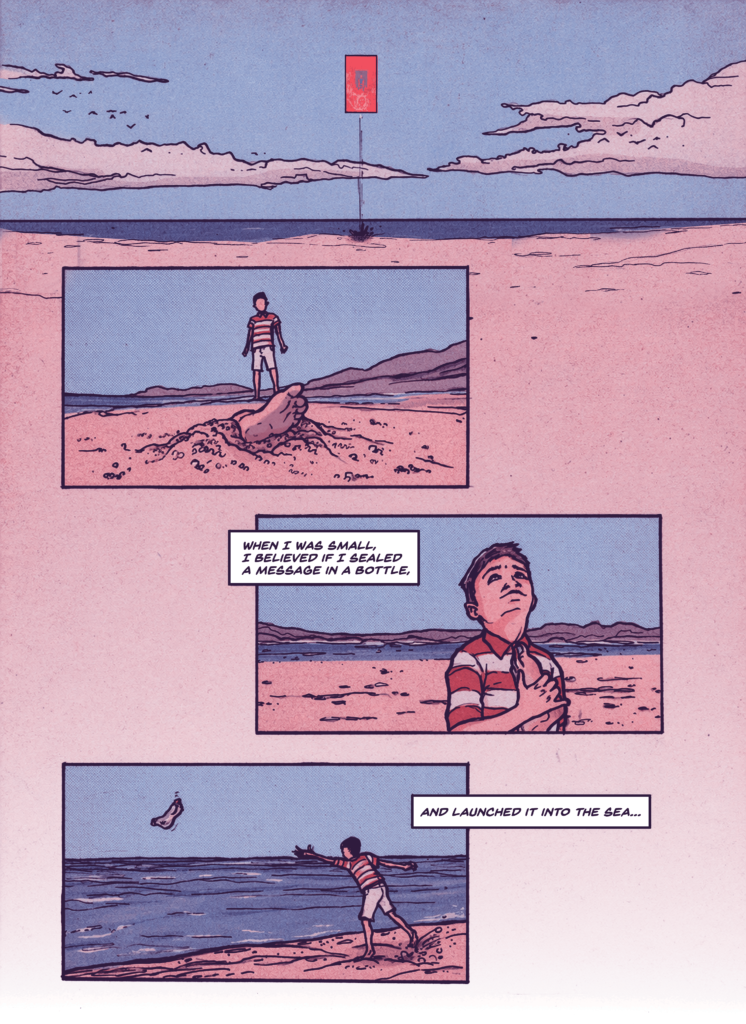
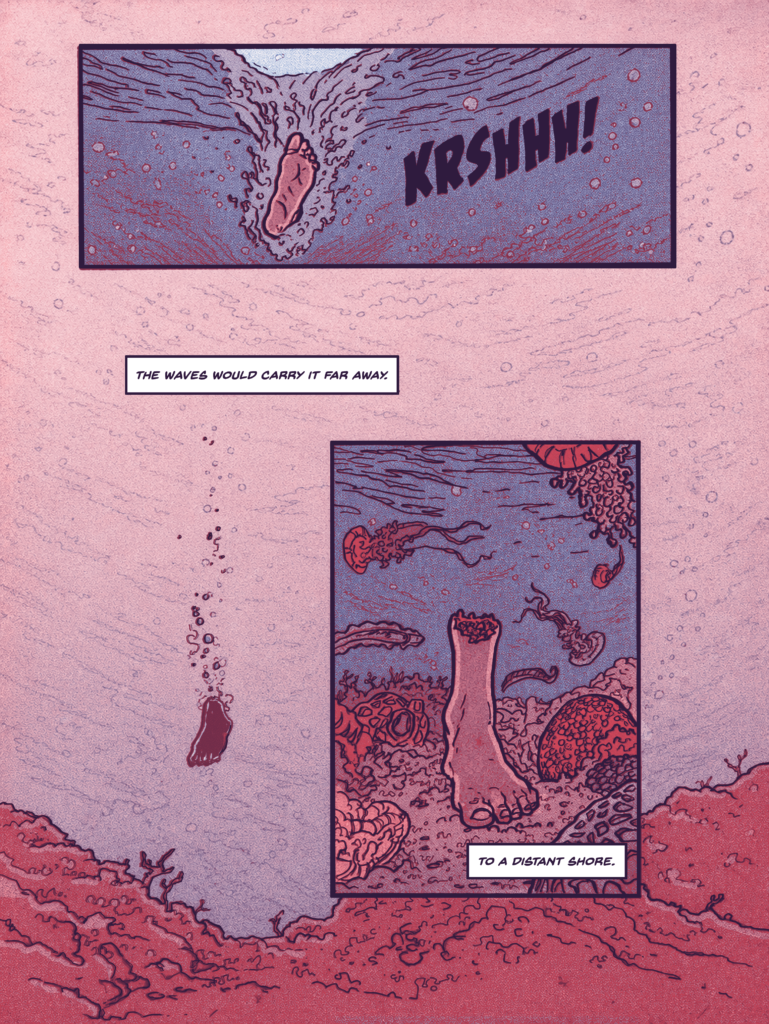
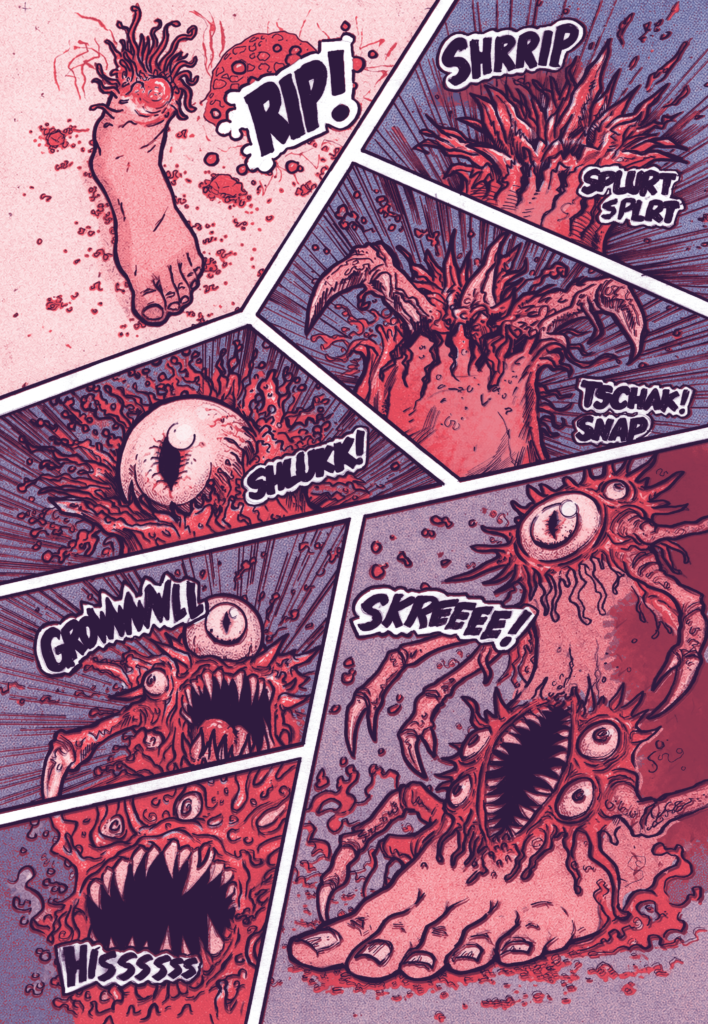
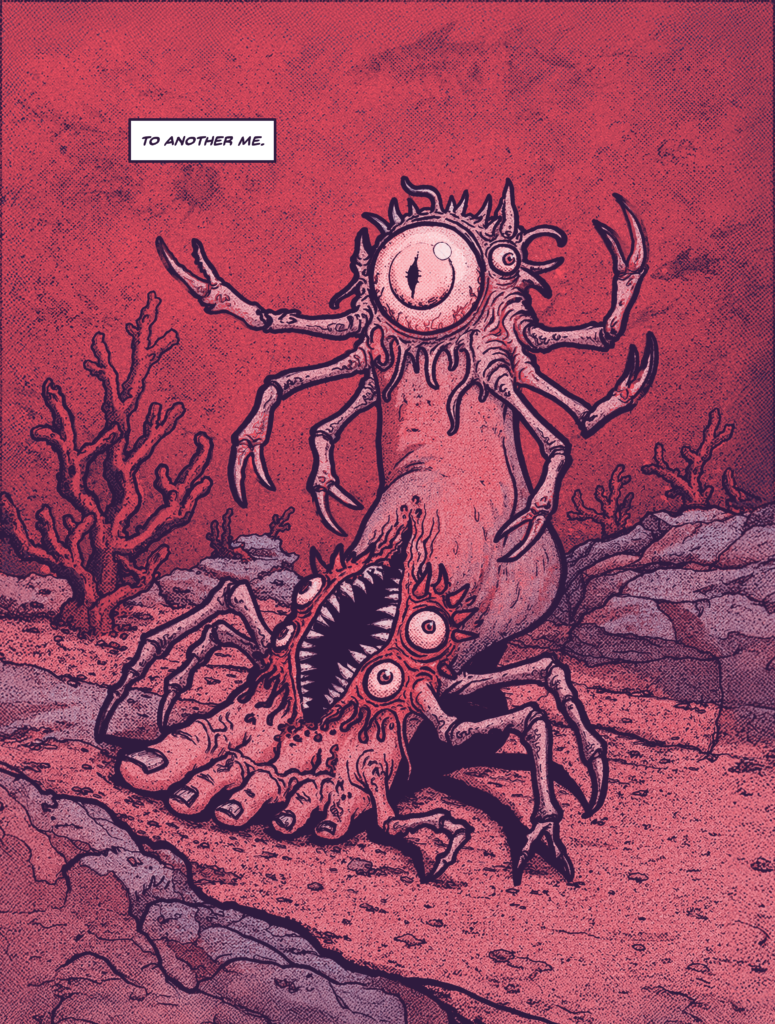
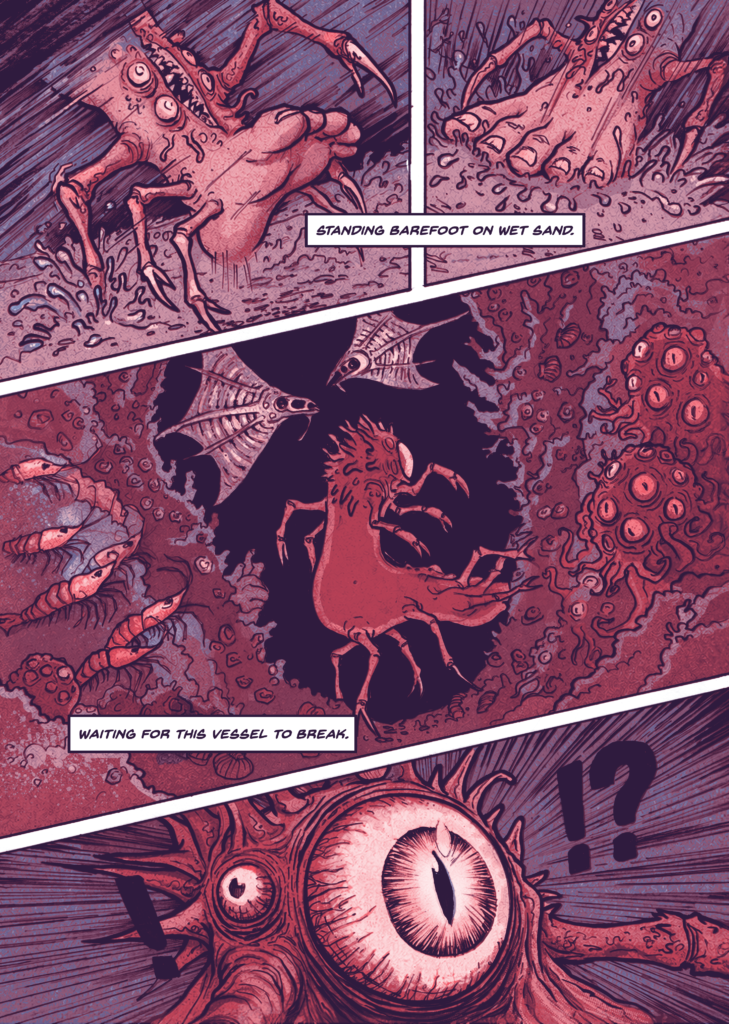
To explore that space, I developed a sequential comic narrative based on this story.
This approach is informed by Graphic Medicine and Narrative Medicine, drawing on scholars like Erin La Cour, Anna Poletti, and Rita Charon
Frame storytelling and image-making as ways of engaging lived experience rather than simply representing it.
Not as an illustration of the experience, but as a way of thinking through it.
A way to hold multiple tones at once:
Humour
Discomfort
Curiosity
Contradiction
The comic functions as a design tool.
It allows narrative to be externalized, and shared without forcing it into clinical language.
It creates a space where meaning can remain open, and where not everything needs to be explained or resolved.