Displaced Topologies
Tatjana Mirkov-Popovicki
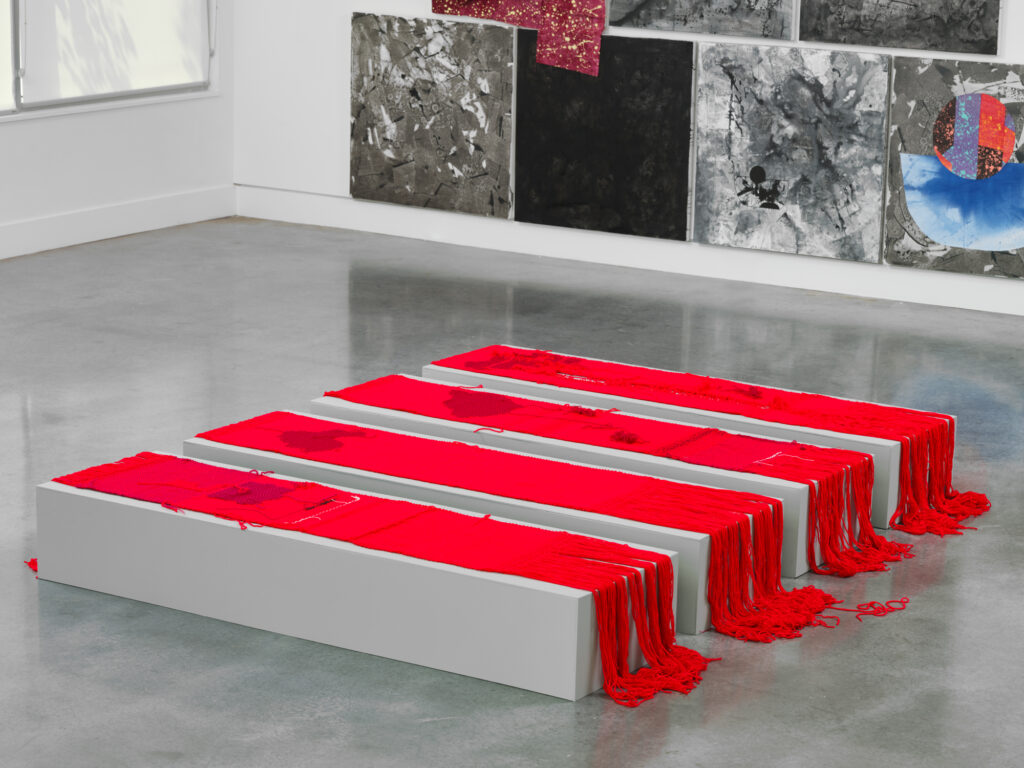
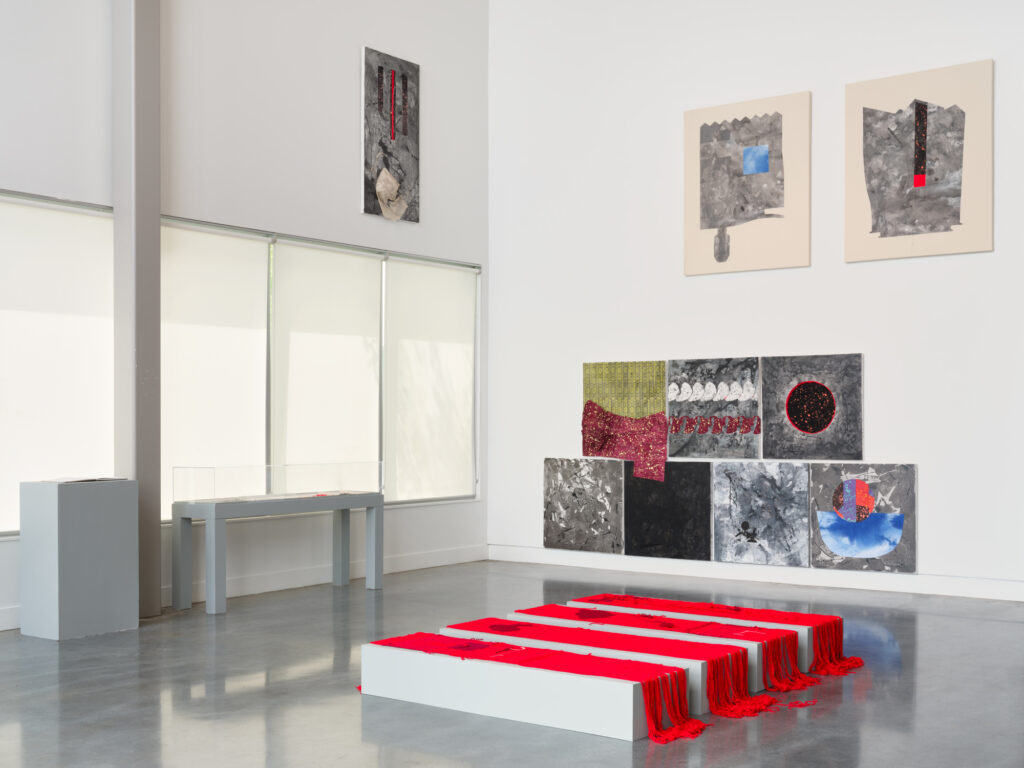
The Displaced Topologies collection explores the concept of belonging to disparate cultures within the context of storytelling, ancestry, deep history, displacement, borders, and both hard and soft man-made structures, as well as records of fractures, disintegration, and rebuilding. It gathers artworks that symbolize structures, documents, and humans connected by the conditions of migration, displacement, and cultural heterogeneity.
In this series of works, I use an abstract visual language to express a dichotomous cultural identity and to ponder the question: As displaced people, how do we create a sense of home and build community in foreign places? What is the contribution of displaced people to the future?
Sediments Of Time, 2025
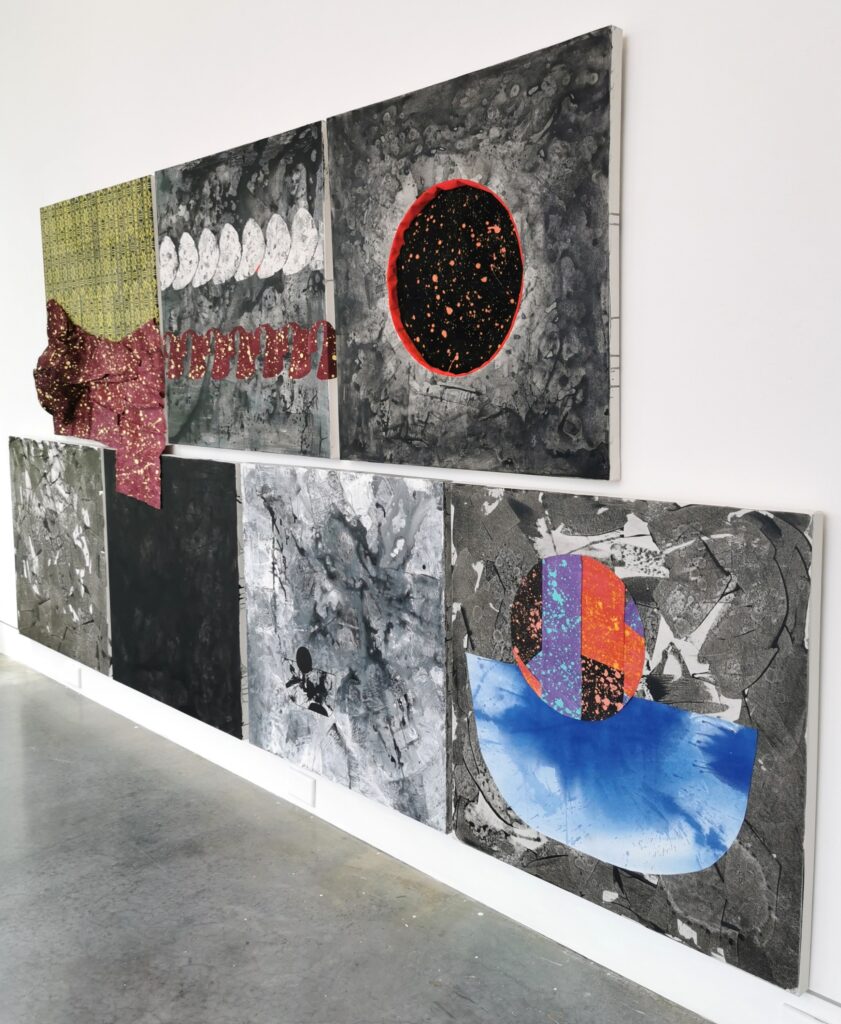
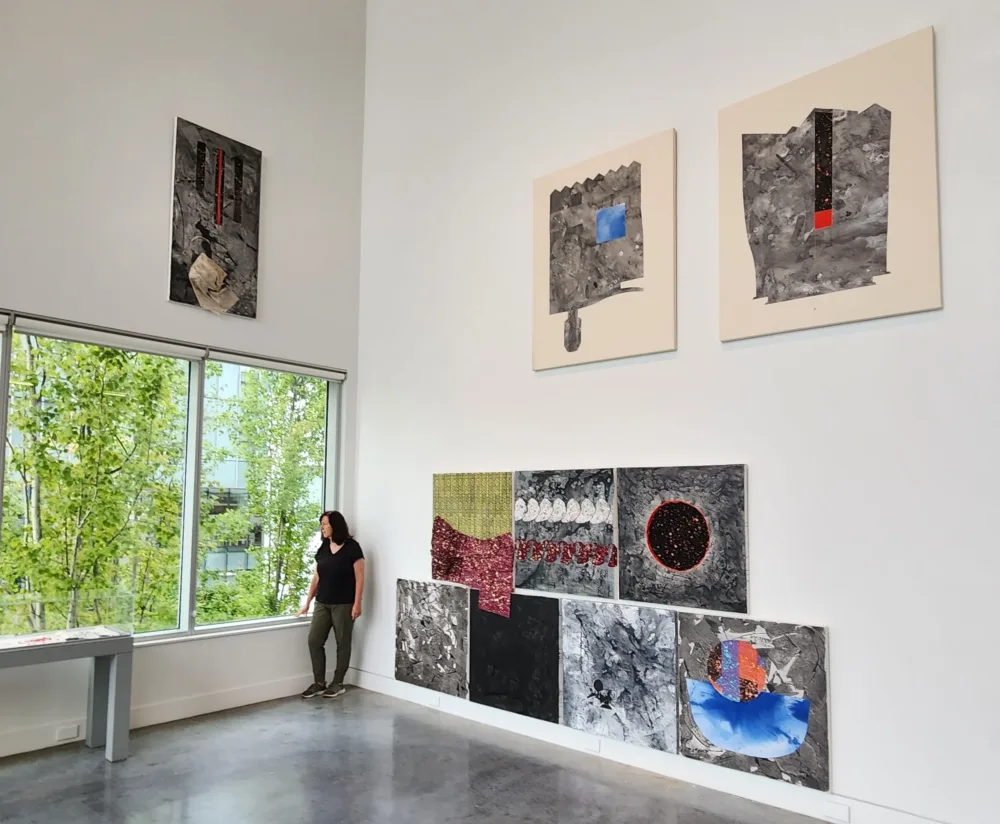
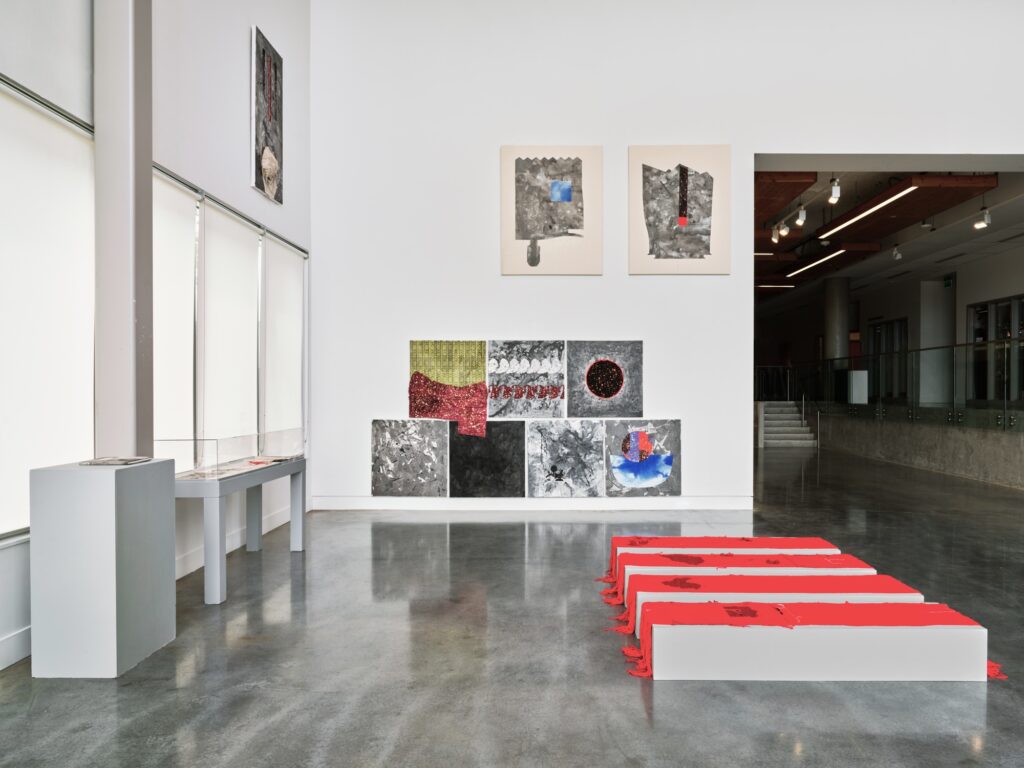
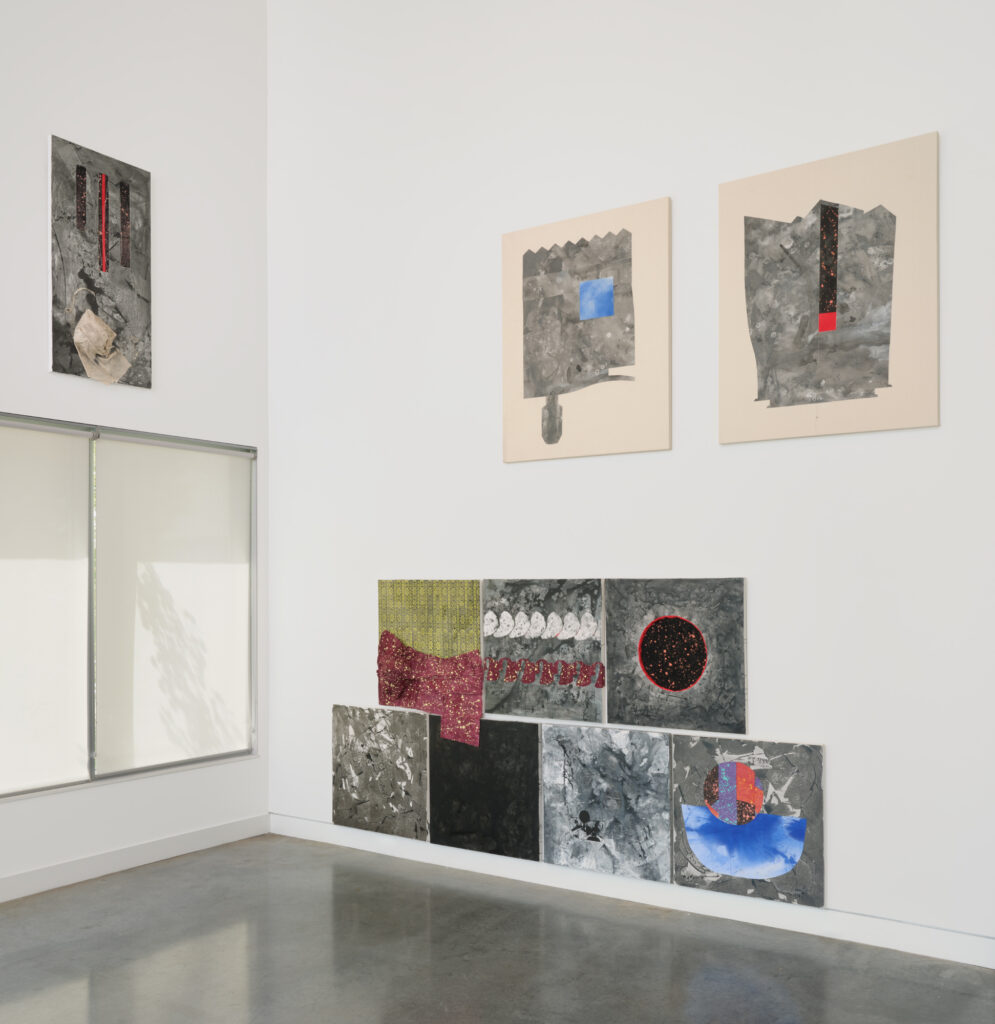
Sediments of Time (2024-2025) is a group of mixed-media canvas collage paintings (graphite, acrylic, thread, fabric stiffener, screen print) on stretched canvases. The grouping is hung in a bricolage pattern, serving as a wall metaphor and narrative of migration. This artwork explores conceptual gestures of migration expressed in abstract language through the symbolism of folds, patterns, portals, and protrusions.
The surface of the canvas is interrupted by tearing, fraying, and layering, evoking trauma as well as breakthroughs and new perspectives. Three-dimensional forms of folded textiles are complemented by the flattened patterns through line drawing, repetition, collaging, and the removal of shapes, arranged into an alphabet of symbols that articulate dynamic gestures evocative of pictorial writing.
Four Buildings, 2025
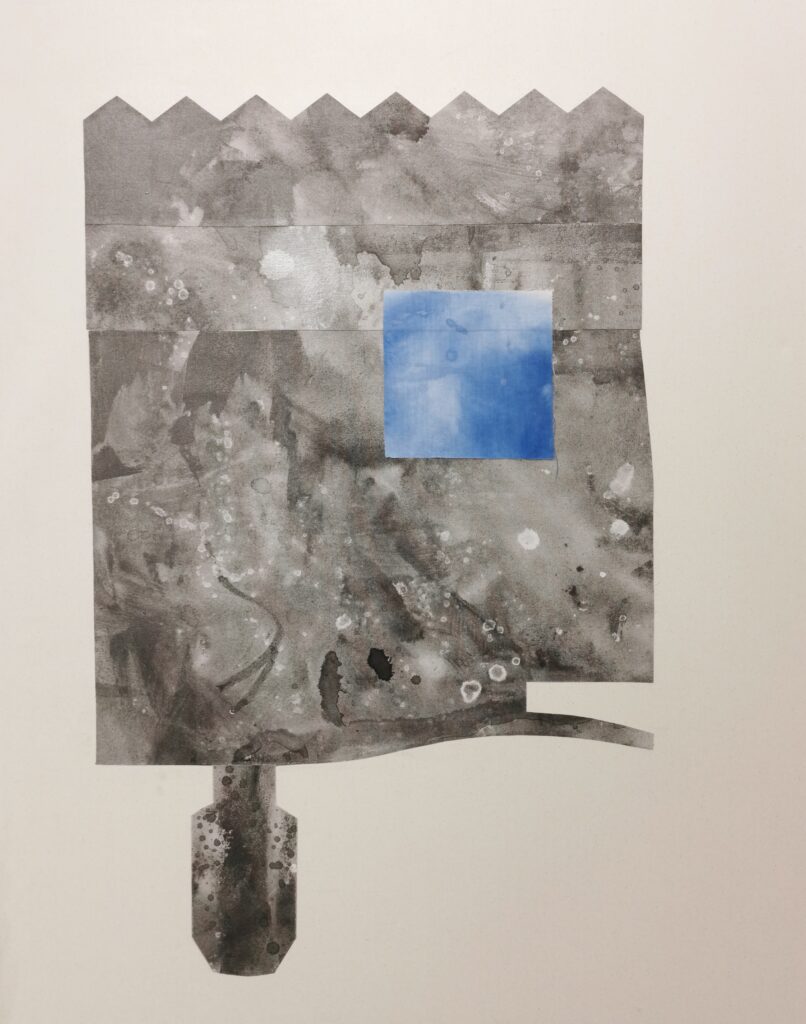
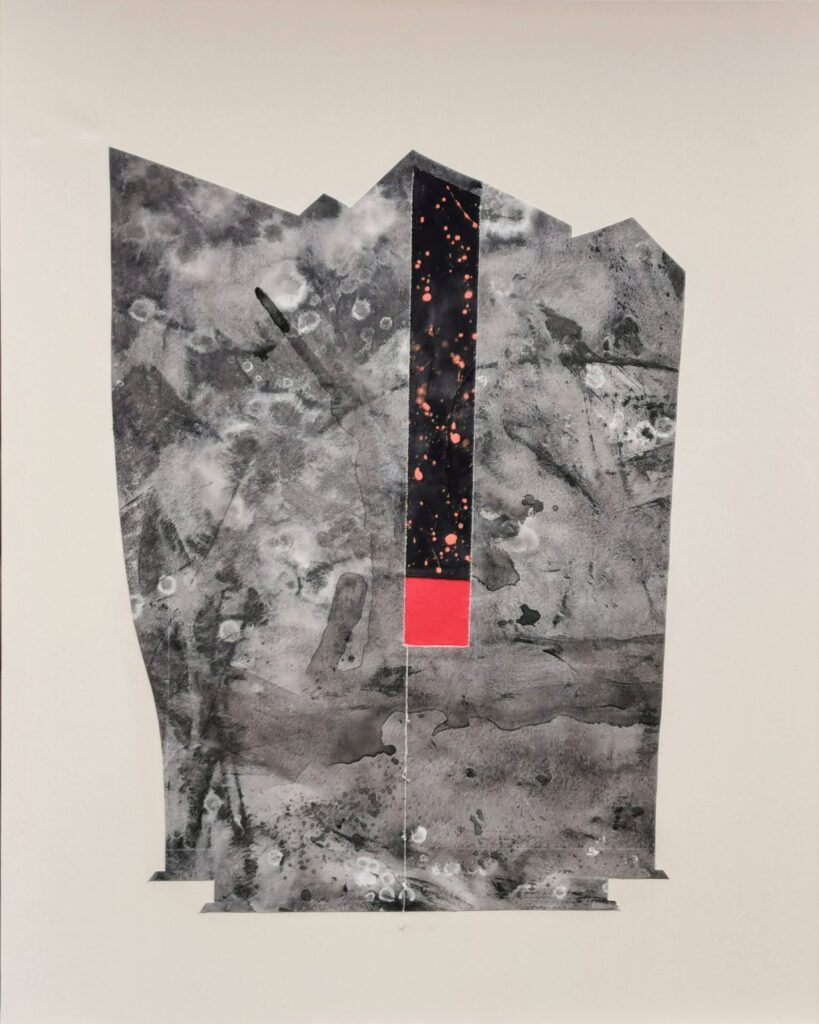
The Four Buildings (2025) diptych of canvas collages (graphite, acrylic, thread, raw canvas) references the roof shapes of four specific utilitarian buildings from my two homelands, suturing the distant cultures within a unified context. One pair of rooflines represents the travelling hubs I have frequented, both capable of facilitating and disrupting migrations (the railway station in Novi Sad, Serbia, and the Vancouver airport building). The second pair represents the universities I have attended in the two countries, homes of enlightenment, disillusion, and activism (the University of Technological Sciences in Novi Sad, Serbia, and Emily Carr University of Art + Design). Each pair of buildings connects the geographies and power structures of travel and education in Serbia and Canada in an upside-down way, as one might expect them to be on opposite sides of the globe, in world politics, and in positions of power.
Remnants Of Time, 2025
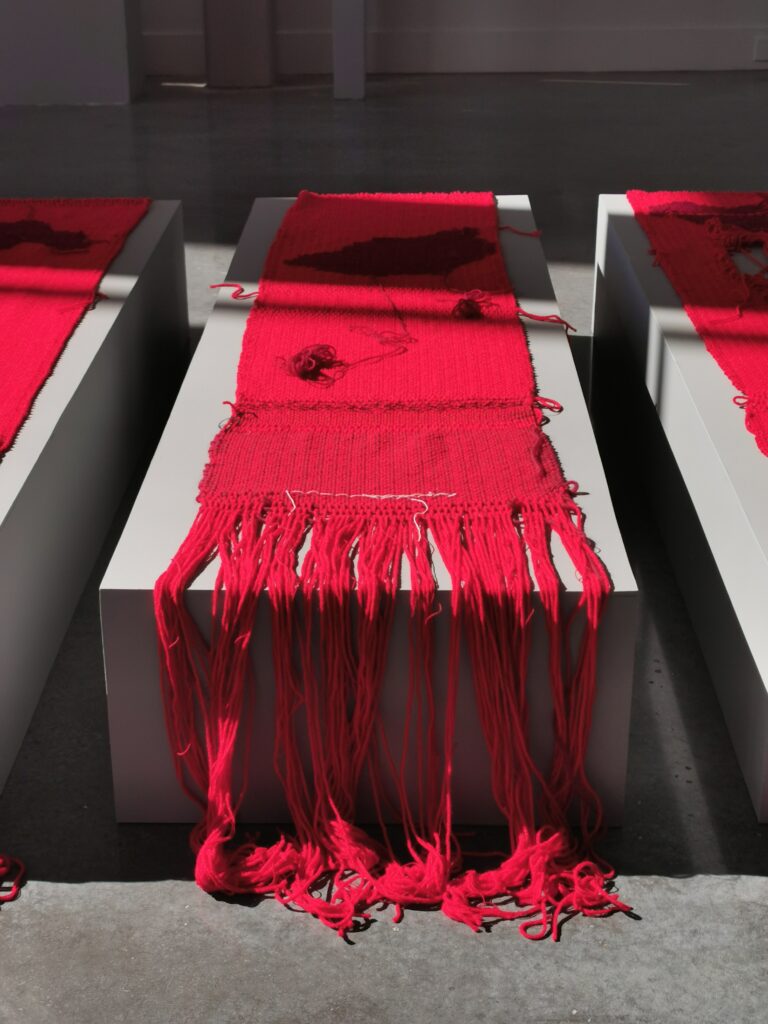
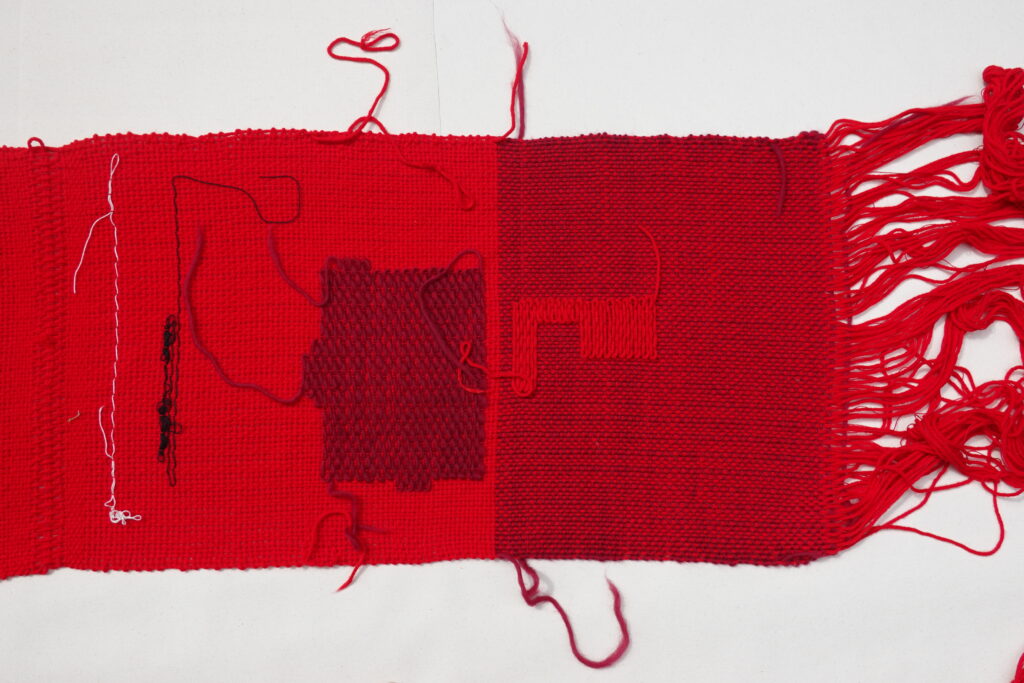
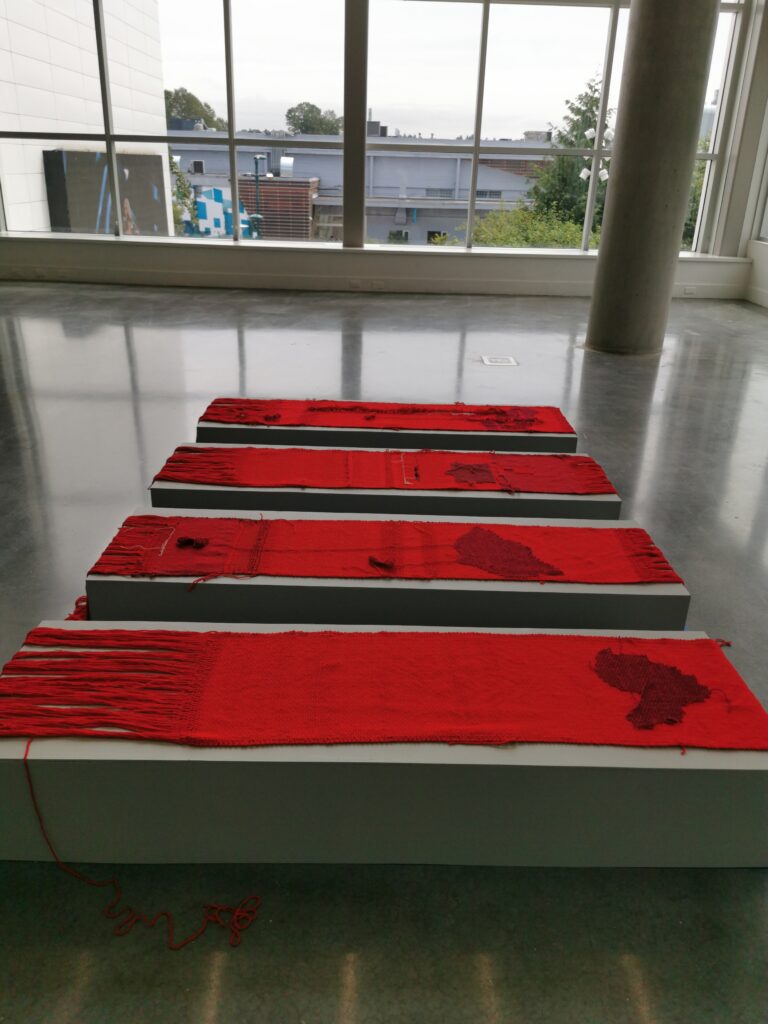
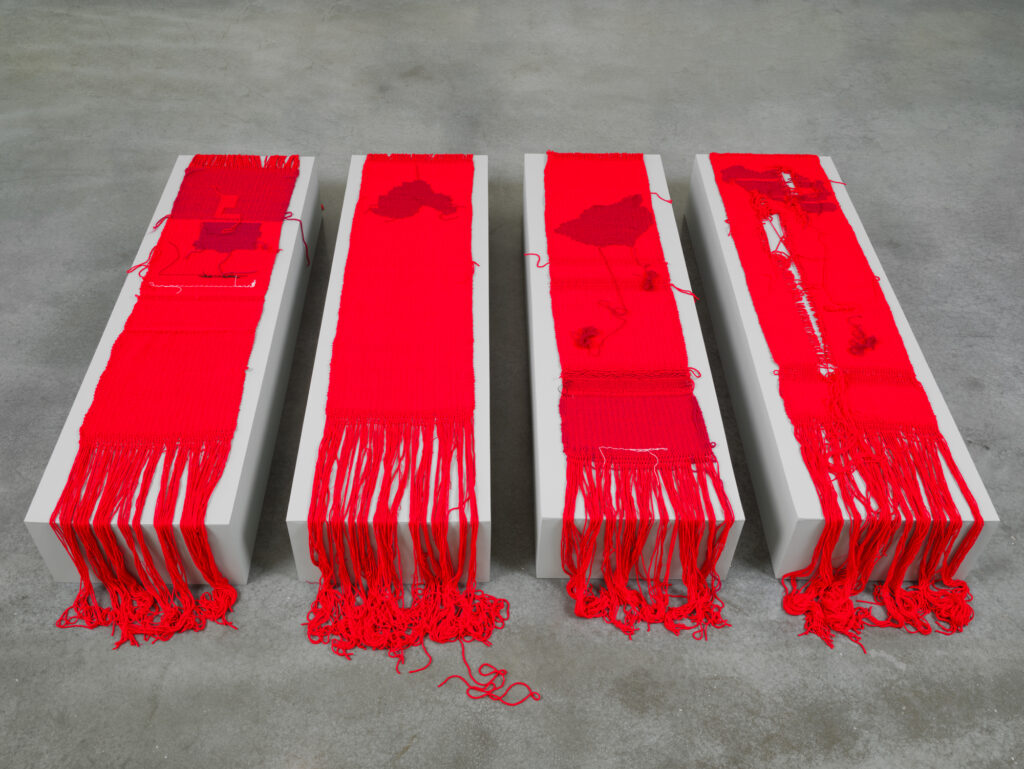
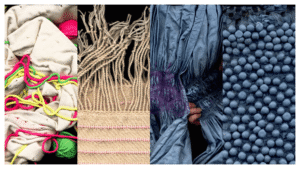
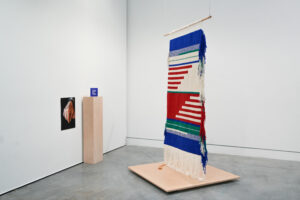
Remnants of Time (2025) is a series of woven (acrylic thread) human-sized banner-like artworks. The woven pieces with warp/weft structures manipulated by tangling, unravelling, and pooling refer to the soft structures experienced in intimate places and symbolize the management of adverse situations within ourselves. Each piece features a representation of a topography, including my torn-apart former homeland, the land of my mother’s family, the map of my birth city on the river Danube, and the blueprints of my Serbian and Canadian homes juxtaposed as a storytelling foil.
Although these woven pieces are reminiscent of political banners, scrolls, and proclamations, they embody humanity through their scale, the pooling of blood-like threads, their interplay, and their attempts to repair themselves. They anchor how one places oneself in history while showing the turmoil, shifting, and uprooting. We are all remnants of times in how we carry our locations, geologies, histories, blood and genes as our lives unfold.
Home Abroad, 2023 / Morning Star, 2024
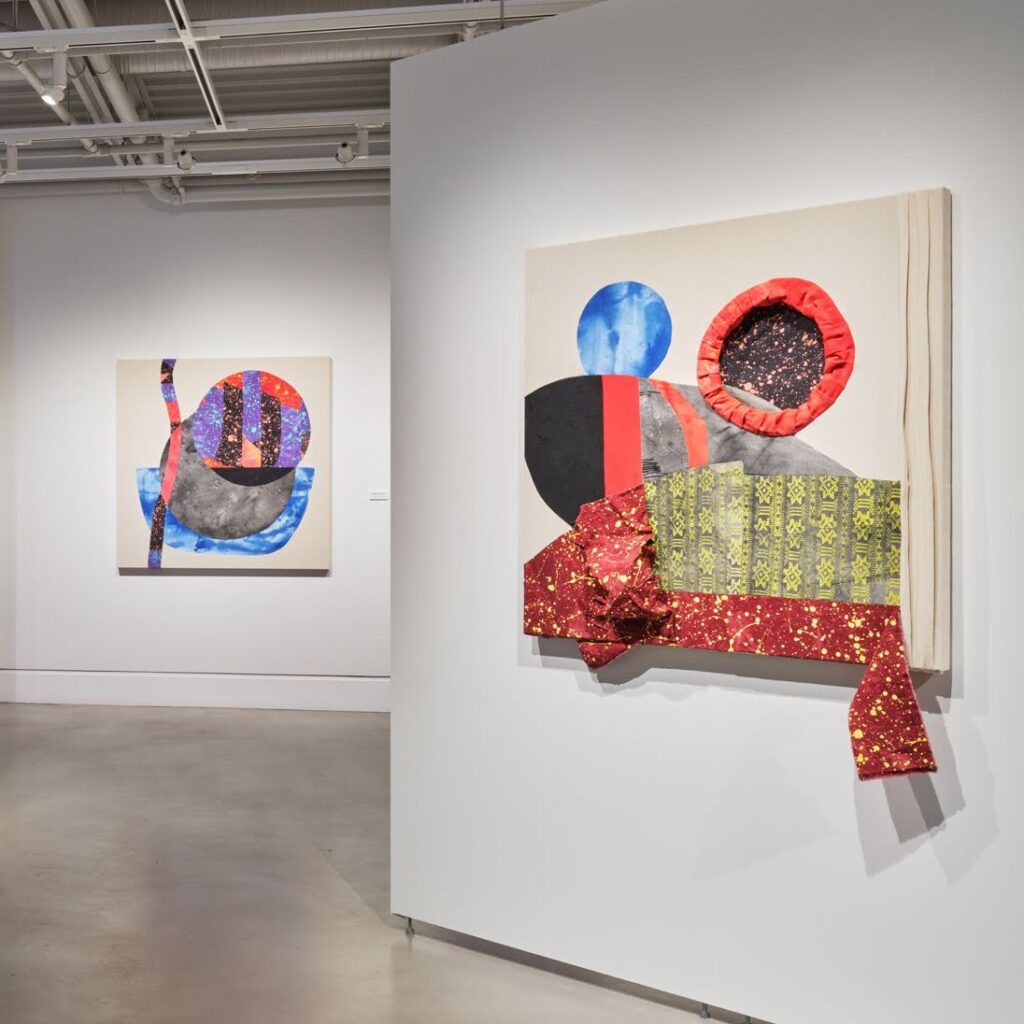
Home Abroad (2023) and Morning Star (2024) are experimental two- and three-dimensional sewn-canvas collages (graphite, acrylic, thread, fabric stiffener, screen print, raw canvas) that paved the way for Displaced Topologies. The sewn-canvas collages approach evokes a relocated kind of life in which the parts may originate from different cultural worldviews, forming something new. Minimalist compositions are juxtaposed with the chaotic, galactic-looking patterns, which signify making order out of chaos, akin to making a home in the pandemonium of a displaced life.
Pluriversal Weaving, 2025
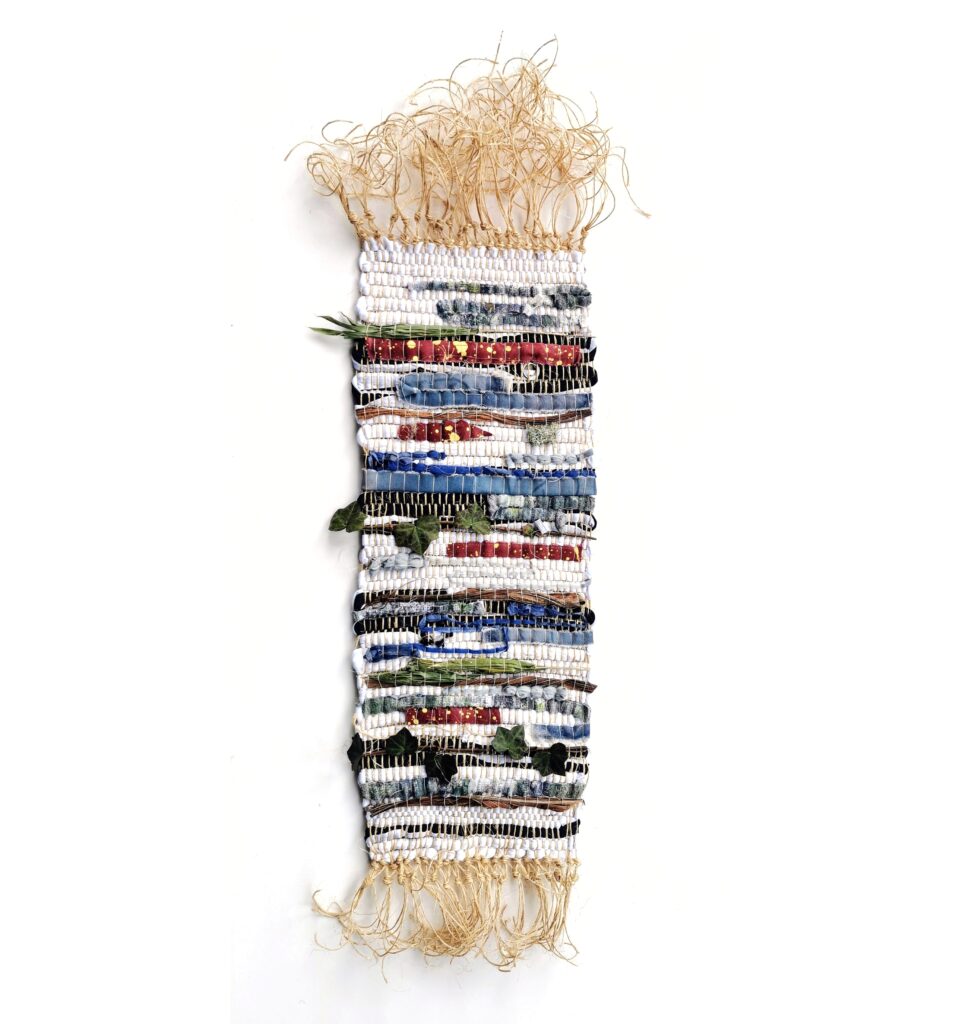
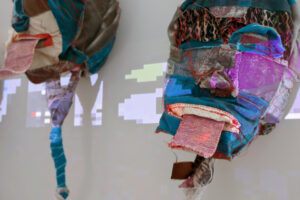
The idea of the pluriverse, an all-inclusive world of many worlds, is applied in a collaborative weaving piece using materials donated by more-than-human inhabitants of the pluriverse. This project was a part of the Leaning Out of Windows, an SSHRC-funded interdisciplinary art + science project with collaborations between Emily Carr University and TRIUMF, Canada’s Particle Accelerator Centre.
The RAs (art students from the ECUAD MFA program) were asked to contribute a soft object for inclusion in the more-than-human materials weaving experiment. The non-humans were represented by the plants from my garden. The donated materials comprise: gardener’s twine, ivy vines, lily leaves, bamboo stems, moss, cyanotype on canvas, fabric projection screen, oil painter’s rag, dyed cotton ribbons, painted canvas remnants, and acrylic thread.