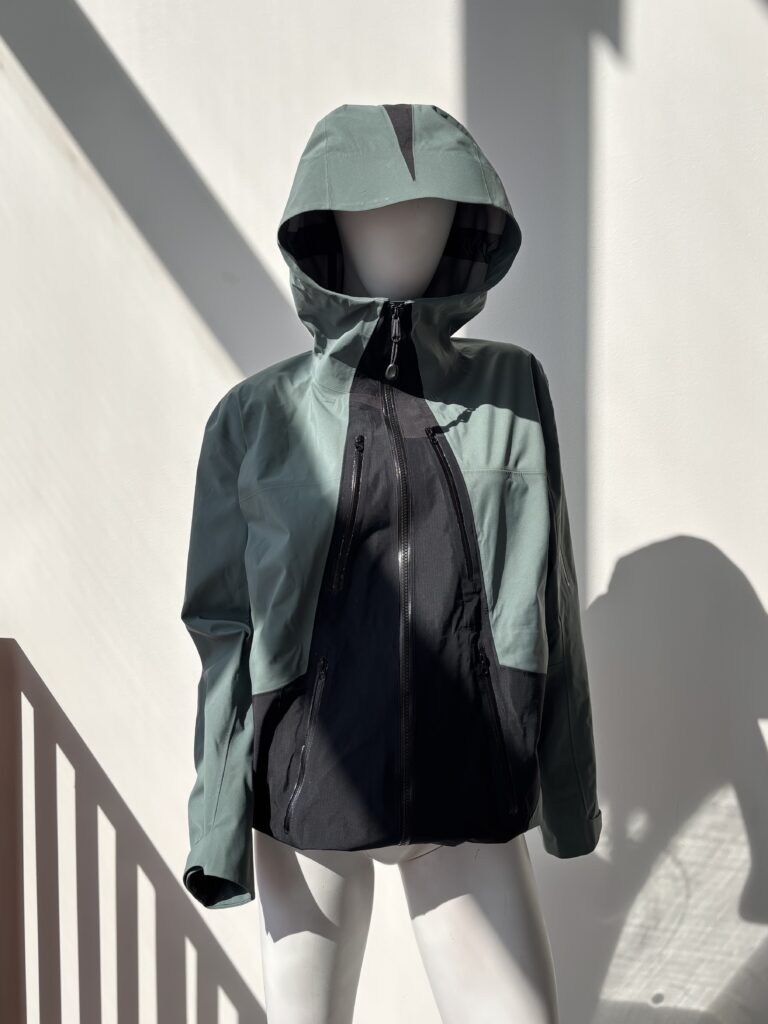
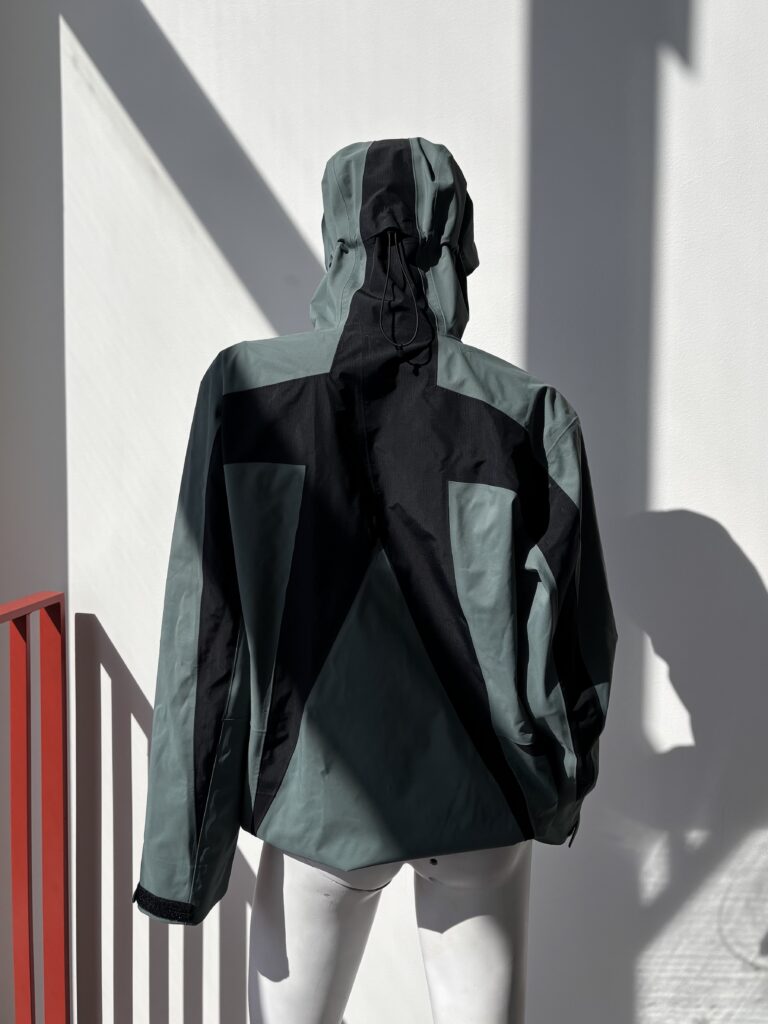
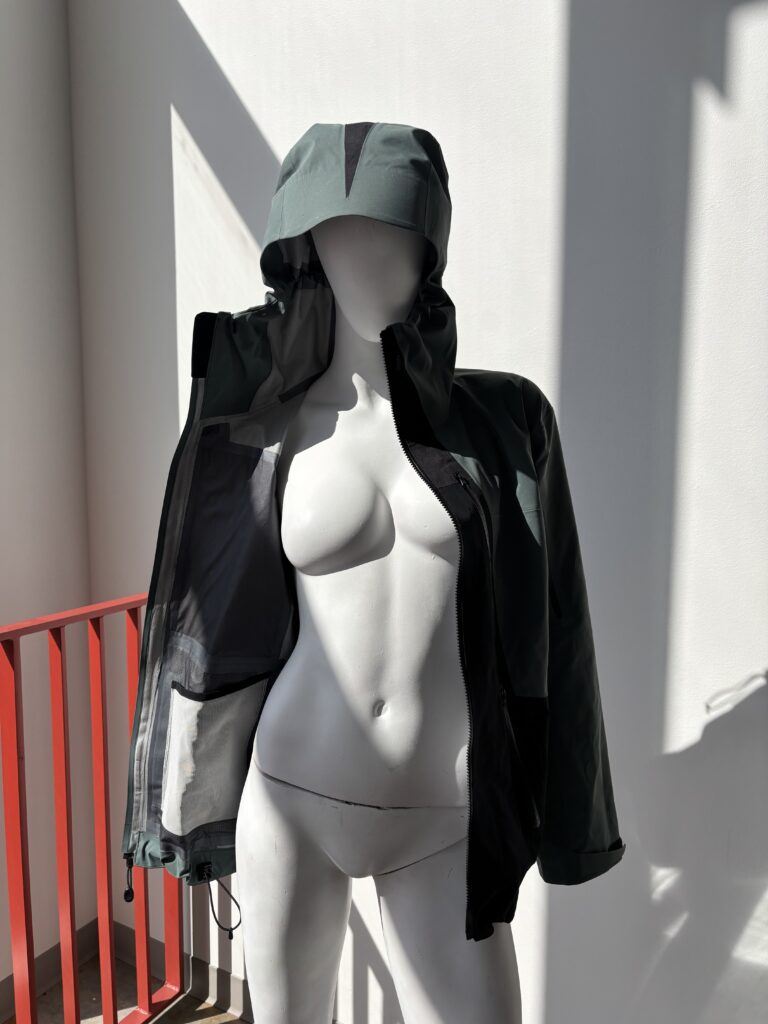
Practices for Accessible Snowsports: Jacket 01.
Sarah Wohlgemuth
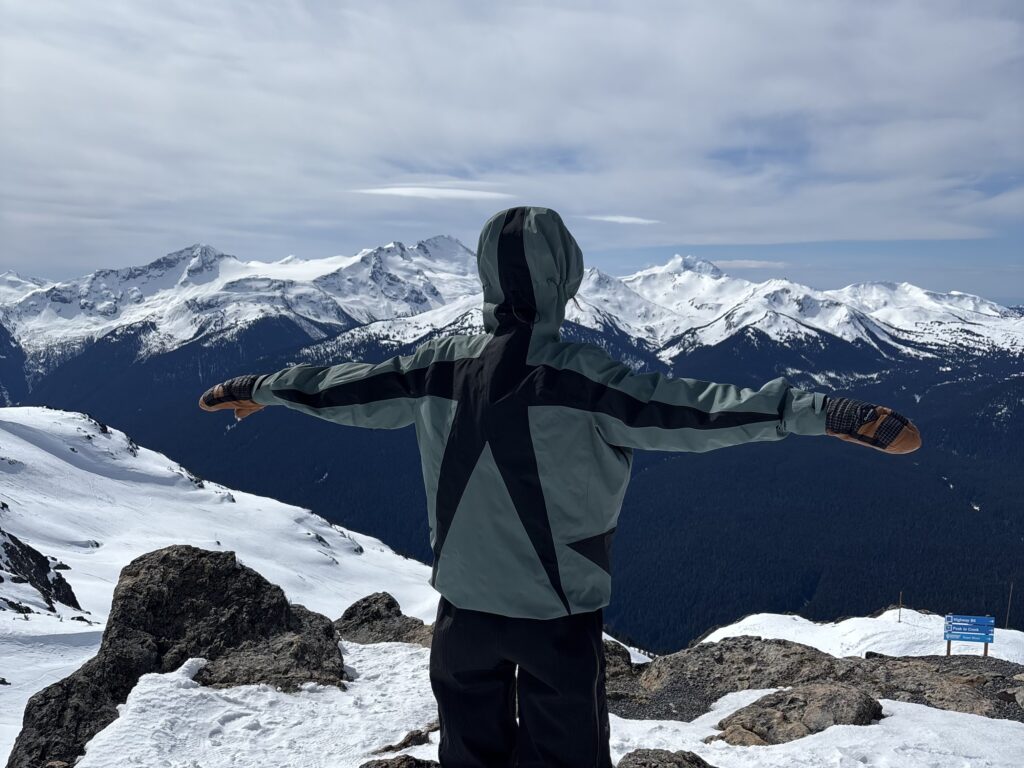
A new jacket, made from an old jacket.
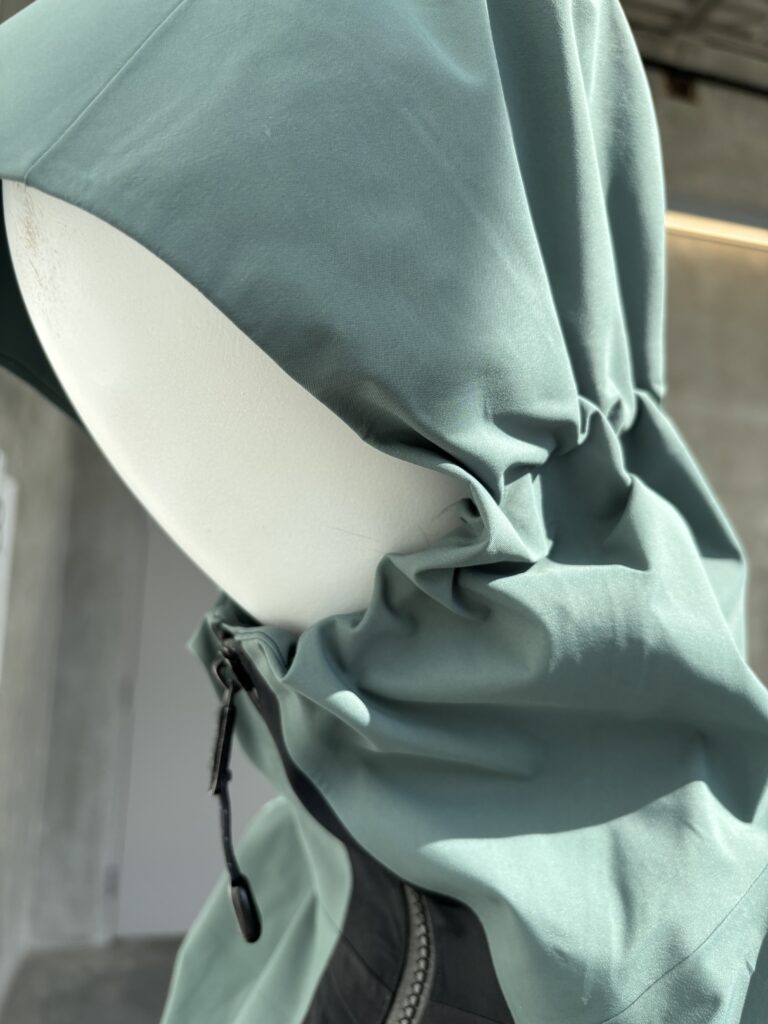
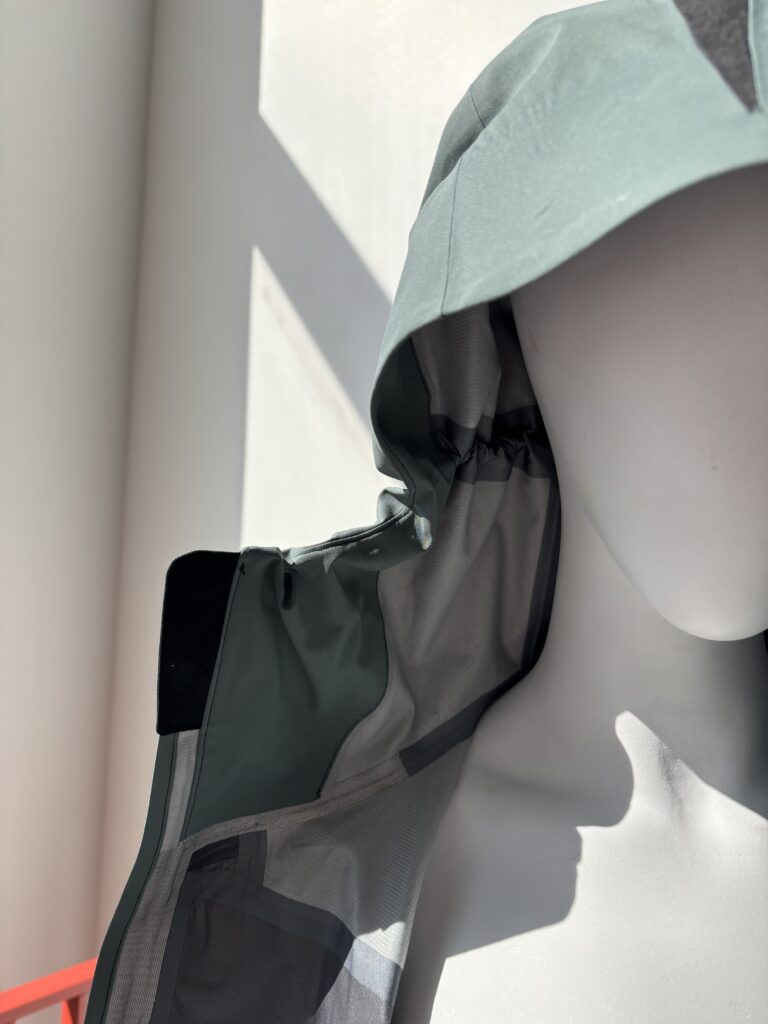
Jacket 01 is the outcome of an exploration of ways to break down the barrier to entry in snow sports, through constructing highly technical sporting apparel in a more accessible manner. Upcycling and accessible sewing methods offer the opportunity to not only make outerwear cheaper or more sustainable, but it opens doors to reshape who gets to participate in sport, how people build relationships with their gear, and what performance means in the first place.
Context
My textile practice has long been grounded by repair and upcycling within the context of outdoor use. As an avid skier, I’ve utilized my textile practice as a means to enhance my experiences within sport, build and foster connections to community, and to explore my own self expression. For this project, I was inspired to dive deeper into how I could design with discarded technical apparel to offer a more accessible and sustainable means for self expression in sport, without jeopardizing functionality in the process.
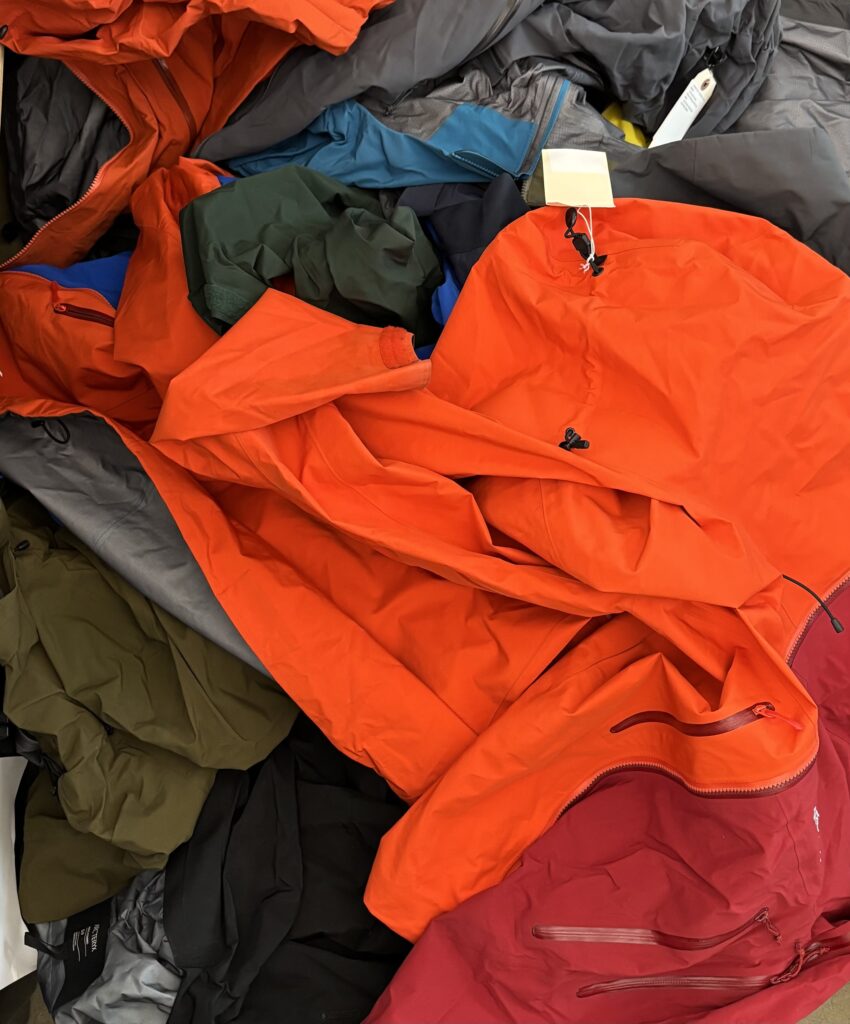
Explorations
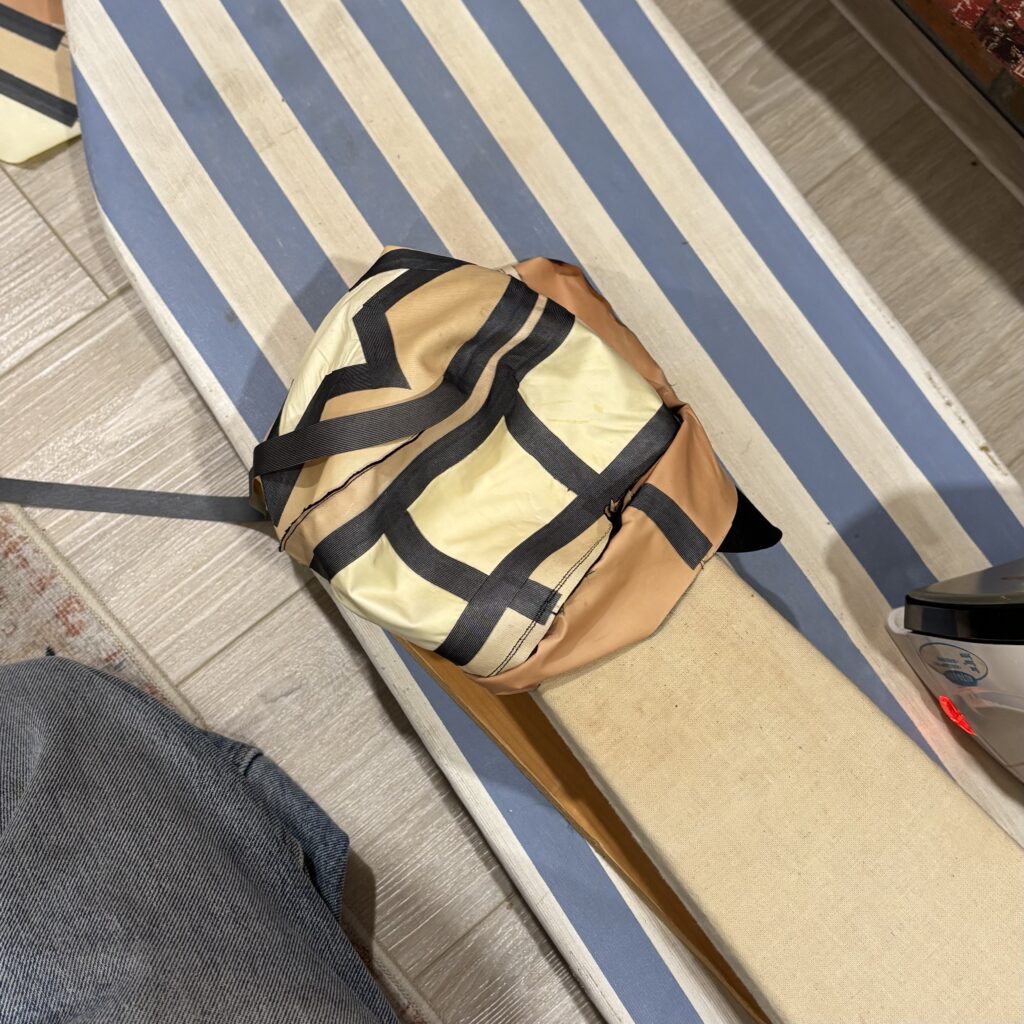
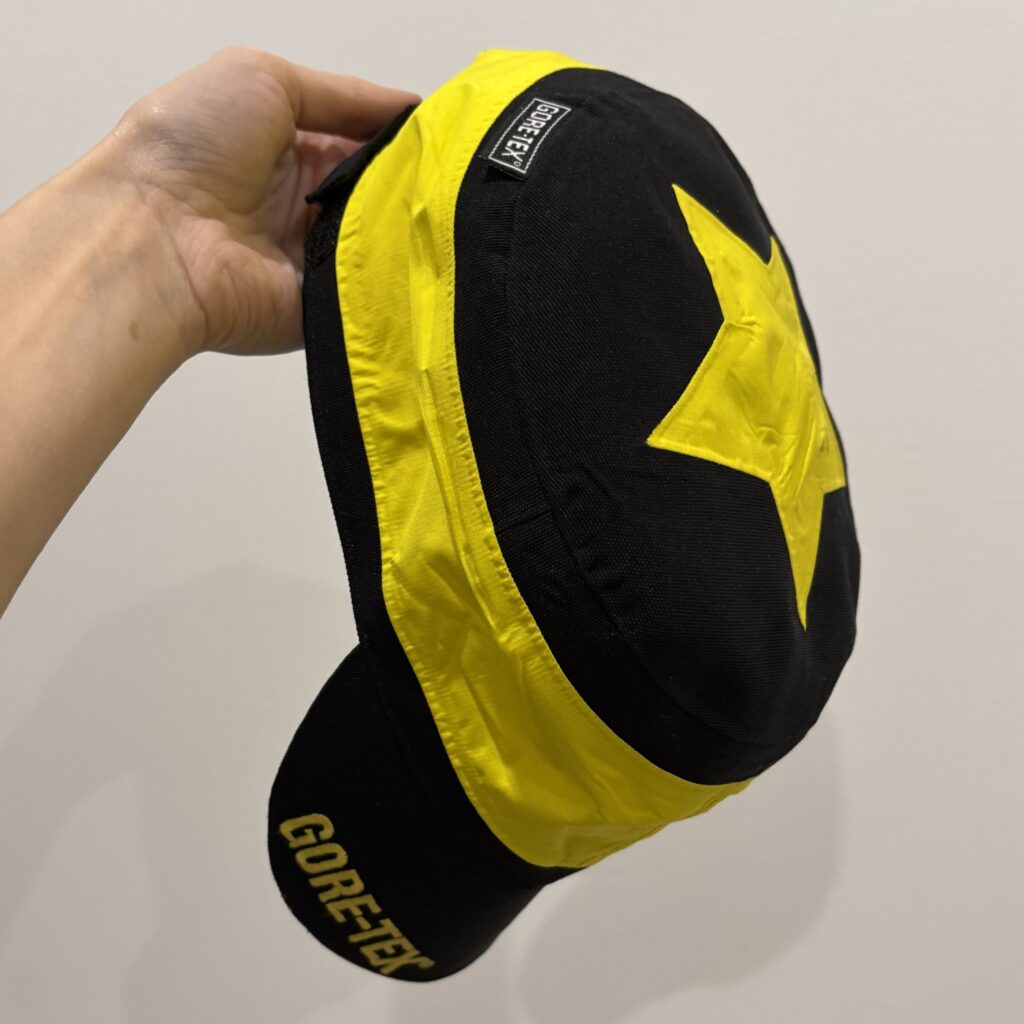
Star Hat
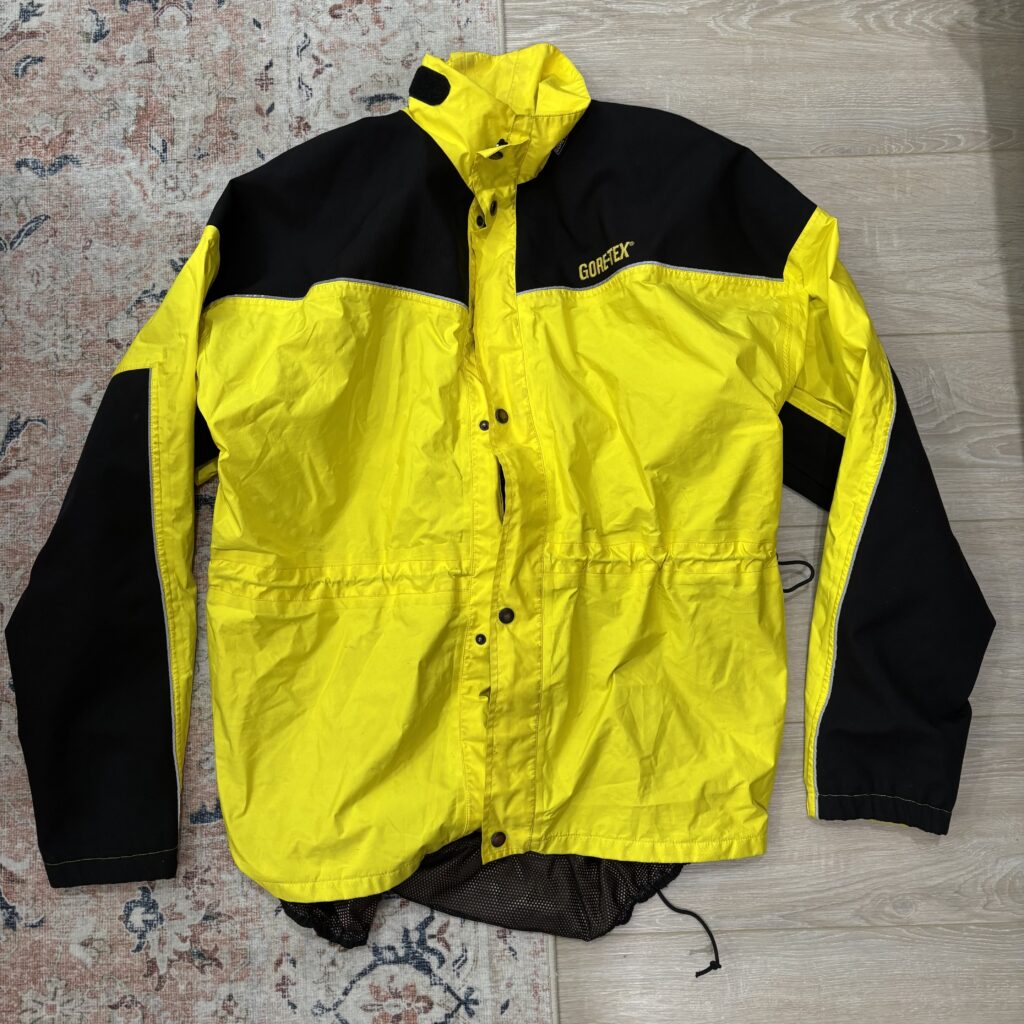
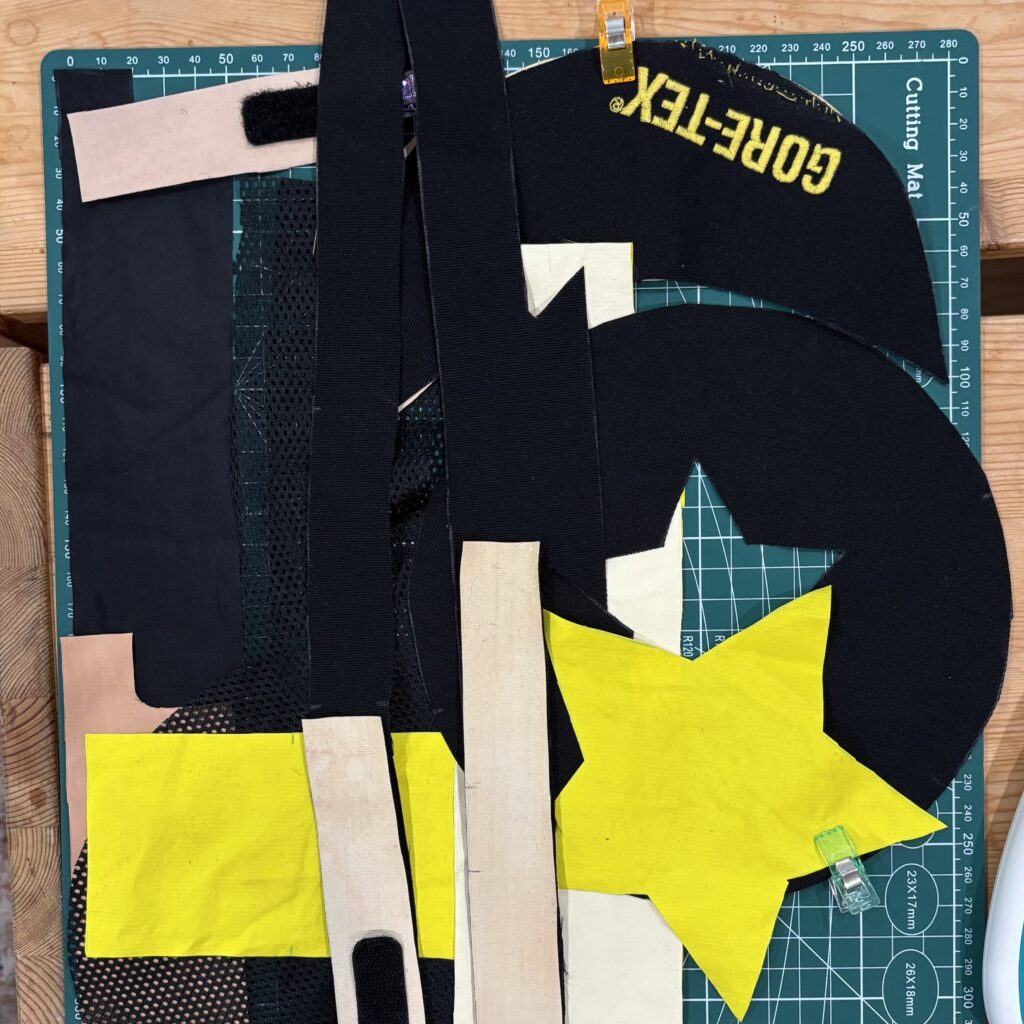
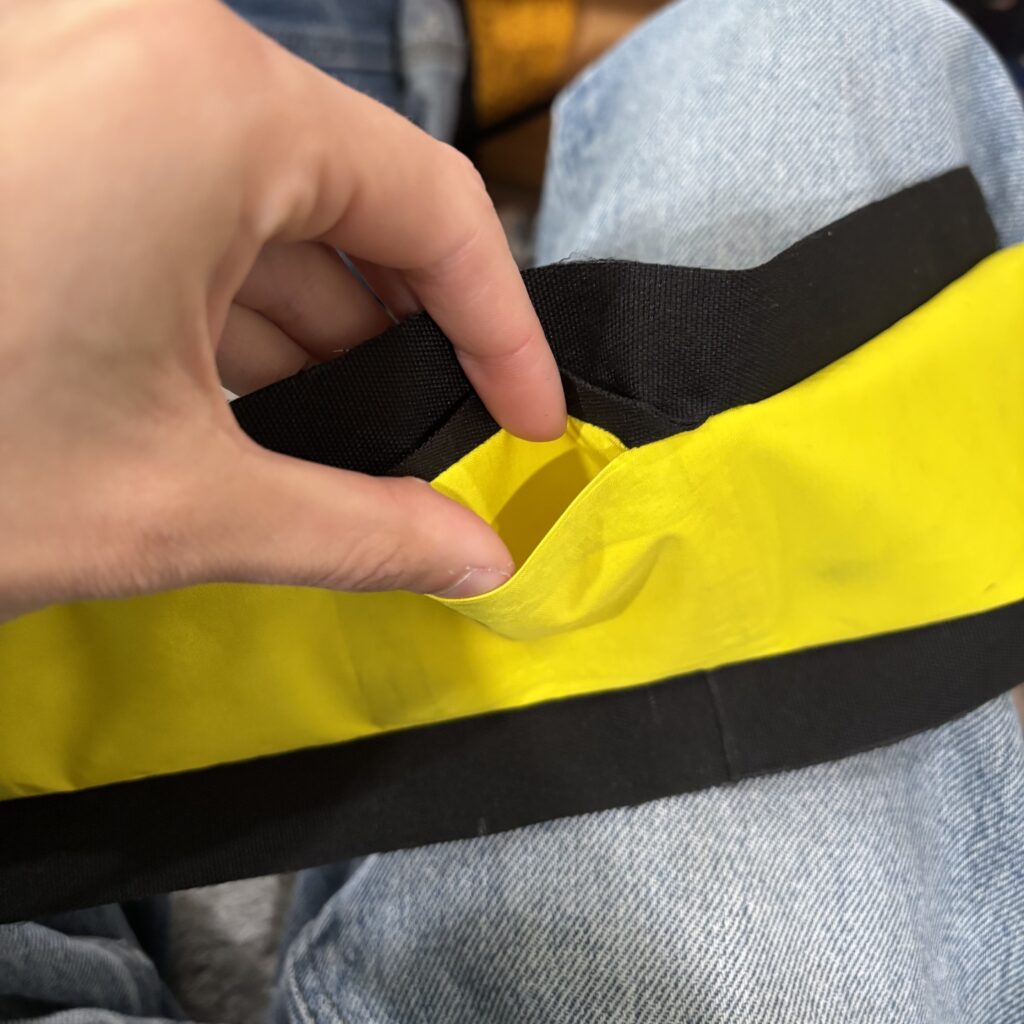
In early explorations of how discarded apparel could be transformed to serve new functions, I transformed an old Gore-Tex jacket donated to me by a family member. This exploration began with a curiosity of alternative ways of carrying, how attachment to our clothing can change with reworking the form of the item, and self-expression through non-conventional use of materials. Through this exploration in the form of a cadet hat, I was able to validate the functional value of a thirty plus year old material, methods for working with older versions of a still relevant material in the outdoor space, and ability of working with 3-layer technical materials with standard home sewing tools.
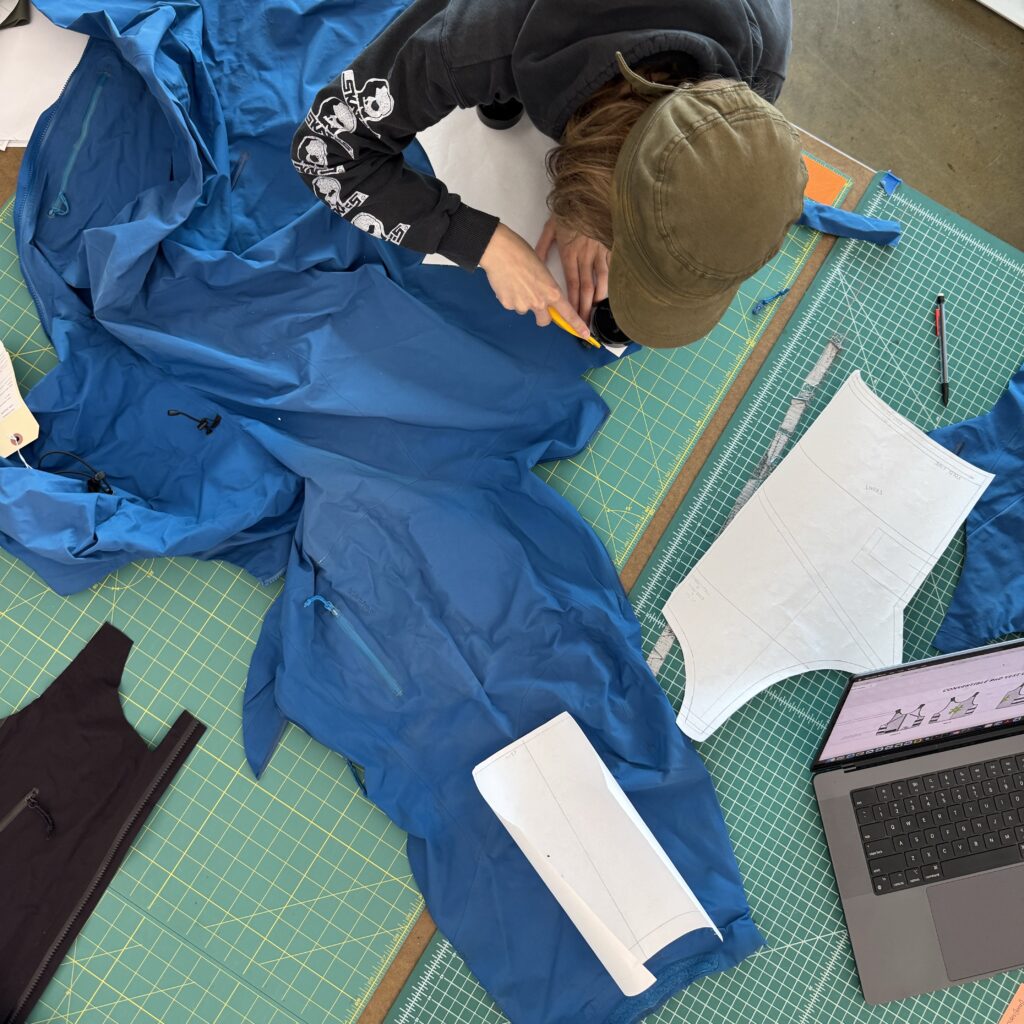
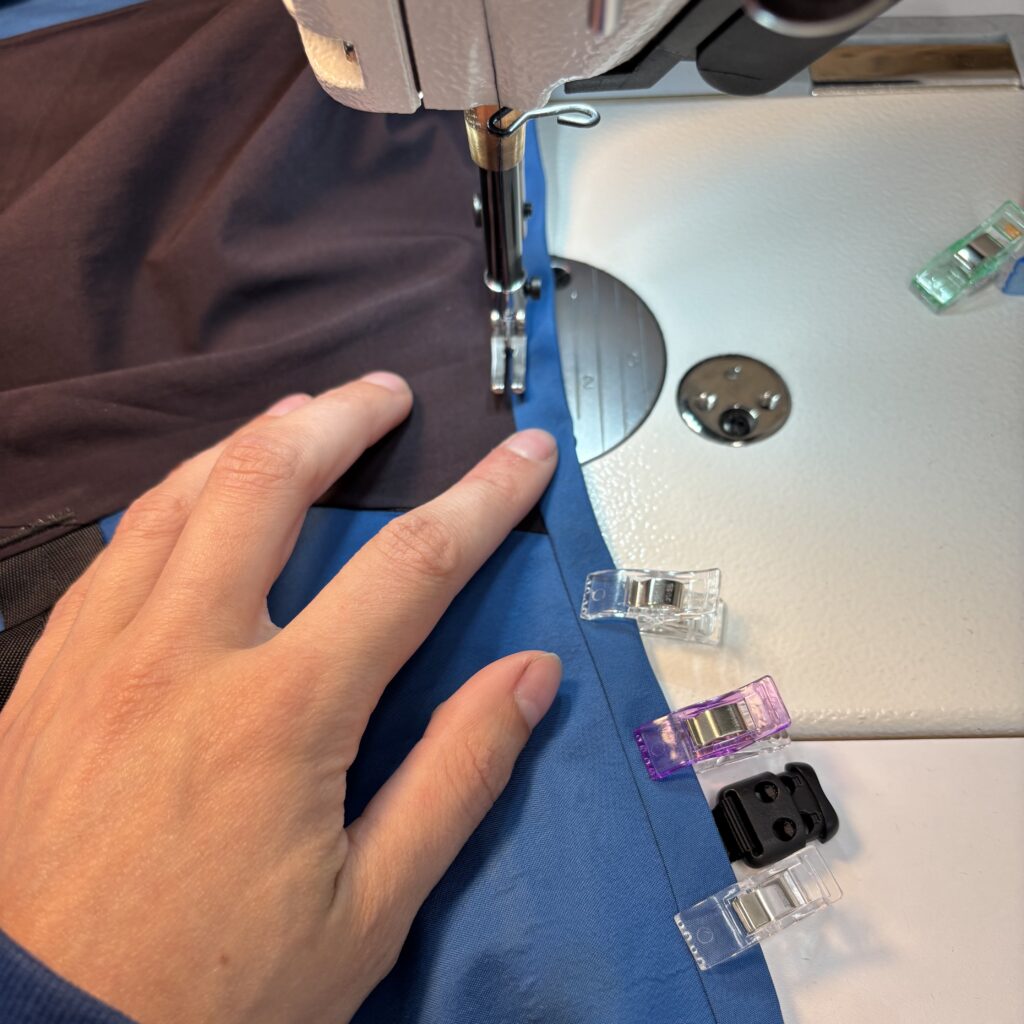
Research + Development Vest
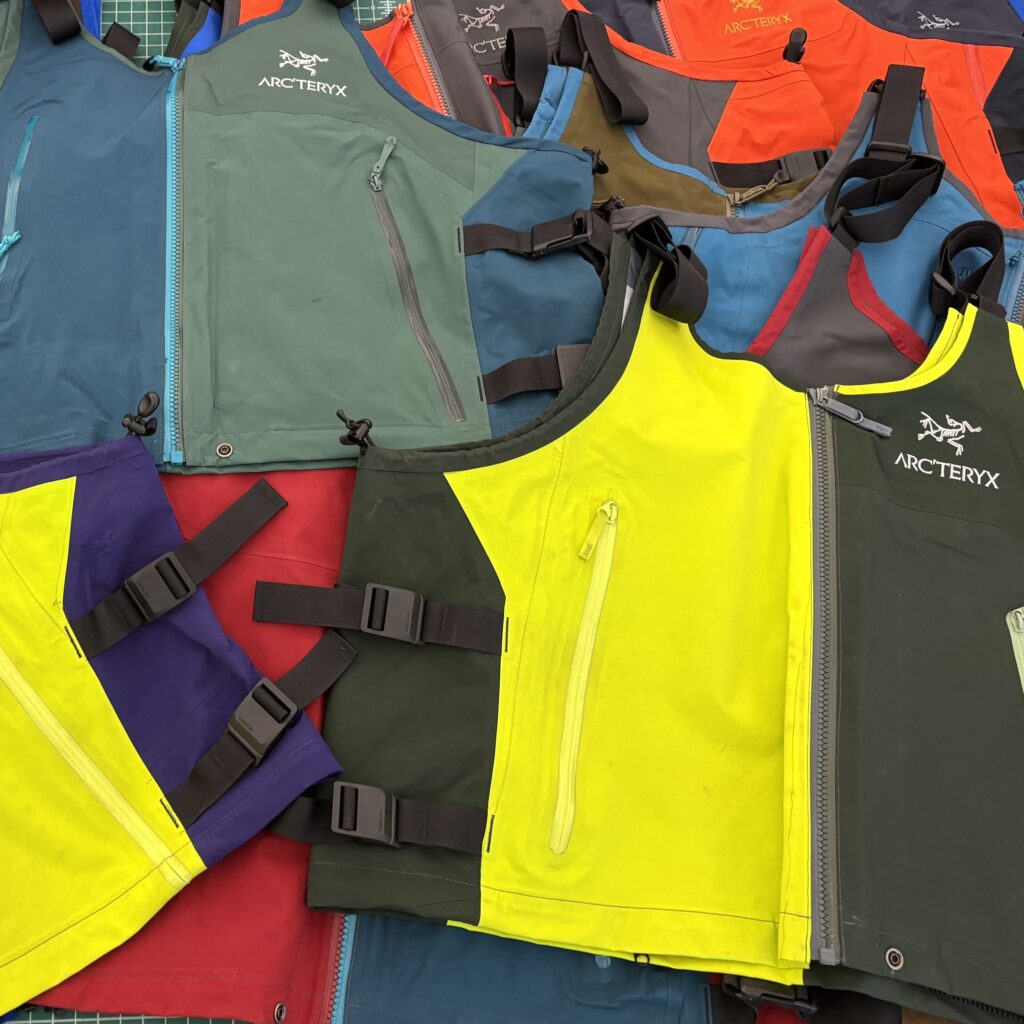
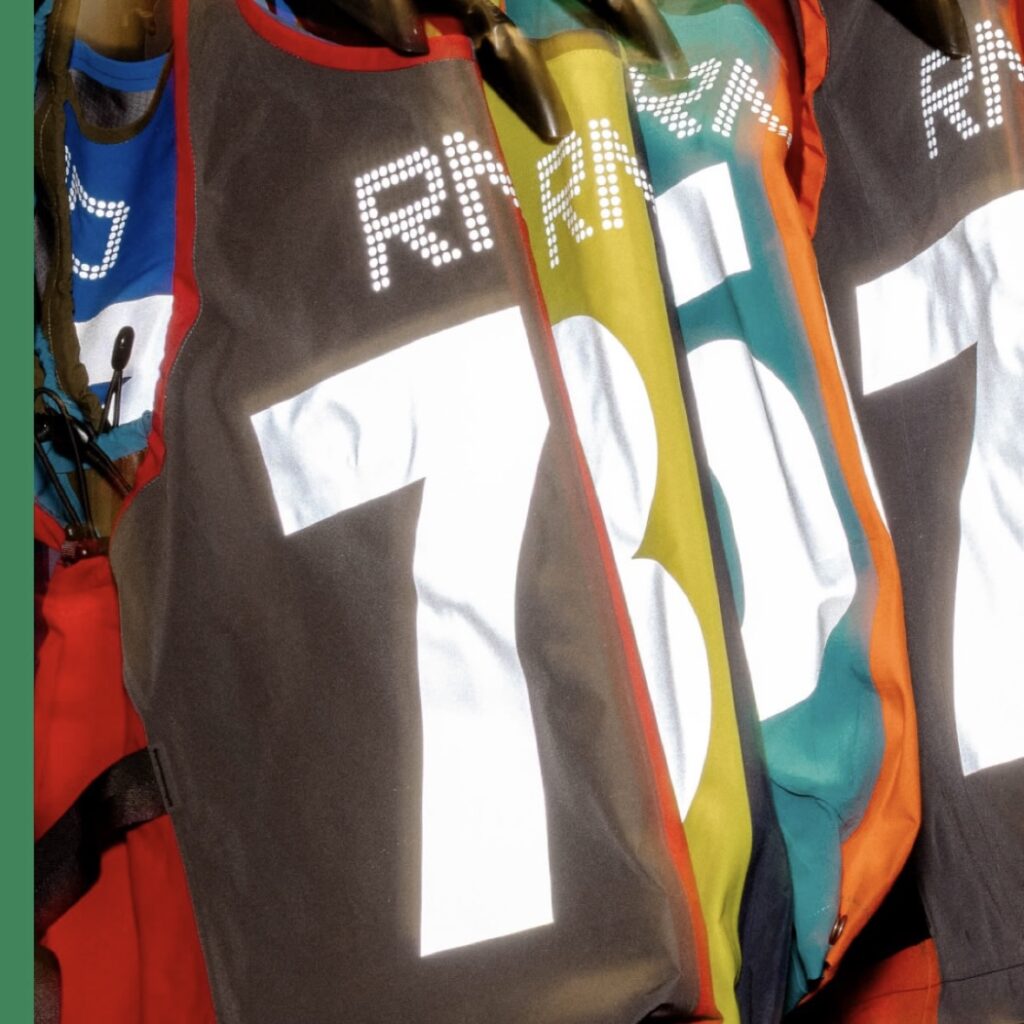
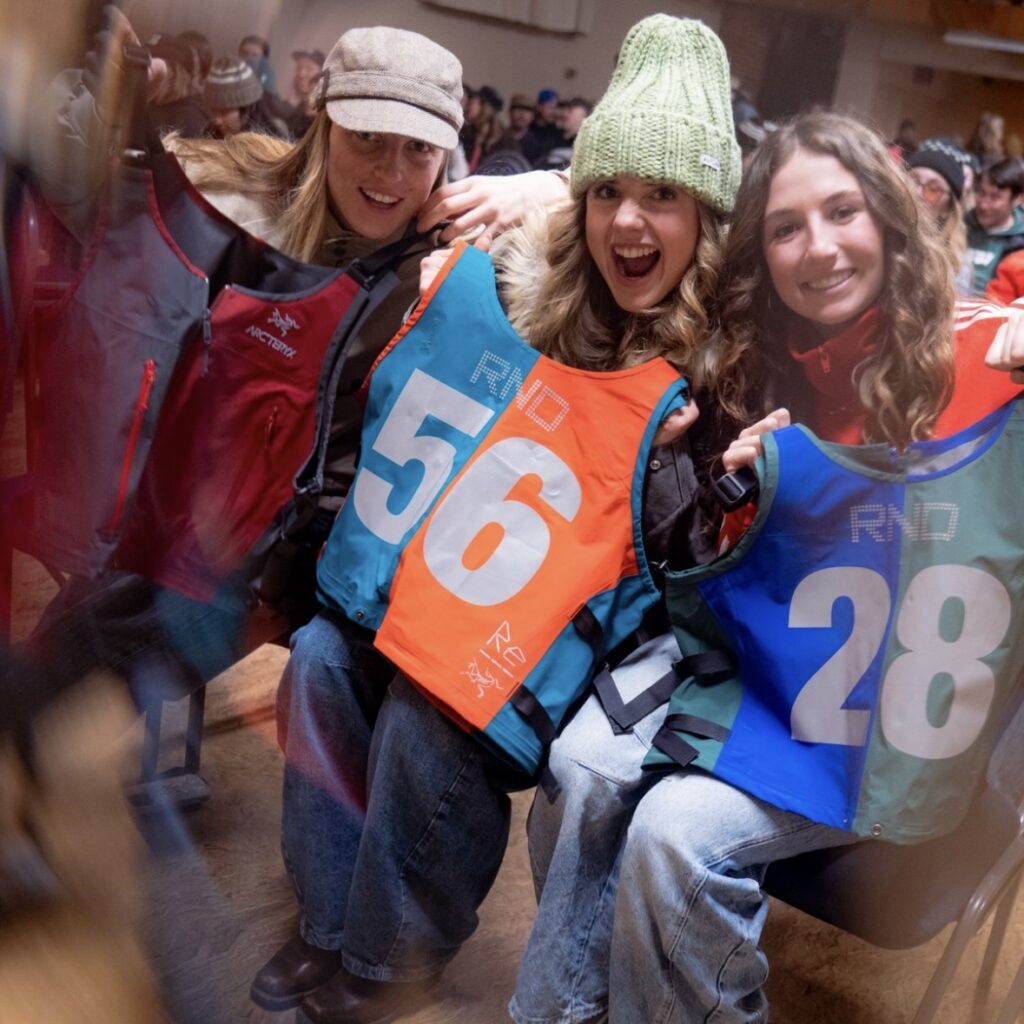
Another influential exploration during the early stages of this project was the design and development of a competition bib I had been working on through my job as a design assistant at Arc’teryx during the fall. This project was centred around utilizing warrantied jacket stock to create low waste competition bibs for the participants of the 2026 Research + Development event, a backcountry snowboarding competition created to give up and coming female athletes an opportunity to compete at the Revelstoke Natural Selection competition. This project gave me the opportunity to develop my technical skills, and offered insights into how upcycling offers a unique opportunity for individual self-expression through connection to garments, individuality, and sustainability. This project helped to ground my capstone in this space, as transforming discarded objects into new and exciting garments to extend the life of these materials is the most authentic and fulfilling part of my practice.
Jacket Process
Pattern
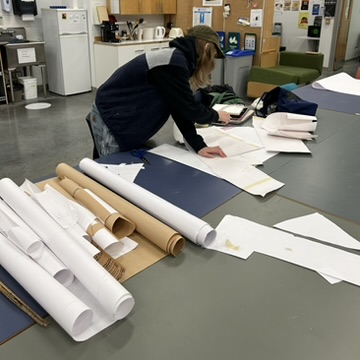
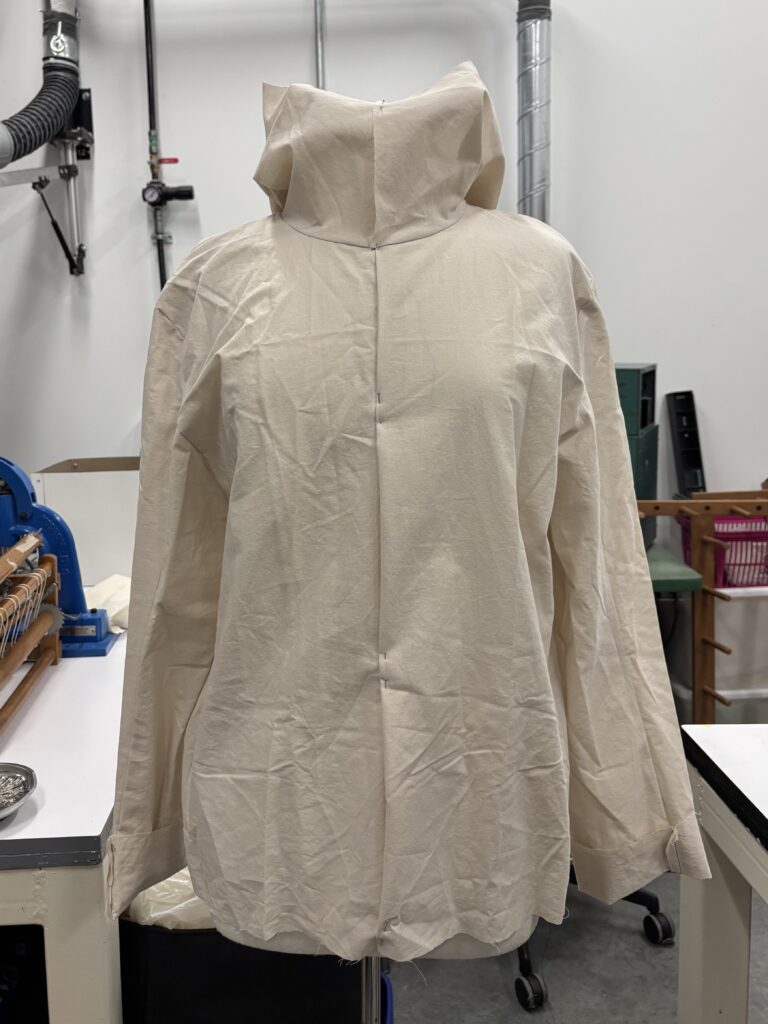
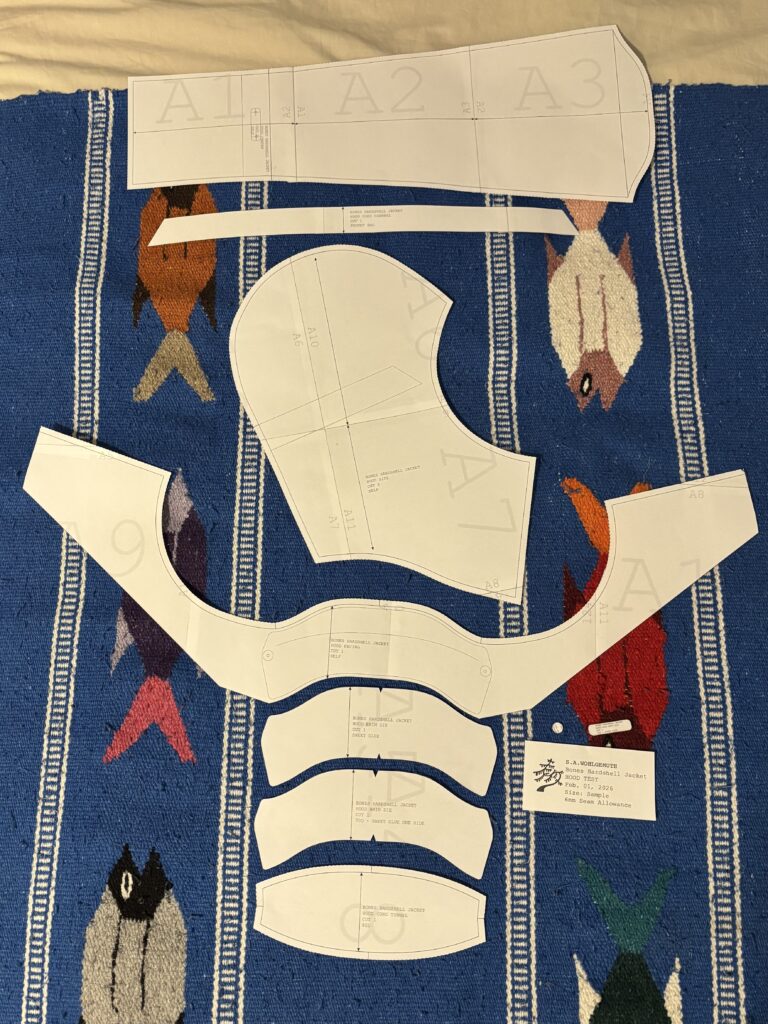
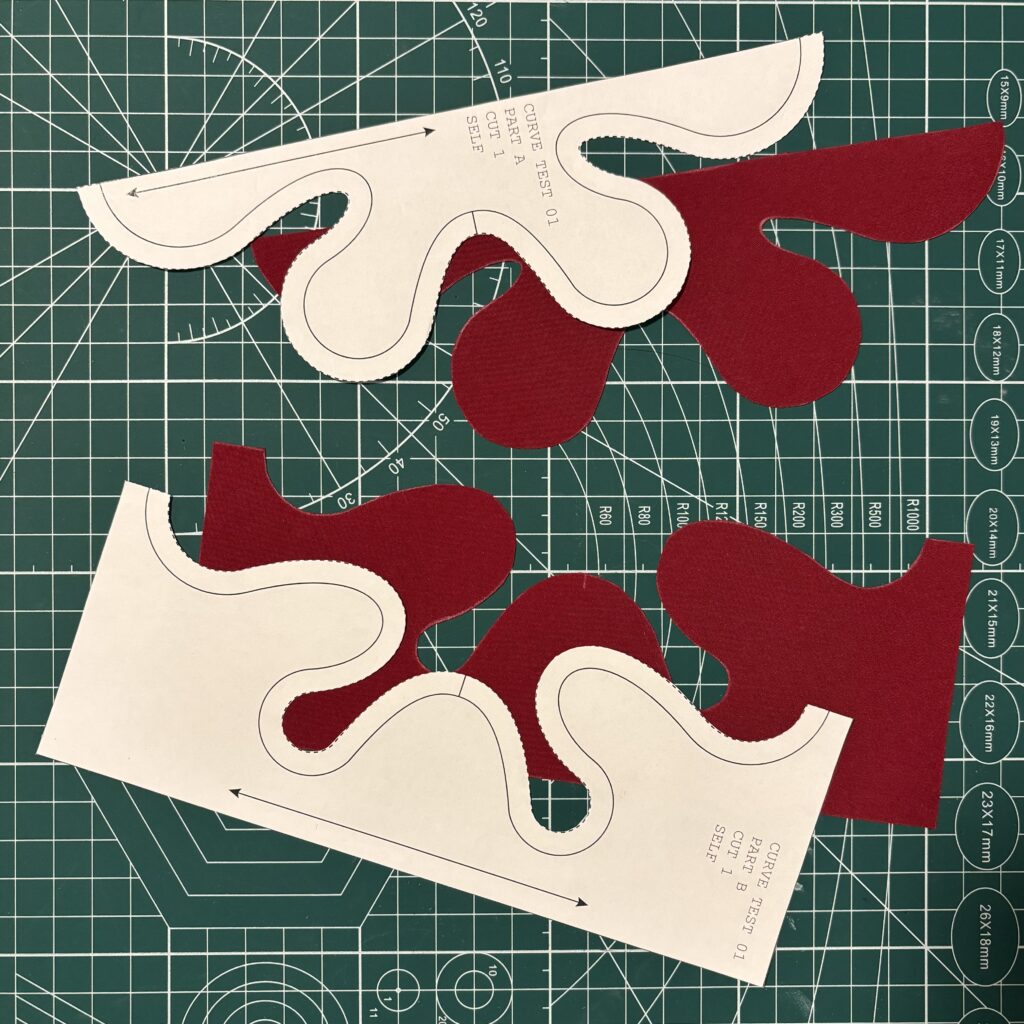
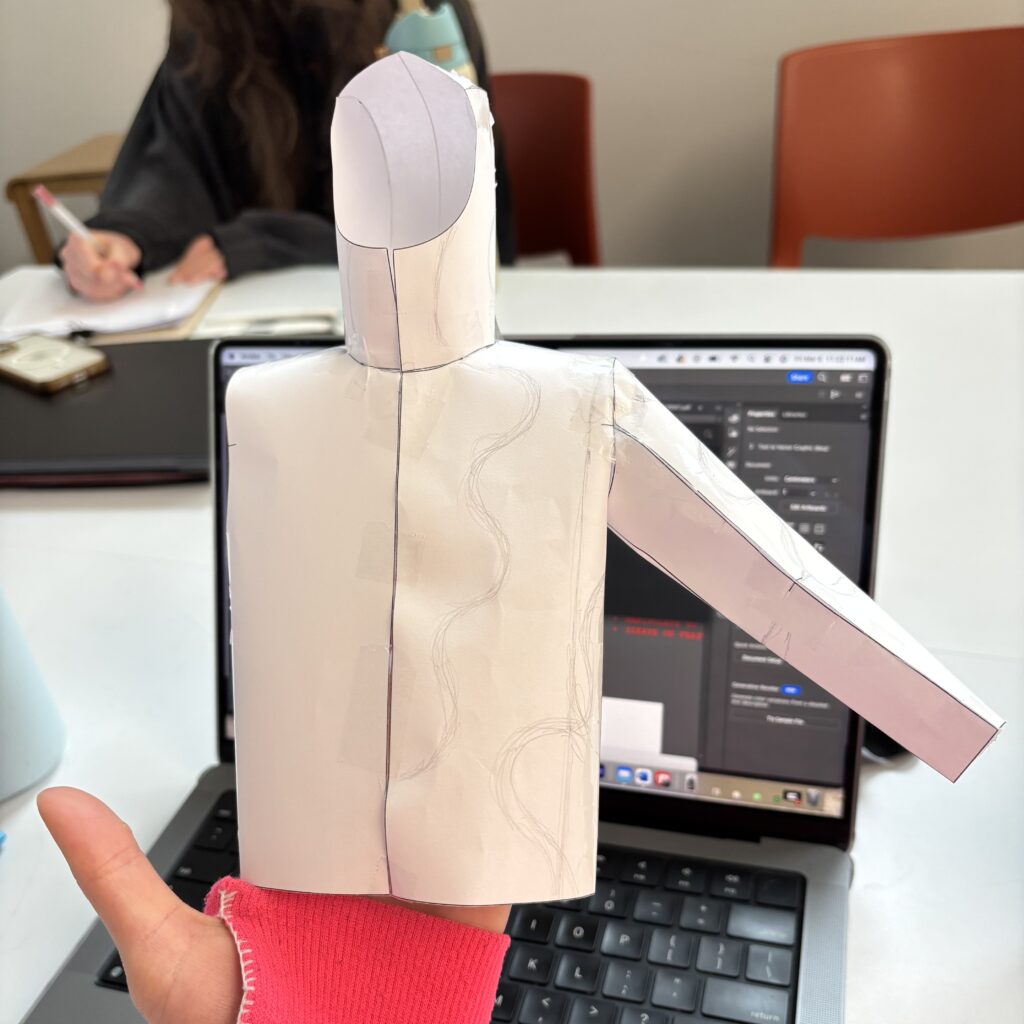
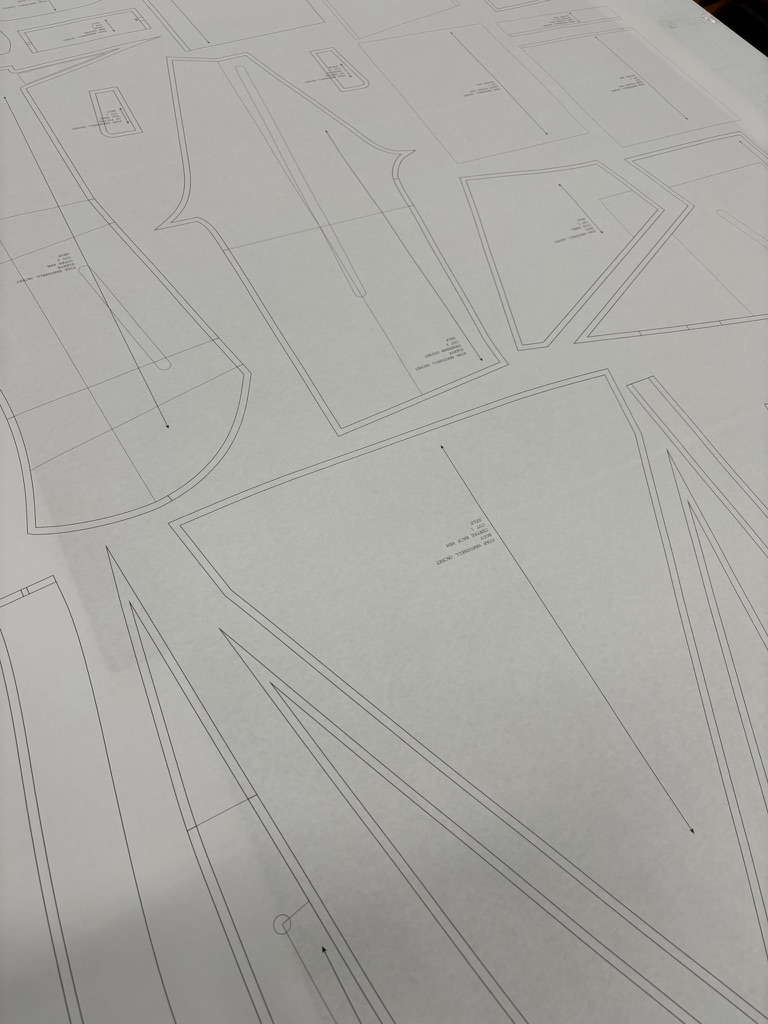
A large portion of my work in the first semester was focused on the development of a jacket block. Once I had a block I was able to move my patterns into Adobe Illustrator to continue to develop a pattern for my jacket, quickly iterating through printing pattern elements for testing, creating scale paper models, and altering design lines and features.
Design
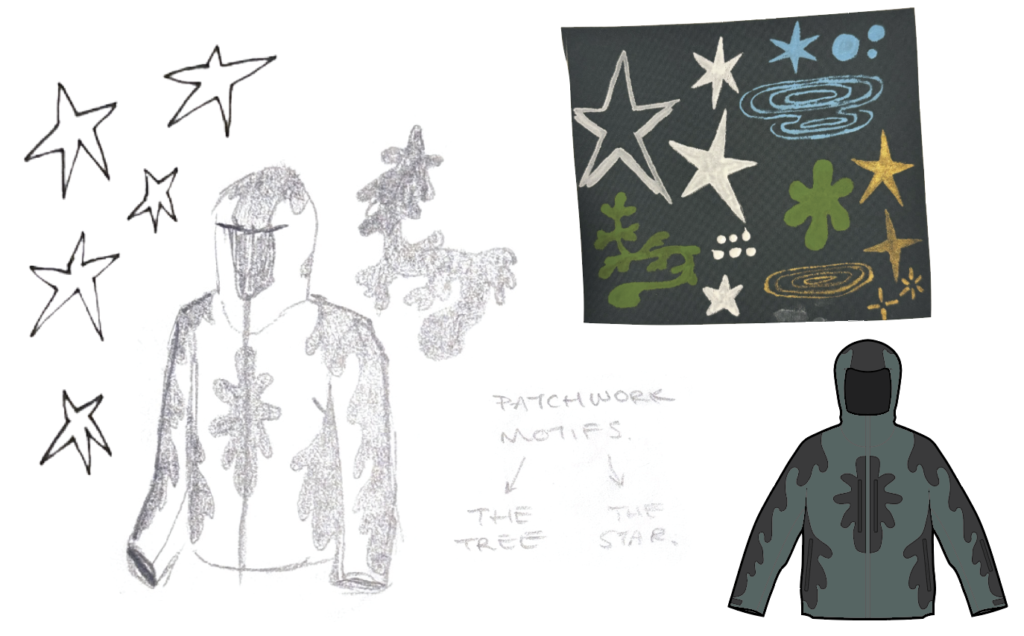
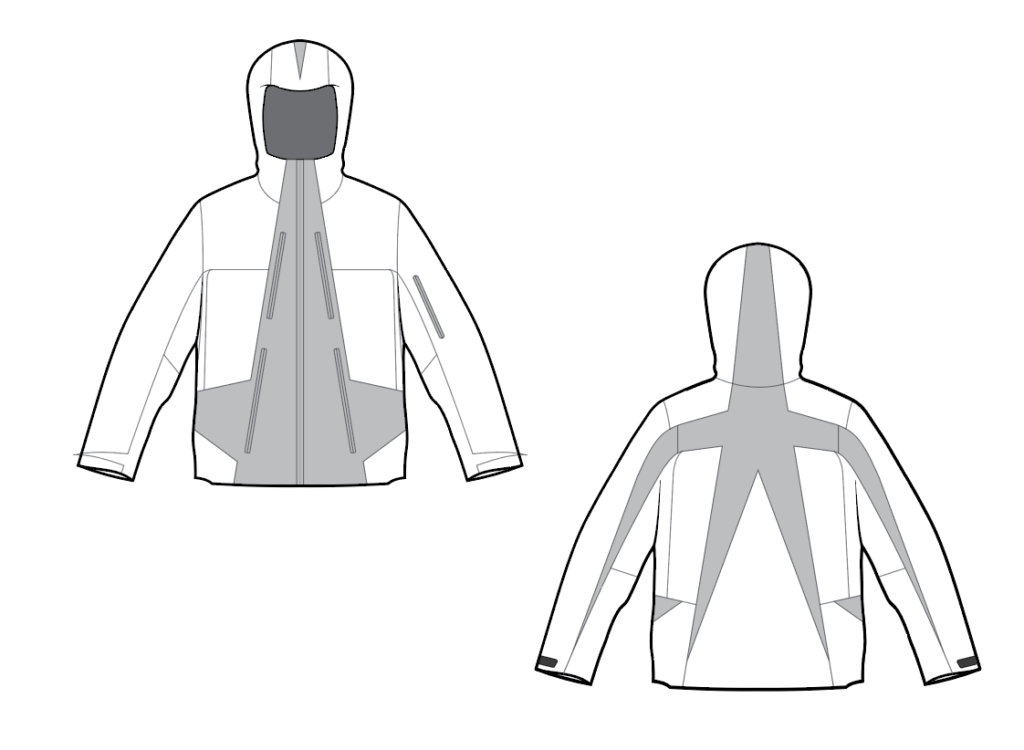
through quick iterations of pattern tests, I was able to narrow my design down through testing results in the feasibility of concept design lines. I landed on the star, is it has been a reoccurring symbol in my work this year, and invokes a sense of wonder.
Making
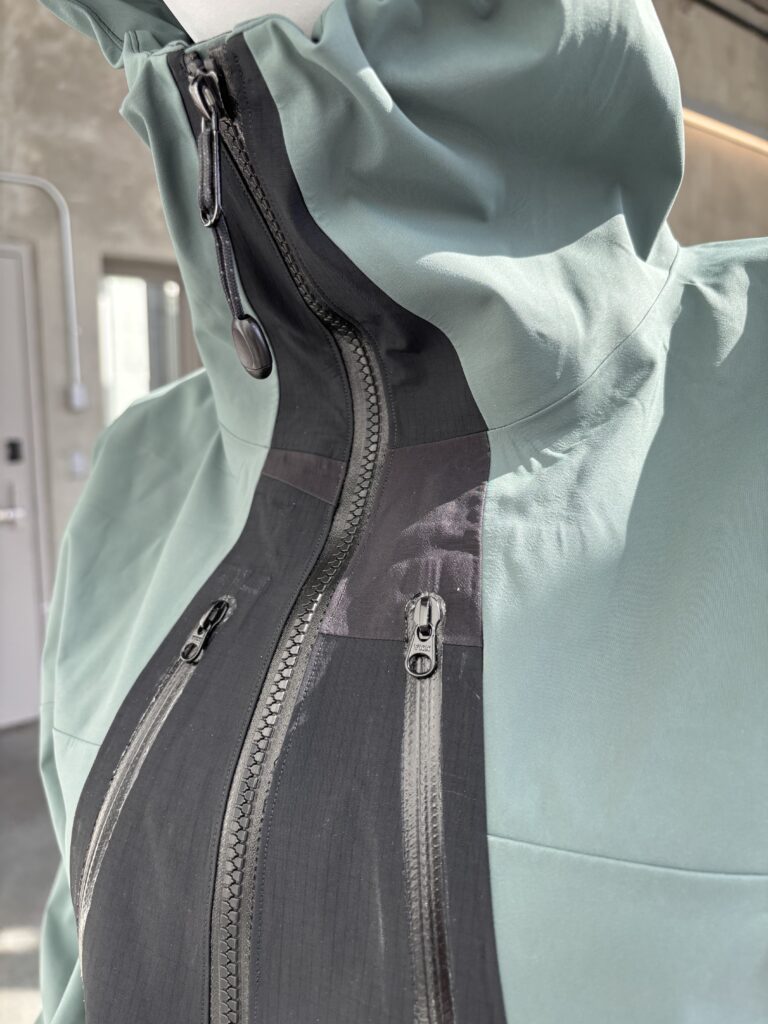
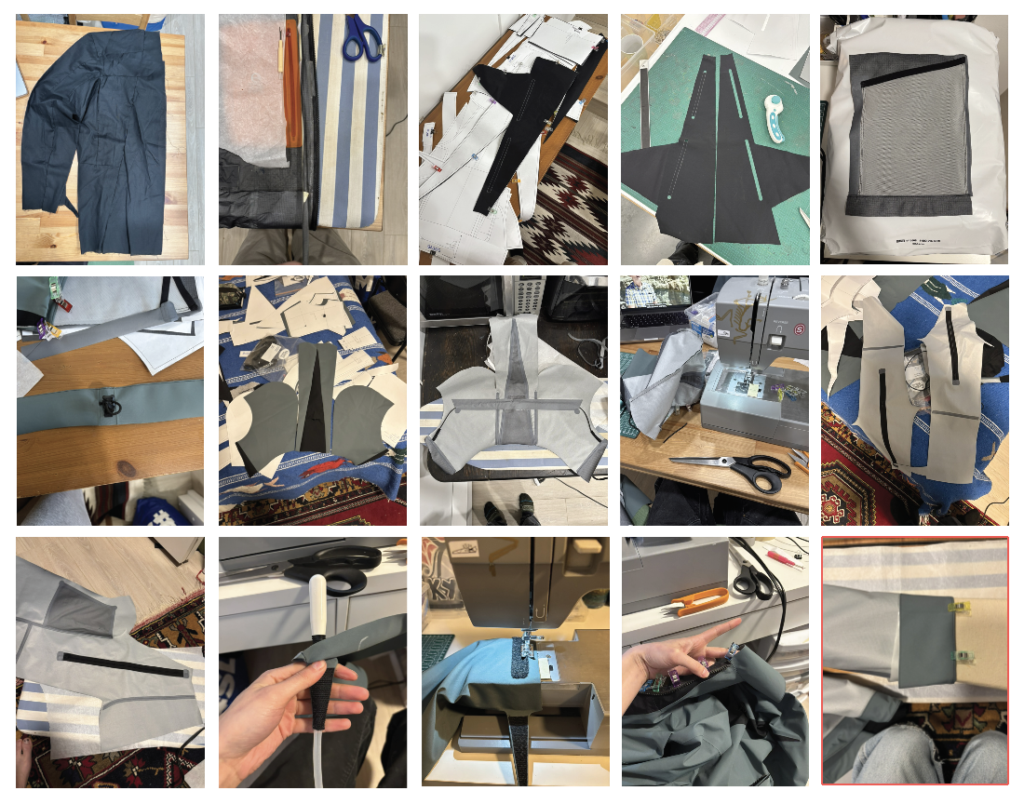
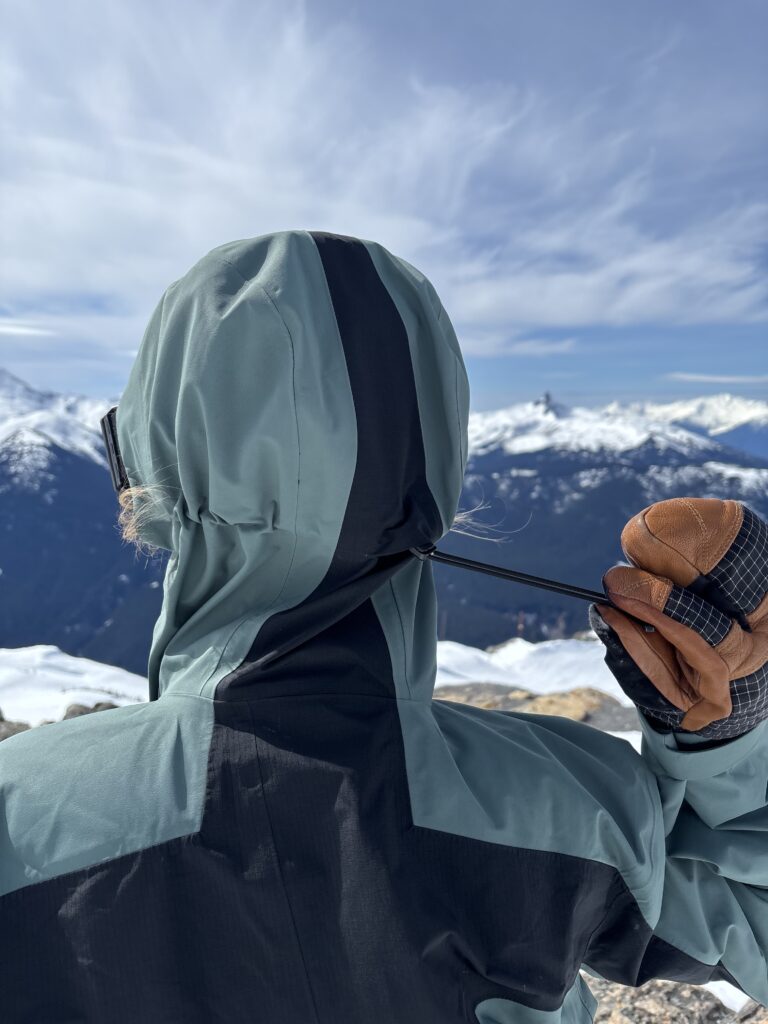
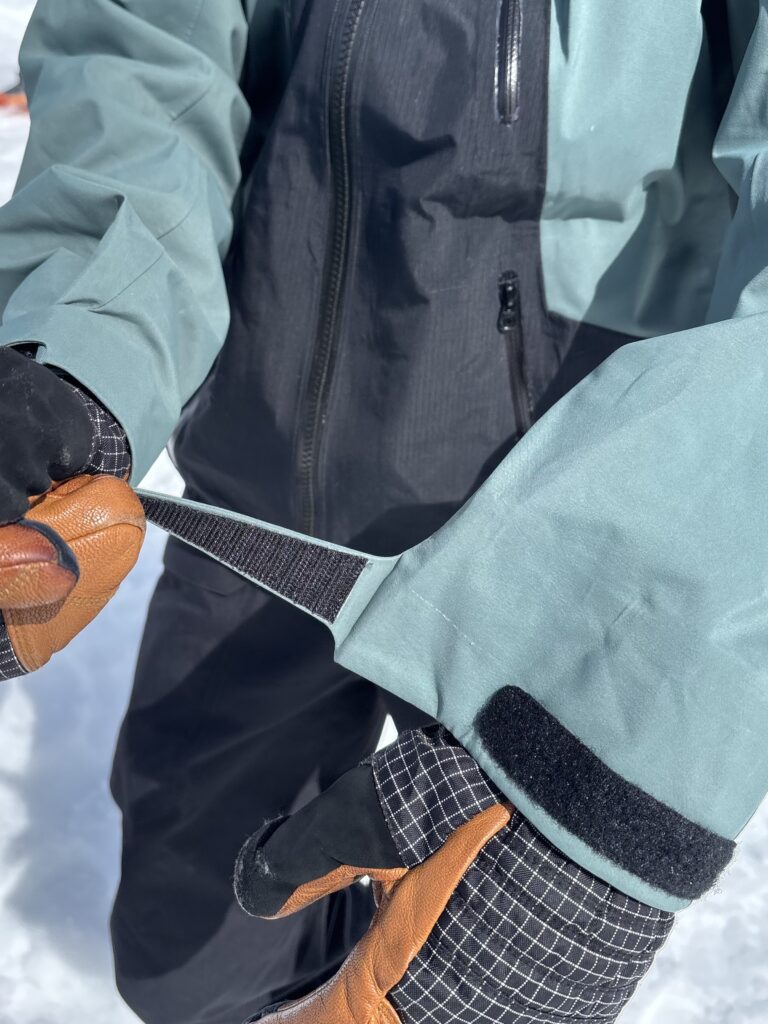
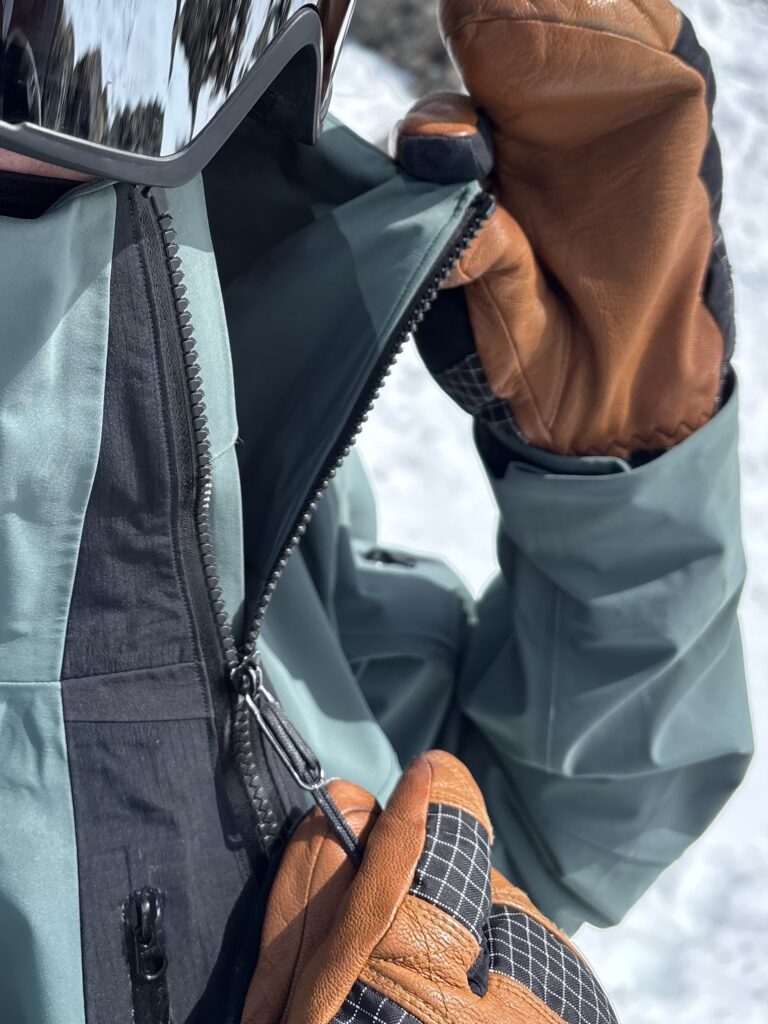
Once my design and pattern was finalized, I was able to begin with a half body mock up to test my pattern and work through order of operations before starting the construction of my jacket. I worked through constructing each subassembly, from facings to laminated pocket zippers, and the hood, before constructing the body of the garment and adding each element to the jacket. Due to the banning of use of my chosen material in the campus soft shop, the majority of this work was done at home, with only my domestic sewing machine and home iron. As I built the jacket and got more comfortable with the tools I was using, I began to really prioritize sewing and laminating as much of it as I could at home, to prove that the processes for constructing technical outerwear could be done accessibly, both through material repurposing and use of simple tools.
Testing
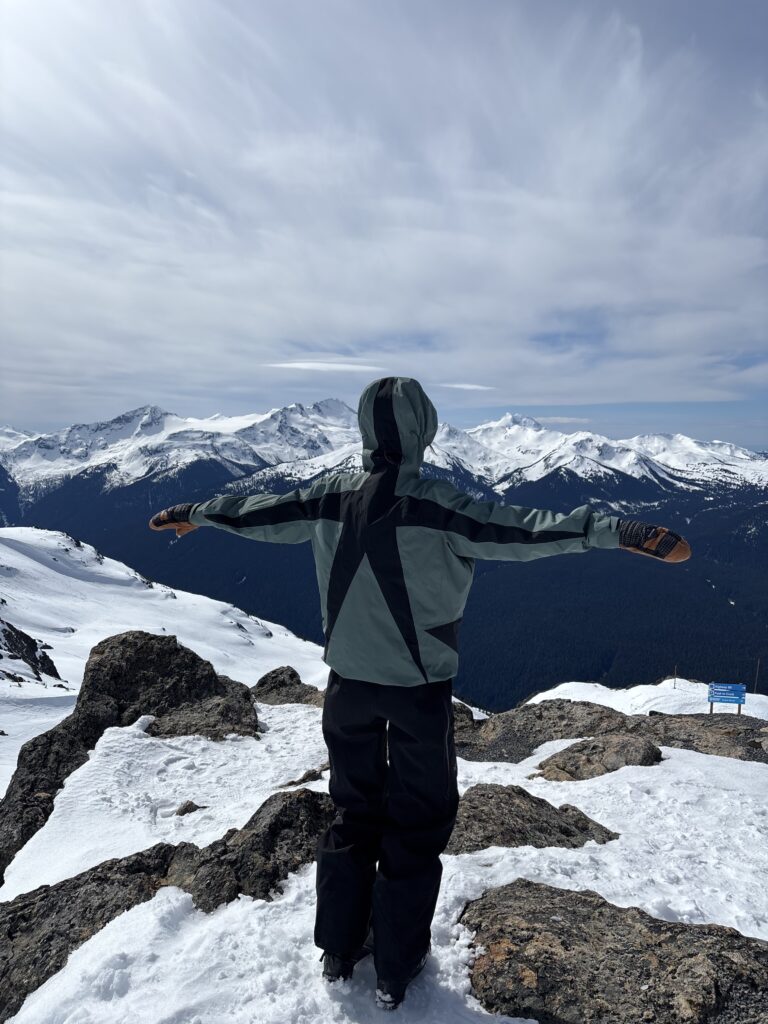
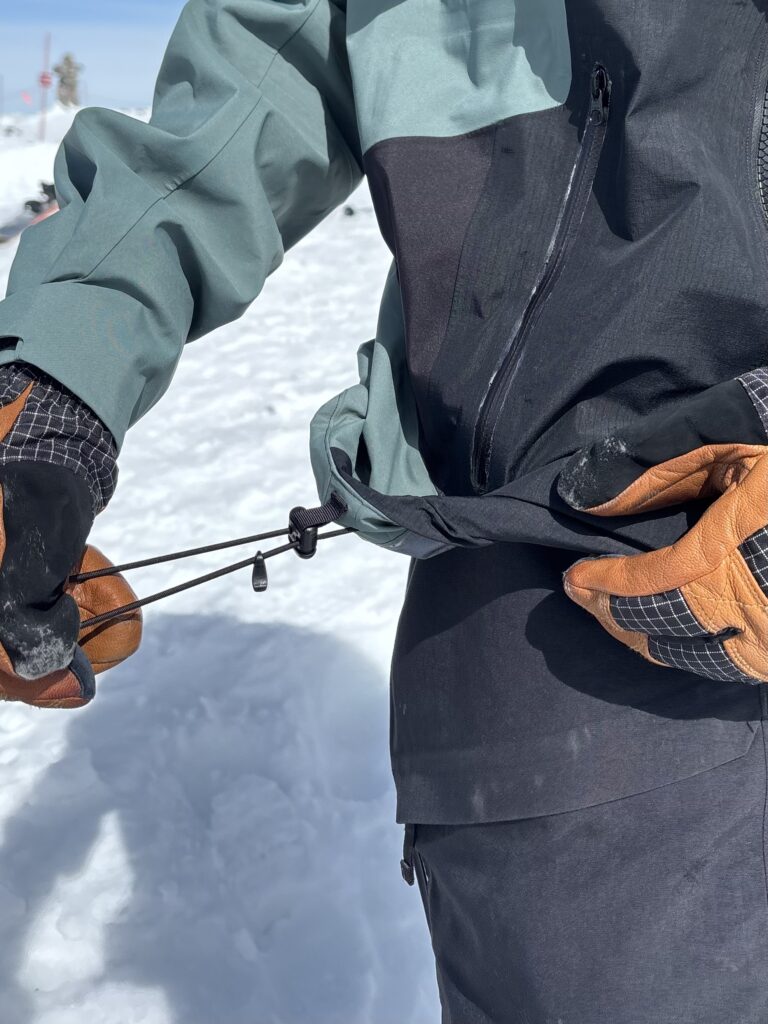
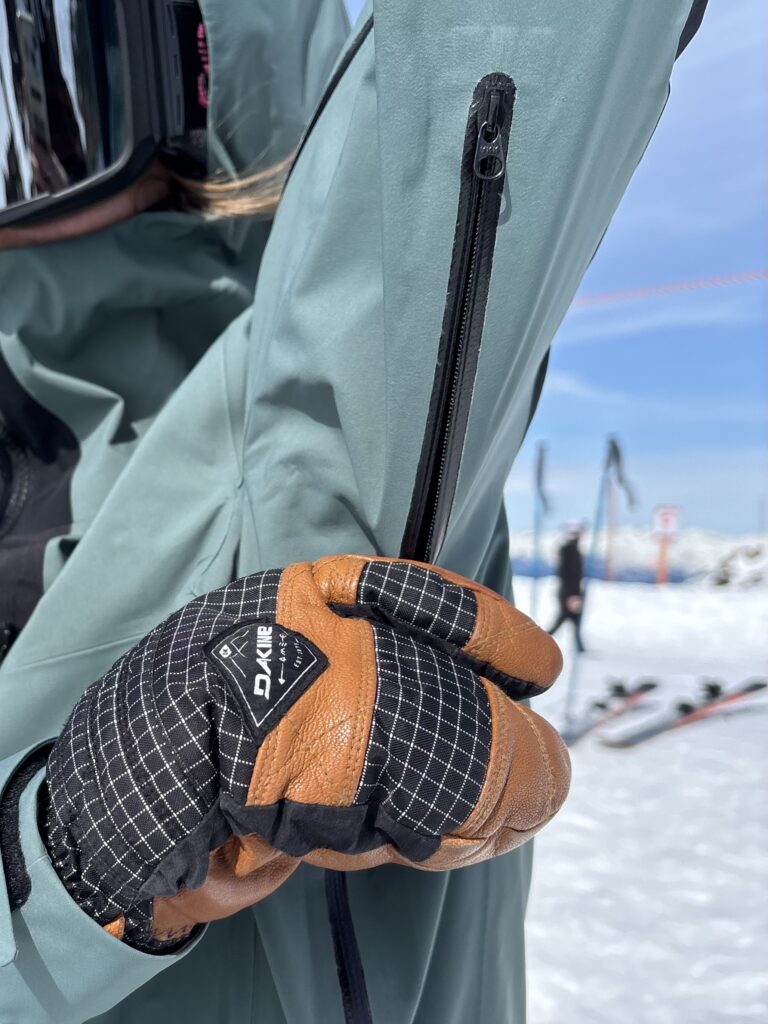
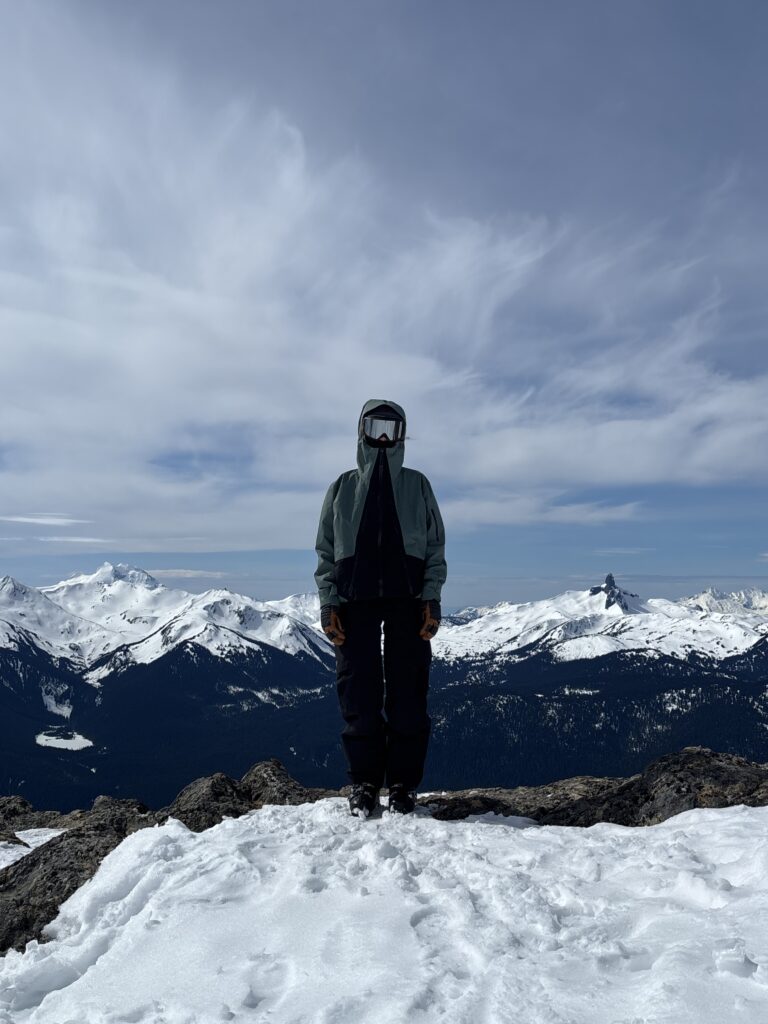
Once my jacket was fully constructed I was able to get on snow with it to test the feasibility of my design and outcome. I was pleasantly surprised at just how comfortable it ended up being, both physically and mentally. What you wear and how it makes you feel has an immense effect on how you can show up for whatever activity you are doing, and to show up in an item of clothing that is the most authentic expression of yourself is pretty special.
The wear-test revealed some areas for improvement in terms of functionality and strength in certain areas of construction, but overall it functioned very well.
Future
Although this was a highly individual project of exploring my own skill development and self-expression within skiing, I see a lot of potential in how sharing the knowledge I gained through this work with others could perhaps help to reduce that barrier to entry to snowsports. Sport, and sewing by means of repurposing and repair are amazing tools for building community when they can be brought together and shared, and I hope to utilize my learnings from this project to continue to explore that connection in future.

Outcome