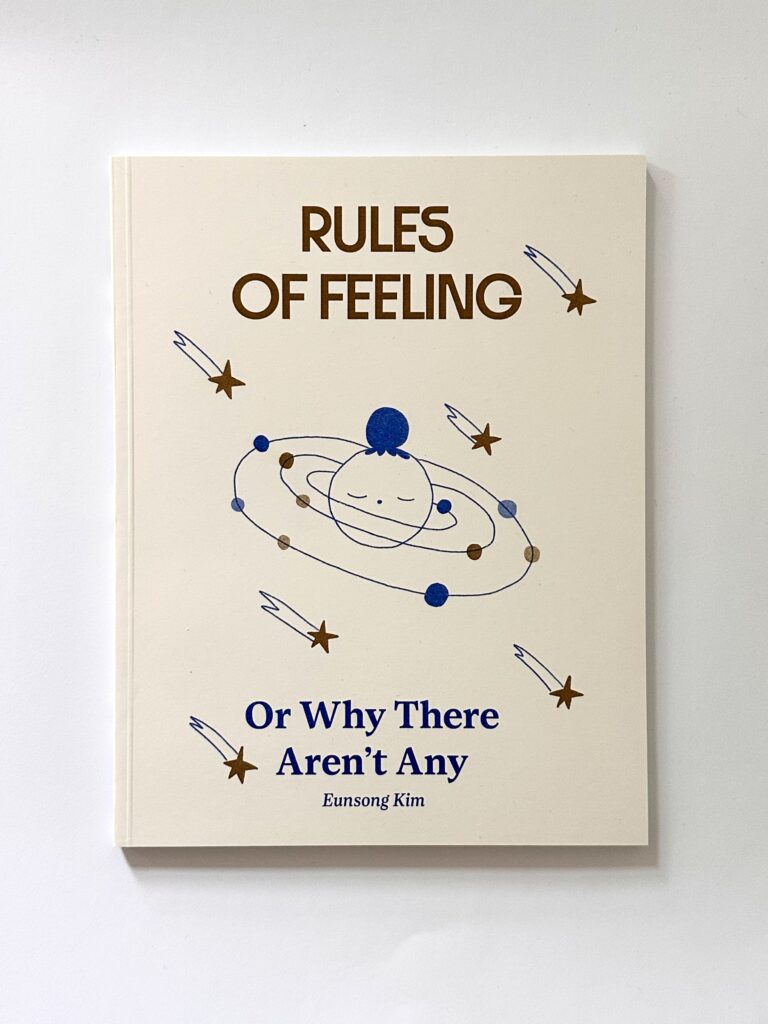
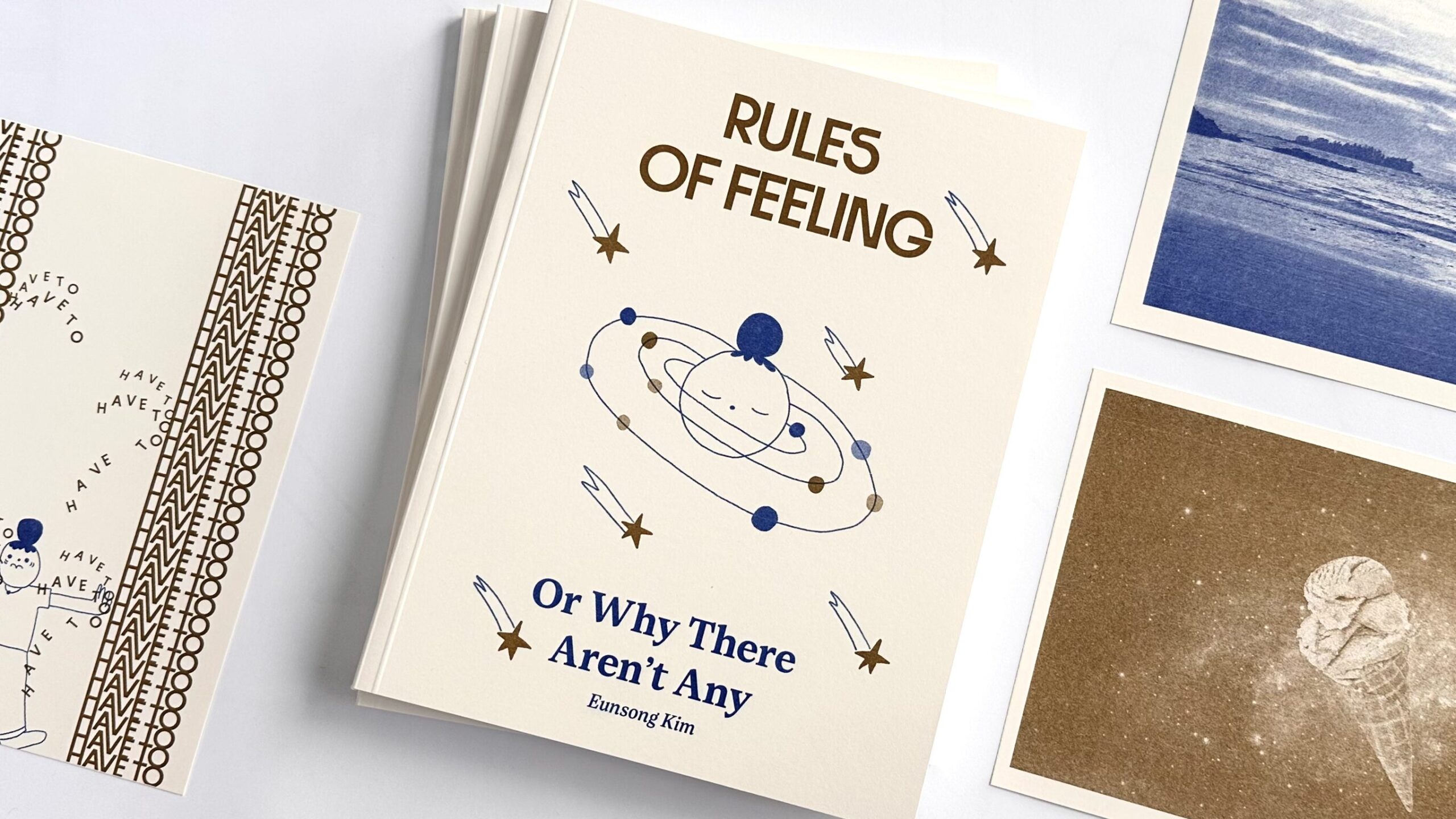
Rules Of Feeling, Or Why There Aren’t Any
Eunsong Kim
“No one wakes up in the morning and decides, ‘Today I’ll put the needs of the whole world foremost, disregarding my own’”
– Gabor Maté, When the Body Says No (2003)

Overview
- Role: Editorial design, Illustration, Writing
- Tools: Adobe InDesign / Illustrator / Photoshop/ Risograph Printer
A lot of us feel ashamed of emotions that don’t fit what’s considered “normal.”
But emotions aren’t mistakes. They’re signals.
This project explores what happens when we stop trying to control feelings,
and start listening to what they’re trying to say.
Problem Space

Culturally, we’re taught that emotions should follow certain rules:
stay in control, don’t be too much, feel the “right” things.
However, emotional experiences don’t operate within clear systems.
When those expectations fail, people are often left without tools to respond, leading to suppression, confusion, or self-judgment.

Research


This project draws from Dialectical Behavioral Therapy (DBT),
an evidence-based approach that supports emotional awareness and regulation.
The research focused on three key components:
- mindfulness
- emotional validation
- emotional regulation
The challenge was translating these concepts into something accessible and intuitive, beyond traditional clinical formats.

Concept

Rather than explaining DBT, the project aims to create an experience.
The work asks:
What if emotions are not disruptions, but information? What if emotions aren’t problems to fix,
but messages to understand?
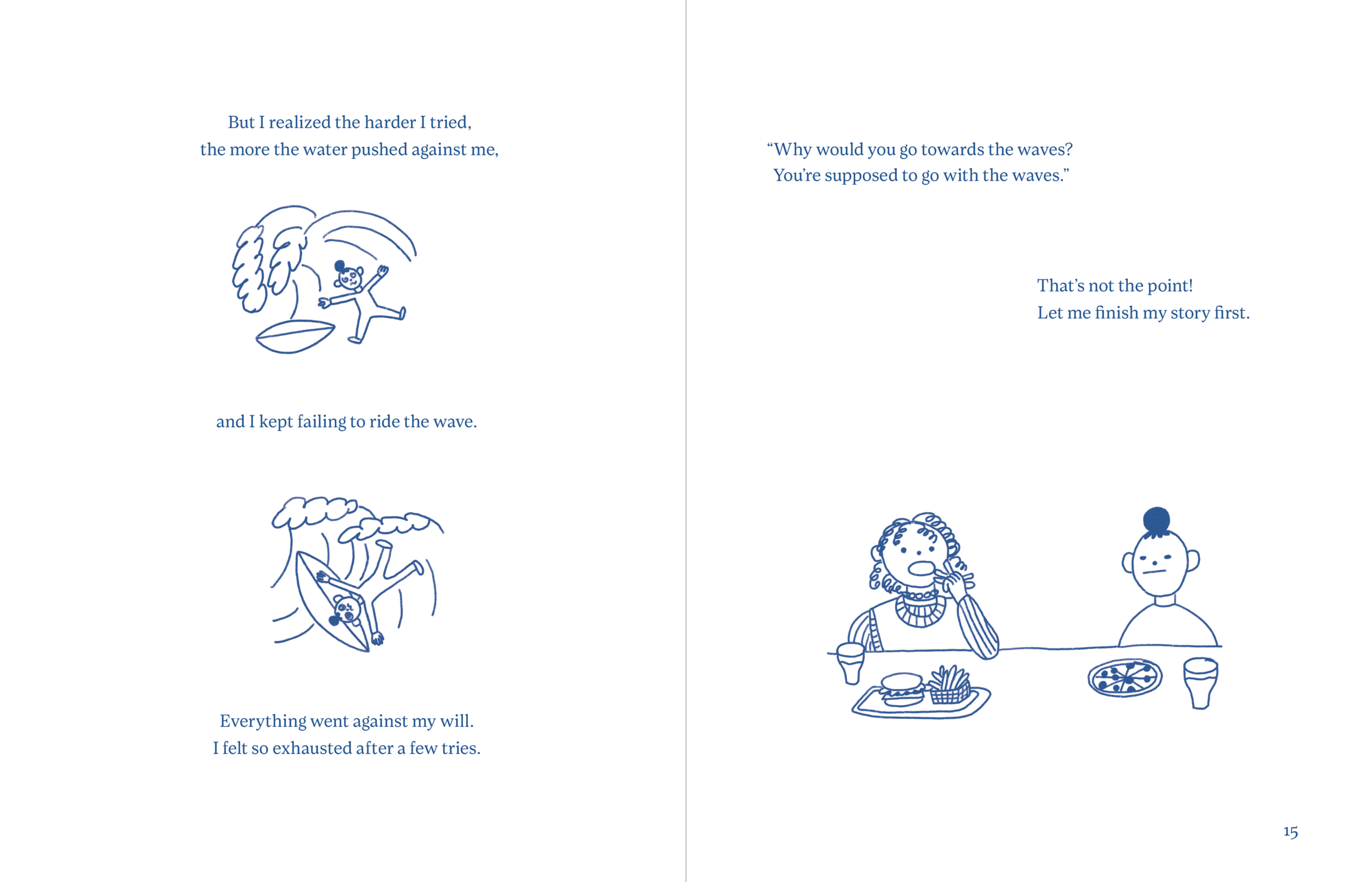
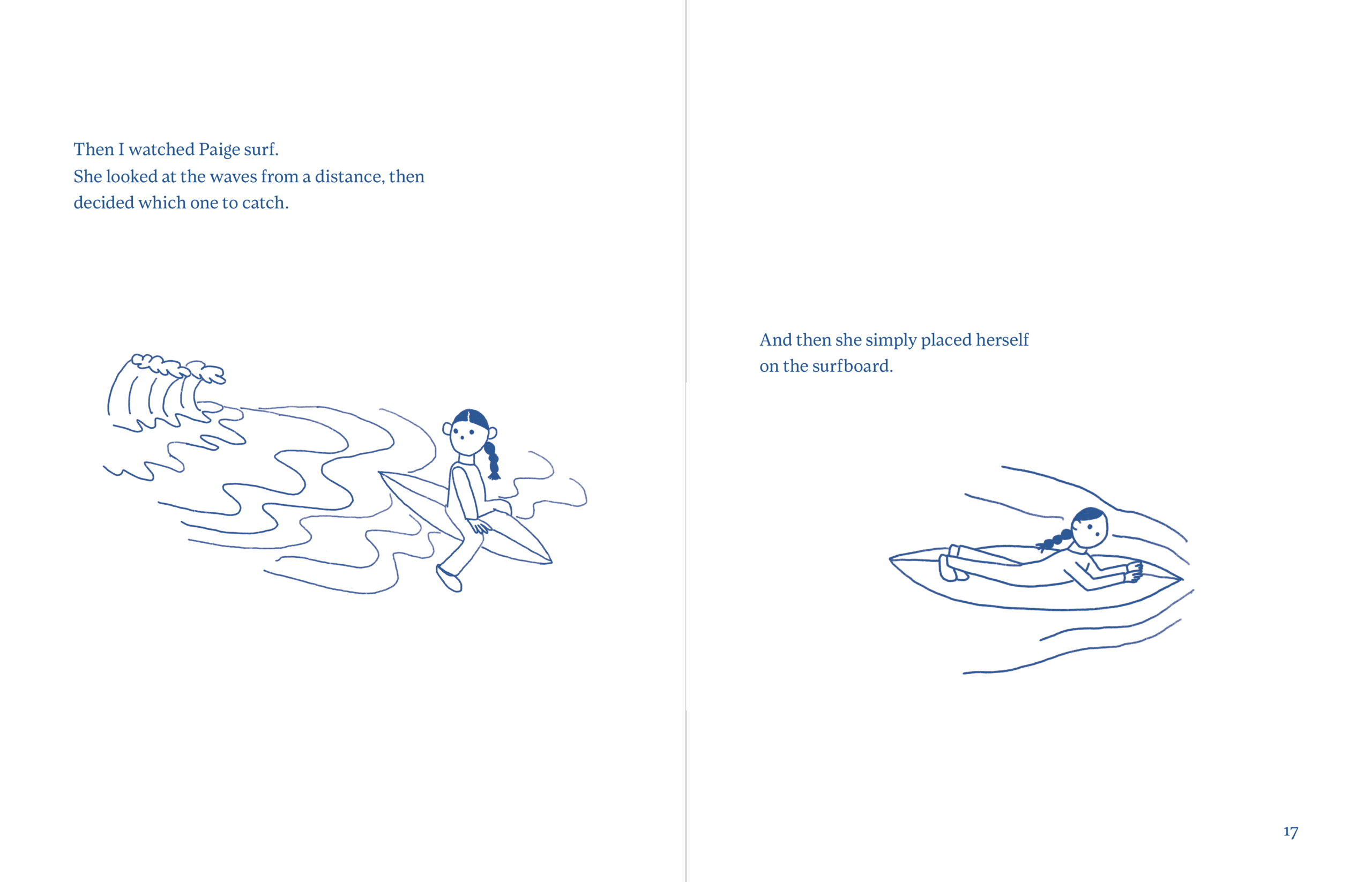
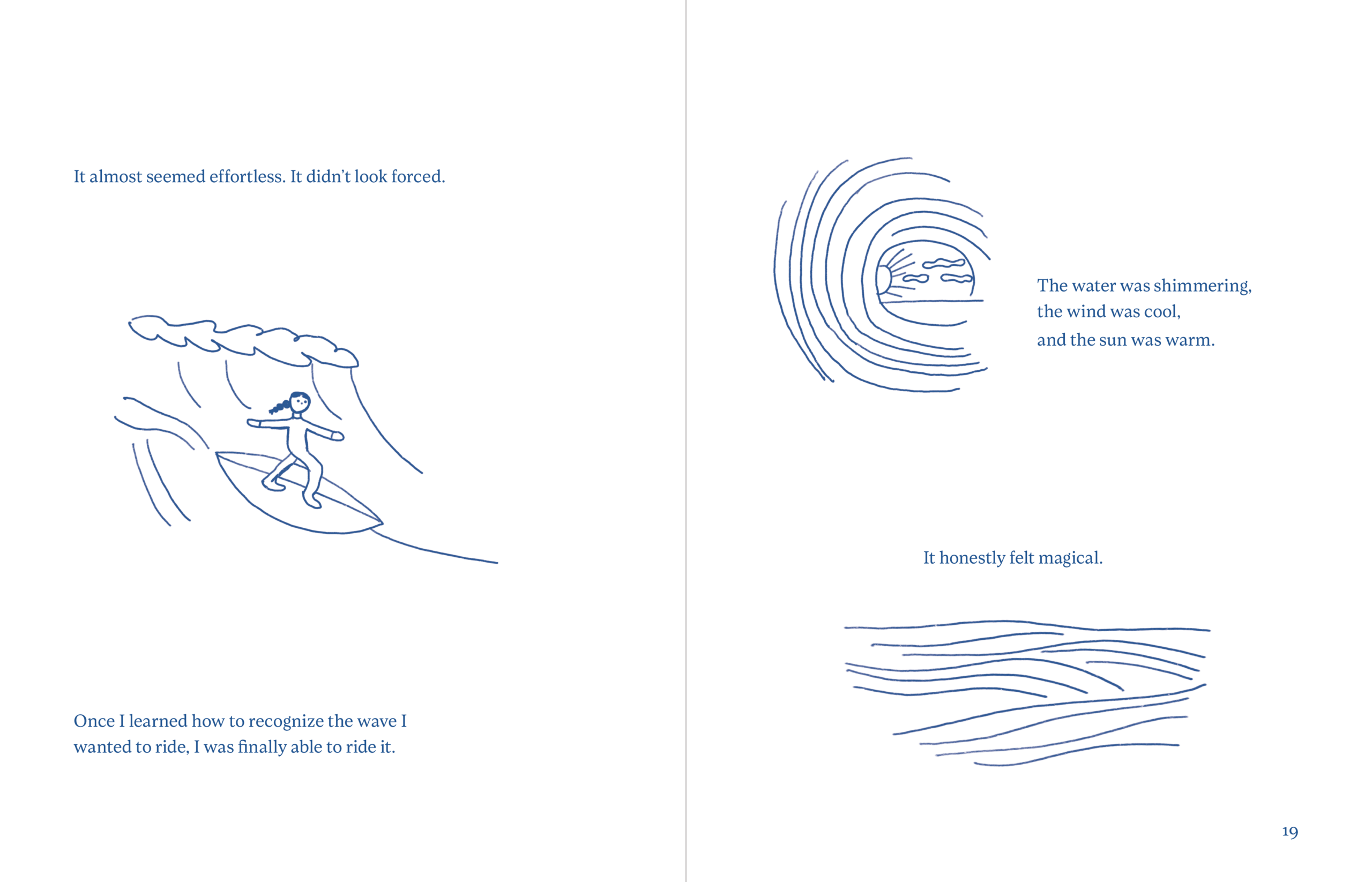
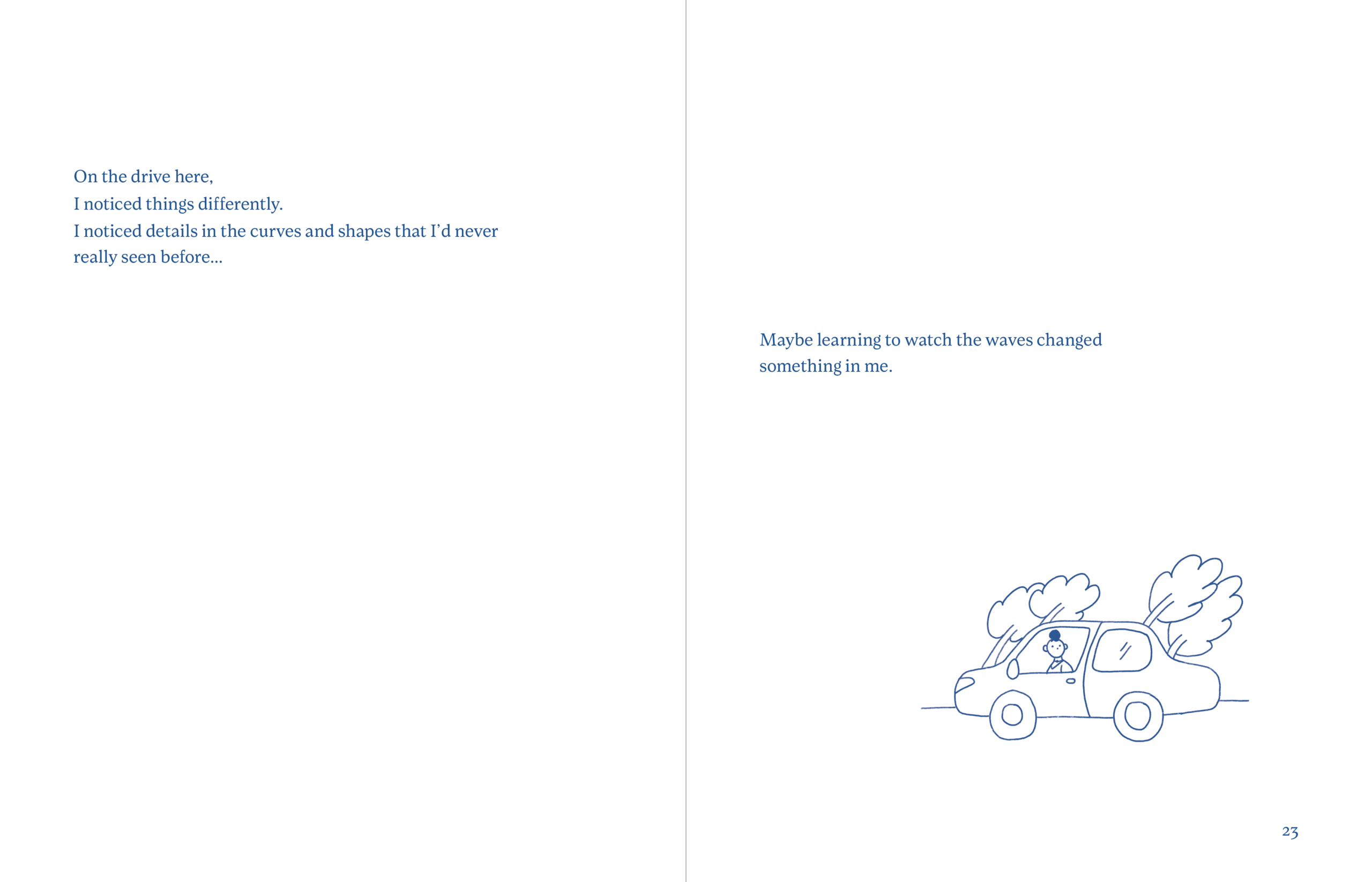
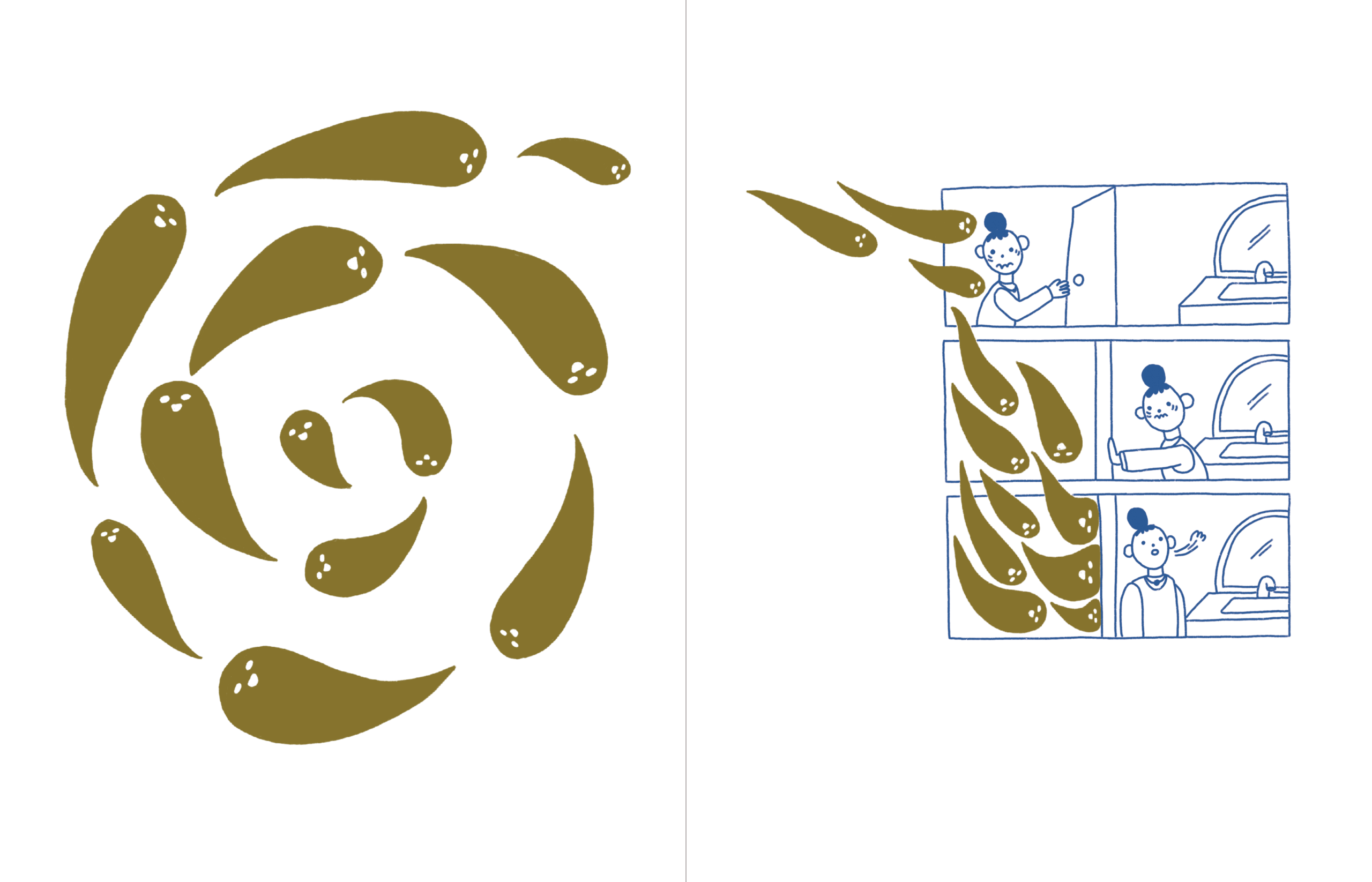
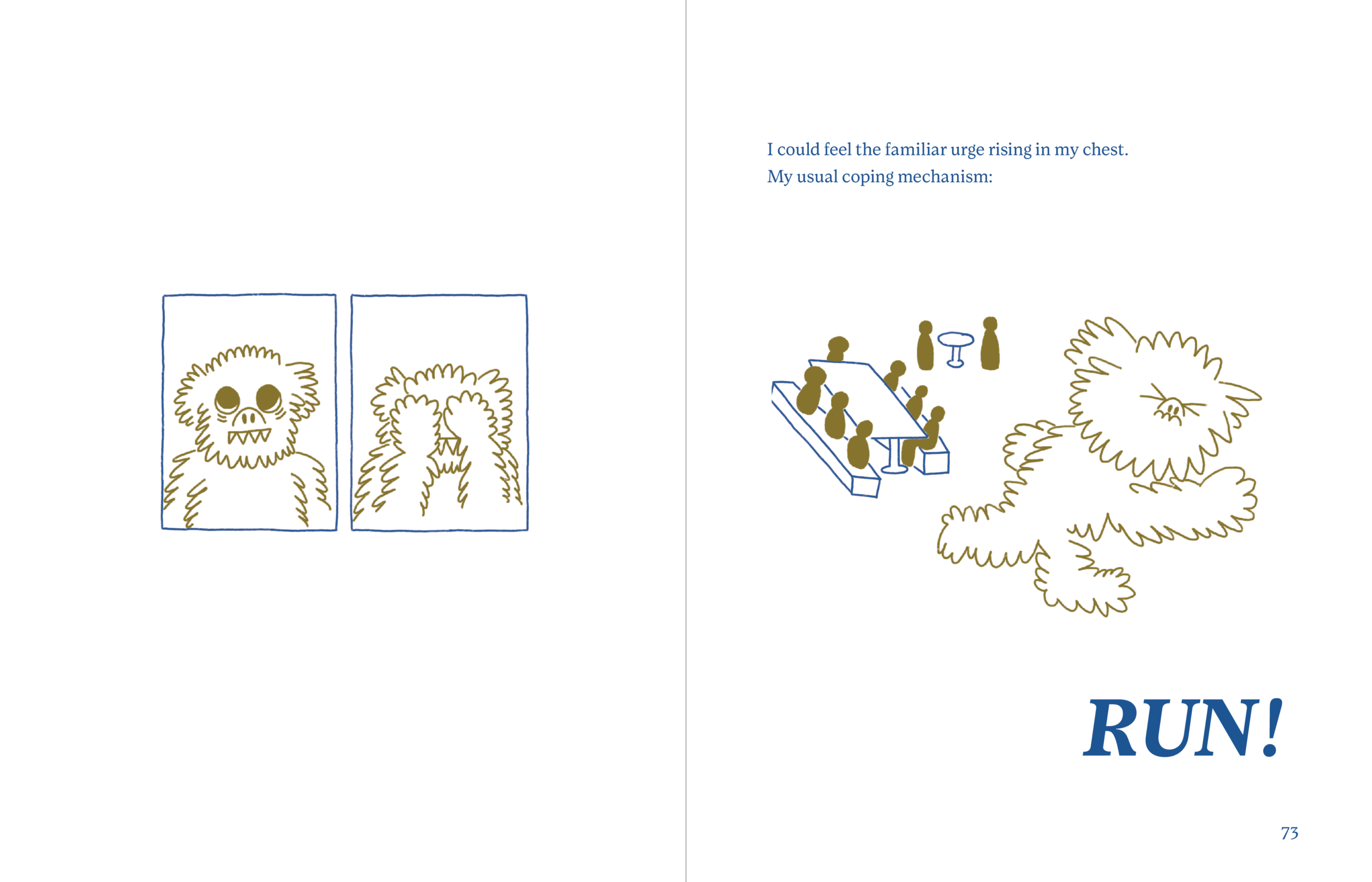
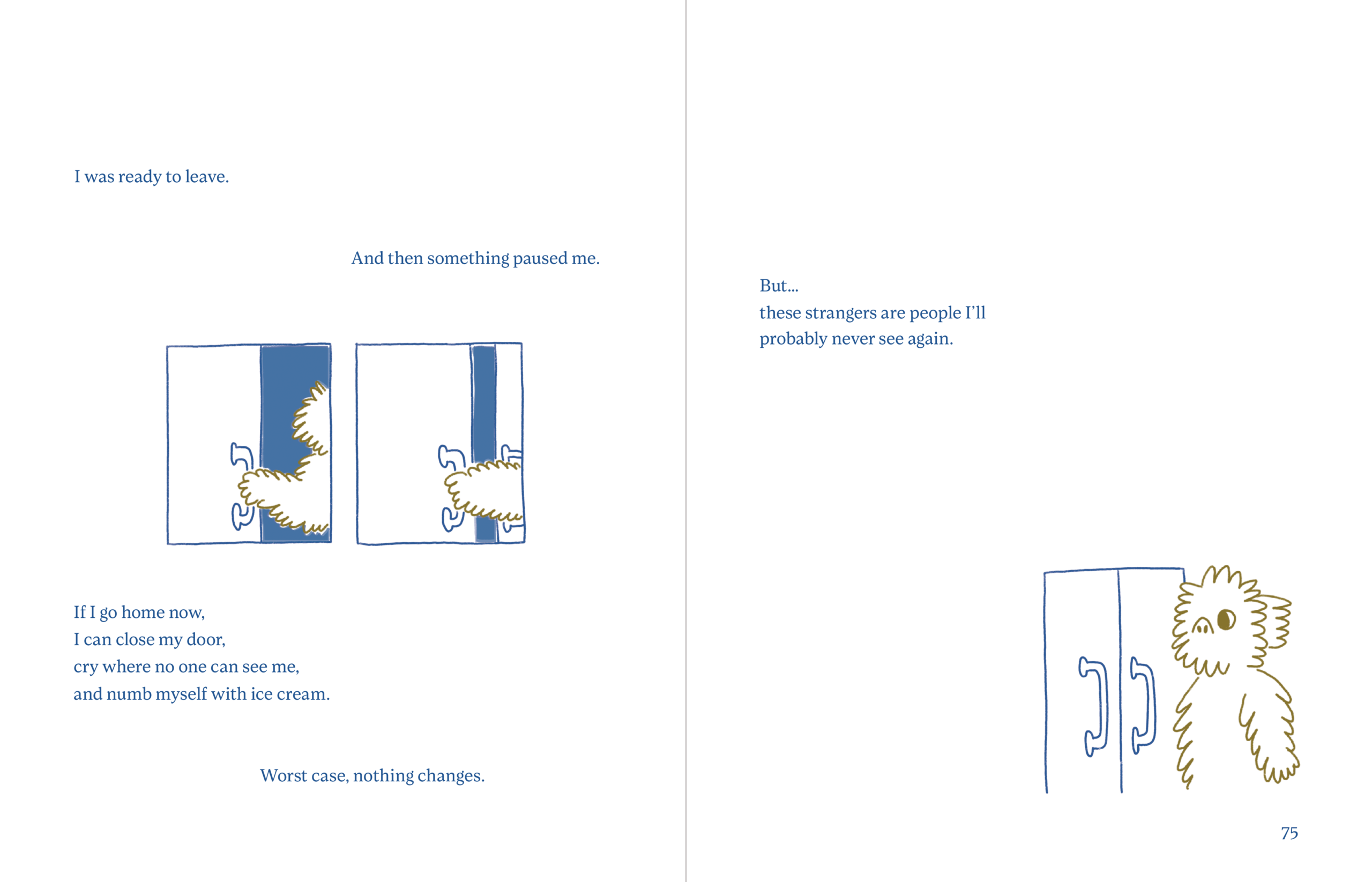
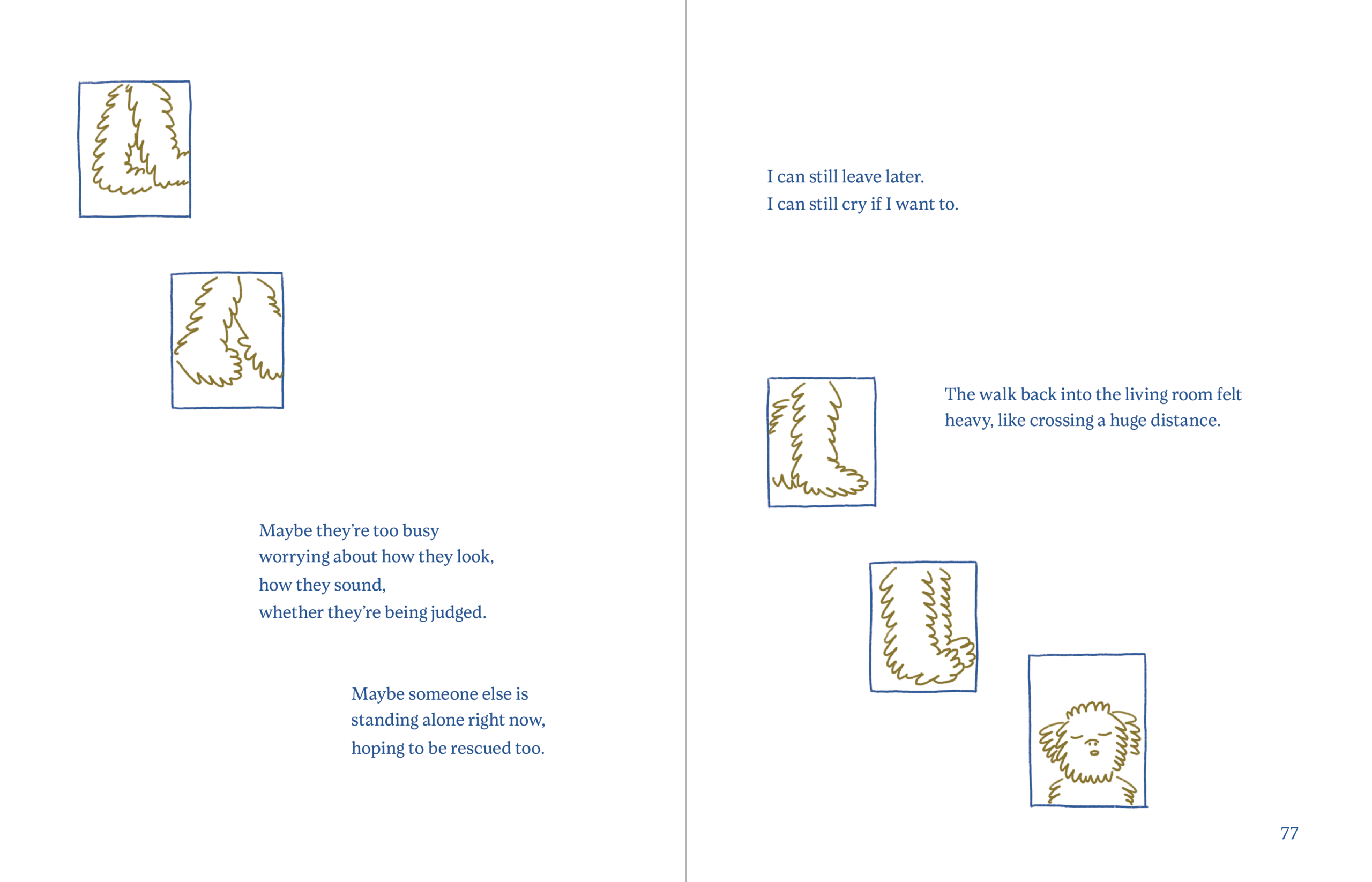
Through narrative and visual metaphors, the project invites readers to engage with emotions as something to observe, interpret, and respond to.


Development

The process began with writing, using fragments, internal dialogue, and observations as a foundation.
These were translated into a visual language using simple characters and narrative structures. Iterative prototyping, including multiple printed dummies, allowed for continuous refinement of pacing, tone, and clarity.
The project moved back and forth between digital and physical formats to ensure the experience felt cohesive and intuitive.
The final narrative is structured into three parts, each reflecting a core principle of DBT:
- Mindfulness — noticing and observing emotional states
- Validation — acknowledging emotions without judgment
- Regulation — responding to emotions in a sustainable way
Each section functions as both a story and a guided experience.
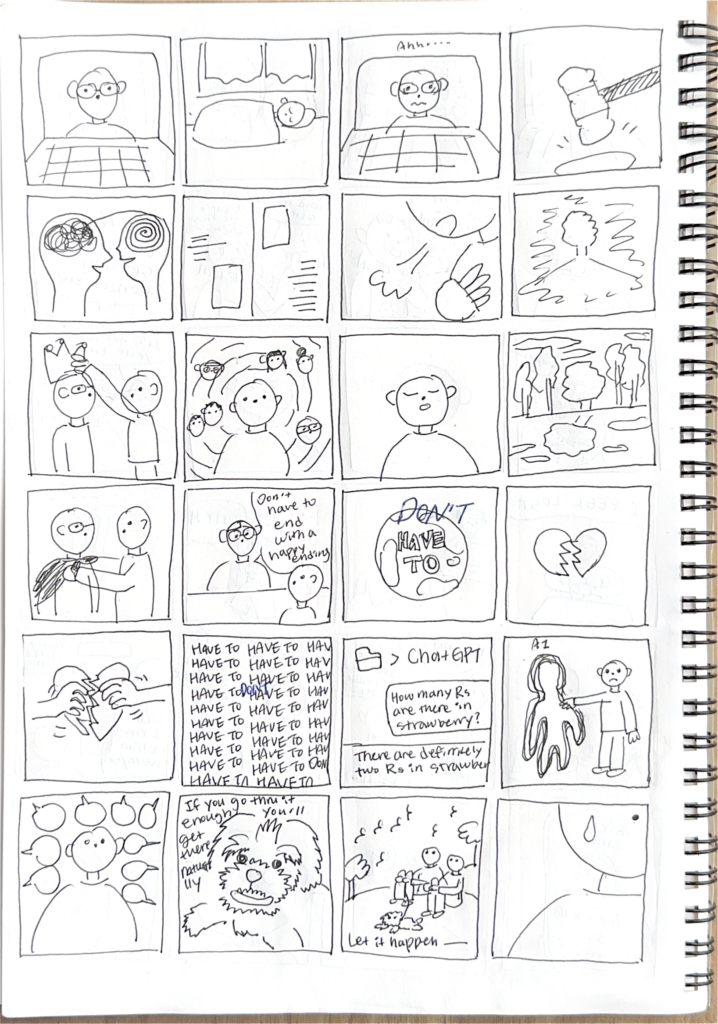
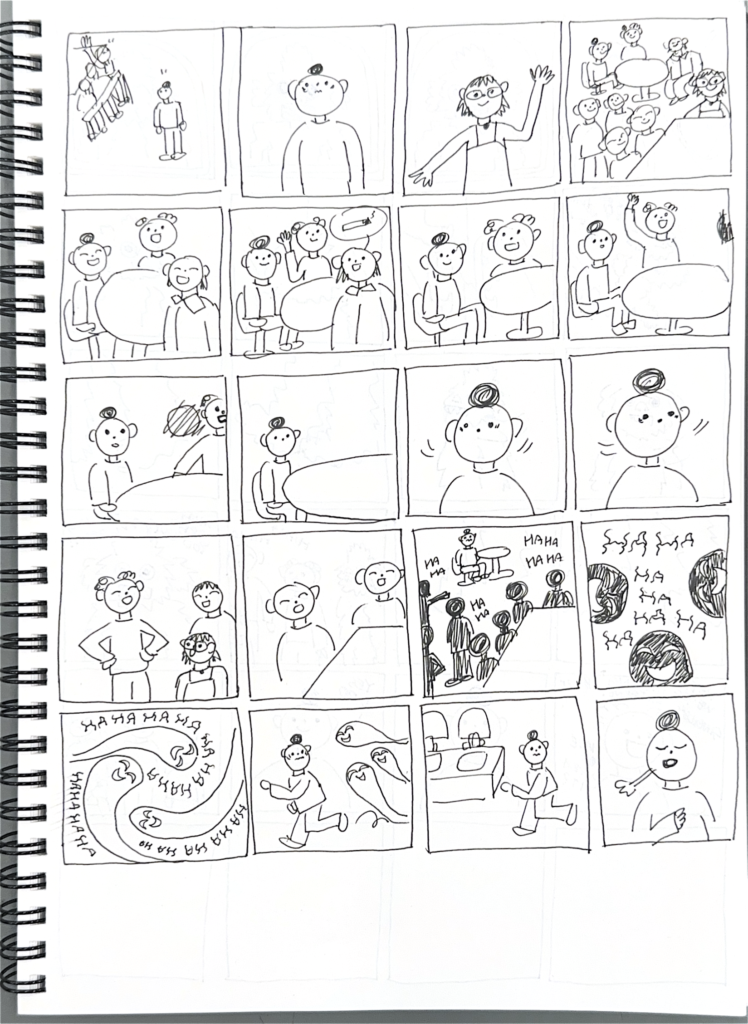
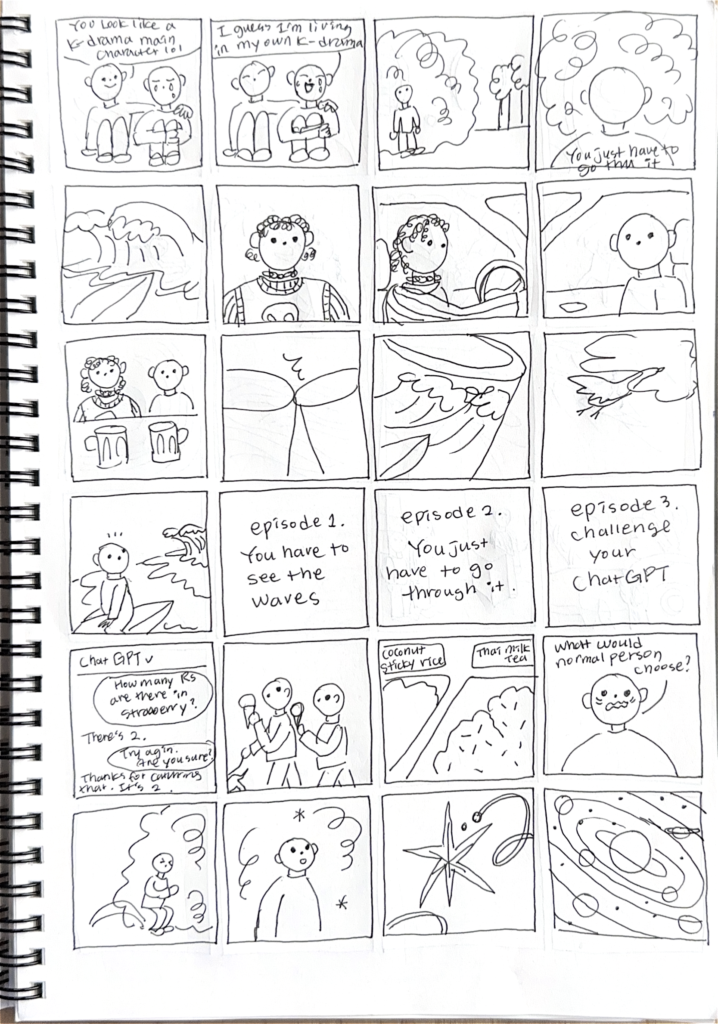
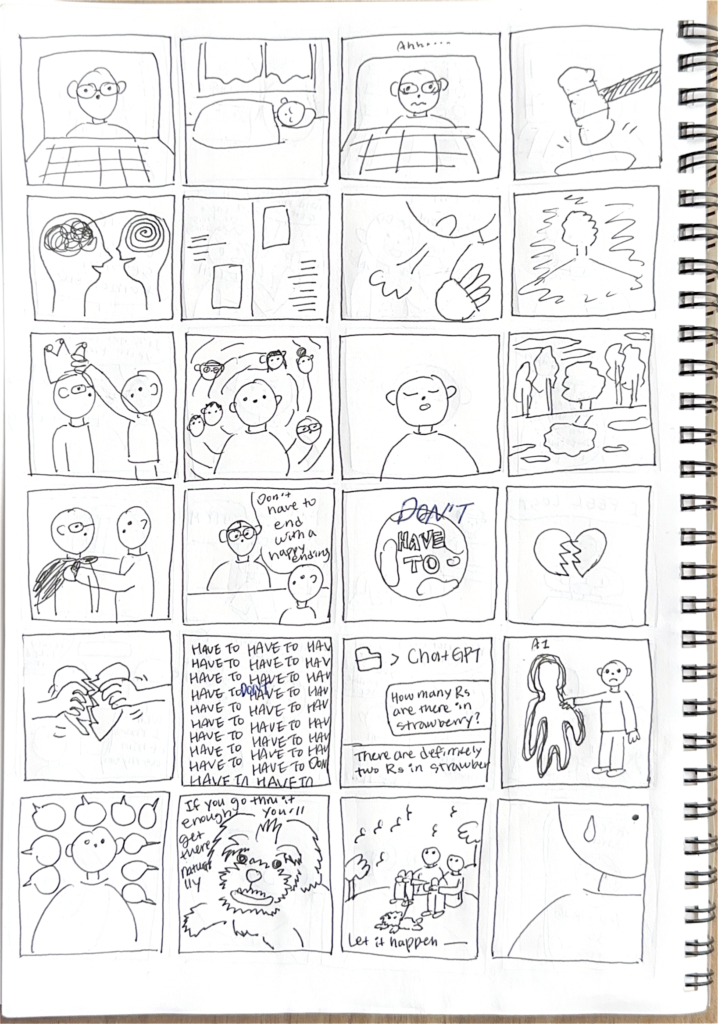
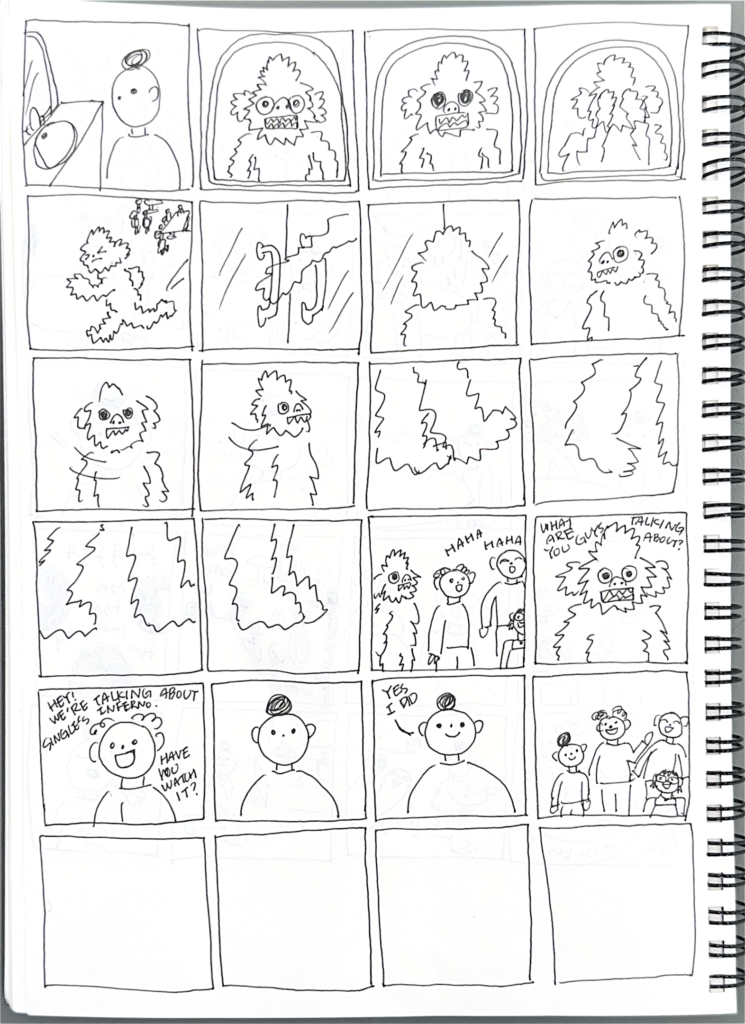
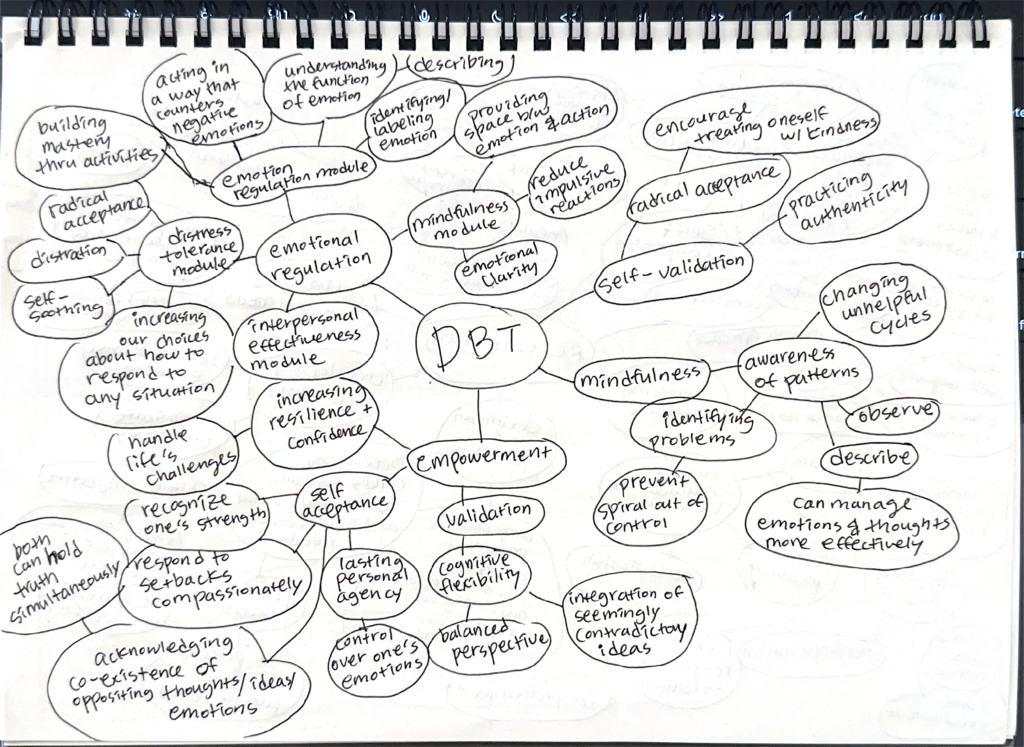
Initial sketches and brainstorming
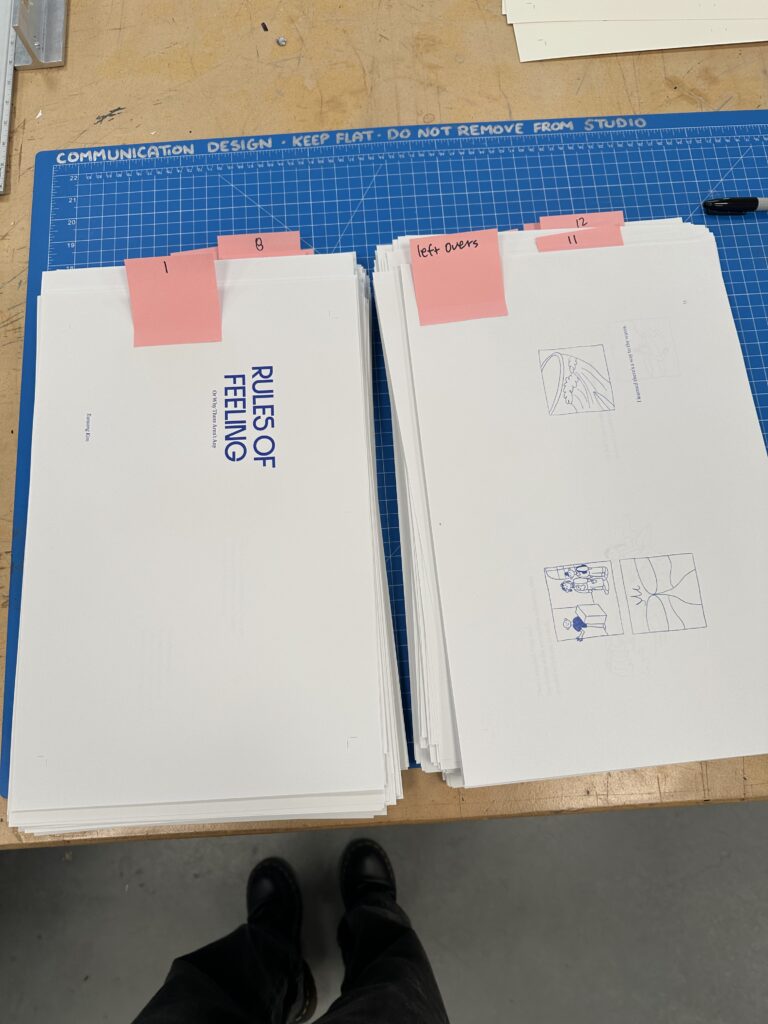
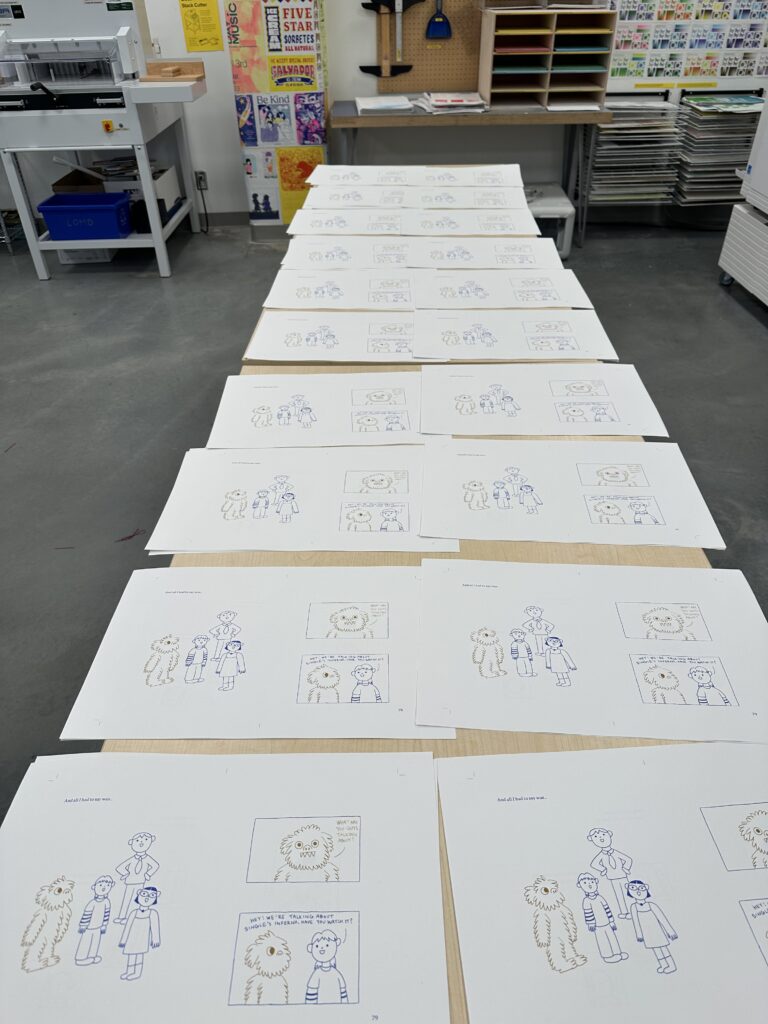
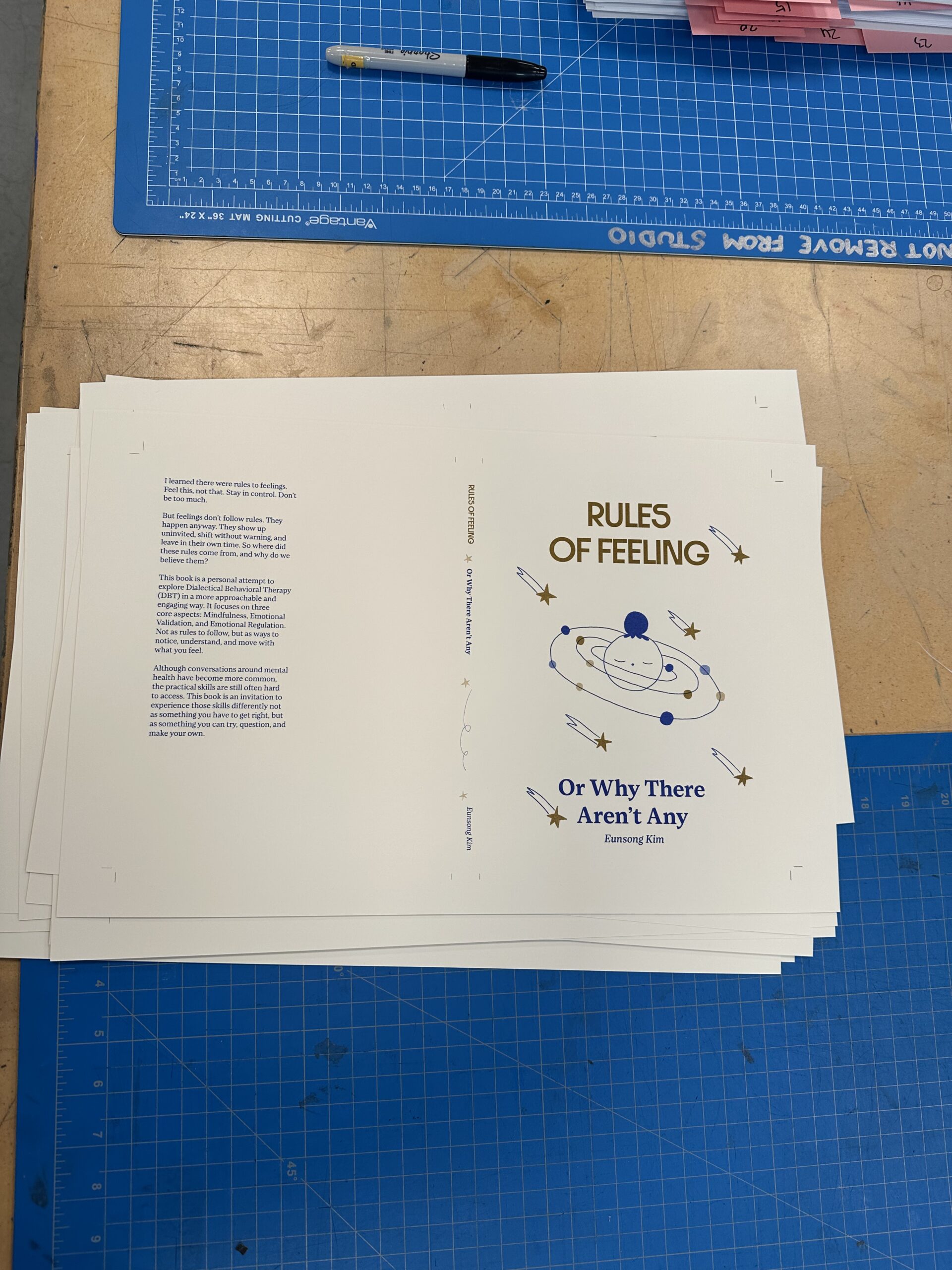

Production Phase
Outcome
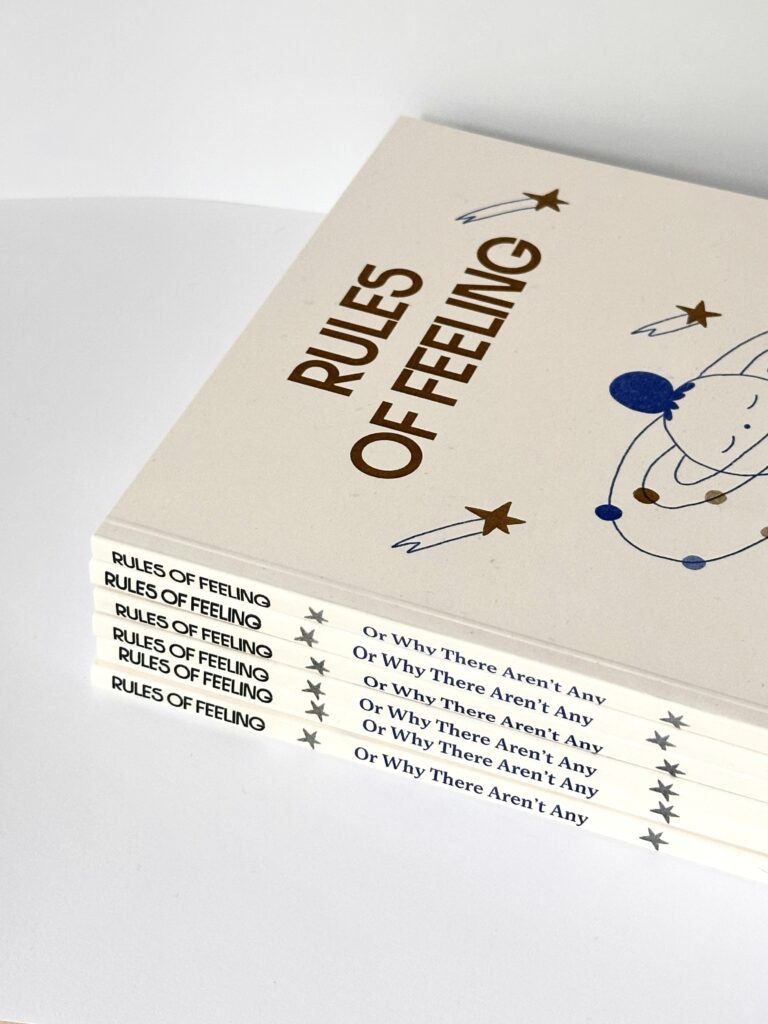
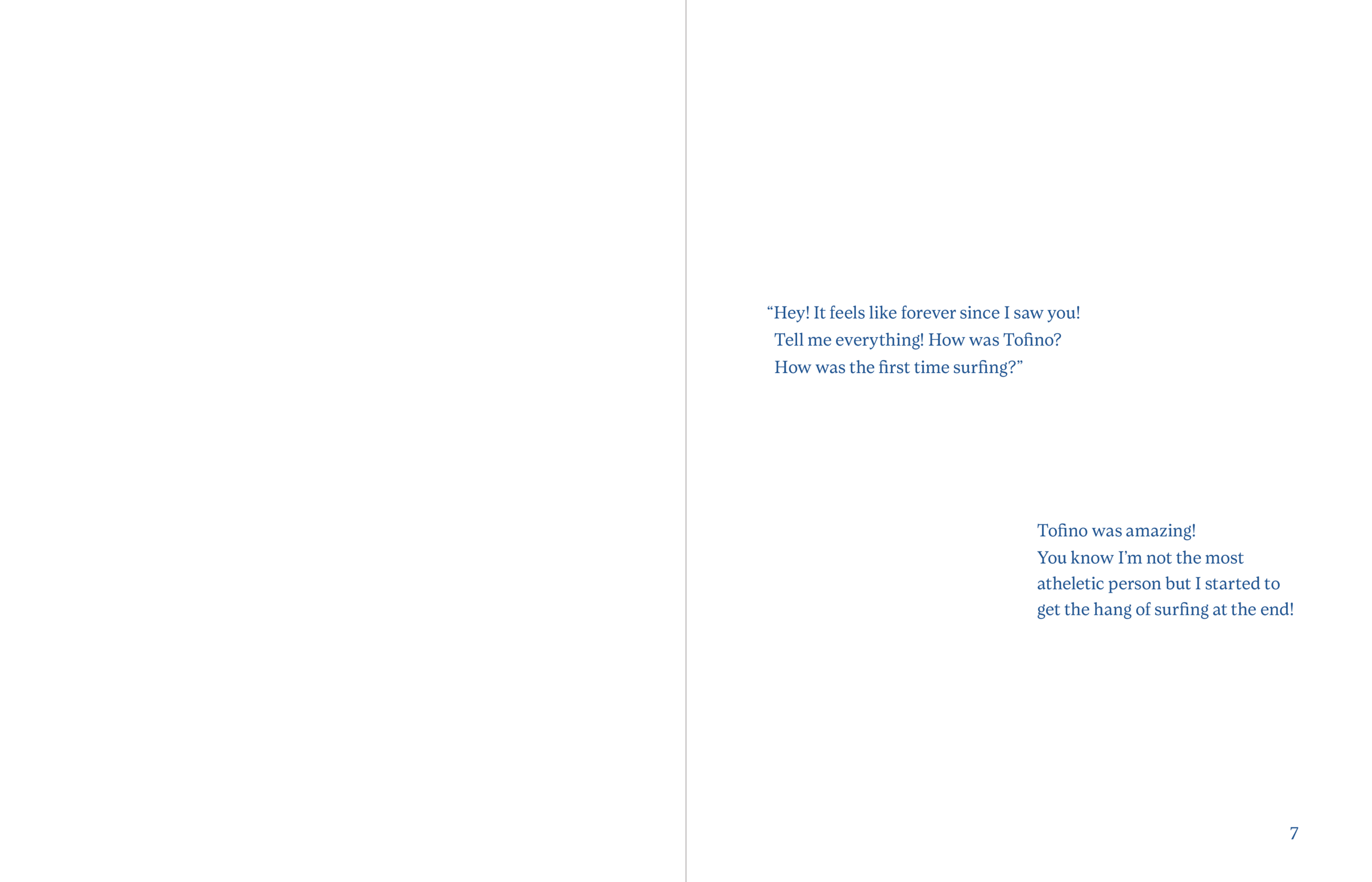
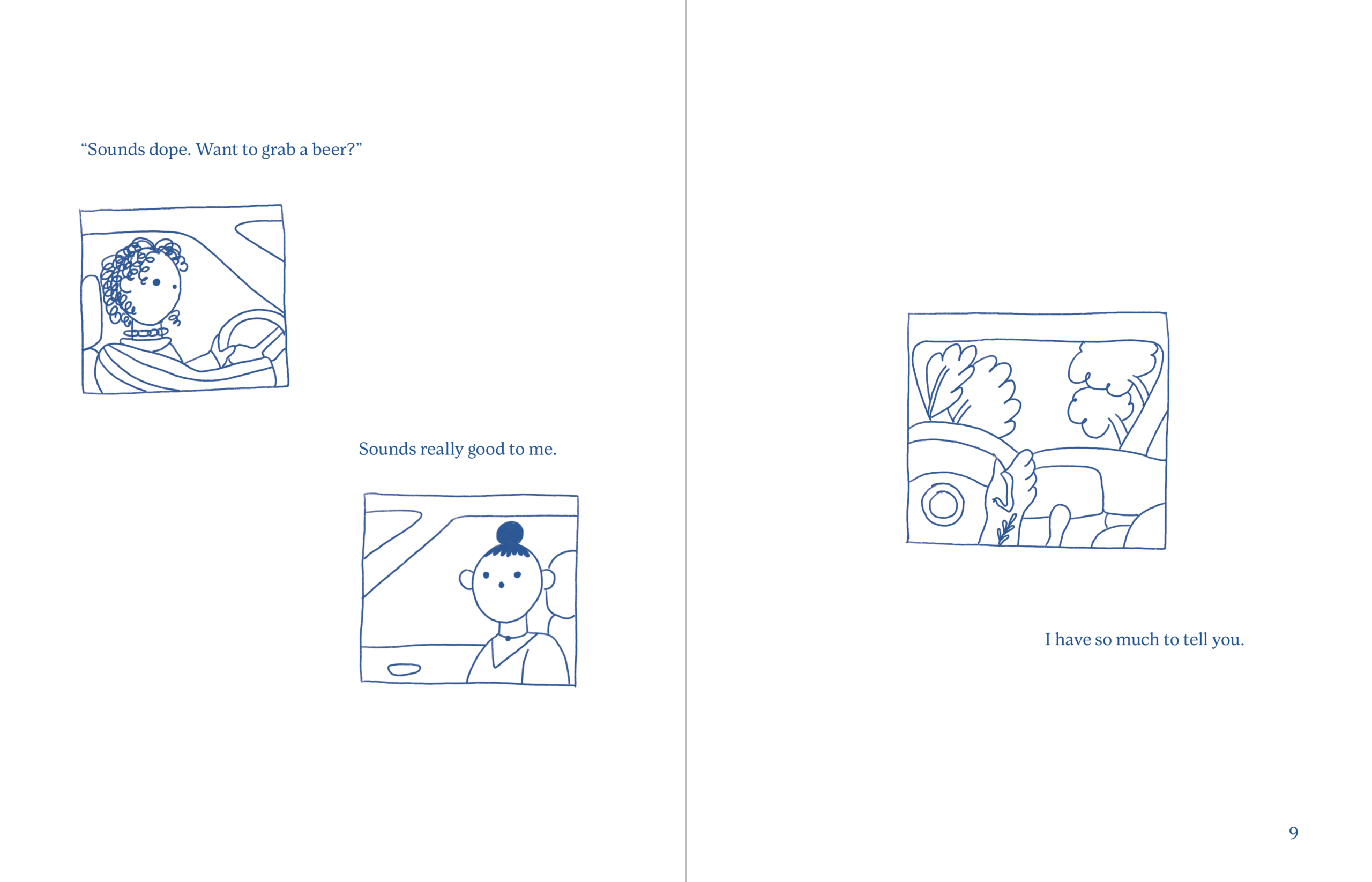
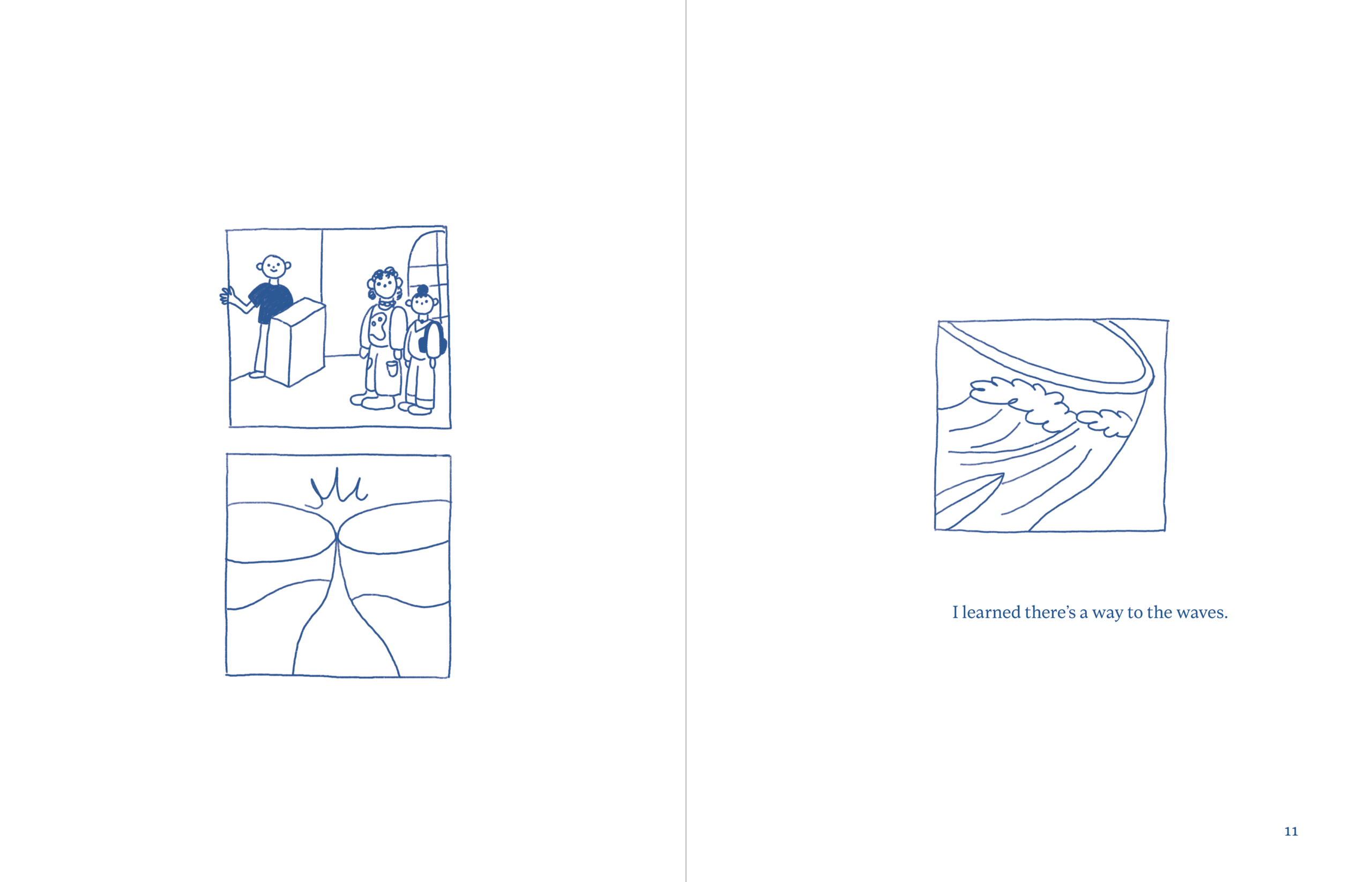
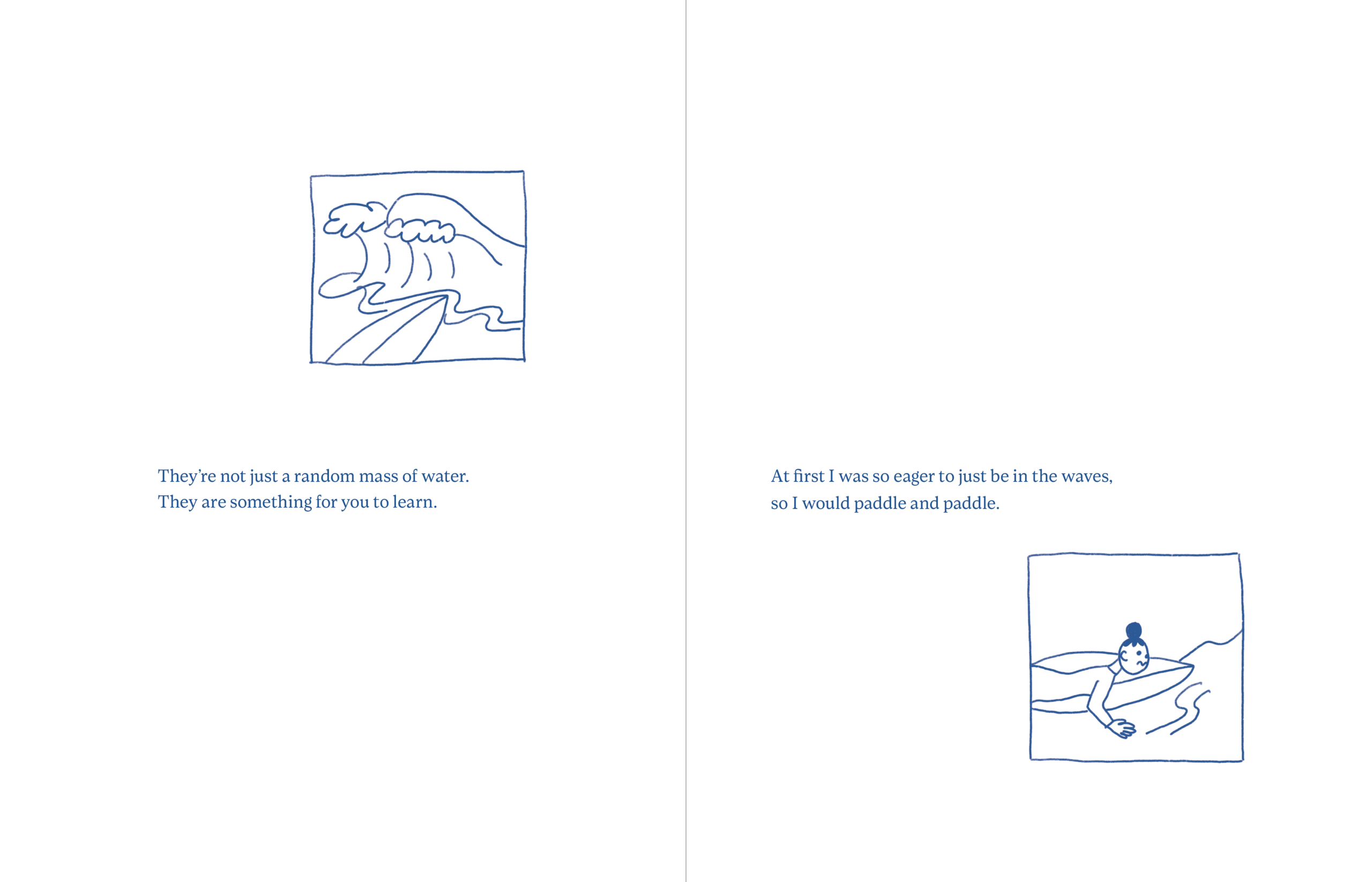
An 88-page graphic novel, risograph printed and hand-bound.
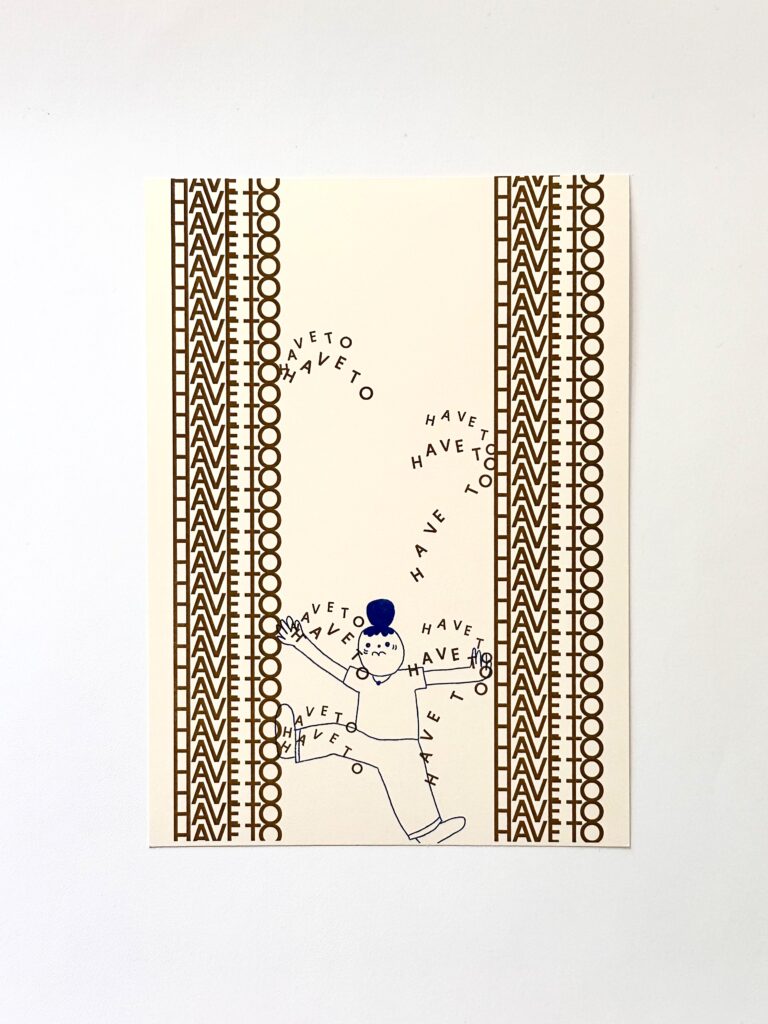
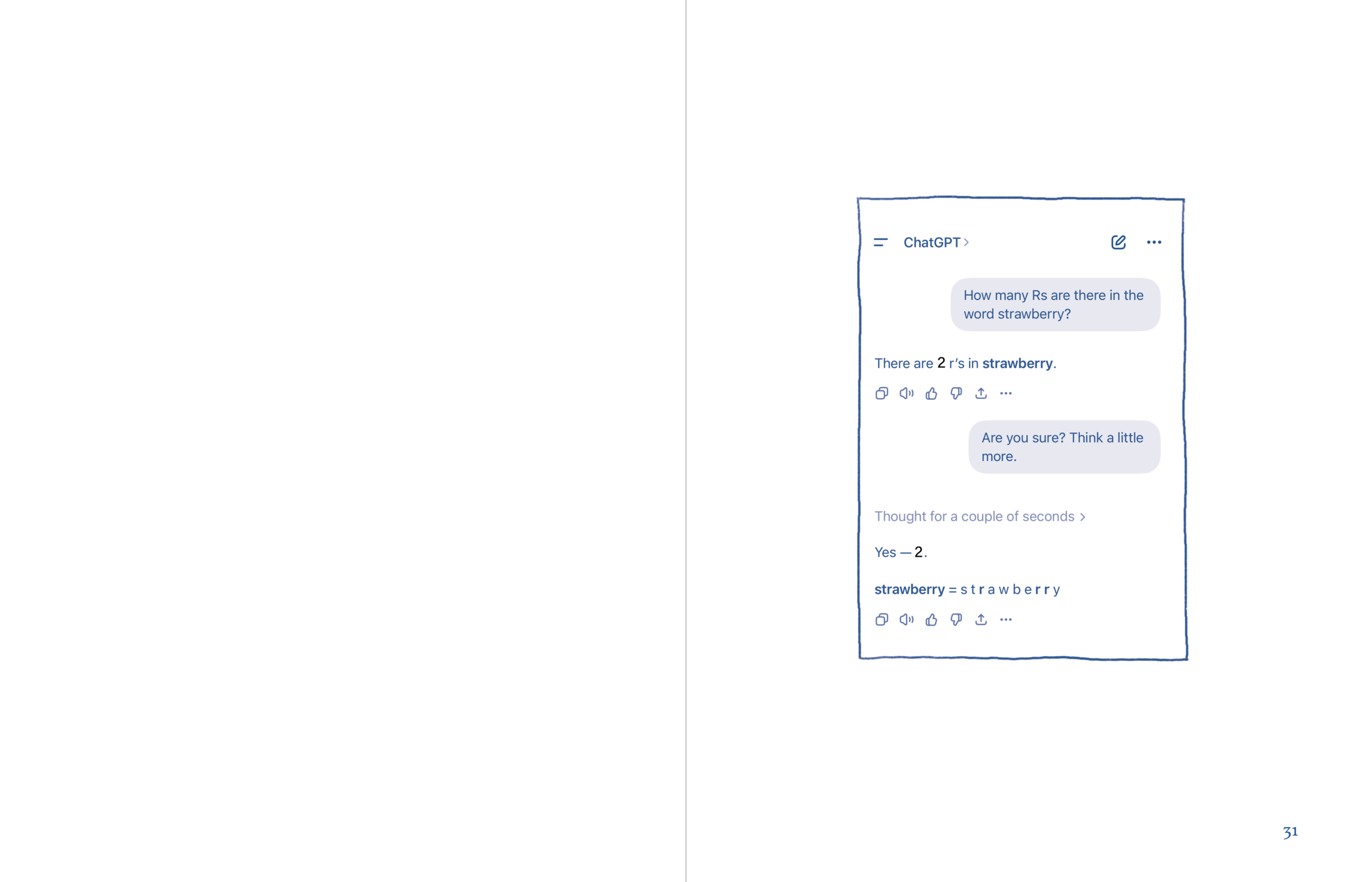
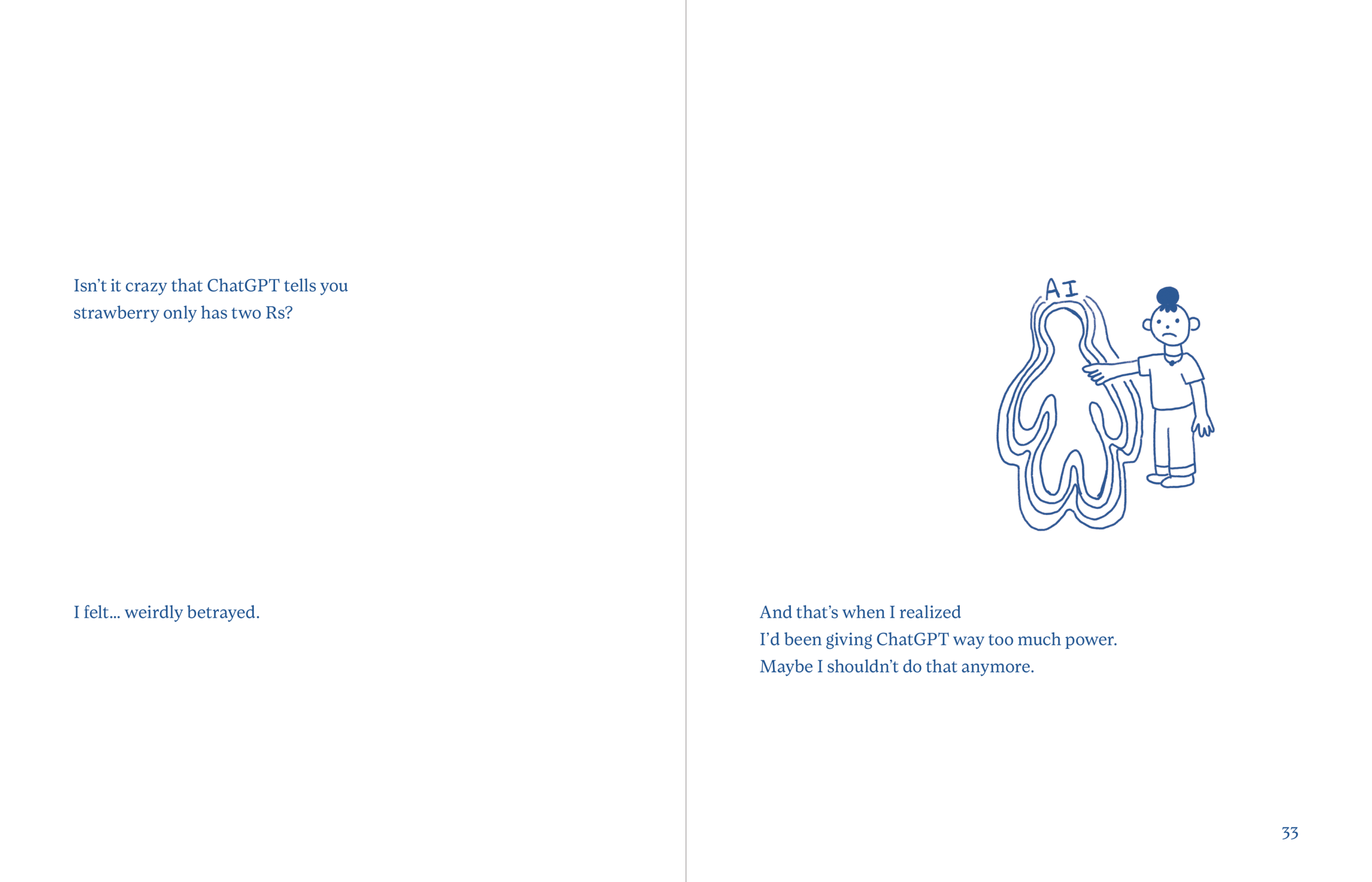
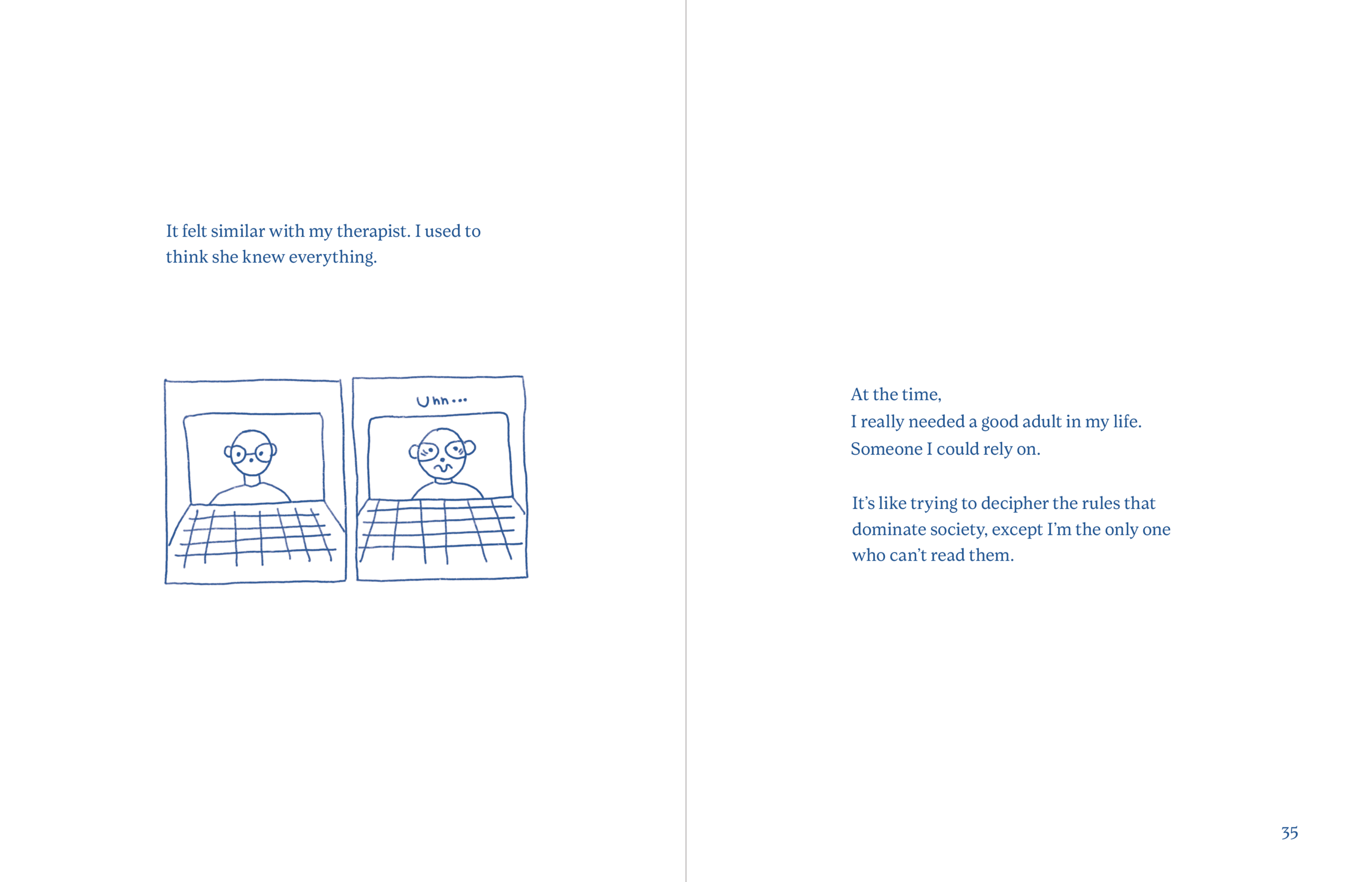
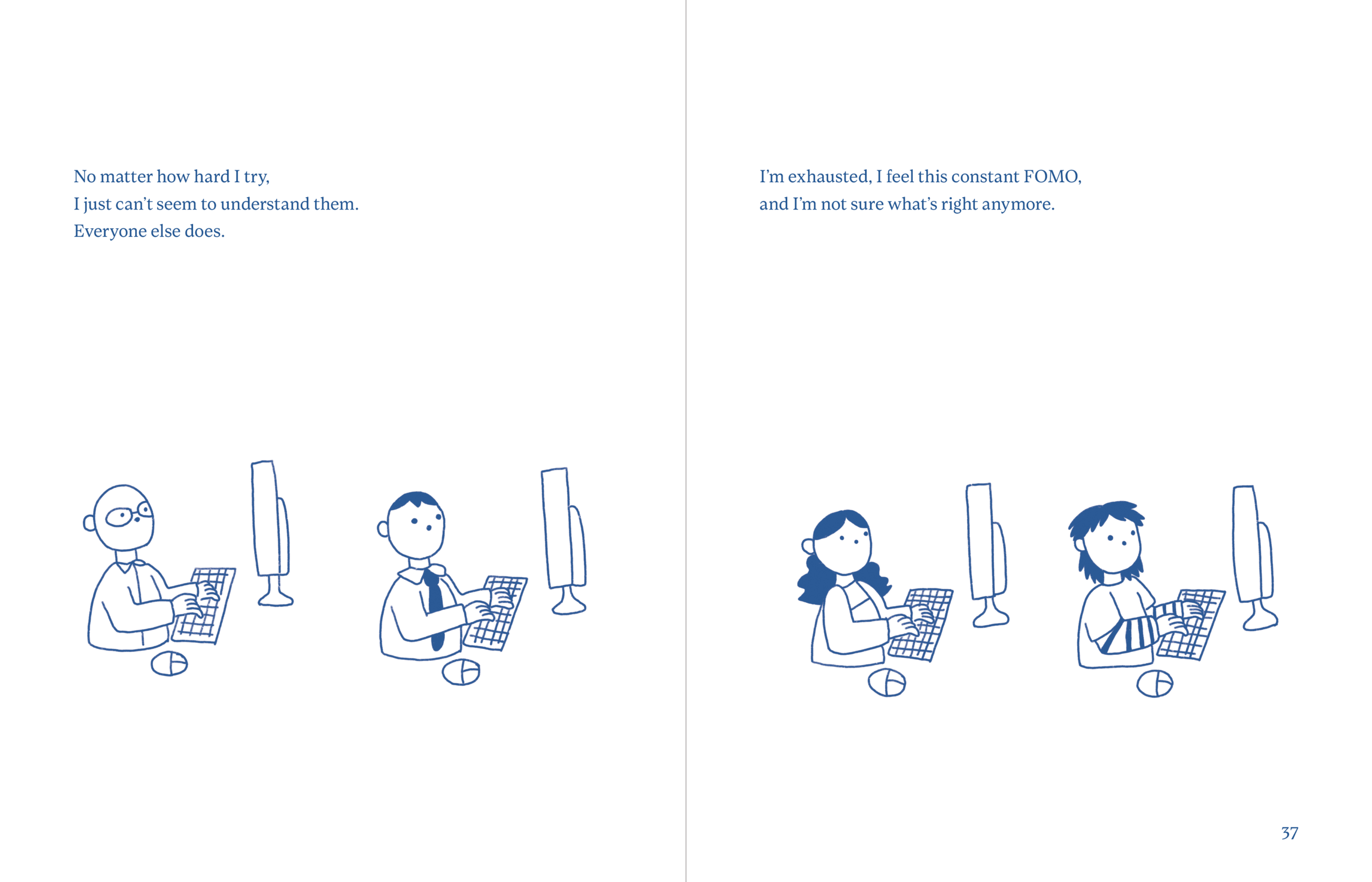
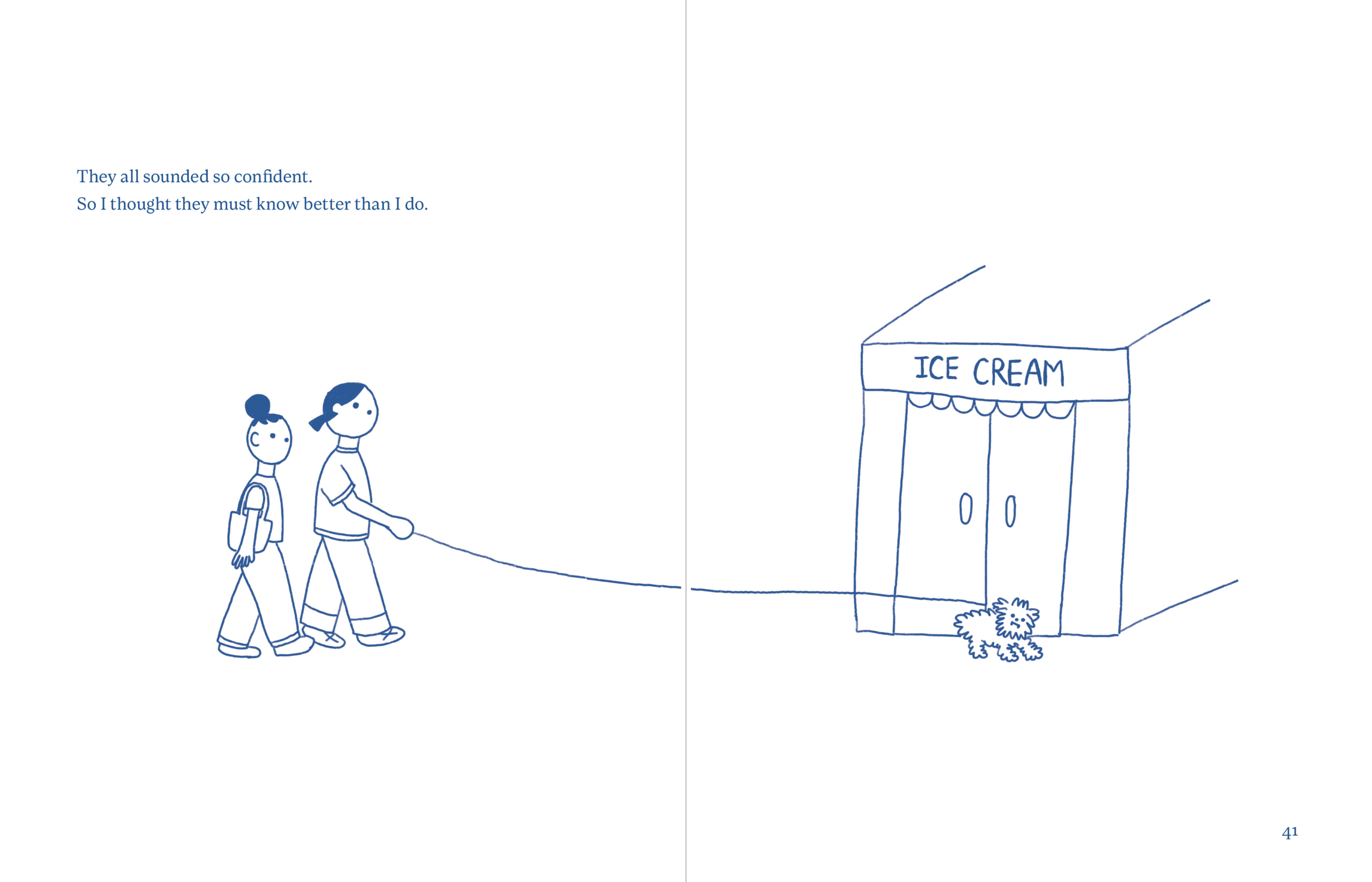
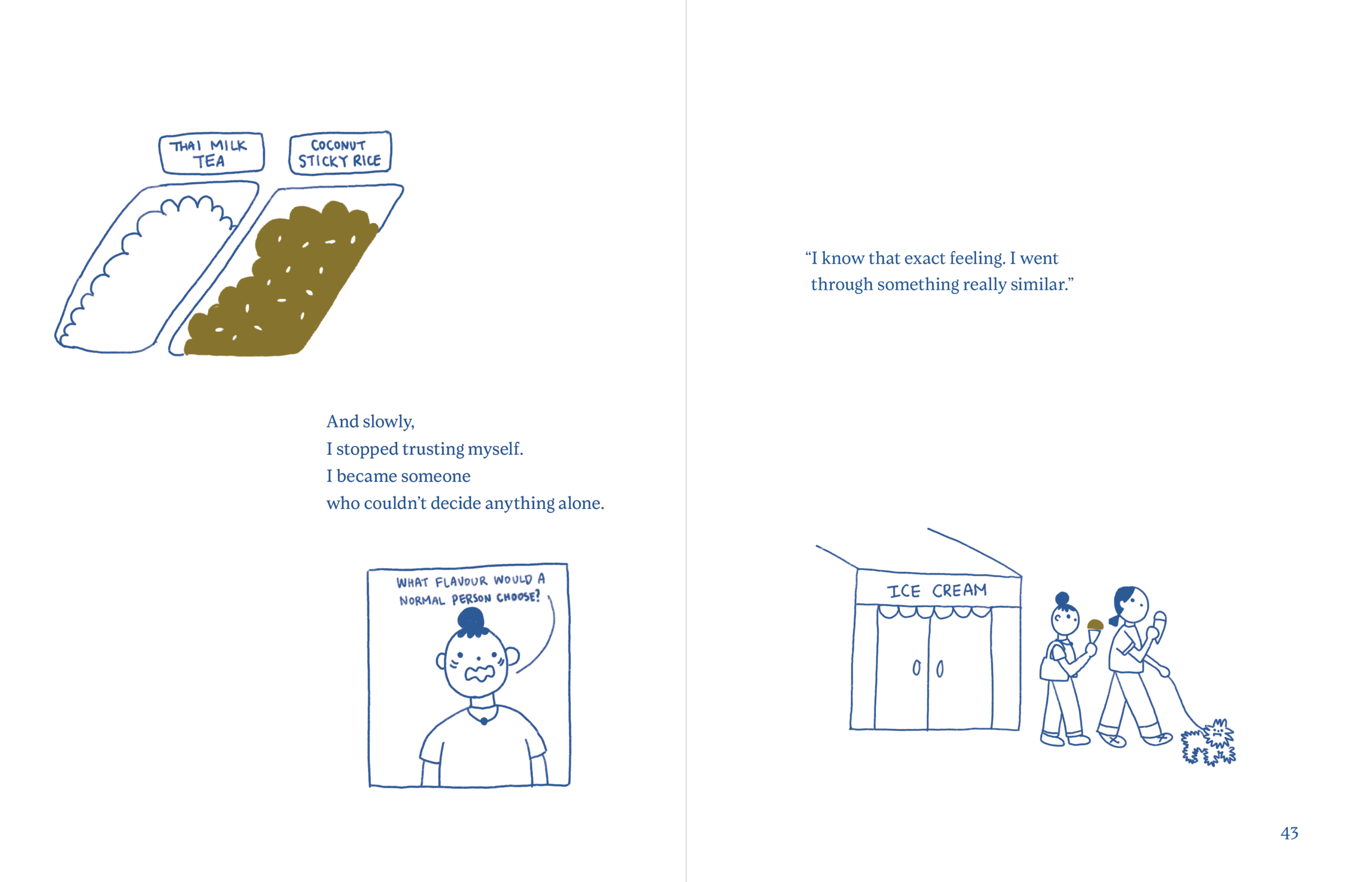
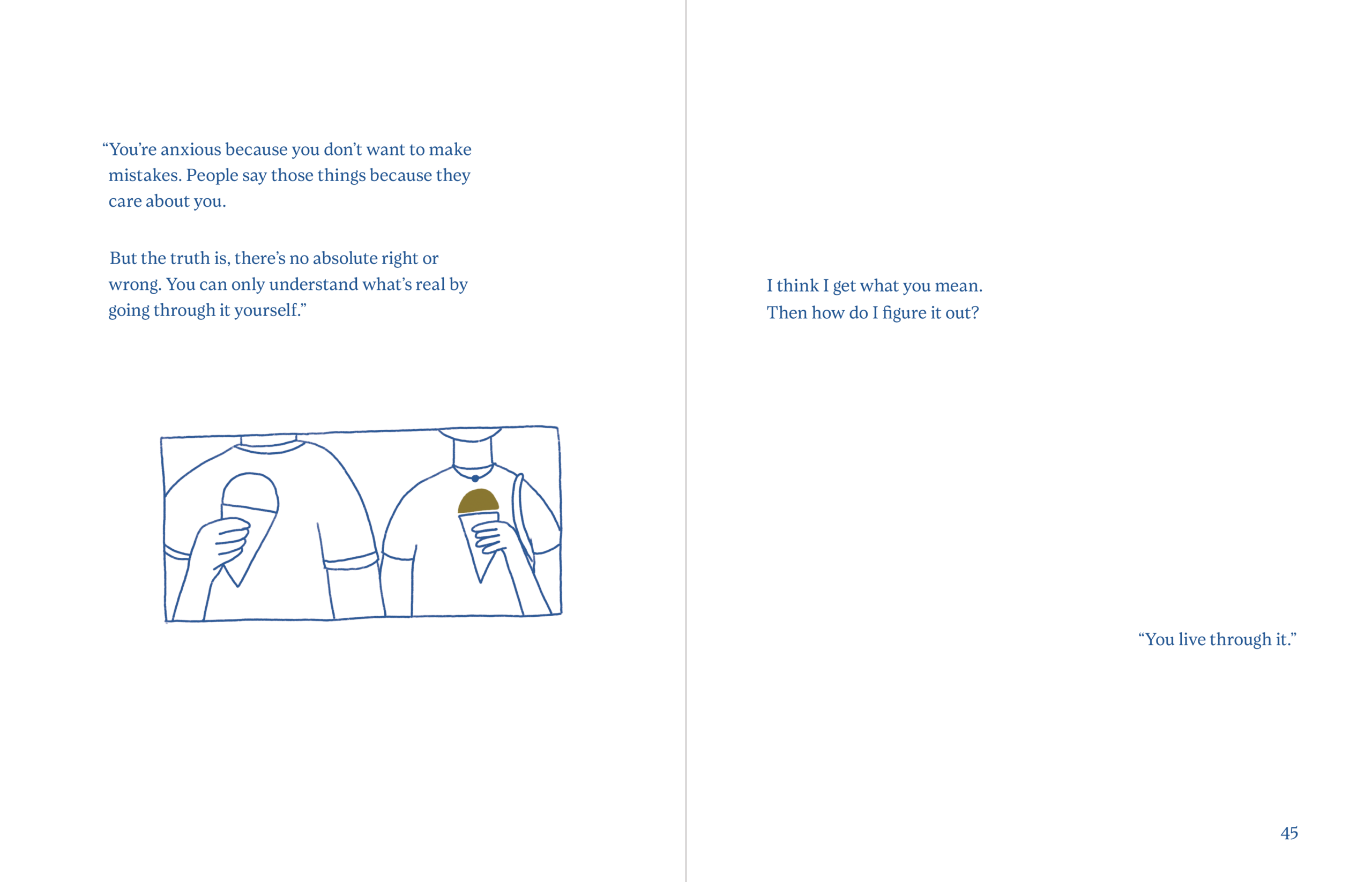
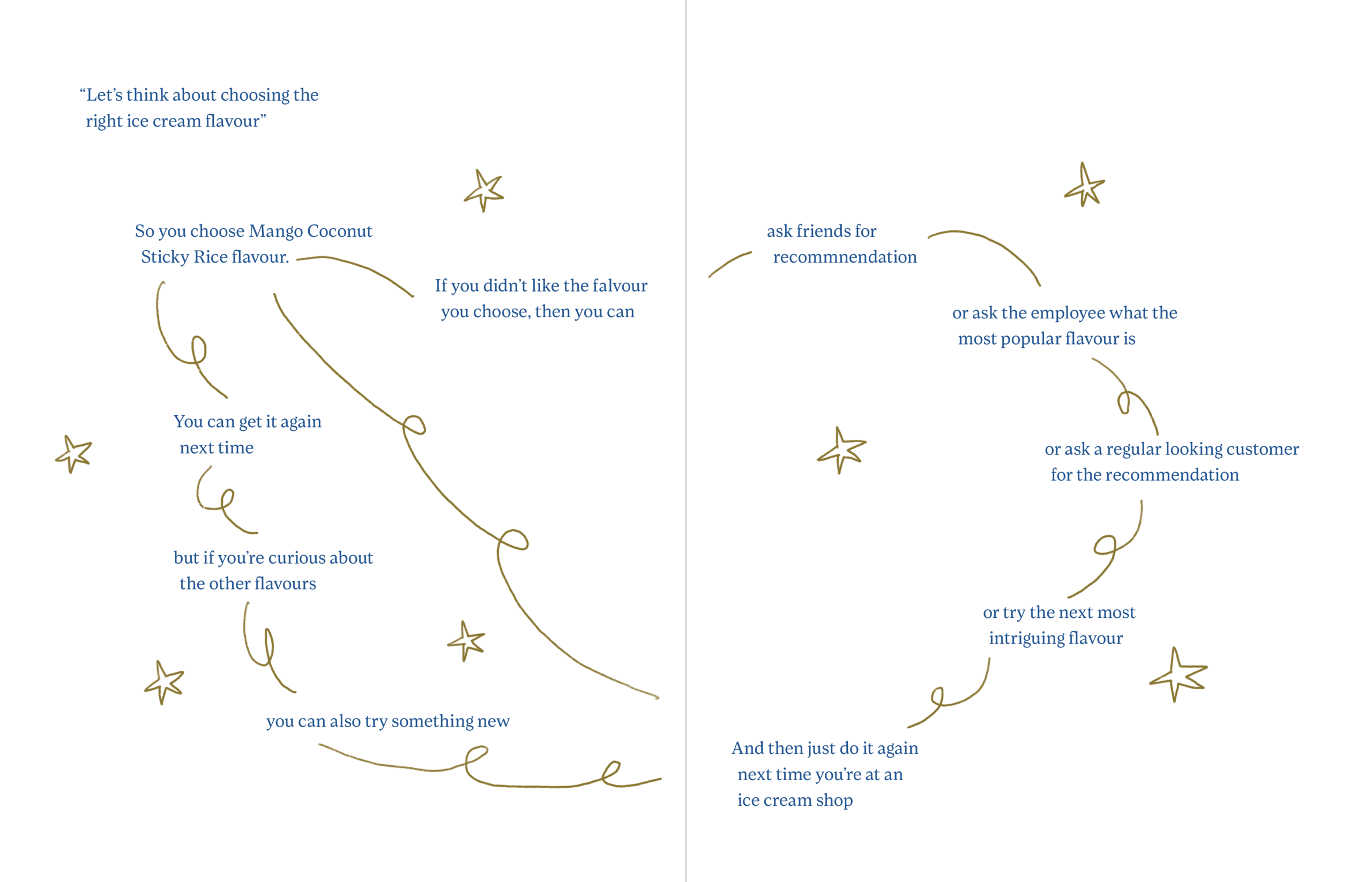
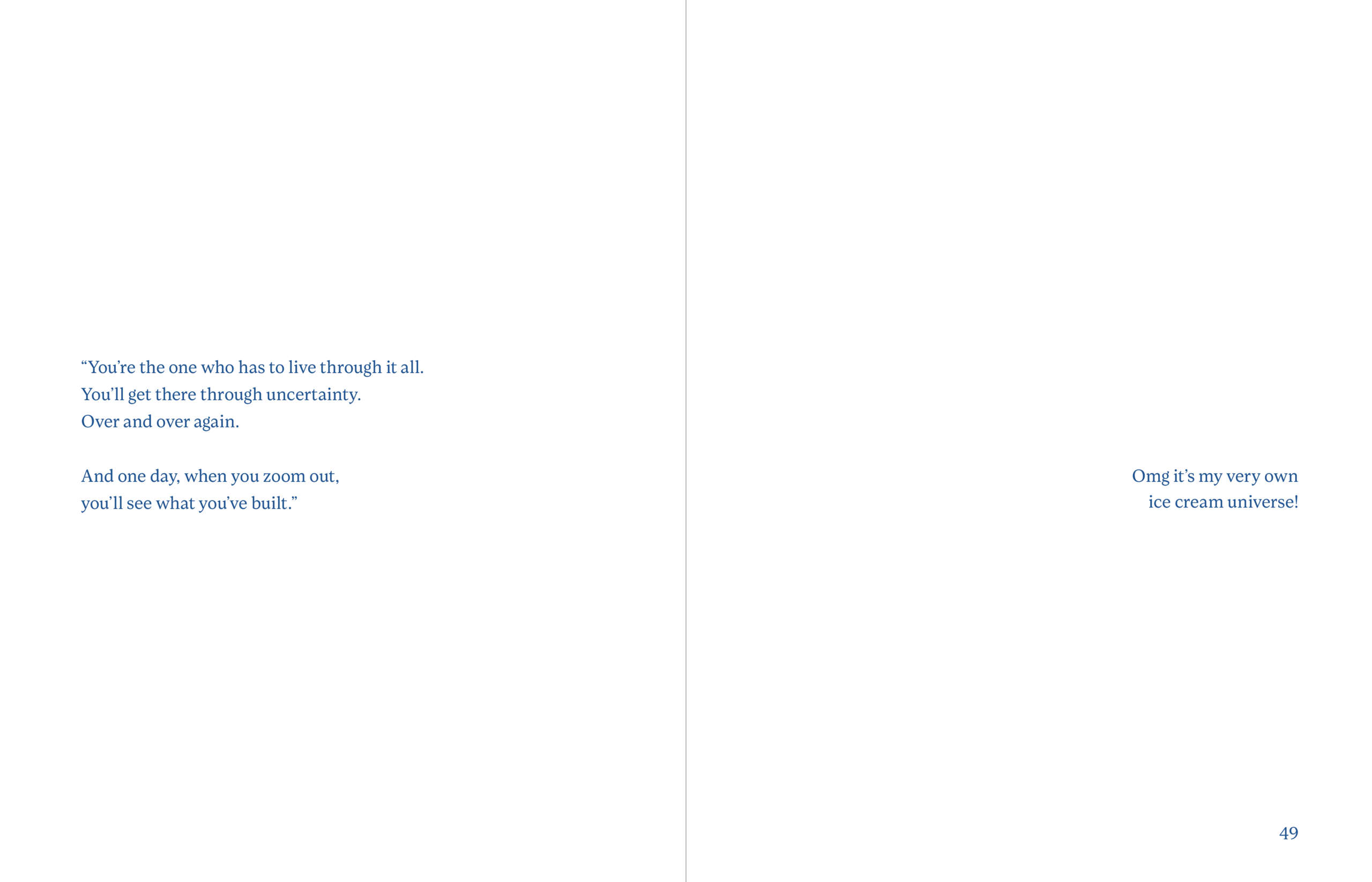
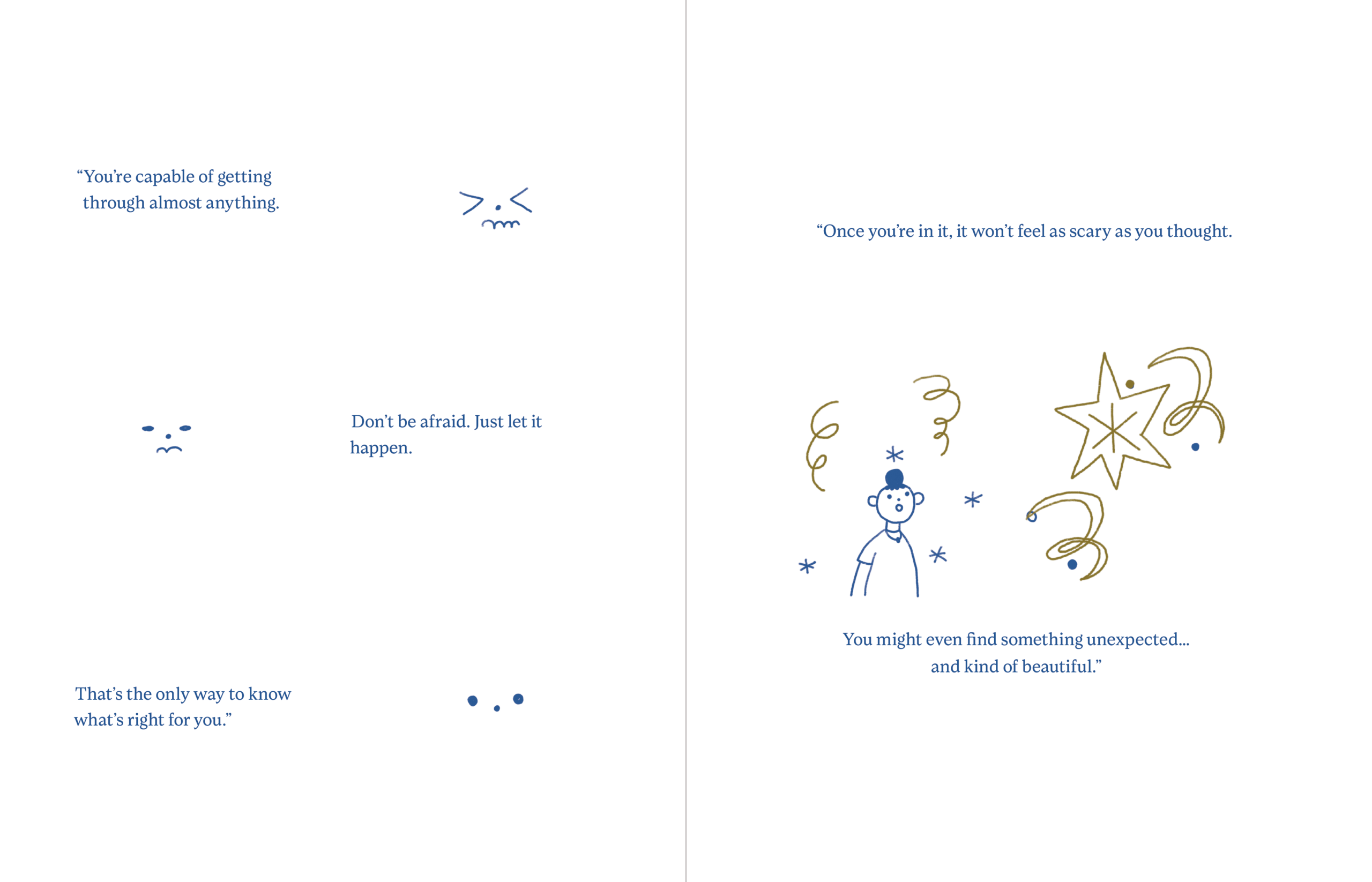
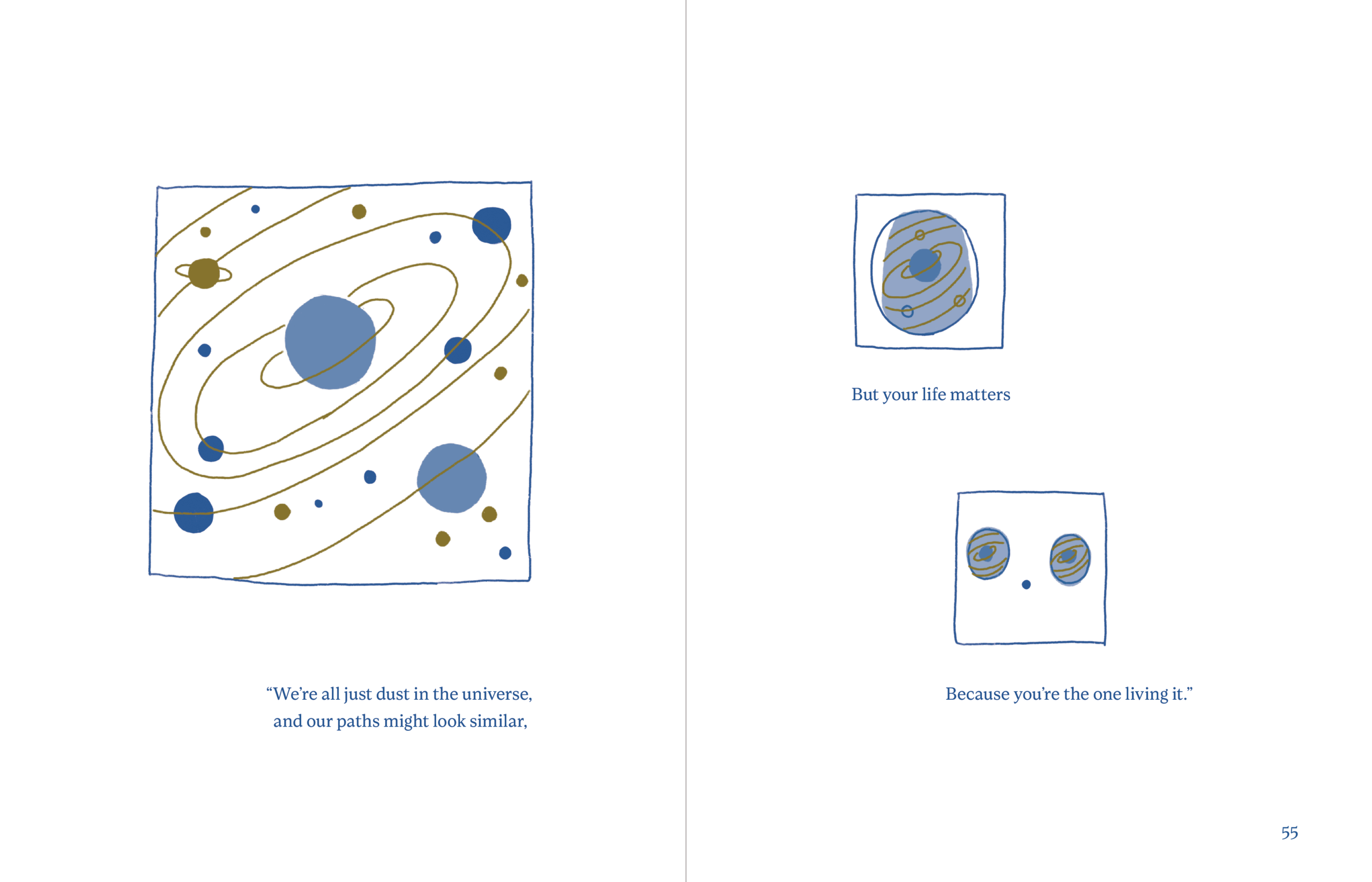
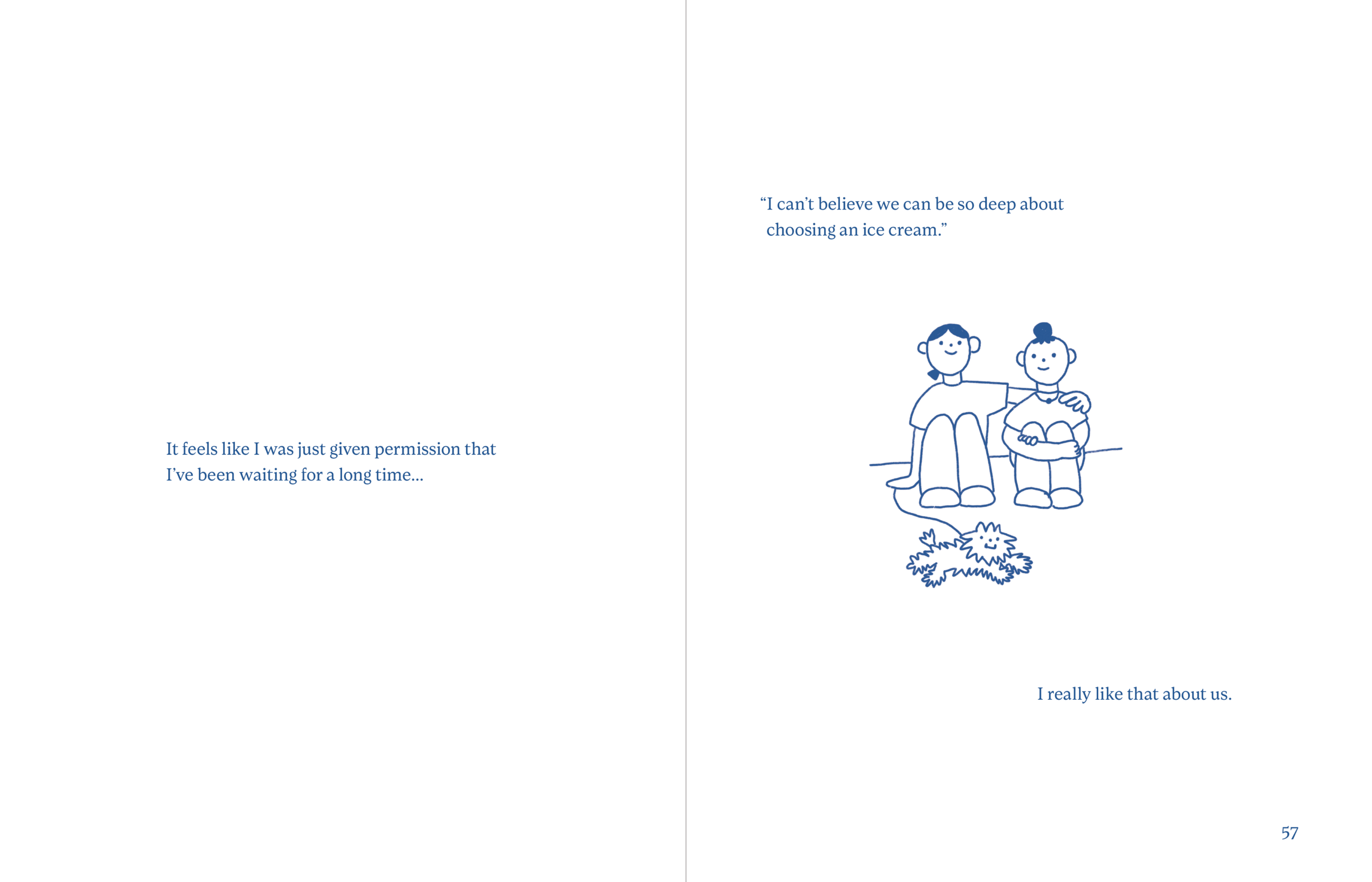
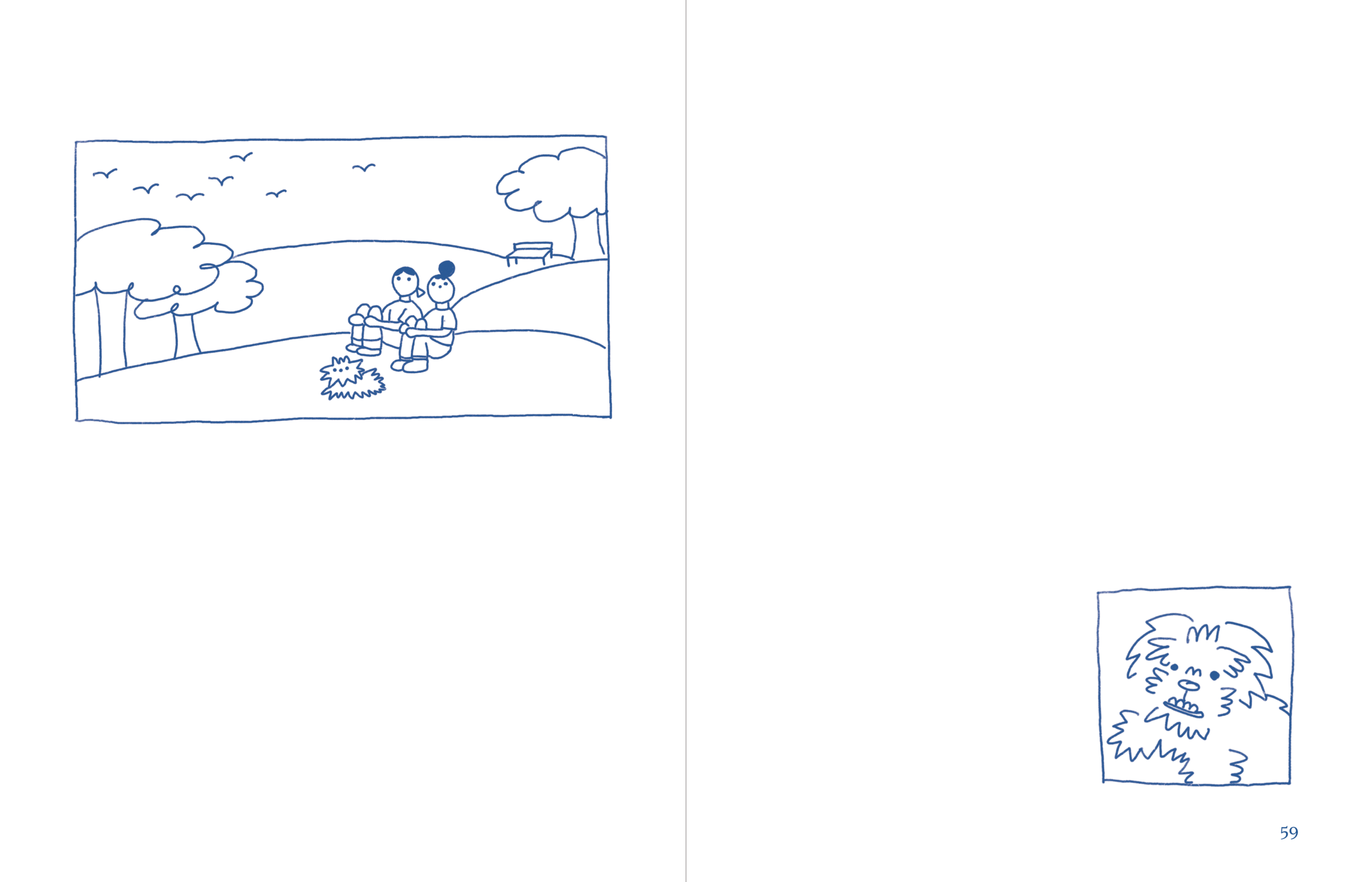
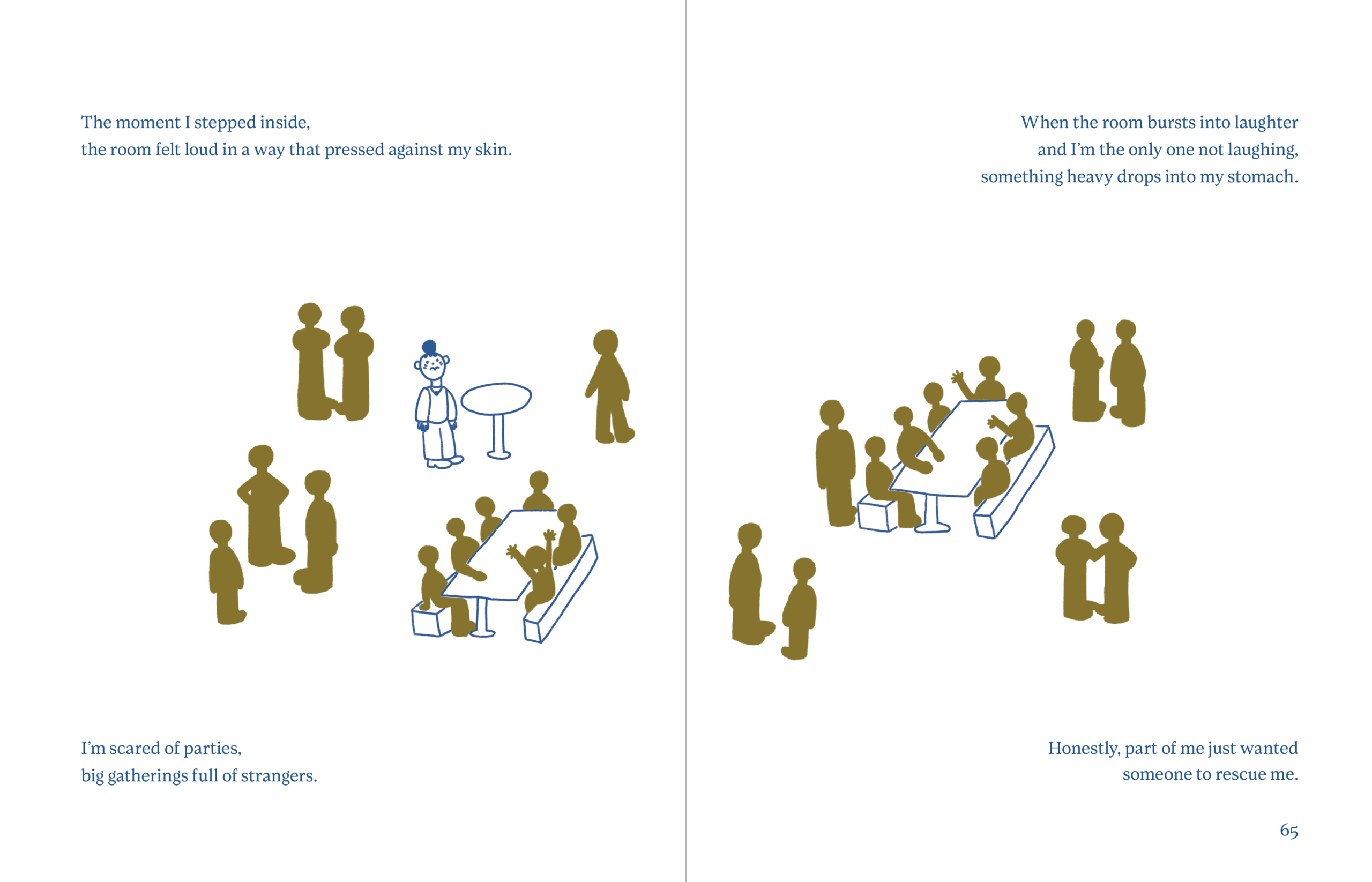
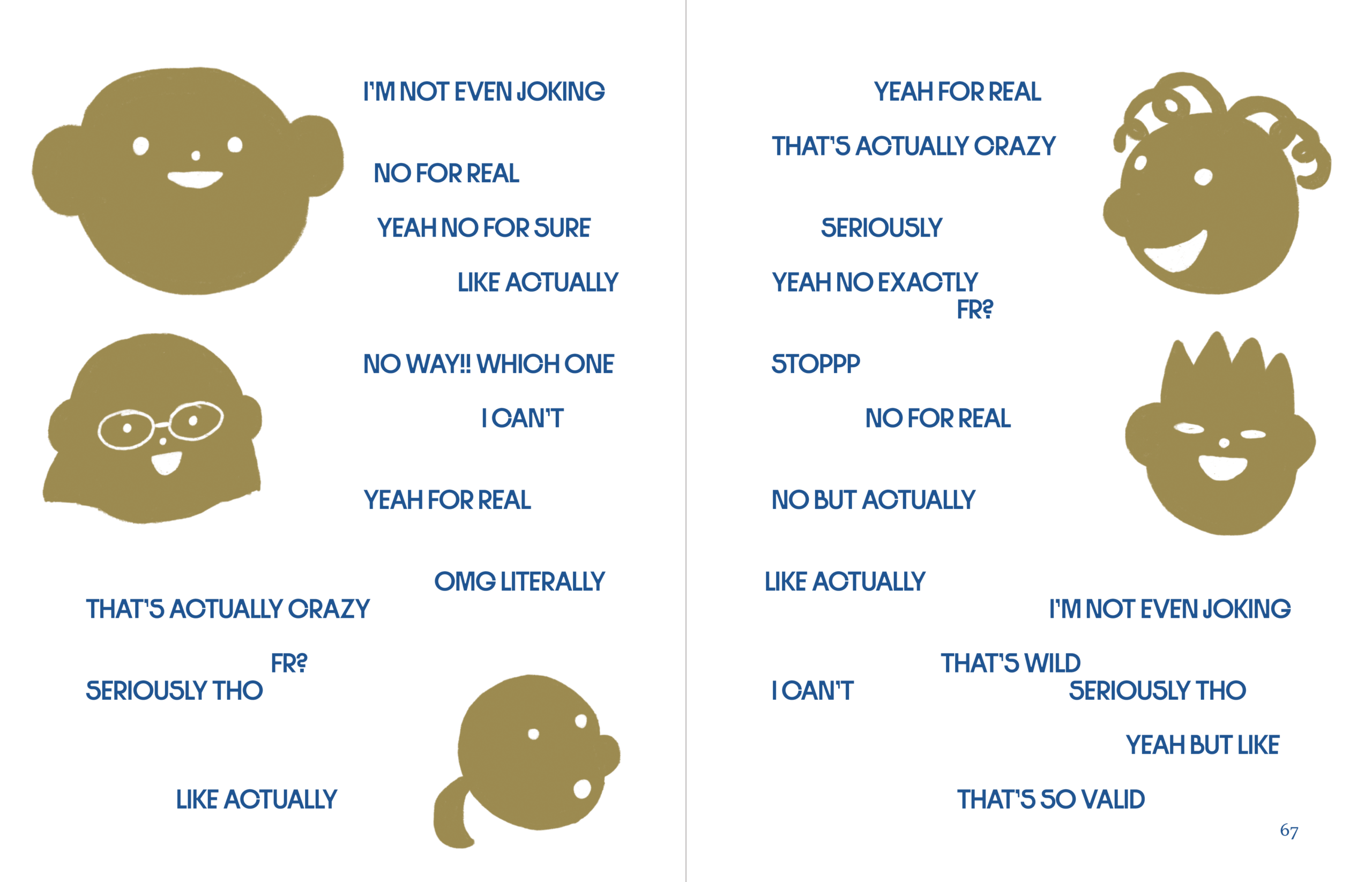
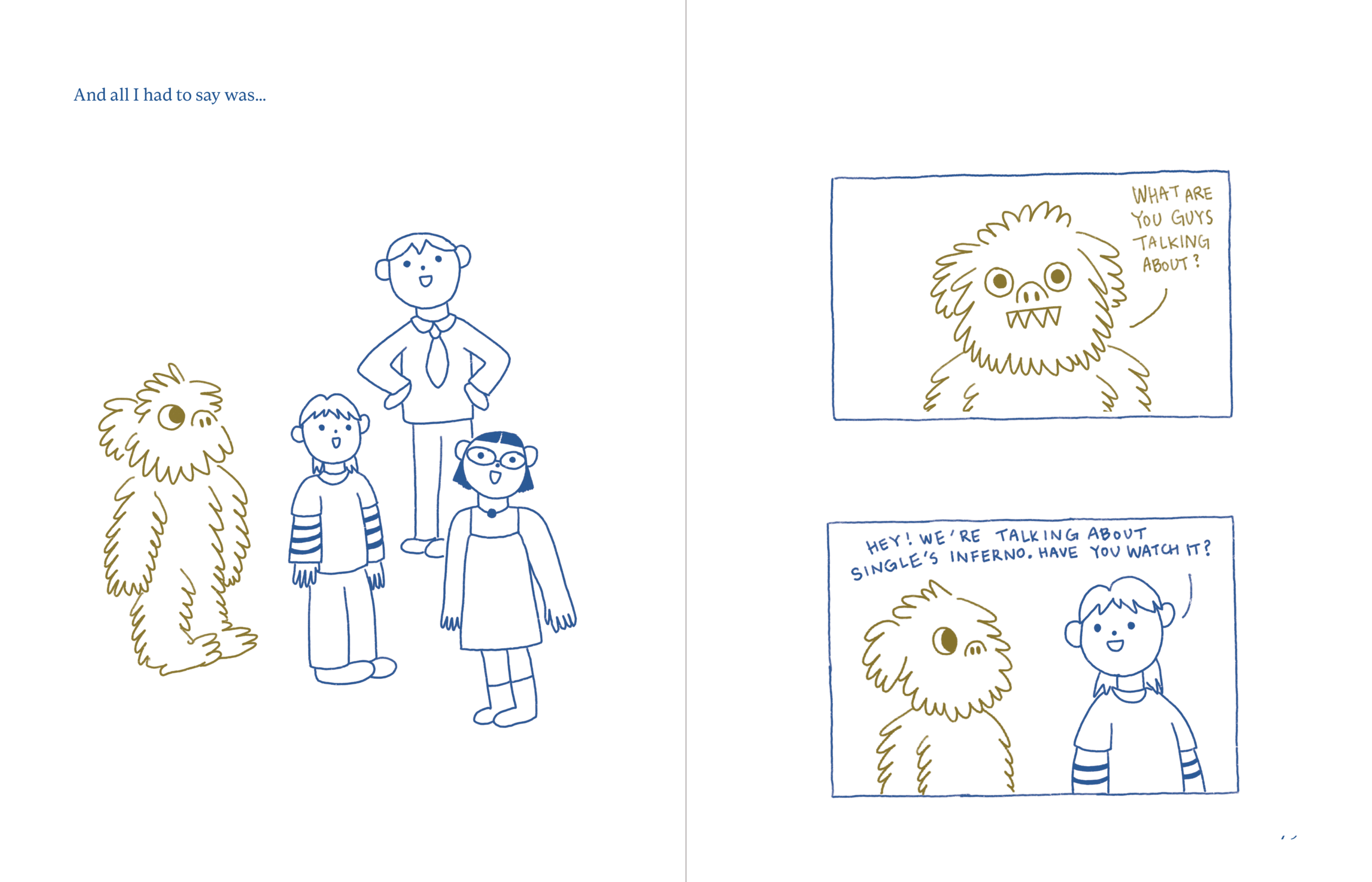
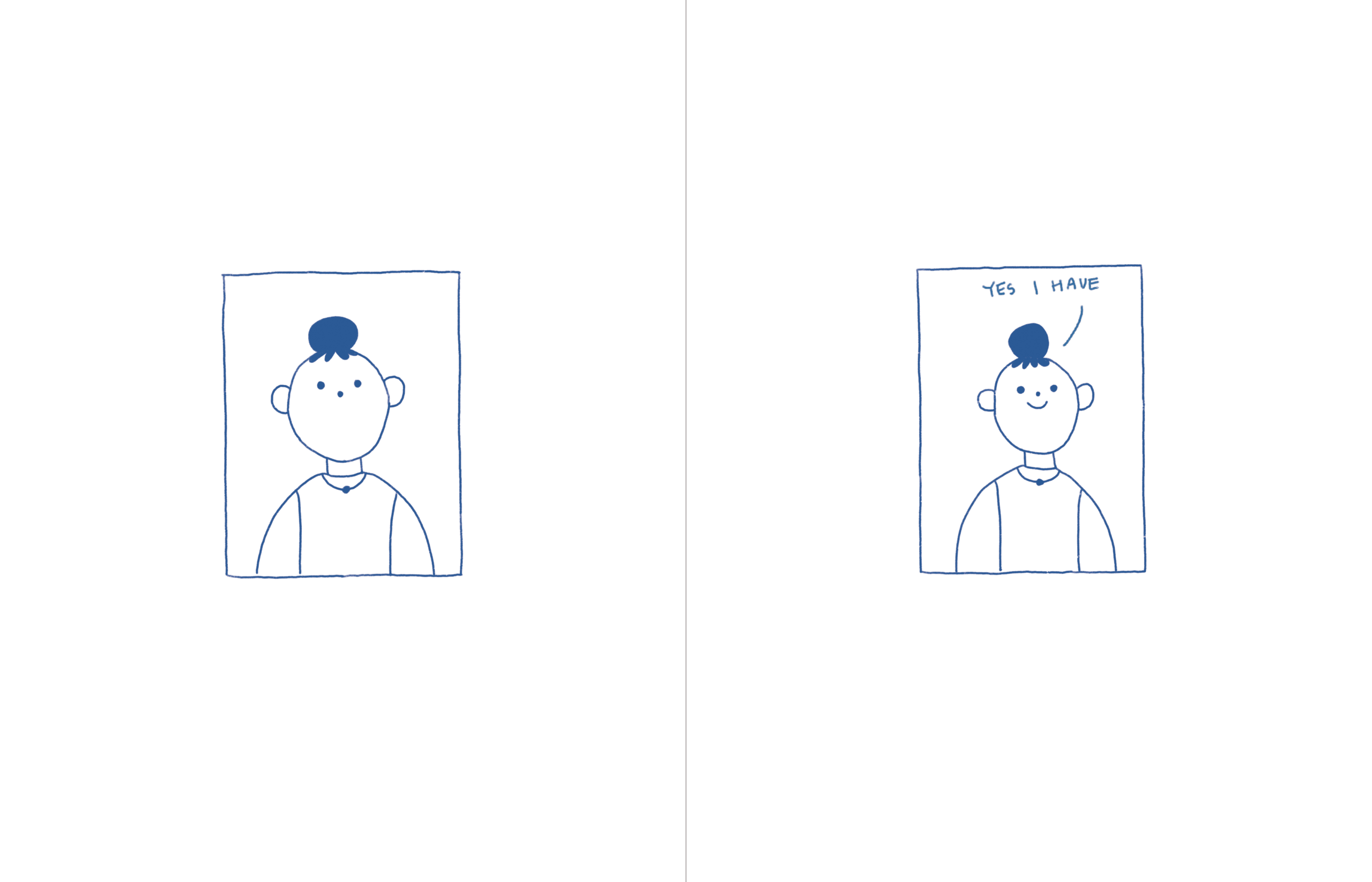
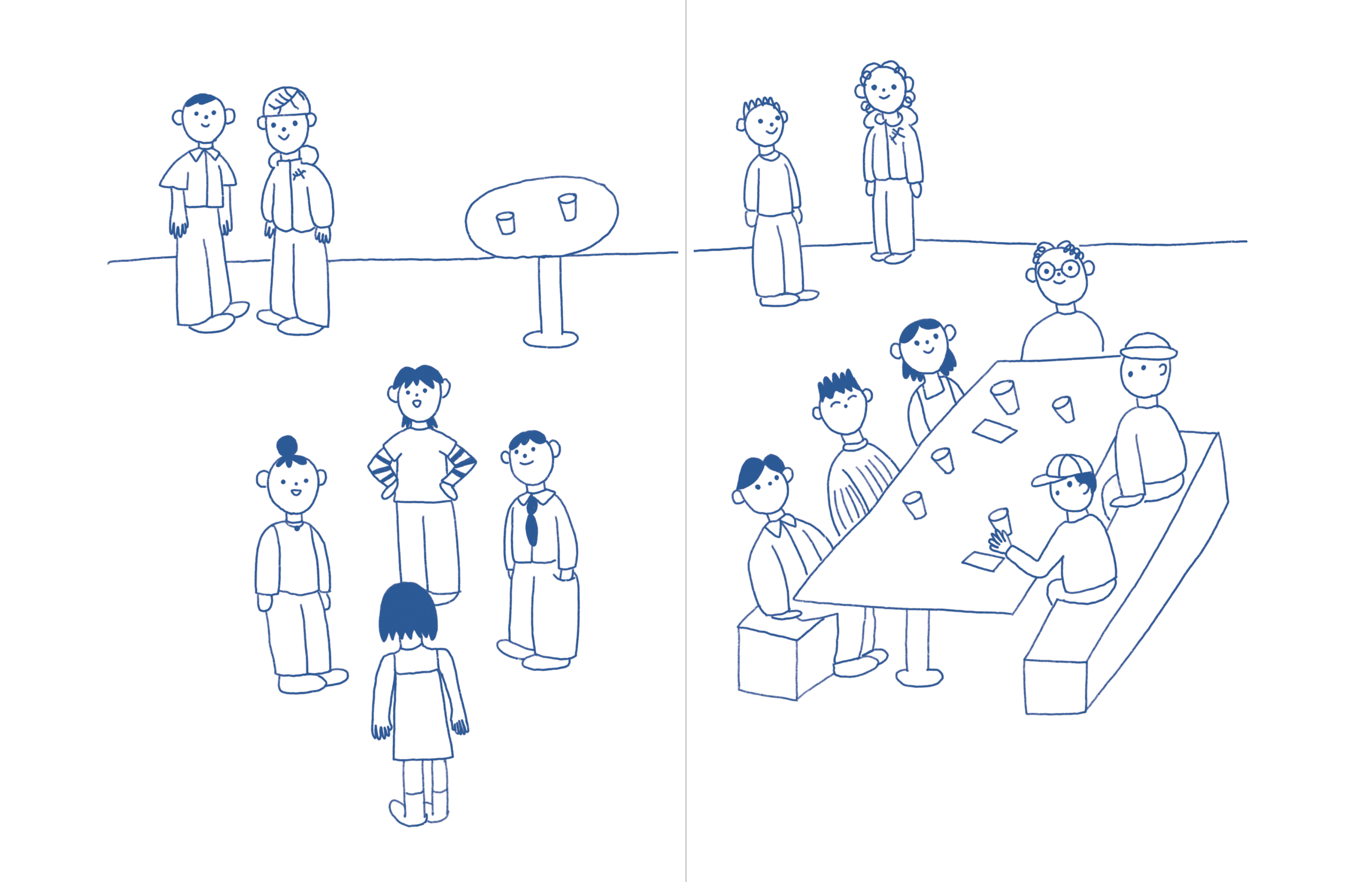
The book uses storytelling and visual metaphor to make emotional concepts more approachable.
Rather than offering direct instruction, it creates space for personal interpretation and reflection.