Going Back
Heeeun Daisy Kim
Stitched and manipulated mulberry paper with monotype, wooden light box
14″x36″x4″, 2026
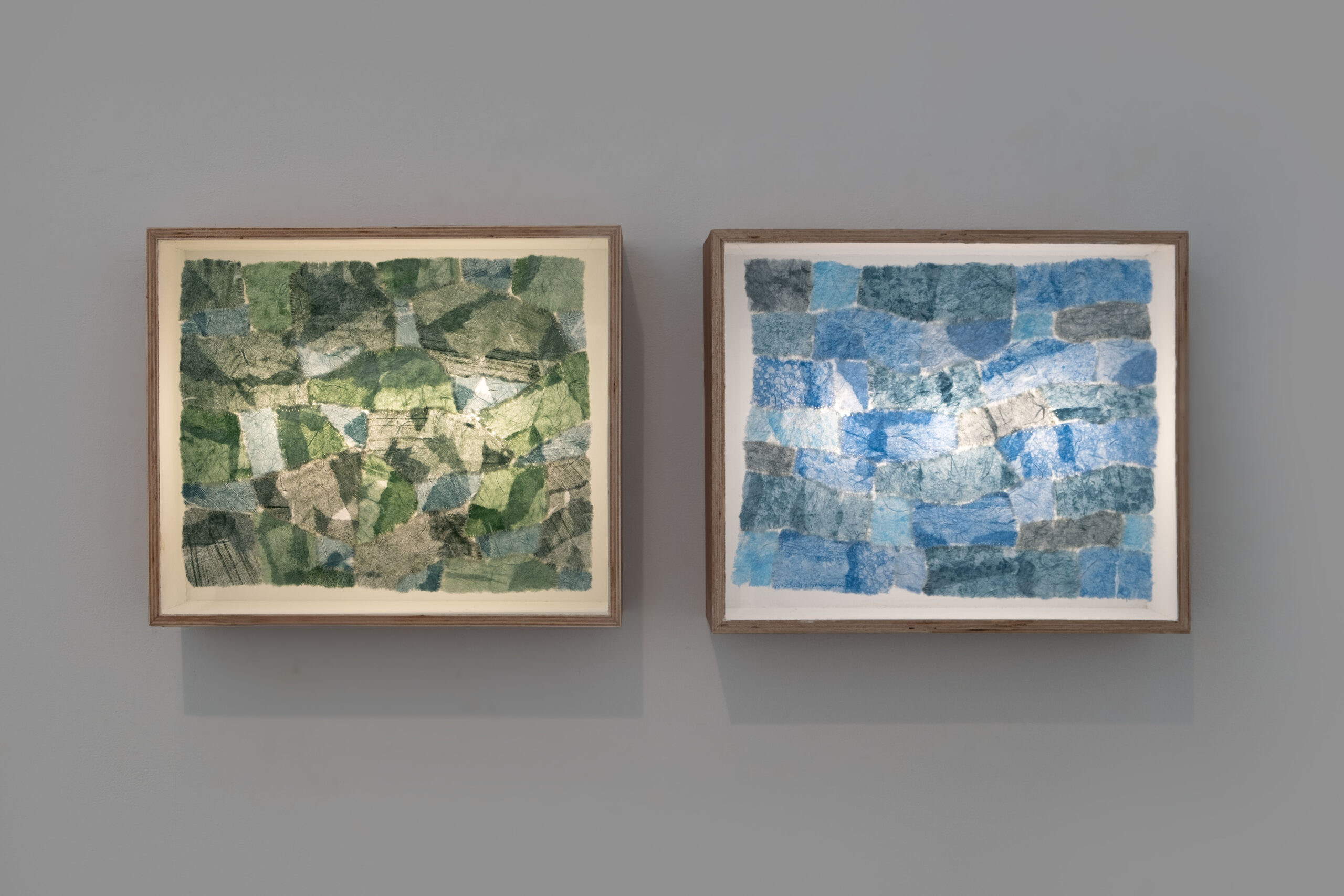
Heeeun Daisy Kim, Going Back, 2026.
Going Back is an inquiry into the essence of remembering ‘home’ as a way to seek a sanctuary for the mind.
In most of my work, memories of the past or home have been recurring themes. While exploring these themes, I became interested in materiality and tactility. Paper has always been central to my practice, and I specifically wanted to work with types that possess a distinct texture, which led me to choose mulberry paper.
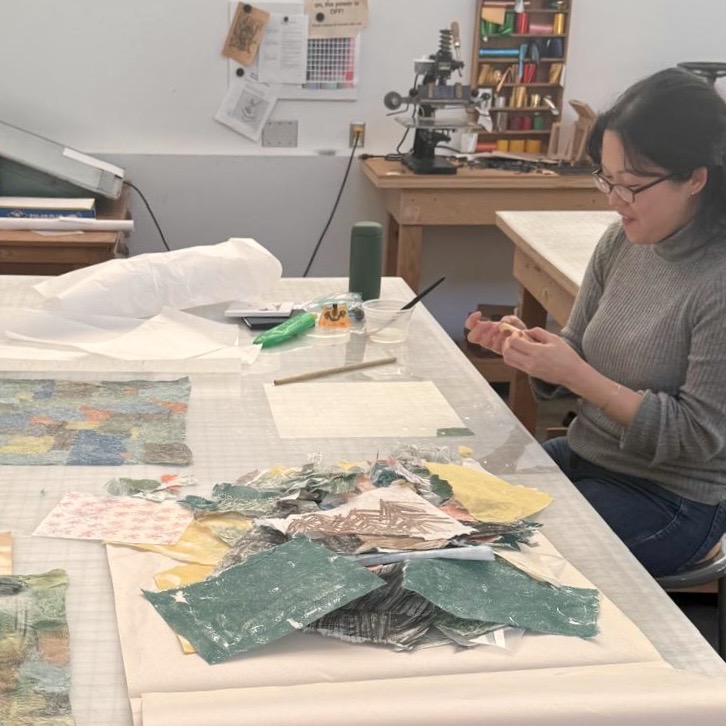
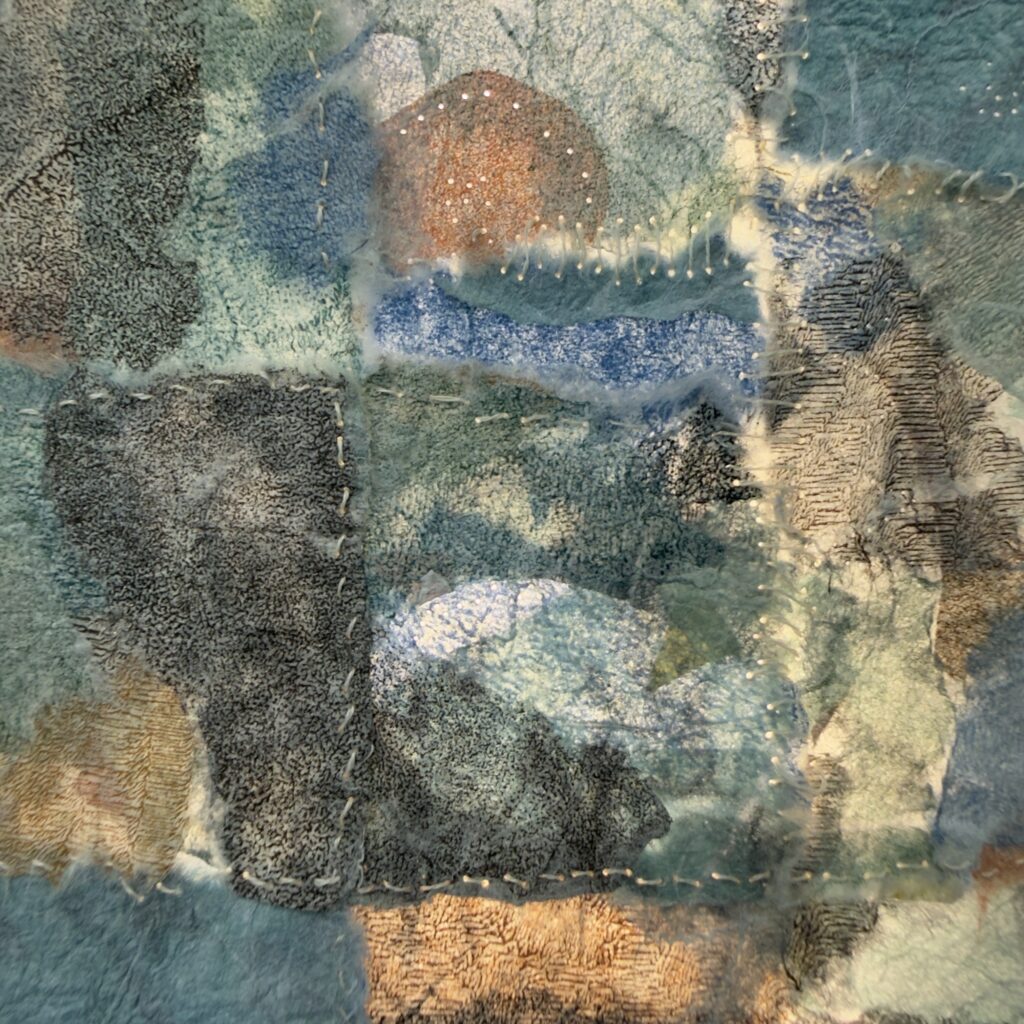
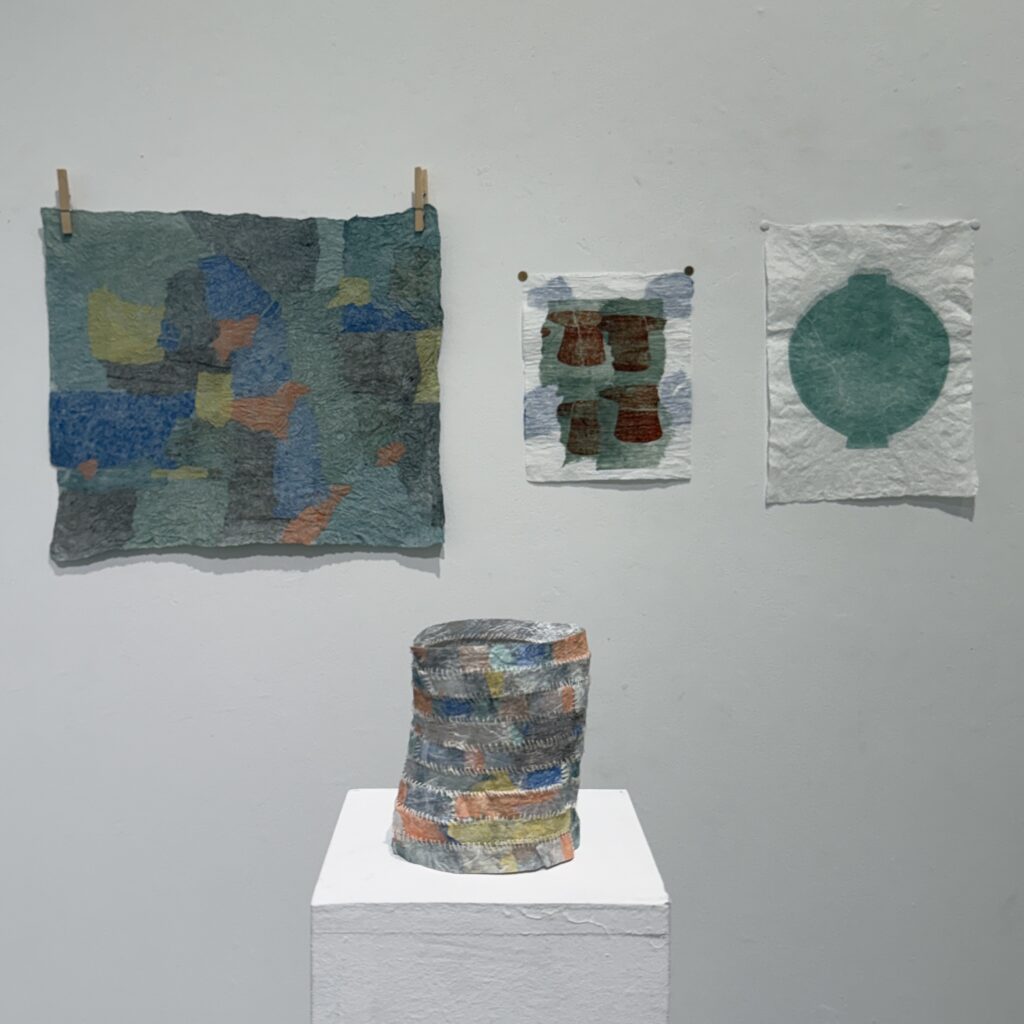
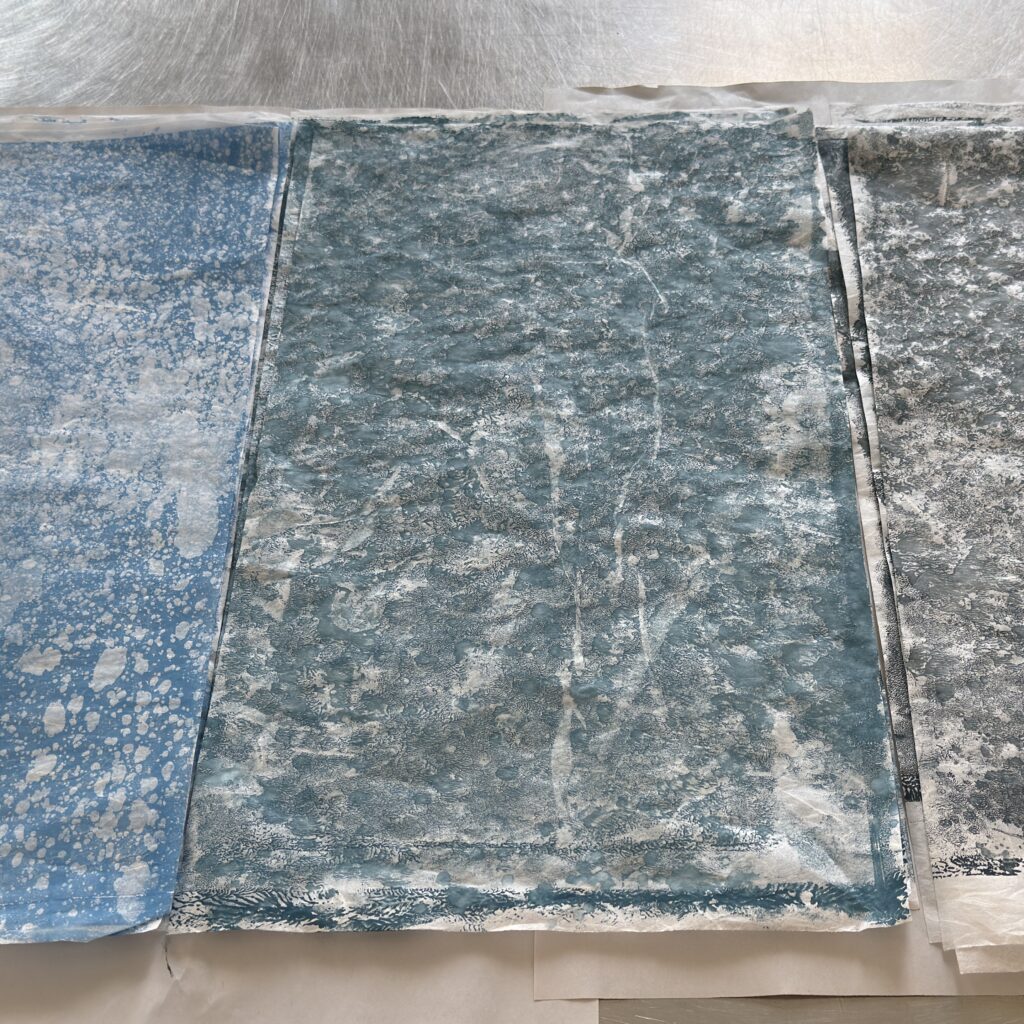
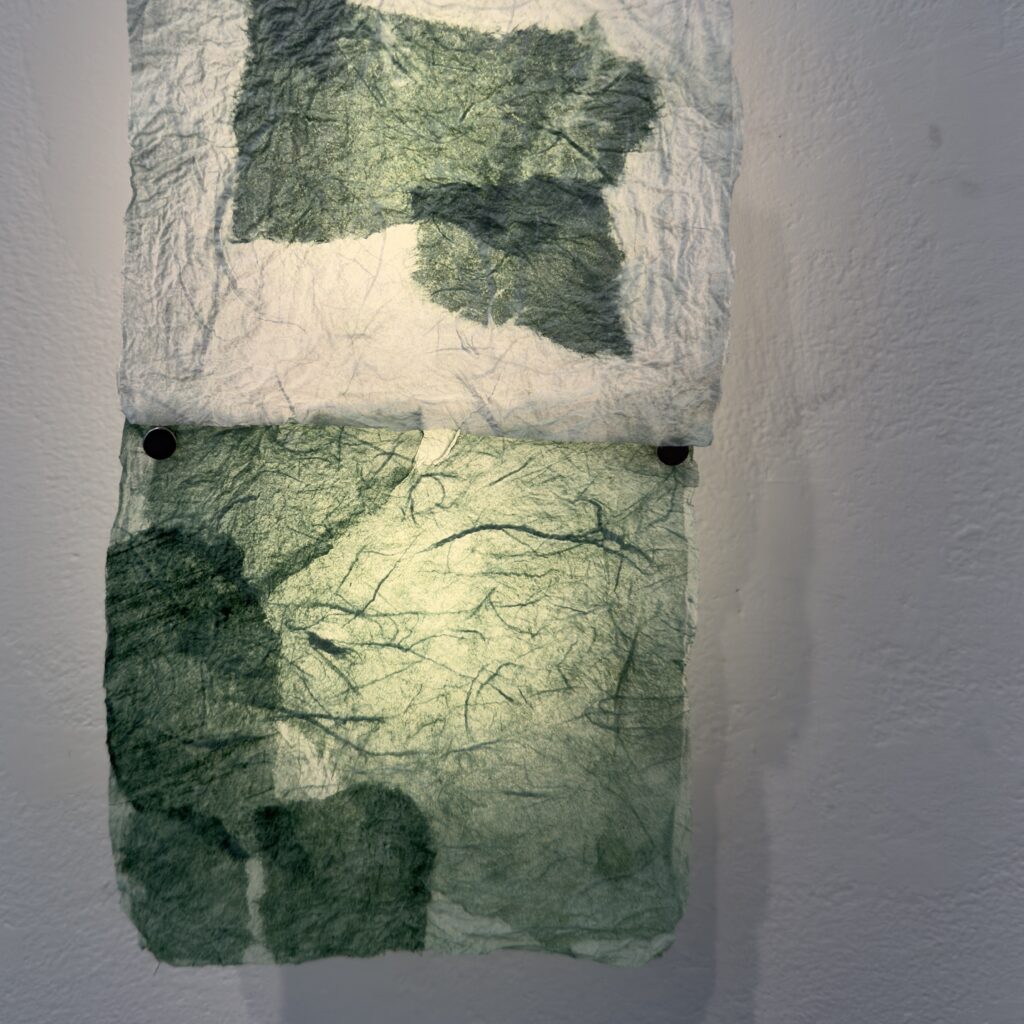
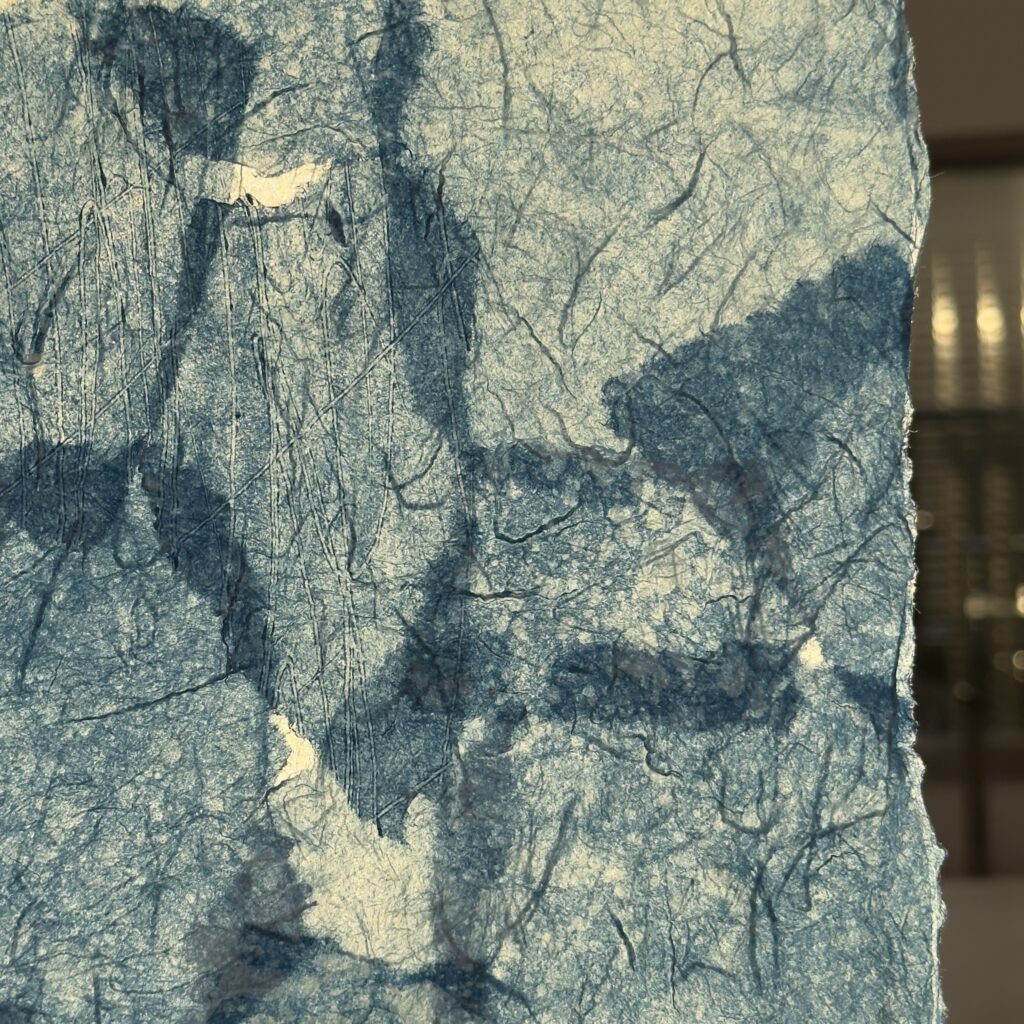
I used Changhoji, a type of Korean mulberry paper used for the windows and doors of traditional homes.
During research, I discovered a paper manipulation technique called Joomchi. This traditional method makes mulberry paper more durable for utilitarian purposes using only water and the friction of one’s hands.
I veil the paper with silkscreen monotype, then tear it apart and collage the pieces. The fibres of the layered papers interlock through agitation, becoming a textile-like surface.
The modified papers are again torn apart to shape the final form through stitching. Although the entire process is laborious, I find it deeply meditative.
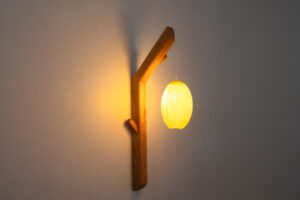
To highlight the paper’s inherent translucent quality, I installed the stitched pieces in wooden shadow boxes with lighting.
The backlighting illuminates the textures and layers, allowing the light to breathe through the paper.
Throughout the process of making and experimentation, I reflected on my family’s stories about how they remember home. The way they reminisce about the landscapes of their youth made me realize how deeply nature imprints itself onto one’s memory. And I began to see mountains and oceans as thresholds—links that have connected the different stages of our lives.
The title Going Back draws inspiration from the Korean euphemism for death, specifically when referring to the passing of elders: ‘돌아가셨다’, which literally translates to ‘they have returned’ or ‘went back.’ I chose this title from the reflection that the process of finding comfort in memories of home, and living through life, is ultimately a journey of returning to the sanctuary we long for.
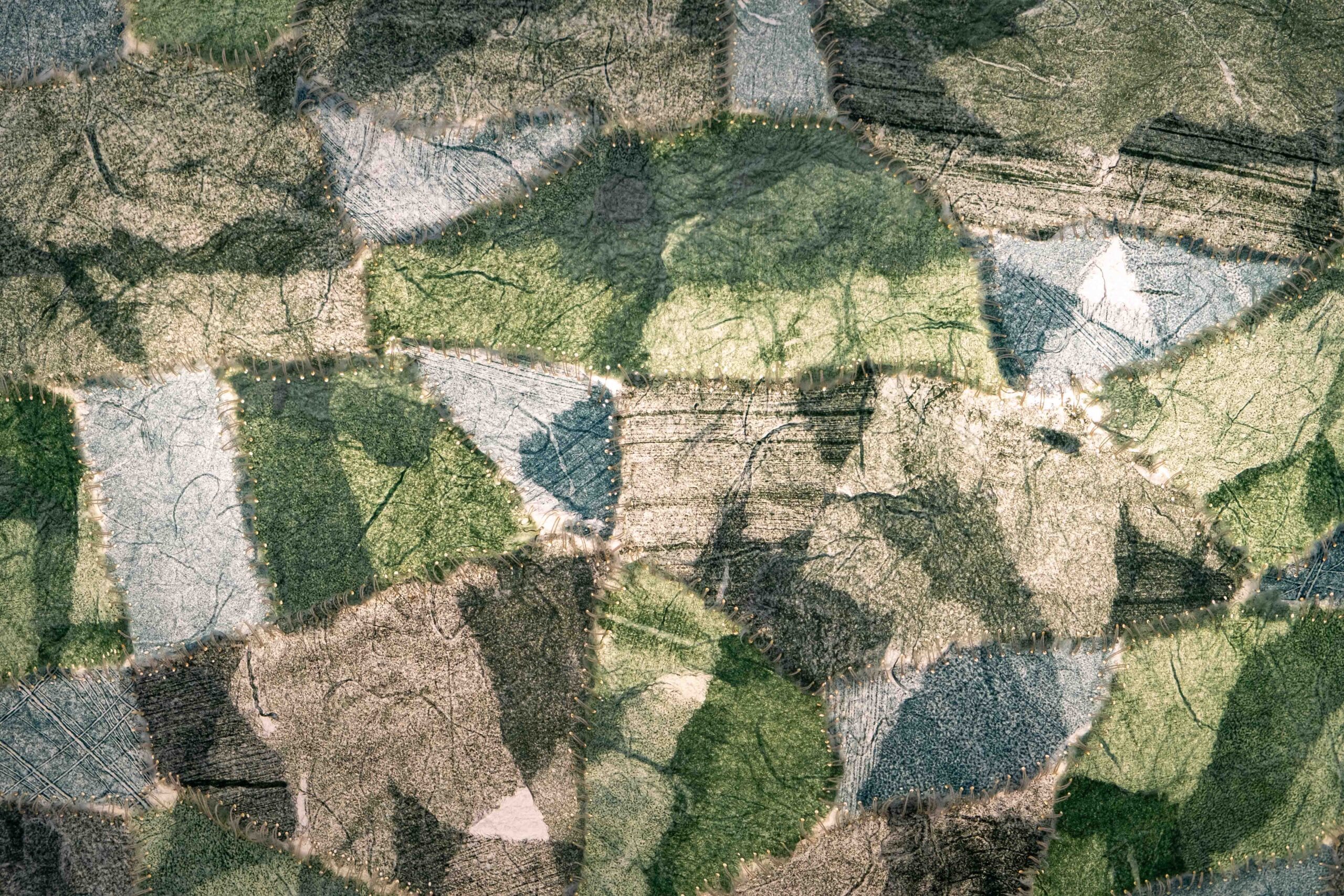
Heeeun Daisy Kim, Going Back (detail), 2026.
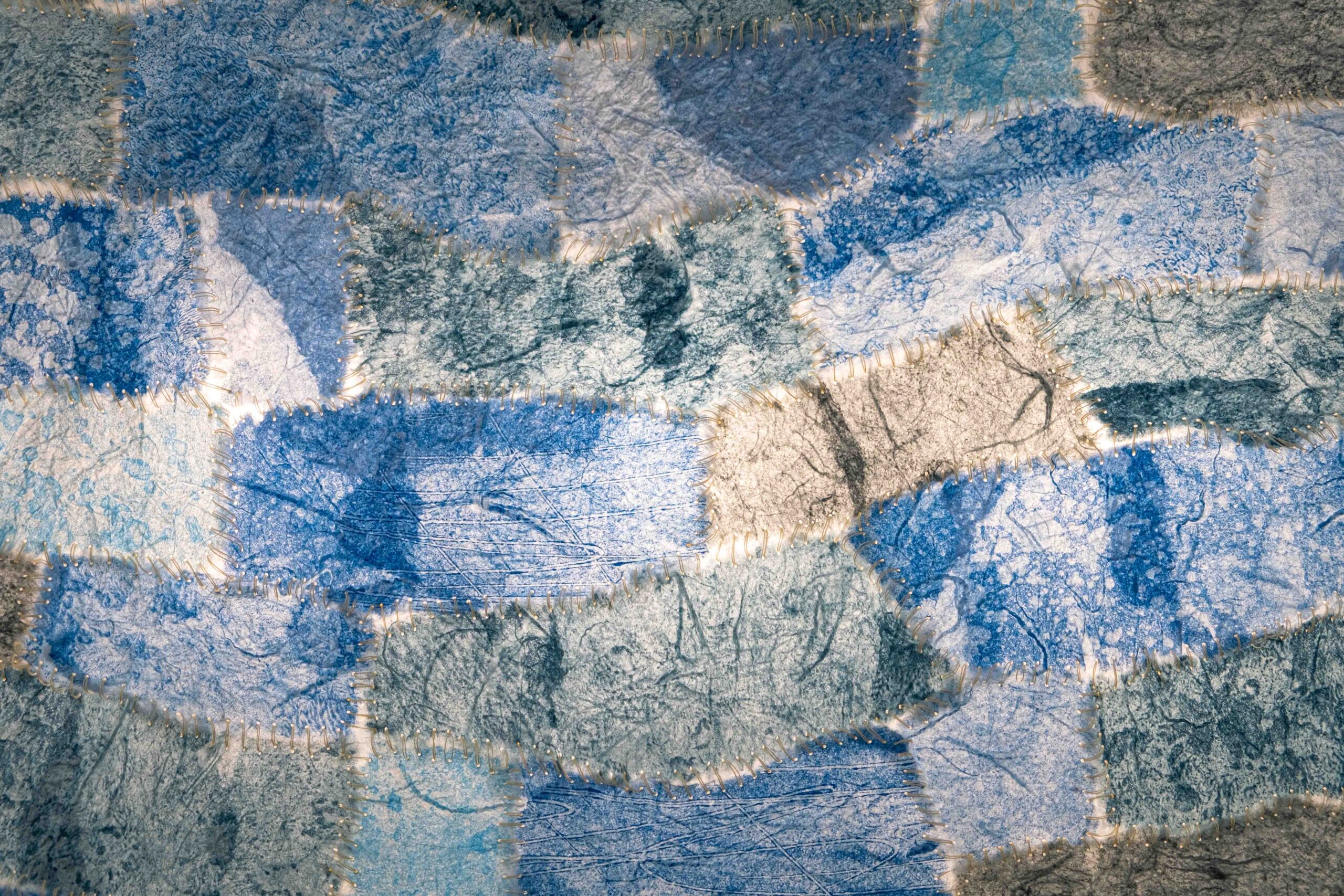
Heeeun Daisy Kim, Going Back (detail), 2026.
In Search of One’s Own Mountain
Collage, mulberry paper with monotype
7”x9.5” & 4.5”x9.5”, 2025
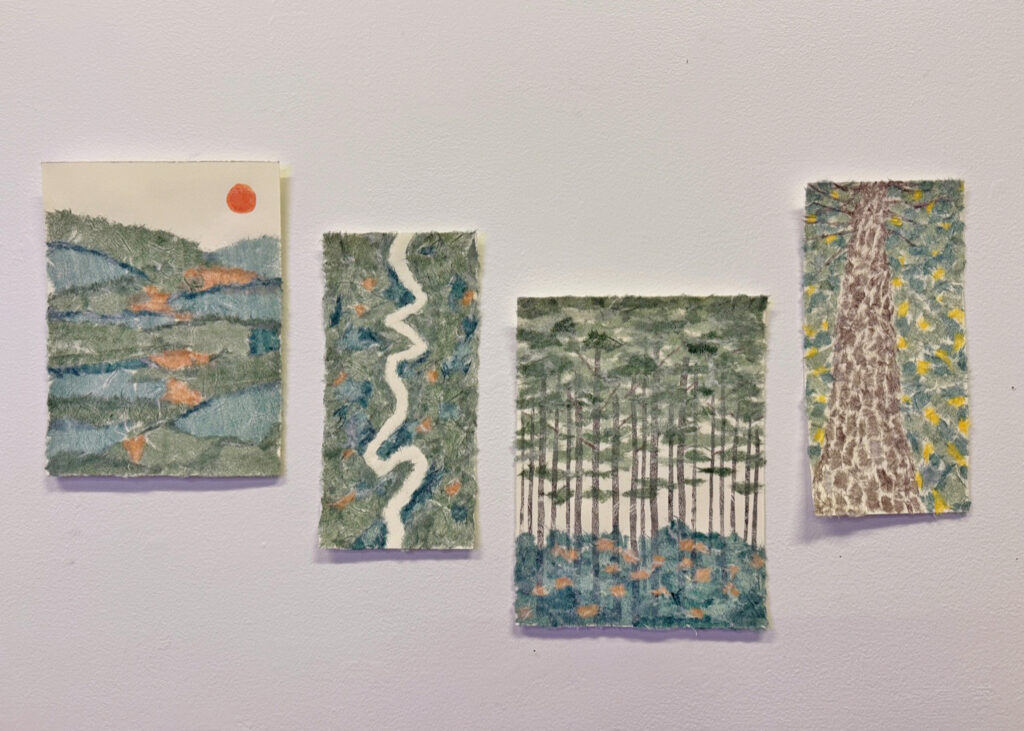
Heeeun Daisy Kim, In Search of One’s Own Mountain, 2025
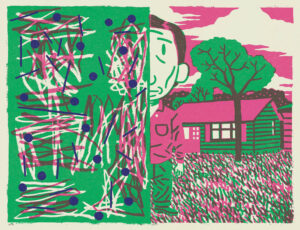
In Search of One’s Own Mountain is a series of collage works recreating images of the mountain pass from memory and longing.
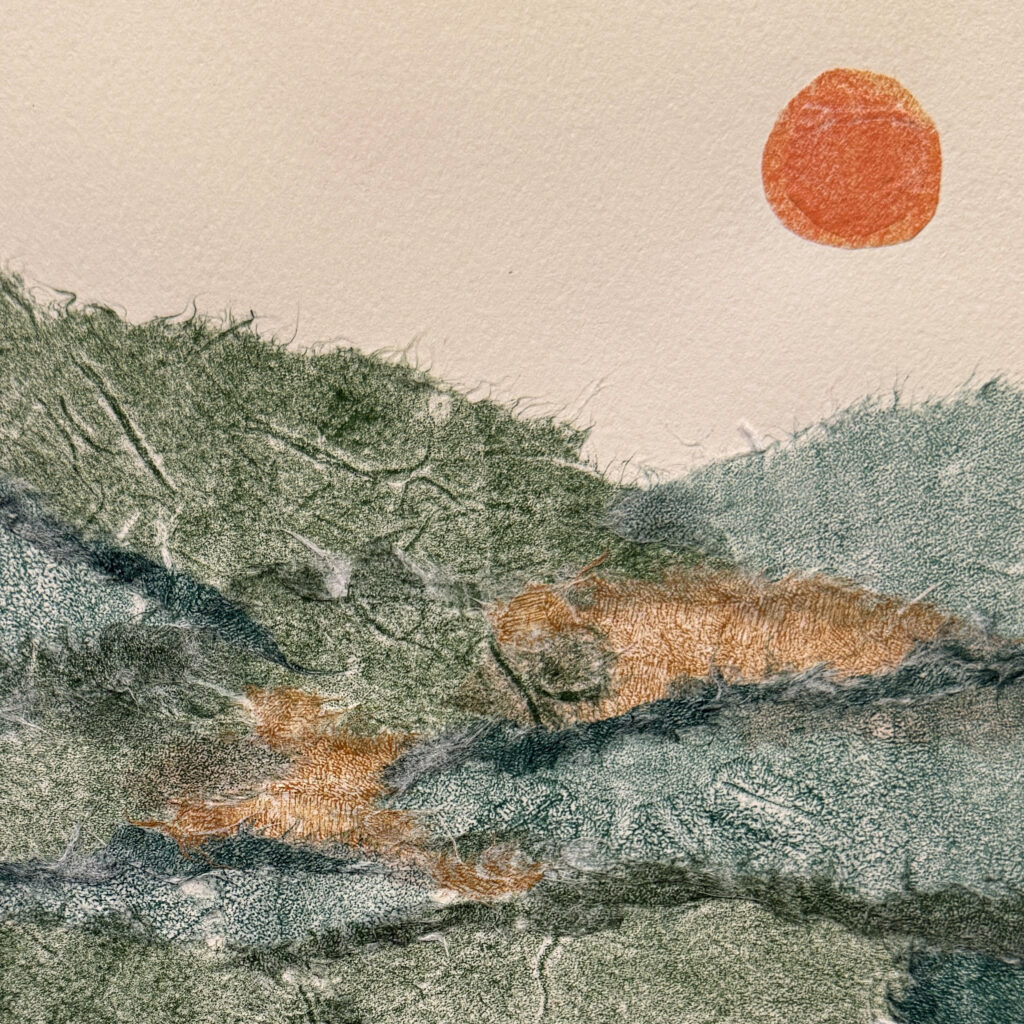
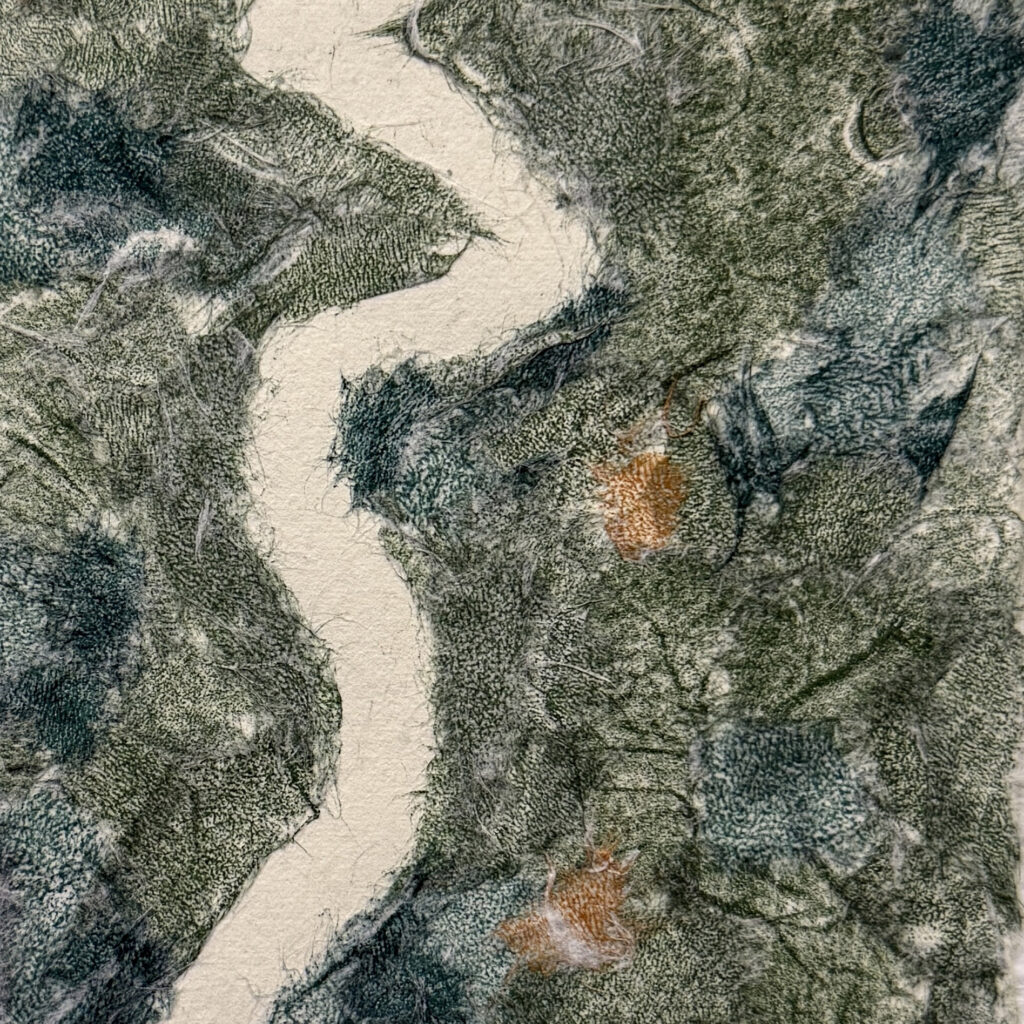
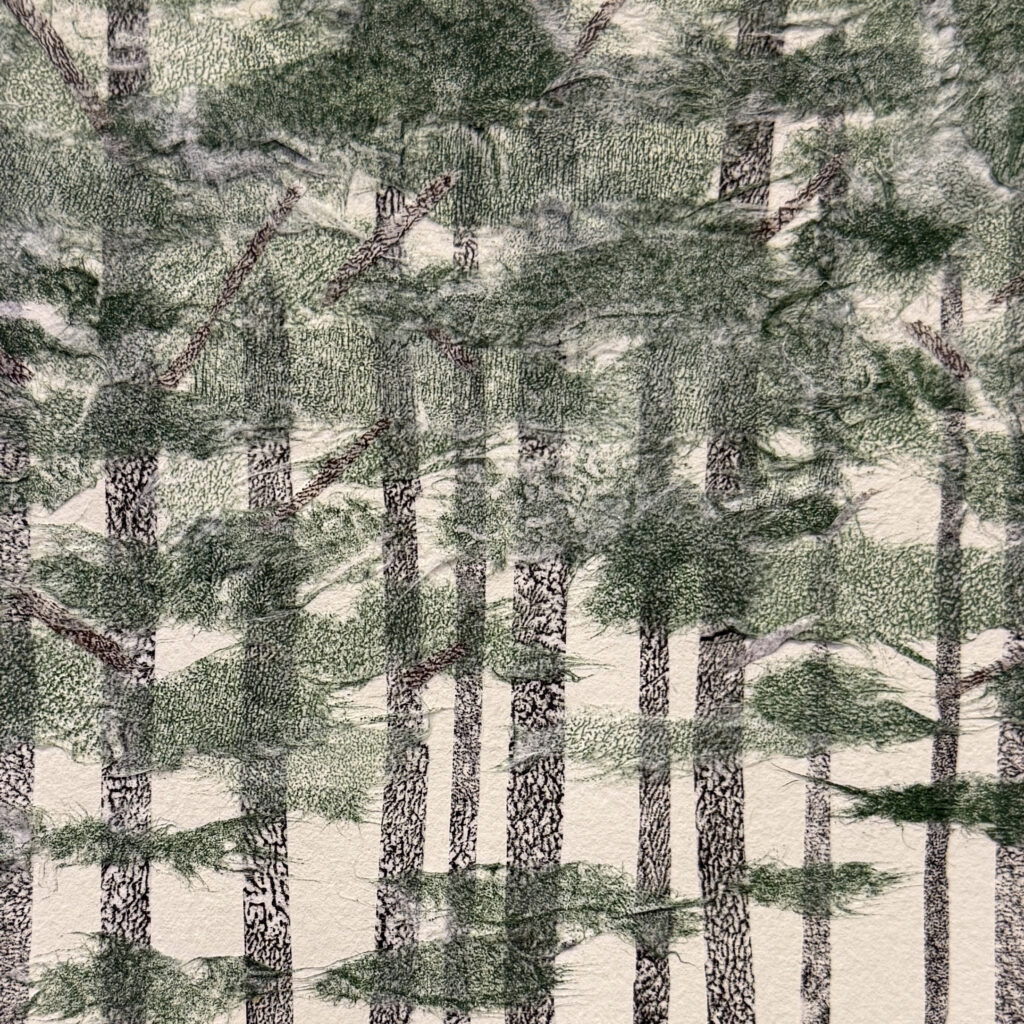
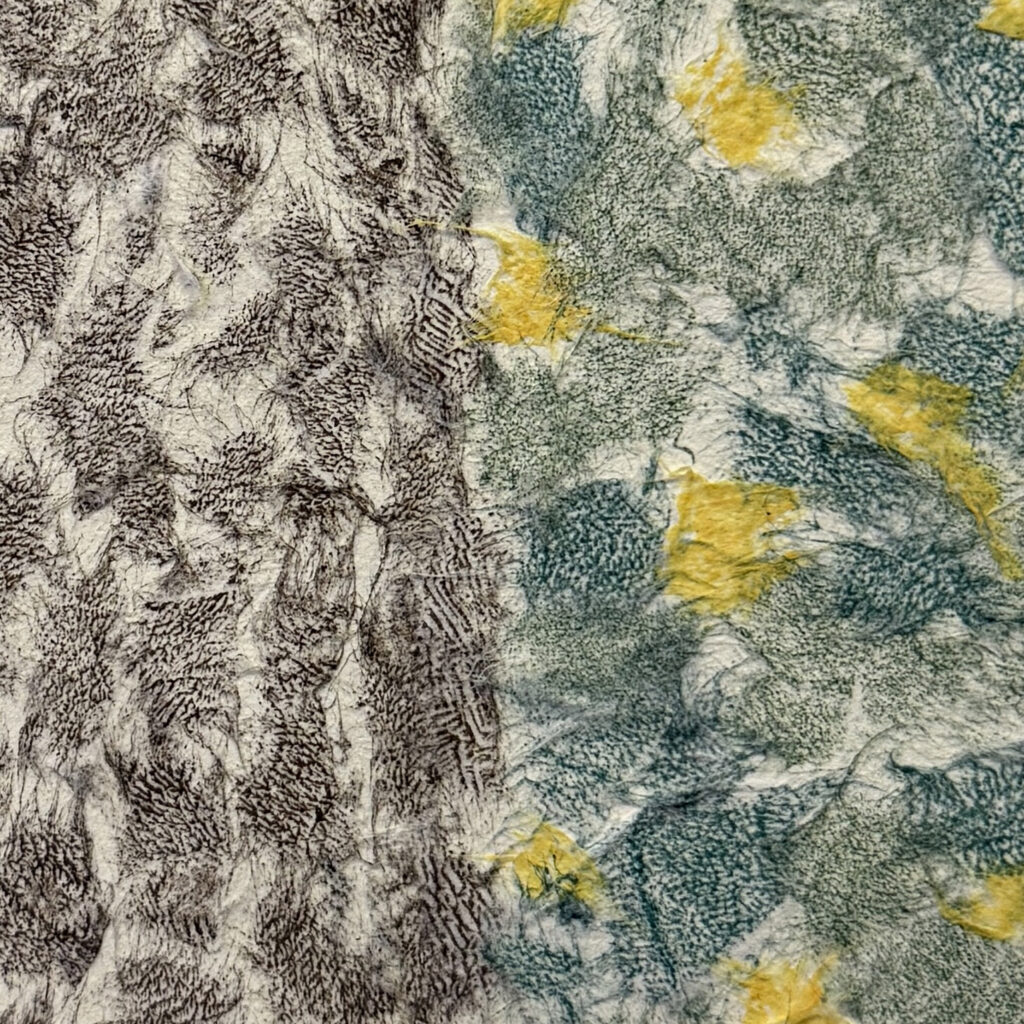
Each sheet of mulberry paper is veiled in silkscreen monotype, then hand-torn, cut, and recombined.
Throughout the series, perspective and composition shift, as the placement of images follows the undulating contours of the mountain pass from childhood memories.
My mind repeatedly returns to the past whenever I feel unsettled. Among these recollections, the scenery of the mountain pass in my father’s hometown has lingered most.
My family crossed the pass every year, and I long for the peacefulness of that space and of that time. Yet, I am aware that the place today would not be the same; how it was once felt may not align with how it exists now.
Through the passage of time and the inevitability of shifting recollections, the place of memory transforms into an imagined scene of lingering contours.
Traced in Thread
Paper, thread, string
2″x1.5″(folded) & 2″x42″(extended), 2025
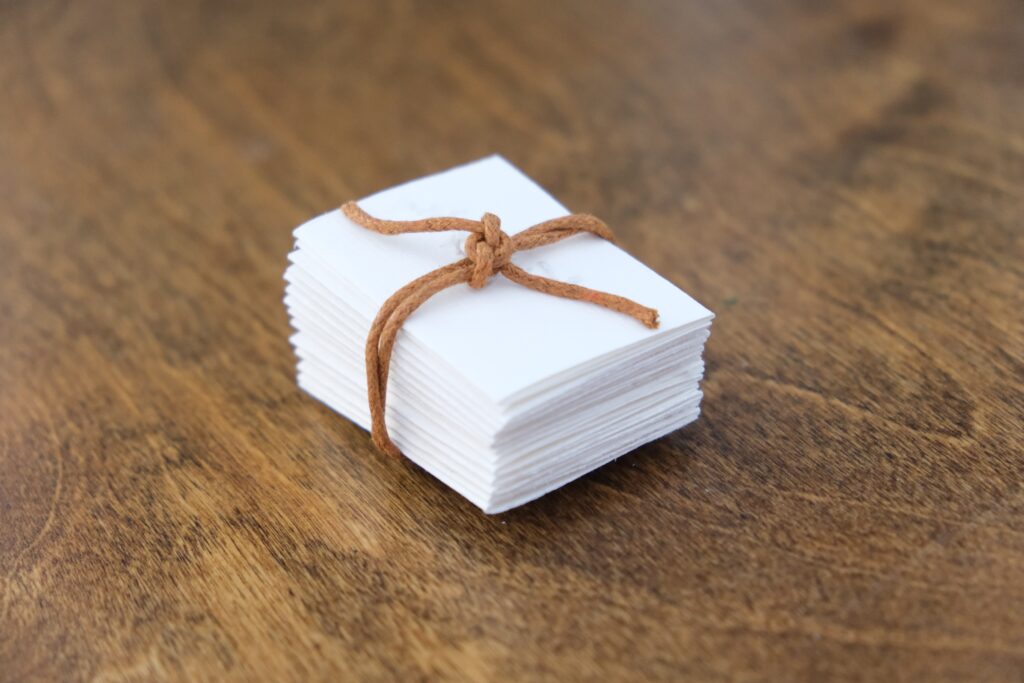
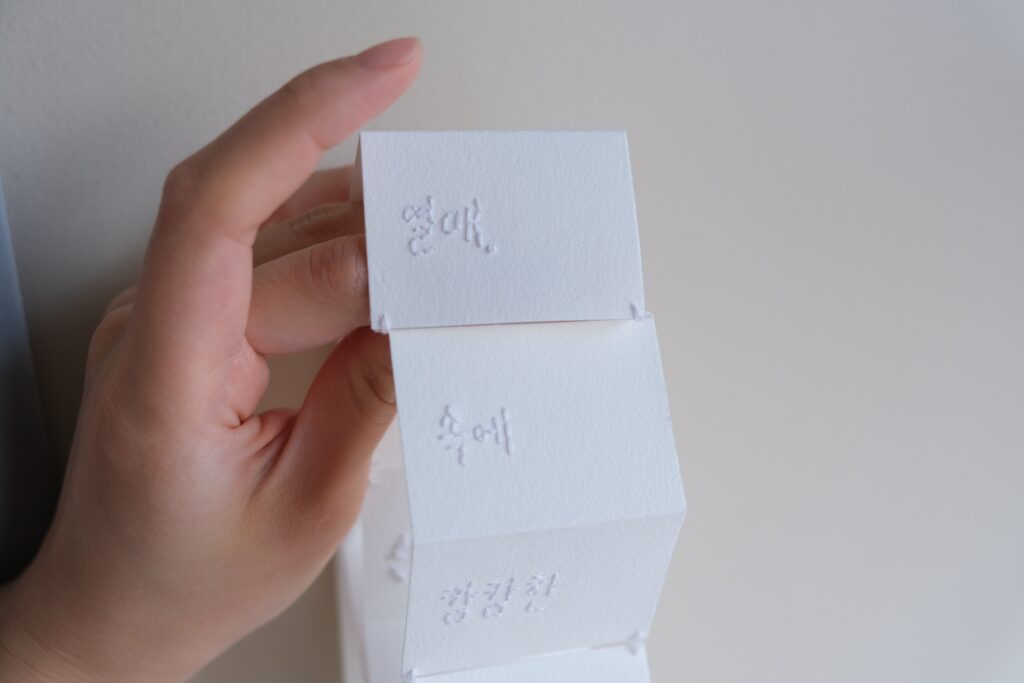
Heeeun Daisy Kim, Traced in Thread, 2025
Traced in Thread is an accordion book that explores reconnecting fragmented language and how words drift apart and come together.
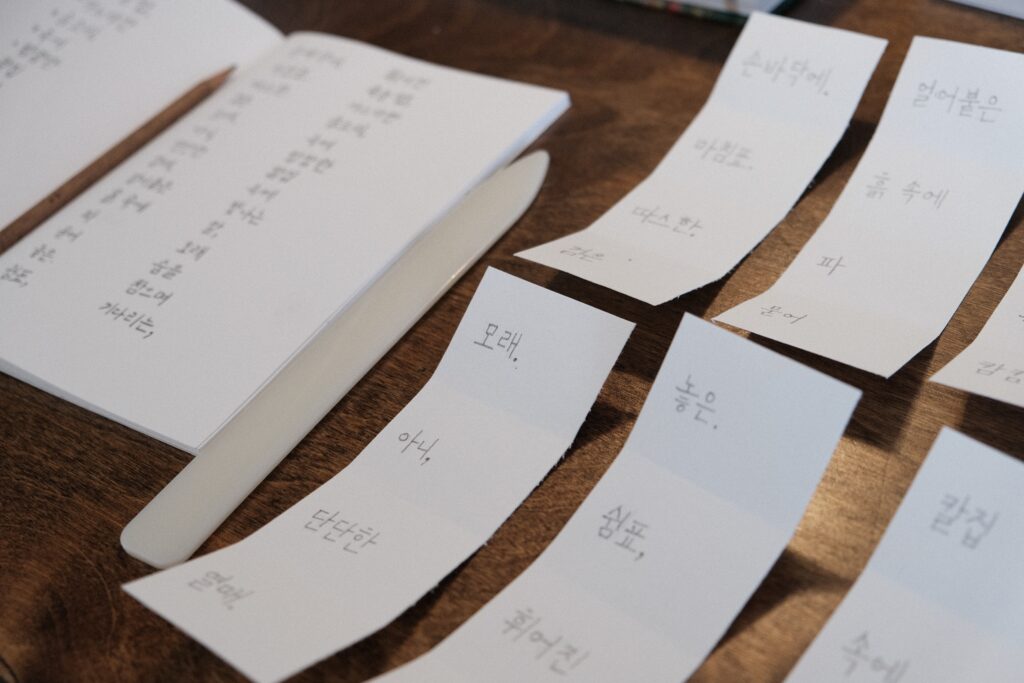
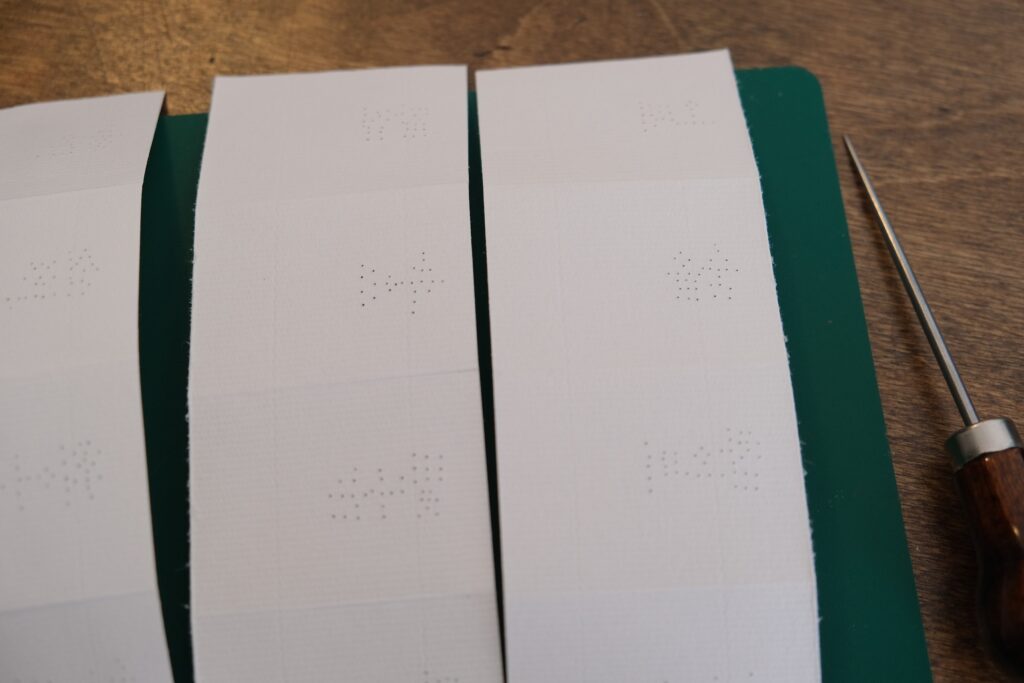
The text in this work is borrowed from a poetic passage in Greek Lessons by South Korean author Han Kang.
The novel portrays two characters who gradually lose parts of their ability to communicate—one has recently become mute, while the other is losing their eyesight.
As a result, they find a way to communicate through touch, relying on the physical sensation of tracing words on the palm.
The sentences were already broken down, but I fragmented them further through stitching to transfer words onto paper, mimicking the process of transcription.
By using only Korean, I experienced how the interplay of words creates different meanings and images when arranged in varied or random layouts.
I also wanted to see how non-Korean speakers would experience the work when the fundamental purpose of language fails, leaving only the visual fragments behind.
Remnant of nights
Black paper, graphite
3.5″x3.5″, 2023
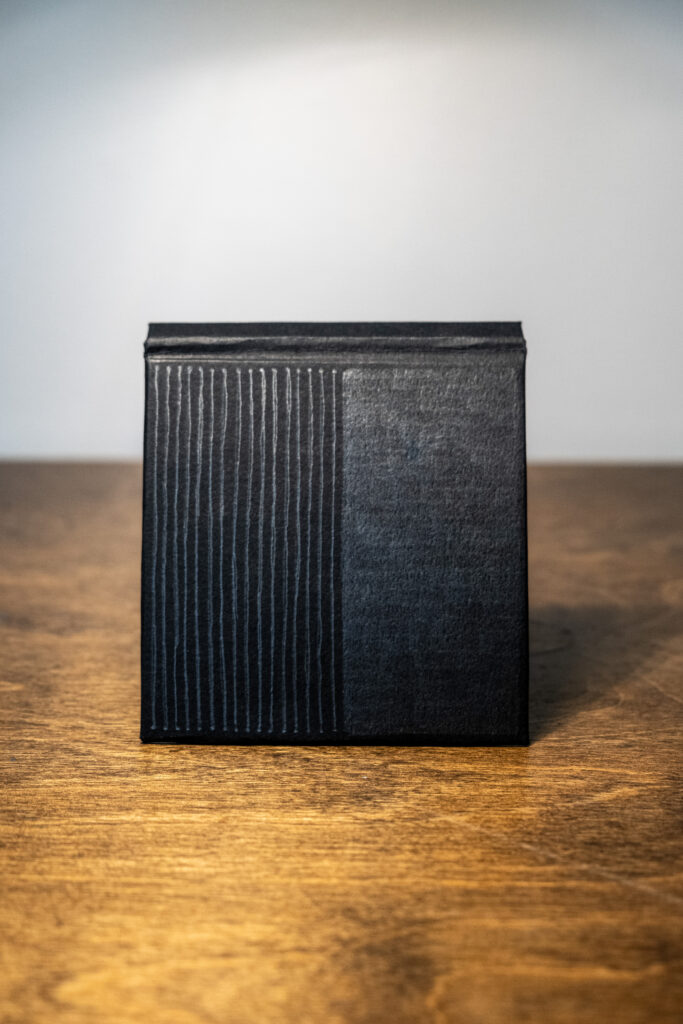
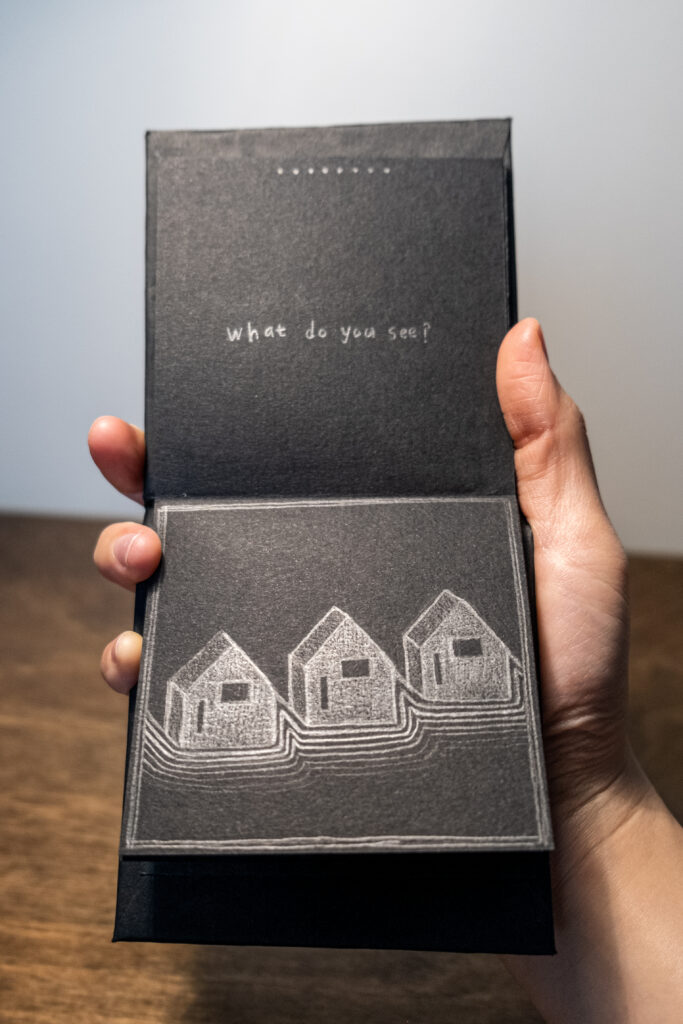
Heeeun Daisy Kim, Remnant of Nights, 2023
Remnant of Nights is a mini book that combines reflections and drawings, conveying a sense of seclusion comes with the night.
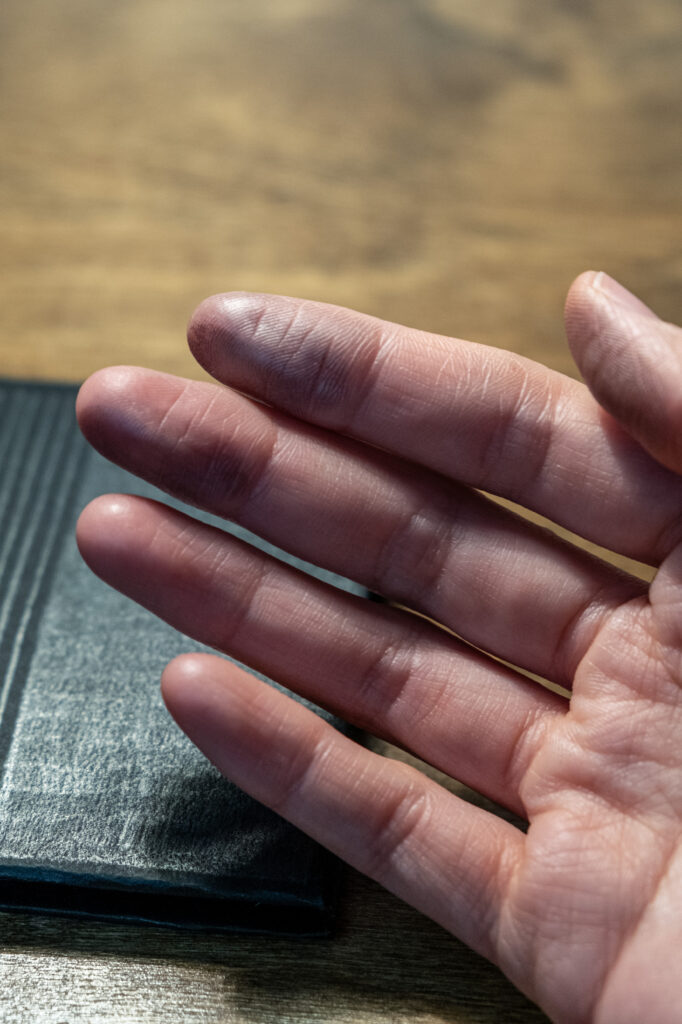
I used graphite on black paper to depict the haziness of indescribable thoughts that emerge in the hours of darkness. The intensity of the graphite’s sheen shifts with different light and angles, adding to the contemplative mood of the piece. I chose not to use fixative so that the graphite can be smudged and worn away over time by the touch of viewers, leaving traces on their hands, much like how moments and thoughts of the night that once felt vivid begin to haze and fade.