homebound, nowhere
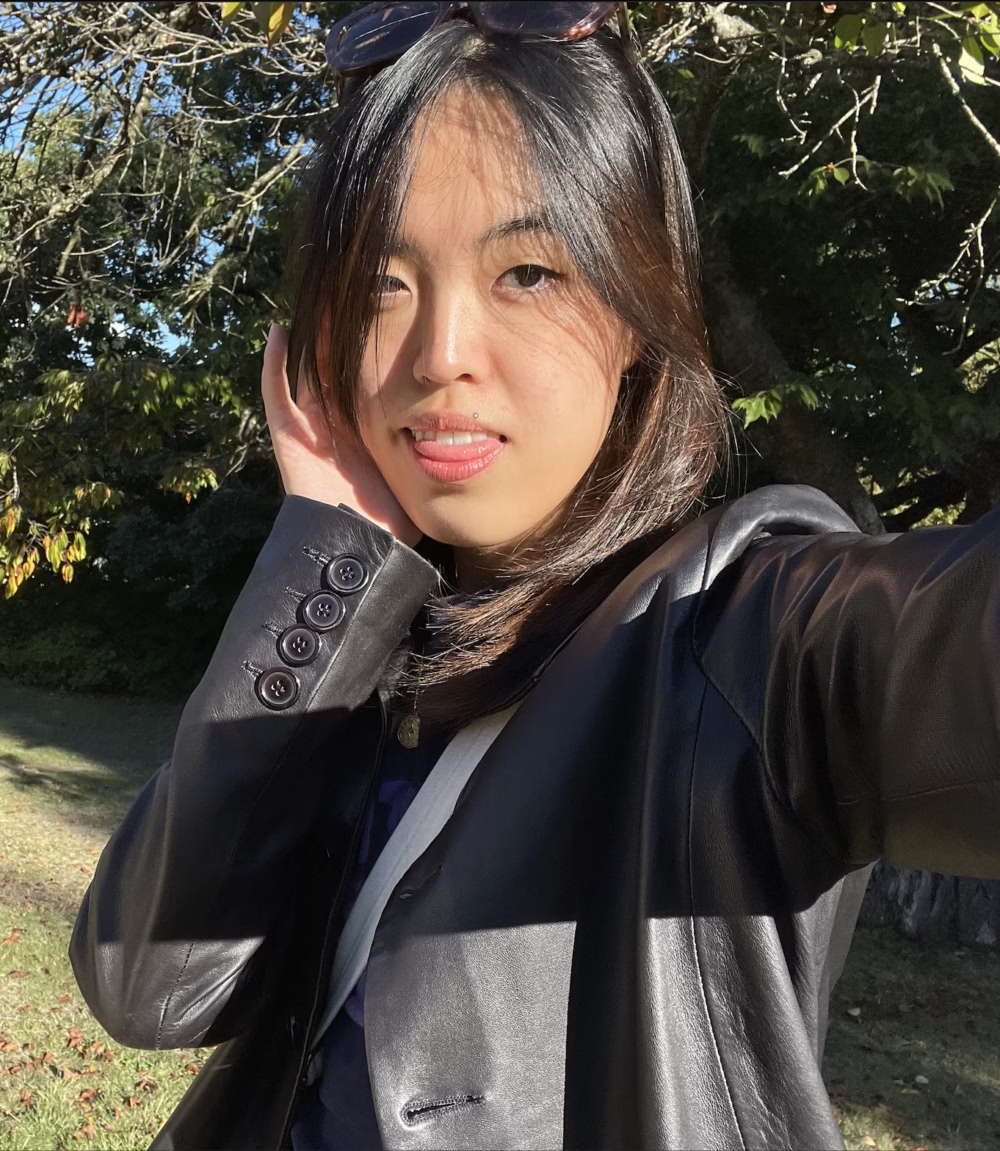
Sophie Wang
See it On Campus: Level 1
located in the long classroom in the sculpture gallery: D1357
Visitor Infoa textile-based installation tracing the contradictions of chinese diasporic identity across love, language, and belonging.
a space where language falters, where love is inherited before it is understood, and where “home” exists somewhere between presence and absence.
project overview – a house without a roof
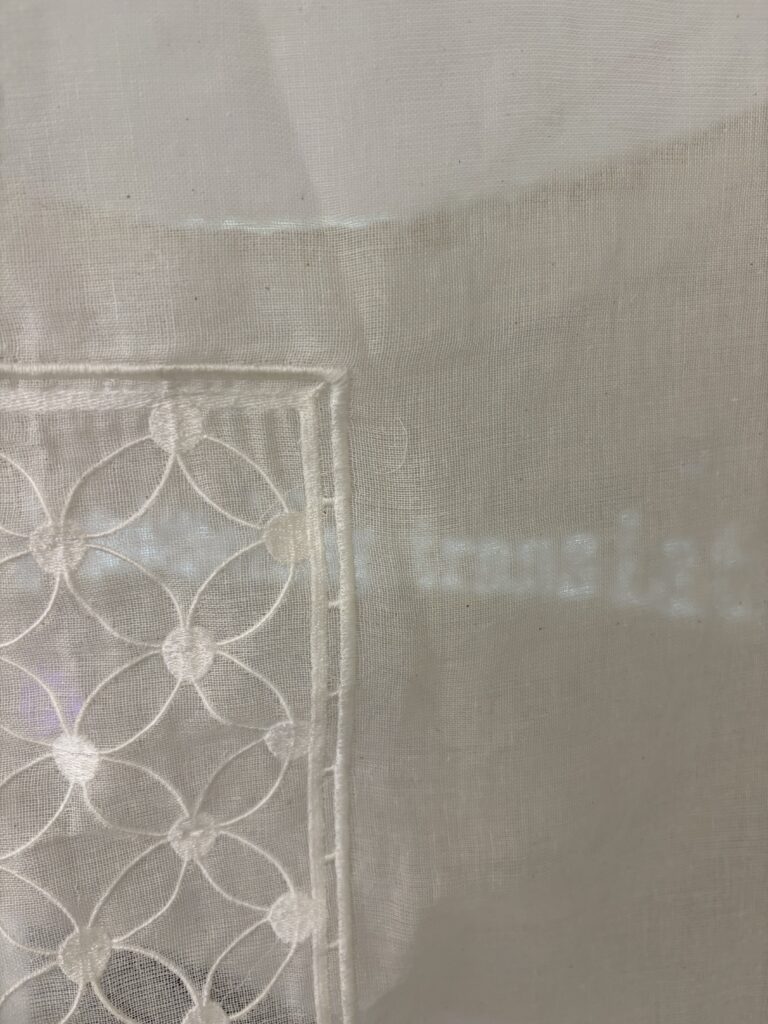
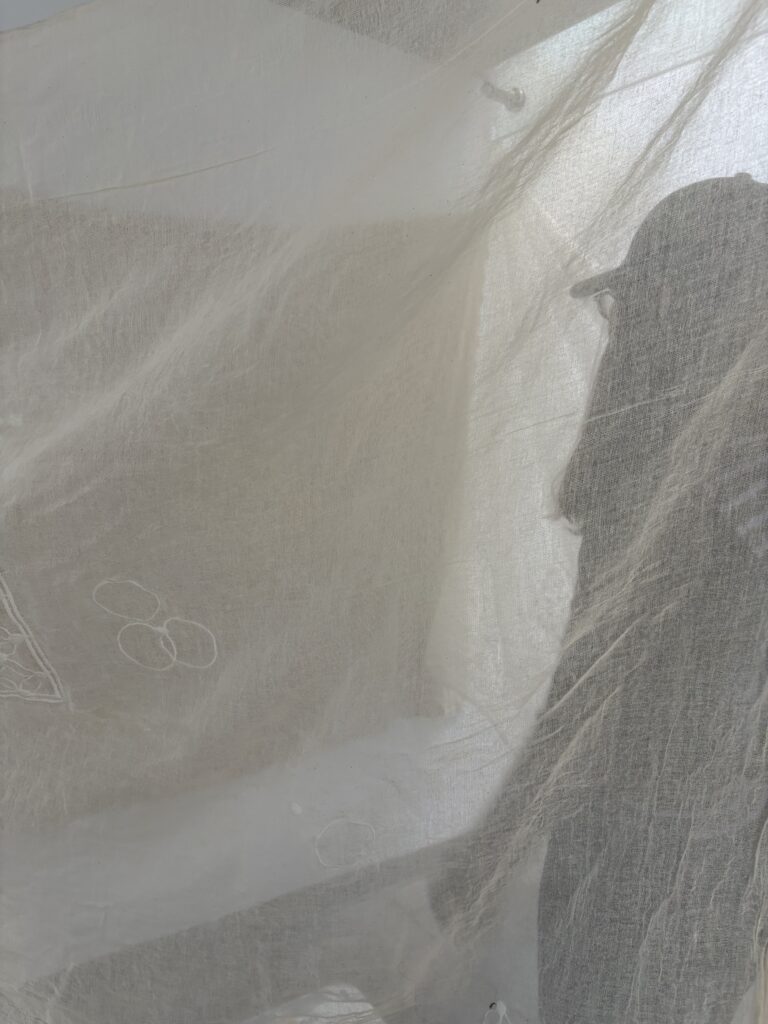
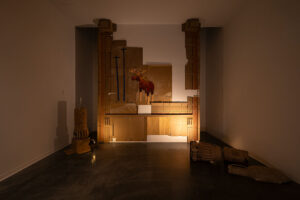
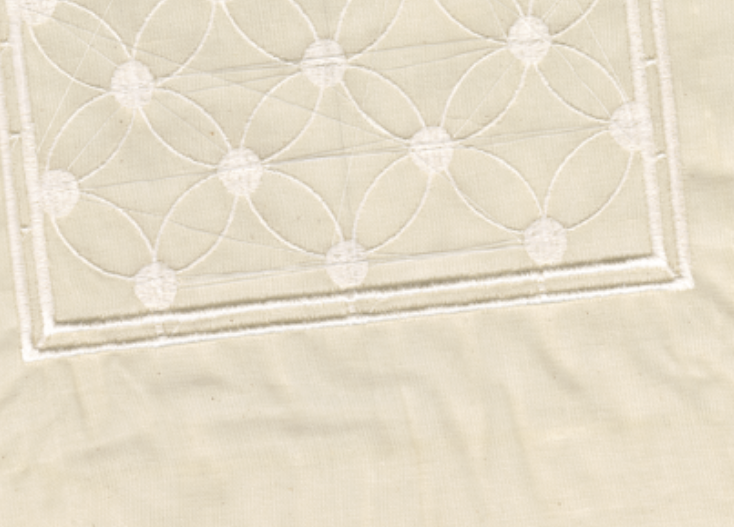
homebound, nowhere is an immersive installation that explores the instability of belonging through textile, digital interaction, and language. a suspended, roofless house constructed from gauze, embroidery, and crochet becomes both structure and metaphor: something you can enter, but not fully inhabit.
this work draws on personal chinese diasporic and second-generation immigrant experience, in which identity is shaped through fragments: inherited language, unspoken emotion, and cultural memory that resist clear translation. rather than presenting a fixed narrative, the installation invites the audience to move through a space of tension, between understanding and feeling, between presence and distance.
design probe – what does it mean to belong?
for many second-generation immigrants, identity is not singular or stable.
language becomes partial.
emotion becomes inherited.
“home” becomes difficult to locate.
simple phrases like “i love you” carry weight beyond their surface meaning, shaped by cultural context, translation, and what is left unsaid.
design often prioritizes clarity and resolution.
but this project asks:
what happens when design becomes a process of making; an exploration of feeling and lived experience?
how can an experience carry contradiction, without needing to resolve it?
approach – from digital to material
the project began with text and digital interaction, exploring poetic slippages between english and chinese.
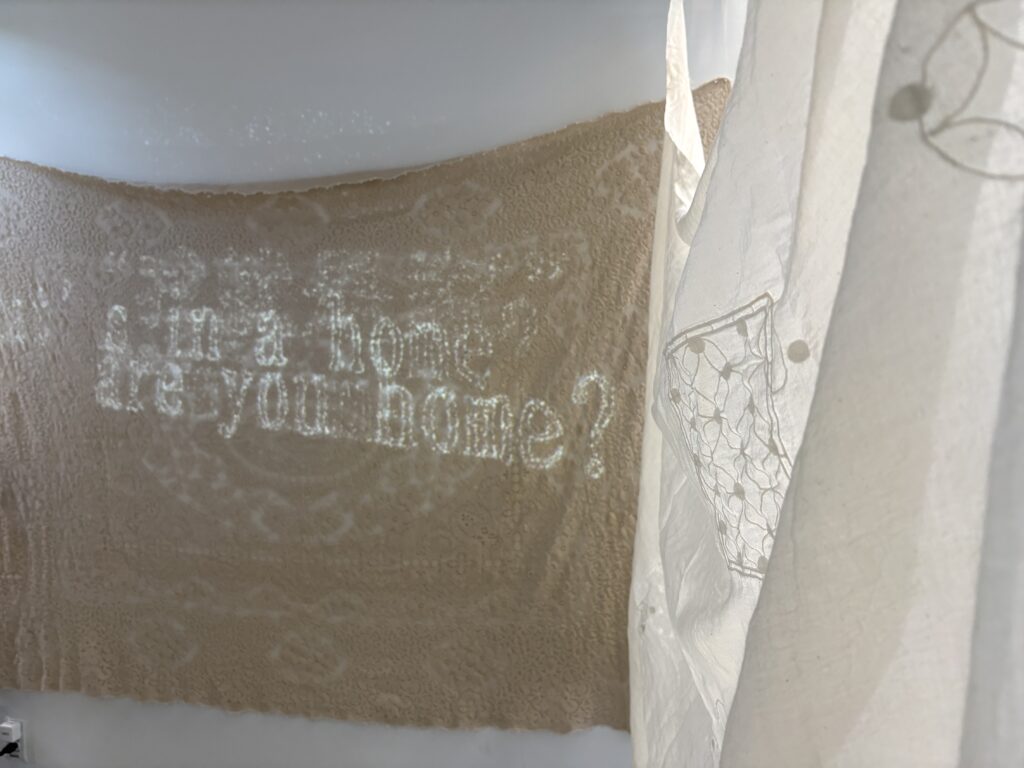
using projection, motion tracking, and sound in touchdesigner, fragments of self-written poetry shift, repeat, and dissolve: never fully stabilizing. language is not fixed, but lived.
“我爱你” / “i love you” / “i / love / you” begin to blur; where “爱” (love) and “i” collapse into one another.
language is felt as tension, rather than clearly understood.
over time, the work moved away from the ambiguity of the screen.
text became thread.
language became texture.
meaning became spatial.
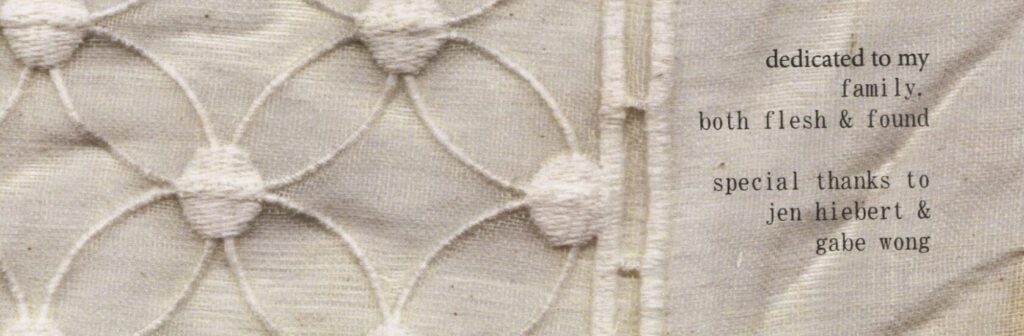
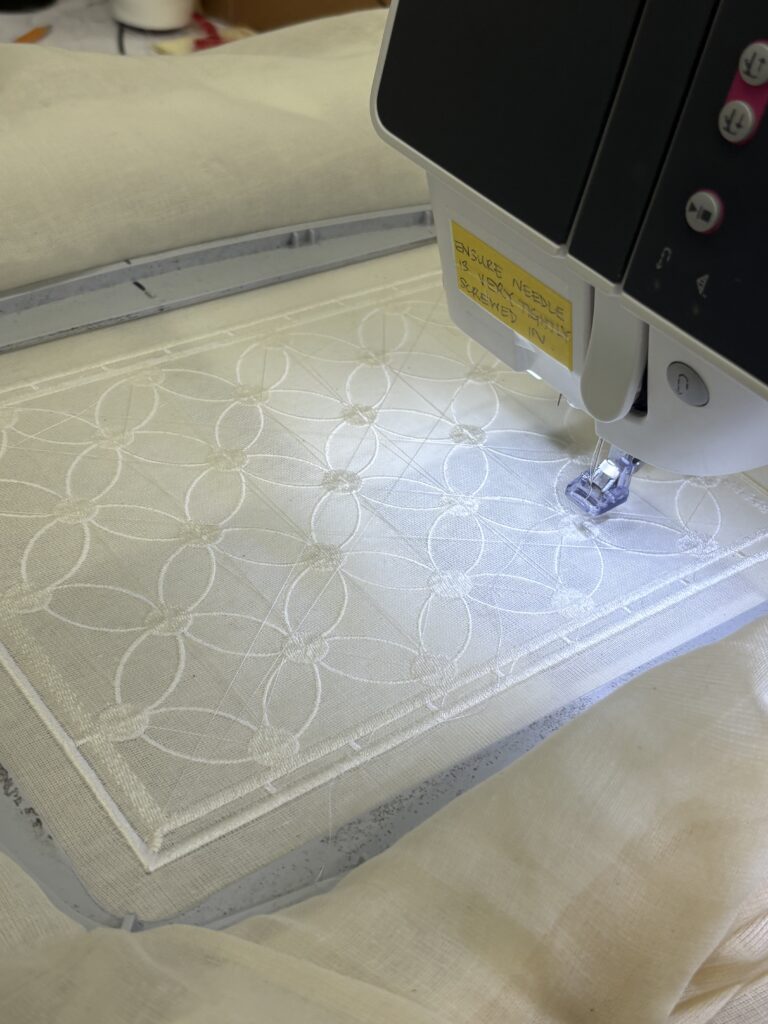
through crochet and embroidery, textile becomes a “second skin” of this project; tied to identity, memory, and care.
this shift brings the installation into something more embodied, tactile, and physically present.
enter the installation