#HAIKUVER
Chris Lee
Imagining neighbourhoods, streets and alleys, nooks and crannies of Vancouver through haiku
About the project:
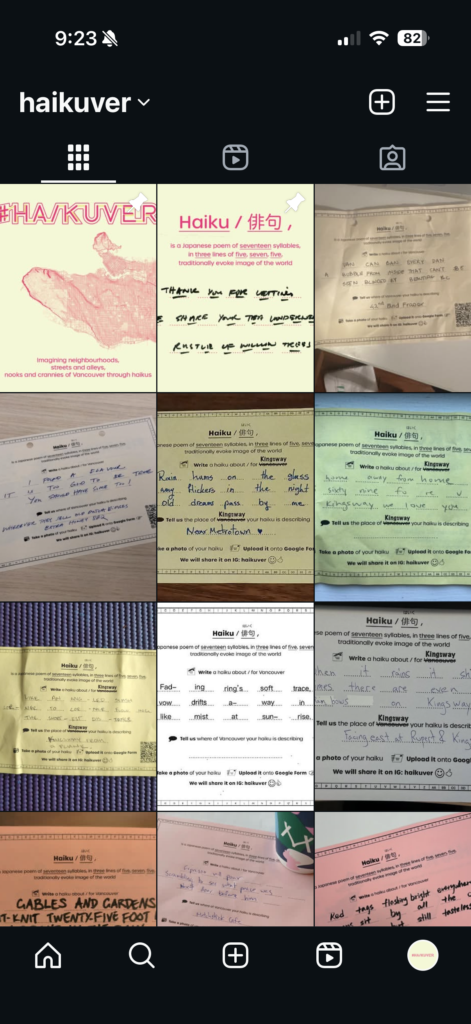
#HAIKUVER is a studio project engaging Vancouverites in collective making. Began with designing a postcard with a call-to-action, inviting participants to write a haiku for and about Vancouver, this design probe includes instructions for writing the haiku and uploading it to the Google Forms portal. An Instagram account (IG: haikuver) was also created to showcase the haikus once made as a shared resource, and has since become the platform I use to interact with participants. The project was then scaled up by dropping them in people’s mailboxes and partnering with Emily Carr University Library, Vancouver Public Library branches and City of Vancouver’s community centres to enable the postcards to be displayed on their community bulletin boards. Until today, the #HAIKUVER Instagram account has featured 39 haikus about Vancouver.
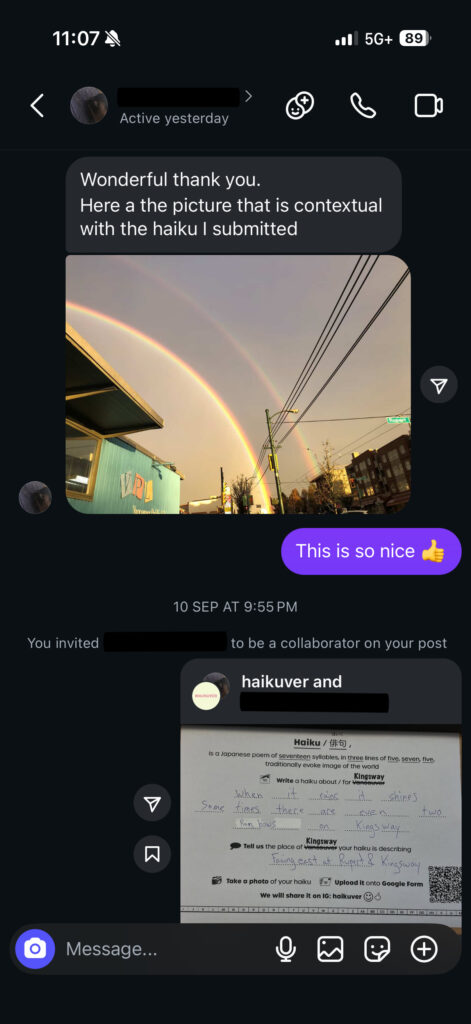
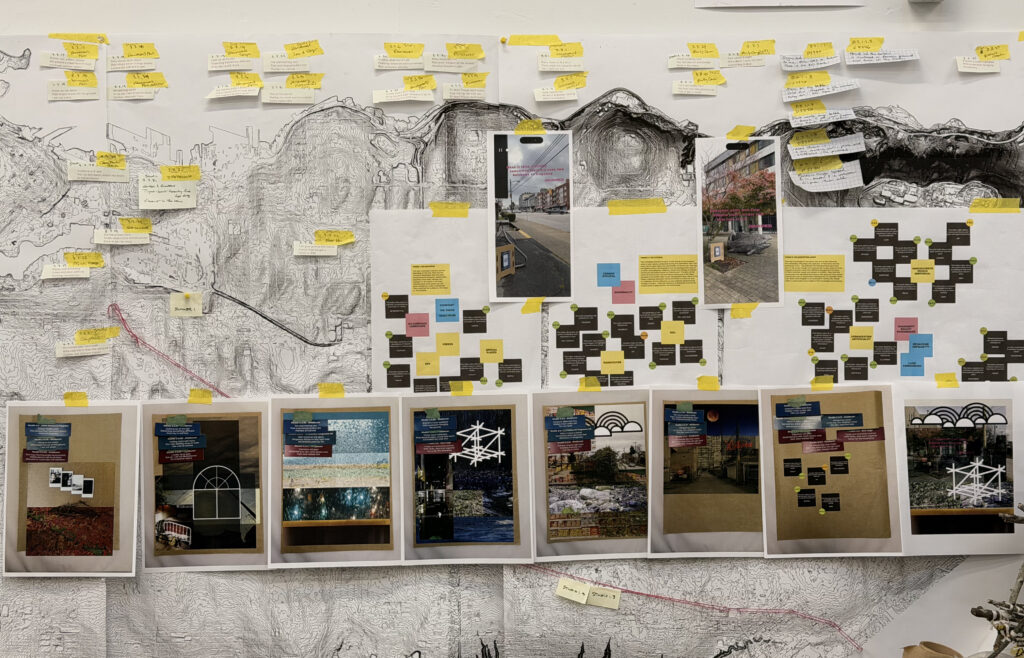
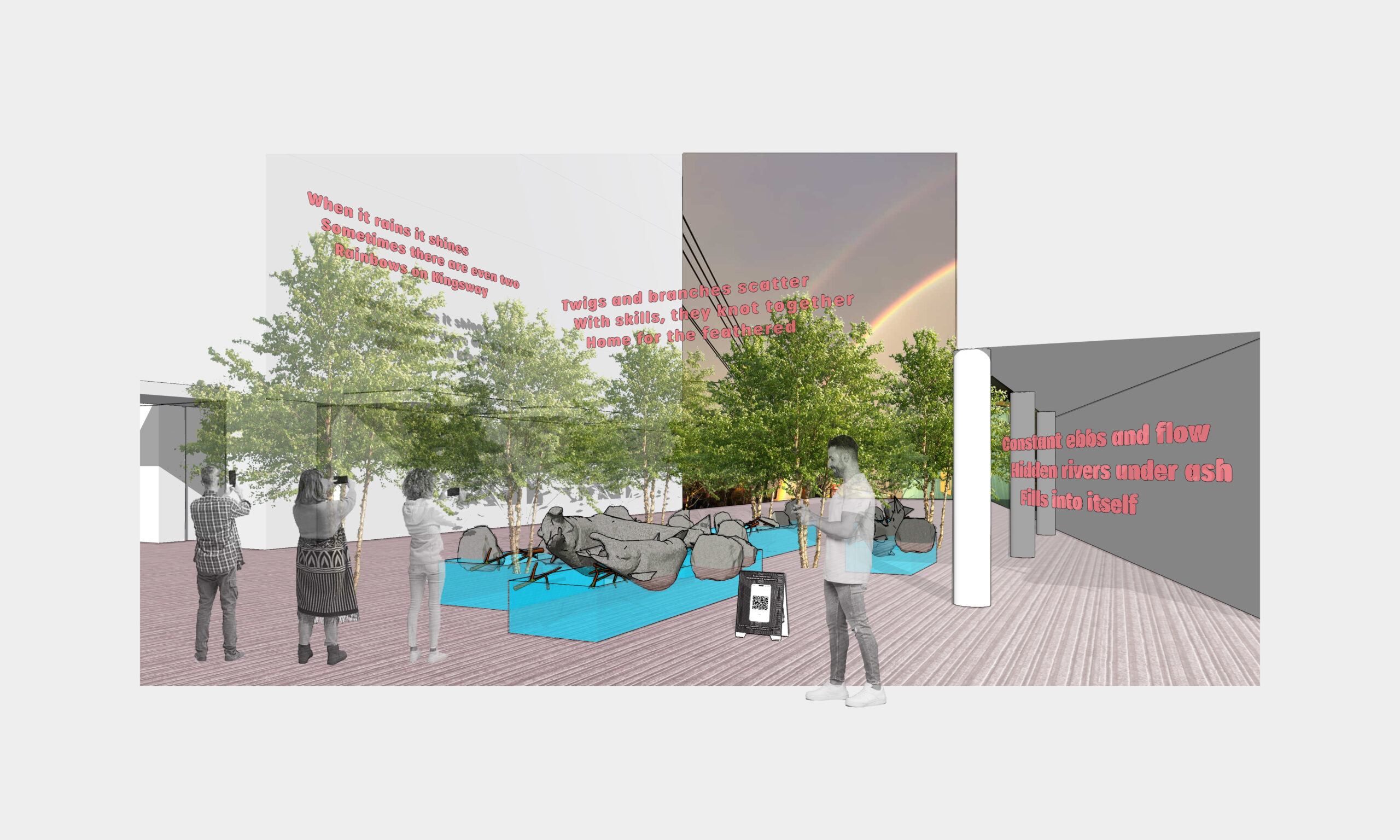
In Fall 2025, an outdoor “exhibition” of the #HAIKUVER project showcased the haikus in the public realm using Augmented Reality (AR) technology. This exhibition was also to be an extension of my studio space during ECU Open Studio 2025. I prepared maps for visitors to my studio space to locate the on-site cues I placed along Kingsway before Open Studio to activate the #HAIKUVER AR experiences.

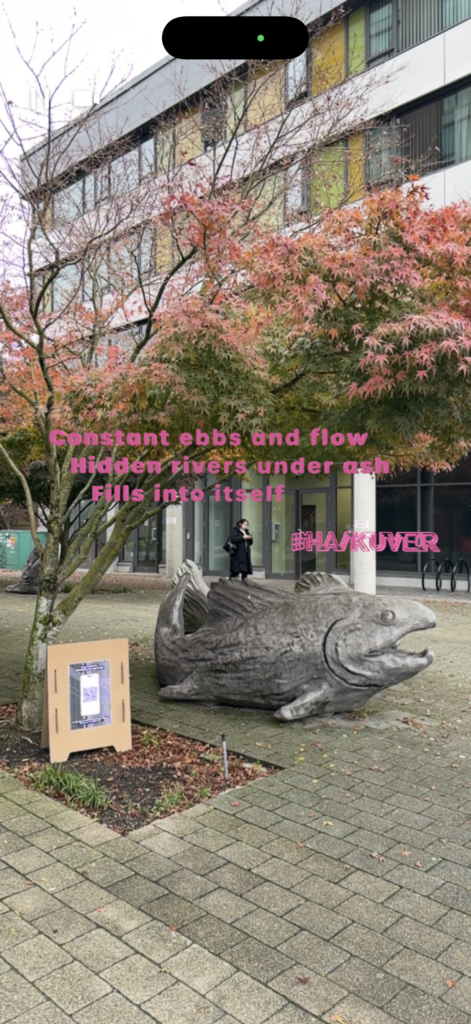
The #HAIKUVER project opened a new dimension to what had otherwise been perceived as the mundane and ordinary everyday landscape by unravelling the social fabric of the city, which is regarded as performative, sensual and psychological. By giving back agency to the place and people to speak for themselves, this project celebrated the richness and diversity of urban life, explored the unscripted spaces of the city, and valued the messy, informal, and intuitive way of design practice. While deciphering the creative responses by the participants, it was comforting to see that there is still room for imagination within our highly ordered, hierarchical, and defined city.
The #HAIKUVER project provided me with new tools to keep expanding the fourth dimension beyond the physical built environment. I wish my work would resonate more with others moving forward, and this project will always serve as the reference point for how everything begins and how it will evolve.
About the design practice:
My work sought to understand another way of design practice that went beyond the conventional ways of knowing through spatial analysis and morphological approaches. It moved away from the patronizing idea that designers are the only ones with knowledge, toward recognizing a possible new pattern of understanding through embodiment, engagement, and collective making. This emerging practice began by shifting away from the land-based approach that treated space as static. Instead, it sought new, deliberately designed ways to understand the everyday phenomenon of interaction between people and places. It was a design practice that prioritizes ambiguity over objectivity, intuition over intellect and collective creativity over individual innovation. By working across the interdisciplinary boundaries, this emerging design practice aims to engage with the vernacular experiences of people and connect to the consciousness of urban society.