is feeling still feeling when time stops? [00:50:04]
Keeyan Suazo
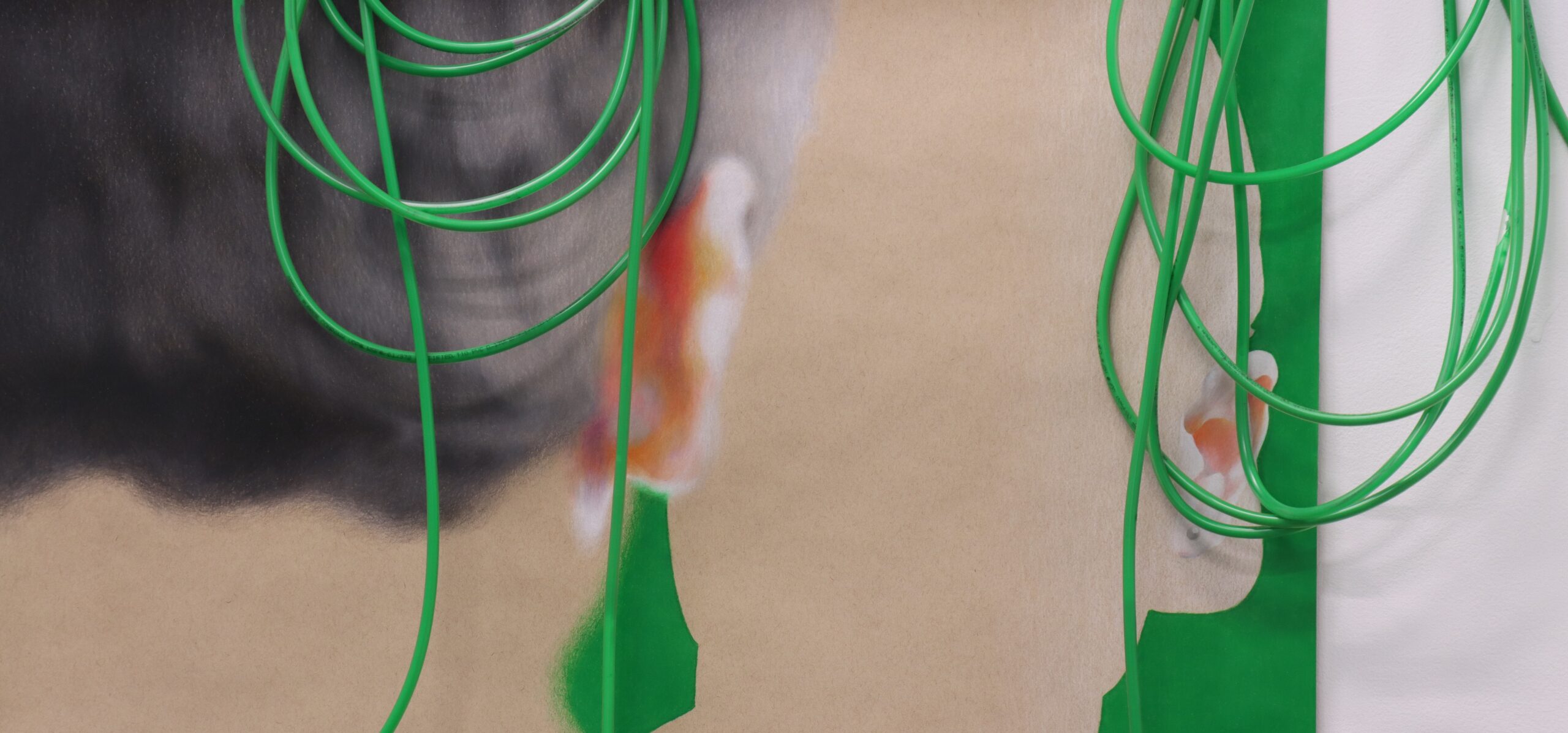
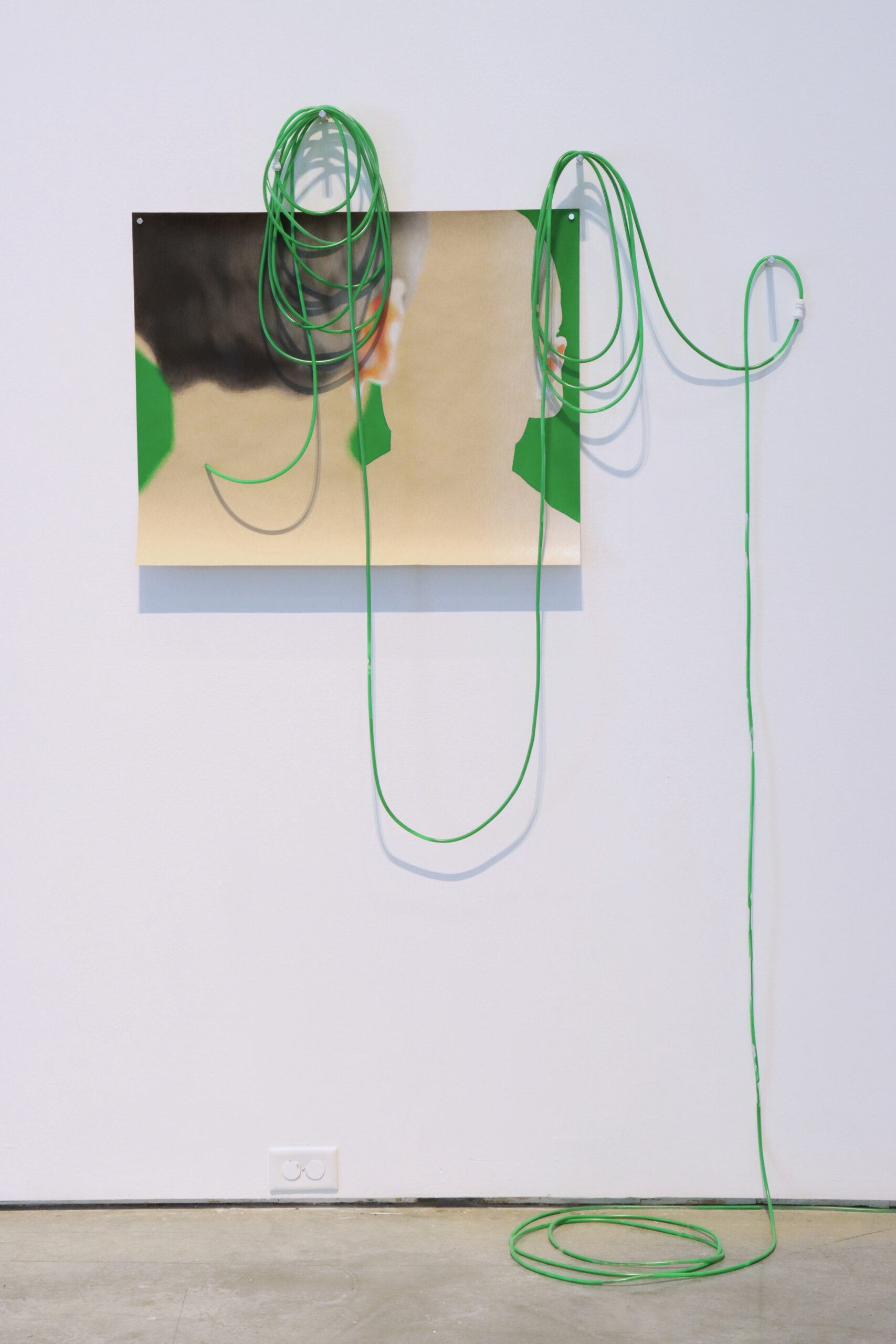
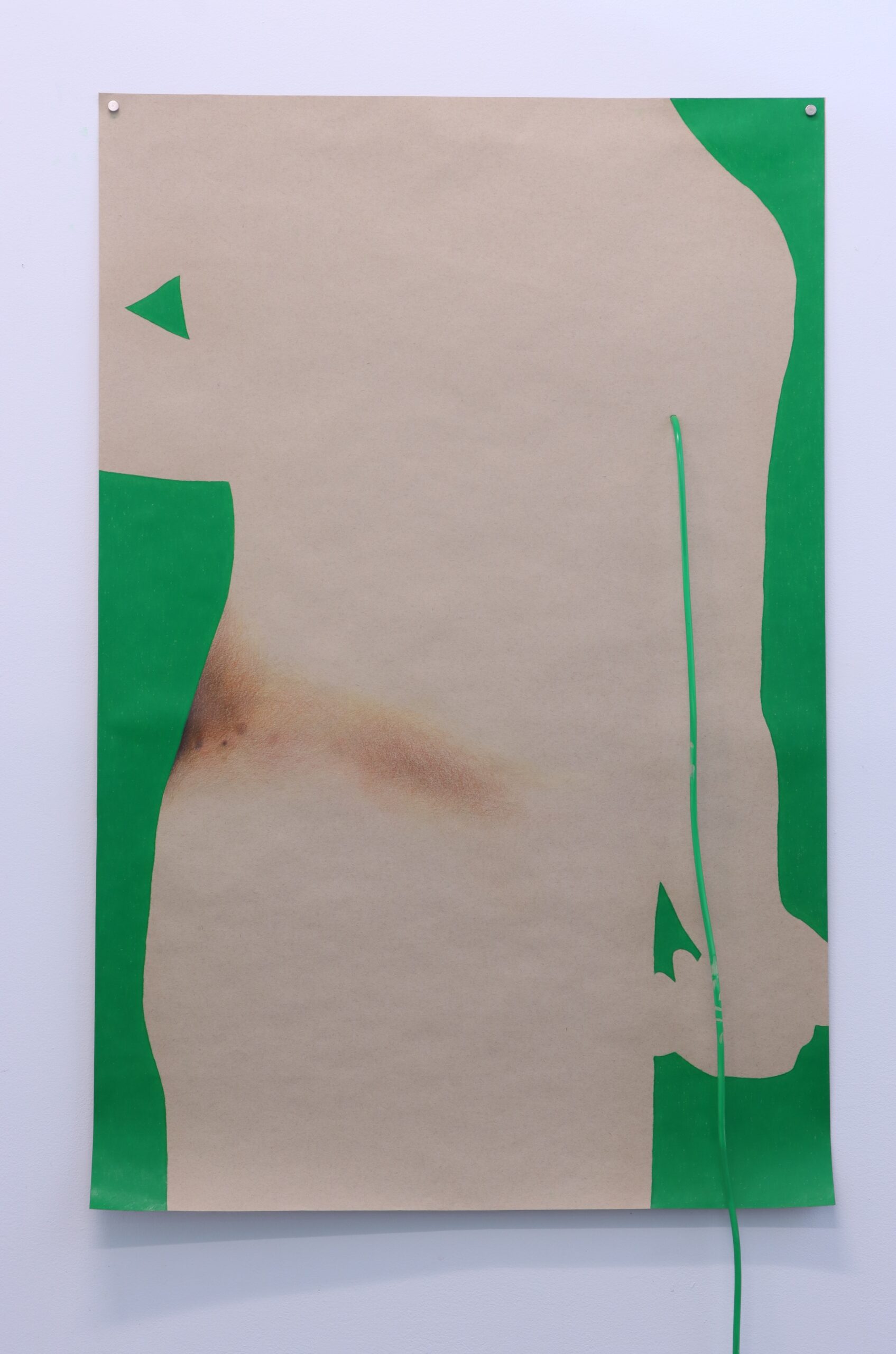
is feeling still feeling when time stops? [00:50:04], detail, 2026, clear vinyl tubing, vinyl paint, tube connector, stand-off post, dried flower, colour pencil, graphite, and wax pastel on paper
What is at stake with the pause?
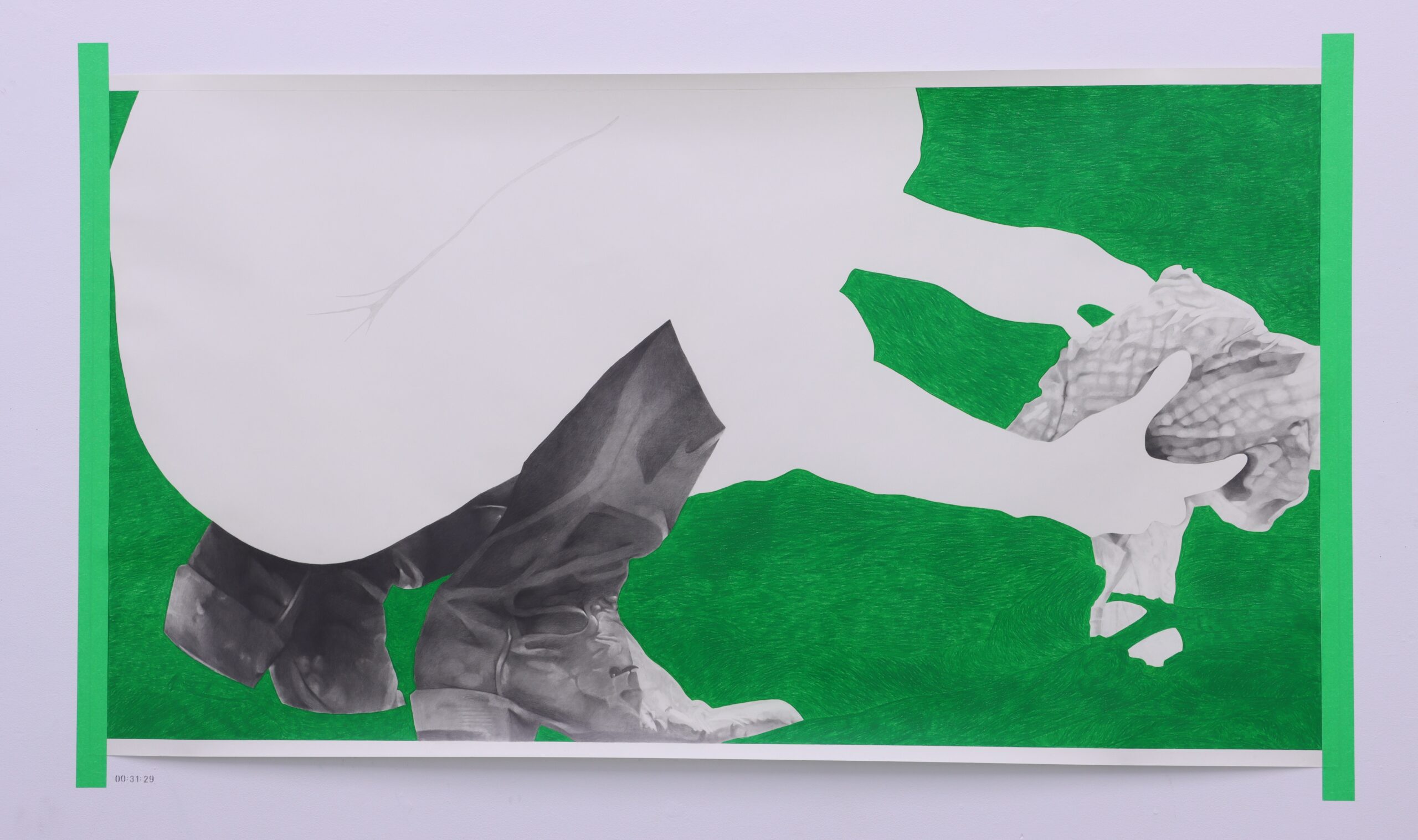
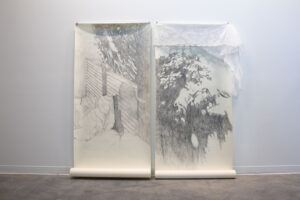
is feeling still feeling when time stops? [00:50:04]appropriates a film still from a queer Filipino film (I will not disclose the title of the film; if you know, you know). This piece is part of the series Projected Intimacy, Simulated Touch, which explores specific recurring intimate queer scenarios within video, photo and written media that occur within a natural landscape. The title of the piece asks us: What is at stake with the pause? Is pause utopic? Is pause optimistic? Is a stimulus no longer a stimulus within the state of a pause? How do we discern a pause from a complete cessation? Are we even capable of differentiating them? What is its function? A pause (rather than a stop) suggests a then and there. A prolonged now, a pause becomes a site of optimism, giving the audience the agency to imagine and foster diverse futures.
is feeling still feeling when time stops? [00:50:04], installation view, 2026, clear vinyl tubing, vinyl paint, tube connector, stand-off post, dried flower, colour pencil, graphite, and wax pastel on paper
Green as a site of queer agency
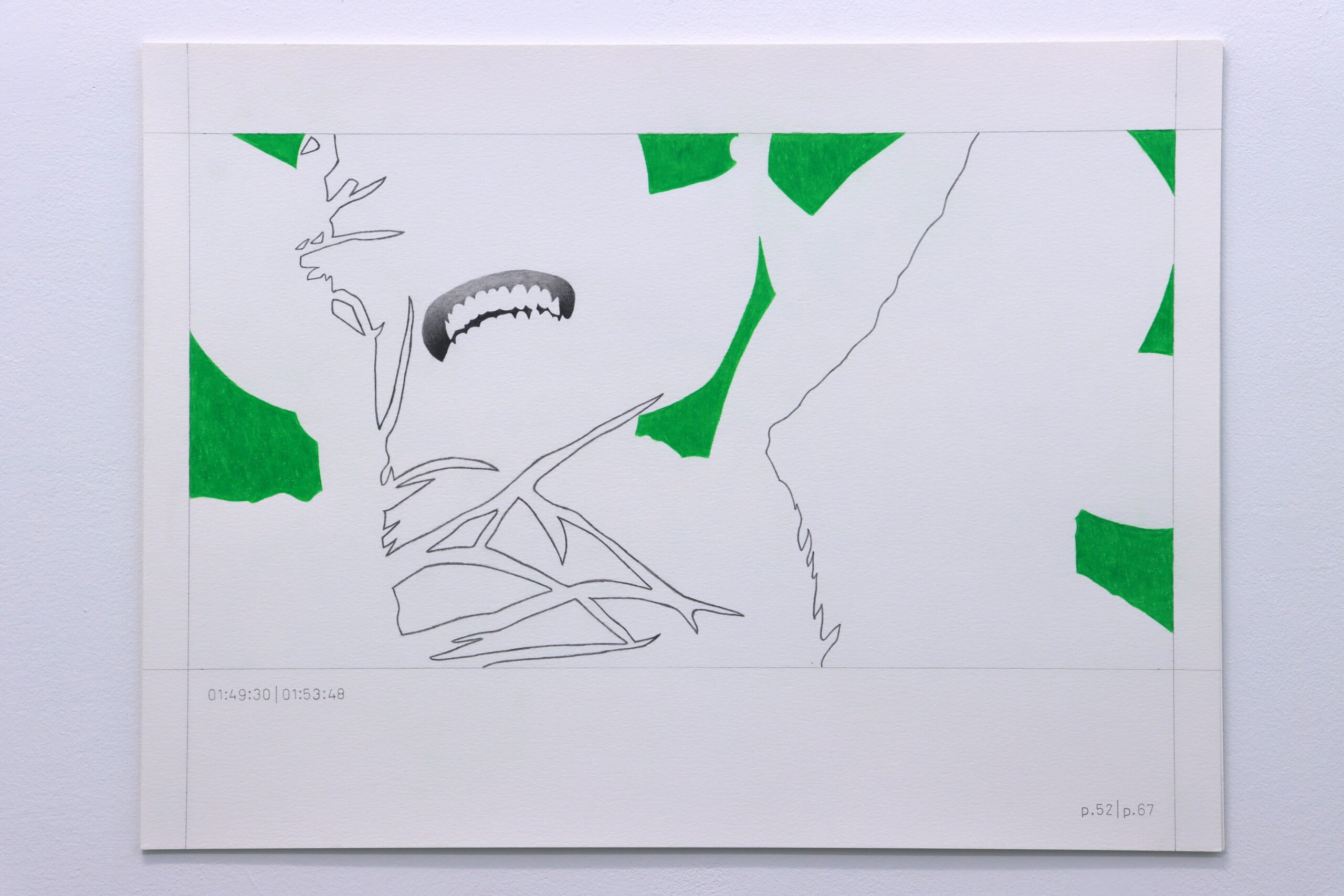
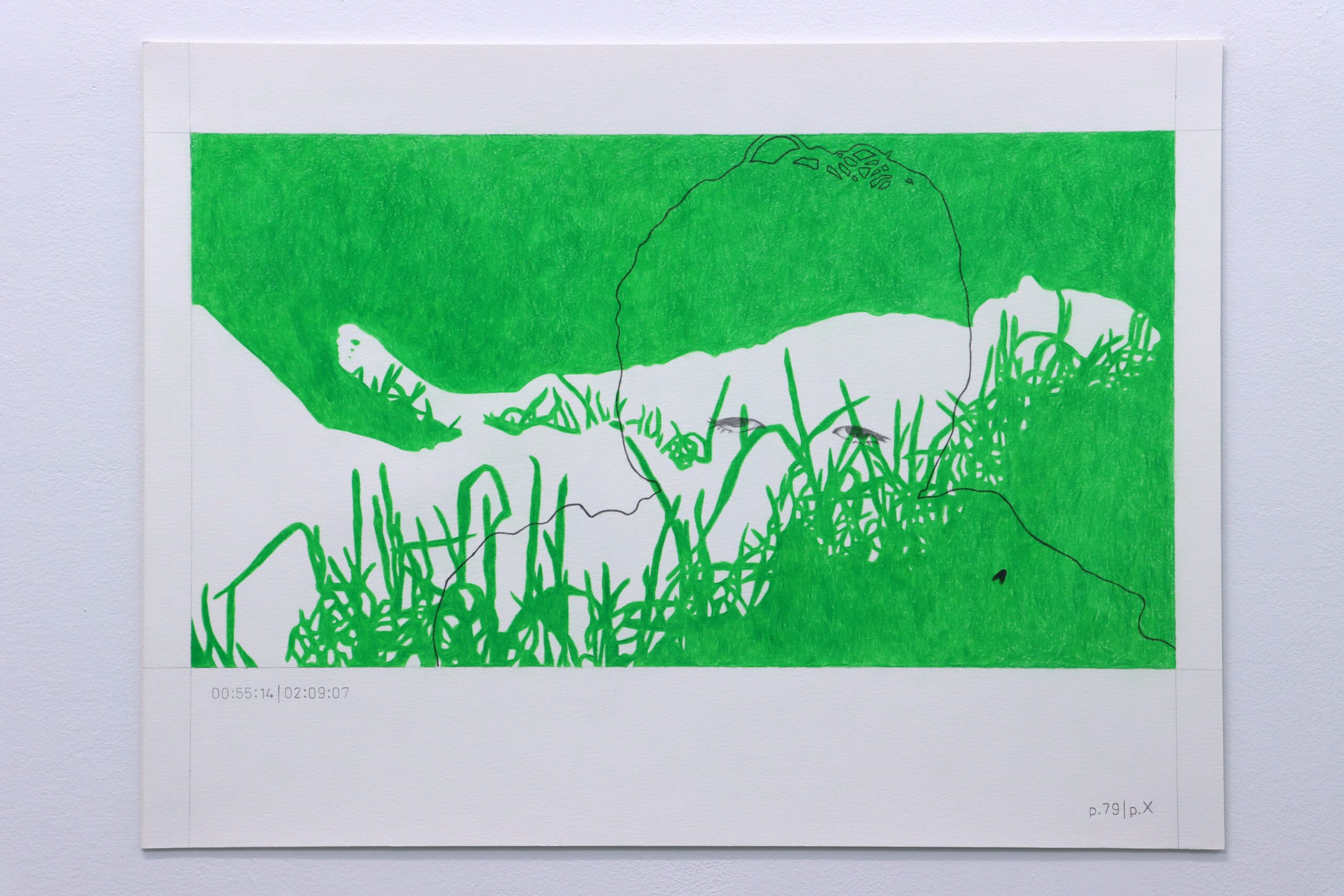
Green is commonly associated with nature, but with its intense lurid variants, it can also signify artificiality and toxicity. The use of green is a quiet intimation of an underlying cultural narrative. In the Philippines, green is an adjective used to describe something lewd (e.g. green-minded means having sexual thoughts). My current research explores the term ‘berdeng dugo’ or ‘green-blooded’, a term for queer men in the Philippines, while engaging it with the term ‘queer of colour’. The origin of this terminology has been quite elusive; nevertheless, green-blooded is a form of applied transparency, a form of othering. I ask myself: What shade of green is my blood then? Chroma-key green (green screens) is often used in film as a backdrop, allowing characters to be edited into any background. I am interested in the pure ambiguity and transportative capabilities of green screens to conjure a portal for imagining a radical queer future where one can be whatever, whenever and wherever they imagine. Chroma-key green becomes a suit to be a spy undetected. This undetection, censorship, hiding, teasing through the blur and silhouette of the bodies becomes a flirtatious gesture. Chroma-key-green-blood becomes a cloak, a teleportation device and a time machine—a portal within our veins. Various connotations with the colour green shift across multiple discourses: as something to degrade queerness, but also as an entry point for imagining queer futurity. Bask in the verdant green glow of potentiality.
Untitled [01:49:30|01:53:48] [p.52|p.67], 2025, graphite and colour pencil on watercolour paper, 18” x 24”
Untitled [00:55:14|02:09:07] [p.79|p.X], 2025, graphite and colour pencil on watercolour paper, 18” x 24”
to prolong looking [00:31:29-…], 2026, colour pencil, graphite and wax pastel on paper, 42″ x 78″
within [a fountain of blood, a faucet] [03/13; 9750], 2026, clear vinyl tube, vinyl paint, colour pencil and wax pastel on paper, 27″ x 70″
/ maging luntian / maging kahit sino / maging kahit ano / maging kahit saan / maging kahit kailan /
Keeyan Suazo
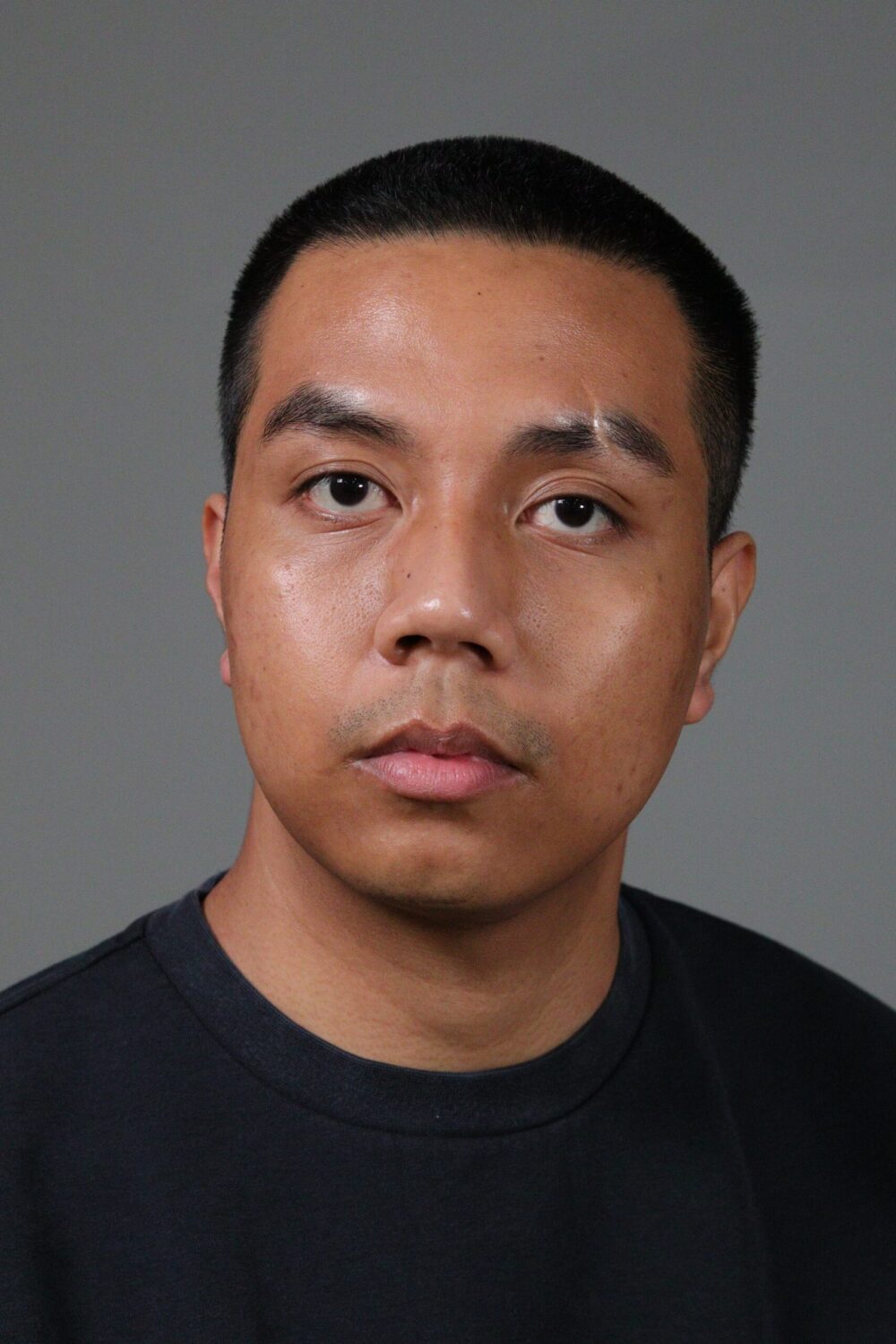
Keeyan Suazo is a Filipino-Canadian multidisciplinary artist, curator and writer based in Surrey, the unceded traditional territory of the Katzie, Semiahmoo, Kwantlen, and other Coast Salish Peoples. He now holds a Bachelor of Fine Arts in Visual Arts from Emily Carr University of Art + Design. Through drawing, sculpture, ceramics and photography, Suazo explores different narratives of transformation, transposition, and translation. In varying levels of opacity and transparency in visual storytelling, he selectively shows and obscures different elements within a scene (both constructed and found visual materials) to convey themes of intimacy, eroticism and memory. He investigates the etymological histories of words, showing their multitude obvious and embedded hidden meanings through semiotics and symbolism built from personal, familial, and communal definitions. His work has been presented in Roundhouse Community Centre, University of British Columbia, Gallery 626, Massy Arts Society, and in his solo exhibition at Burrard Arts Foundation.