Thalacysm
Sydney Weibel
Thalacysm is a video game concept art project focused on the deep sea and the creatures that reside within it.
“Awakening in the furthest depths of the ocean, the embark on a journey to reunite with humanity. However, along your travels you come across numerous incredible, but strange creatures. You find once familiar species worshipping gods, living in cities, and are even capable of communication. With their help, you begin the 36,000ft ascent to the surface.
But how did these creatures adapt and evolve so rapidly? How are you going to survive long enough to reach the surface? And why do the creatures you encounter only get more deformed the higher up you are?
Use the information you gather to craft supplies, upgrade equipment, and ultimately piece together the truth that binds humanity to the depths.”
Instagram: @noomru
Email: noomruArt@gmail.com
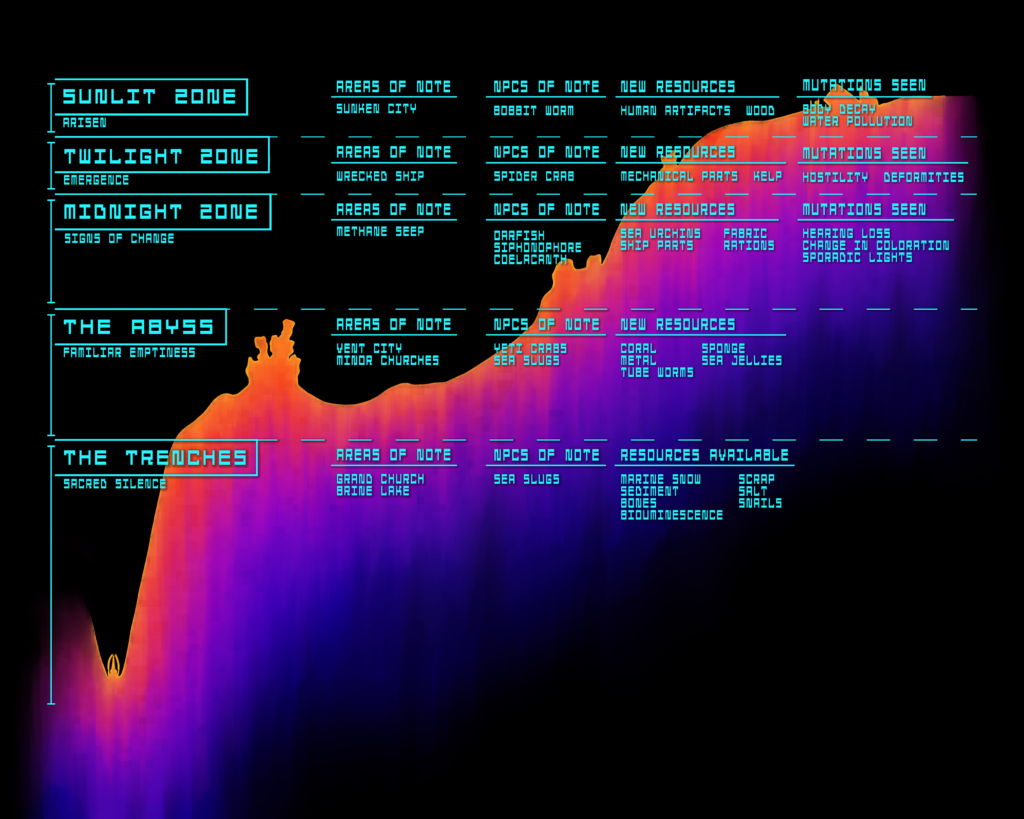
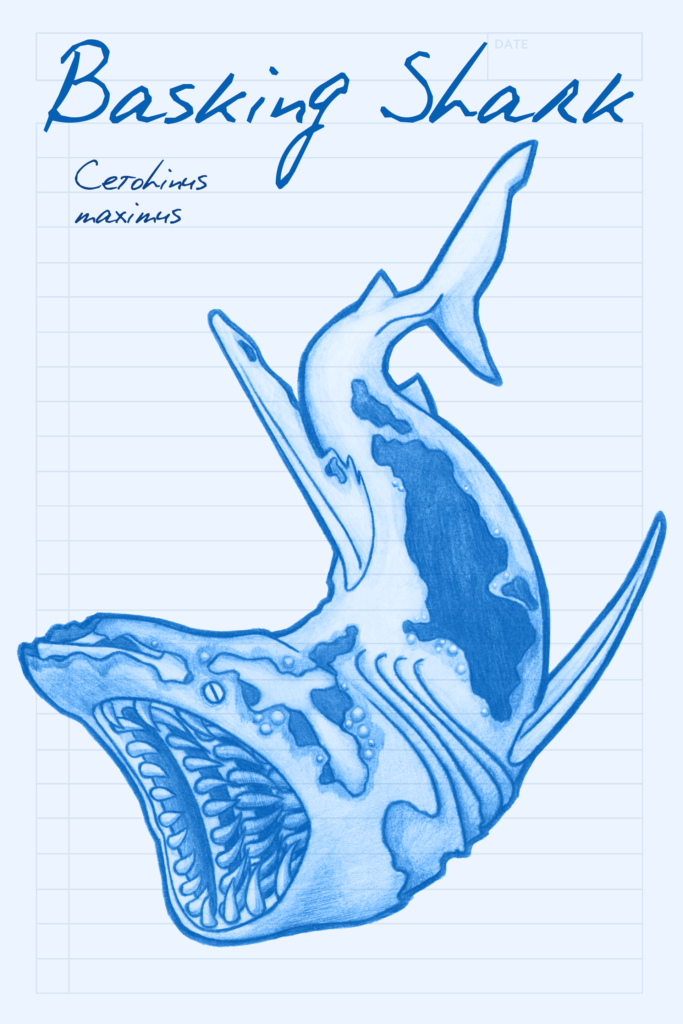
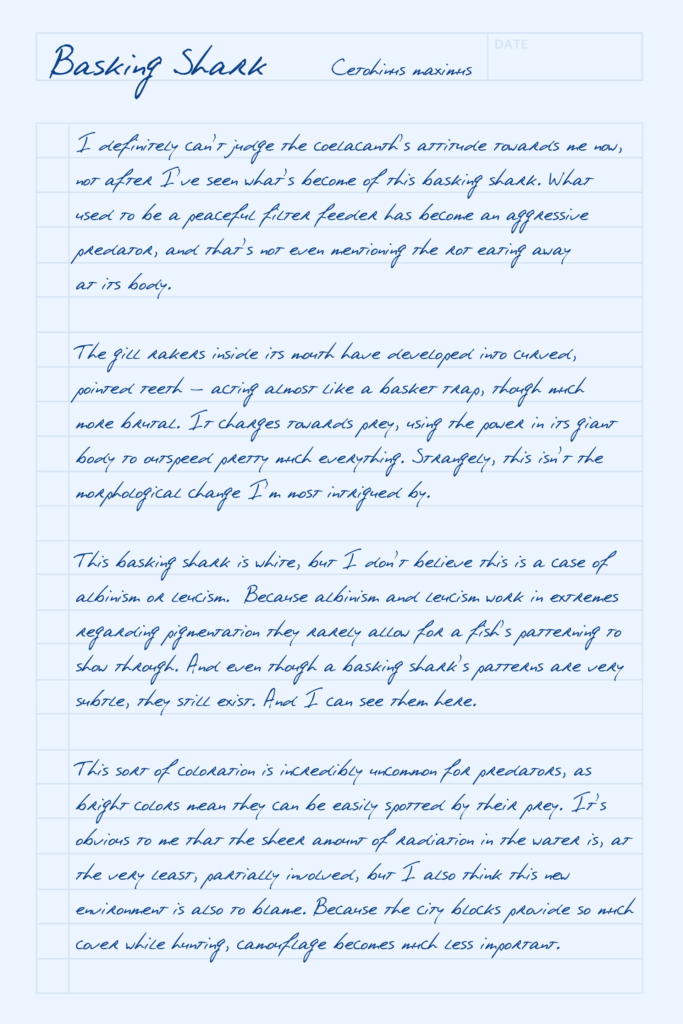
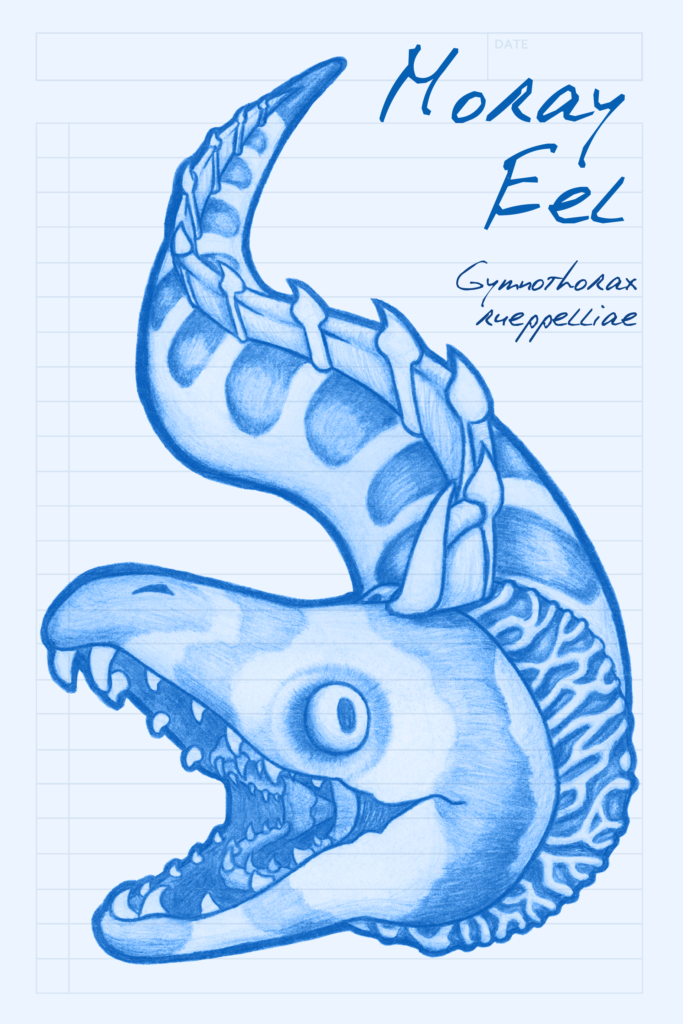
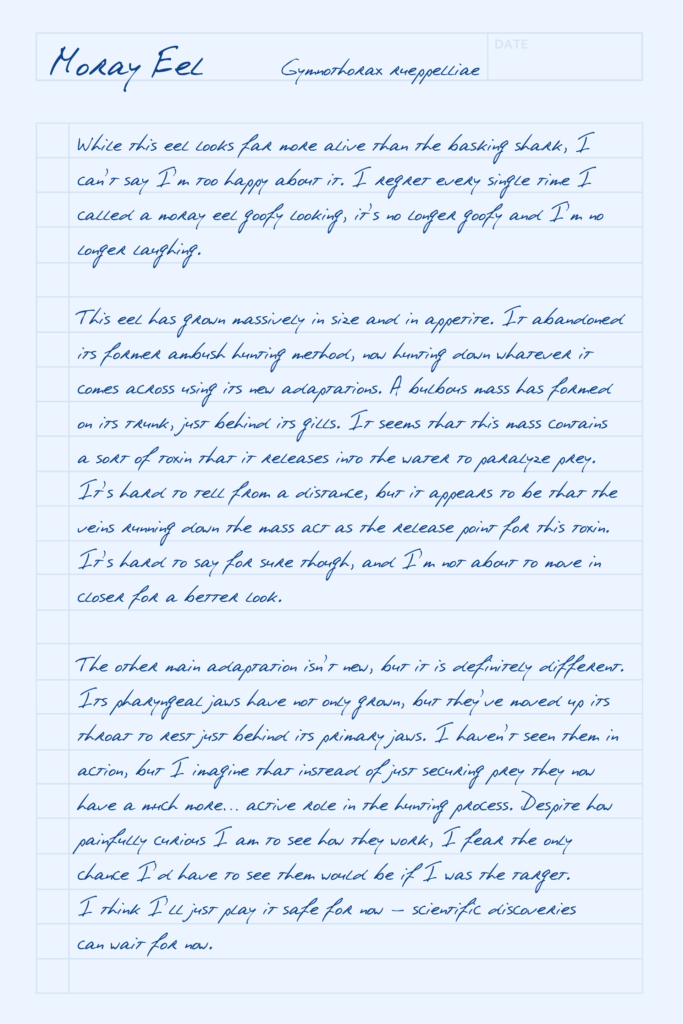
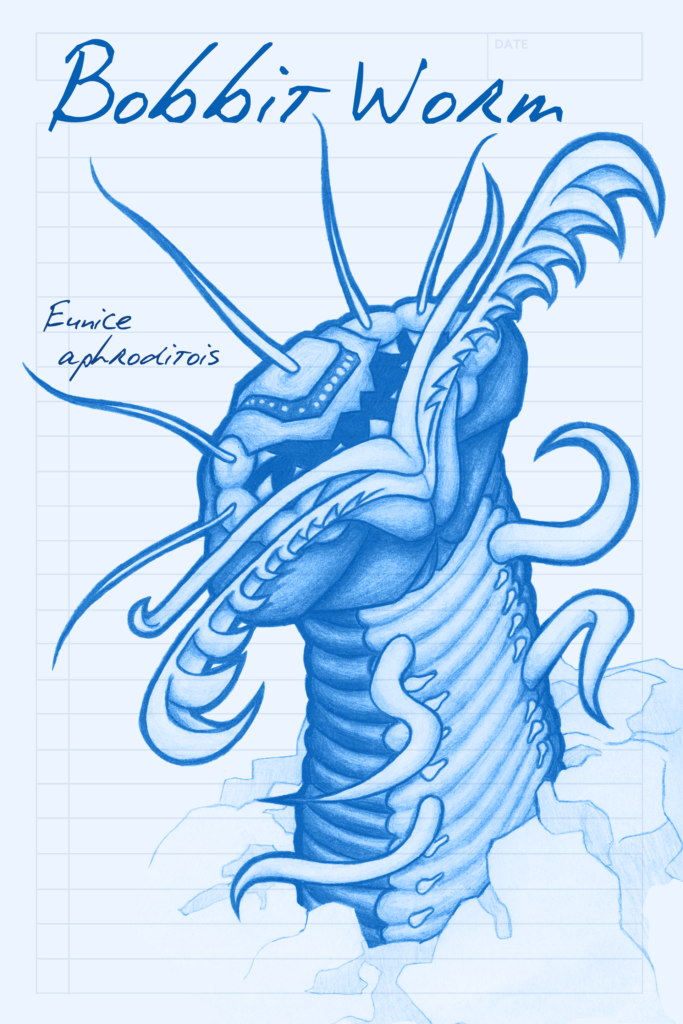
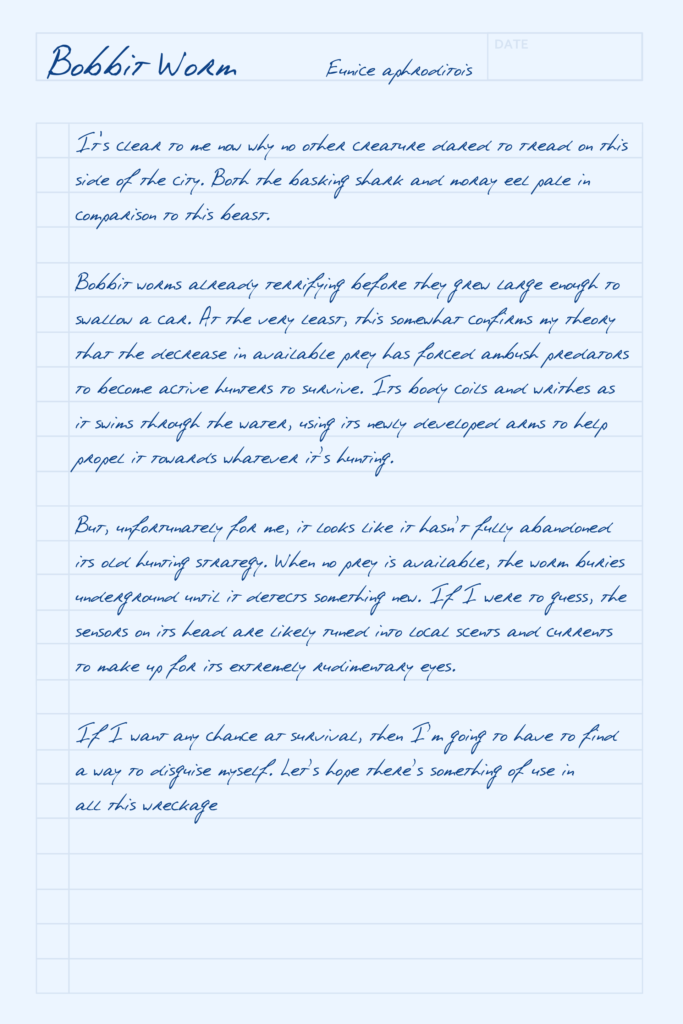
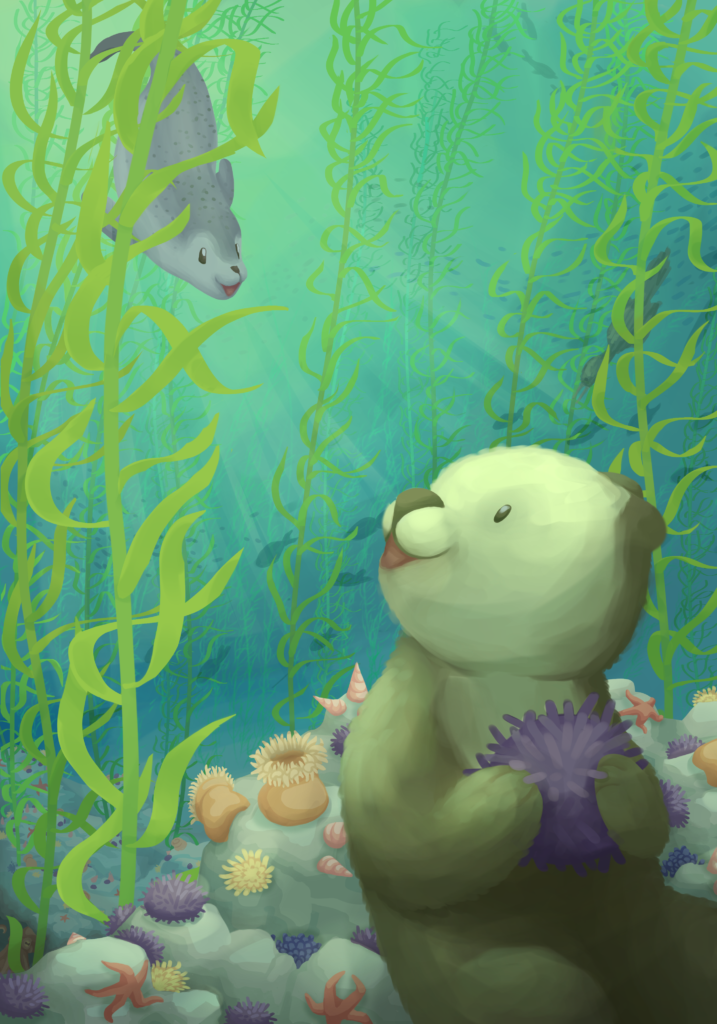
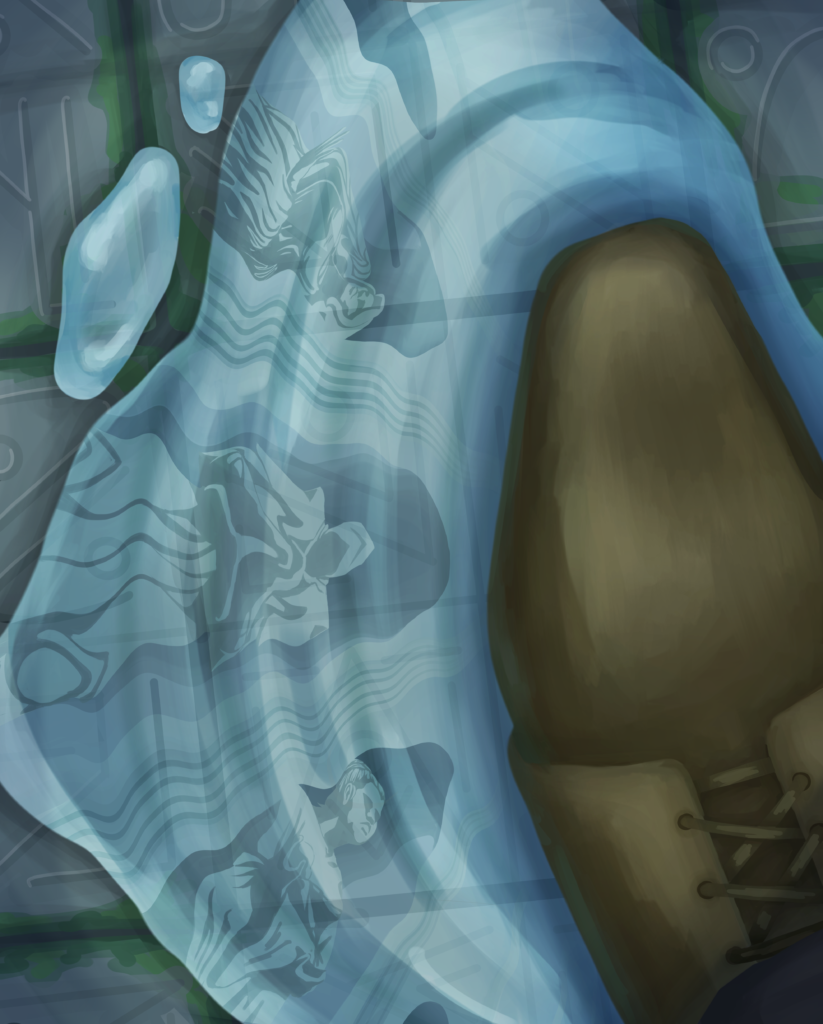
This project is comprised of four illustrations depicting core scenes in the game and eleven field journal pages that describe some of the creatures you would encounter while playing the game.
The Depths
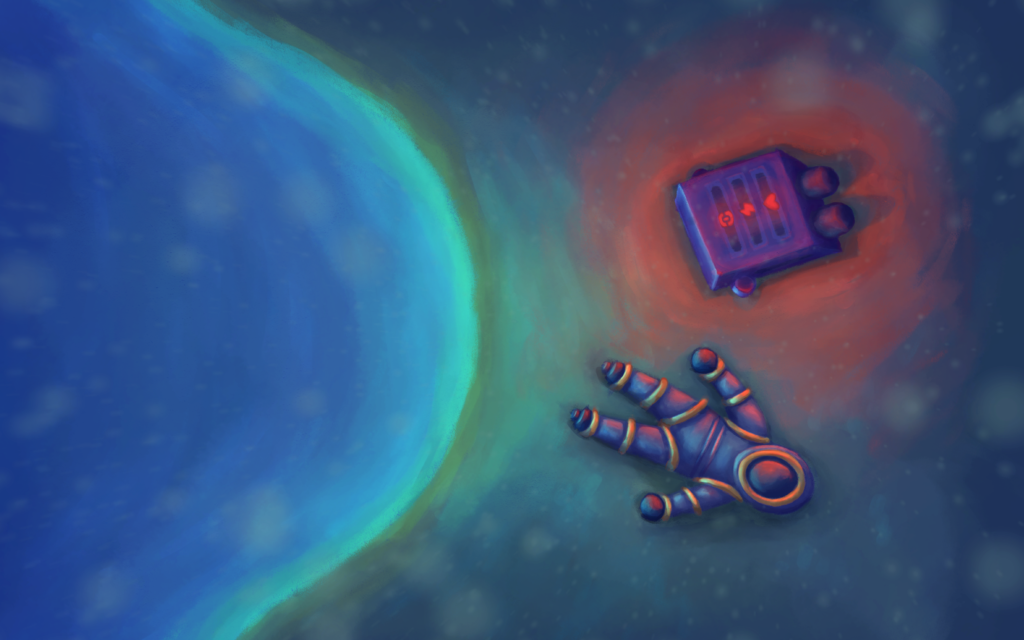
The first area of the game takes place in the deepest trenches of the ocean. The player wakes up in front of a brine pool with little memory of how they got there. They quickly realize that things aren’t quite right when they meet a nudibranch. Instead of being only a few inches long, this one is more than 10-feet-tall and able to communicate with them.
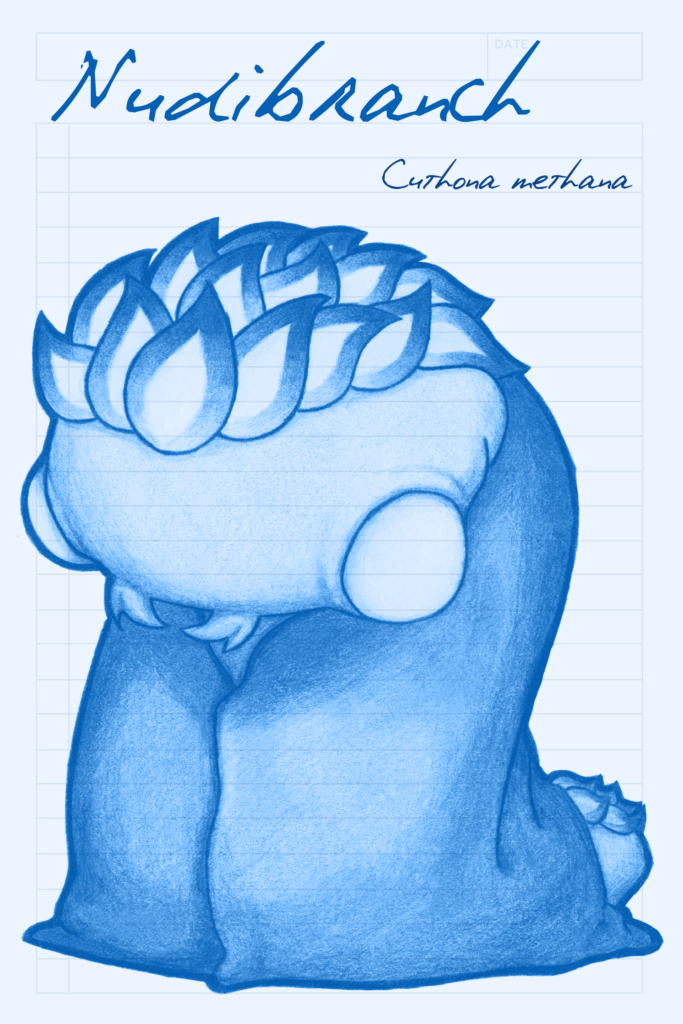
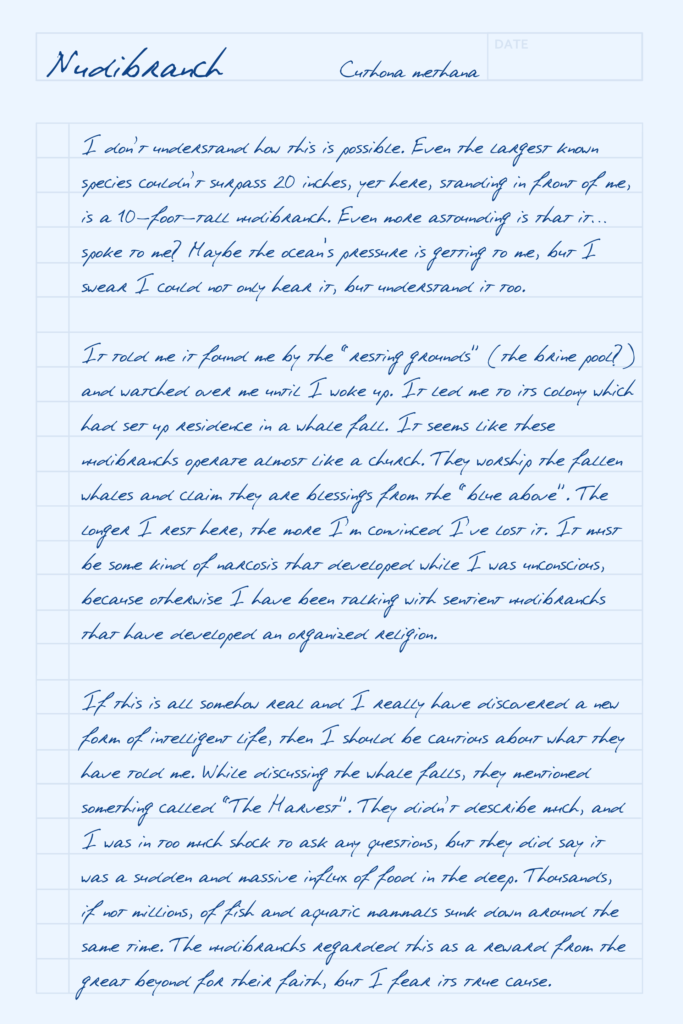

They guide the player back to their settlement so they can safely recuperate. While speaking with them, the nudibranchs mention something called “The Harvest,” however they don’t elaborate furthers and the player is unable to ask any questions before being ushered forward
It shows you a path forward, towards another civilization. Upon making the treacherous climb up the trench walls, you reach:
The City
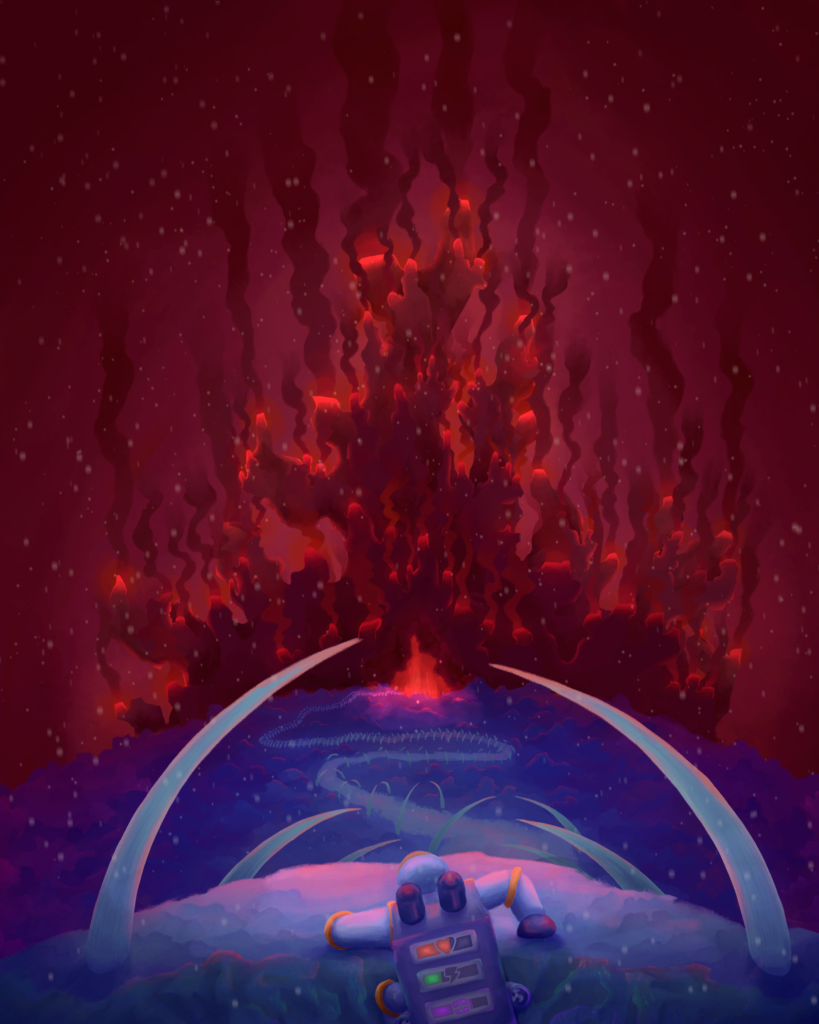
Down a path adorned by whale ribs stands a massive field of hydrothermal vents. Even from a distance, the player can see a variety of different creatures swimming around the smoke stacks. Although they get the chance to meet many of those creatures when they arrive, the most notable of them all is the yeti crab.
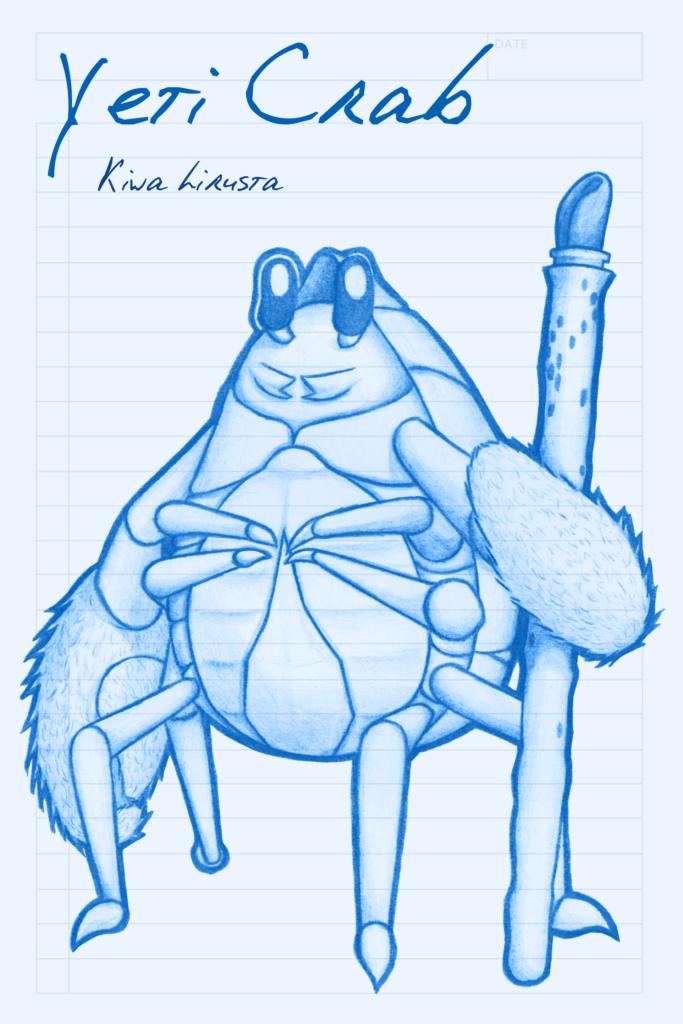
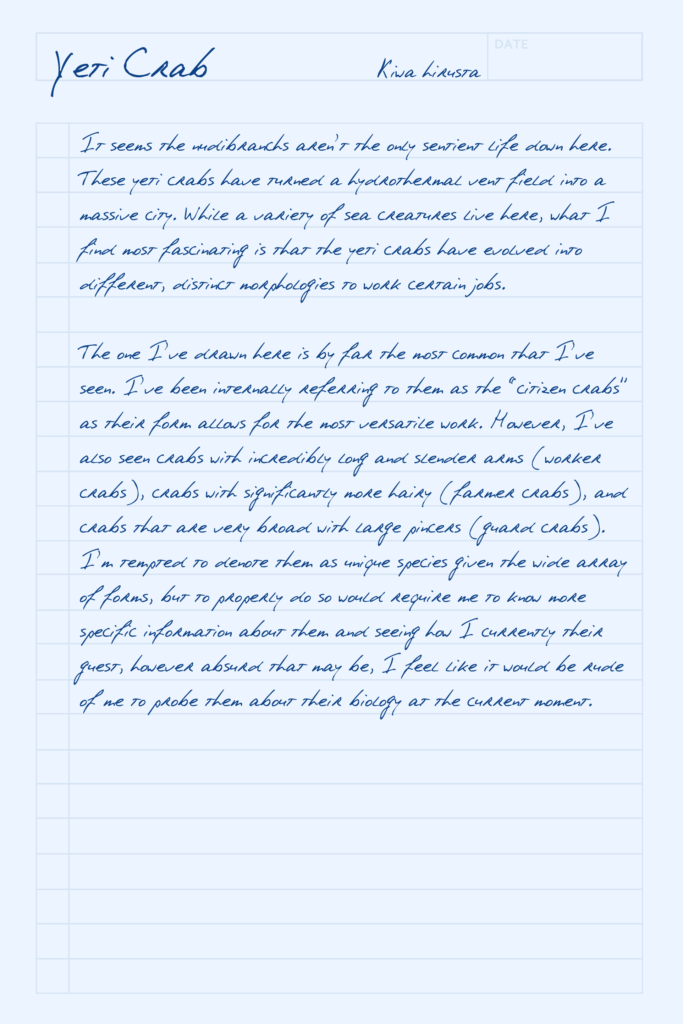
These crabs act as guardians of the vent city. Wielding a tube worm like a staff, they oversee all the residents and ensure everyone is safe. The crab takes the player on a tour of the city, showing them around and introducing them to some of the residents.
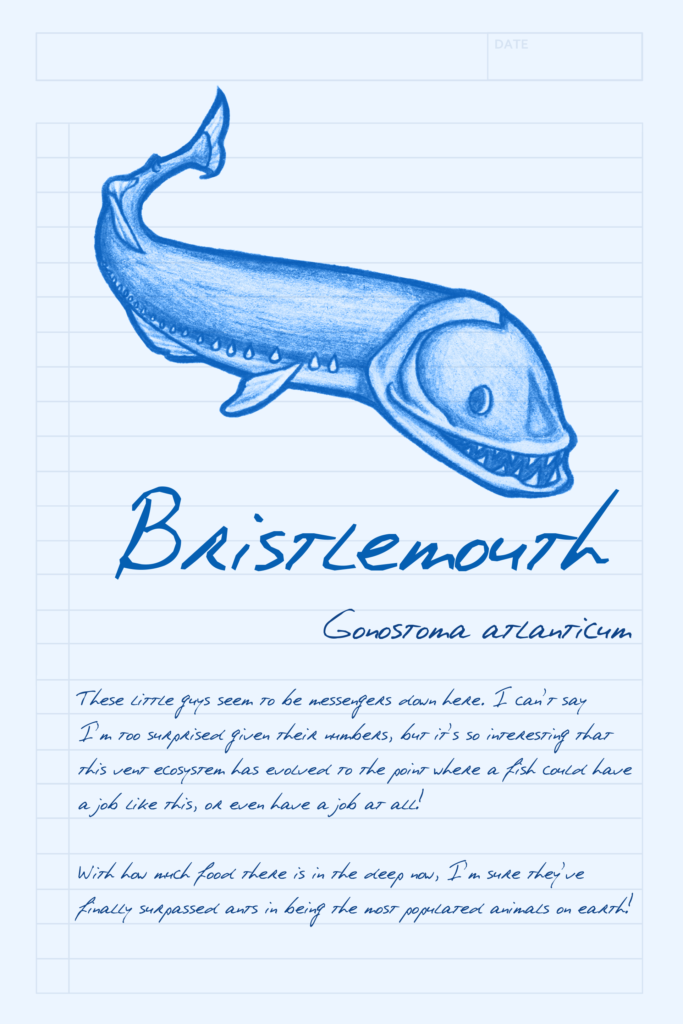
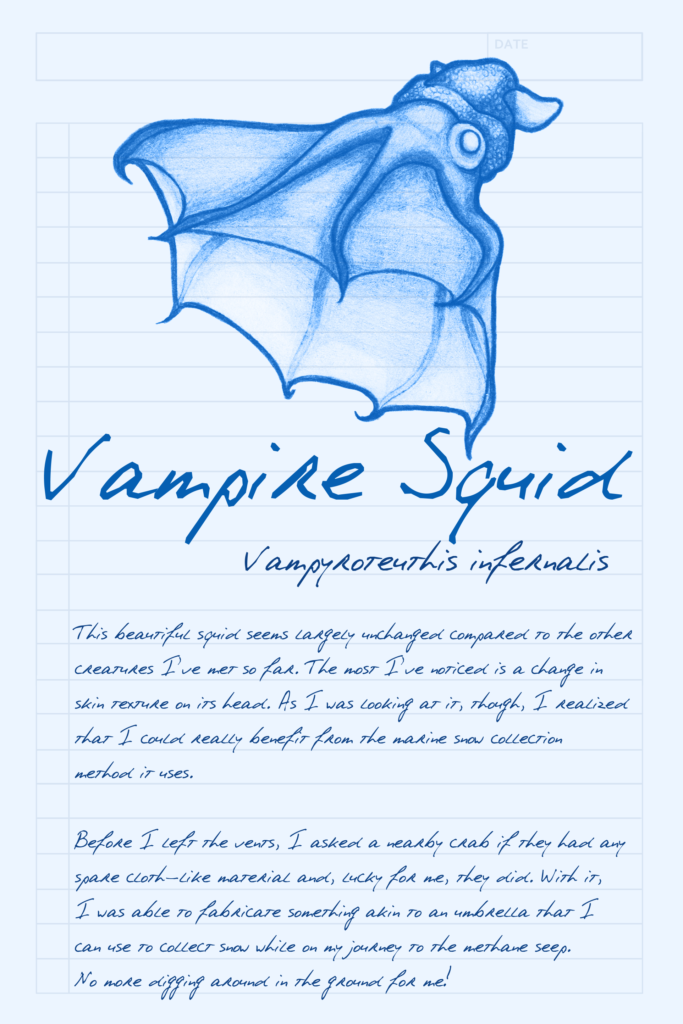
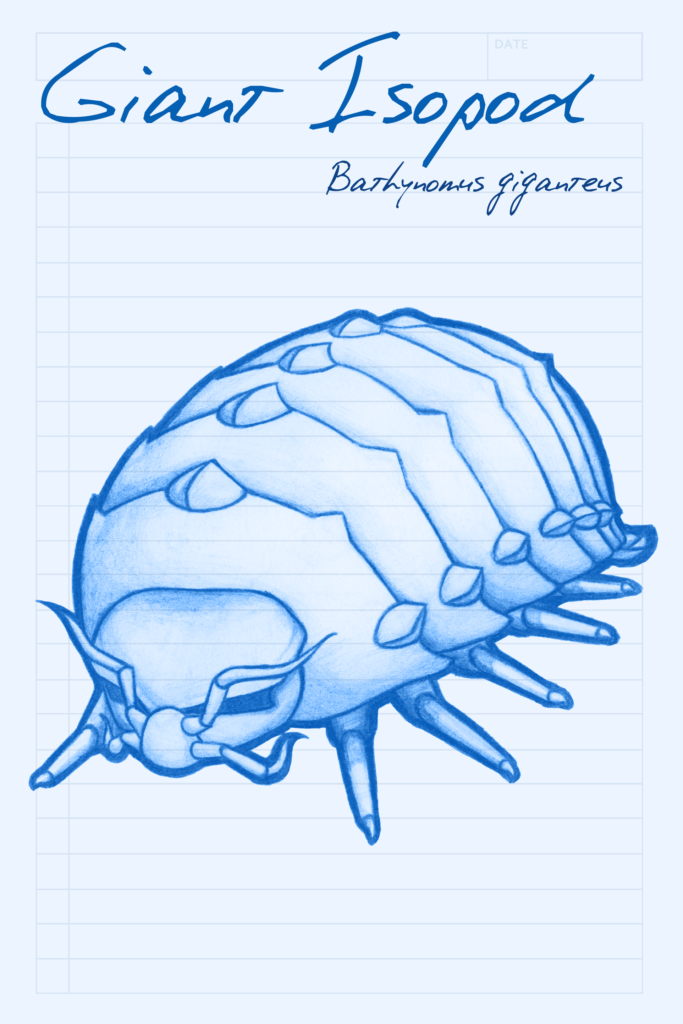
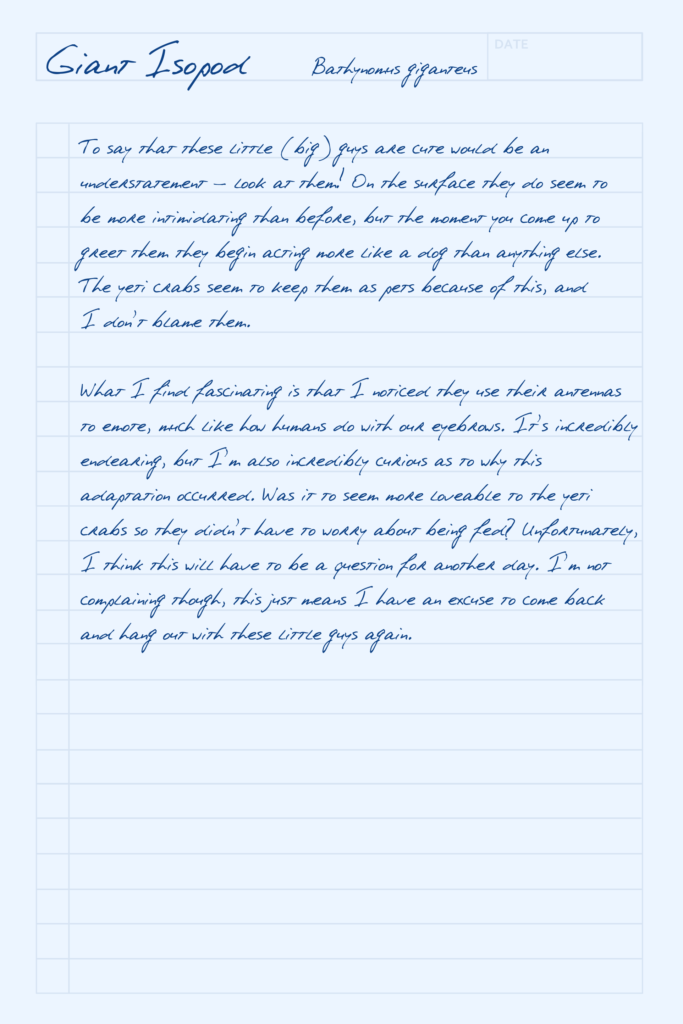
During the tour, the player is able to ask what The Harvest was and why it was so important to the nudibranchs.
They explain that for as long as they remember the deep was a cruel, barren place. Food was rare and friends were rarer, is was a place were only the most ruthless could survive. Occasionally, when a large enough surface creature died, the body would sink down below and create an oasis for the grizzled depth dwellers. Simply having the access to food allowed the creatures to co-exists, even if just for a short while. The nudibranchs worshipped these bodies, claiming they were gifts from a god above.
One fateful day, a new body fell to the depths. Then another. Then thousands. Then millions. The nudibranchs said it was a divine gift, a reward for their faith and named the event “The Harvest“. The creatures of the depths suddenly had surplus of food. There wasn’t a need to isolate out of fear anymore, so they came together to build a new system of survival: a system that rewarded community, not predation. As a byproduct as this, the creatures of deep were also able to rapidly evolve. Since their offspring no longer had to fight to survive, new adaptations were able to flourish and bloom.
By the time the story is over, the pair had fully traversed the city. Knowing that for The Harvest to have occurred, some sort of tragedy must have happened on the surface, the player is now determined to return to home. They ask the crab for directions and supplies, and, knowing what they had to do, the crab obliged.
Now, with a motive and a way forward, the player presses on towards:
The Seep
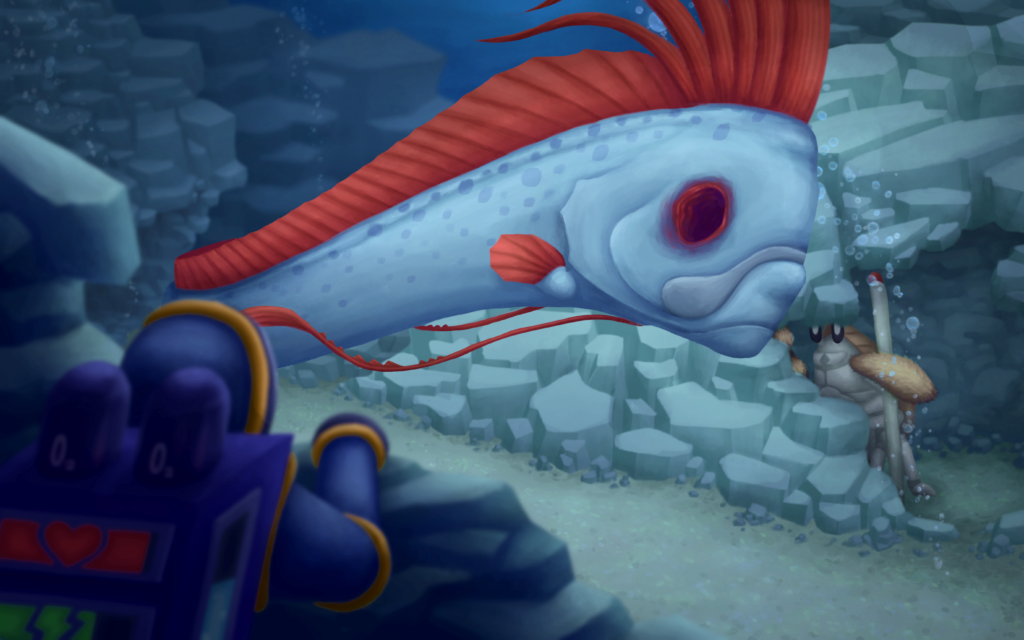
The arrive at a methane seep, an area where gas under the ocean floor collects and bubbles up. This particular seep is located in a mid-ocean ridge, providing shelter for the creatures living there. In particular, it provide shelter for a lone yeti crab, the player’s new guide.
The crab in the city told you about them: they couldn’t abandon the fear that remained from the old days, so left the city to ensure their safety. However, they still care for their species and will help out those sent to them, including the player. The other residents of the seep haven’t adopted the communal lifestyle found in city, so crossing the ocean ridge will be a matter of stealth – one that wouldn’t be possible without a local’s knowledge of the area.
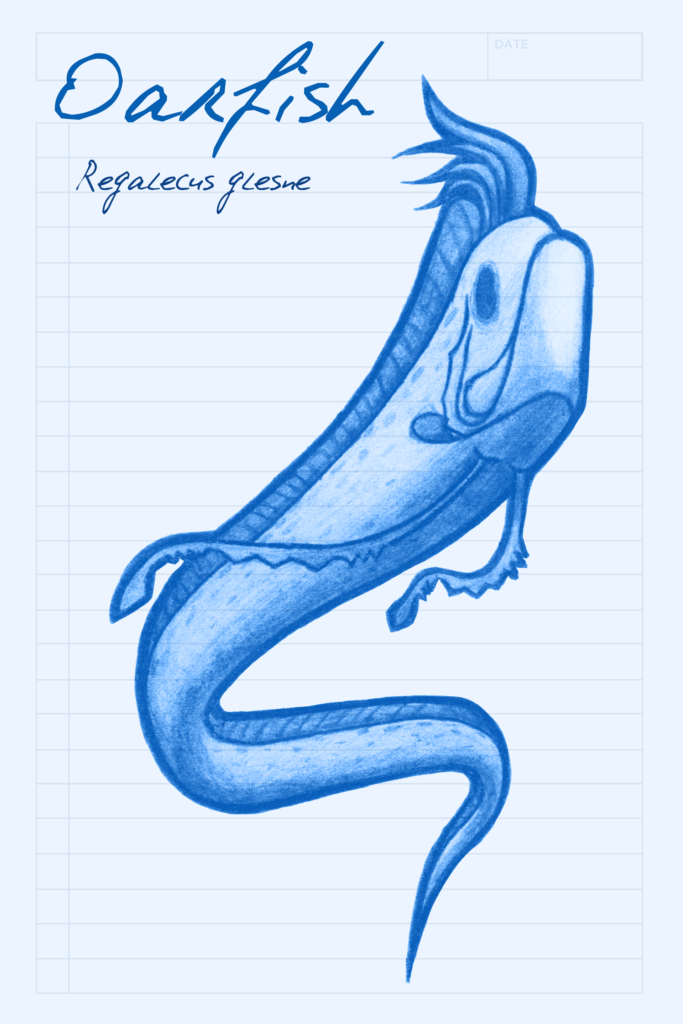
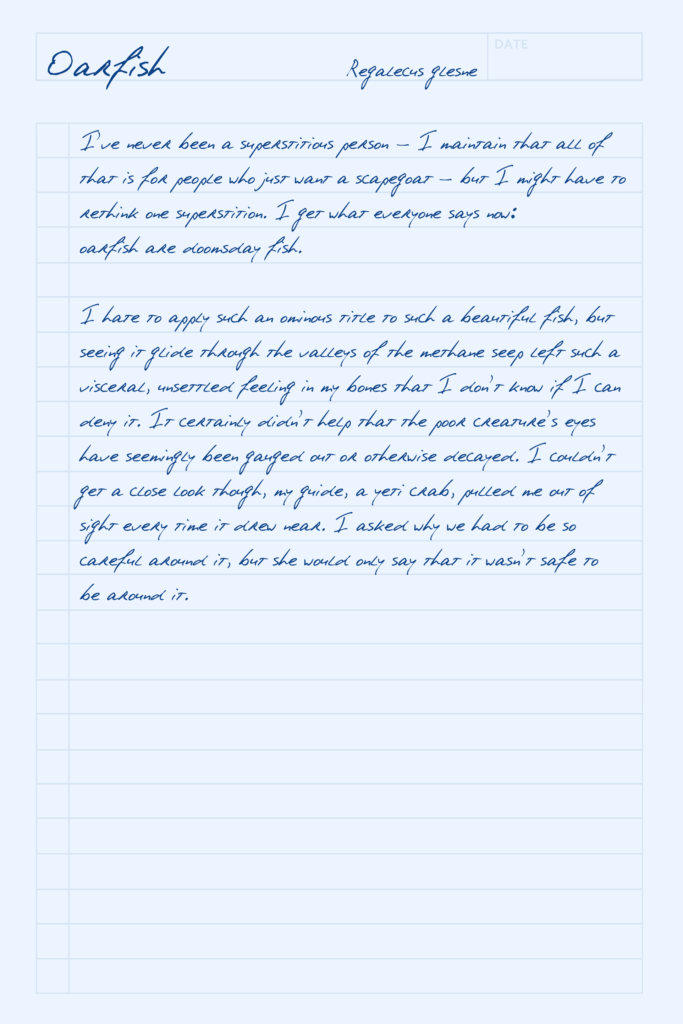
During the crossing, the pair encounter a haunting sight: a lone, disfigured oarfish.
When they finally exit the seep, they encounter another striking creatures. Thankfully, this one’s a welcome sight.
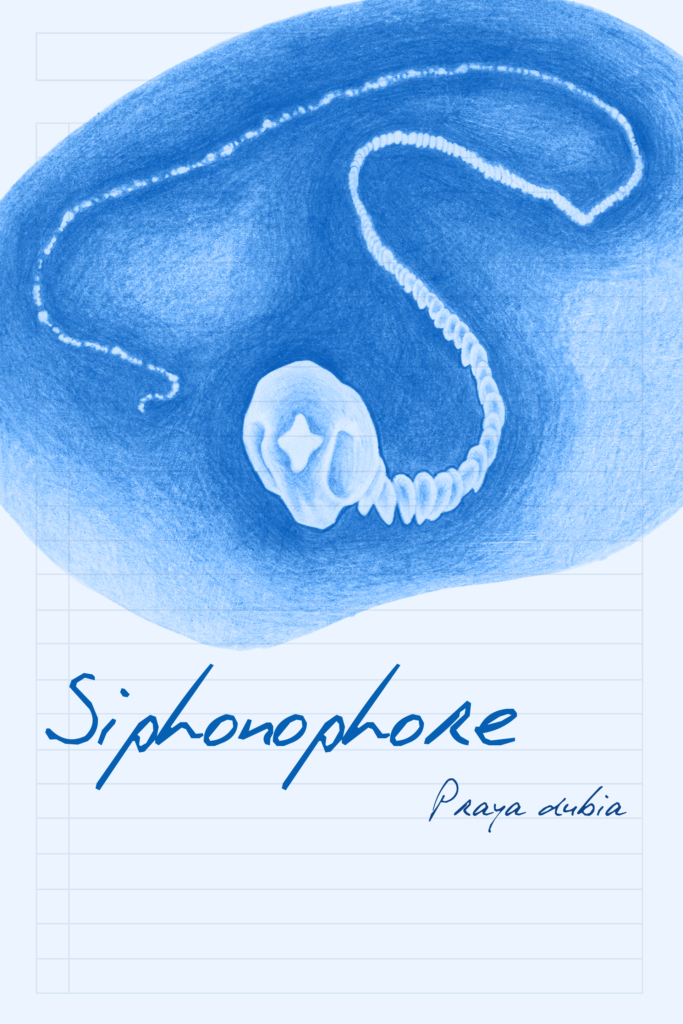
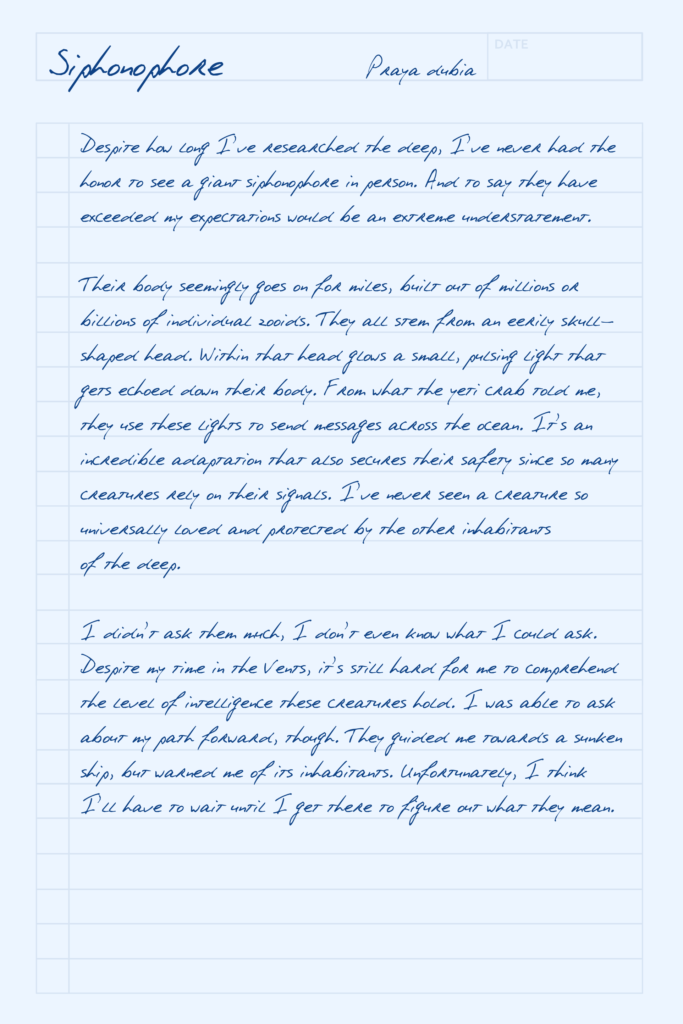
Using it’s web of knowledge, the siphonophore directs the player towards a sunken ship. While it will help replenish their supplies, the ship is home to a host of hostile creatures. It’s a treacherous road, but one they must take if they want to make it back to the surface.
The Ship
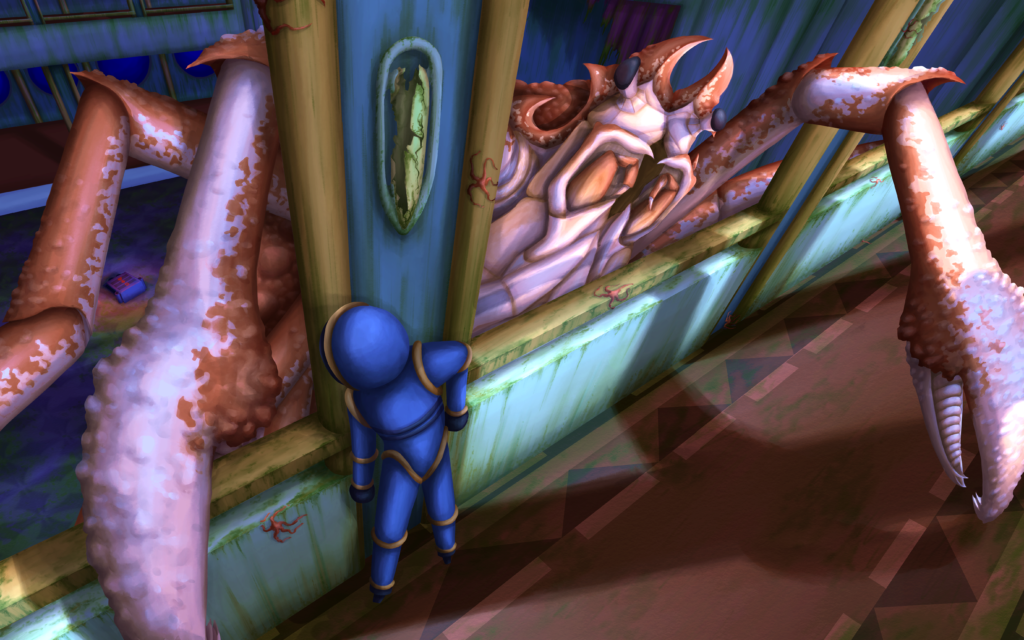
The ship, as the siphonophore foretold, contained a major threat: a giant spider crab. Besides it’s massive stature, the most shocking thing about this crab is the fact that it’s very aggressive. Crabs are typically scavengers and only hunt themselves when it’s convenient. This crab, however, is actively seeking out prey, and that includes the player. They must make their way through the remains of the ship, gathering whatever materials they can, before the spider crab can catch them.
Once they escape, they know they must keep moving forward, that the surface isn’t much further, but which way is up? Suddenly, as they’re weighing their options, a feeble fish swims into view.
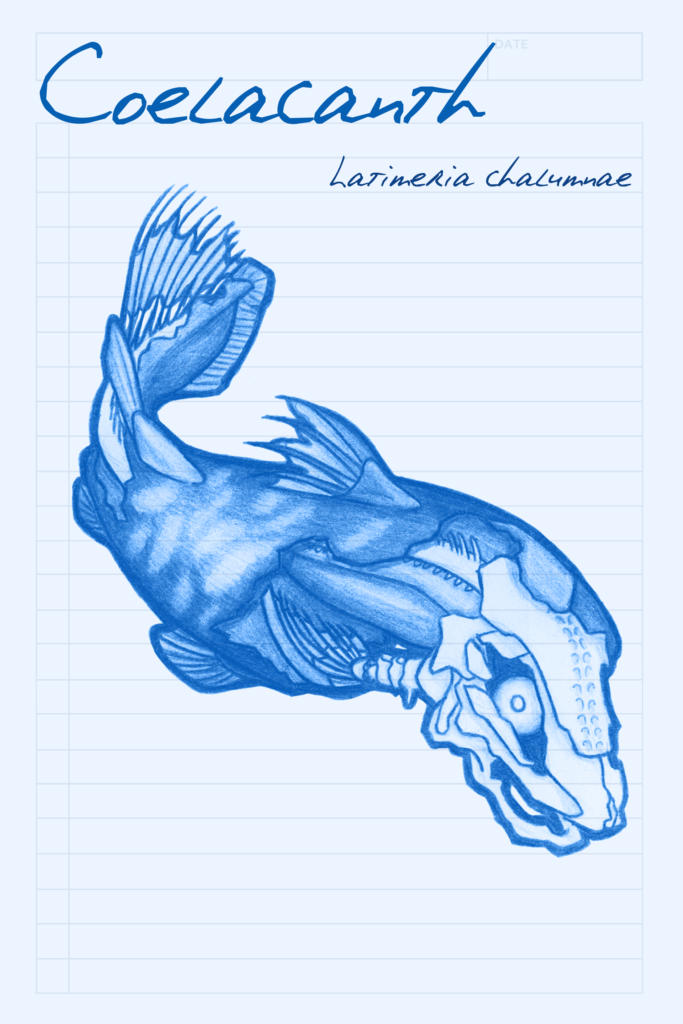
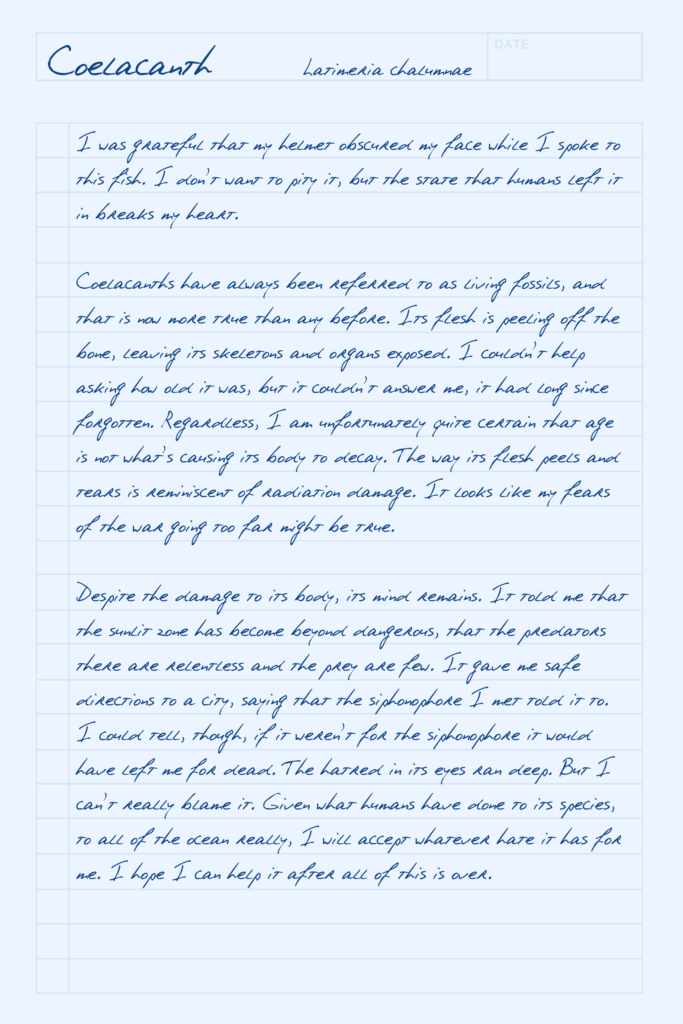
With its help, the player presses forward, ready to return home or to whatever remains of it…
This is where the story leaves off for now, but the journey continues. I will be continuing this project on my own and aim to turn it into a real game one day. Below, I have three more journal pages with their accompanying text.
This whole project is a love letter to the ocean to me. I didn’t realize it before my time at ECU, but the ocean is a constant inspiration to me and I continuously look to it for inspiration. It’s been so common in my works that I’ve started to be referred to as “the fish girl”, a delightful surprise if you ask me.
At the beginning of this school year, I knew I wanted to make my senior project about concept art, probably for a video game, but I didn’t have something to make concept of. No plot, no characters, nothing. As I brainstormed ideas, I kept coming back to the ocean (shocker). I realized that most of the popular underwater games have a similar structure: the shallows are safe and the depths are dangerous. It makes sense, the depths of the ocean is a strange place home to even stranger creatures. But because it makes sense, it gave a great idea: what if there was a game where the depths were safe and the shallows were dangerous? This became the core idea of my project.
The reason I became so excited about this idea wasn’t just because it was different, it was also because it meant that I could show love to the deep sea creatures I hold dear. I love weird looking creatures, and the deep sea is chock-full of them. It’s my hope that portraying these creatures in more positive light that others will learn to love them too.
The final thing I would like to share in regards to this project is some fun facts that I’ve learned over the course of working on this.
Below the fun facts will be some of my other works from ECU, so be sure to check those out too!
- Brine pools are pools of highly salinated water that cannot mix with the surrounding sea water, forming underwater lakes. These pools are so salty that anything that enters them will die due to shock. The high salinity also gives them an otherworldly teal color.
- Nudibranchs are used in real world medical research, most notably in cancer research.
- Hydrothermal vents are a hot spot for life in the deep sea. Many of the creatures that live on them are able to convert radiation that emits from them into food, and the ones that can’t just eat the ones that do.
- Yeti crabs got their name from their hairy limbs and part of their diet consists of bacteria that live within the hairs. To make sure they have a consistent food supply, they wave their arms around to expose the bacteria to as much as its food as possible, essentially farming the bacteria.
- Bristlemouths are the most populated vertebrate (not just fish) on earth. Their numbers are estimated to be in the trillions to quadrillions
- The “snow” that is mentioned a few different time in the notes is referring to marine snow. Marine snow is basically all the organic material, mainly detritus, that falls from the upper layers off the ocean. It’s a bit gross when you think about it, but it looks very pretty in photos!
- Hydrothermal vents and methane seeps (also known as cold seeps) formed very similar ways, with both being caused by gas coming up from the earth’s core. In fact, methane seeps are only referred to as cold seeps because they’re only cold in comparison to hydrothermal vents.
- Methane seems can sometime also form brine pools.
- Siphonophores are colony animals, made up of small, multicellular creatures called zooids. Zooids reproduce asexually, meaning that every one of them are clones of the same, original zooid. However, because mutations can occur in asexual reproduction, the zooids slowly become different from one another. Siphonophores are able to use this to their benefit though. The zooids use the mutations to develop specific functions such as swimming, digestion, and reproduction.
- Coelacanths are known as living fossils because, for a period of time, we thought they went extinct millions of years ago. It was only in the 1930s, when a researcher in South Africa found one in a fisherman’s daily catch, that we discovered they still live in our waters.
- The largest migration on earth isn’t of birds flying south in the winter, but of fish in the twilight zone moving up to the surface at night and then back down when day breaks!
- Moray eels‘ pharyngeal jaws was one of the inspiration for Alien (1979)’s Xenomorph
Digital Illustration
Sculpture