when people want to speak in secret they go under a tree.
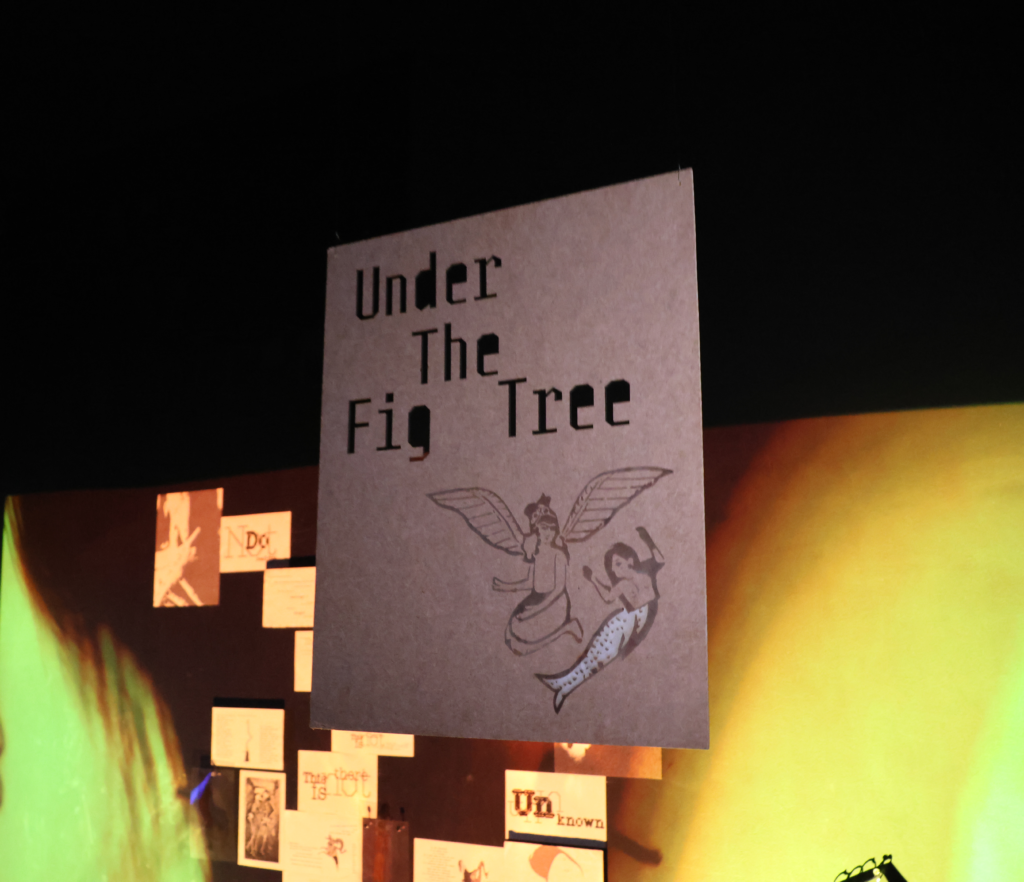
Now we’re all under the fig tree.
In Iran, symbols speak. They carry meaning, things that are hidden, or things that exist as wishes, as secrets. Symbols are alive through different parts of the streets, architecture, carpets, paintings, and as metaphors in poetry, which is also a big part of this culture. In Iran, you hear poems being recited in family gatherings and different occasions, it becomes something you almost live through. I grew up with the poetry of Rumi, Hafez, Saadi, and others. When I was around 13 or 14, I began to question those poems differently. I remember wondering why Rumi loved Shams-e Tabrizi, another man, so intensely. People around me would say it’s only spiritual love, love of God, or just a story. But it stayed with me. I kept asking,
Where do erased stories go?
What remains when they disappear?
That’s led me to work on the erasure of queer stories/history in Iran.
Which is approached in two ways.
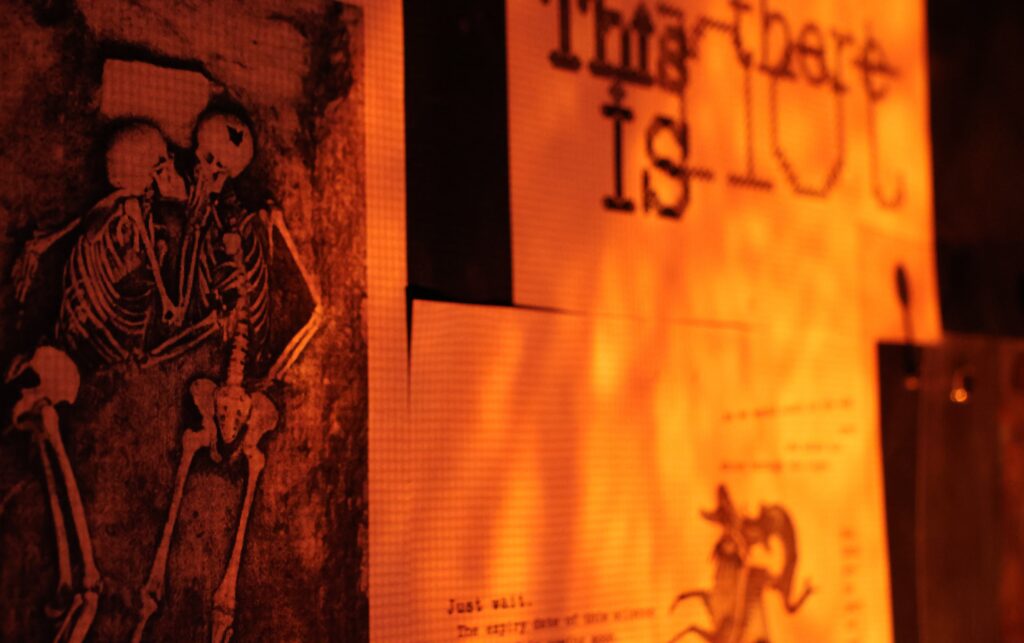
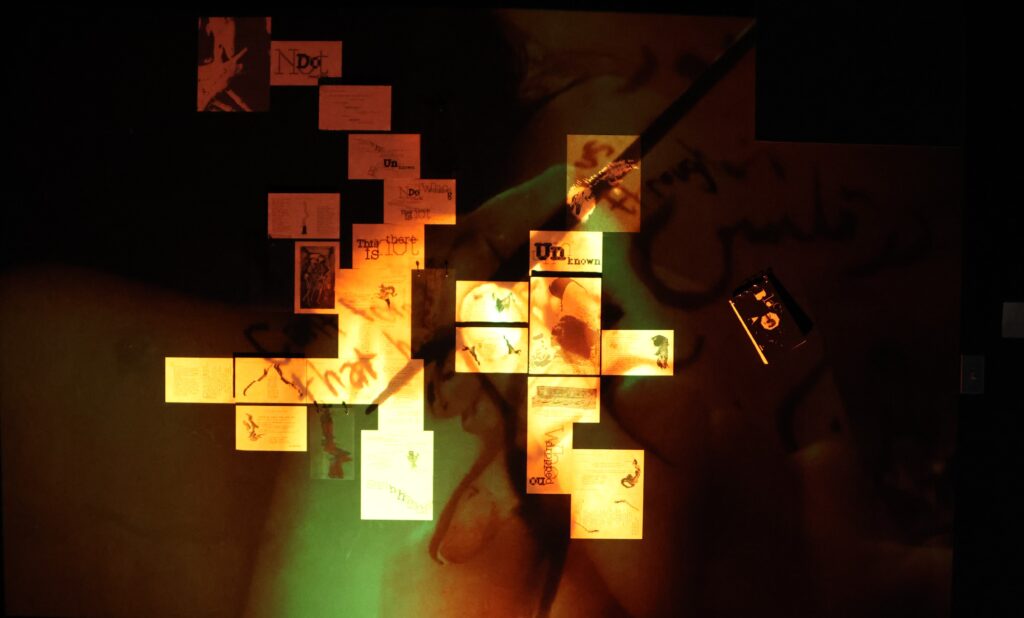
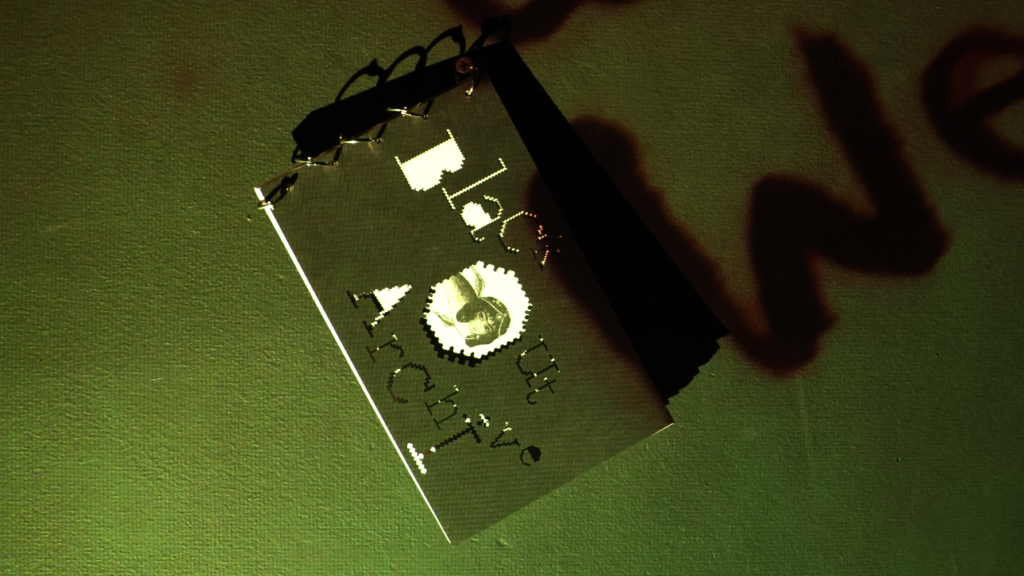
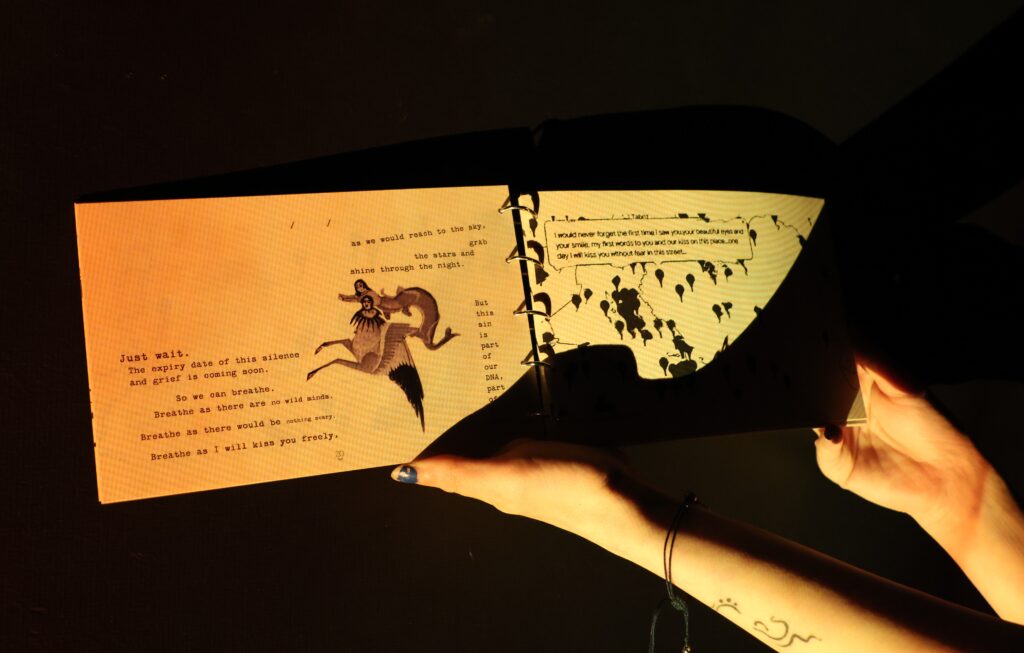
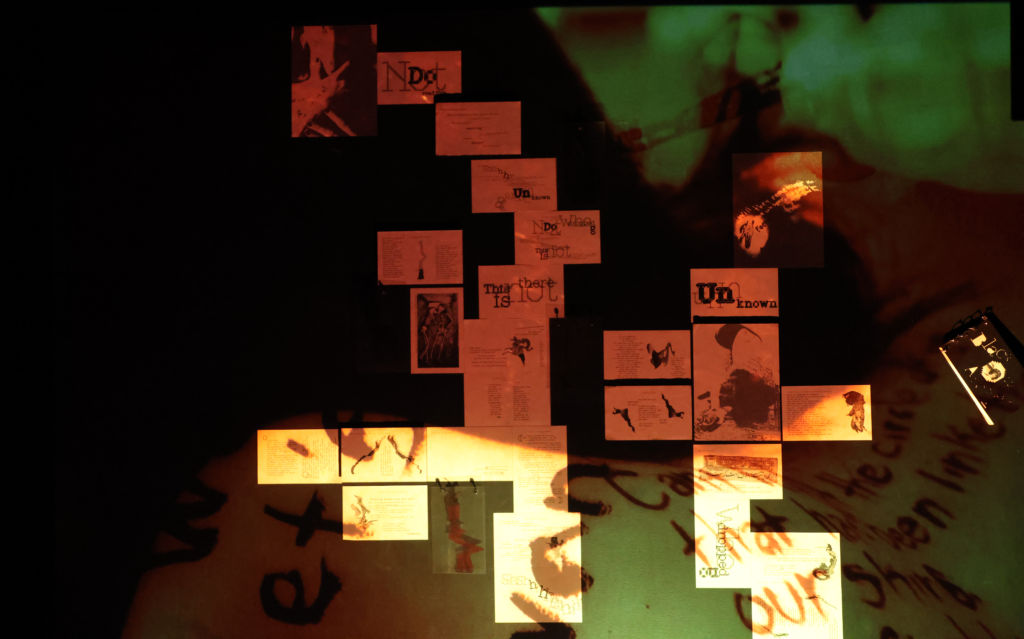
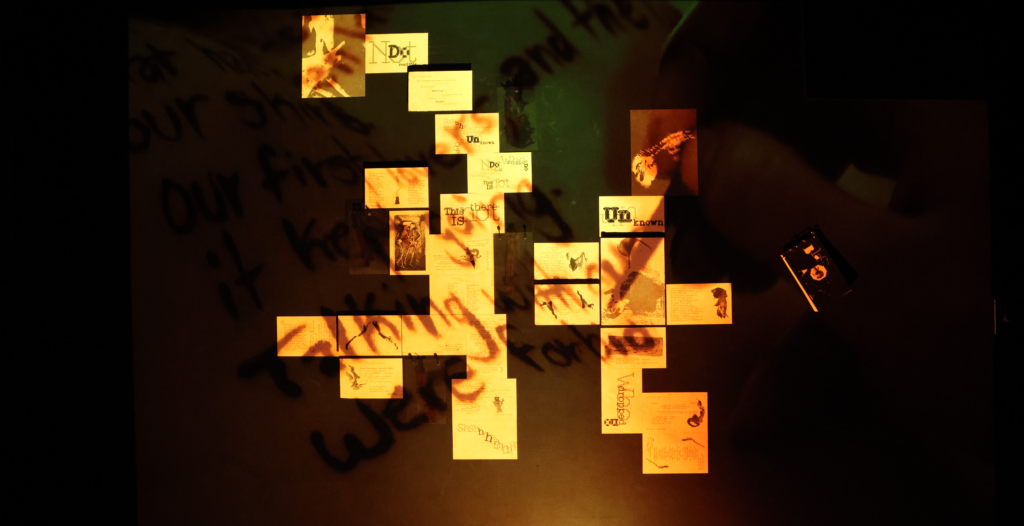
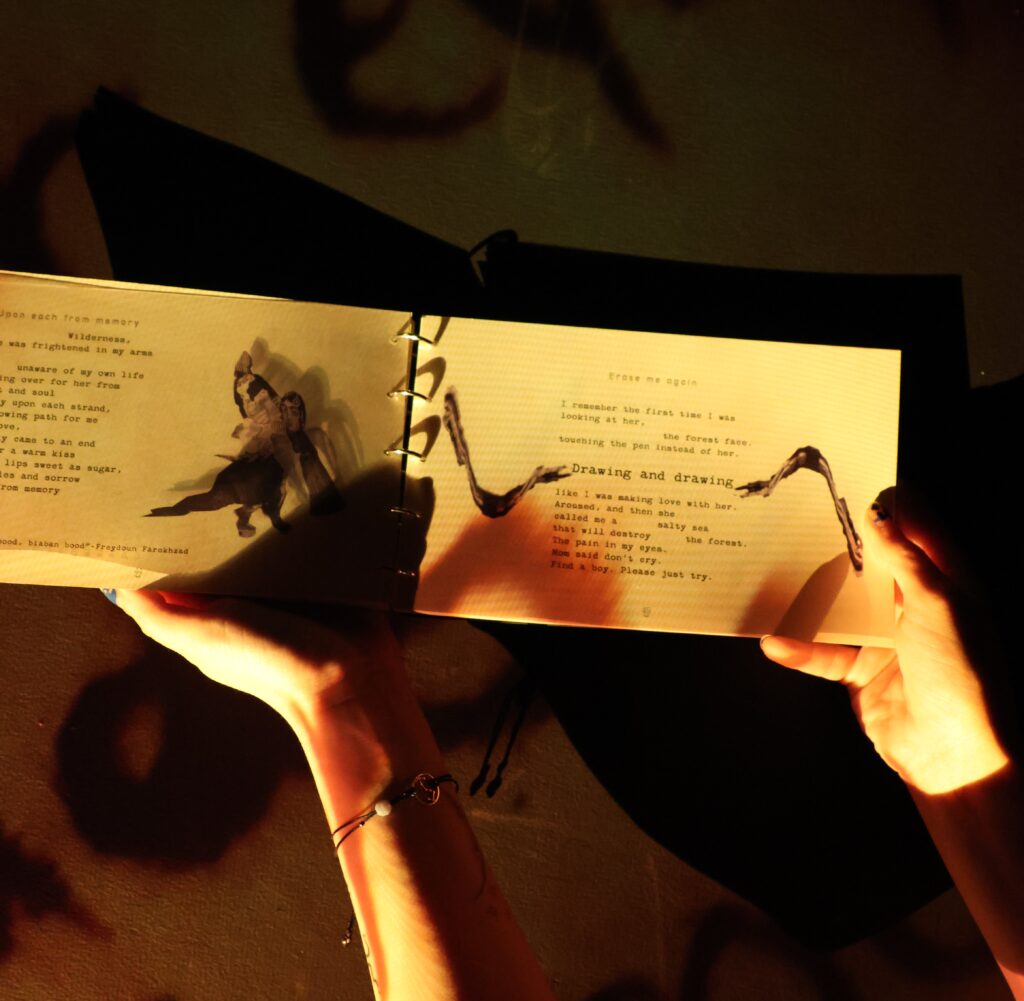
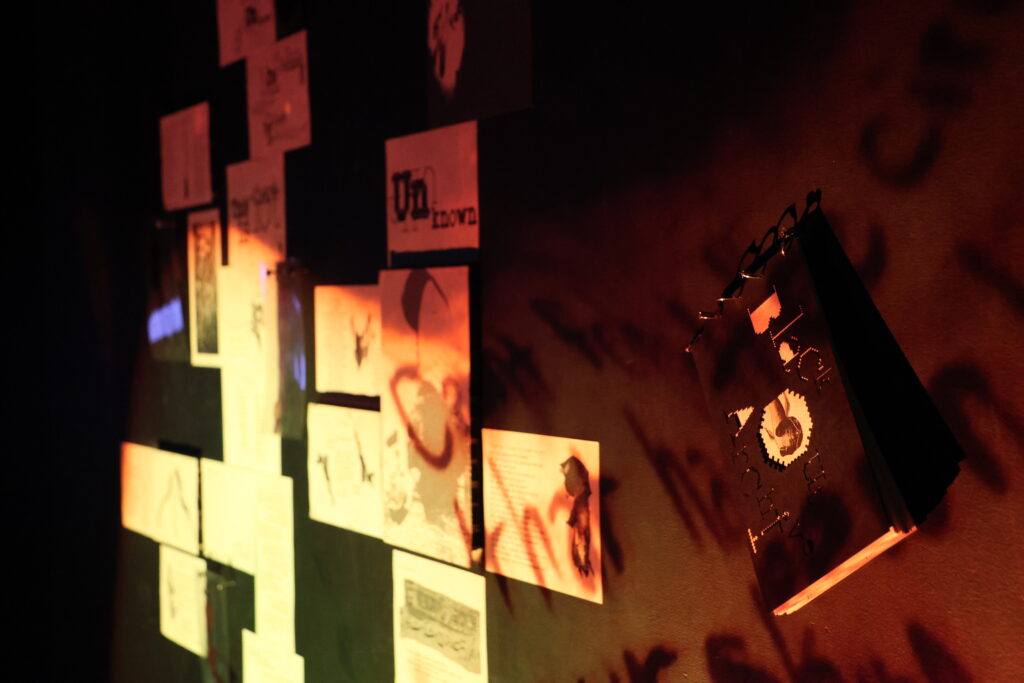
The first one is the blackout archive, including five chapters. This stays here, shhh focuses on being a secret and secret relationships. Unknown is based on personal experiences. Who Dropped Ou” focuses on the non-binary pronoun “او” (ou) in Farsi. Do Not Read This is about the experience of being forbidden. And This Is Not Here focuses on places that hold hidden love stories in Iran. Together, these five chapters include 35 poems.
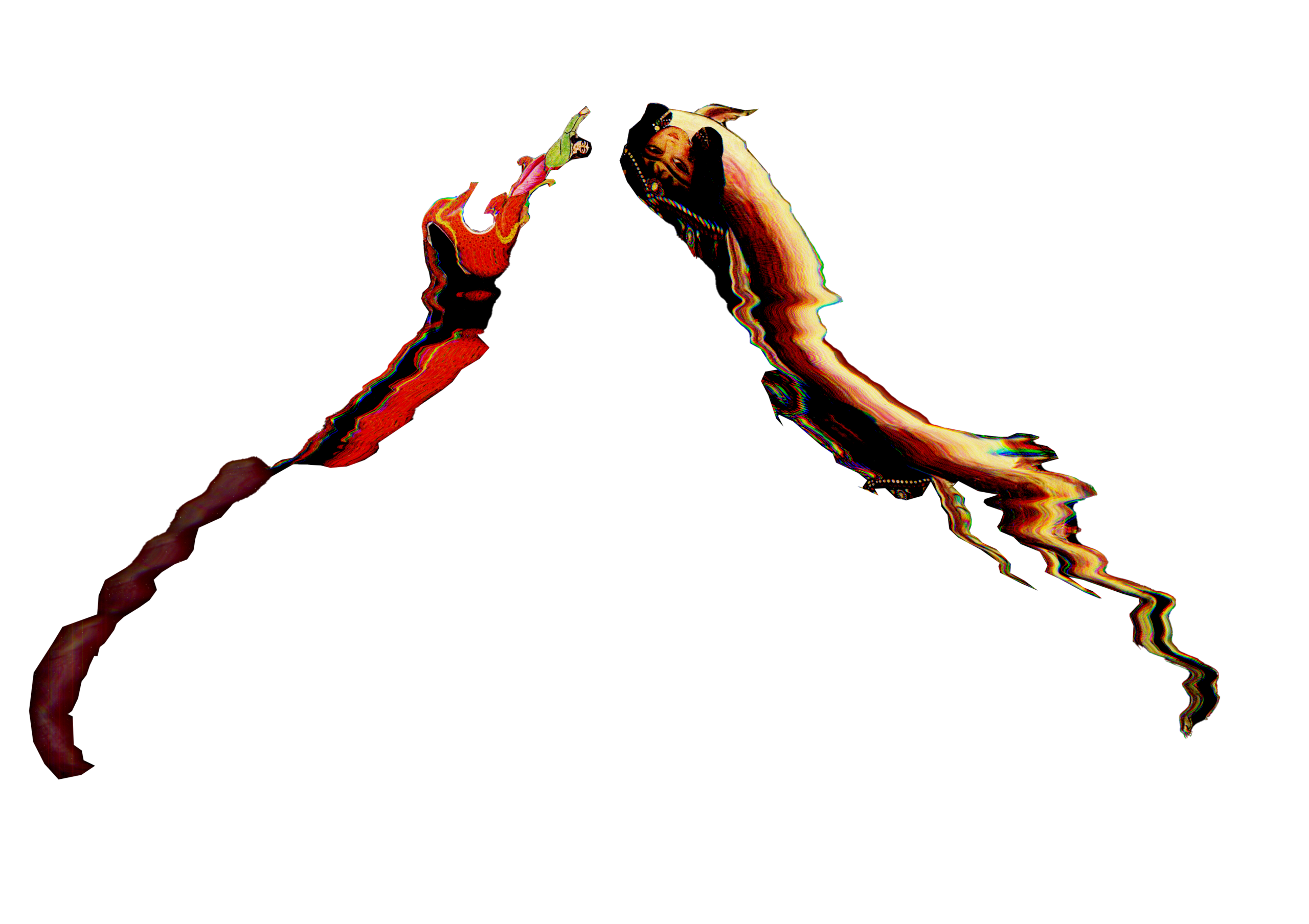
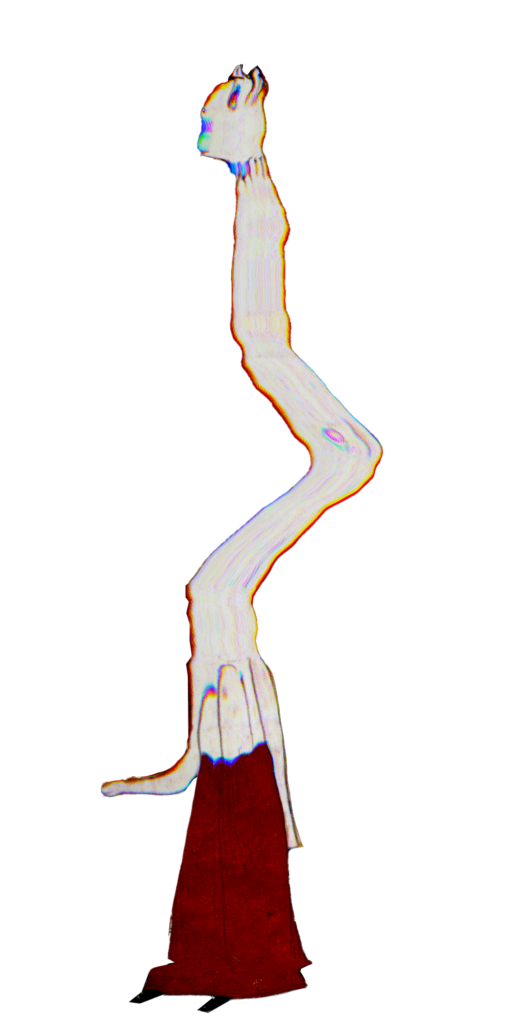
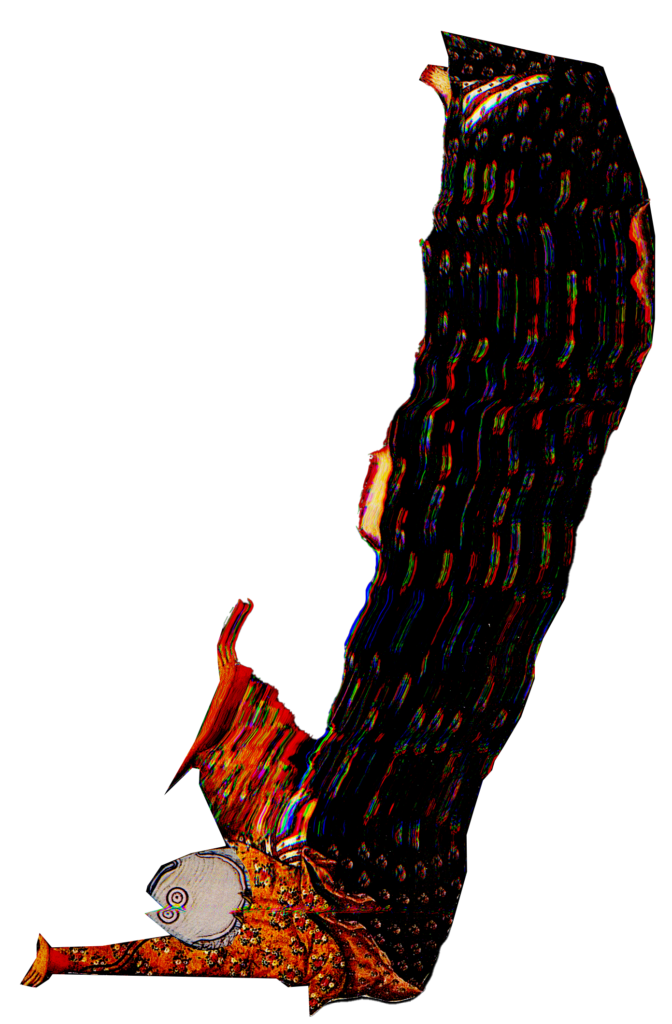
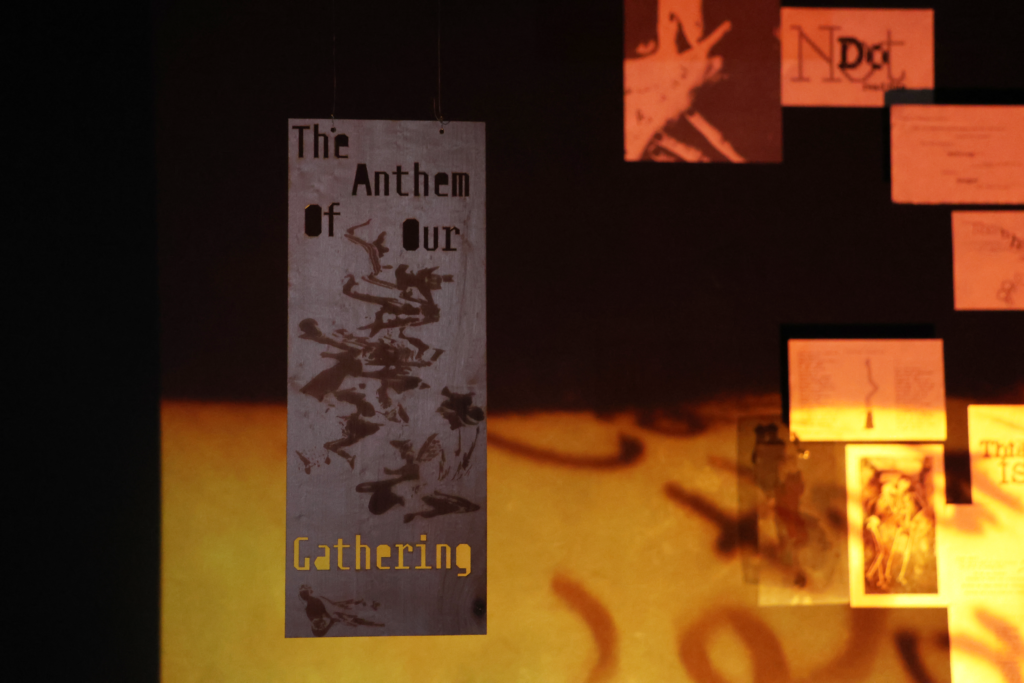
For the visual part of the book, I created hybrid characters through collage using Persian paintings and illustrations. These hybrid characters carry a mystical feeling. They are layered with different truths, identities, times, and fragments of community. Their collective name is The Anthem of Our Gathering, taken from an erased part of a Hafez poem I found. I used a scanner while moving the characters, to capture motion and the traces they leave behind.
The book is mostly poetry and typography. The characters are placed on transparent paper, to bring back the erasure and presence.
Without the characters, the text feels incomplete, like something is missing.
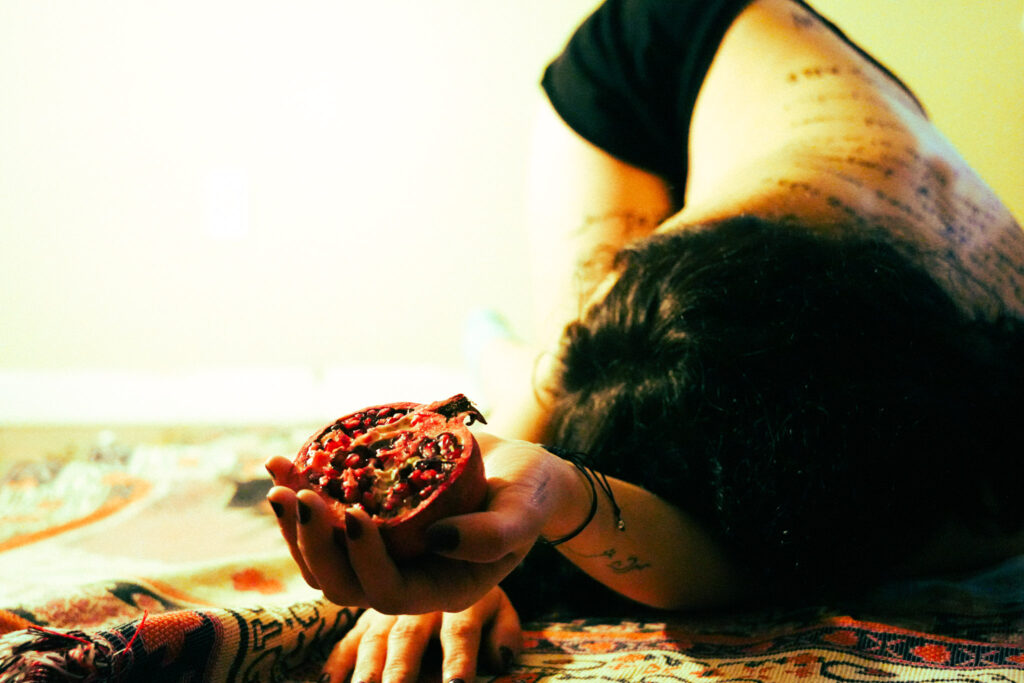
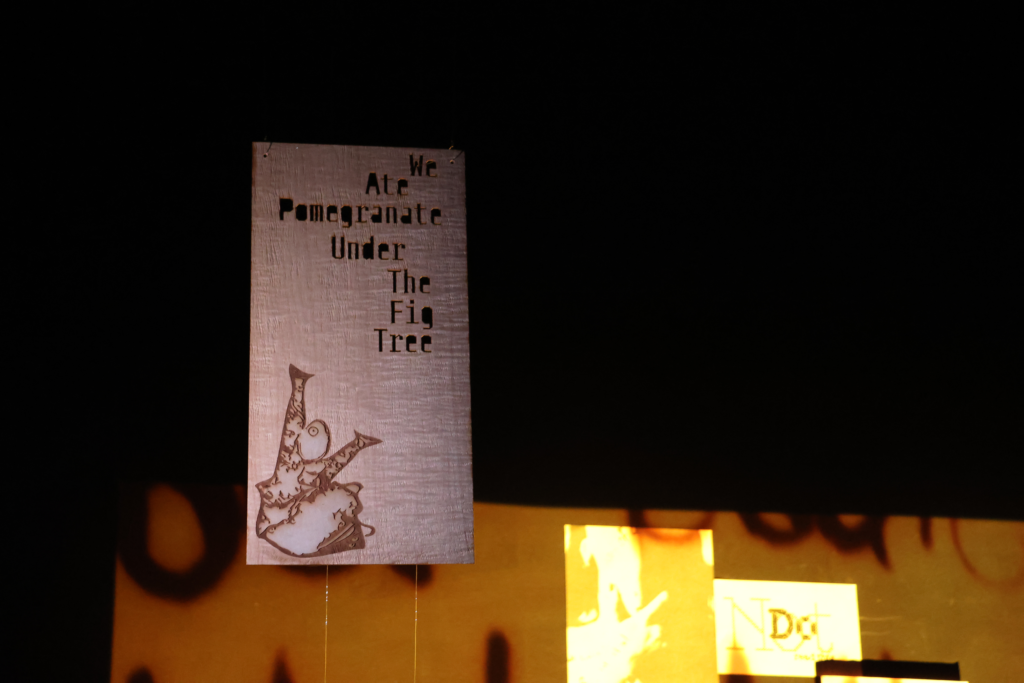
The second approach is the video titled We Ate Pomegranate Under the Fig Tree. It is inspired by the movie “The Pillow Book”. In the video, a person writes my poems on a body. There is an interaction with pomegranate, which connects to some of the poems. The pomegranate is a symbol of love and life. The video is layered, showing fragments coming together, combining different parts of the poems.
Bodies carry memory and secret stories. Every story is written on the skin through time, even the hidden ones. Bodies hold and remember. The camera holds fragments, and words become echoes of whispers.
The project comes together as an installation of selected pages from the book, the video responding to it, and three laser-cut wooden pieces carrying the names of the project and the community.
In the end, the body becomes the book, and the book becomes the body.
Their merging is what the installation tries to make visible.
Mahsa Ghazvinian
Mahsa Ghazvinian is an Iranian artist and Communication Designer based in Vancouver, Canada. With a background in drawing, photography, painting, illustration, and graphic design from Saba Vocational School in Iran, Mahsa’s work is shaped by her journey of immigration and filled with the concepts of time, memory, identity, and place.
Specializing in typography, layout, visual design, poetry, and storytelling. Mahsa challenges design norms to create impactful, memorable experiences that resonate with diverse audiences.
![ᐸᑭᑎᓈᓱᐃᐧᐣ [pakitinâsowin] by Shayne Hommy](https://2026.theshow-ecuad.org/wp-content/uploads/2026/04/IMG_2091-scaled-e1777333063636-300x205.jpg)