Mycoweaving
Emilia Abundis
ECU Award Recipient
Honourable Mention, Ecological Design Graduation Award
A collaboration with mycelium
What if we design like fungi?
Sections
- Mycelium Teachings
- What is mycelium?
- About this project
- Lab
- Research
- How it works
- Mycoweaving as a methodology
- How to collaborate with mycelium to design alternative futures?
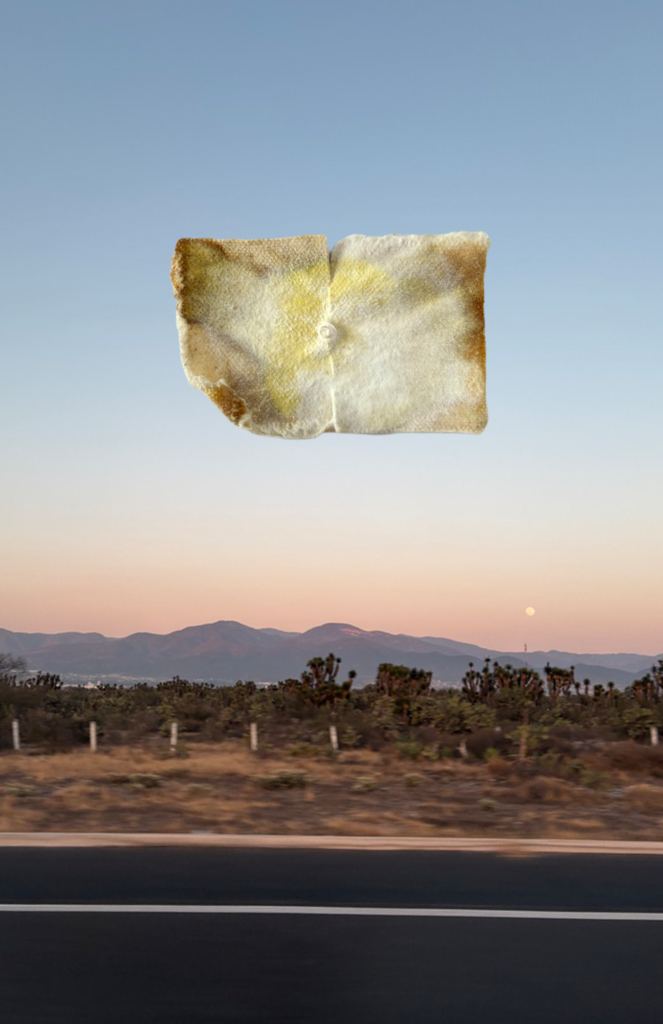
Mycelium Teachings
- We can’t force something to be what it’s not.
- To trust
- Push the material, and it will push back.
- Distributing over accumulating resources.
- Slow down and be patient
- Regeneration needs fuel and energy.
- To embody
- Push the material, and it will push back.
- Constant movement = alive
- Naming is acknowledging
- Embody knowledge
About this project
Mycoweaving is a project in which mycelium has been both a teacher and a collaborator.
Based on regenerative practices and an ecofeminist approach, this project seeks to redesign the established colonial, patriarchal, and capitalist design approach into one that fosters community, regeneration, and a deeper connection with nature.
I started this project working like mycelium. Branching and expanding through conversations and collaborations.
In collaboration with Maia’s Farm’s scientific team, who guided me and allowed me to cultivate mycelium at their lab.
I began blending science and design, exploring mycelium’s ability to grow on and between textiles, transforming textile waste into new biomaterials.
What is mycelium?
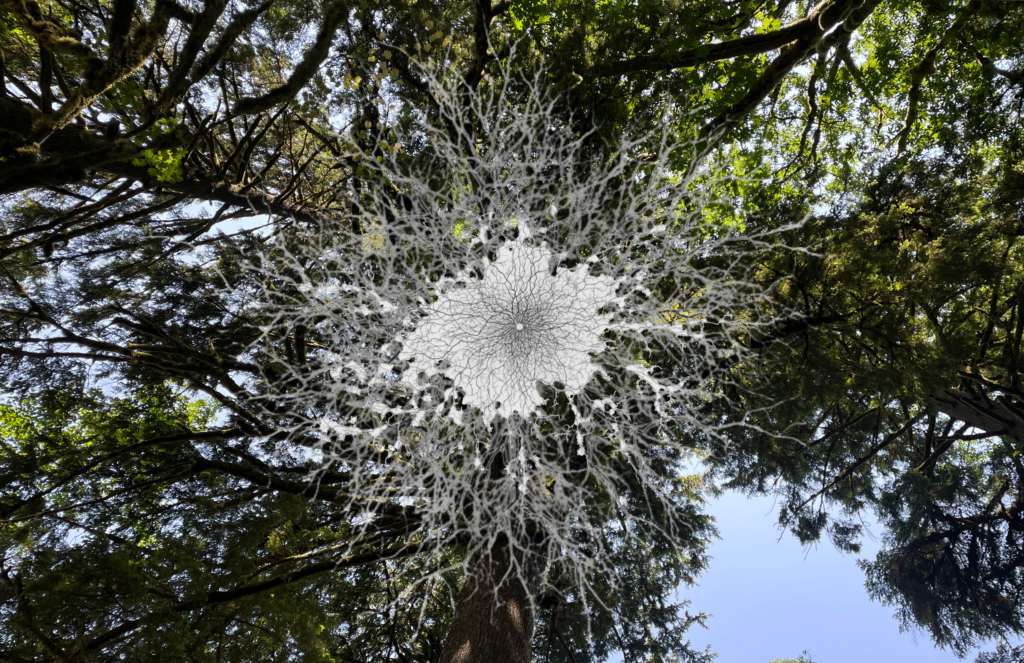
Mycelium
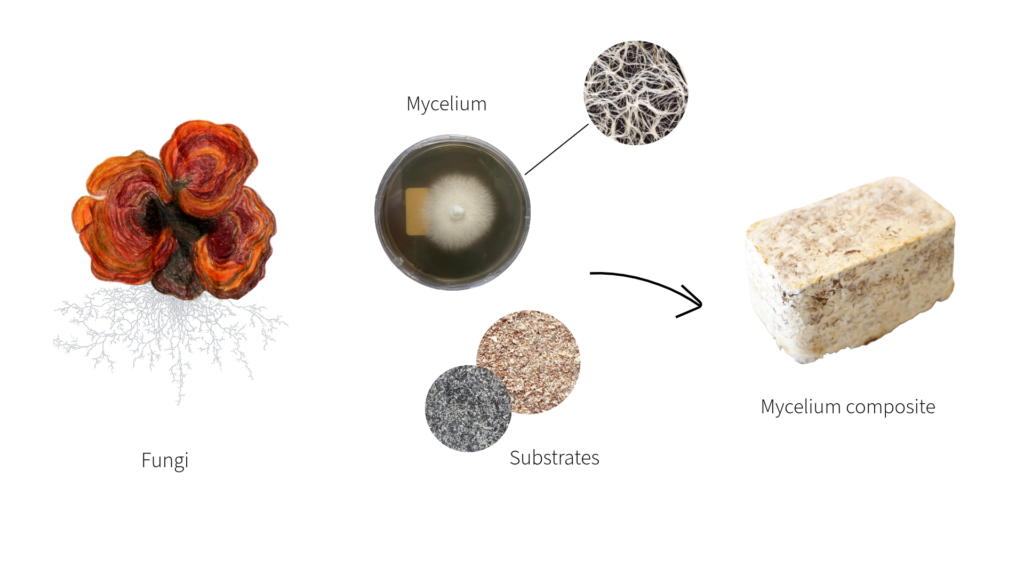
Is the body of the fungus; it’s everything that’s underneath the surface. It’s a whole network of thin, fungal thread-like structures called hyphae. It’s the part of the fungus responsible for nutrient absorption, growth and the formation of symbiotic relationships between plants.
Mycelium bio-composites
In recent years, mycelium has been recognised as a sustainable biomaterial capable of growing on and binding different composites. Some of these innovations worked only with mycelium, while others combined it with other composites to create stronger structures.
Lab
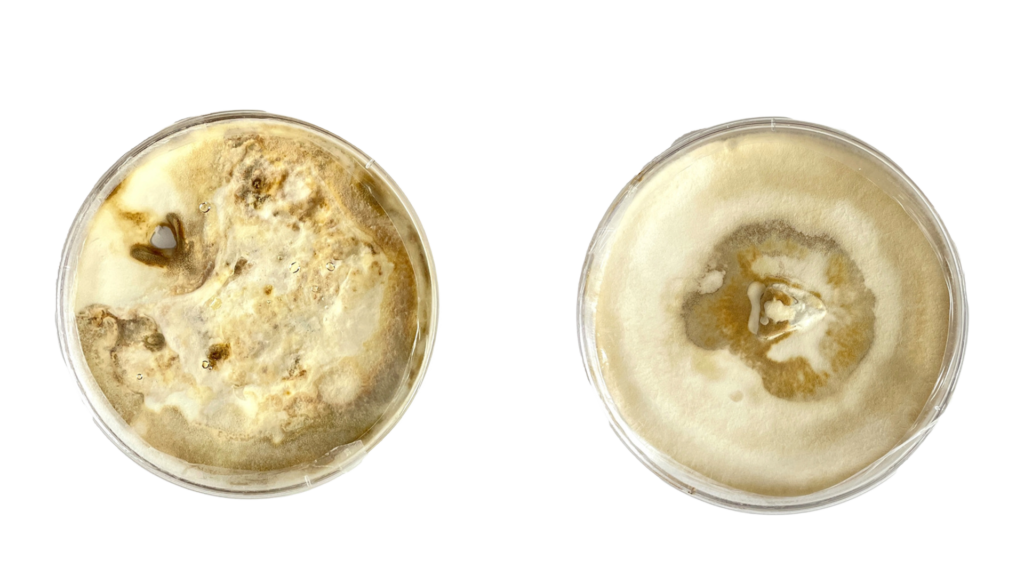
The first semester involved me getting proper training working in a lab. Ludo, the mycologist, trained me to prepare and cultivate mycelium on Petri dishes and to follow all necessary lab sanitation protocols.
I was asked by the lab to make labels for my samples and to pick one as the parents’ strain, from which all my future experiments will come.
So I gave them a name: Arlo and Bruno, or A and B
By naming them, I was acknowledging them.
A living organism, another team member in this research project.
Research
And the growth began…
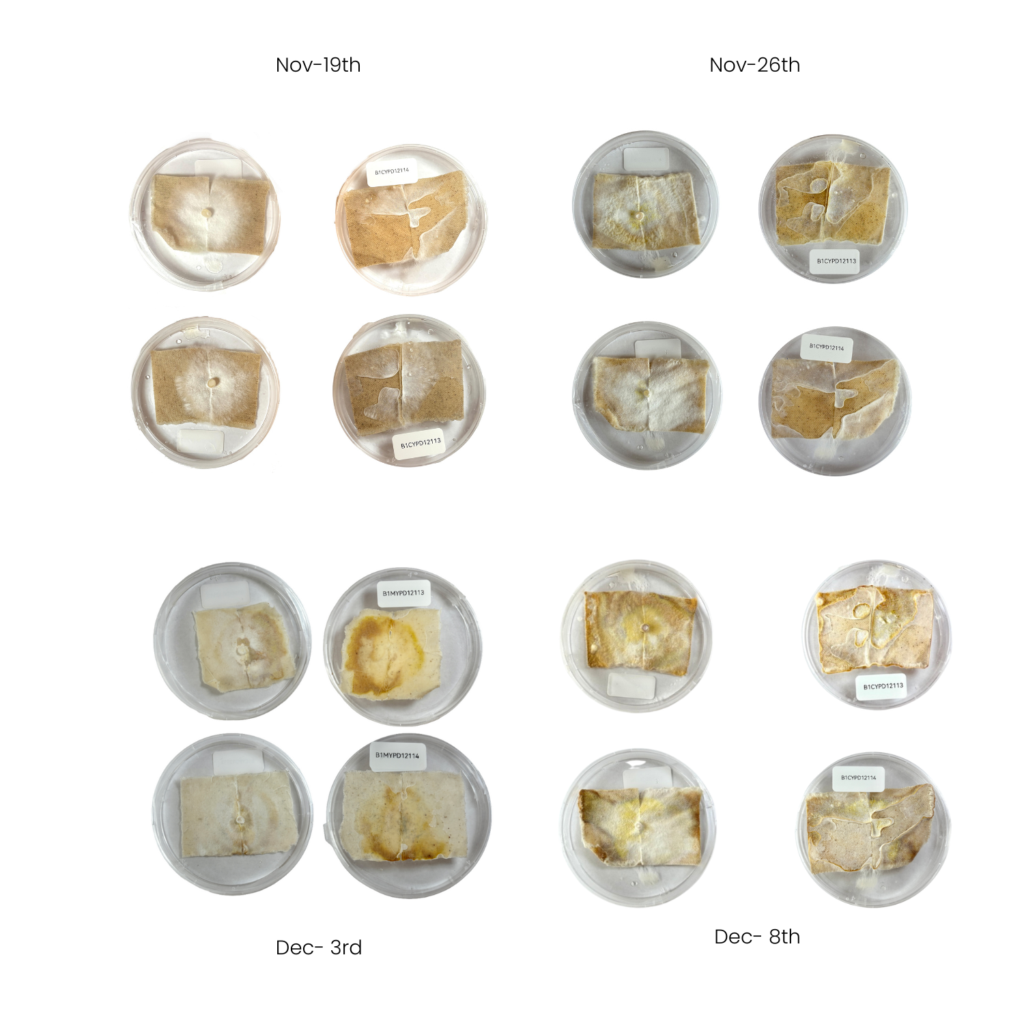
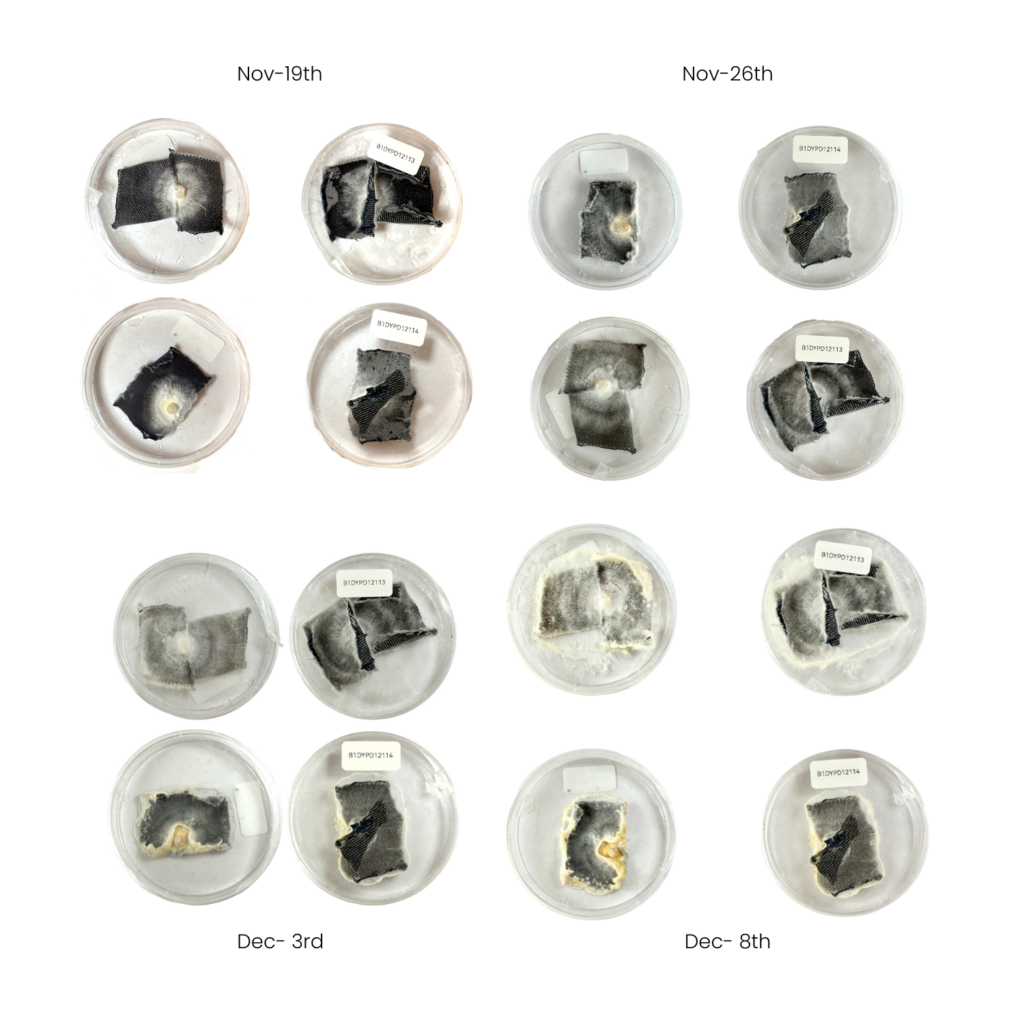
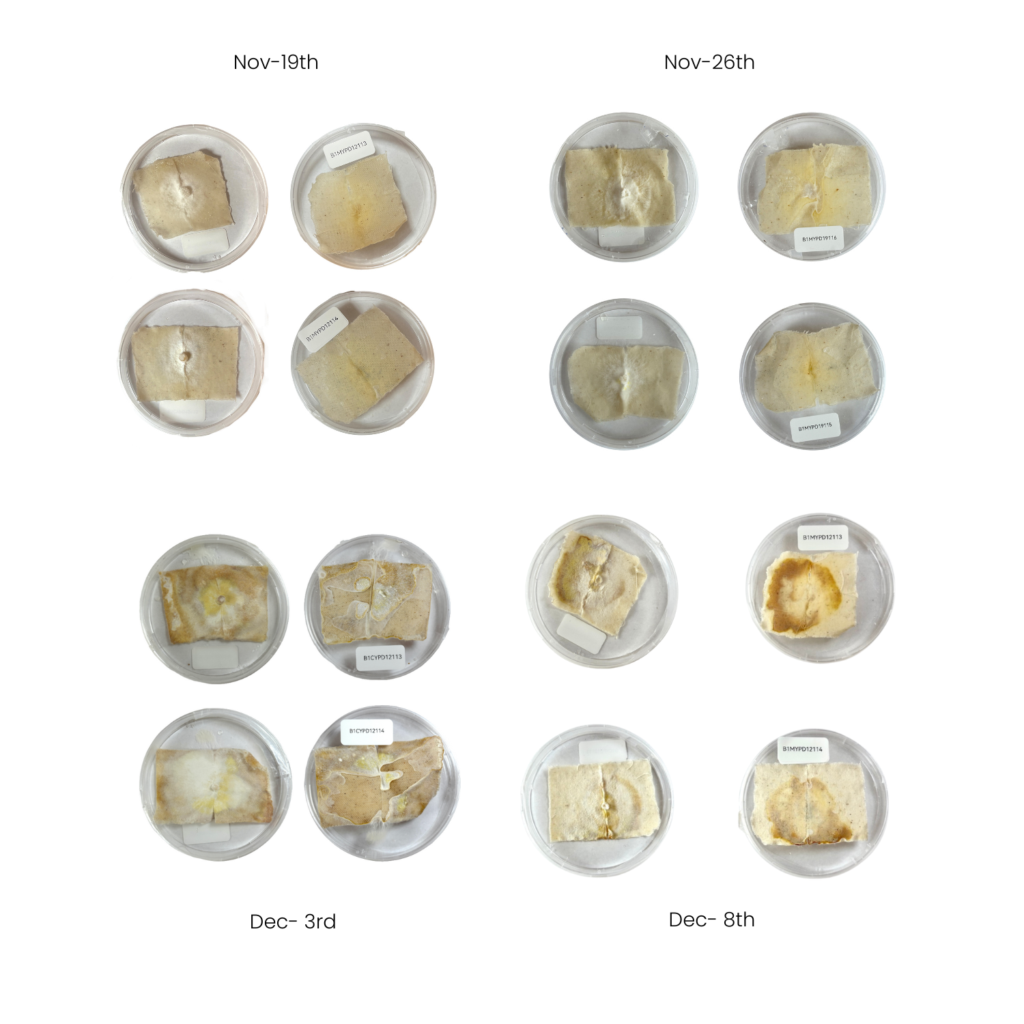
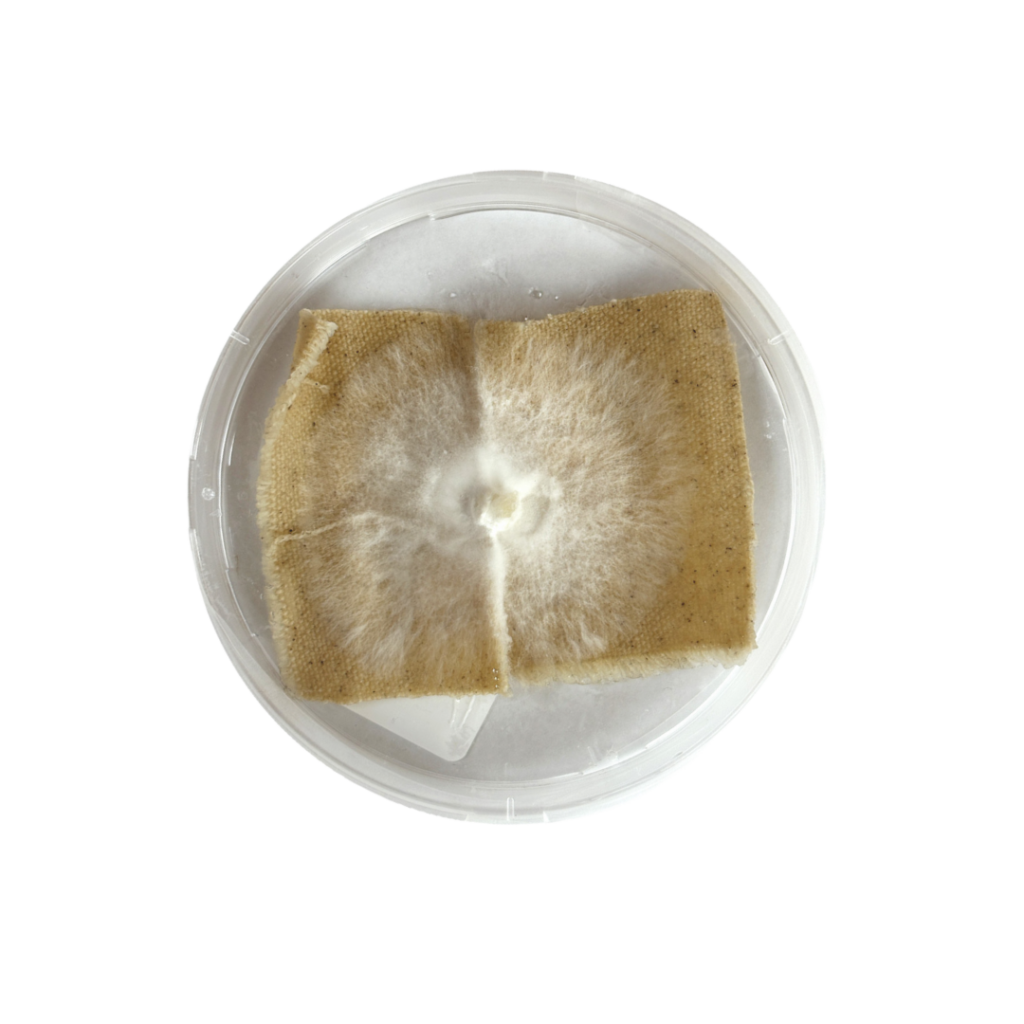
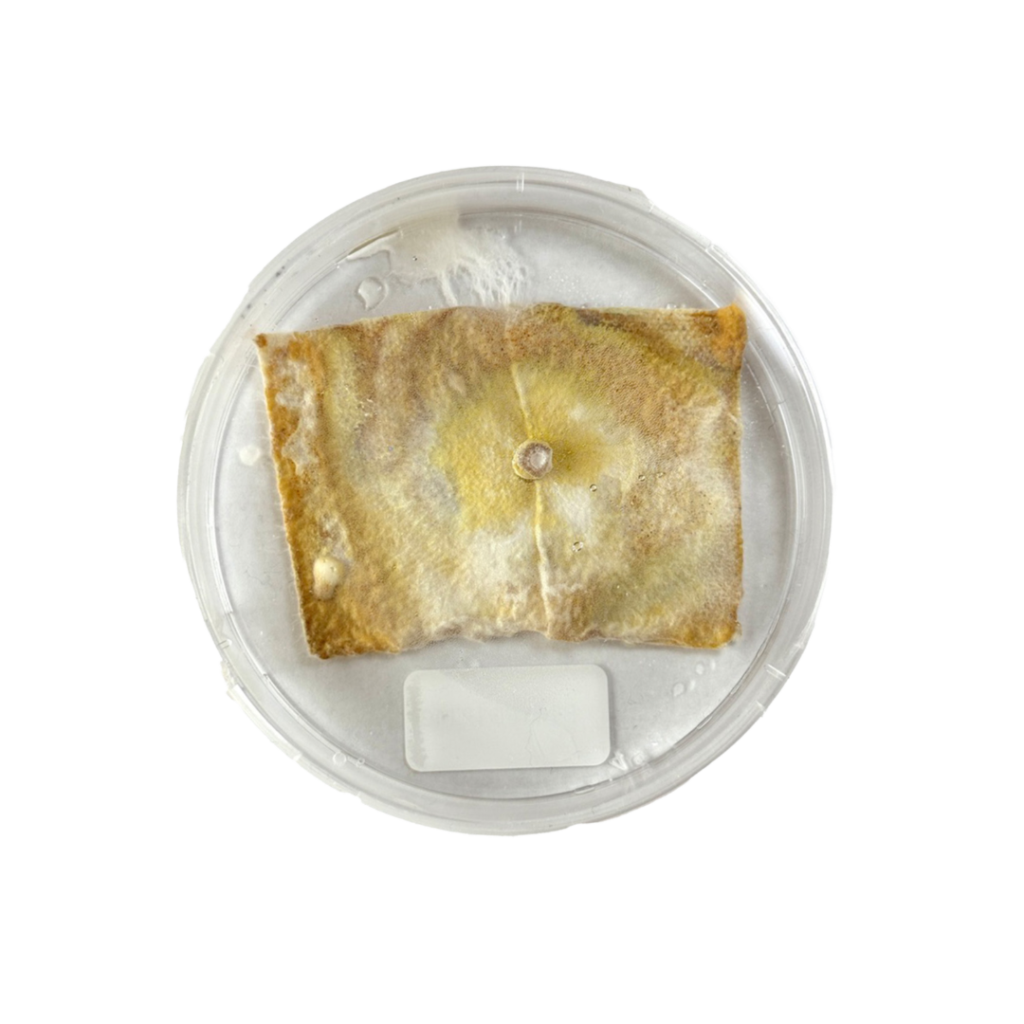
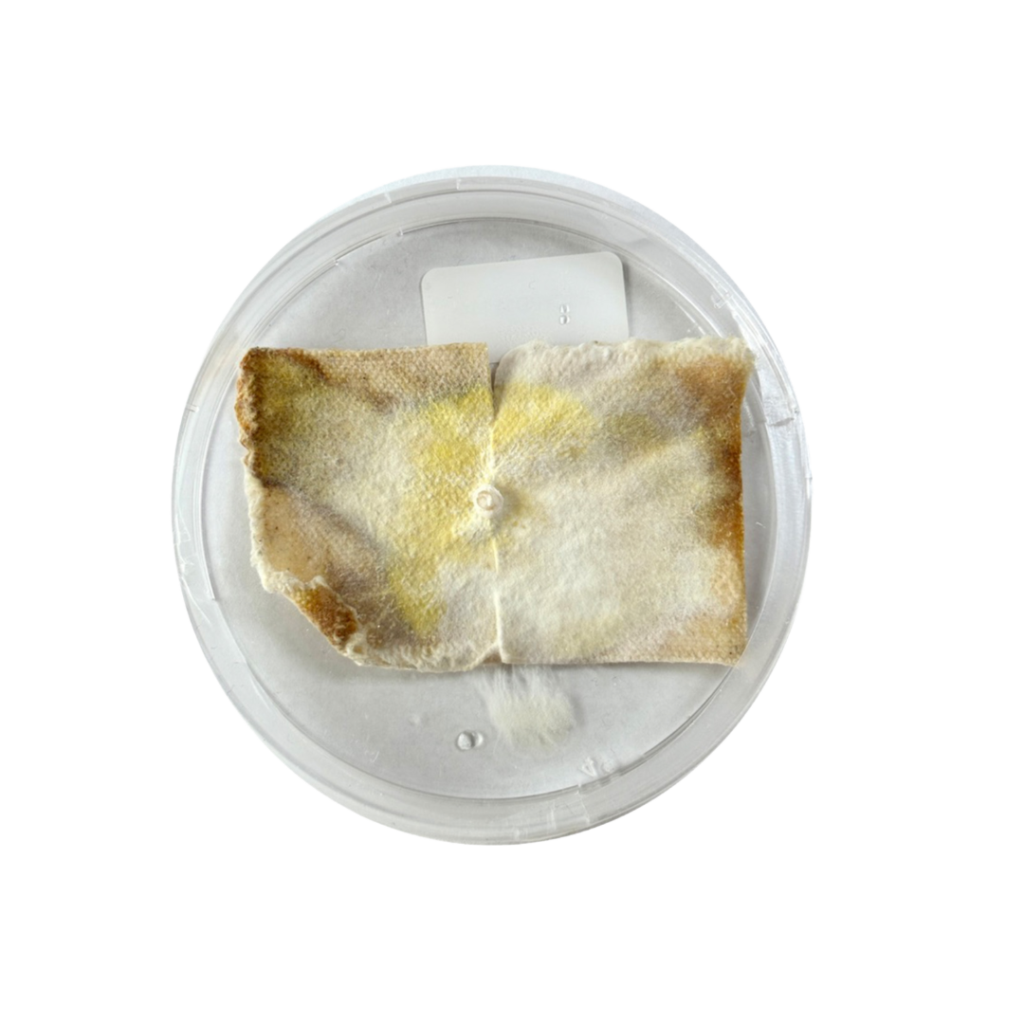
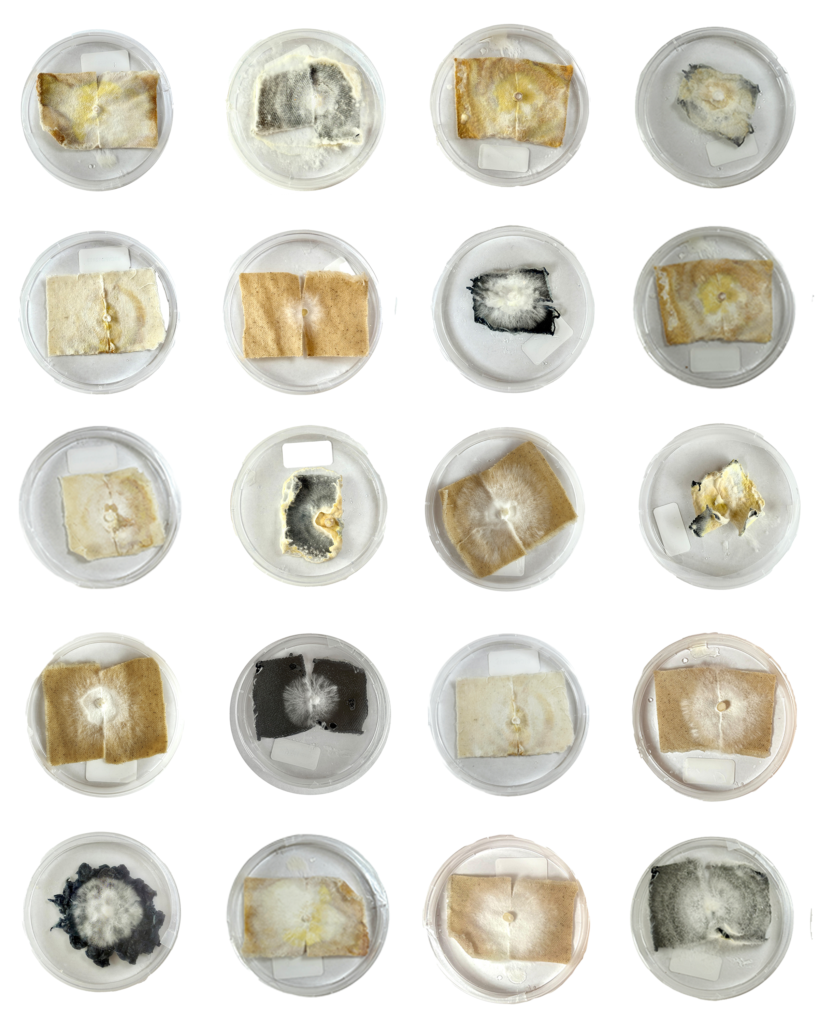
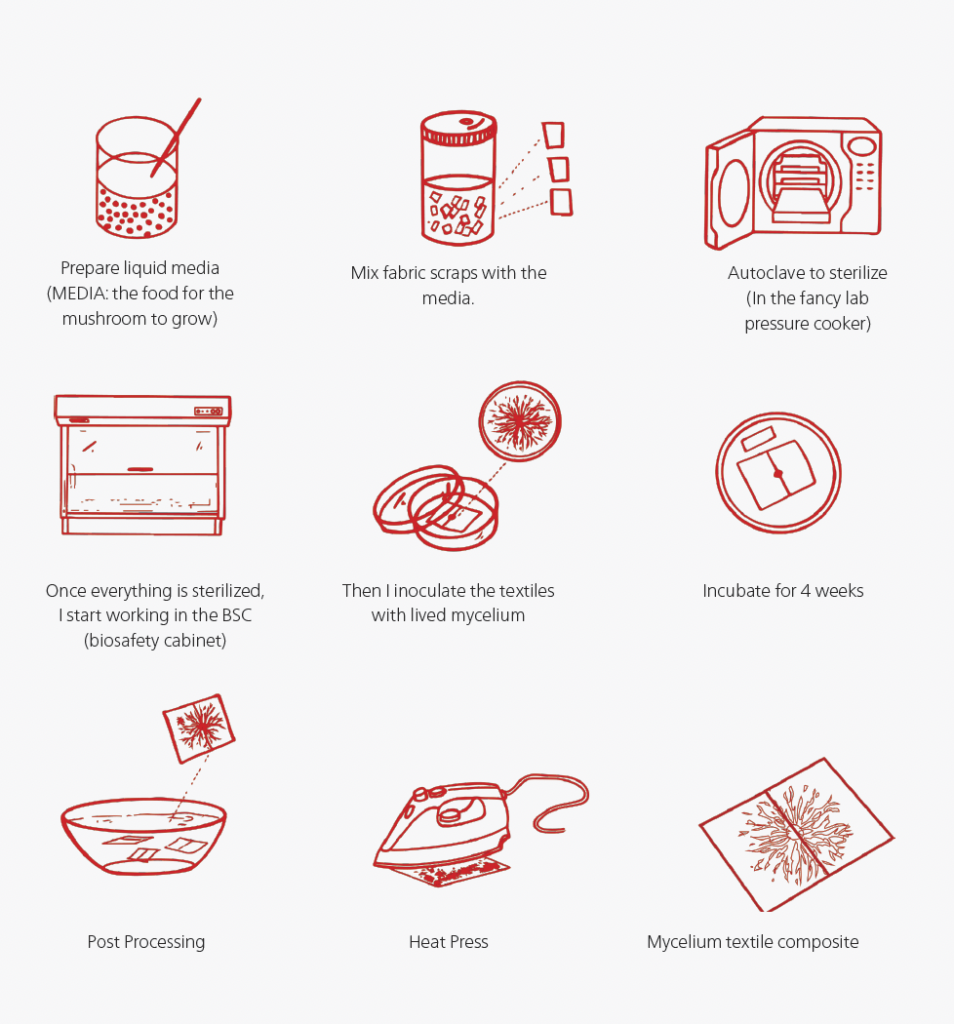
For 4 months, I focused on learning how to grow mycelium on textile scraps and how to post-process the material.
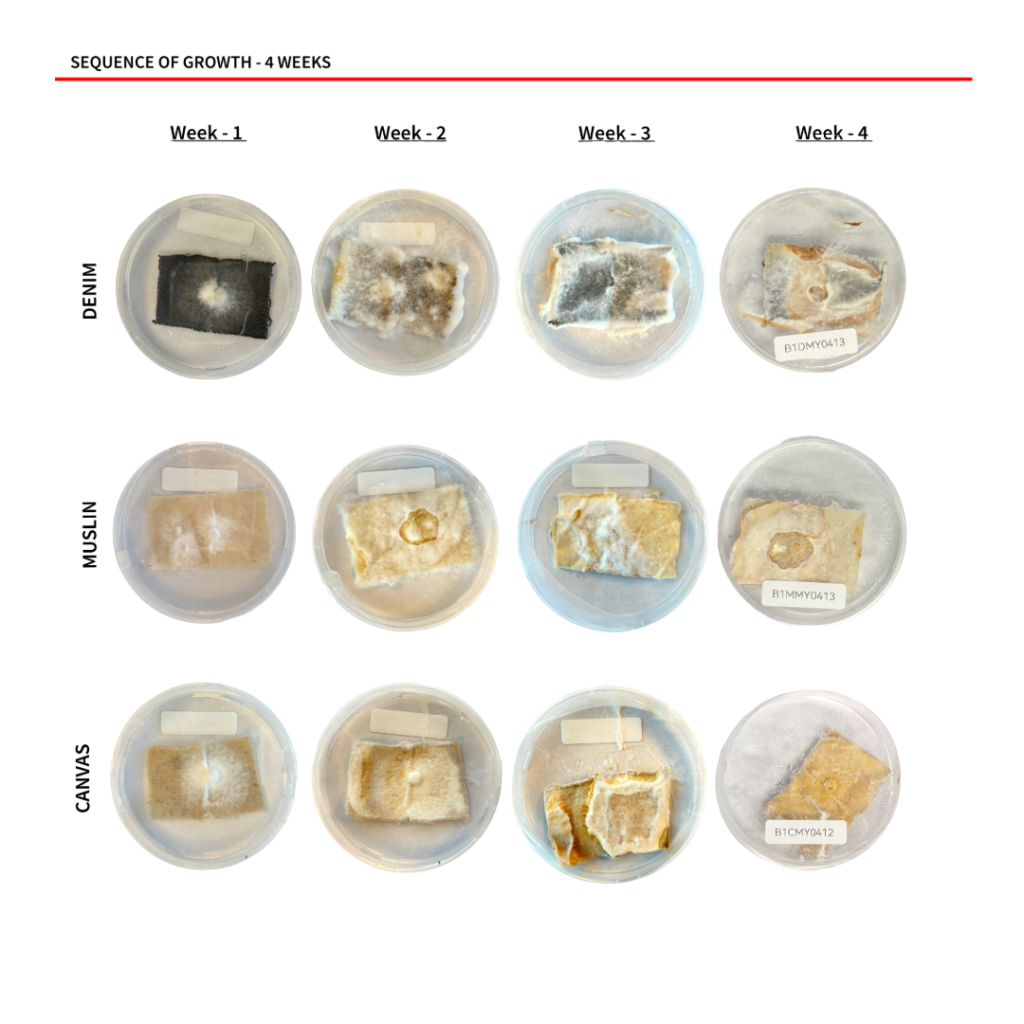
I waited
I observed, and I trusted
Observing an almost static, constant movement
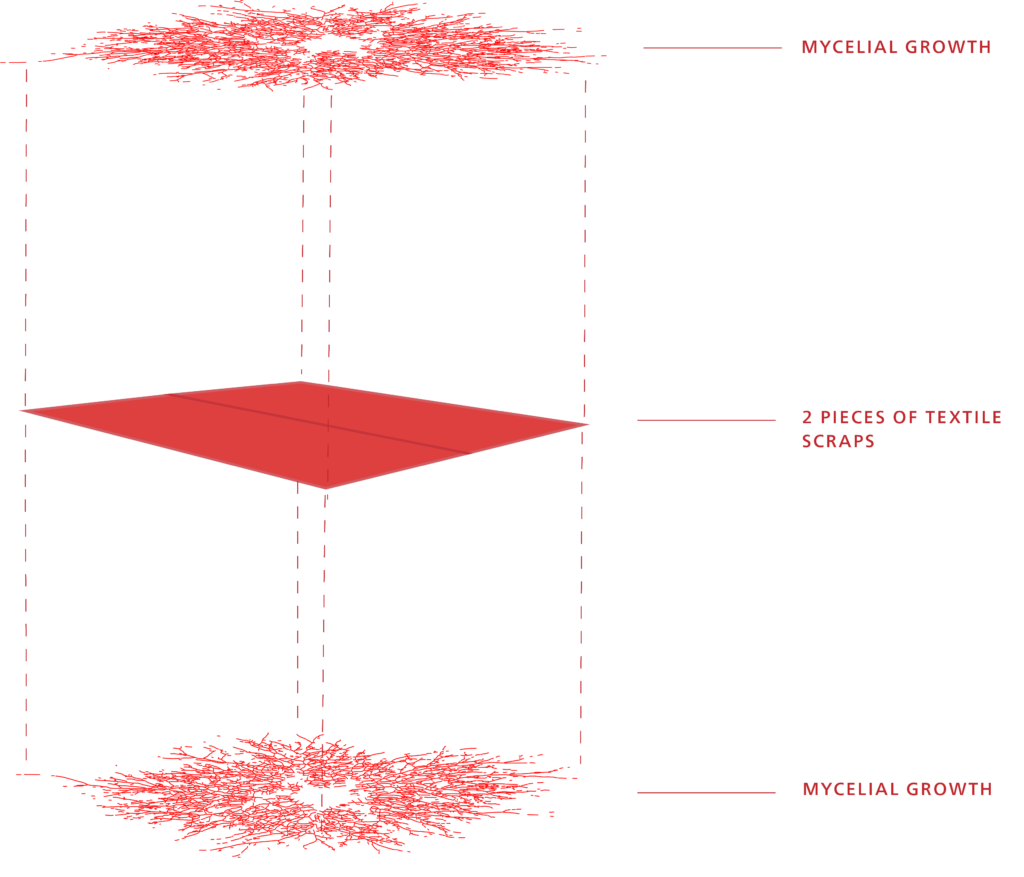
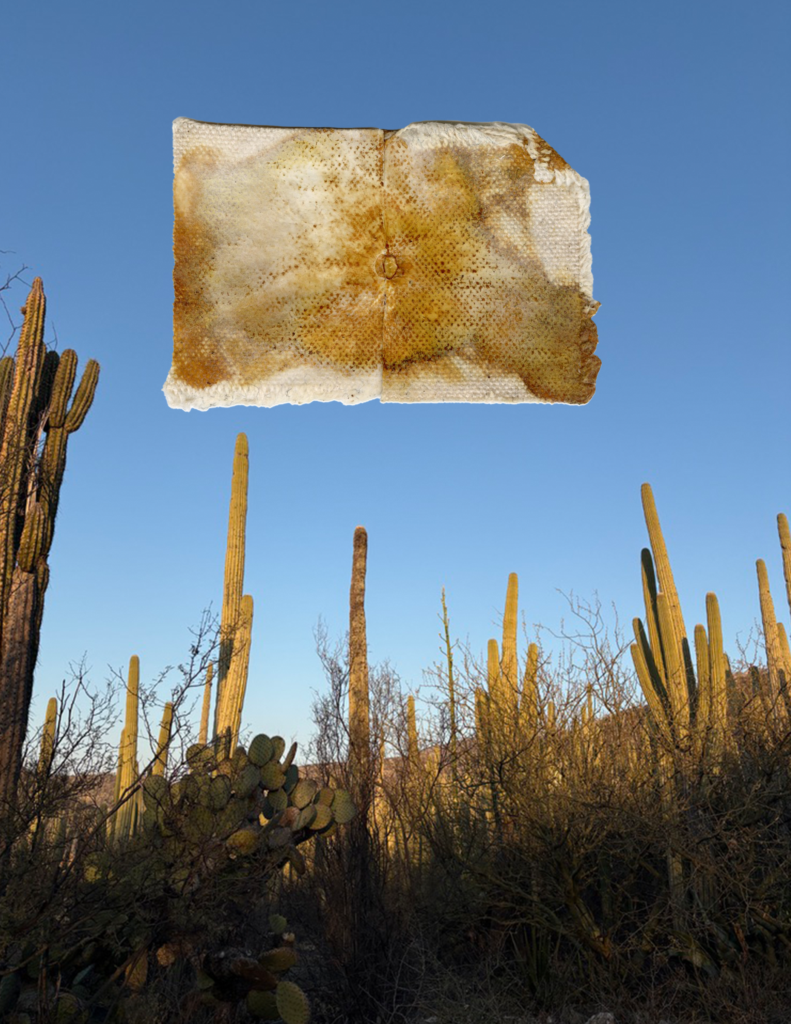
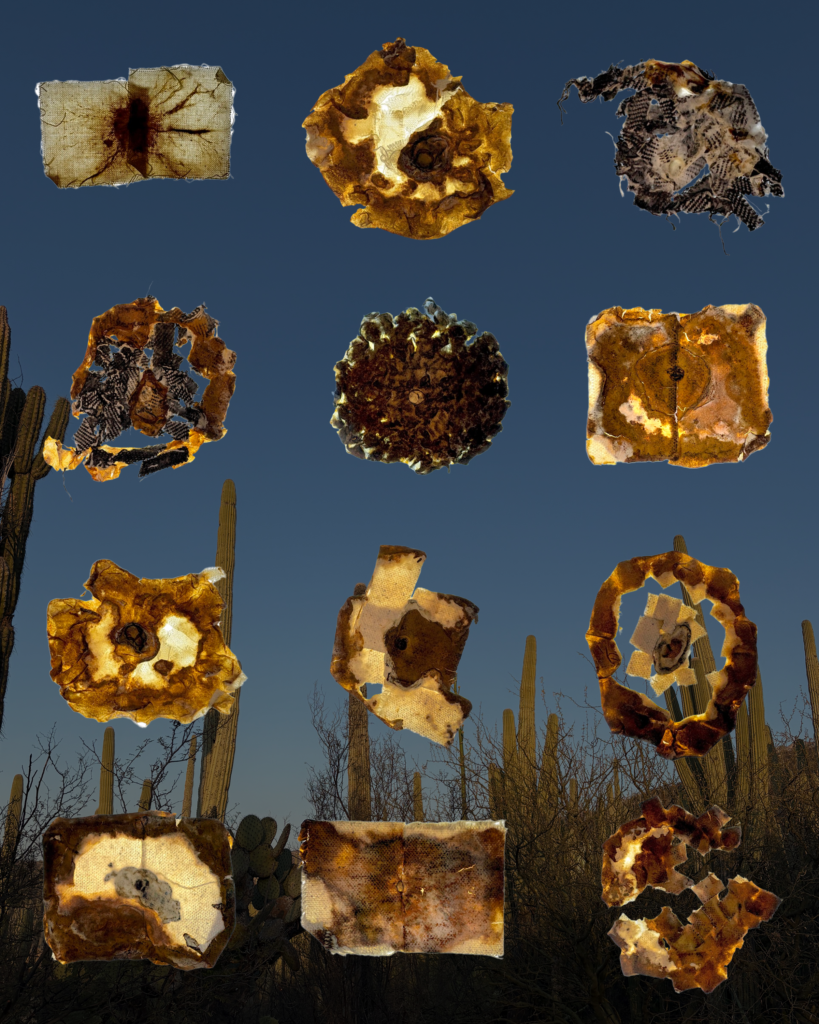
The mycelium grows on and between the textile pieces, creating a bond that holds them together. Becoming a mycelium composite.
Through a series of experiments and extensive sampling, I developed a method.
A method that would guide my final experiment at the Lab.
An experiment in which I tested the material’s tensile strength and wrote a research report.
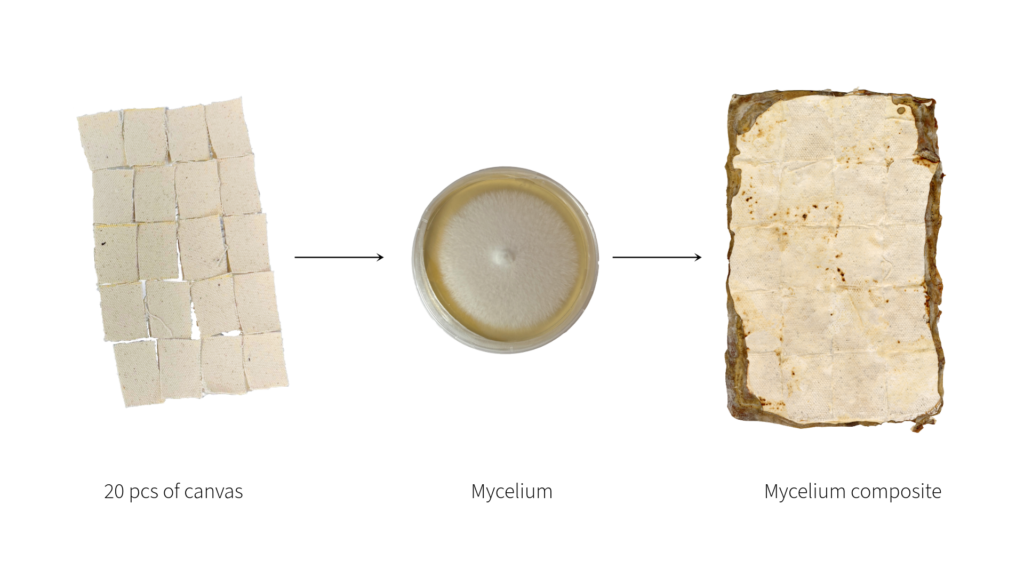
I decided to up-scale and test mycelium’s ability to connect 20 pieces of fabric, creating a larger mycelium-composite.
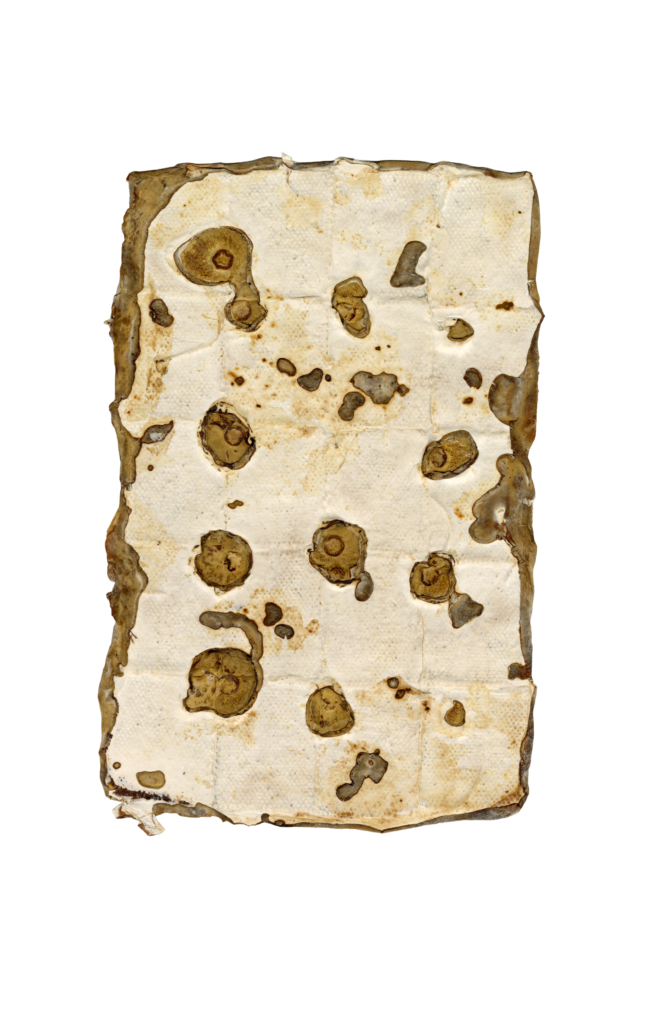
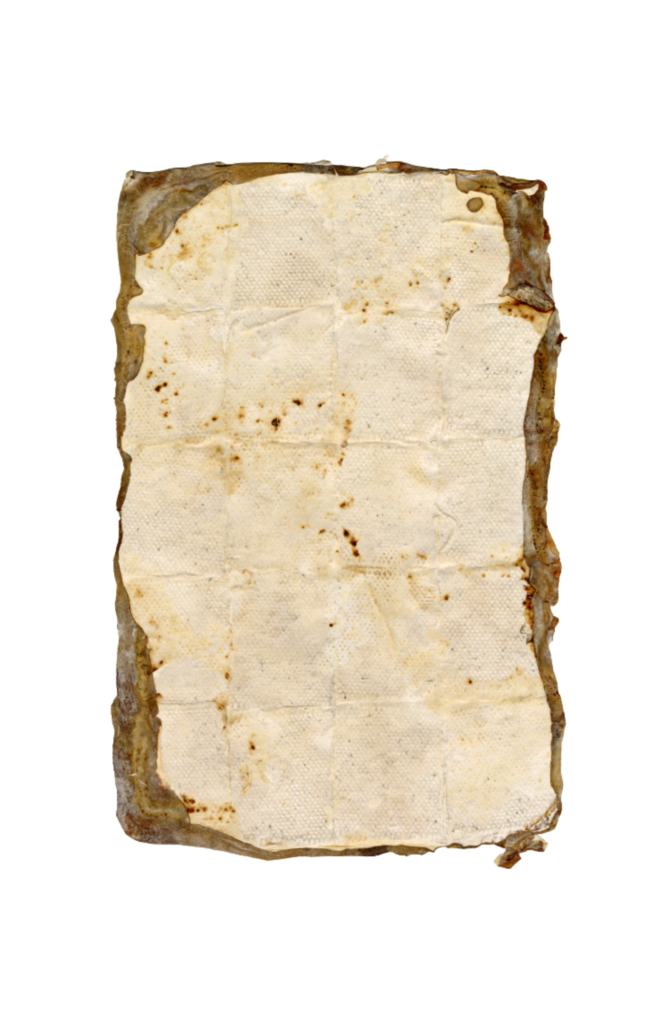
Mycoweaving as a methodology…
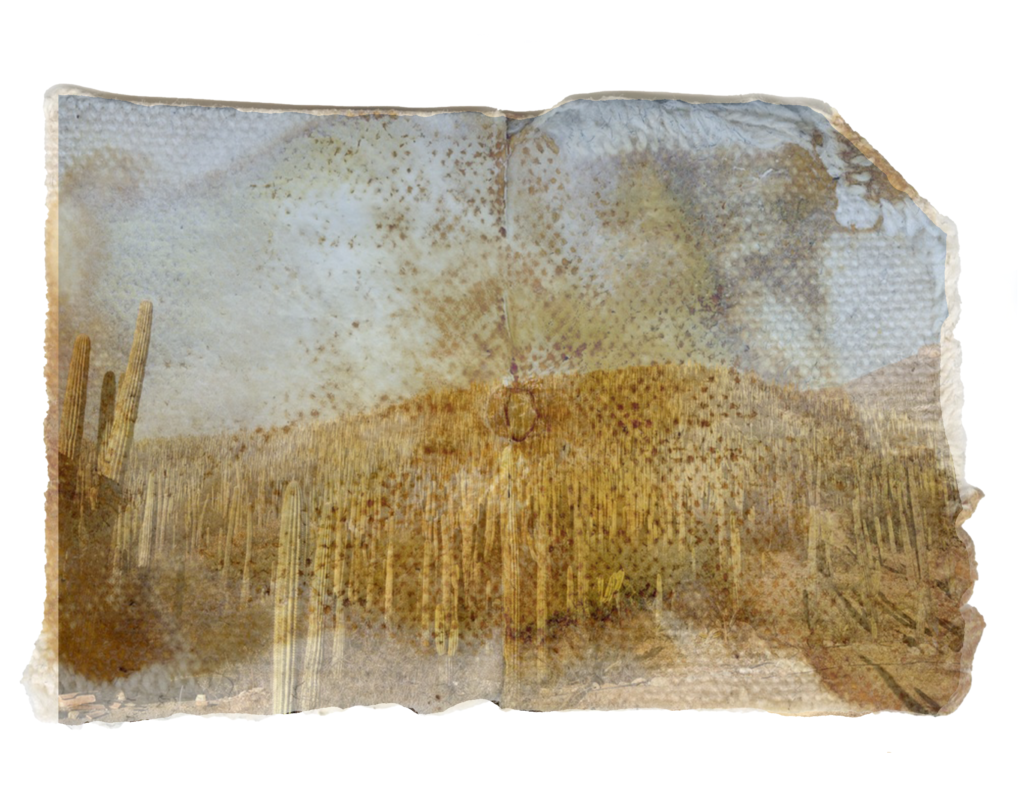
It is not just about the material; it is about reimagining futures in which these materials fit and are part of our everyday lives.
The mycelium teachings go beyond the material and propose a methodology. An alternative way of designing, living and moving like fungi.
As I dived into the science and biology working with mycelium, I began learning a new language.
Science can help us interpret, understand and learn from natural systems.
Design can pass on this knowledge through visual and tangible communication.
A mycelial design uses these two languages and explores the dialect of uncertainty.
It questions not looking to understand but to learn. Becoming a bridge from the natural system to the modern world through biodesign.