時光之器 Vessels of Time
Lanlan Ji 蘭
Material studies in vessel, cloth, residue, and return, 2022–2026
1. Standard Vessel Study
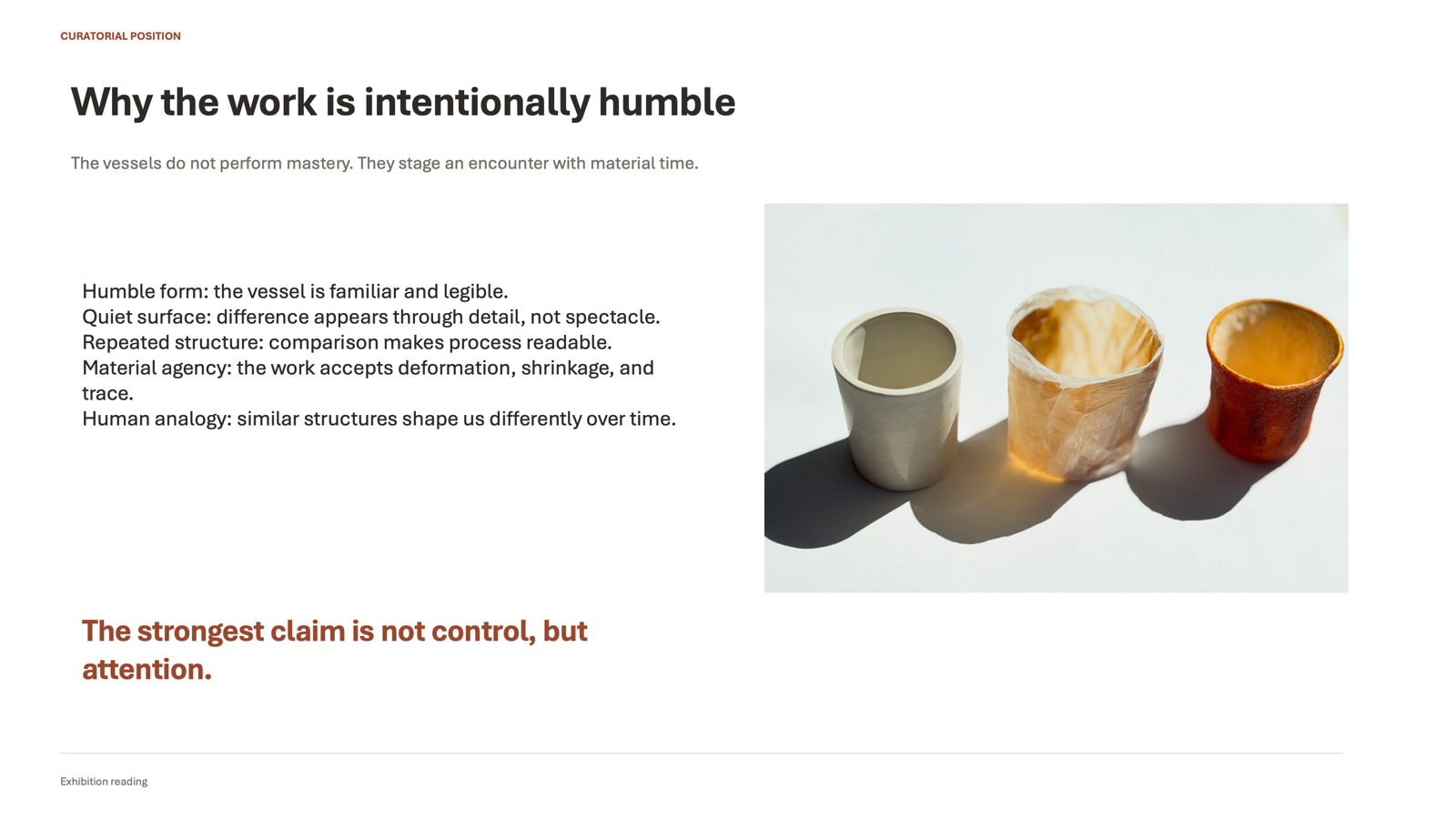
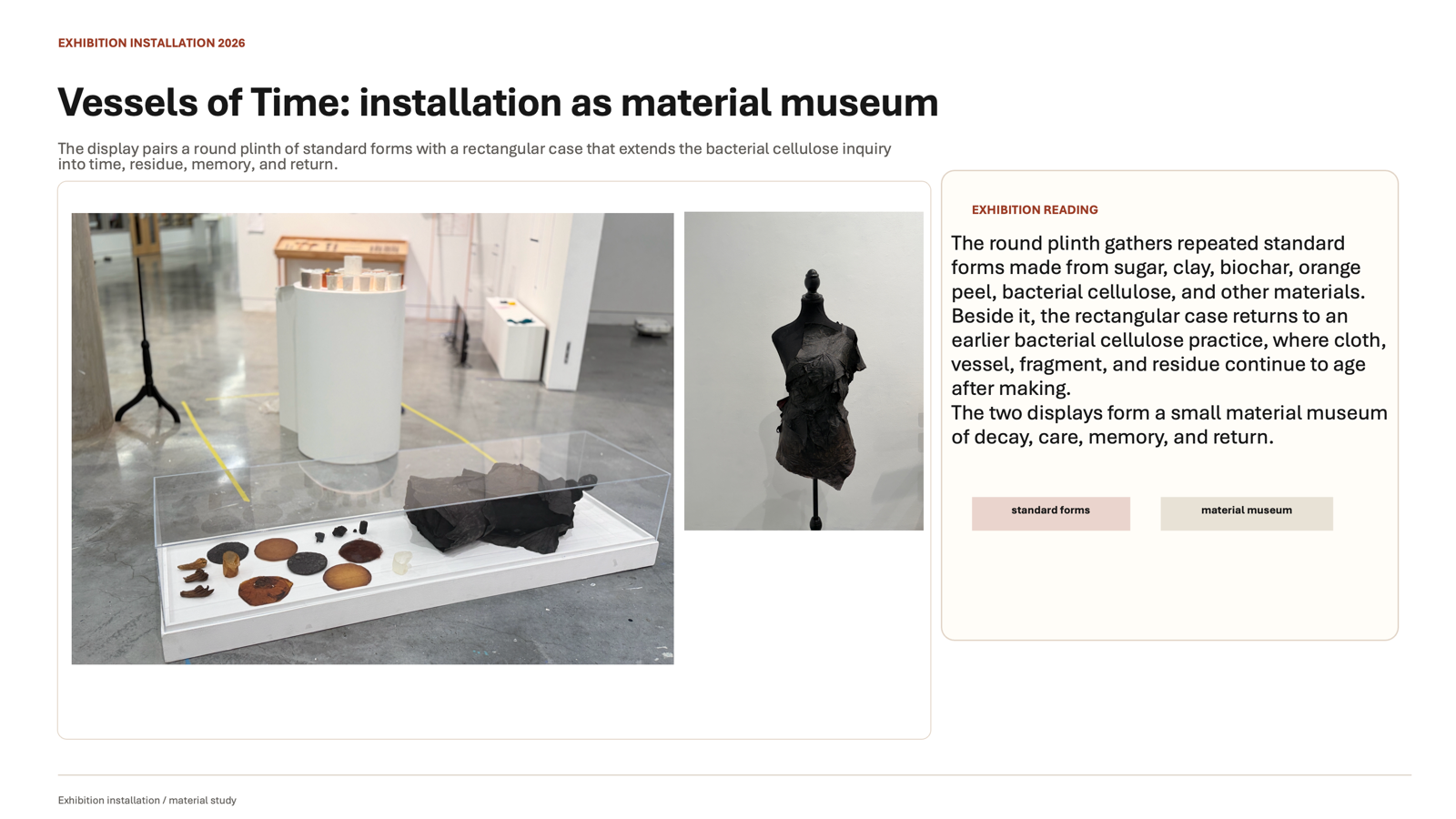
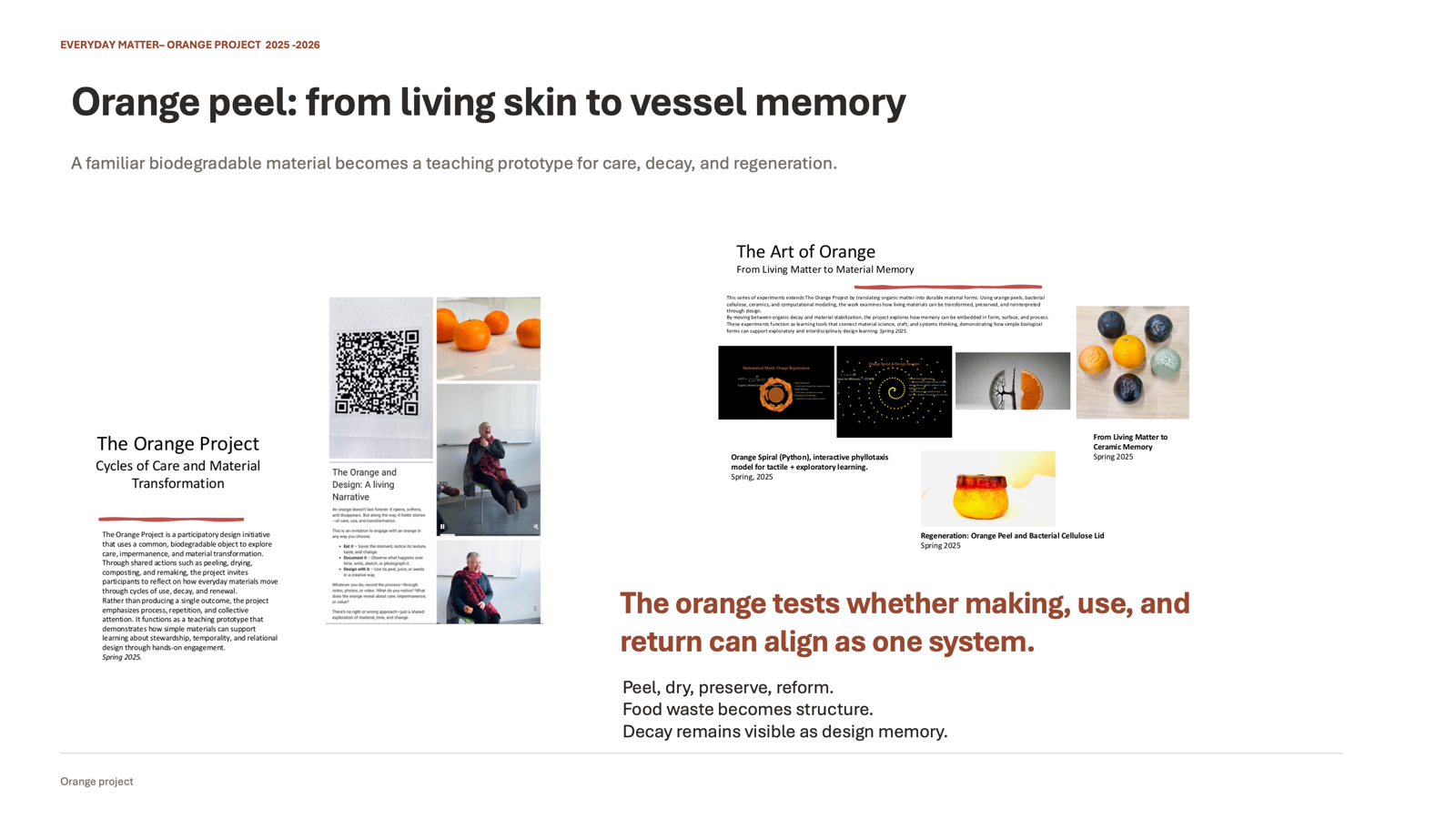
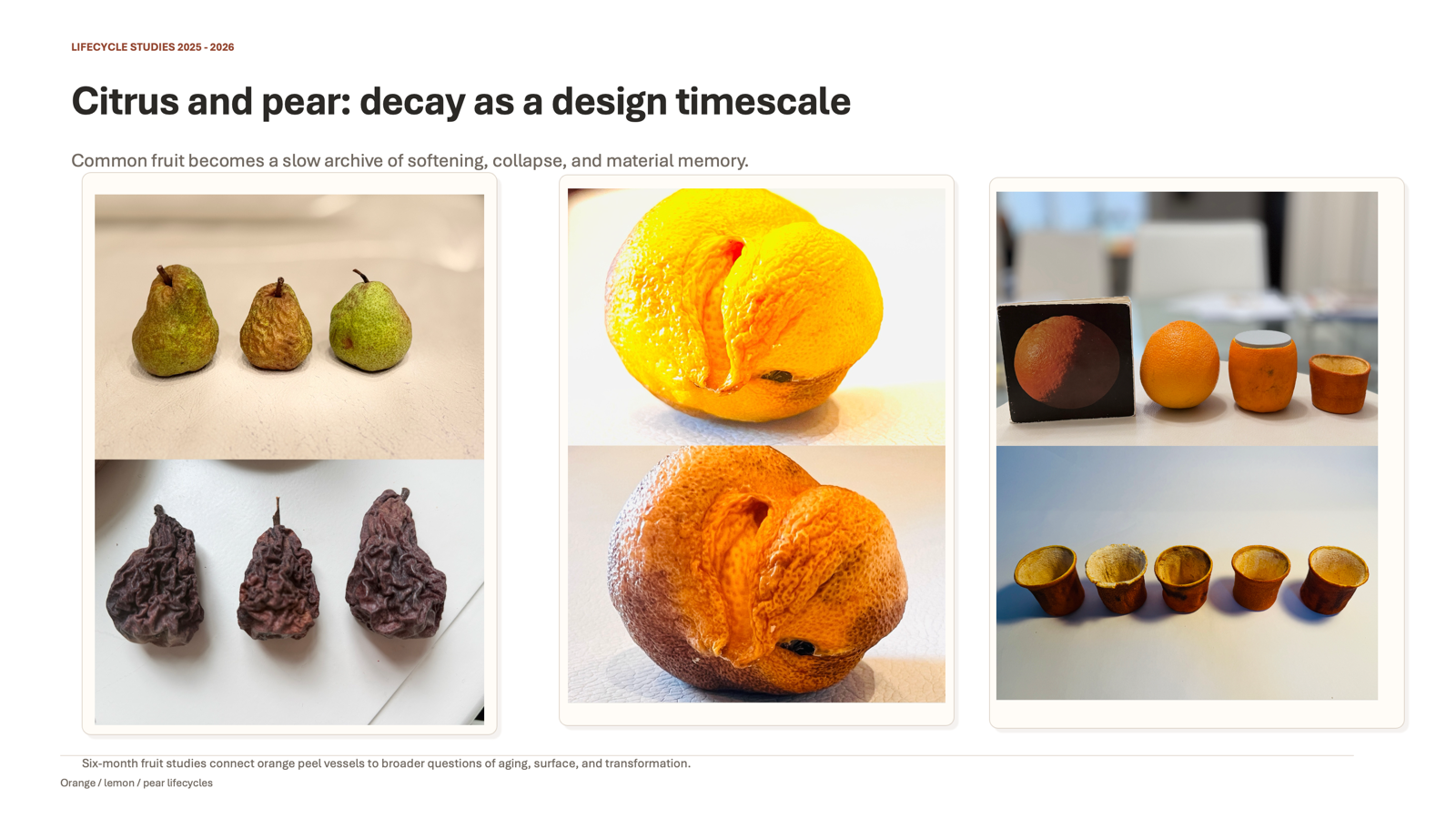
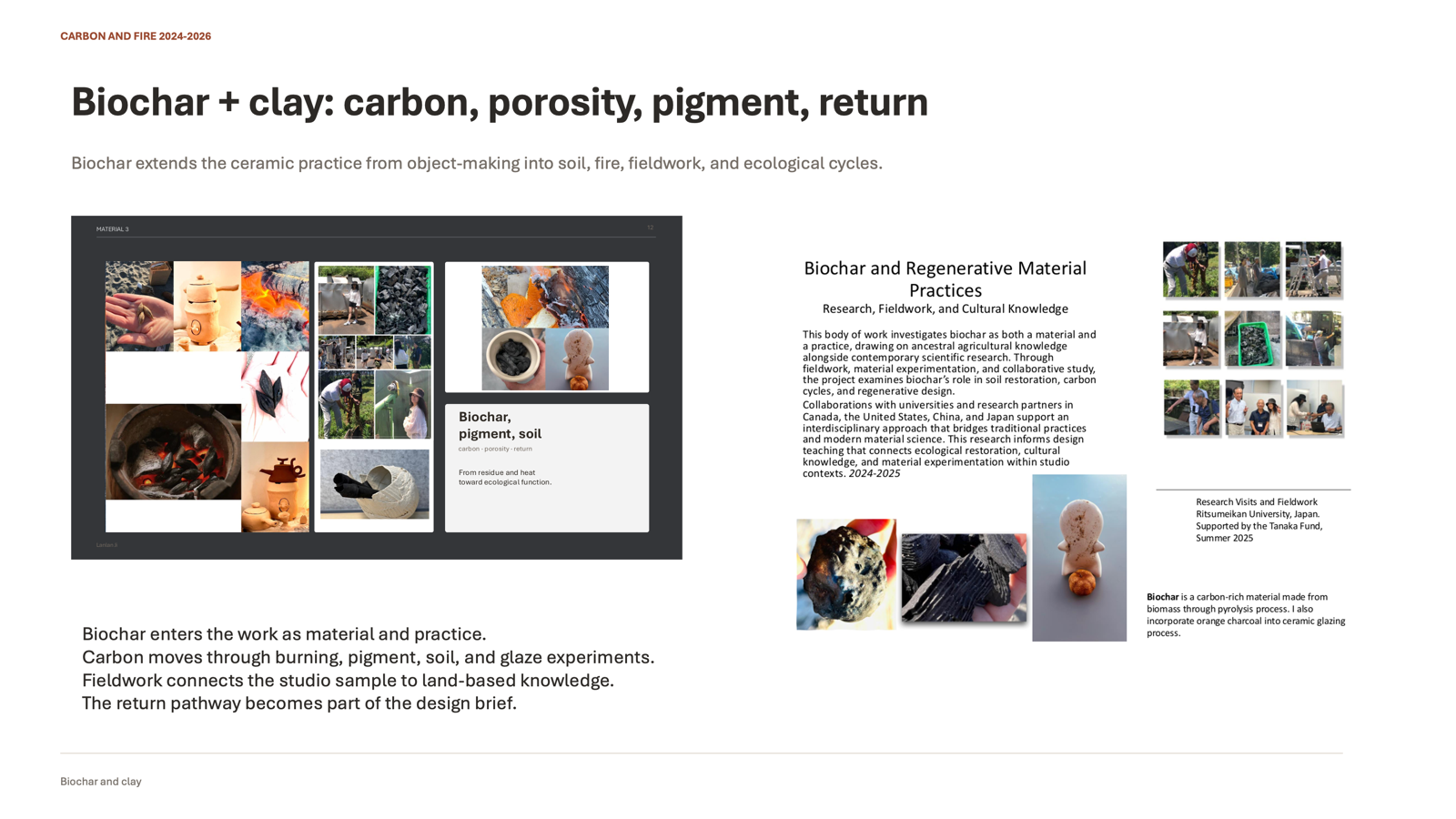
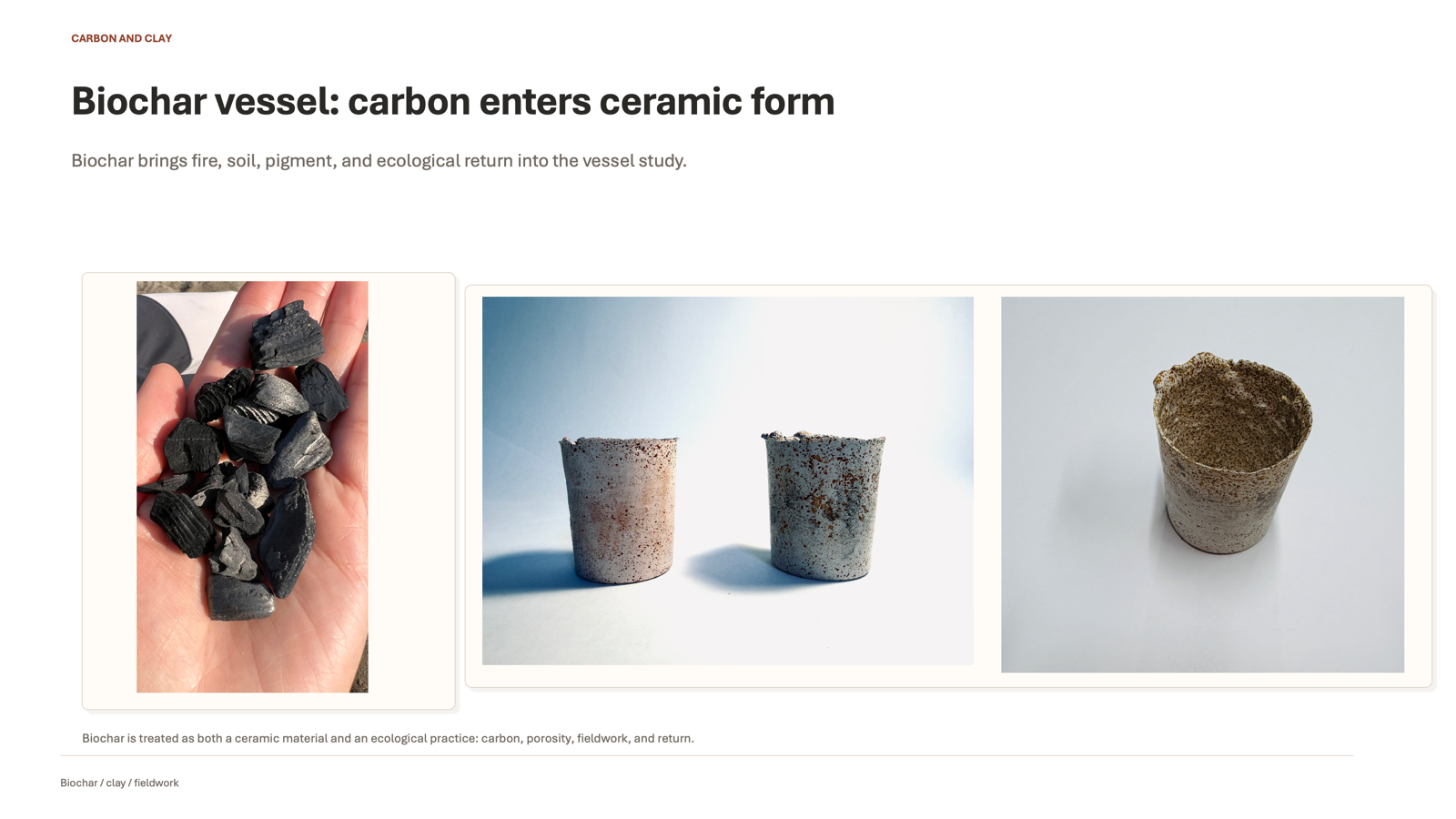
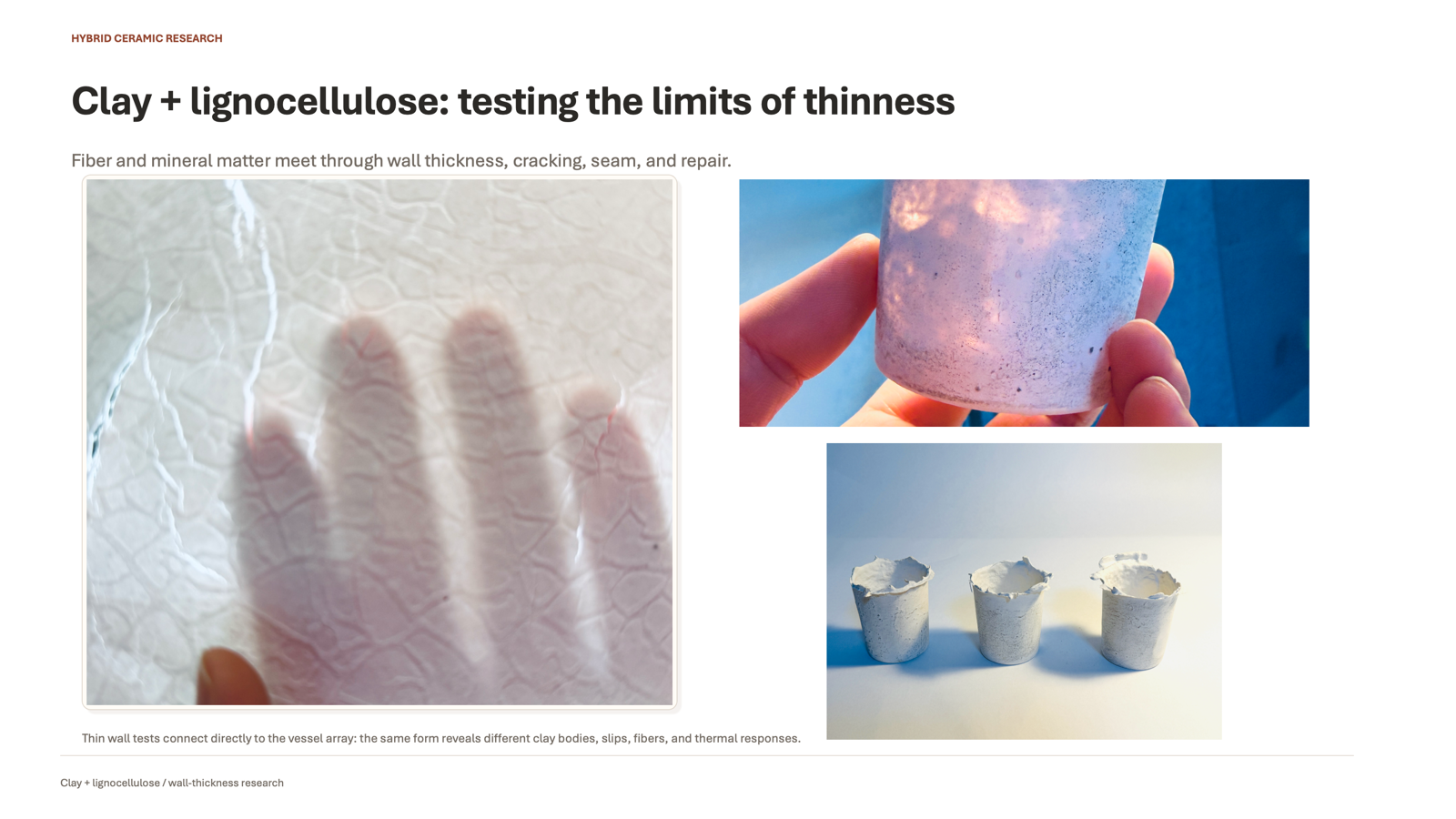
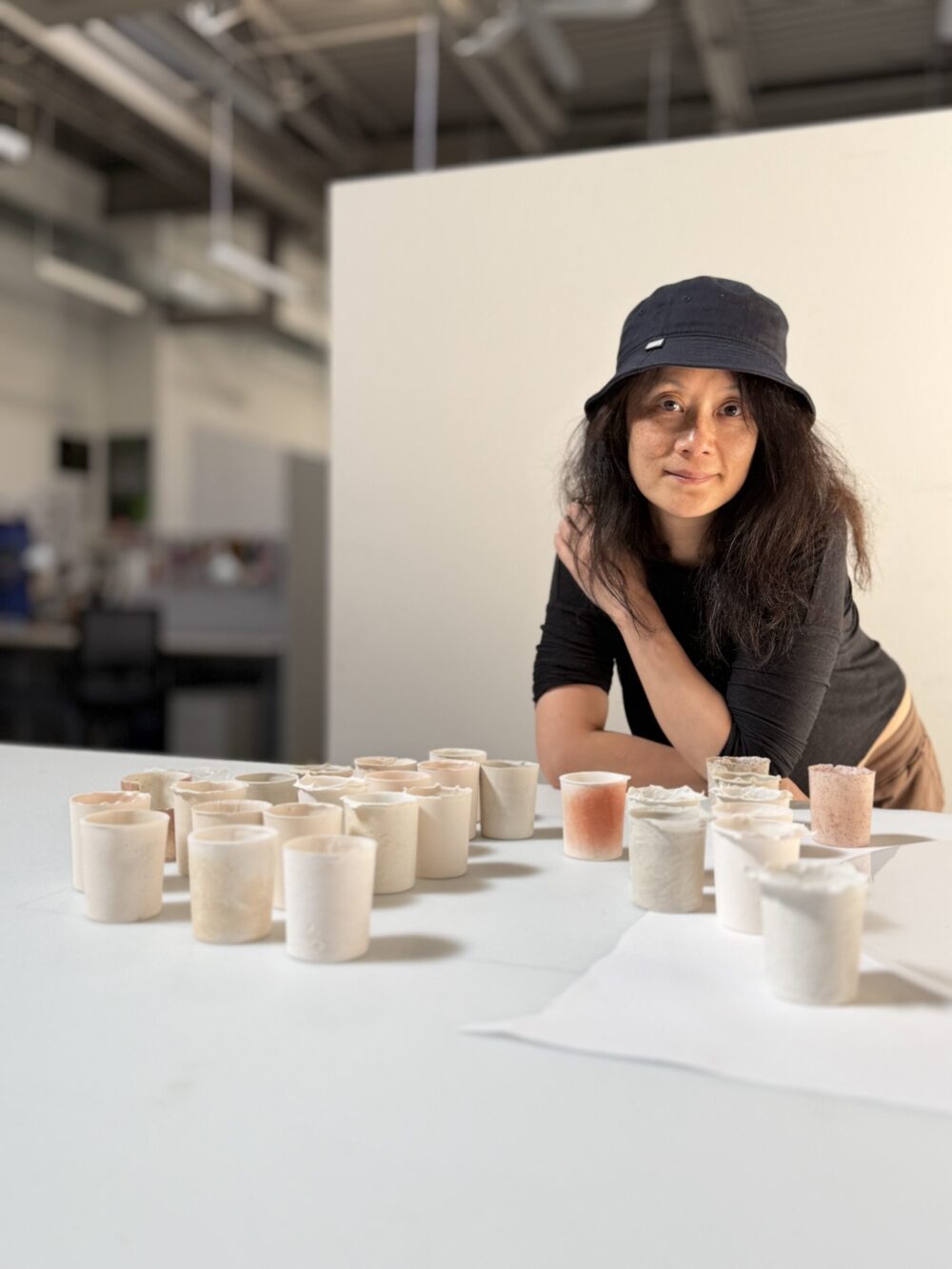
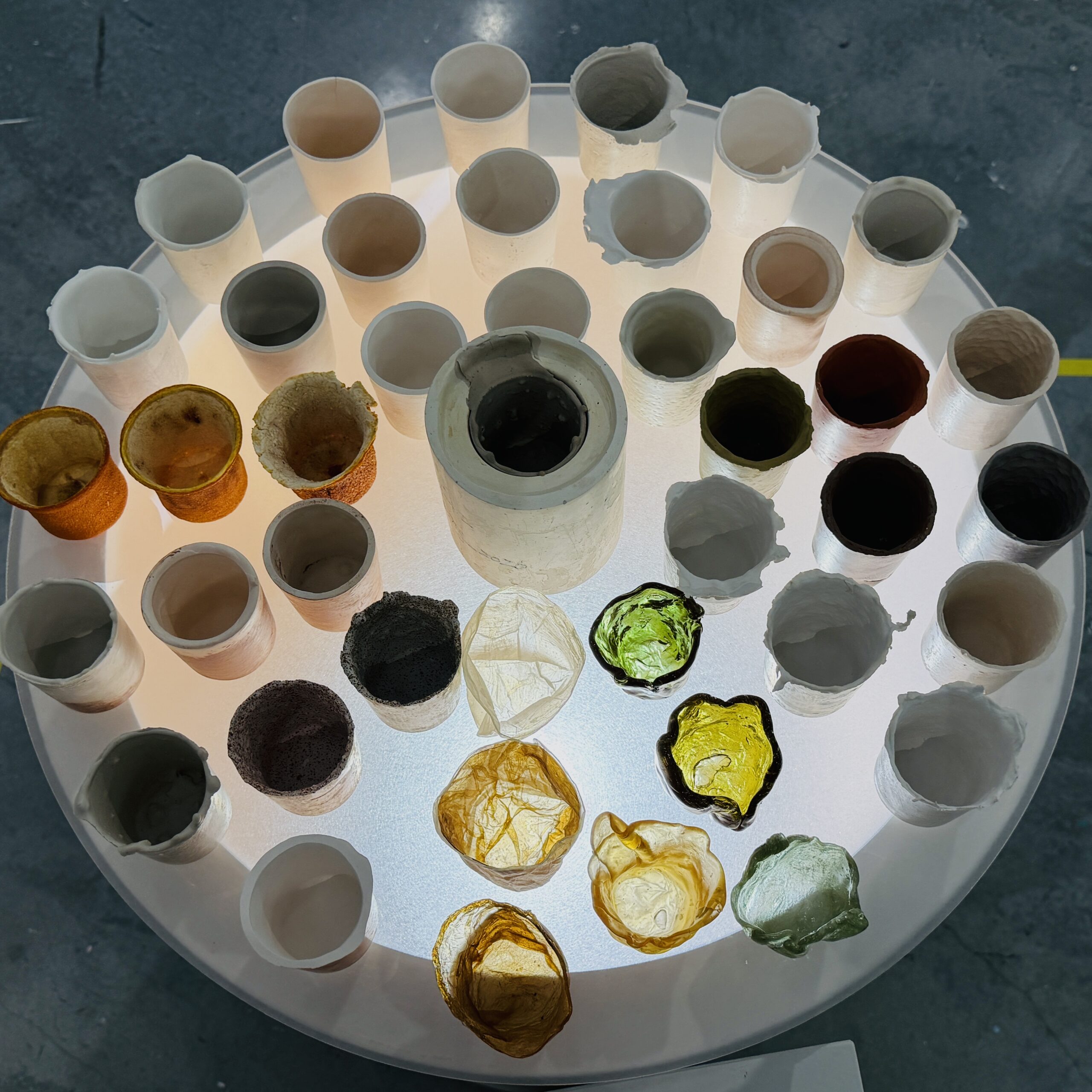
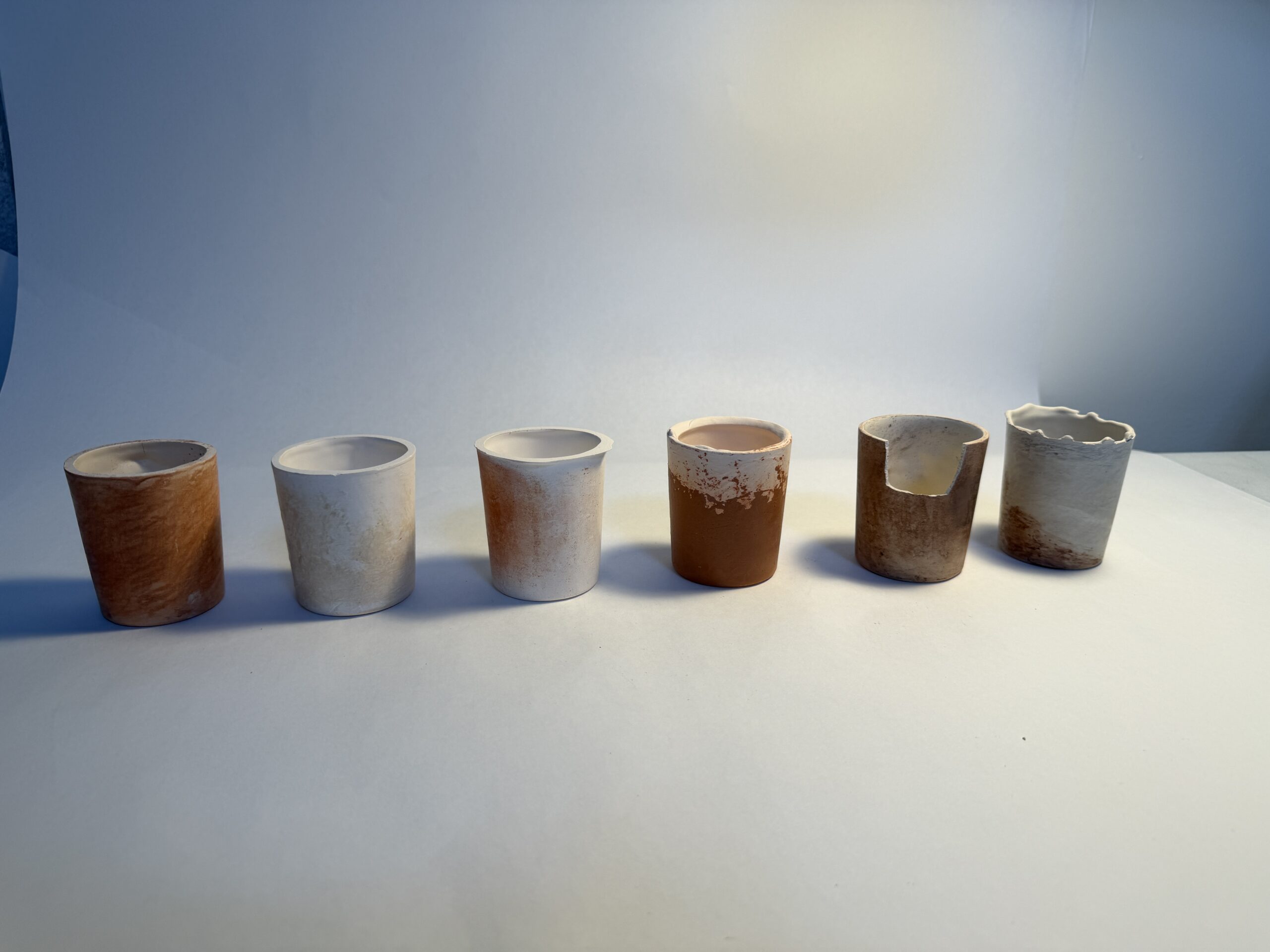
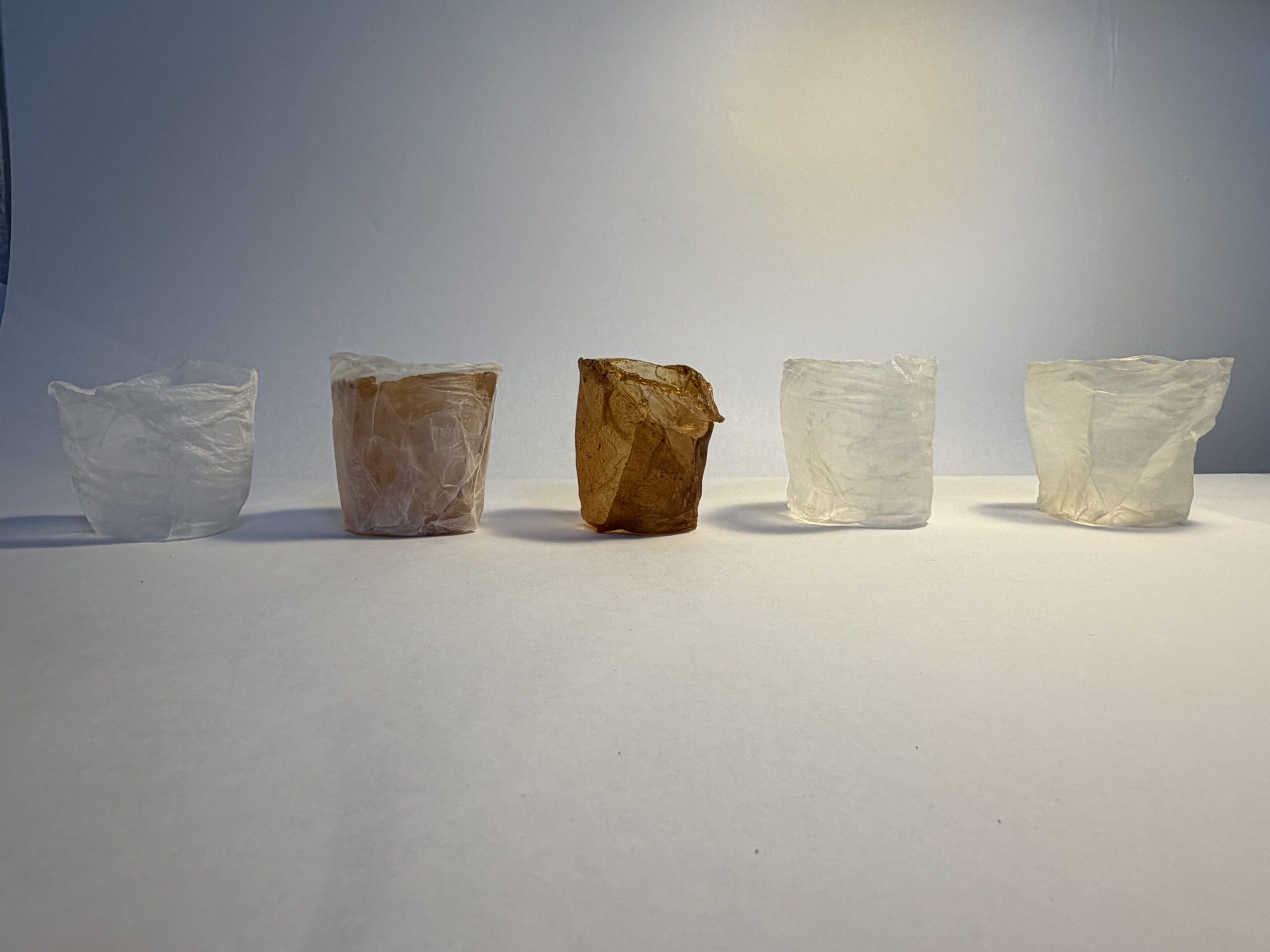
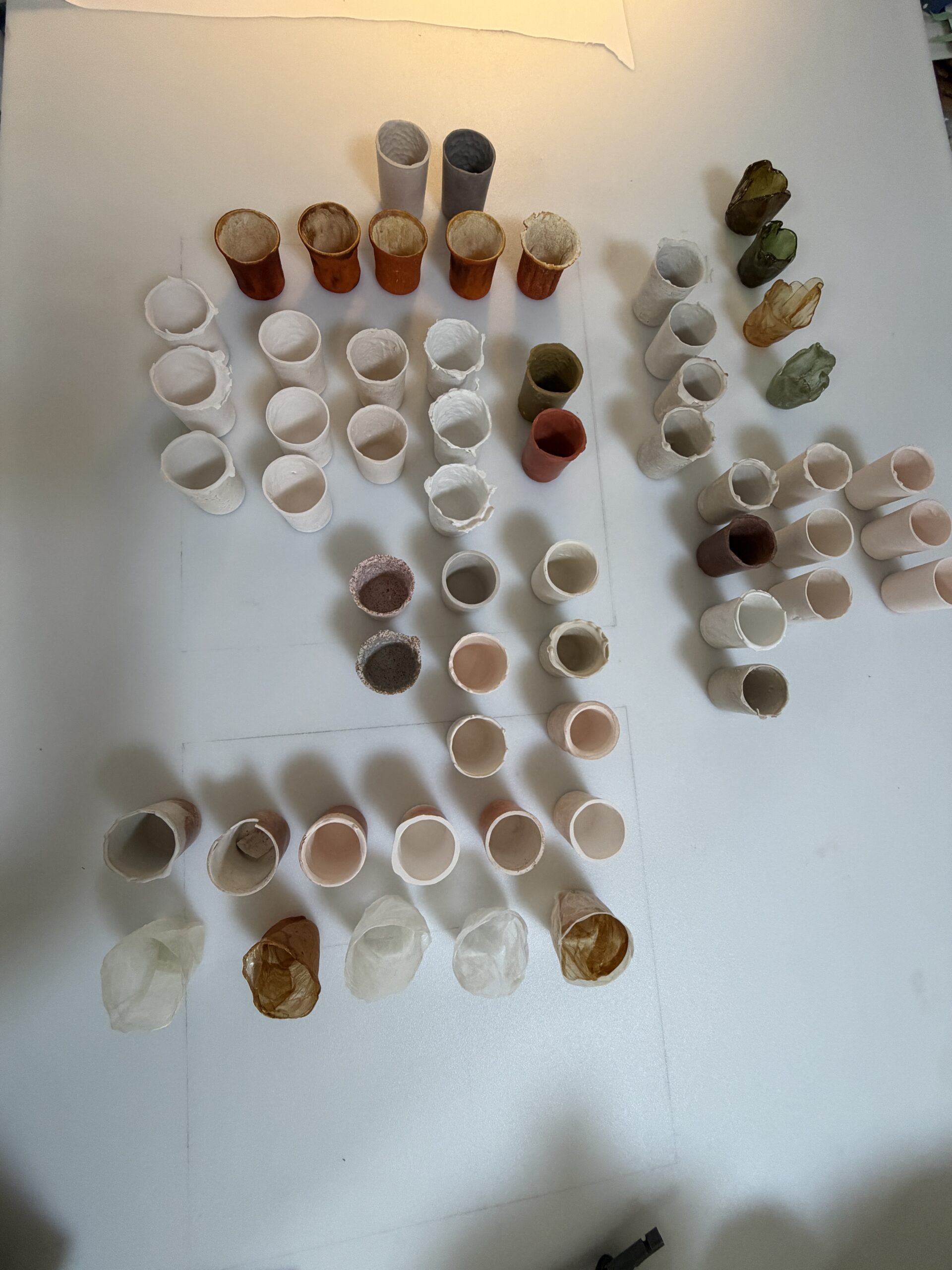
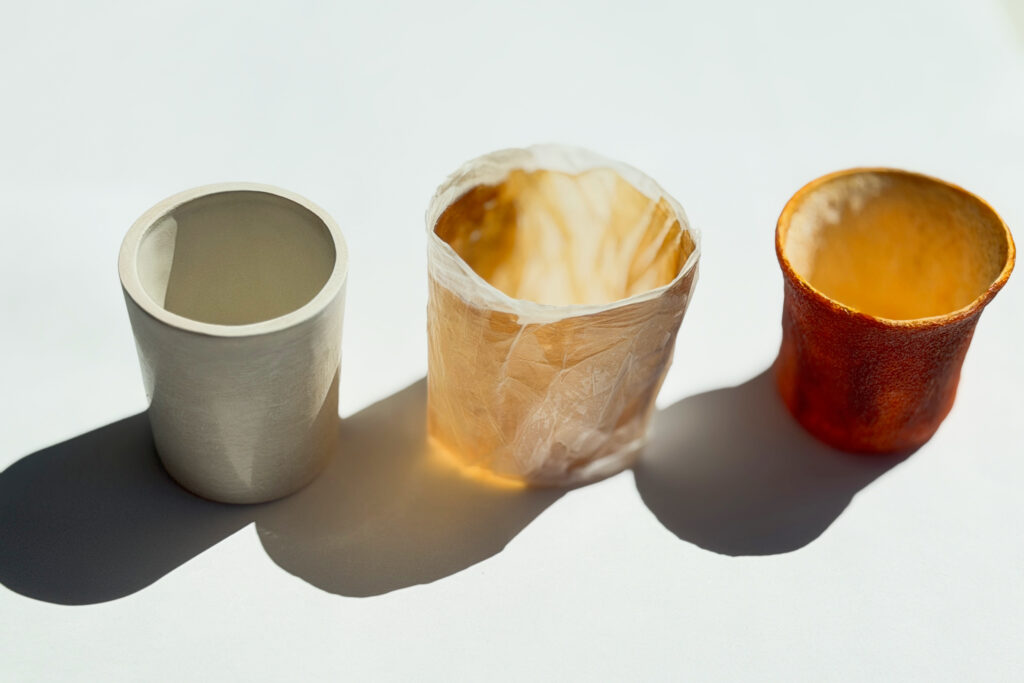
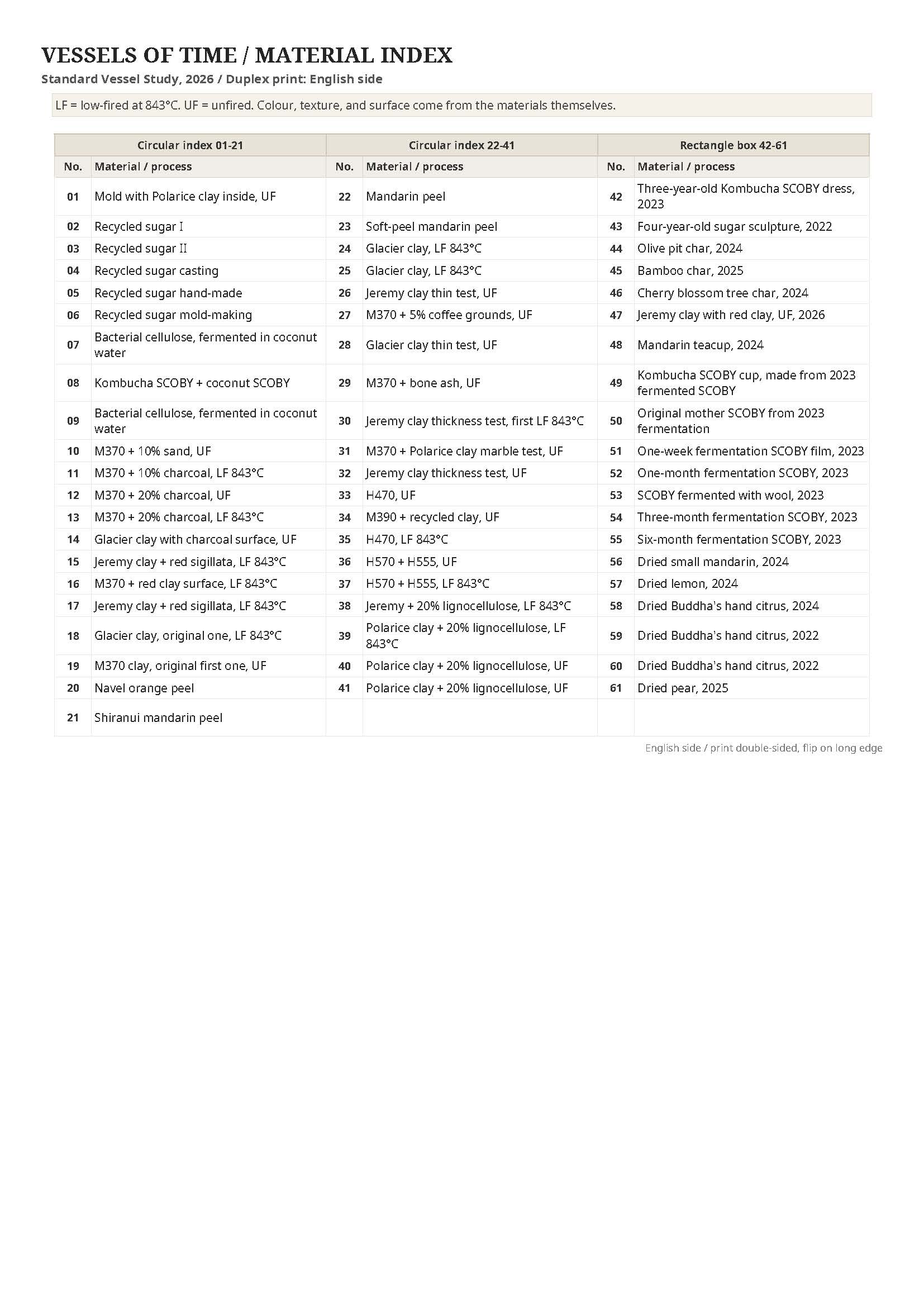
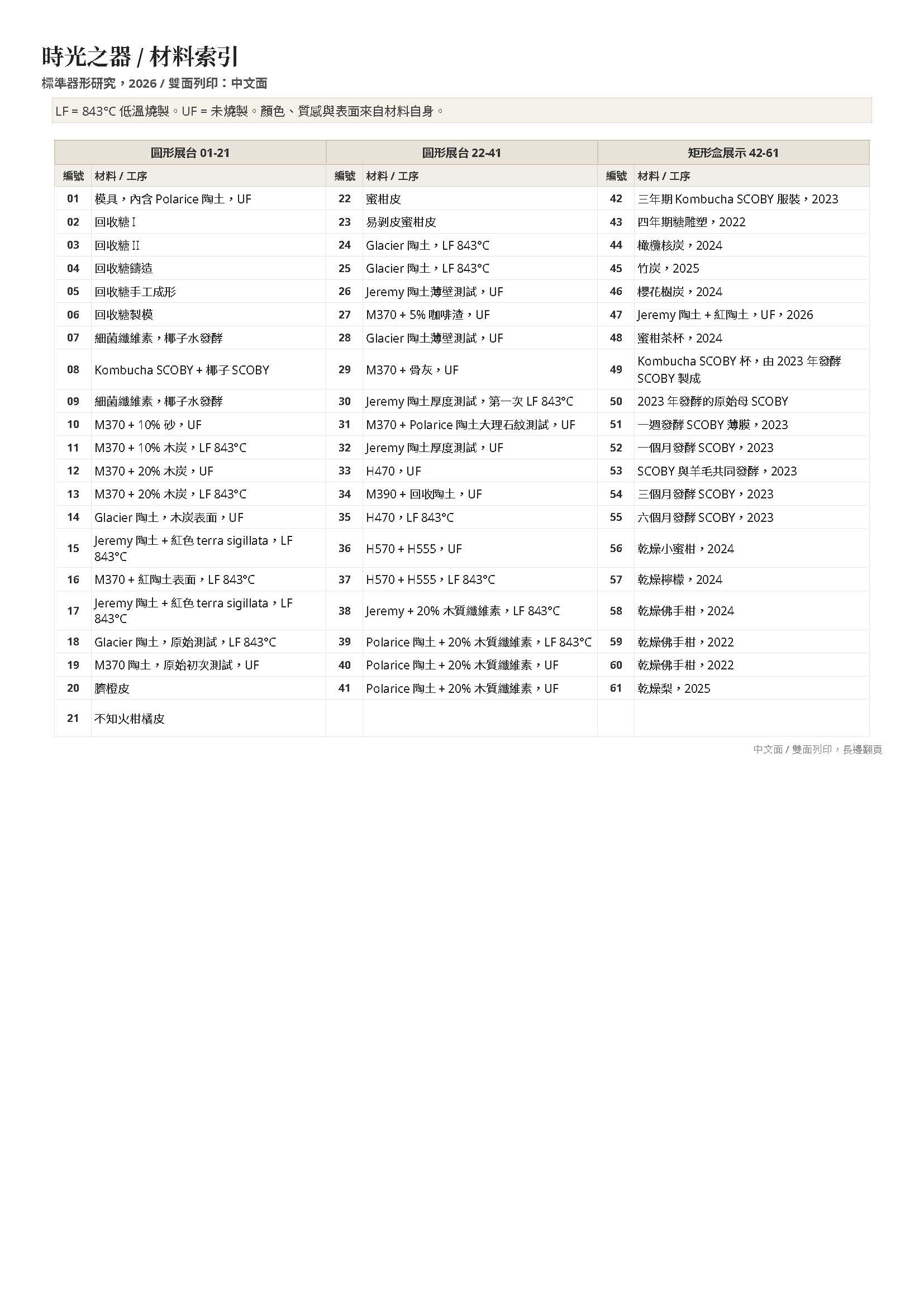
Materials: sugar; various clays; clay with biochar; clay with lignocellulose; clay with sand; clay with coffee, orange peel; dried bacterial cellulose membrane.
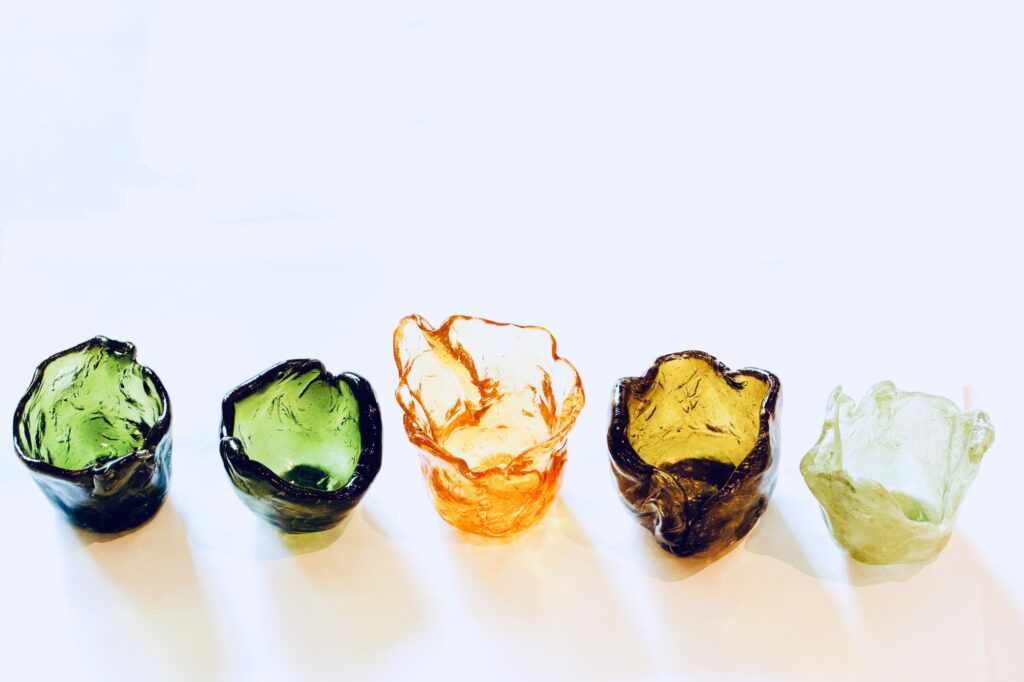
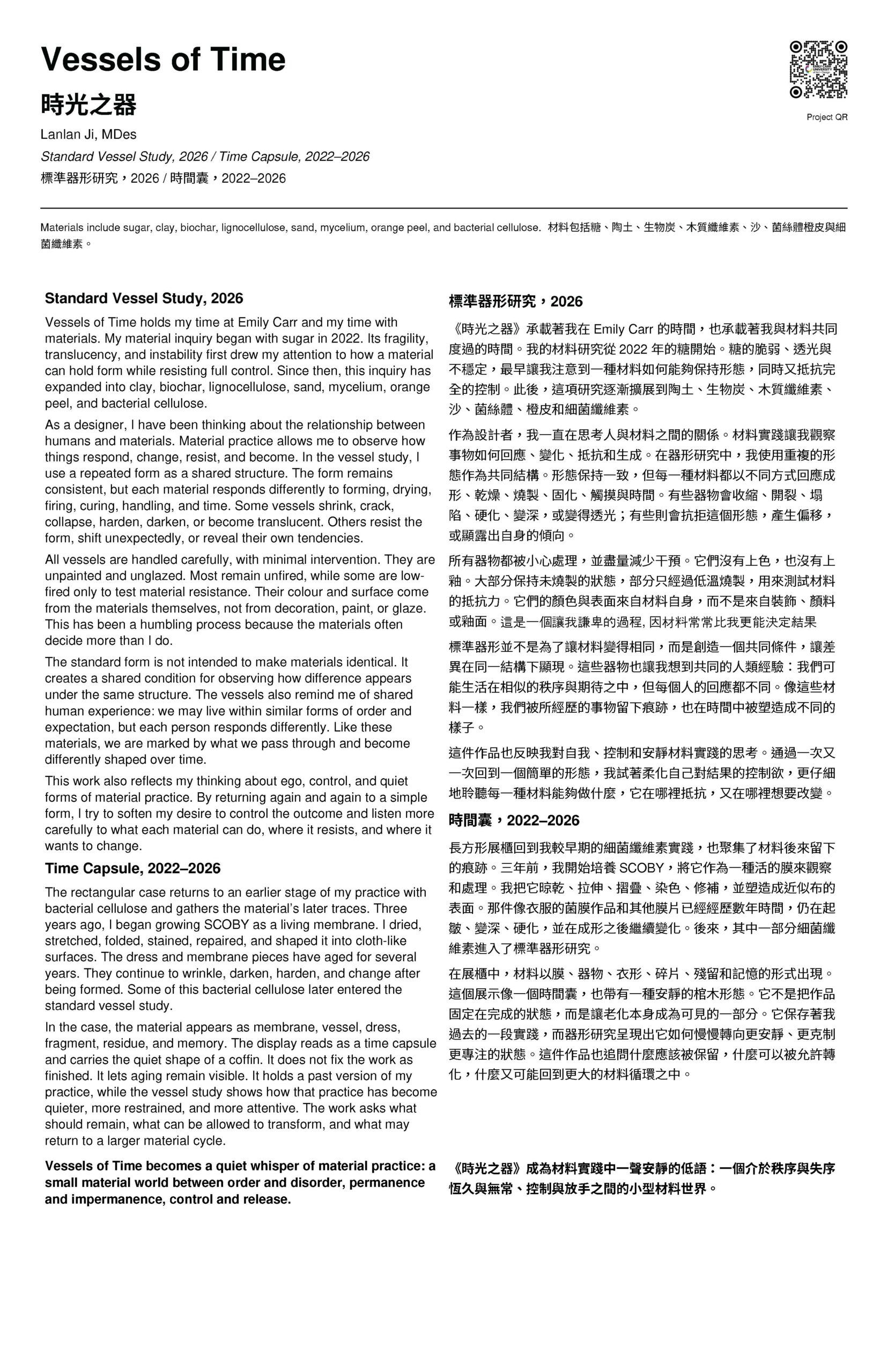
Vessels of Time also holds my time at Emily Carr and my time with materials. Four years ago, my material inquiry began with sugar. Its fragility, translucency, and instability first drew my attention to how a material can hold form while also resisting full control. Since then, this inquiry has expanded into a broader material practice involving clay, biochar, lignocellulose, sand, mycelium, orange peel, and bacterial cellulose.
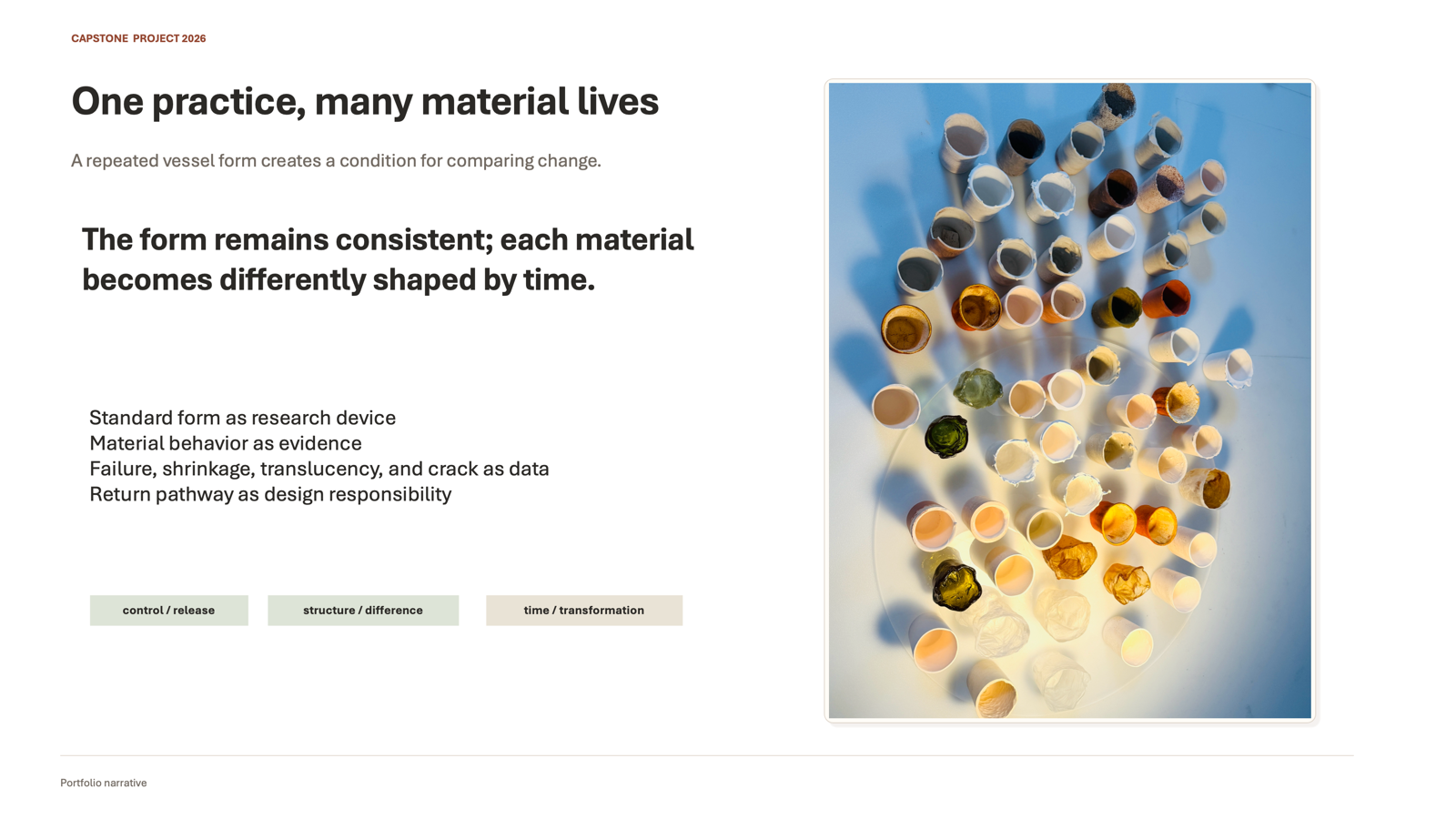
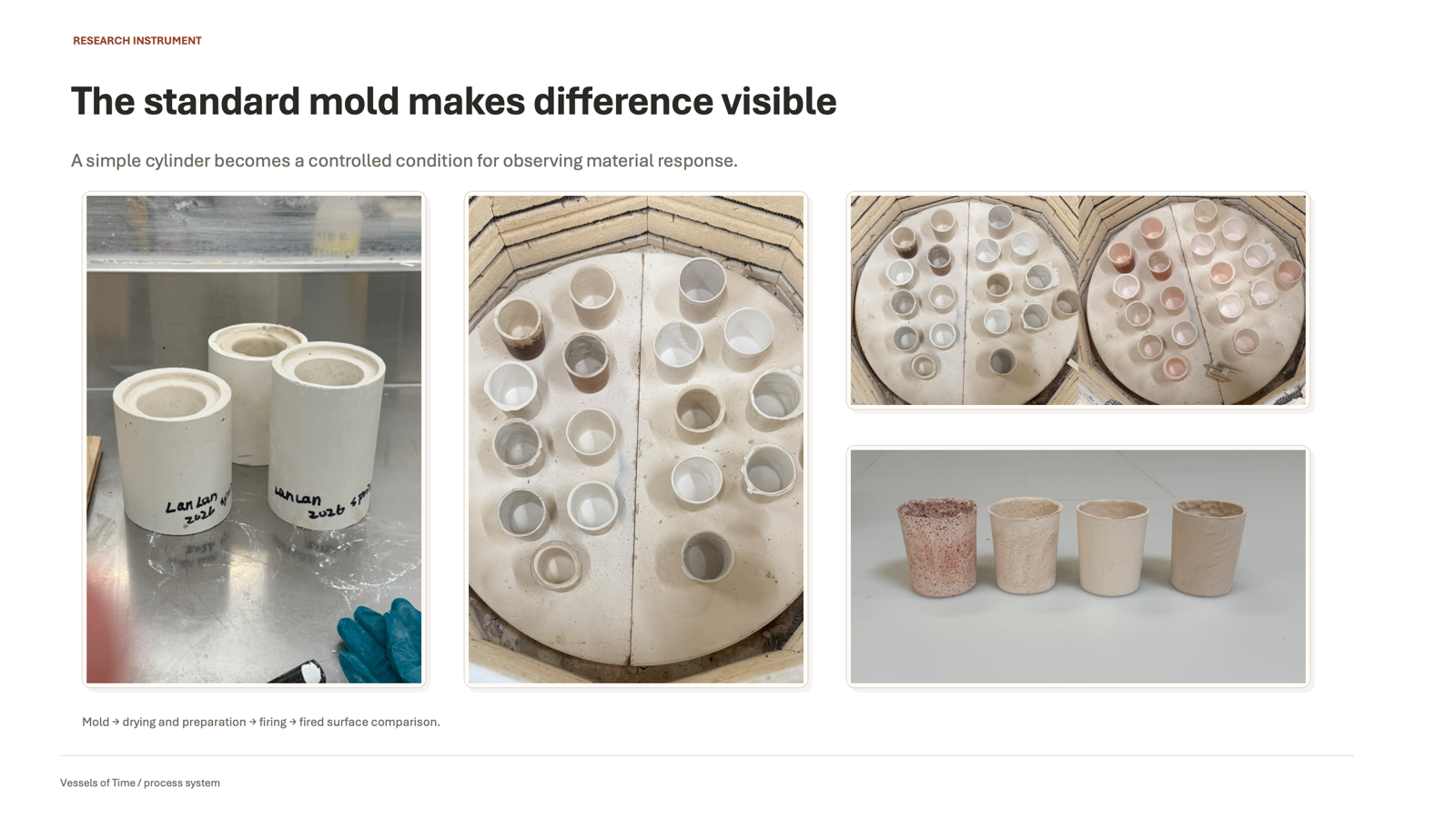
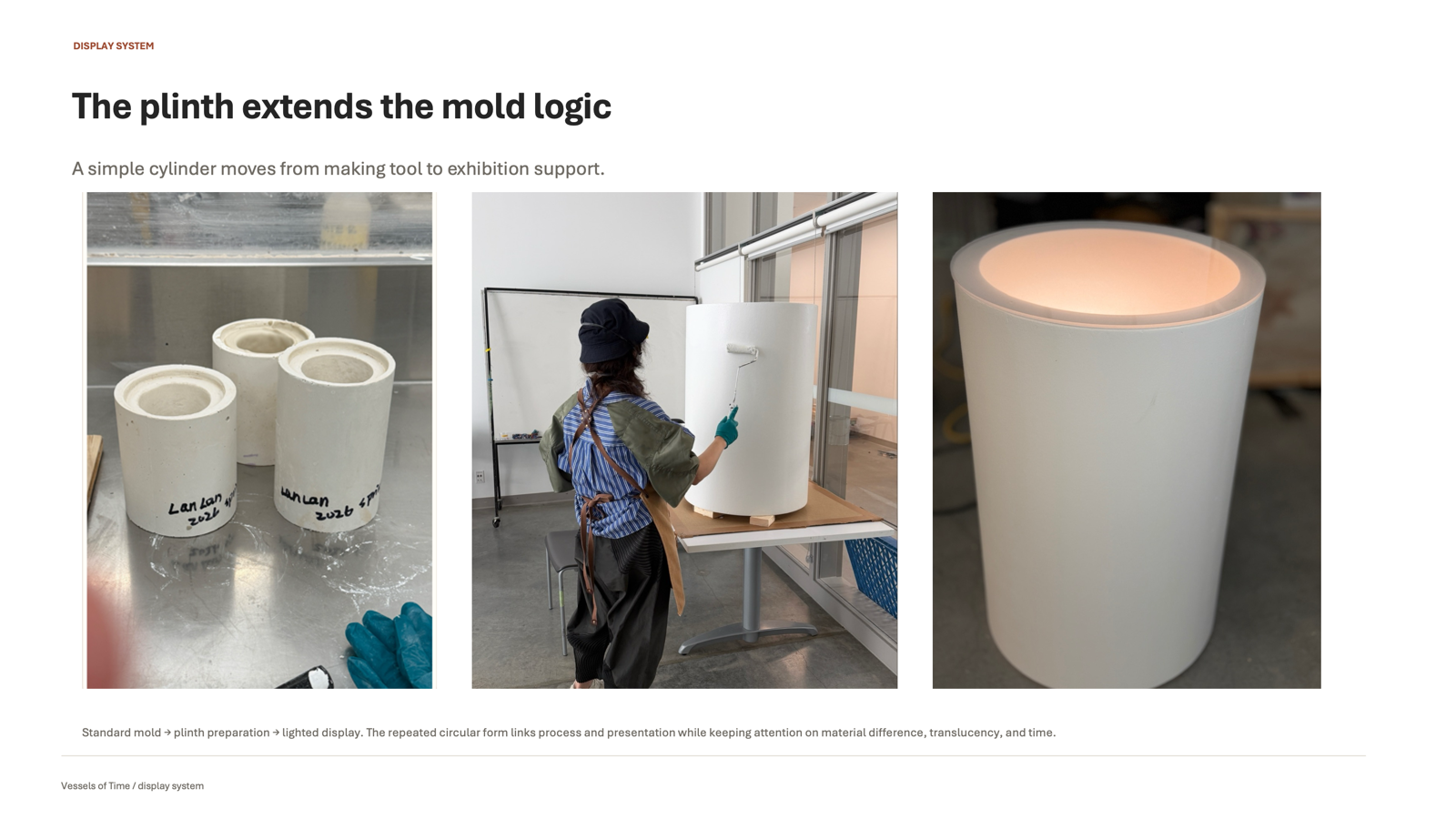
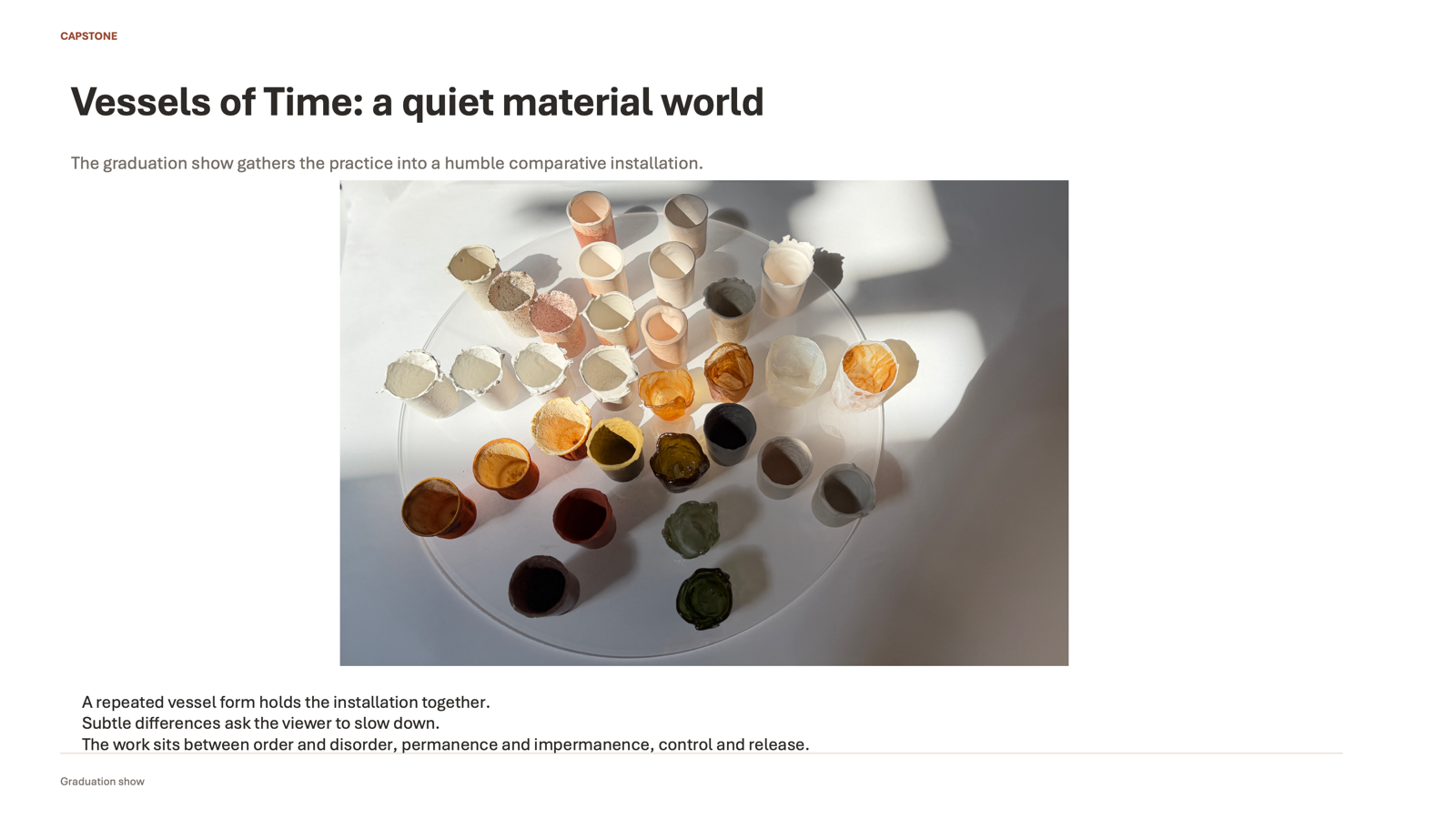
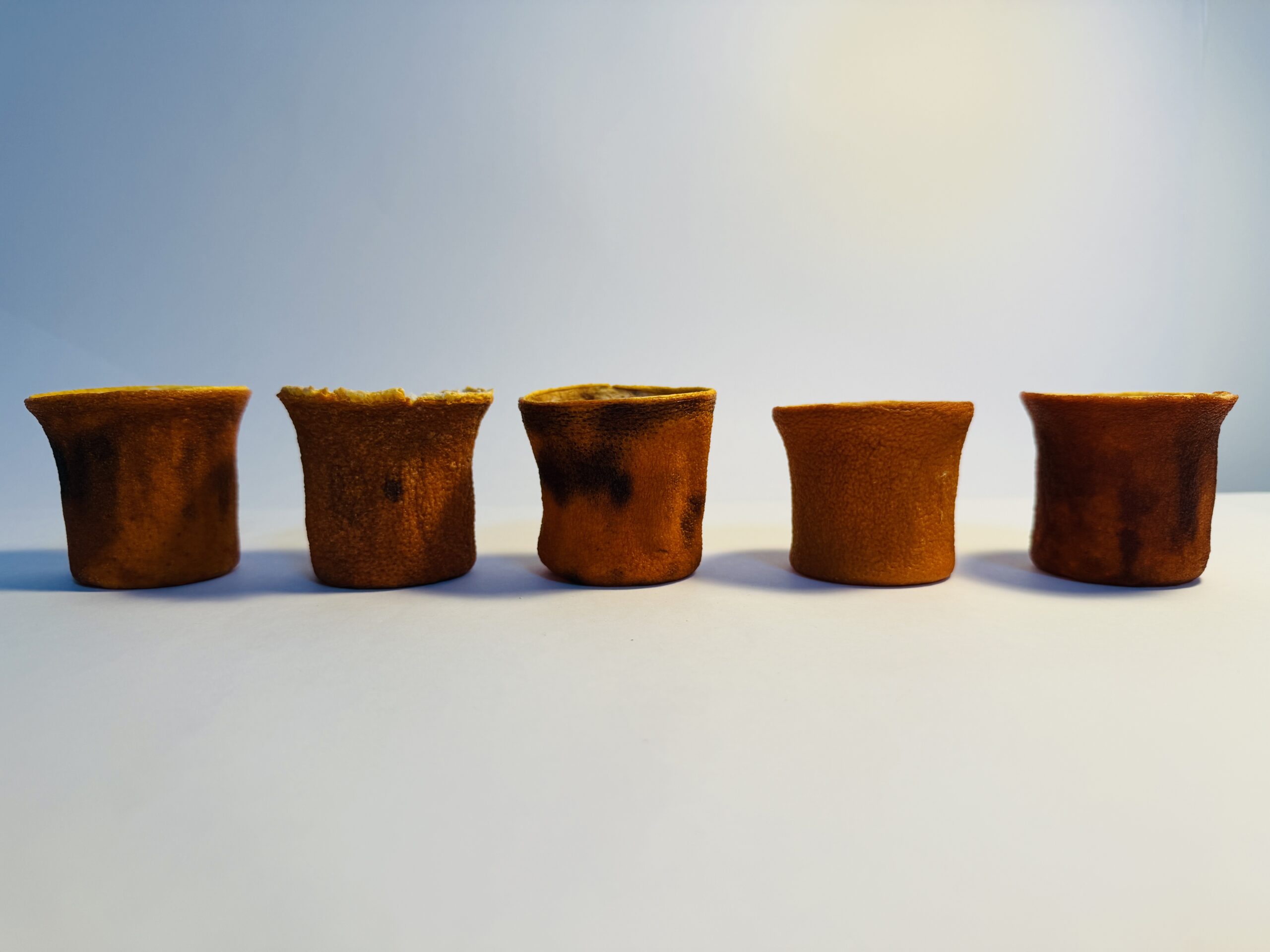
As a designer, I have been thinking about the relationship between humans and materials. Material practice allows me to observe how things respond, change, resist, and become. The round plinth presents a series of repeated vessel forms made from these different materials. I use a repeated vessel form as a shared structure. The form remains consistent, but each material responds differently to forming, drying, firing, curing, handling, and time. Some materials shrink, crack, collapse, harden, darken, or become translucent. Others resist the form, shift unexpectedly, or reveal their own tendencies.
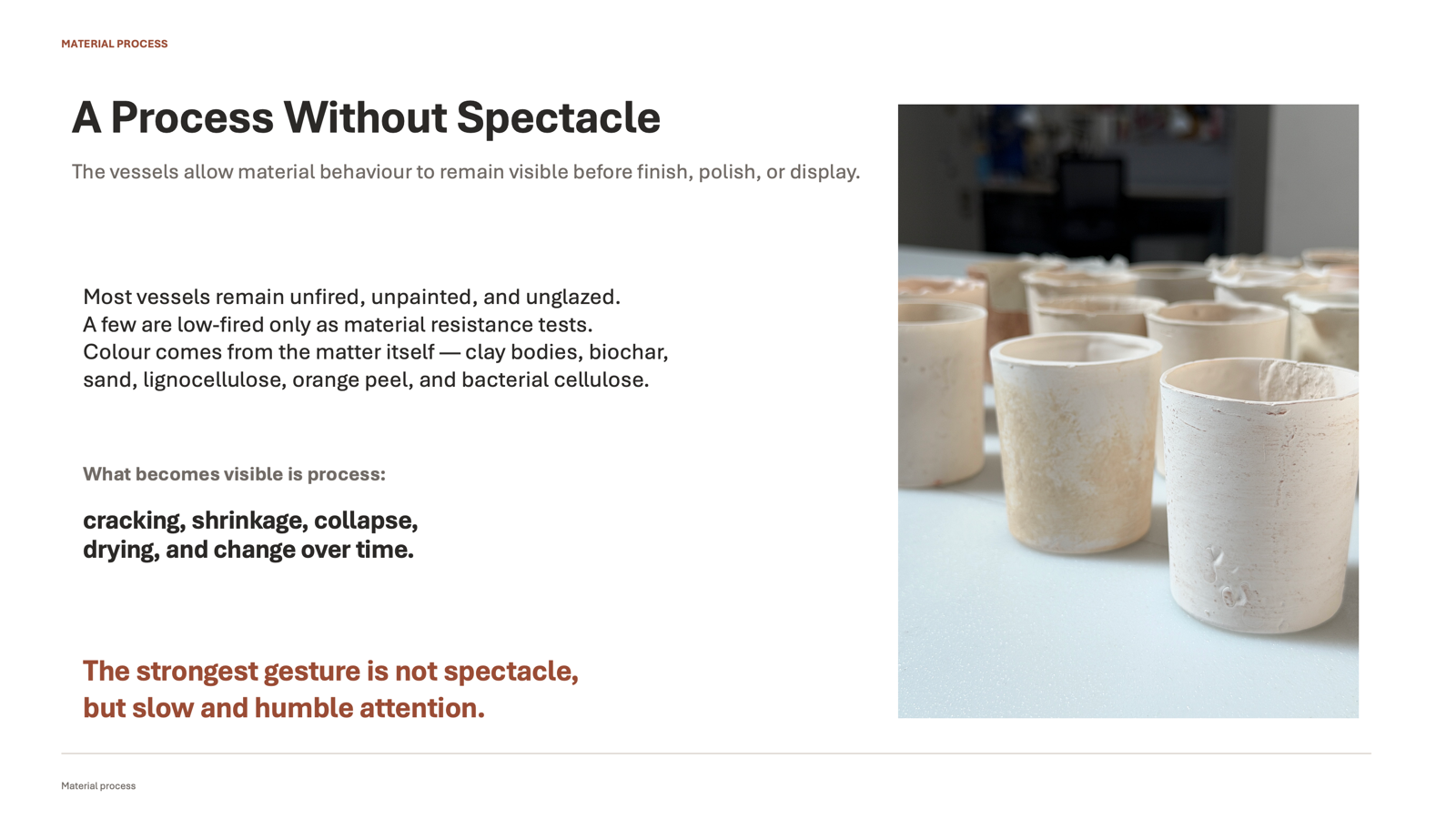
All vessels are handled carefully, with minimal intervention. They are unpainted and unglazed. Most remain unfired, while some were low-fired only to test material resistance. Their colour and surface do not come from added decoration, paint, or glaze, but from the materials themselves. The work invites slow and humble attention to cracking, shrinkage, collapse, drying, and change over time. This has been a humbling process because the materials often decide more than I do.
The standard form is not intended to make materials identical. It creates a shared condition for observing how difference appears under the same structure. This idea also connects to my capstone project, where regenerative material practice became a way to think about care, pressure, transformation, and response over time. In this sense, the vessels remind me of shared human experience. We may live within similar forms of order, expectation, and inherited structure, but each person responds differently. Like these materials, we are marked by what we pass through, and we become differently shaped over time.
This work also reflects my thinking about ego, control, and quiet forms of material practice. For this project, I chose to stay close to small repeated forms, minimal intervention, and careful handling. Materials are not neutral supports for human expression. They carry histories, labour, ecological costs, and future consequences. By returning again and again to a simple form, I try to soften my own desire to control the outcome and listen more carefully to what each material can do, where it resists, and where it wants to change. The project asks what should remain, what can be allowed to transform, and what may return to a larger material cycle. In this sense, Vessels of Time becomes a quiet whisper of material practice.
The collection is larger than what can be shown. Choosing which vessels enter the final display has been difficult because each one carries a material response, a test, or a trace of change. The selection is not a judgment of value. It is shaped by space, rhythm, visibility, and relation. The vessels outside the display remain part of the larger archive of this study.
These vessels form a small material world between order and disorder, permanence and impermanence, control and release. Each vessel records a trace of process, pressure, transformation, and time.
標準形態材料研究
材料: 糖;多種陶土;陶土與生物炭;陶土與木質纖維素;陶土與砂;橙皮;乾燥細菌纖維素膜。
《時光之器》也承載了我在 Emily Carr 的時間,以及我與材料相處的時間。四年前,我對材料的探索從糖開始。糖的脆弱、透光與不穩定,讓我第一次注意到:材料可以承載形態,同時也會抵抗被完全控制。從那時起,這個探索逐漸擴展為更廣泛的材料實踐,涉及陶土、生物炭、木質纖維素、砂、菌絲體、橙皮與細菌纖維素等材料。
作為一名設計者,我一直在思考人與材料之間的關係。材料實踐讓我在製作中觀察事物如何回應、變化、抵抗與生成。在展览中,这些器物被放置在圆形展台上,我使用重複的容器形態作為共同結構。形態保持一致,但每一種材料都以不同方式回應成形、乾燥、燒製、固化、觸摸與時間。有些材料會收縮、開裂、塌陷、硬化、變深,或變得透光;有些則會抗拒這個形態,產生偏移,或顯露出自身的傾向。
所有器物都被小心處理,並以盡量少的介入完成。它們都未上色、未施釉;其中多數保留未燒製的狀態,少部分僅經低溫燒製,用以測試材料的耐受性。顏色與表面並非來自外加的裝飾、塗料或釉料,而是來自材料本身。作品將注意力放在材料緩慢而謙遜的變化之中:開裂、收縮、塌陷、乾燥,以及隨時間產生的改變。這也是一個讓我感到謙卑的過程,因為材料常常比我自己決定得更多。
標準形態並不是為了讓材料變得相同,而是為了觀察差異如何在相同條件下出現。這個想法也連結到我的畢業項目。在其中,材料實踐成為一種思考照護、壓力、轉化與時間性回應的方式。從這個角度看,這些器物也讓我想到人的經驗。我們可能生活在相似的秩序、期待與既有結構之中,但每個人都會以不同方式回應,並在時間中成為不同的自己。像這些材料一樣,我們也被經歷過的事物留下痕跡,並隨著時間被塑造成不同的樣子。
這件作品也反映了我對自我、控制欲與安靜材料實踐的反思。在這個項目中,我選擇停留在小型、重複的形態之中,以細緻的處理和最少的介入與材料相處。材料並不是人類表達的中性載體。它們帶有歷史、勞動、生態成本,以及未來的後果。透過一次次回到簡單的形態,我試著放鬆自己對結果的控制,更仔細地傾聽材料能做什麼,它在哪裡抵抗,又在哪裡想要改變。這個項目也在追問:什麼應該留下,什麼可以被允許轉化,什麼又能回到更大的材料循環之中。從這個意義上說,《時光之器》像是材料實踐的一聲低語。
這組器物的數量遠超過展覽空間所能容納。選擇哪些器物進入最終展示,是這個過程中困難的一部分,因為每一件都承載著一種材料回應、一次測試,或一段變化的痕跡。這種選擇並不是對價值的判斷,而是受到空間、節奏、可見性與彼此關係的影響。那些沒有進入展場的器物,仍然屬於這個材料研究更大的檔案。
這些器物形成了一個小小的材料世界,介於秩序與失序、永久與無常、控制與放手之間。每一件器物都留下了過程、壓力、轉化與時間的痕跡。
2. Time Capsule
Bacterial cellulose practice, SCOBY, body study, and material memory
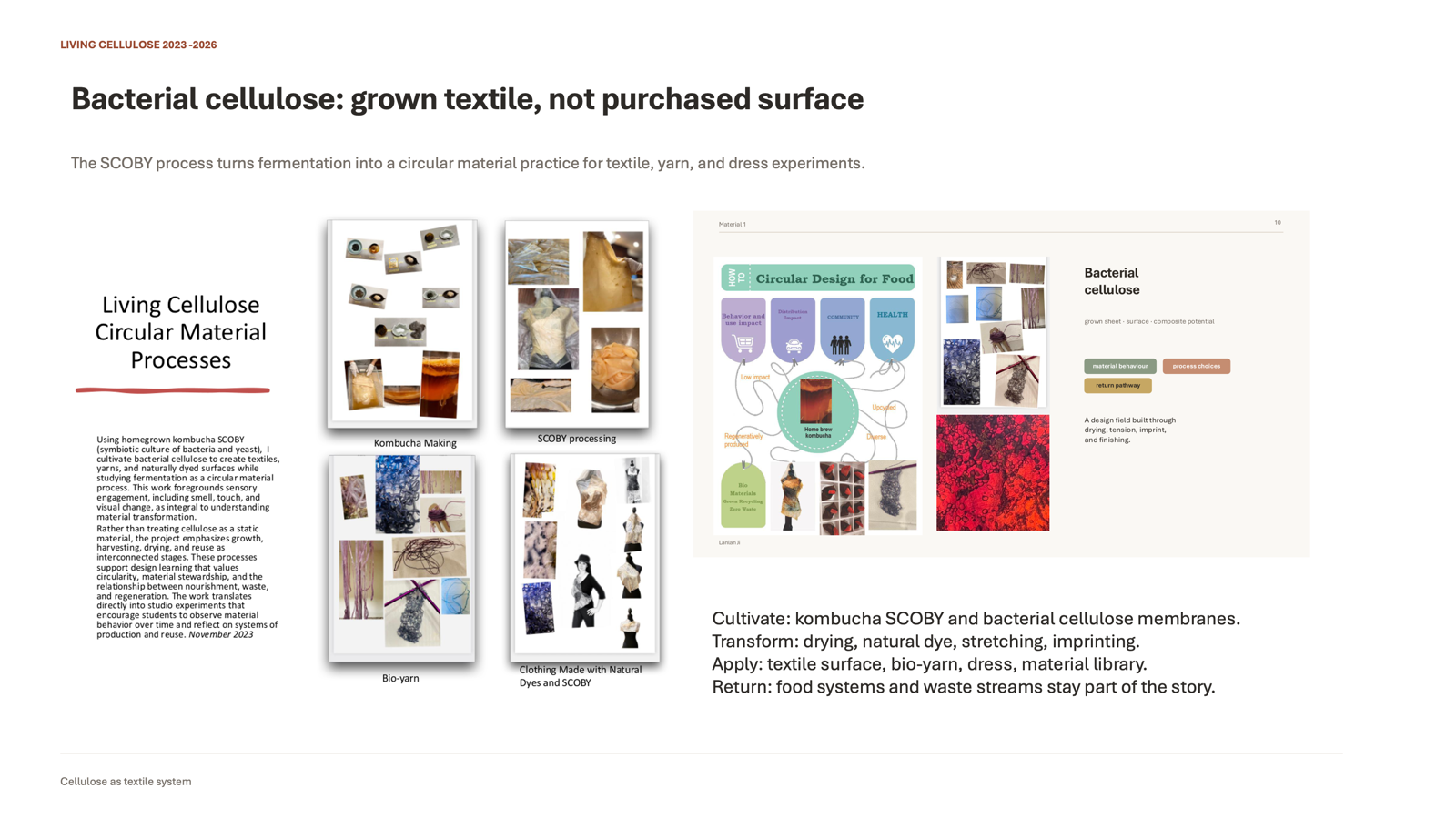
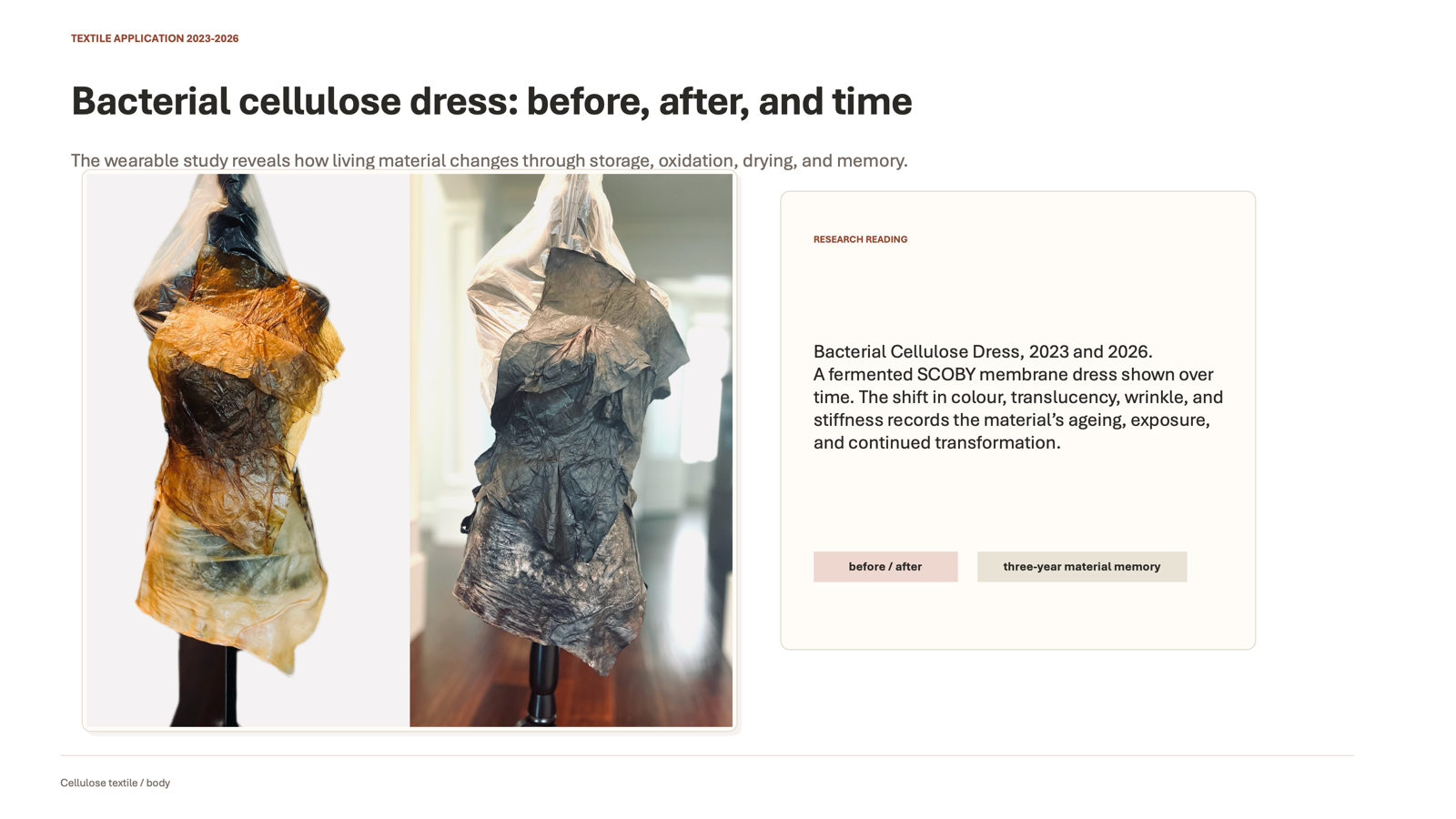
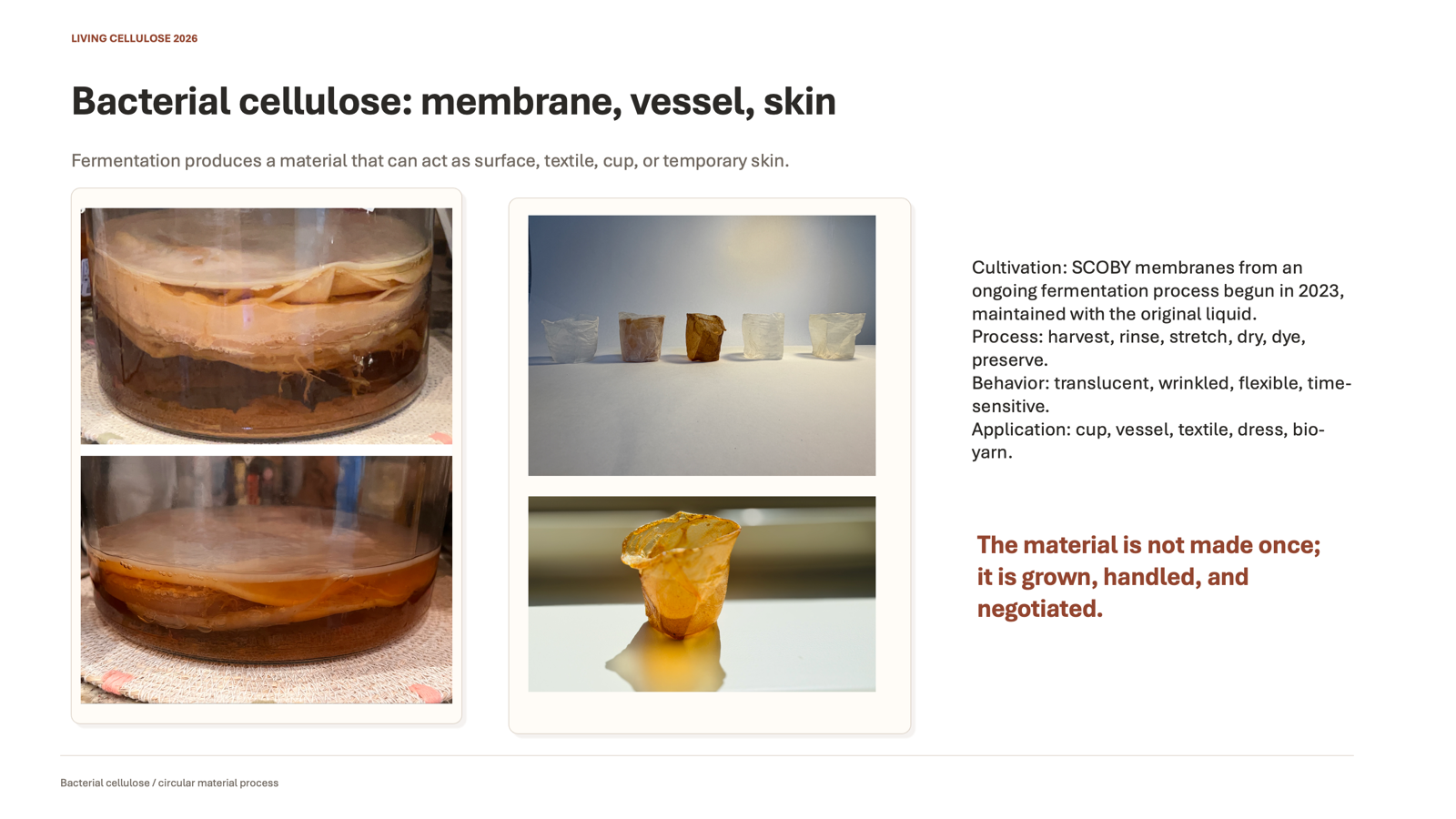
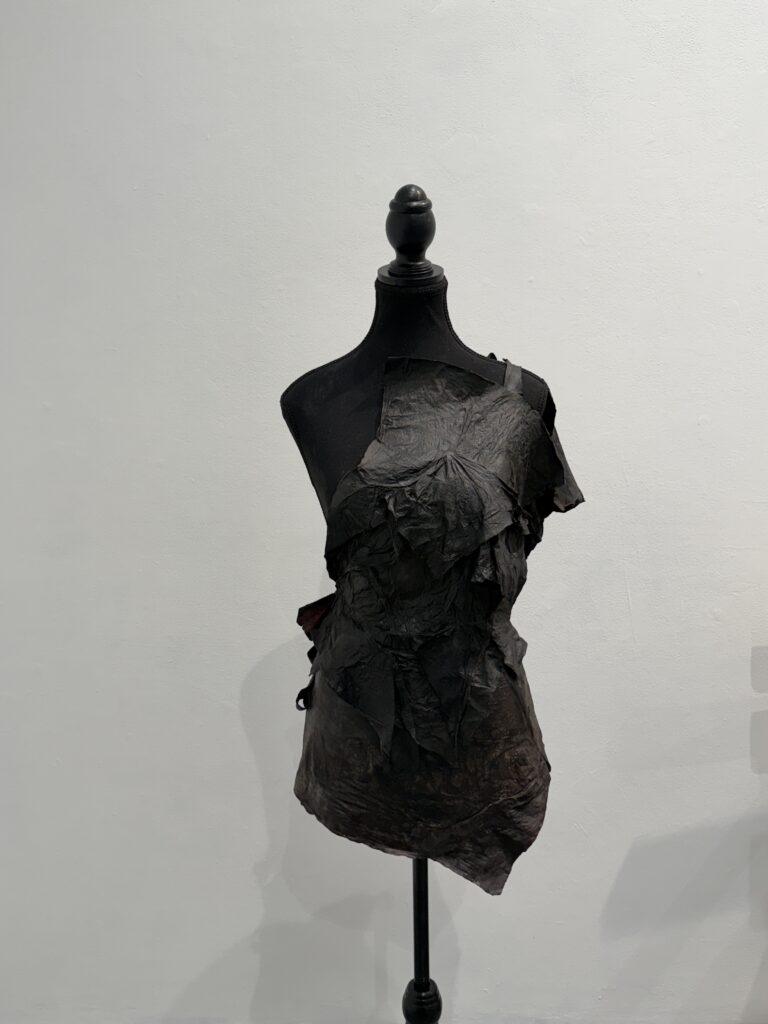
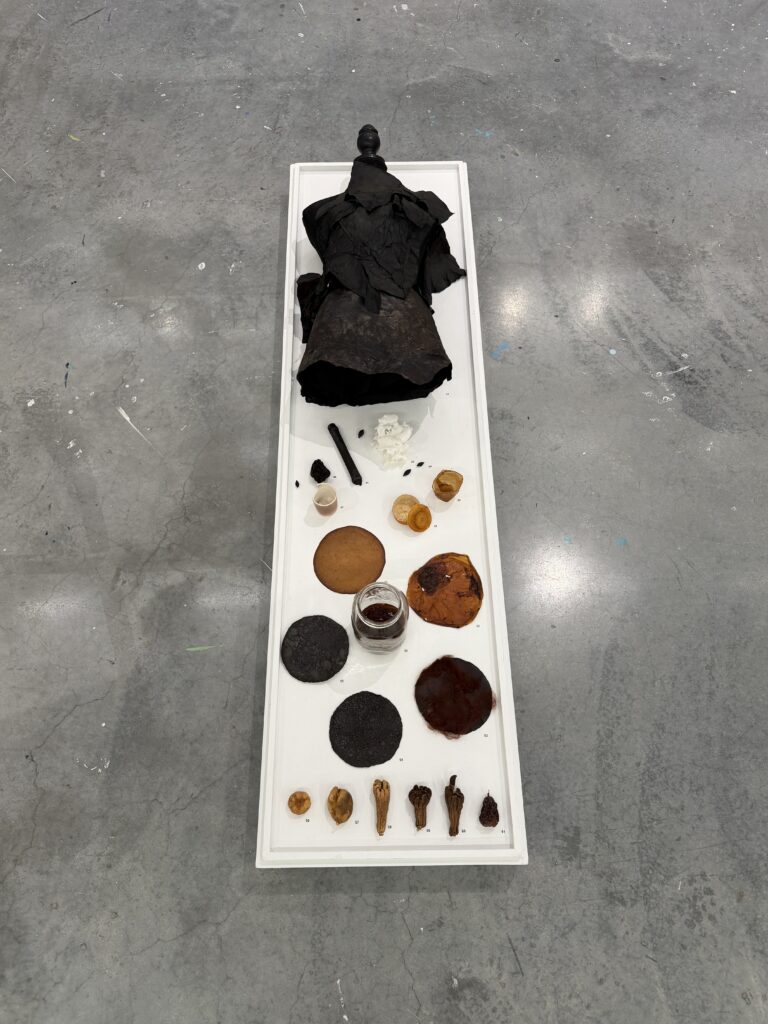
This rectangular case returns to an earlier stage of my material practice with bacterial cellulose. Three years ago, I began growing SCOBY as a living membrane. I dried, stretched, folded, stained, repaired, and shaped it into cloth-like surfaces. At that time, I was drawn to its scale, skin-like texture, and its movement between living matter, textile, body, and object. Some of this bacterial cellulose later entered the standard vessel study shown on the round plinth.
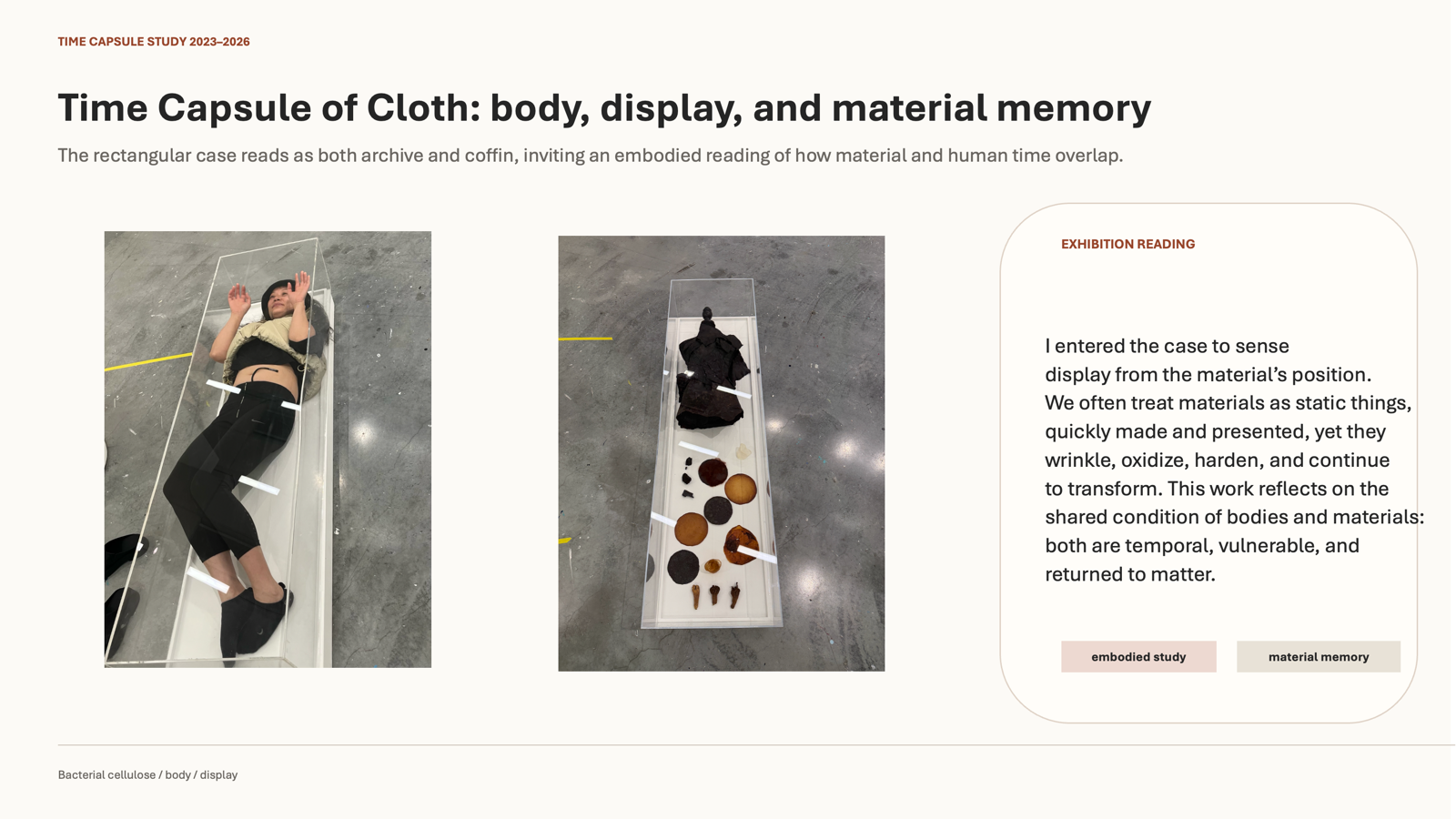
In this case, the material appears as cloth, vessel, fragment, residue, and memory. The display reads as a time capsule. It also carries the quiet shape of a coffin. I entered the case with my own body to sense the work from the material’s position. We often treat materials as static things, quickly formed and presented. This gesture asks what it means to stay with material as it ages, weakens, wrinkles, hardens, and returns.
This earlier SCOBY practice holds a more bodily and expressive phase of my work. It allowed me to think about material as something grown, handled, worn, preserved, and eventually returned. Looking back at it now, I can see how it led me toward a slower and more humble way of making.
时间囊
细菌纤维素实践、SCOBY、器形研究与身体研究,2023–2026
这个长方形展柜回到我较早期的细菌纤维素材料实践。三年前,我开始培养 SCOBY,将它作为一种活的膜来观察和处理。我把它晾干、拉伸、折叠、染色、修补,并塑造成类似布的表面。那时,我被它的尺度、近似皮肤的质感,以及它在生命物质、纺织物、身体和物件之间的游移所吸引。后来,其中一部分细菌纤维素进入了圆形展台上的标准器形研究。
在这个展柜中,材料以布、器物、碎片、残留和记忆的形式出现。这个展示像一个时间囊,也带有一种安静的棺木形态。我把自己的身体放入展柜中,试着从材料的位置去感受这件作品。我们常常把材料视为静止的东西,快速地塑形、完成,并展示出来。这个动作让我思考,当材料老化、变弱、起皱、硬化并回归时,我们如何继续与它相处。
这一早期的 SCOBY 实践保存了我创作中更具身体性和表现性的一段阶段。它让我把材料理解为一种可以生长、被触摸、被穿戴、被保存,并最终回归的存在。现在回看这段实践,我能看到它如何慢慢把我带向一种更缓慢、更谦卑的制作方式。
Supporting exhibition documents
Process Book Excerpts