Refusing Retail: Plastics Reduction in Real Life
Rin Liu
ECU Award Recipient
Winner, DESIS Radical Sustainability Award
Transitioning to a Sustainable Future: Reduction of Plastic Packaging through Community-based Purchase Pooling in Burnaby, BC
Thesis Project of Rin Liu, MDes Information Futures
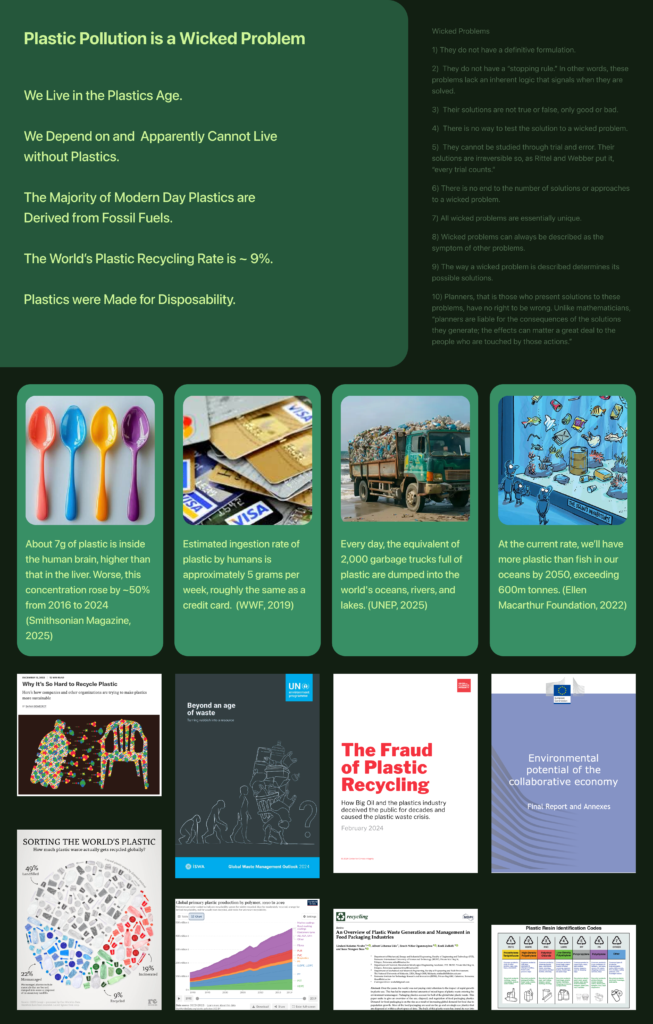
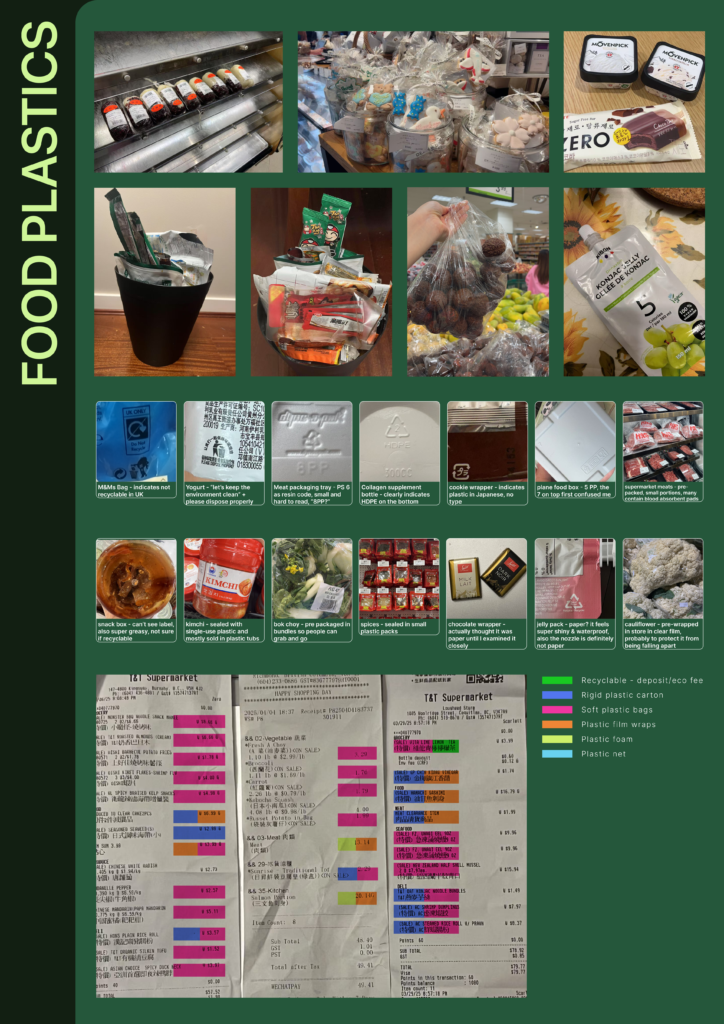
Every time I go grocery shopping, I feel overwhelmed by the number of plastic bags I’m bringing home with me. I’m not buying takeouts or instant meals – just normal produce to cook at home. Even then, I still can’t make plastic-free purchases. From a series of autoethnographic research and co-design, I designed the Metrotown Purchase Pooling Community and developed a more sustainable form of grocery shopping.
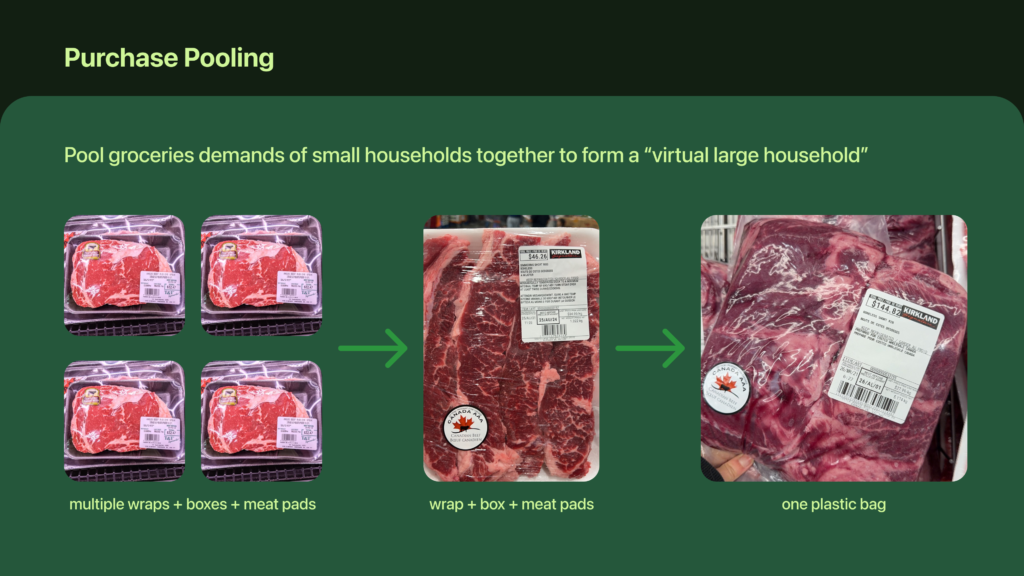
TLDR: Modern retail stores are designed for speed and individual convenience, which usually means everything is wrapped in layers of single-use plastic and relatively small portions. My project challenges that model by asking: What if we shopped in a team? Instead of 100 people buying 100 small plastic tubs of yogurt, we buy in bulk, share it, and bring it home with our own jars. The concept is not difficult; the biggest problems are logistics and communications. By building a real community in Metrotown, Burnaby, and treating it as a living lab, I used iterative design and co-design methods to develop a working protocol and a digital service.
Problem Space Exploration
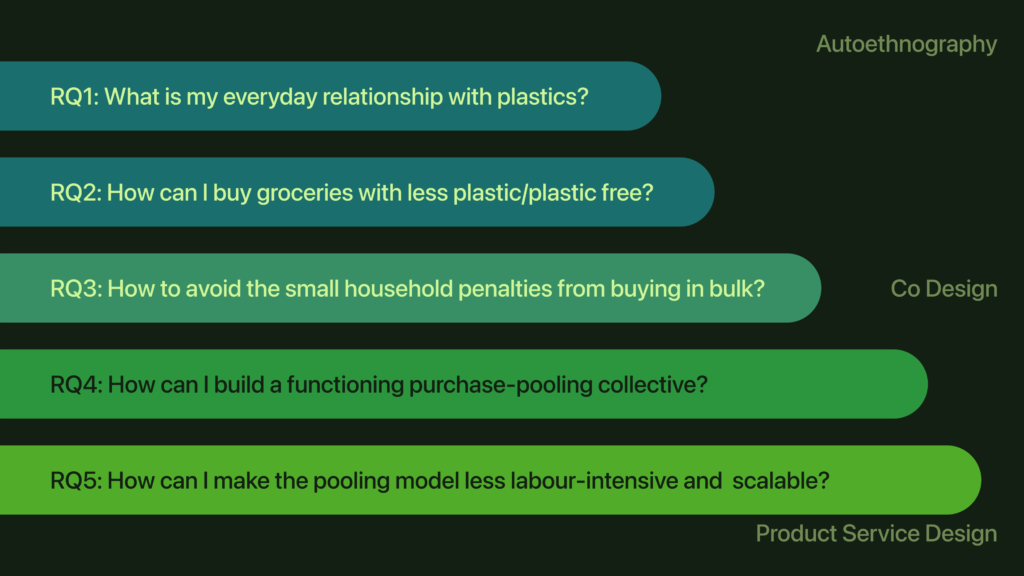
Five research questions guided my design journey. My primary research and design began with autoethnography, moved toward co-design and iterative design, and ended with product (UI/UX) and service design.
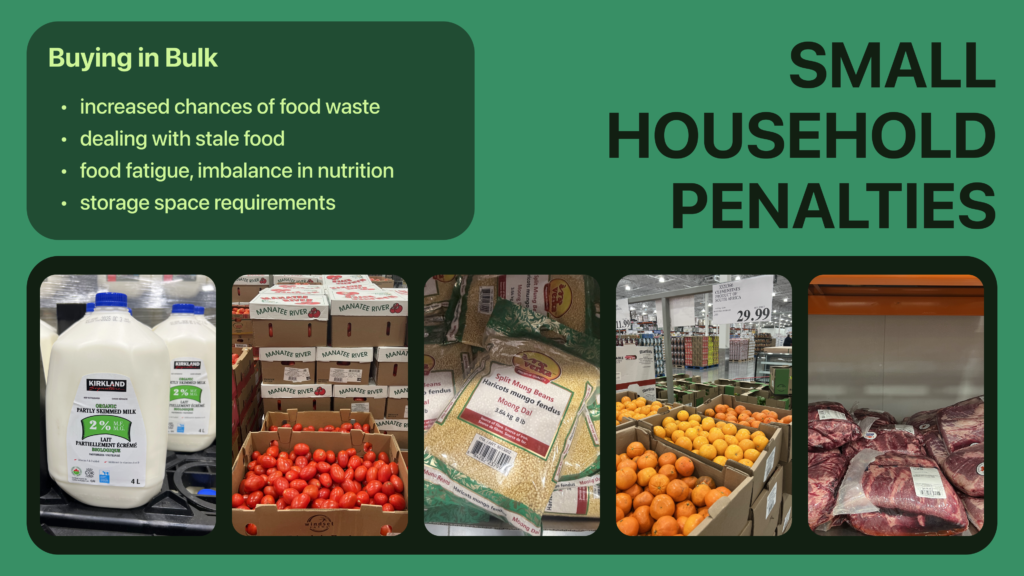
From Individual to Community
The community is necessary because when individuals or small families try to consume in bulk, it leads to small household penalties. When consuming with a small group, the chances of successfully pooling a bulk item drop as people’s item choices don’t always align. The pooling success rate of items increased drastically as the community expanded and active poolers hit 20.
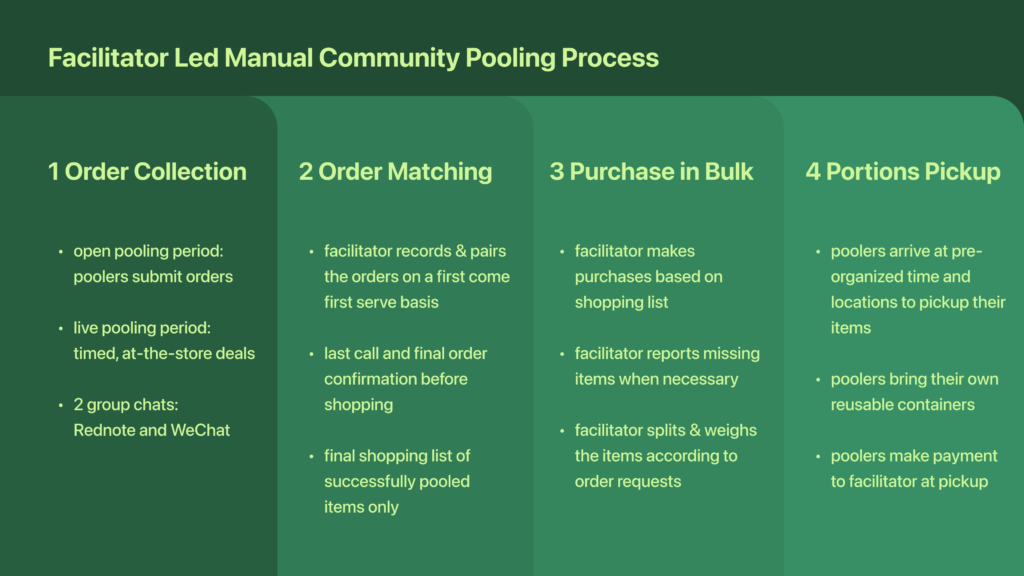
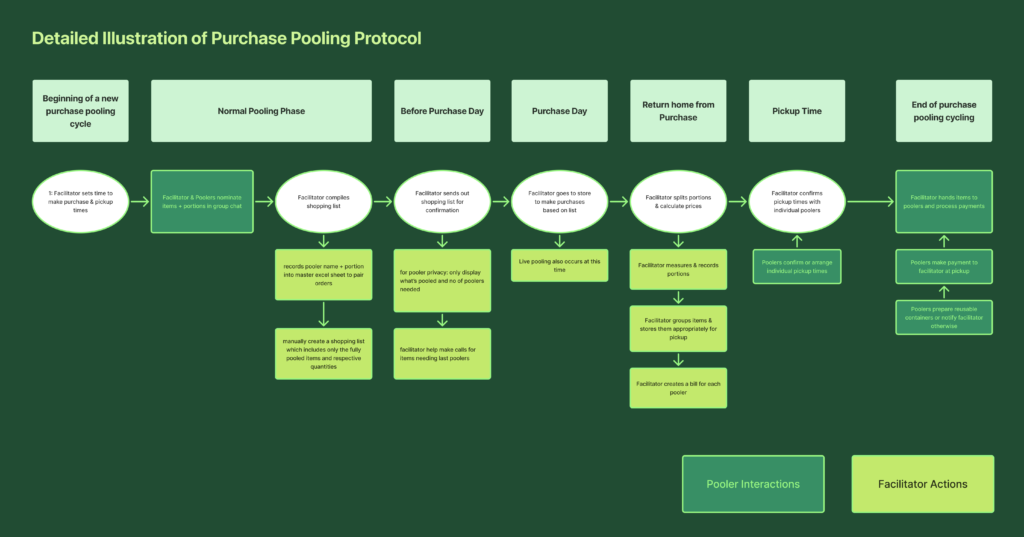
The active pooling protocol can be simplified into four stages: 1. Order Collection Phase 2. Order Matching Phase 3. Purchase in Bulk Phase 4. Portions Pickup Phase.
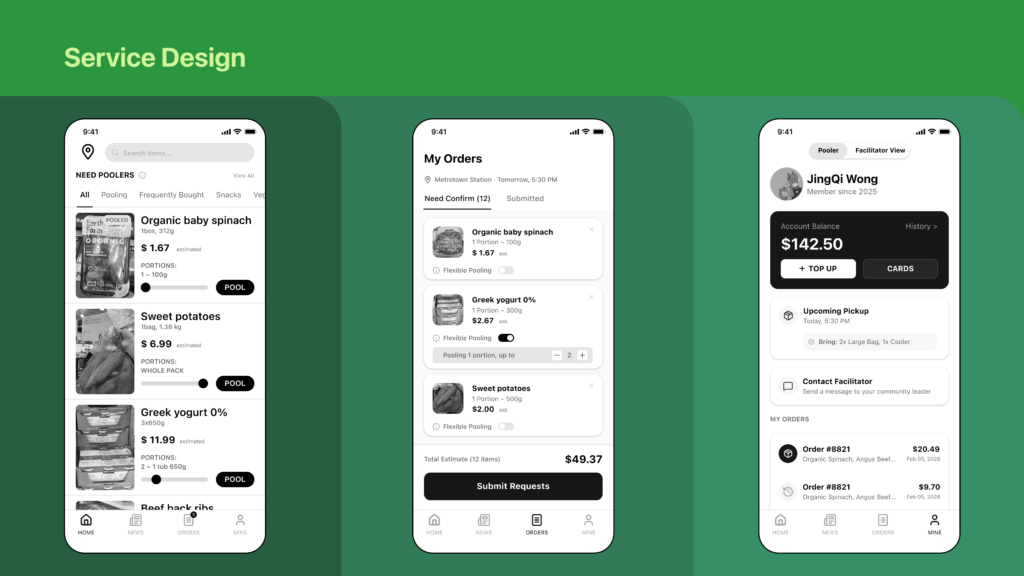
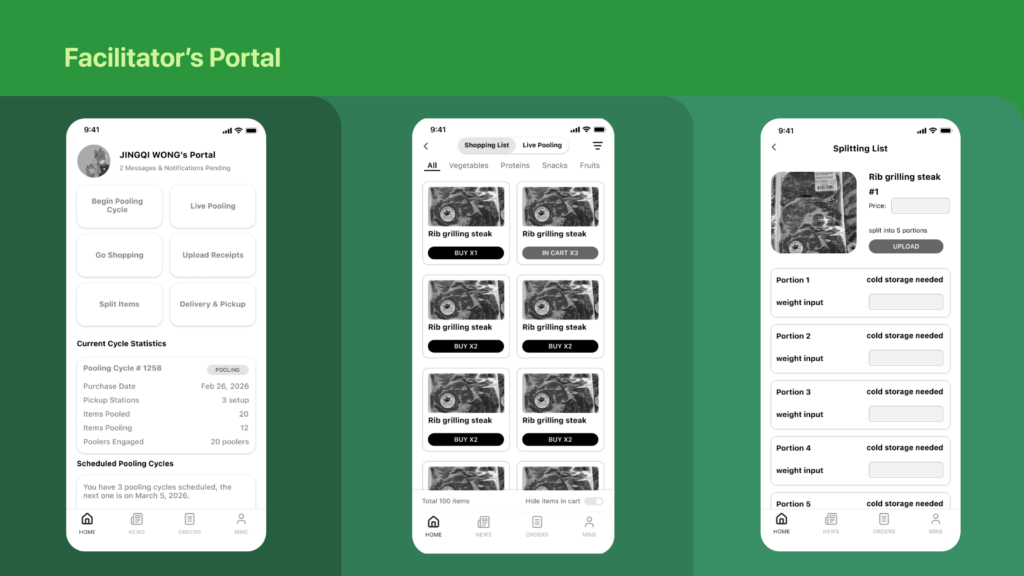
The Service Design
Release Granted