Morpho
Mananveer Singh
A Hormone Replacement Therapy Support Bridge
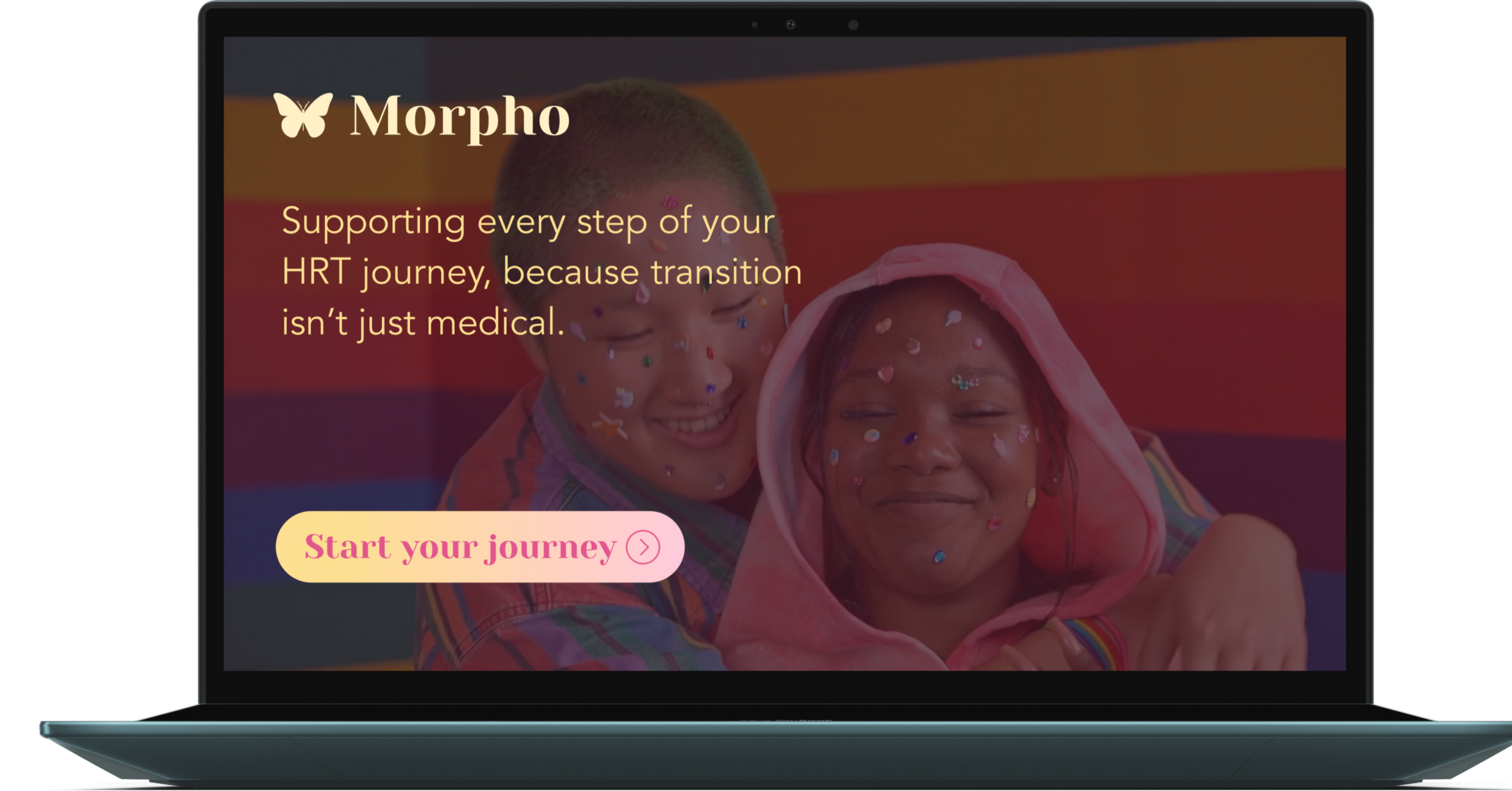
Morpho is a speculative service designed to support trans individuals navigating Hormone Replacement Therapy (HRT)* beyond clinical care. While institutional platforms like Trans Care BC provide comprehensive medical information, much of the day-to-day lived experience of transition remains fragmented, uncertain, and emotionally unsupported.
This project explores how design can bridge the gap between institutional healthcare systems and informal community knowledge, creating a more continuous and human-centred support system.
*Hormone Replacement Therapy is a medical process in which trans and non-binary folks take estrogen or testosterone, along with hormone blockers, to align their physical traits with their gender.
Problem Space
As HRT is still under-researched, most trans people rely on lived experiences, community knowledge or online platforms such as reddit & discord, for their daily questions and needs. Information is available, but it is not personalized, and difficult to contextualize in everyday situations.
Initial design question
How might we design an app that helps trans individuals track their HRT progress while making related information more accessible, organized, and centralized?
Research Approach
For concept testing I hosted a co-design workshop with trans people
to map current gaps & come up with features for the app.
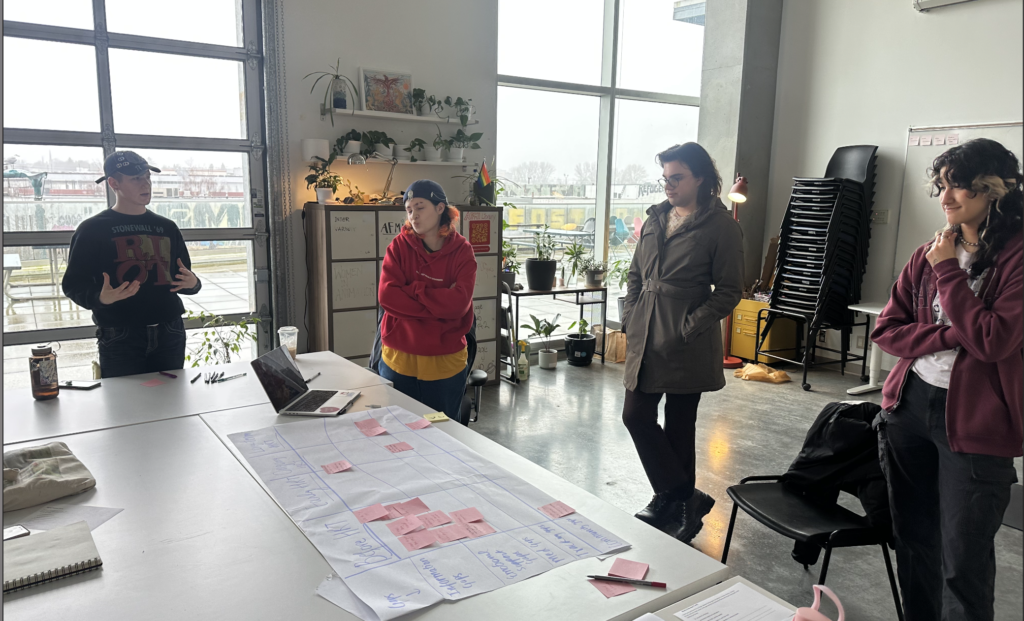
What stood out was that users didn’t just need information; they needed reassurance, context, and a way to navigate everyday experiences during HRT.
Pivot
This led to a switch in my thinking. I realised the issue wasn’t access to information, but how users relate that information to their own lived experiences.
This turned my project from an app design to a service design.
Final Design Question
How to support trans individuals through the day-to- day lived experience of HRT, alongside existing healthcare systems?
Solution
The main touchpoint for this service is the website.
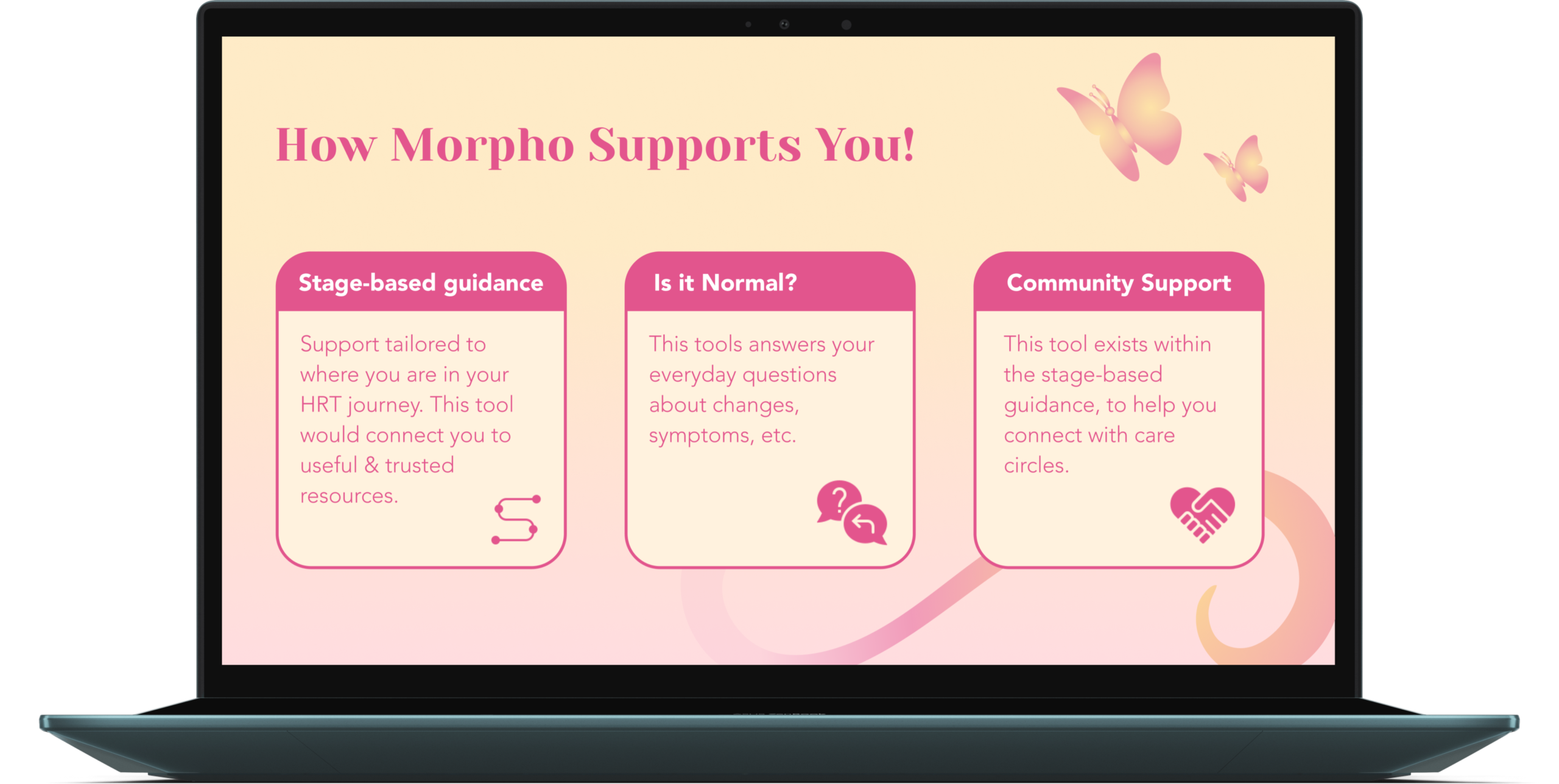
This is where users lands after CTA on the landing page.
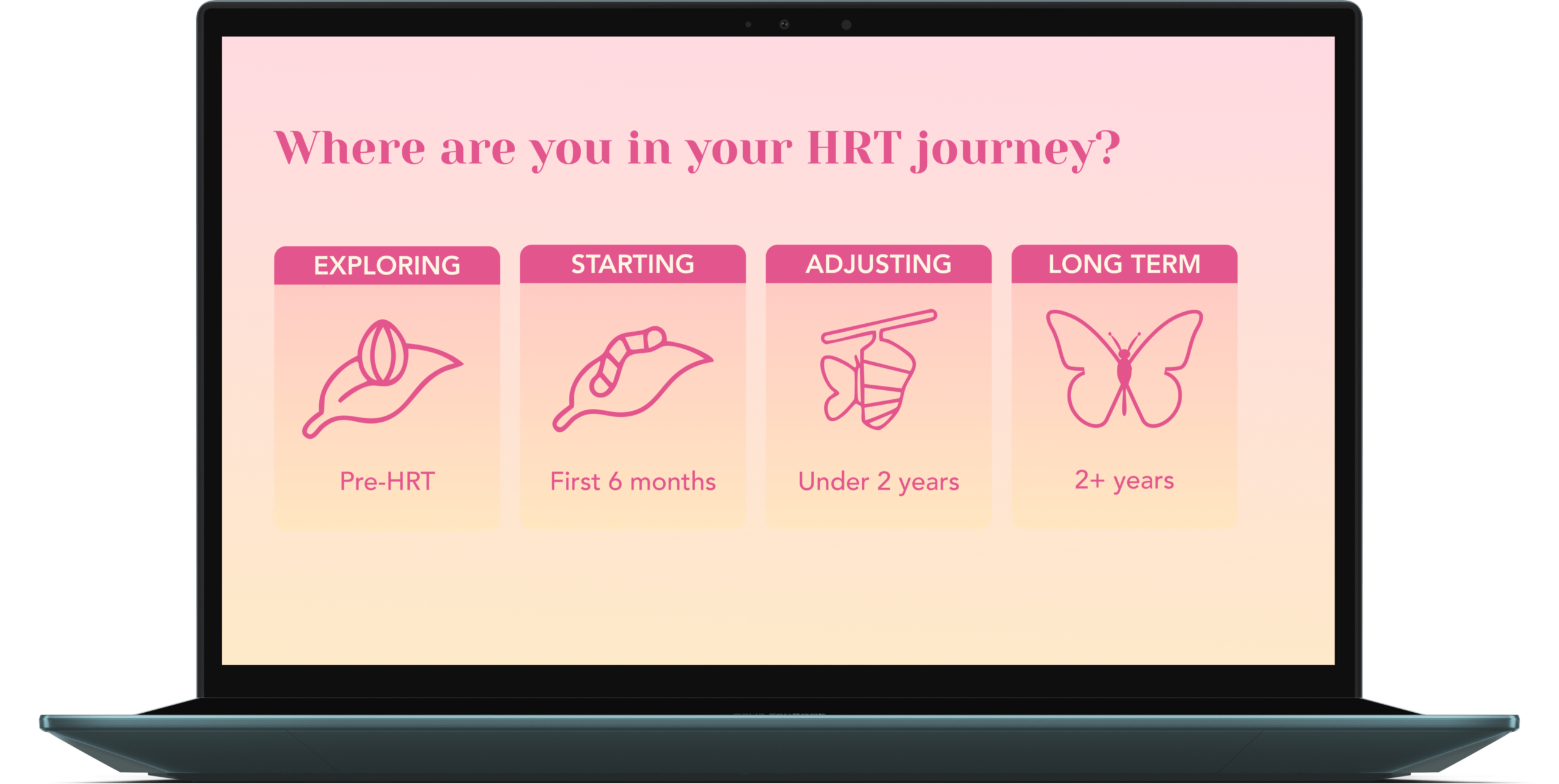
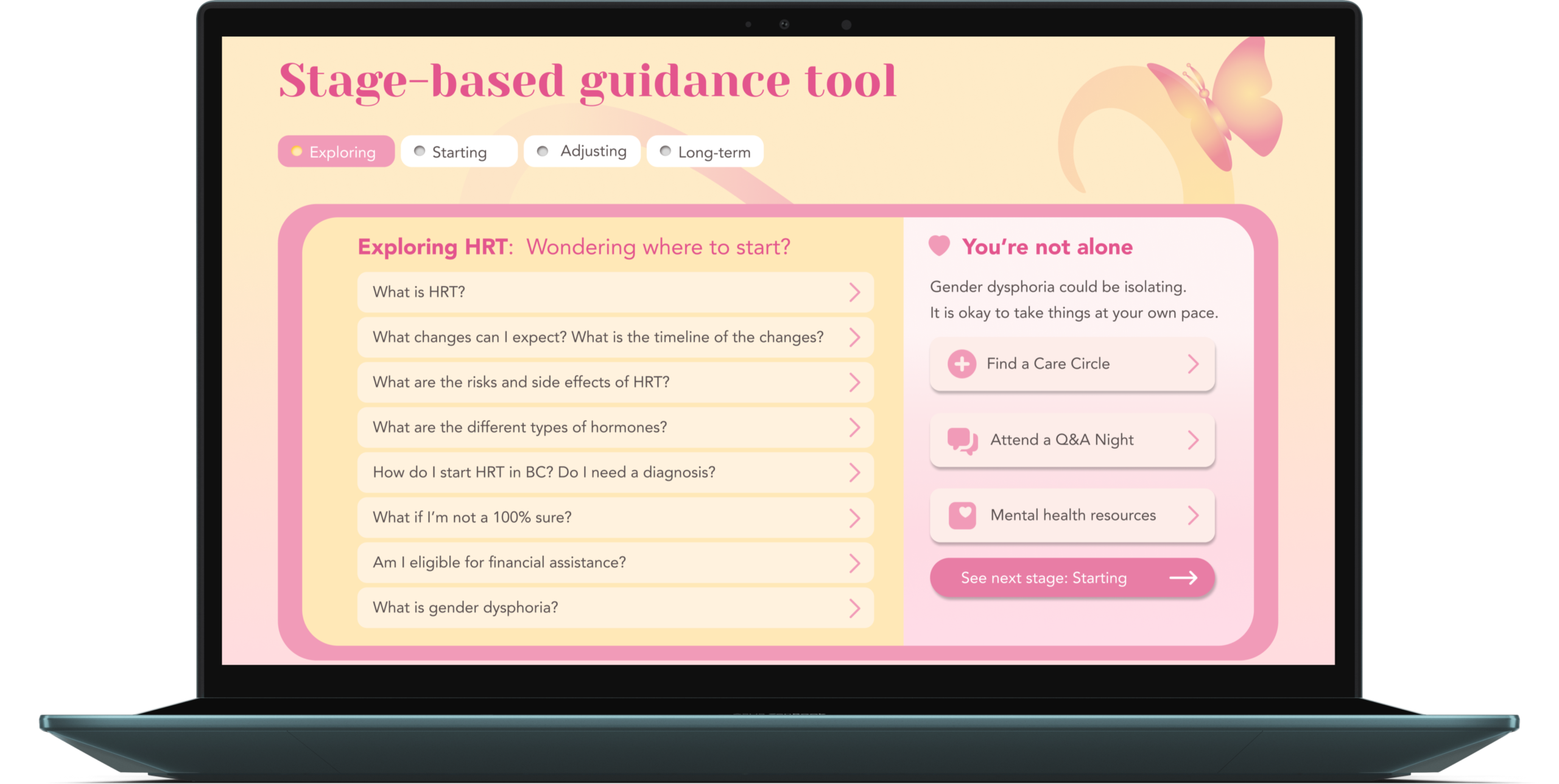
The first tool is the stage-based guidance tool, which connects users to trusted resources based on their current stage of transition. It helps them get quick answers to FAQs, while also connecting users to community groups.
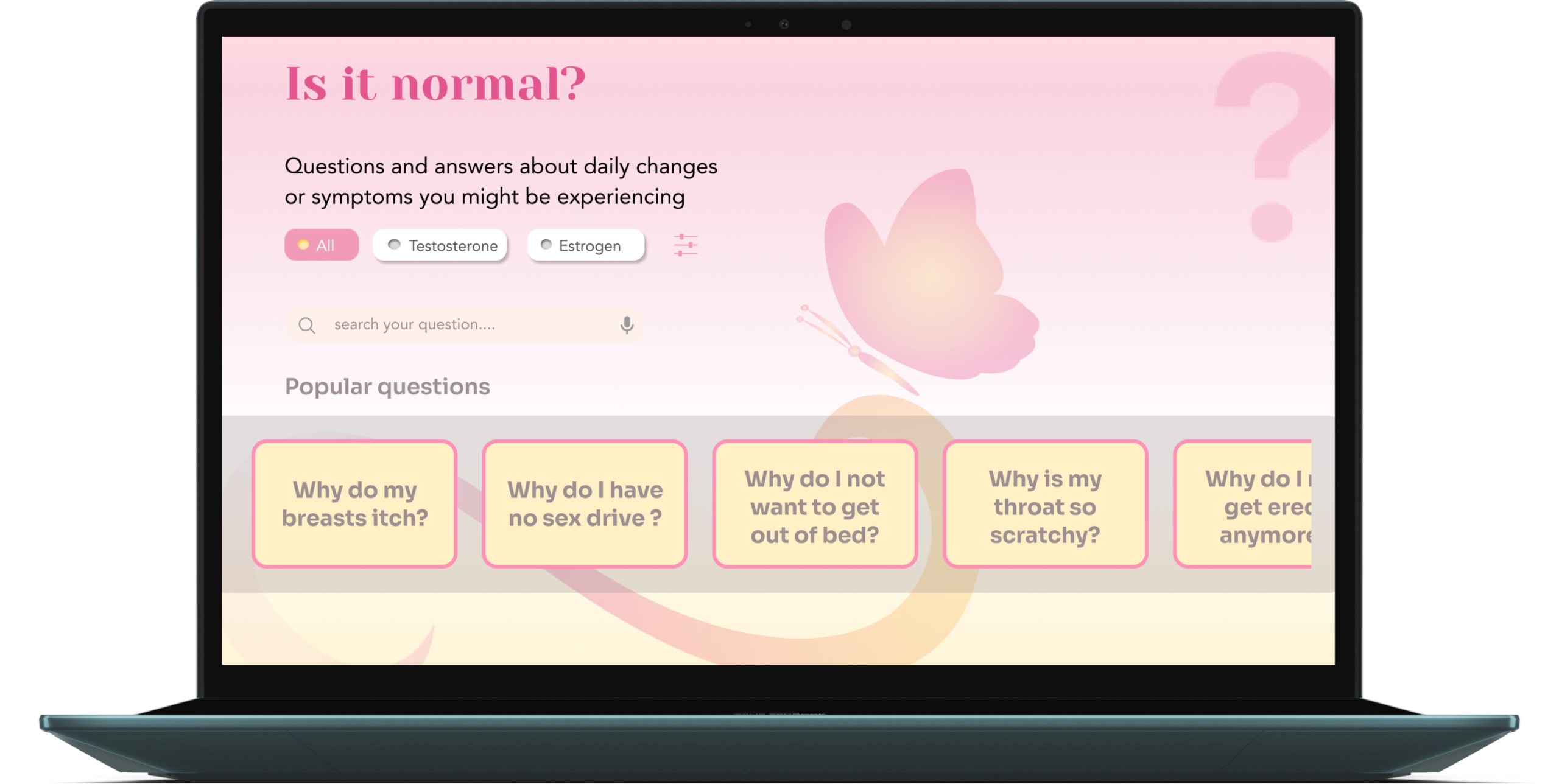
This tool allows users to search everyday experiences, like mood changes, body sensations, or side effects, and get quick, contextual answers. This shifts support from static information to real-time reassurance.
Systems Thinking
This project expands beyond interface design into a service ecosystem.
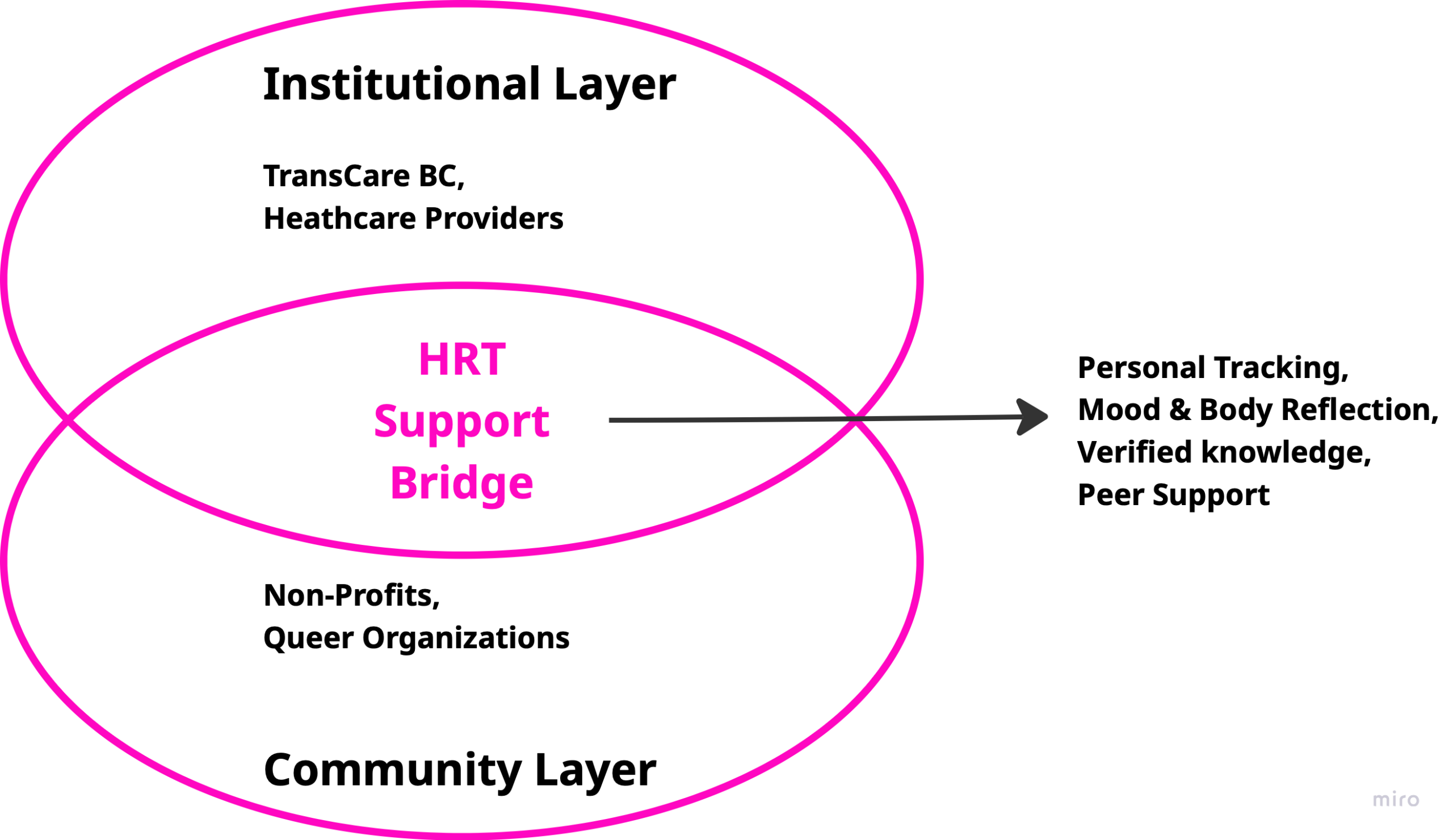
It operates across three layers:
- Institutional (healthcare providers, hospitals, clinics, etc.)
- Community (peer networks, shared knowledge)
- Individual (personal experience, emotions, identity)
The service acts as a connector between these layers.
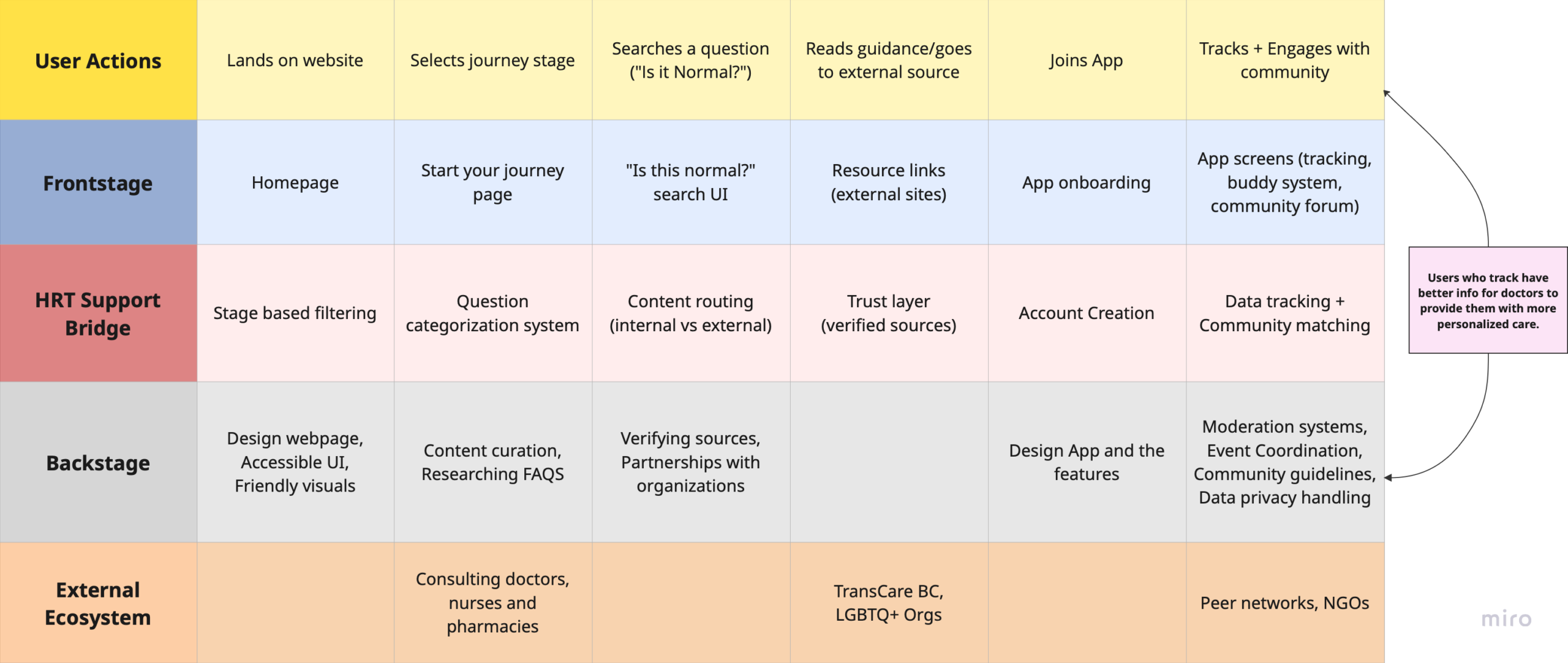
Service Blueprint
Ecosystem Map
I did multiple iterations of the ecosystem map to fully understand how this service would fit into the existing system.
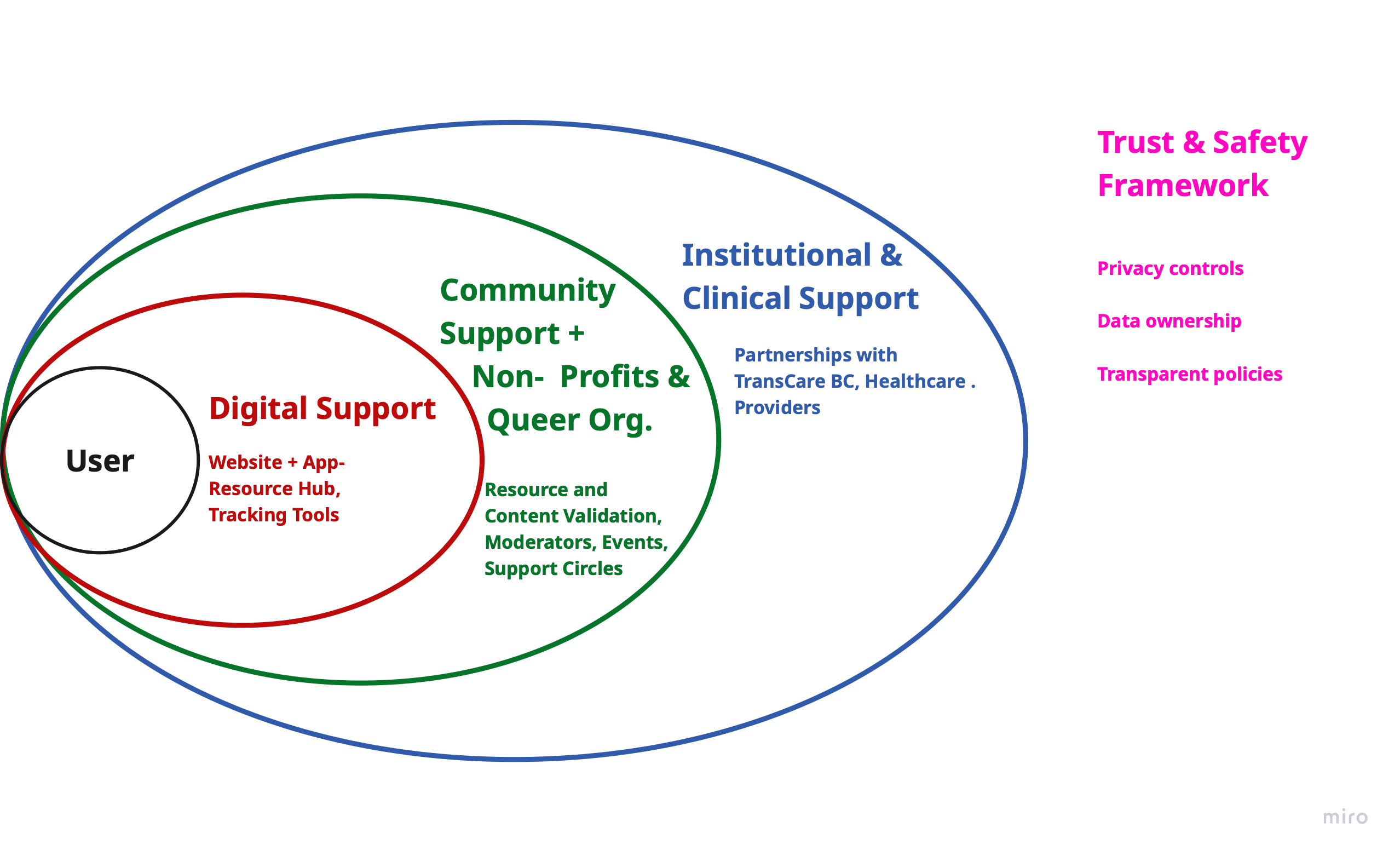
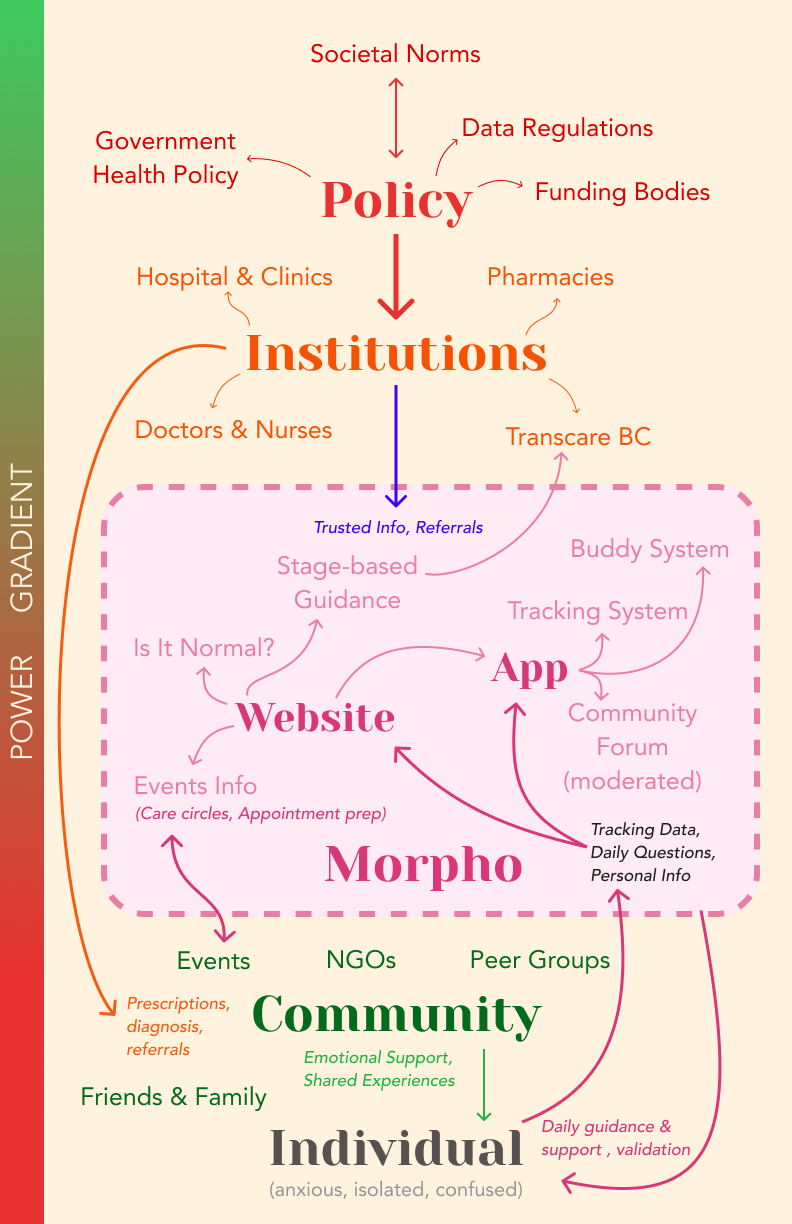
Then I made the final one which also depicts the power gradient, which I feel is important to show when we are dealing with systemic issues.
Key Learnings
- Access to information is not enough. Support must be contextual, timely, and emotionally relevant.
- The most meaningful design opportunities exist between systems, not within them. This project focuses on the space between healthcare and community.
- Designing impactful experiences requires thinking beyond individual interfaces and toward interconnected systems that evolve over time.
Next Steps
- Develop a high-fidelity prototype for a tracking app in which users can log in & record their changes.
- Conduct usability testing with target users.
- Explore partnerships with healthcare and community organizations.
- Expand local event and support networks