Attuning to Nature through Interaction Design: Exploring Aesthetic Experience with Nonhuman Chinese Poetry
Yifan Wang
My research explores the concept of poetic interaction as an emerging topic within the field of interaction design, envisioning design as a delightful and meaningful experience that addresses users’ aesthetic needs beyond usability and functionality. The research journey begins with two central questions, how poetry can inspire interaction design that evokes a sense of poetic interaction with natural phenomena, and what connections can be drawn between poetry and interaction design to spark the creation of meaningful interactive experiences
The Beginning of the Story: An Inquiry toward a “Hybrid” Reality
Throughout my M.Des journey, I was drawn to the dilemma of two seemingly contradictory realities: the physical world and the digital, virtual one. The relationship between technology and the construction of our reality and lived experience unconsciously guided my exploration from the very beginning. In my open-ended inquiry into poetic interactions with natural phenomena through the textual material of nonhuman Chinese poetry, I was also focusing on how technology jointly shapes our experience of the world.
Across these studio projects, I was seeking to examine the different roles of technology and interaction design, particularly how they might construct a positive relationship that mediates our lived experience.
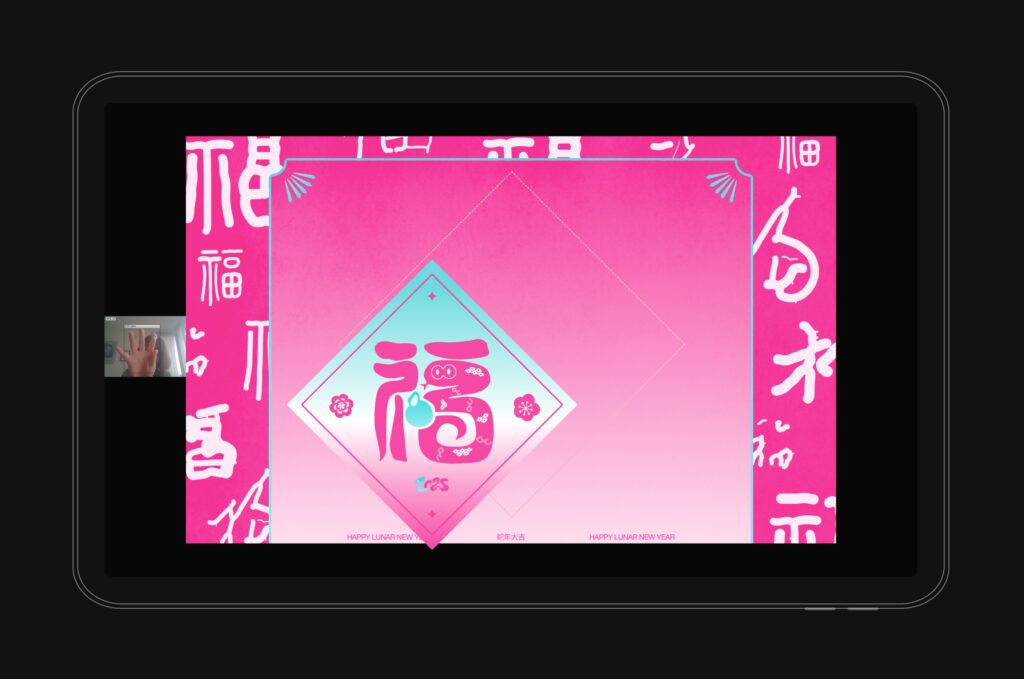
Happy Year of the Snake is a web-based project that explores the digitalization of the cultural ritual of putting up couplets during the Lunar New Year through tactile interaction and hand gestures.
Through bodily movement and sensory feedback, this transient interaction simulates the cultural moment of offering wishes within a celebratory event. In this project, interactive experience evokes embodied emotion associated with ritual practice.
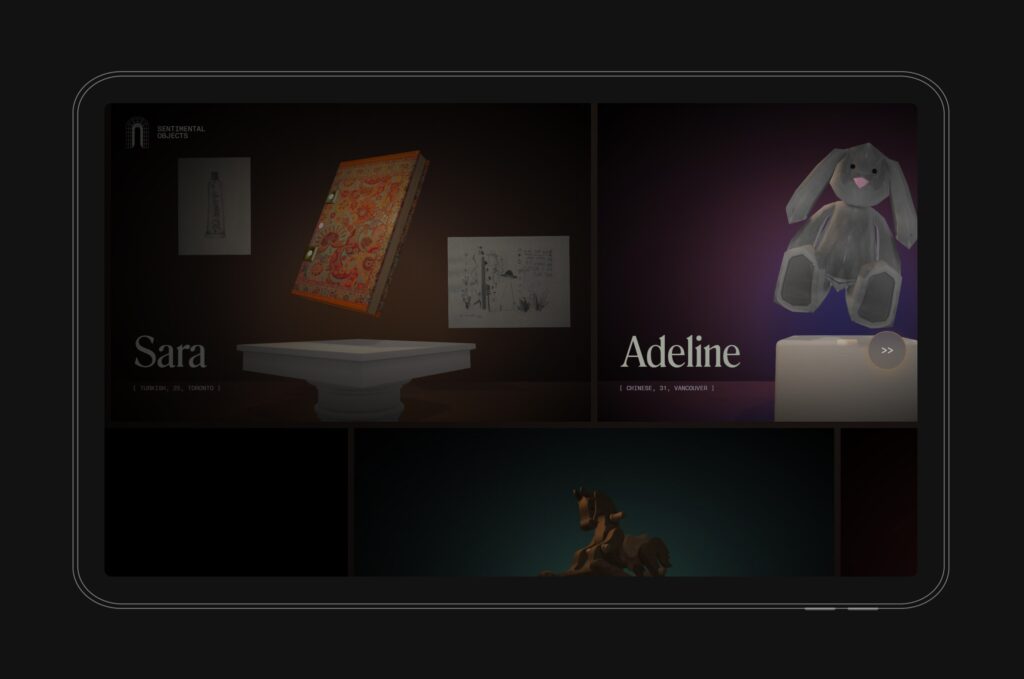
Sentimental Object explored the interplay between physical reality and the virtual world. By housing personal objects and preserving them digitally, the virtual space helped transform the emotional loss of physical objects through a curated digital environment that preserved memories and stories.
In this project, technology functioned as a simulation of the real world, and through the accessibility of the web, the sharing and resonance of stories became meaningful forms of healing.
Poetry as an Experience of the World: Bright Moon, Clear Breeze & Embodied Sensations
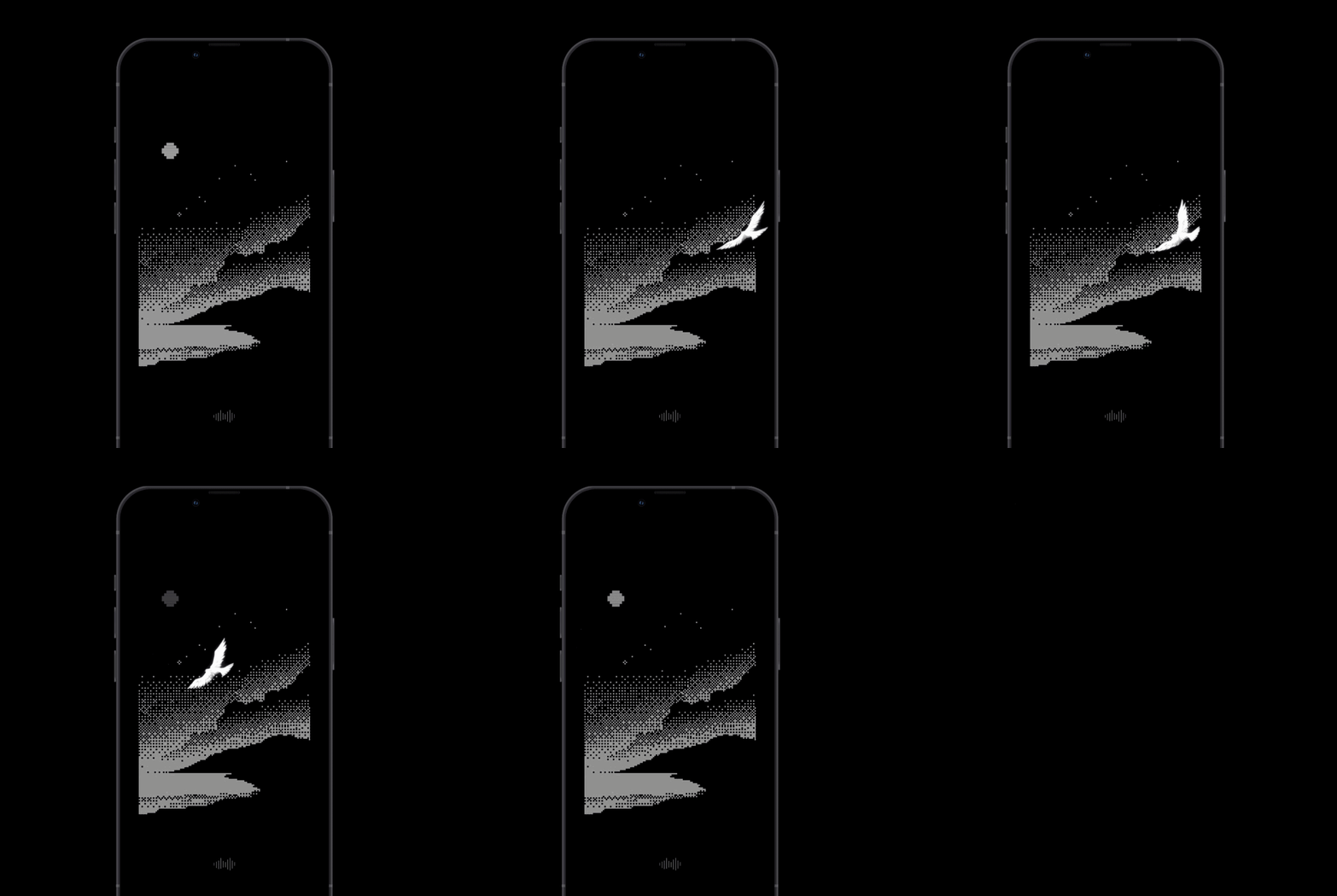
The bright moon startles magpies from the branches;
the clear midnight breeze carries the chirps of cicadas.
明月别枝惊鹊,清风半夜鸣蝉。
Xin Qiji [Song]
The paired imageries of the bright moon and clear breeze from the poem paint a serene night with minimal strokes and abstraction. Through their presence alone, without further detailed description, the verses lead readers into the atmosphere and invite us to inhabit the moment through the combination of imagery. These imageries are intricately connected, forming a poetic chain of causal effects.
Translating into interactive experience, this sketch is inspired by the poetic text of bright moon and clear breeze. The sketch explores how bodily experience and natural forces such as wind and light can mediate a poetic sense of connection between humans and the environment through the thread of digital data input. Audiences are invited to place the windmill outdoors, and to observe how its movement triggers changes in the poetic scene and natural soundscape within the mobile interface. This hybrid experience connects digital and analog media, allowing audiences to immerse themselves in moments of attentiveness and imagination.
Mountains, Water and Beyond: The Realm of “Wuwo” (无我之境)
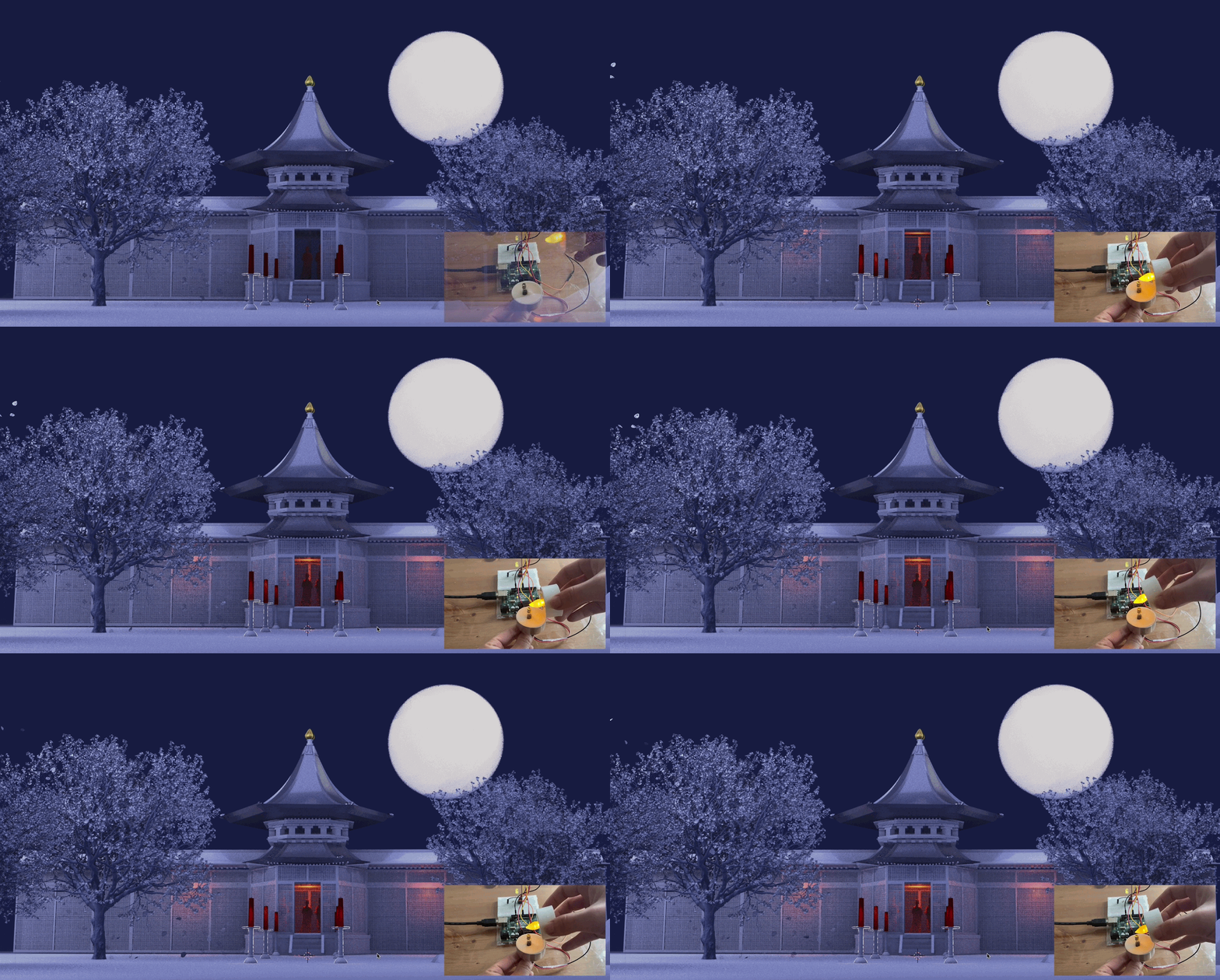
The poetic world provides an abundance of natural imagery that helps readers detach from personal ego and emotions in the present moment and “makes room for nonhuman entities to exist independently of human signification and identification” (Tong, 2022). More importantly, the poem demonstrates how nonhuman poetics creates an immersive space through the relative absence of the poet’s explicit self-presence. This is a wuwo zhi jing (无我之境), meaning “a realm in which the human self withdraws” (Wang, 1969).
In my design explorations, I also seek to create a space where users can be immersed in a natural environment and experience the state of “wuwo” (无我) or “no-self” in the poetic text. The experiences focus on attentively observing and interacting with the environment without the necessity of a human objective or purpose, so that the users can dwell in the space and may feel being dissolved in the moment.
“Everything in Symbiosis”: Metaphor of Nature in Nonhuman Poetics
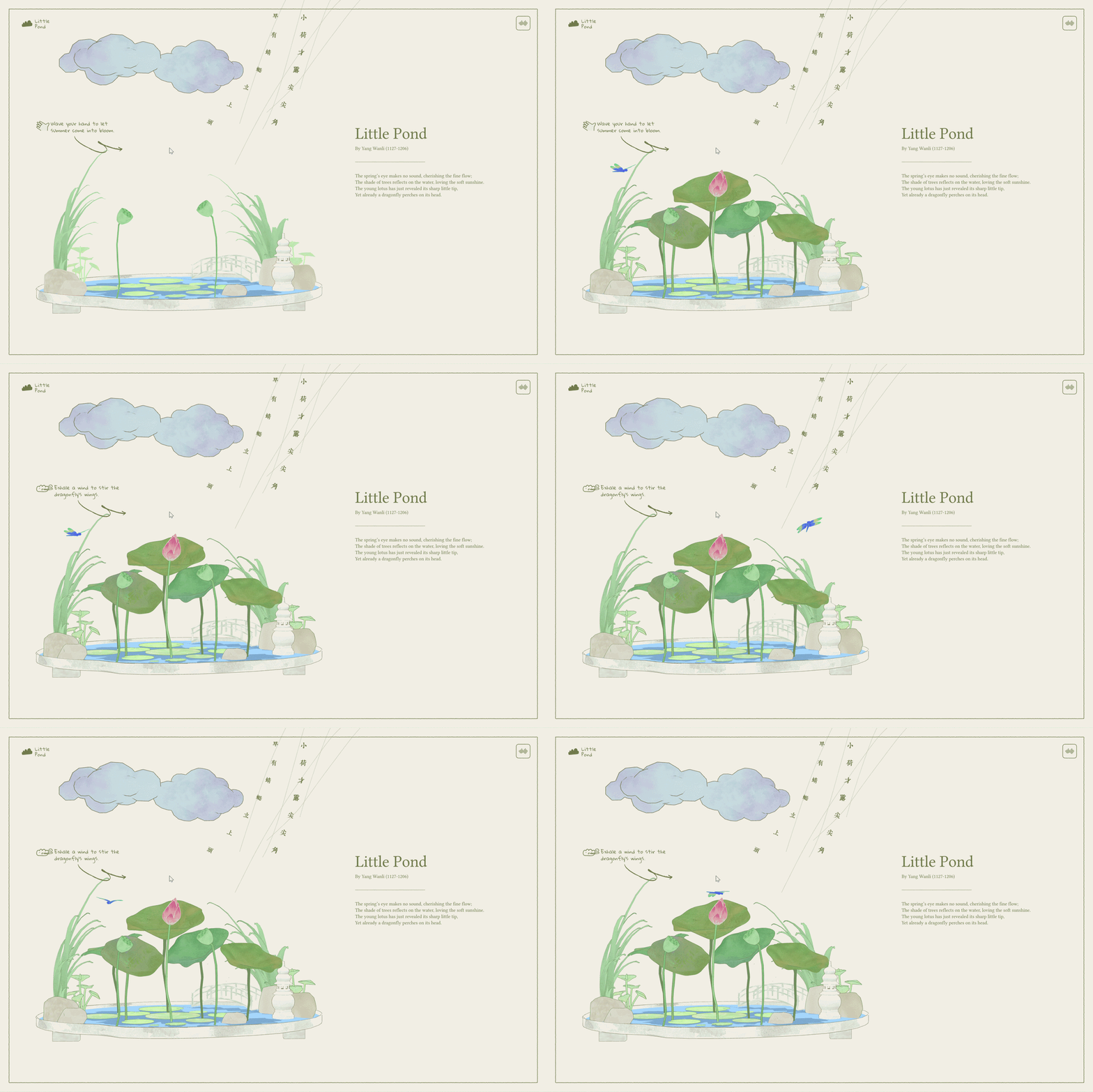
The interactions depicted in poems reflect a poetic perception of an interconnected organism, in which natural elements interact without the intervention of human presence. Nature appears to have its own consciousness. Such expressions in nonhuman poetry resonate with the definition of metaphorical concepts as “understanding one domain of experience through another” (Lakoff & Johnson, 1980, p. 117).
Apply the perception of “everything in symbiosis”- I worked on Little Pond, which is an interactive web experience exploring how the bodily movements can shape a subtle, sensory connection with nature. Through interactive elements, it invites users to feel the rhythm of seasonal change and sensory richness. I aim to deliver this sense of the creative “emergence of language” (Bachelard, 1994) and the perception of “everything in symbiosis” through interactions.
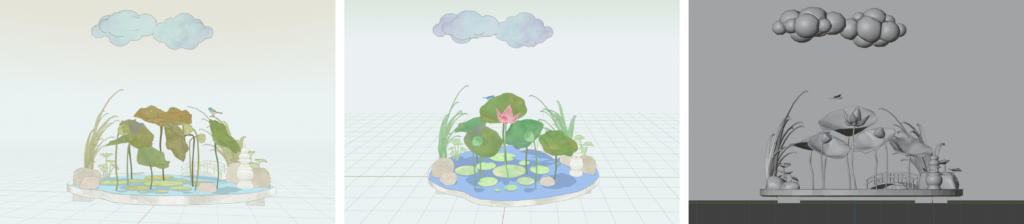
Modeling process in Blender
“Poetic Attention”: Literary Inspirations for Interaction Design
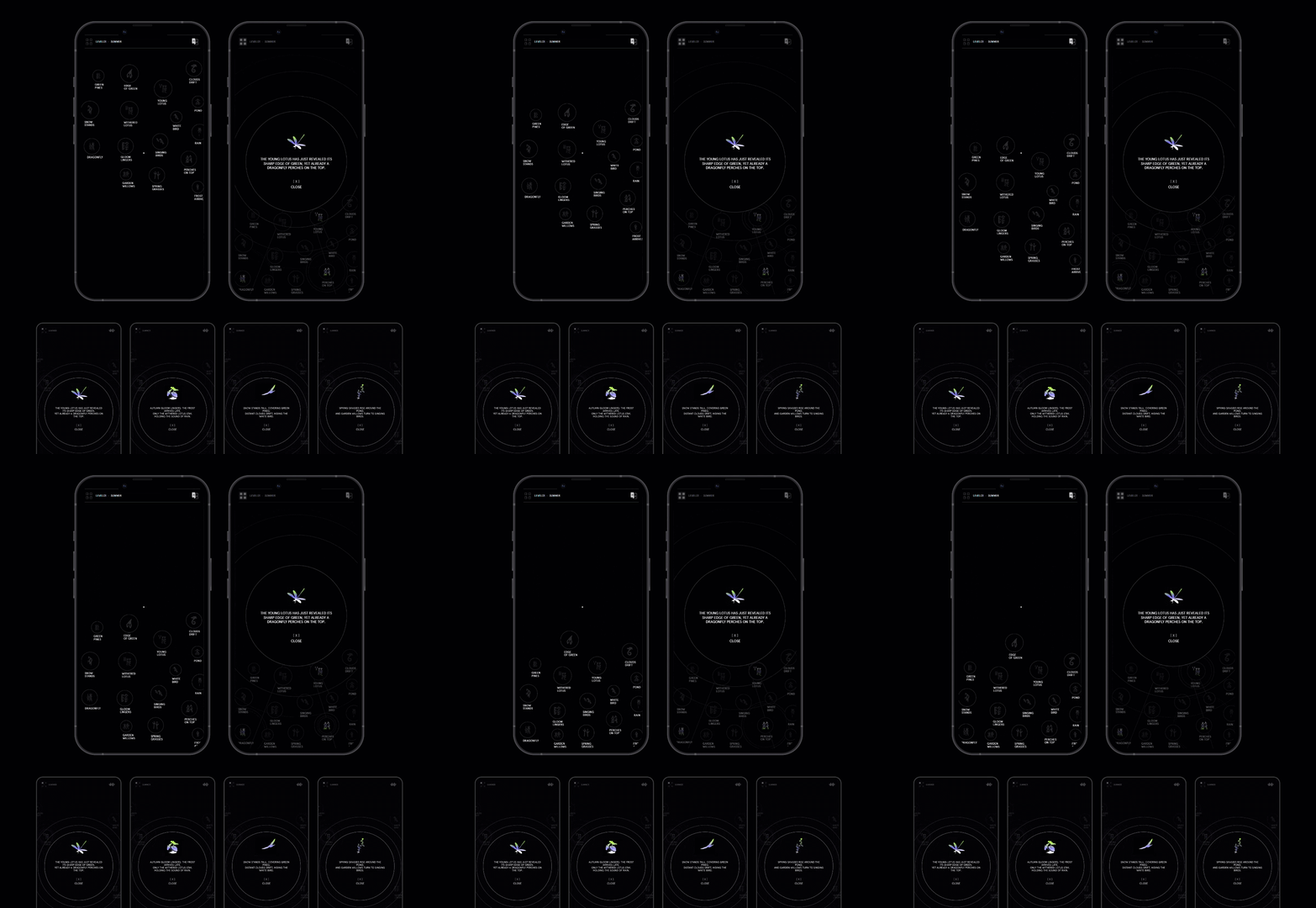
Lucy Alford (2020) introduced the concept of “poetic attention” and argues that poetry is semantic and symbolic; it activates the language and sense-making systems of readers, and therefore demands attention on “sensory, logical, and emotional planes at the same time” (Alford, 2020, p. 8). Interaction design could similarly benefit users by taking into consideration this “poetic attention” (Alford, 2020) when creating aesthetic experiences that enhance engagement with meaning-making and sensory perception, particularly in a time when we feel less connected with the reality.
Sound Puzzle invites users to interact with sound fragments of natural phenomena as the primary sensory elements. This “puzzle-solving” experience mirrors how poetry often needs to be ruminated on, deciphered, and connected from one word to another in order to be deeply understood and resonated with.

Scan the QR code by mobile phone to try!
Throughout the exploration, the more I researched, the stronger a feeling emerged in me to seek a closer bond with the world beyond the screen, and to enrich my store of embodied experiences shaped by whatis real and sensible rather than by the flat and homogeneous digital world. Without ignoring the benefits that technologies have brought to us, it is still hard to deny that technology is a double-edged sword that can flatten the richness of the real world into a tiny screen while leaving us with the impression that we have known it all.
Reflecting on our everyday interactions with technologies, usability and efficiency are usually the priority and key to the business success of design. Designing with poetry creatively, however, prompts me to consider bodily experience and sensory responses, and to bring the charm of the real world into digital or hybrid realities.
Allowing space for imagination in interaction design, along with attentiveness to the rhythm of the natural world, means using design as a way to purposefully redirect users’ focus from screen-based life toward mindful awareness of a reality that is full of wonder.