tension | كشش | keshesh
Shara Hamed
See it On Campus: Level 1
My work is held in the space outside the Aboriginal Gathering Place.
Visitor Info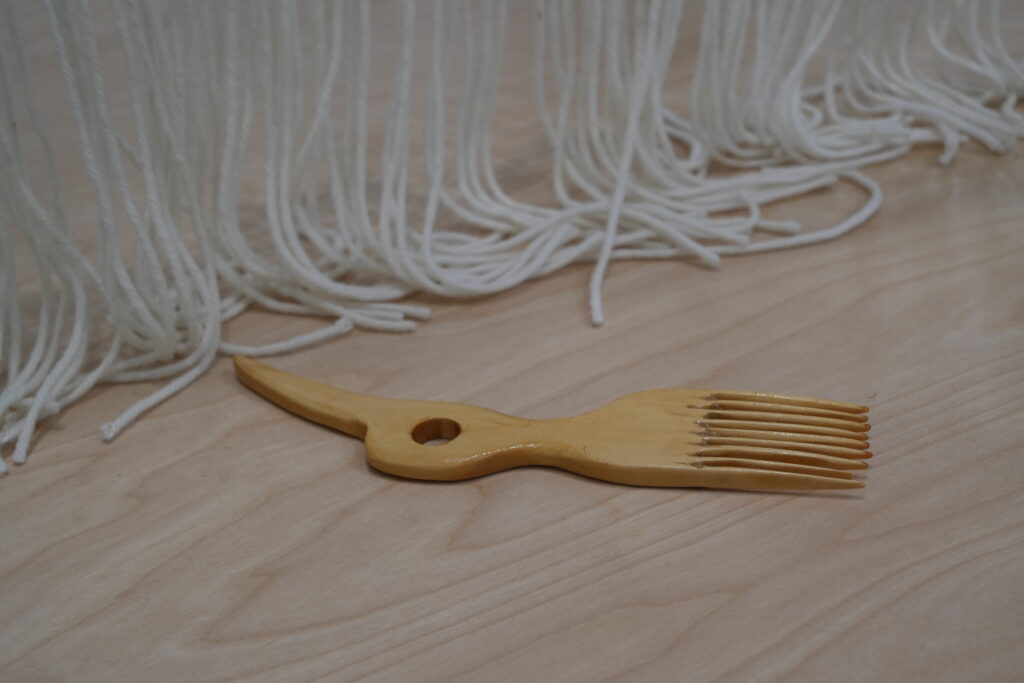
tension | كشش | keshesh
weaving together land, memory + design
Works in Exhibition
These works are held through relation. You are invited to move through them slowly.
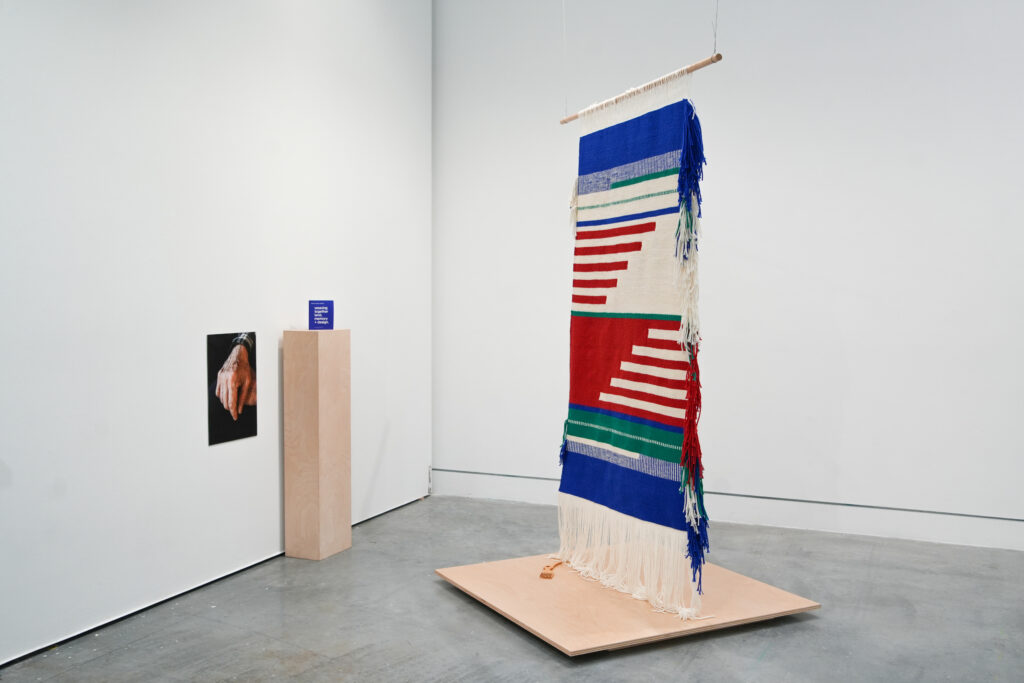
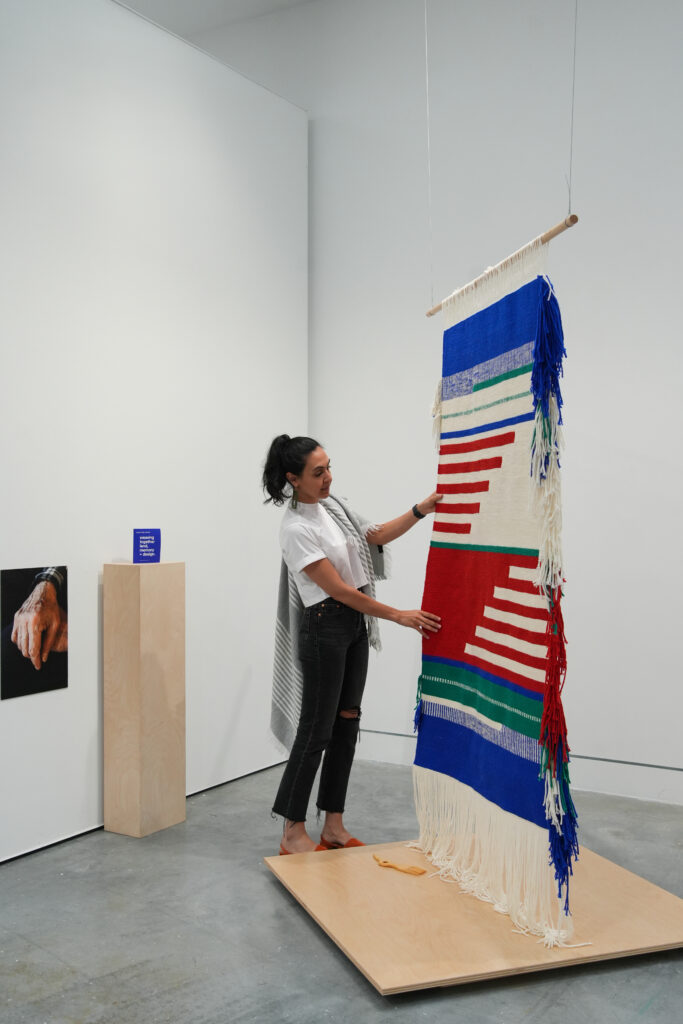
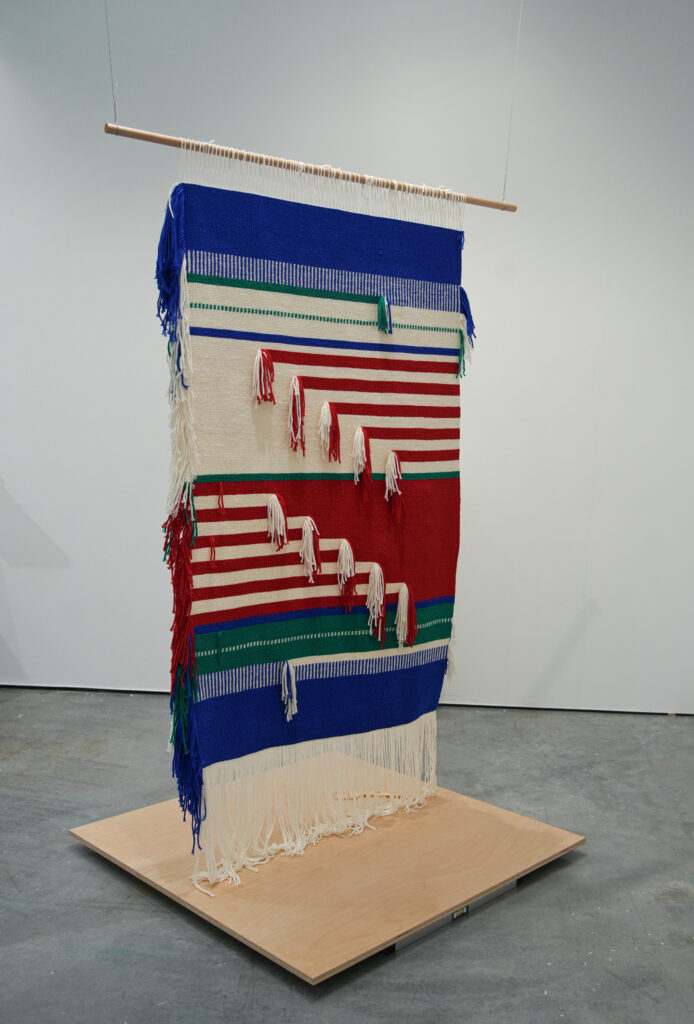
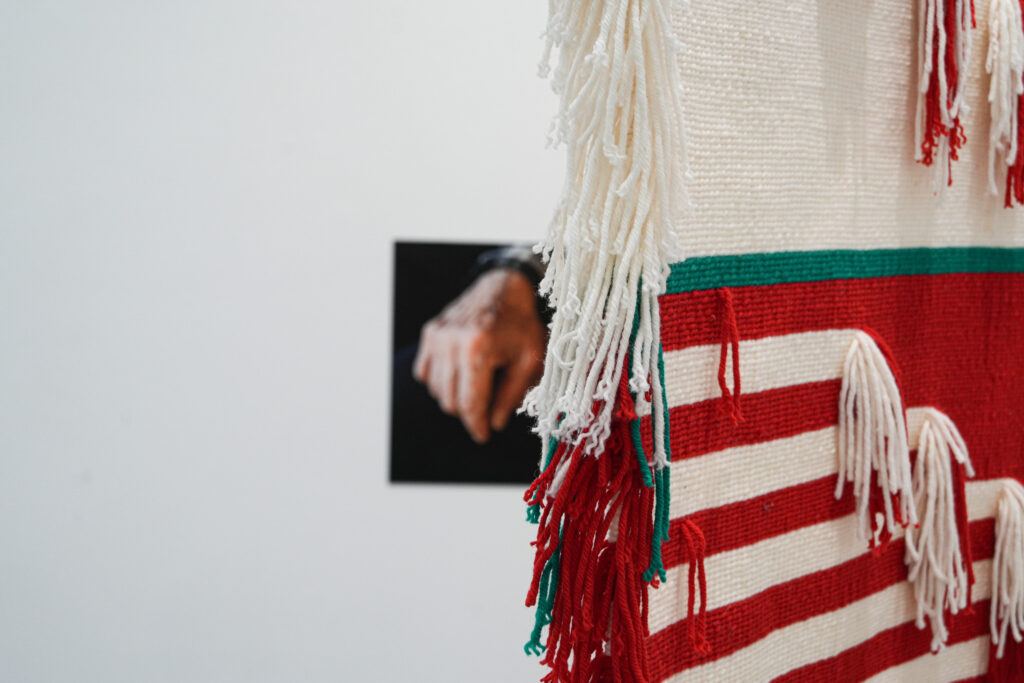
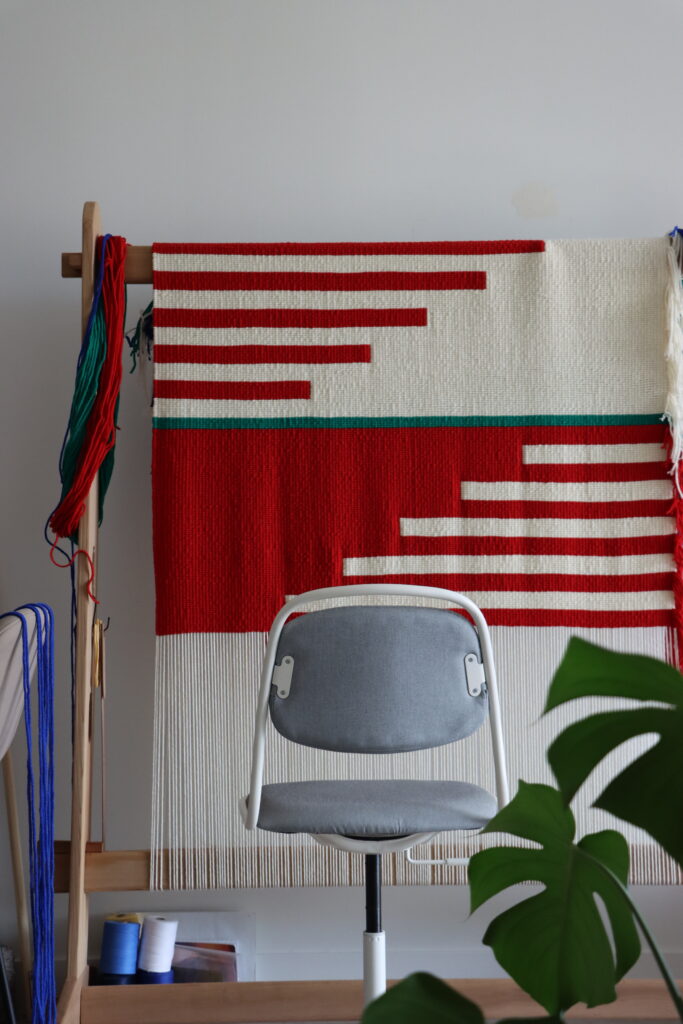
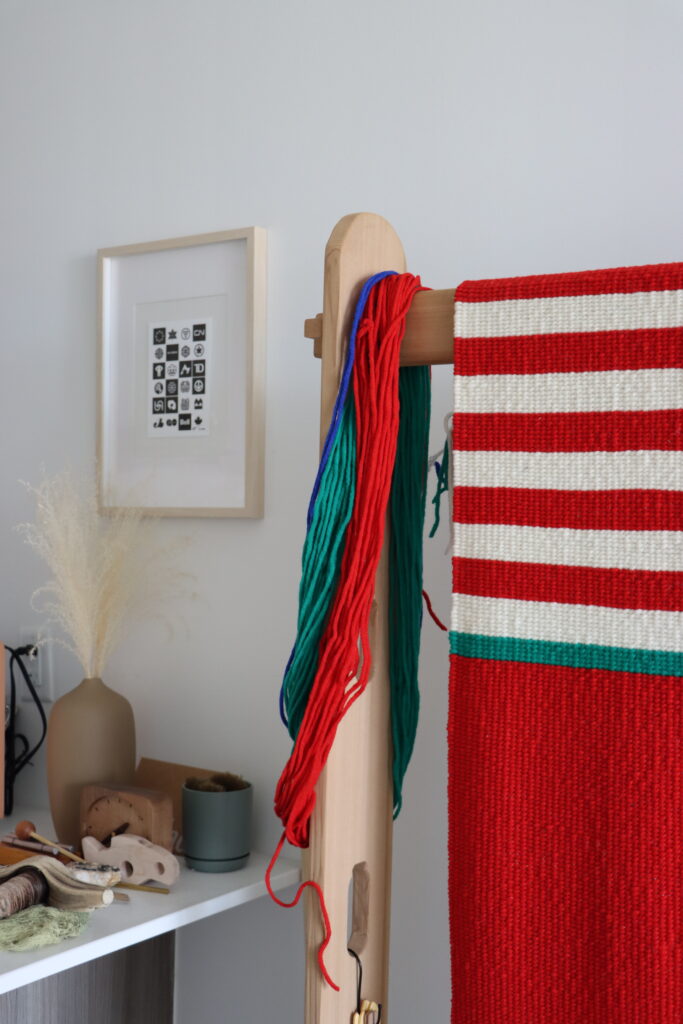
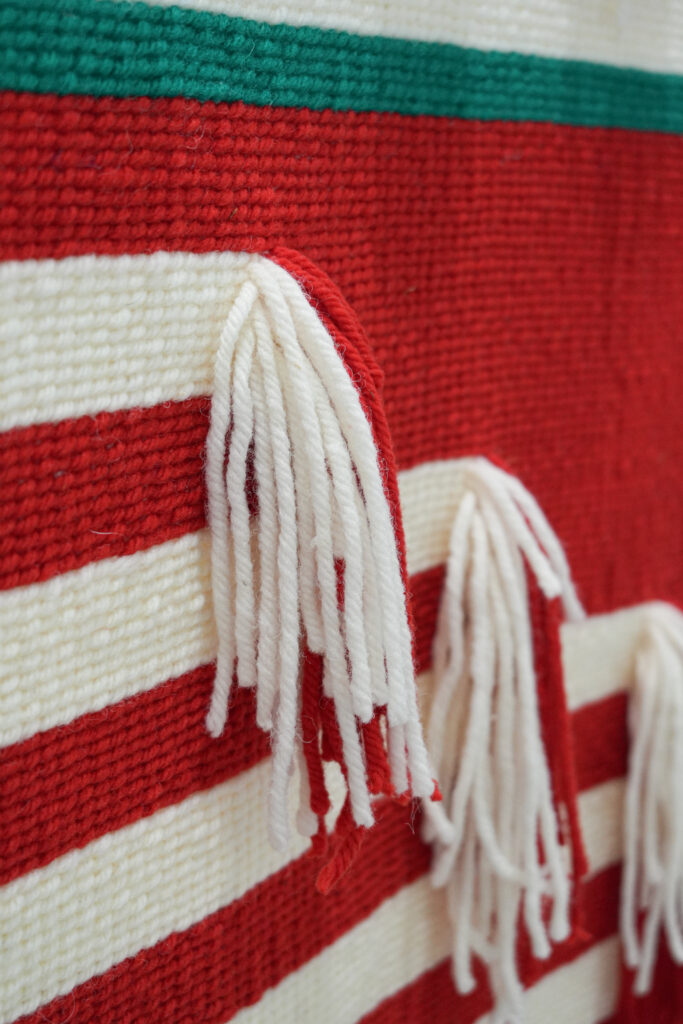
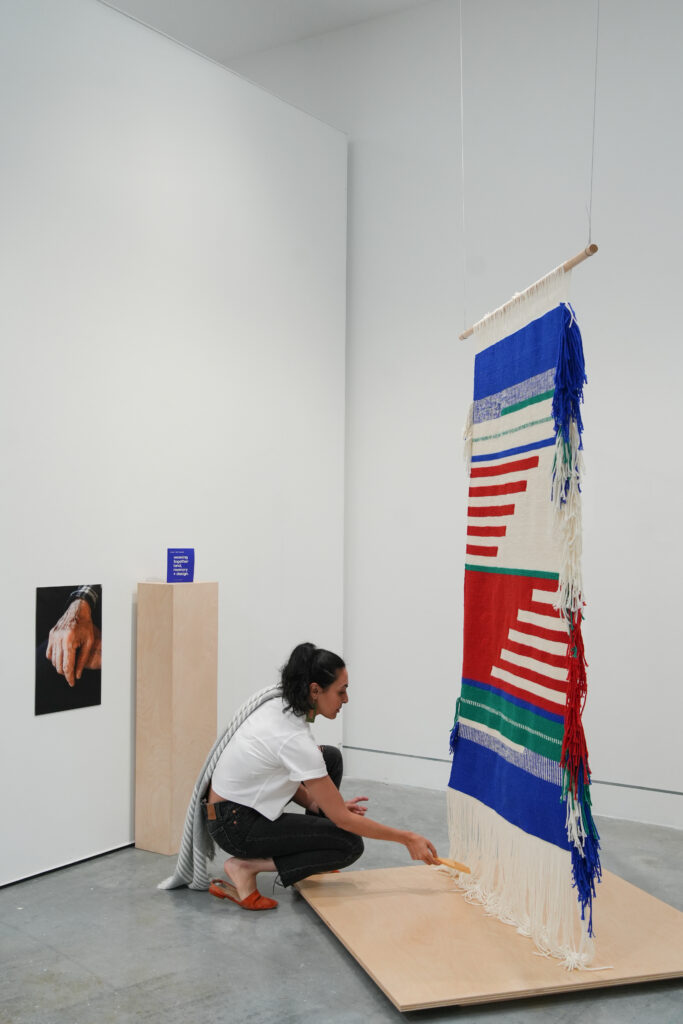
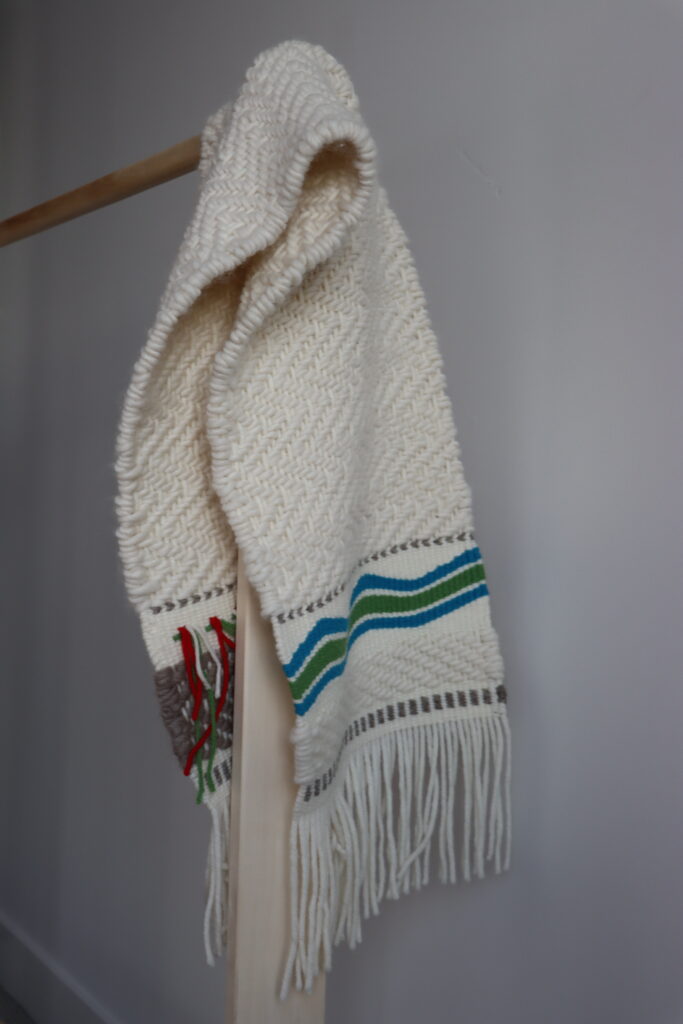
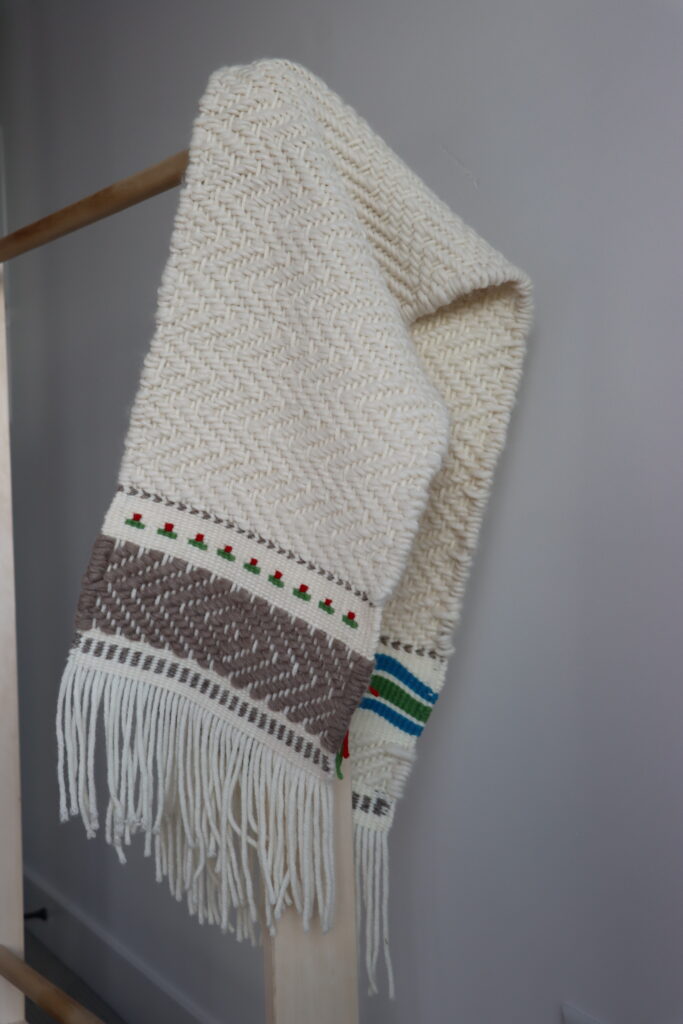
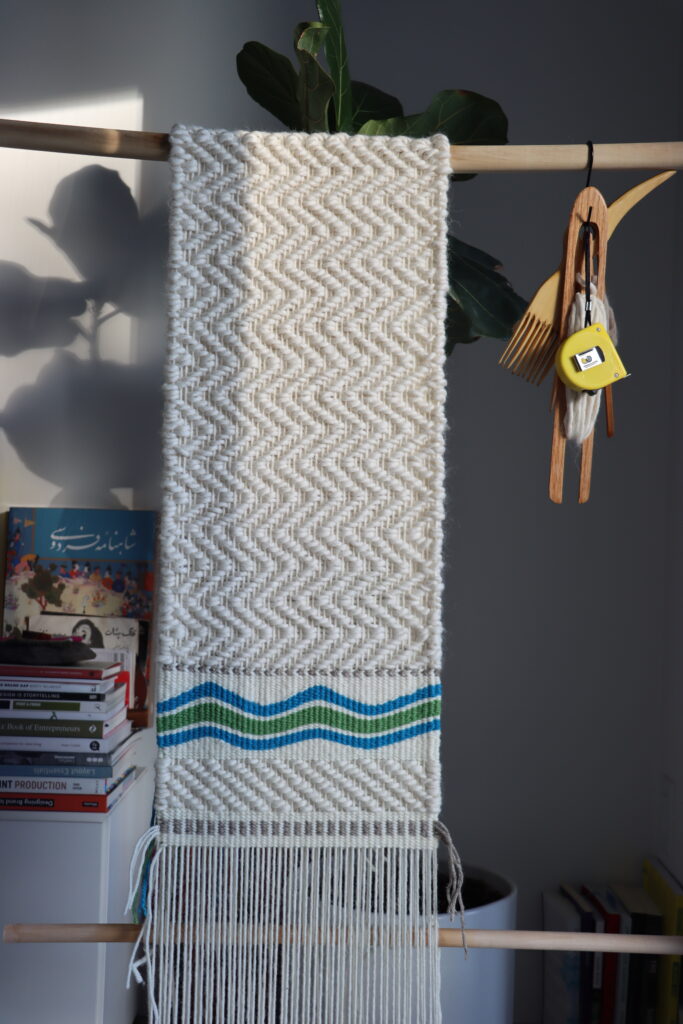
1–Fragments of Becoming | قطعاتی از شدن
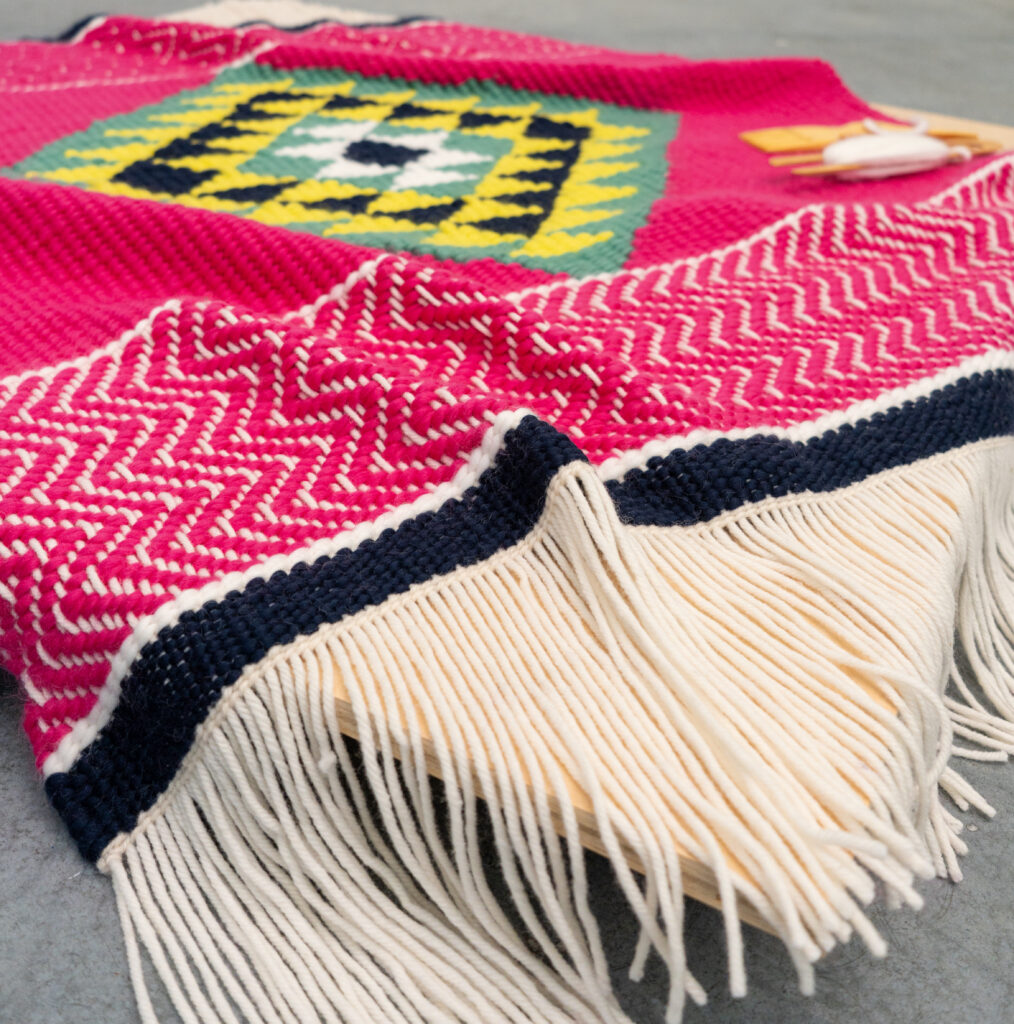
100% wool | Woven on Coast Salish loom
45 × 80 in | 2026
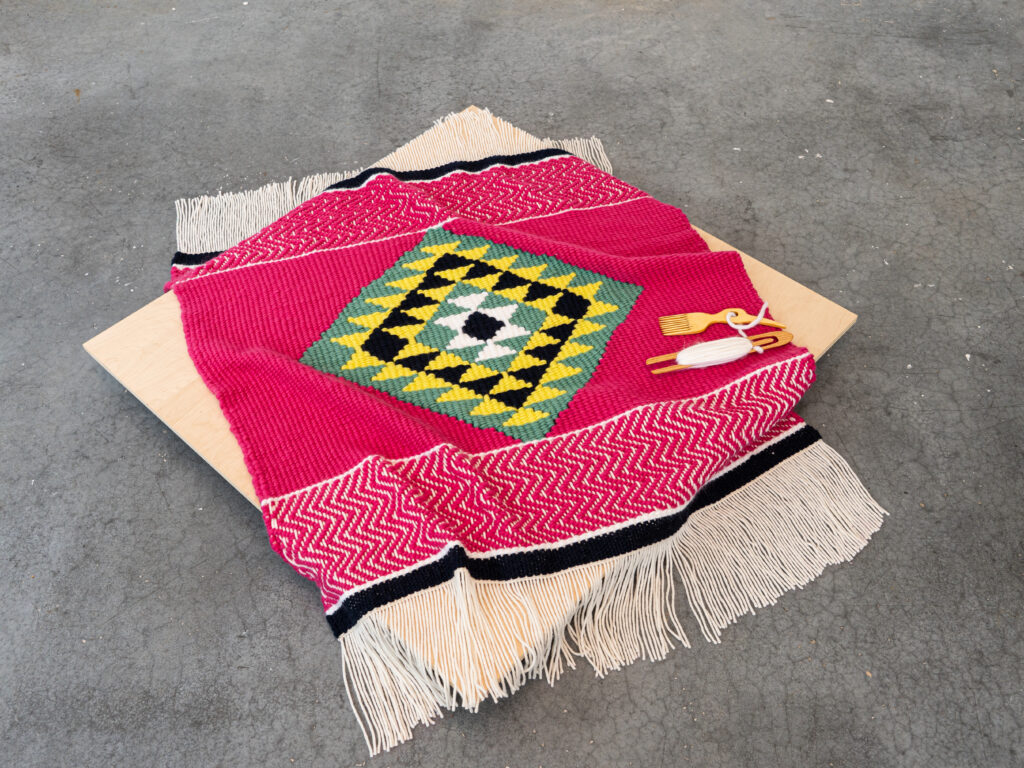
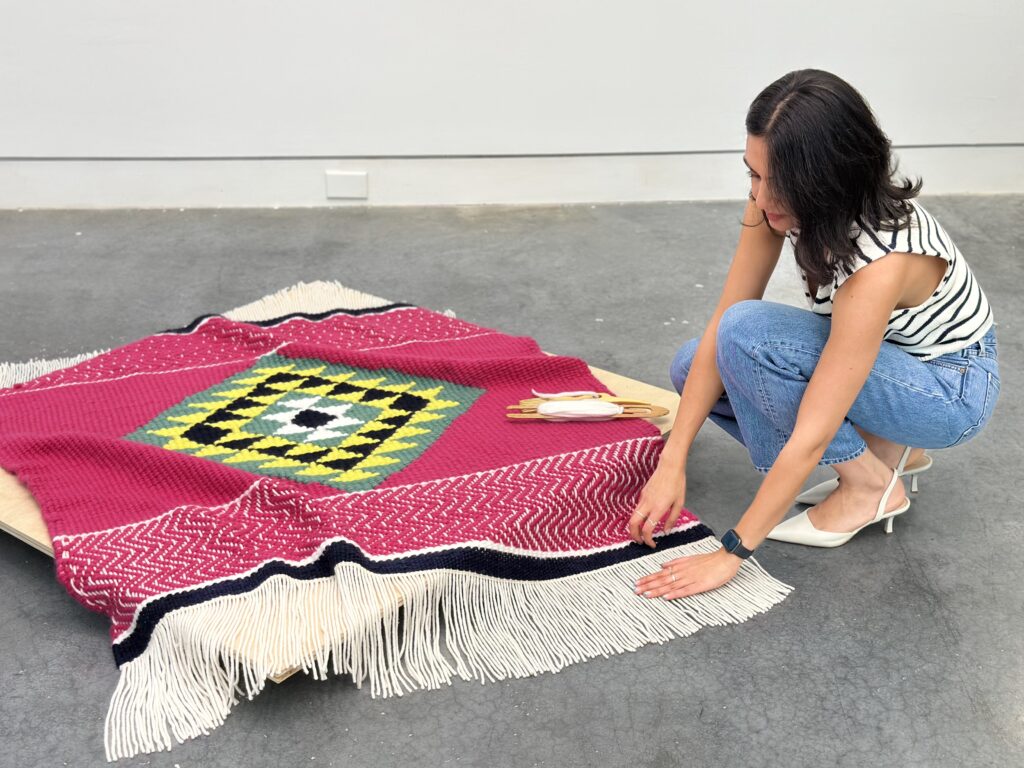
I began my weaving journey on July 31, 2025, as an apprentice under master weaver Angela Paul. What began as learning through listening, repetition, and care has slowly transformed into a practice that continues to shape how I understand relation, patience, and making. Today, I look at this work not as a finished point, but as part of an ongoing journey of learning, tension, and becoming.
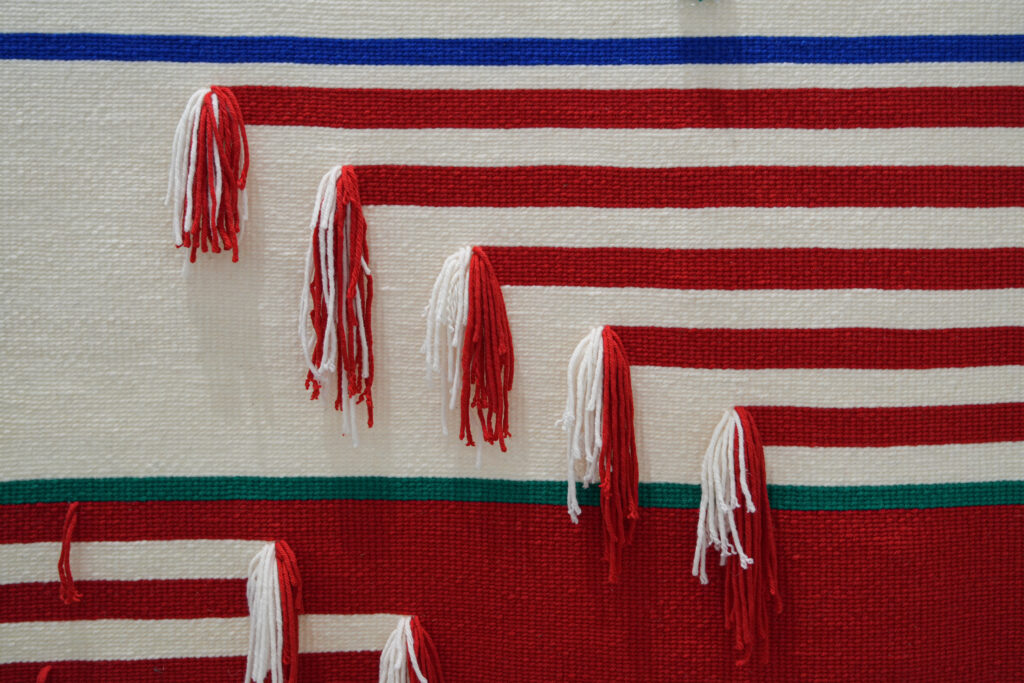
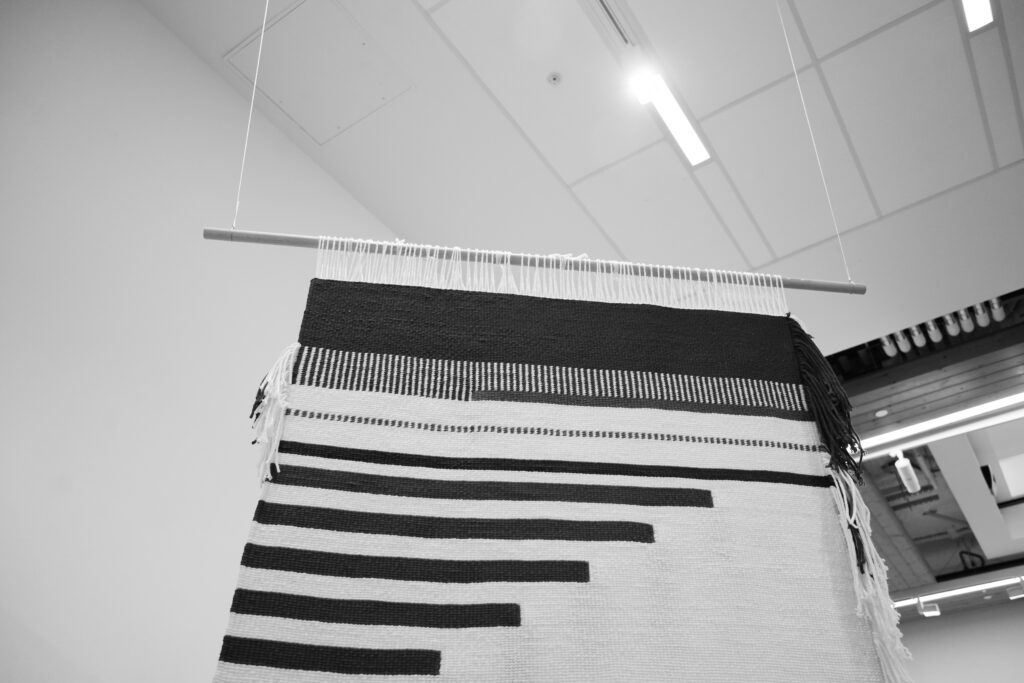
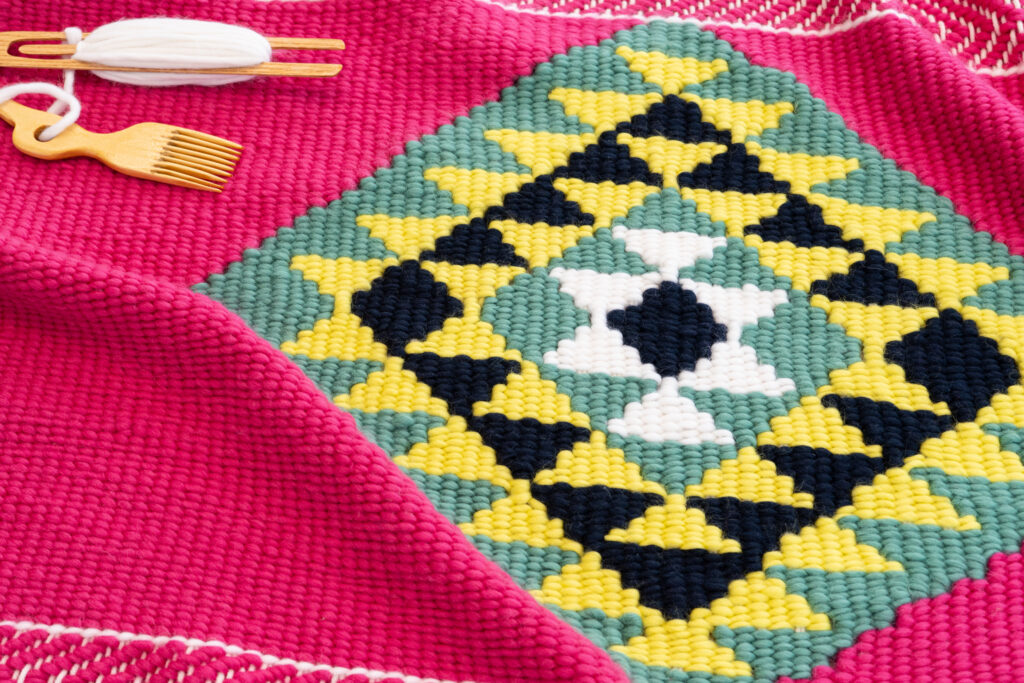
This rug gathers rather than resolves. Built through repetition and shifting fields of white, blue, green, and red, it moves like a record of paths, crossings, interruptions, and return. Colour holds land as memory, and time accumulates through each passage of thread. The sides remain loose, resisting containment and holding space for what is unfinished, unknown, and still becoming. Fragmentation here is not collapse but a condition through which relation and creation persist. The rug does not seek wholeness. It stays with the fragment, carrying land, poetry, and uncertainty together.
In this work, the loose ends become a site of recognition. They reflect a way of living shaped by endurance, restraint, and the expectation to appear composed. Growing up in Iran, there was a quiet responsibility to perform okay-ness. Vulnerability was rarely spoken. To say “I am not okay” was not always possible. Optimism became a way of continuing. I learned this from my parents, whose resistance was not loud, but lived. Despite uncertainty and constraint, they chose joy where possible. Each summer, we went to Shomal by the Caspian Sea. We swam. We laughed. We made space for pleasure. This was not denial. It was defiance. This upbringing shaped how I learned to carry pain, and how to conceal it. In weaving, that concealment becomes impossible. Tension shows itself. Irregularities surface. The knots cannot be hidden.
The back made visible what I had been trained to smooth over. It offered another ethic. One where integrity does not require appearing intact. Through this research, I learned to let go of the demand to perform okay-ness.
To say:
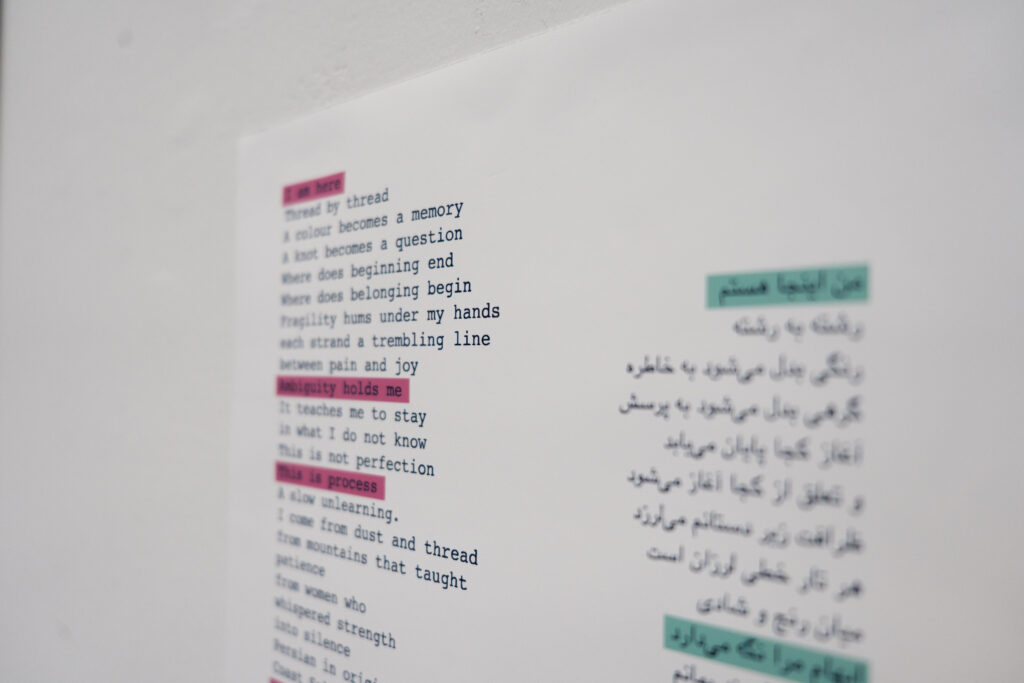
Today I am not okay.
My country is not okay.
My heart aches.
I am hurting.
And still,
I am here.
I am working.
I am showing up.
Imperfectly.
This work is ongoing.
It continues through walking.
Through weaving.
Through relation.
2-Presence | حضور
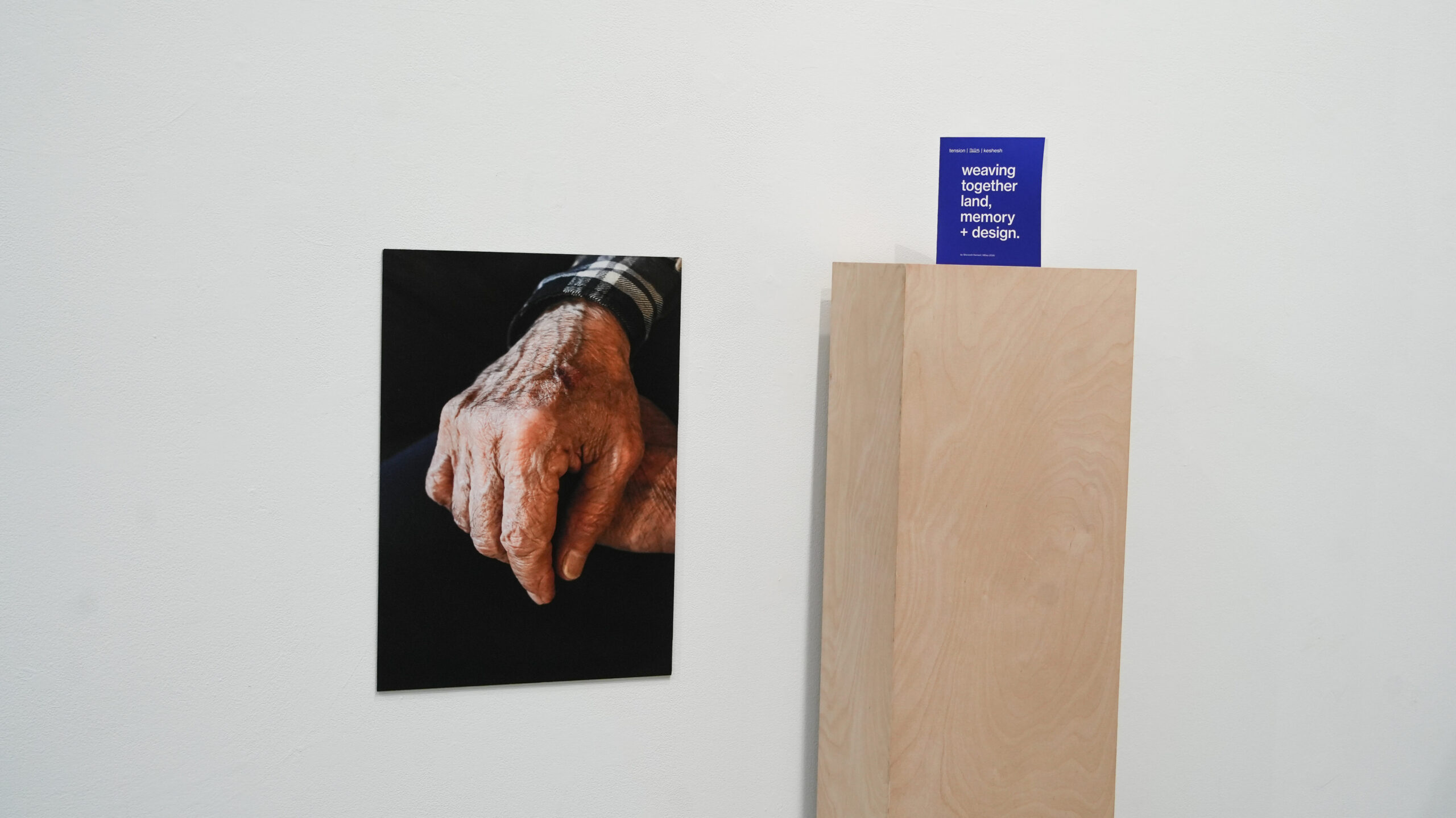
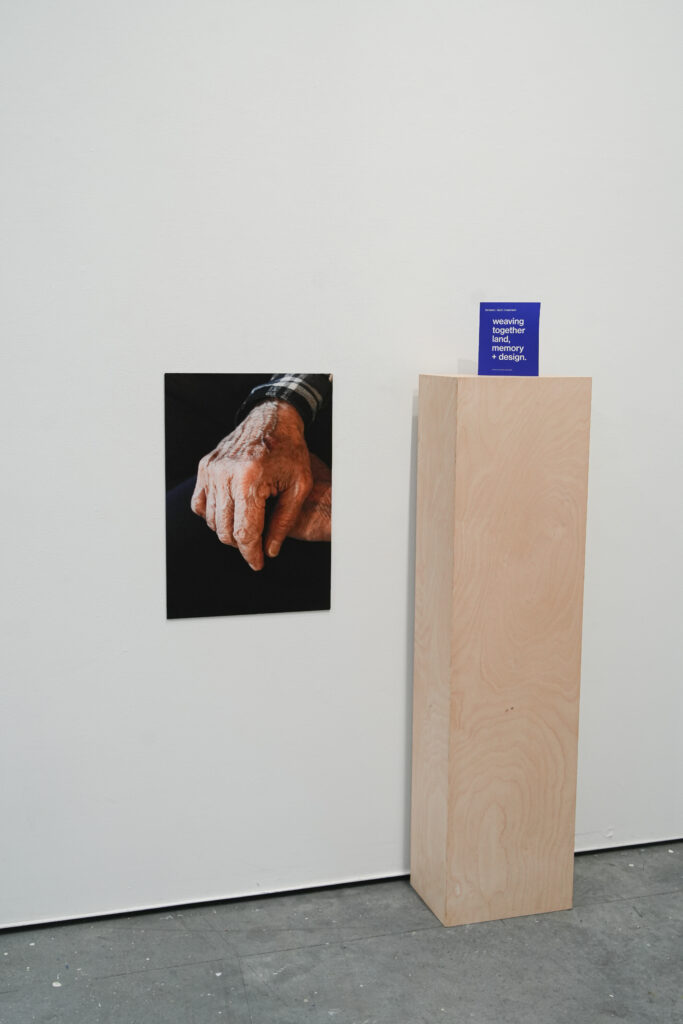
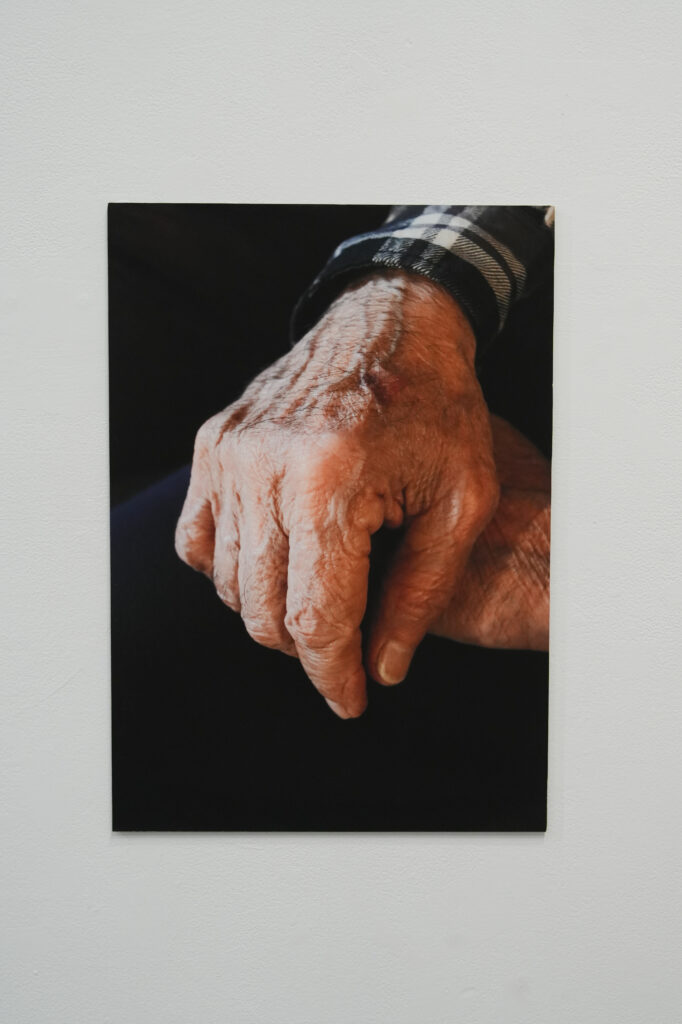
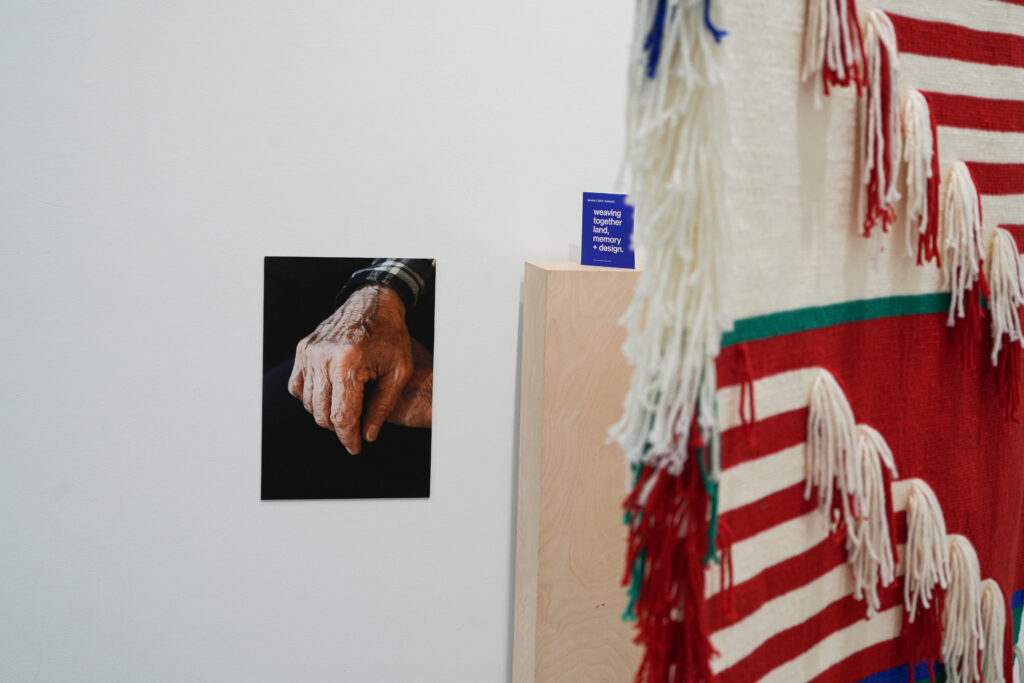
Pigment print on archival paper
20 x 14 in | 2026
“You don’t begin with love,” Mr. Tehrani said. “You begin with light.” A painting cannot sit in direct sun. Oil will crack. Color will fade. Years of work can disappear if the room is too warm, too dry, too careless. “Care is not emotion,” he told me. “It is condition.” If the air harms the work, you change the air. If you cannot, you move the painting. Protection is adjustment. He paused, then added, “Presence does the same thing.” A friend walking into a room can collapse twenty years. A vase on a shelf in Vancouver can return him to Isfahan. A painting holds more than pigment. It holds time. But migration changes the atmosphere around a person. Clothing becomes negotiation. What feels natural in one place can feel exposed in another. “You harmonize,” he said. “You blend.” And in that blending, you decide which parts of yourself can remain visible.
Taken during conversations that unfolded in the homes of Persian immigrant elders who have long been part of my life, this image emerges from time spent together rather than moments extracted, where tea is poured, food is shared, stories are carried, and silences are held. The hands rest, but they are not still; they hold migration, memory, endurance, and the quiet labour of care. These elders are not participants recruited through institutional channels. They are people I have known since my earliest years in Canada, friends who became family far from home. Over time, we have celebrated births, mourned losses, gathered around tables, and carried one another through transitions of displacement and belonging. The conversations did not begin as research. They began through relationship, through years of trust, hospitality, and return. In these homes, hosting is not peripheral but a cultural expression of care, where to be welcomed into a space is to be folded into intimacy and responsibility. Presence here is not simply being there, but an attunement to what surrounds us, a shaping of conditions so something fragile may endure.
This relational foundation shaped the methodology itself. In these gatherings, conversation is never separate from feeling. When grief surfaced, we did not isolate it from the exchange or treat emotion as interruption. We stayed with it. Story and sorrow moved together, woven through gesture, pause, and the space between people. Navigating institutional research ethics within this context required translation between two systems of care. The formal consent process, while necessary, initially felt misaligned with the immediacy of trust already present between us. Rather than entering homes through paperwork, I entered first through relationship, as I always had. Research unfolded through conversation, and written reflections were later shared so participants could review, revise, and decide whether they wished to consent afterward. Consent became iterative rather than transactional. In one system, protection is secured through forms and signatures; in the other, through reciprocity, honour, and presence. My task was not to choose one over the other, but to move between them with integrity. Home, in this research, is not singular. Canada has become a lived home through time, work, and community, while Iran remains origin, ancestry, and unfinished narrative. The work continues across both.
A painting cracks
if heat stays too long.
Color fades in harsh light.
Care is placement.
Shade.
Air.
A friend enters
and twenty years return.
A vase opens Isfahan
like a window.
Her mother’s dress left behind,
and her voice breaks.
Cloth can hold a body
after the body is gone.
Lay the carpets open.
Let them breathe.
Presence is air.
Memory needs circulation.
Home is where
what you love
can breathe.
Research + Thesis
This work is not meant to be read for answers, but for relation.
00–note to reader
It unfolds through return, pause, and attention. I invite you to move through it in dialogue, to linger where something resists clarity, and to notice what stays with you.
Poetry is not decoration in this work. It is method. It is how I think through what resists structure. At times, poetry articulates what analysis cannot hold. It slows language. It keeps experience layered. The poem that follows is not an interruption. It is another register of thinking.
tension | كشش | keshesh does not seek closure. It remains open, evolving, and unfinished by design. What follows is not a conclusion, but a continuation.
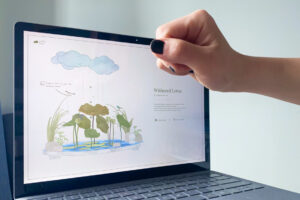
A digital version of tension | کشش | keshesh, submitted to the Emily Carr University of Art + Design thesis library.
Explore the full research-creation document through writing, weaving, image-making, and reflection.
01–preface
I am shaped by what entered unannounced: distance, memory, and the in-between of what was left behind and what had to be learned. I am shaped, and at times undone. Undone by leaving, by learning, by the quiet work of becoming someone else without guarantees. I am shaped by the courage of my parents, who carried us across an ocean long before I understood what it meant to begin again without certainty. I am shaped by land, this land that received me before I learned how to receive myself. And I am shaped by tension: the threads I pull, and the threads that pull back.
02–tension as methodology
This work begins where the threads first tighten. The voice moves between memory, theory, and material practice, tracing the conditions from which the inquiry emerges. Tension appears here in more than one form: in fibre held on a loom, in migration across geographies, and in the ethical questions that guide design practice. Read slowly. The questions that follow do not ask for quick answers. They open the path the rest of the work will walk.
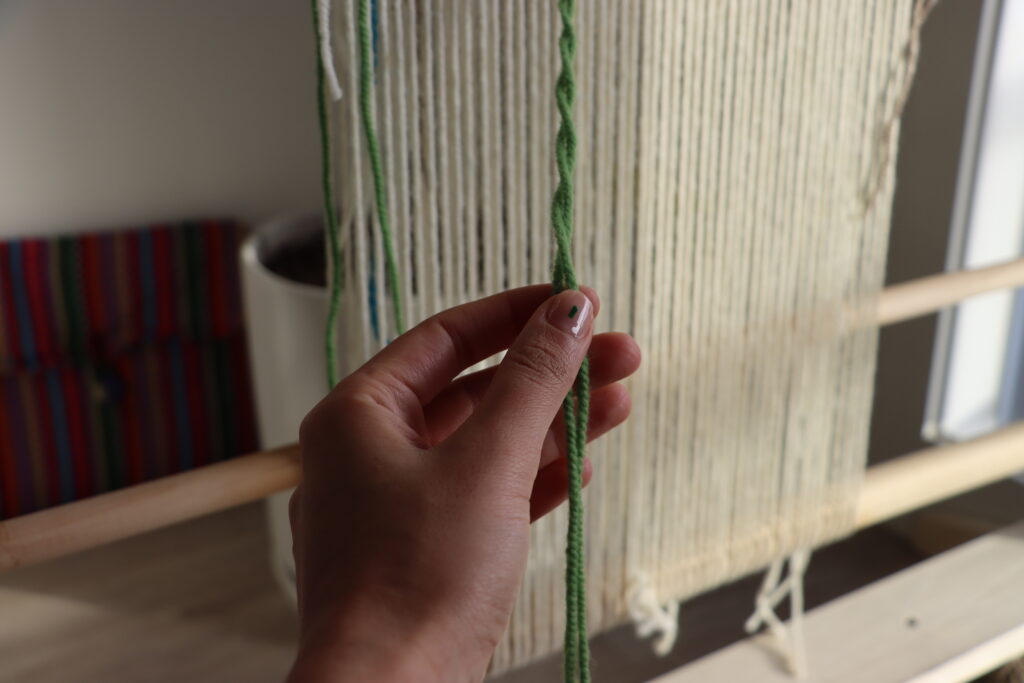
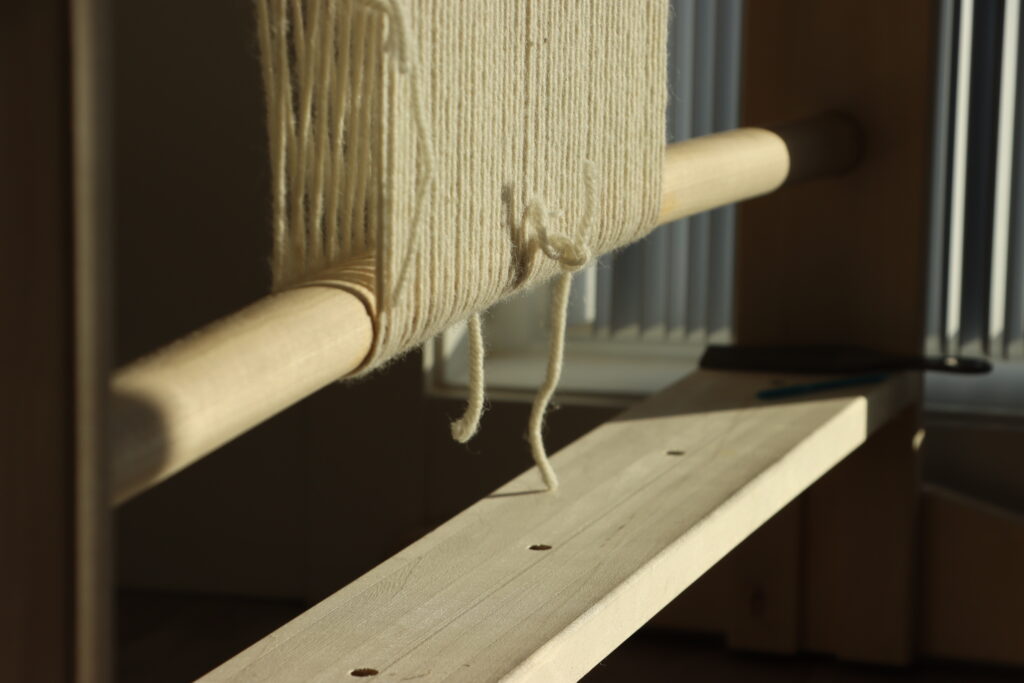
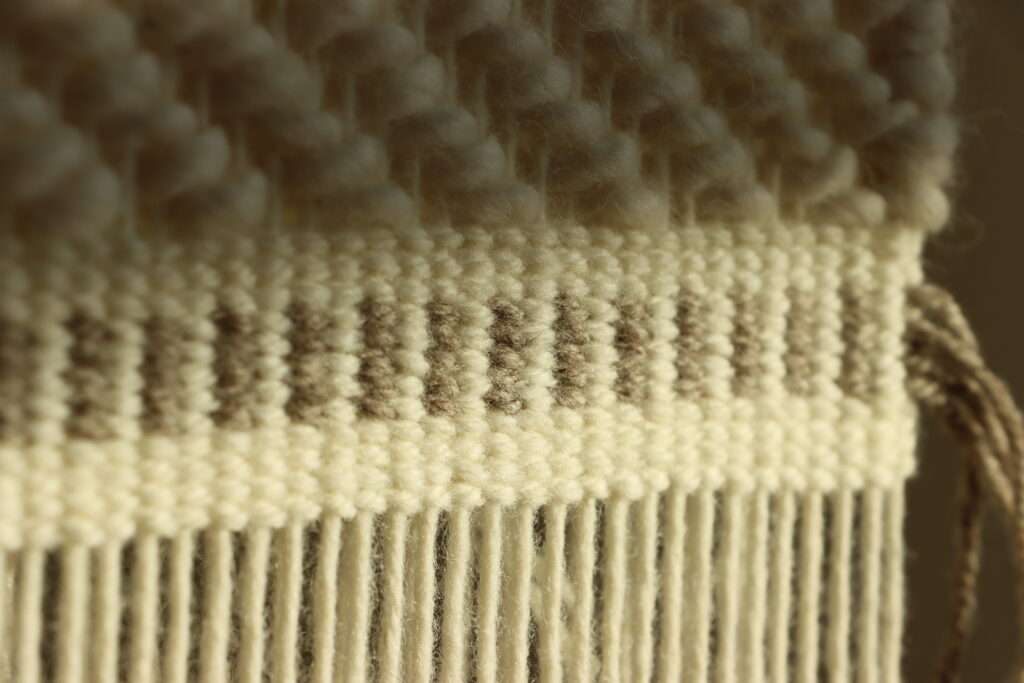
In weaving, tension is foundational. The warp must be held with precision, neither slack nor overstrained, for cloth to take shape. This balance demands constant attentiveness to material response. When tension is uneven, the work distorts; when ignored, structure fails. Tension is not resistance, but guidance.
Coast Salish weaving teachings emphasize this relational understanding. Sḵwx̱wú7mesh and Tulalip hereditary Chief, master weaver, and scholar Chepximiya Siyam’ Chief Dr. Janice George, whose work centers on the revitalization of Coast Salish wool weaving traditions, explains that in Salish Blankets that weaving is “a way of life, not just a way of making,” requiring attentiveness to material, land, and lineage (Tepper, George, Joseph, 2017, p. 156). Within this framework, tension is not a flaw to correct, but a condition to be continuously tended.
I carry this understanding into my design practice and lived experience. Tension appears across displacement and diasporic identity, between inherited knowledge and adaptation, memory and present conditions, responsibility and desire. I remain with tension as a site of learning that sharpens perception and resists simplification.
Design shifts from solving toward accountability to relation. I was trained within corporate and fast fashion design systems that value clarity, speed, and resolution, where tension is treated as conflict to fix and timelines override uncertainty. I now move otherwise. I hold tension and allow contradiction to remain.
To approach tension as generative, I had to slow down. I no longer treat it as a problem to fix, but as the condition through which form and ethical attention emerge. Tension sustains structure and holds difference without collapse. It shapes how I touch materials, listen to stories, and decide what to share. Weaving became the practice through which I live this shift, moving from efficiency toward responsibility. The questions that follow arise from this position.
03–tension as question
In what ways can weaving function as a relational, land-based method for design research that support processes of remembering, becoming, and locating oneself in relation to land, material, and community?
Supporting Research Questions:
How does sustained material tension in weaving reflect and make legible experiences of diaspora, displacement, and cultural in-between-ness?
In what ways can weaving operate as a form of governance, care, and ethical responsibility rather than solely as craft or production?
How do material practices such as weaving and walking enable embodied forms of knowledge that resist extraction-based models of design research?
How can participatory engagement with elders and their garment stories extend material culture beyond objects, positioning it as a living, relational archive?
04–ethical ground and scope
My work began in retail and apparel design in Vancouver, where I learned that design operates within material systems and carries consequence. Industry sharpened rigor and precision but left little room for reflection. While working professionally as a communication designer and completing my first year of the Master of Design, I felt the distance between production cycles and the pace my body needed.
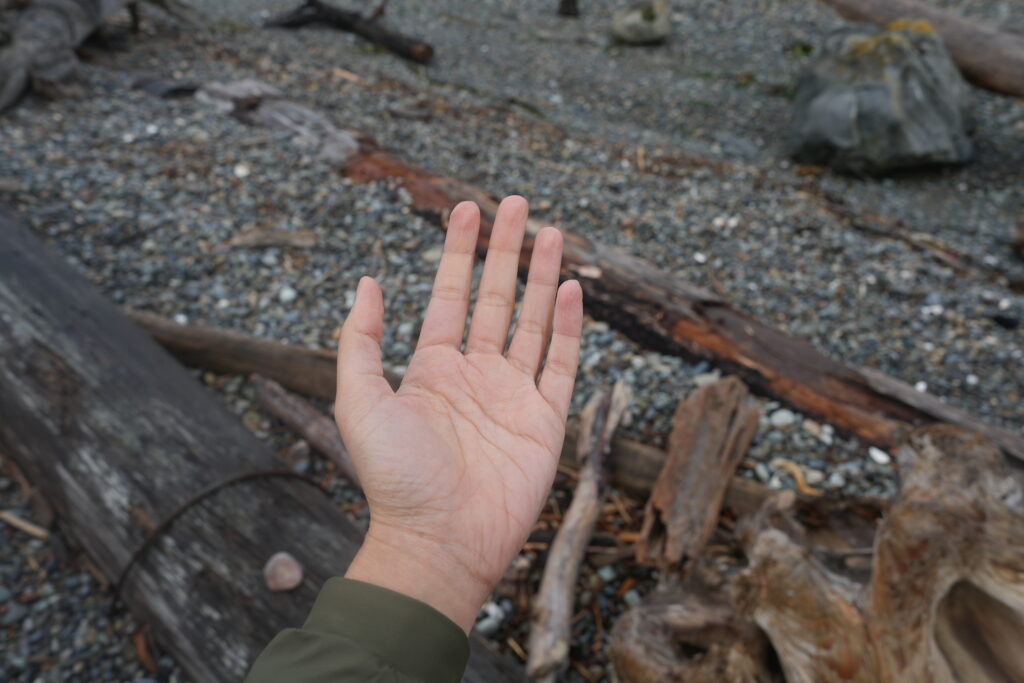
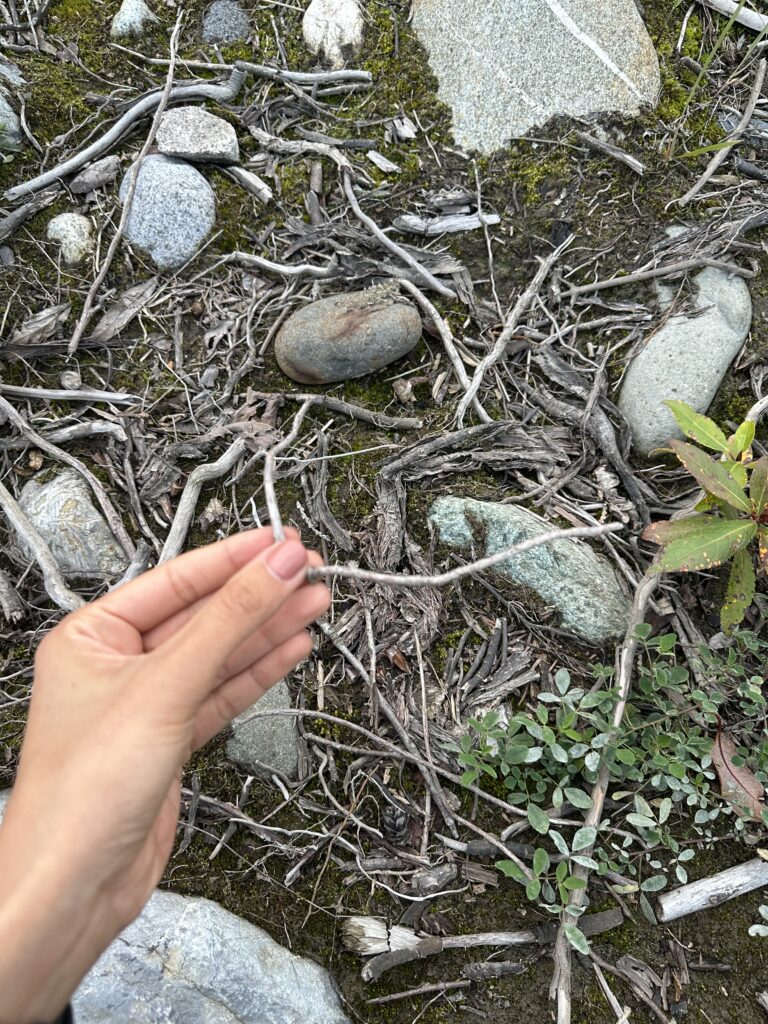
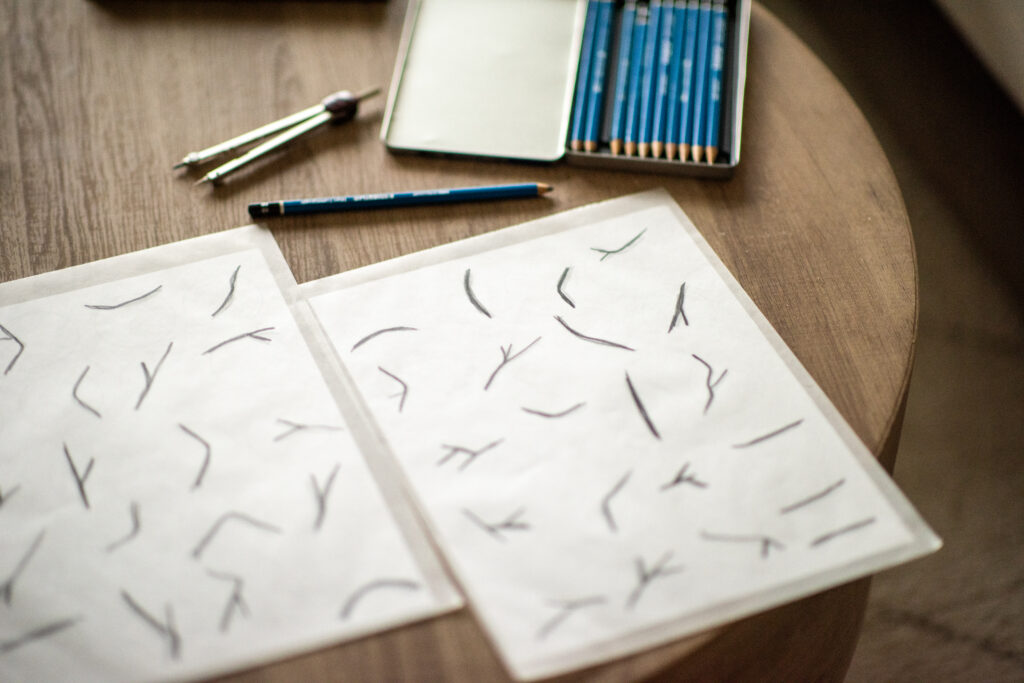
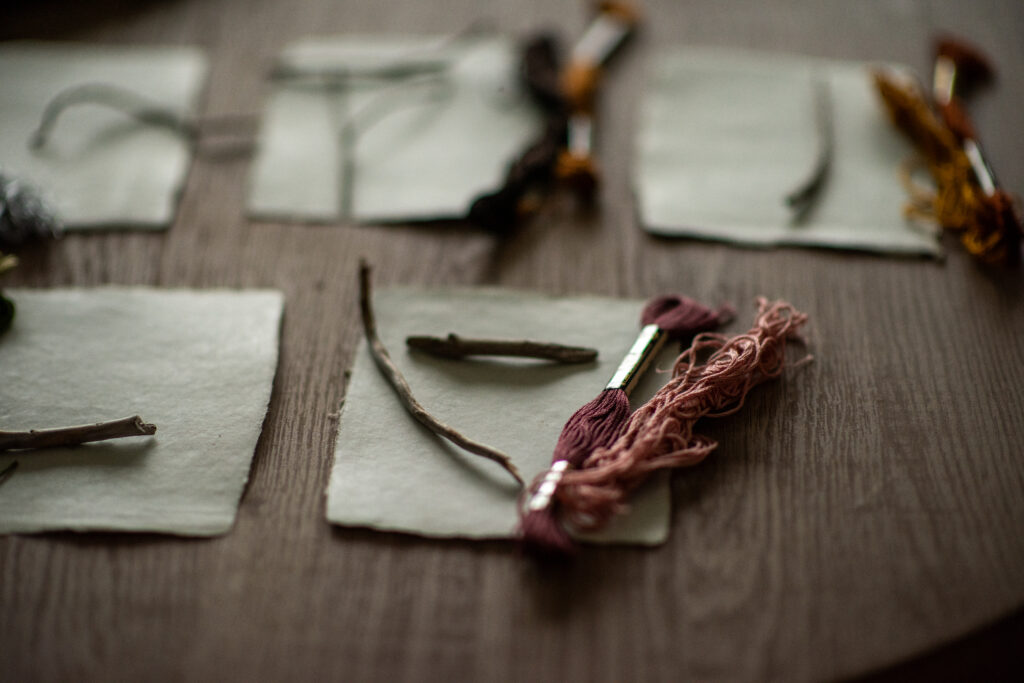
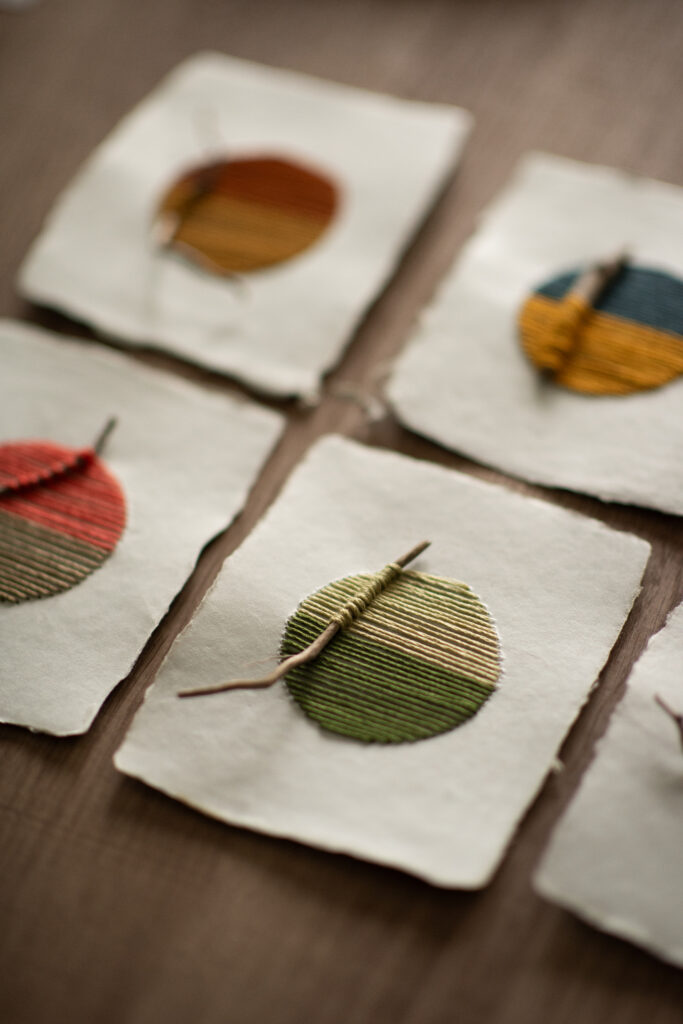
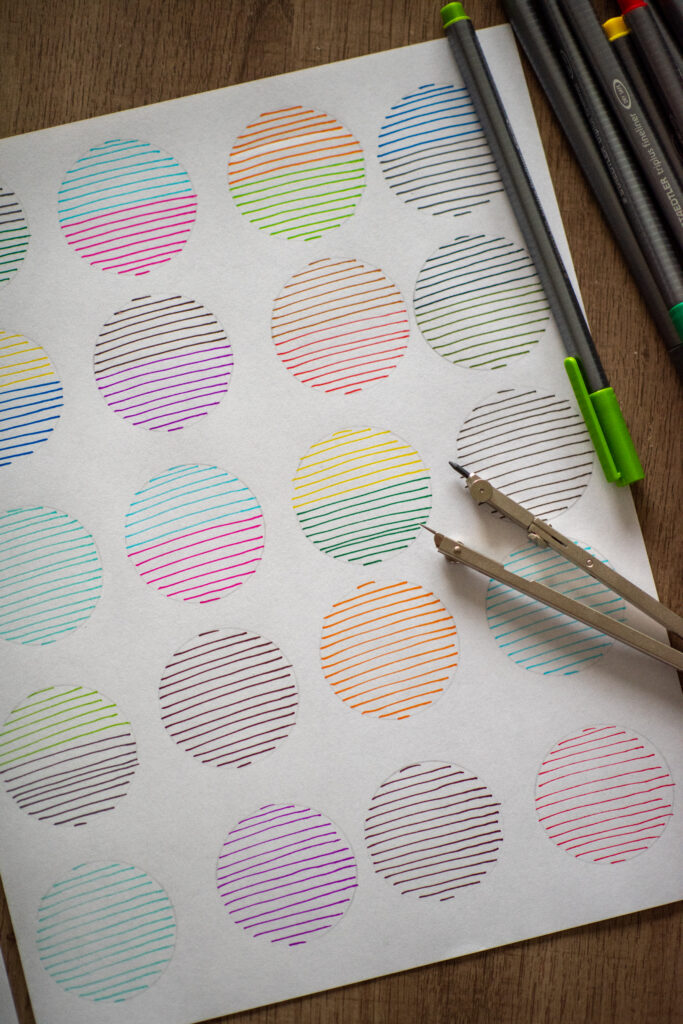
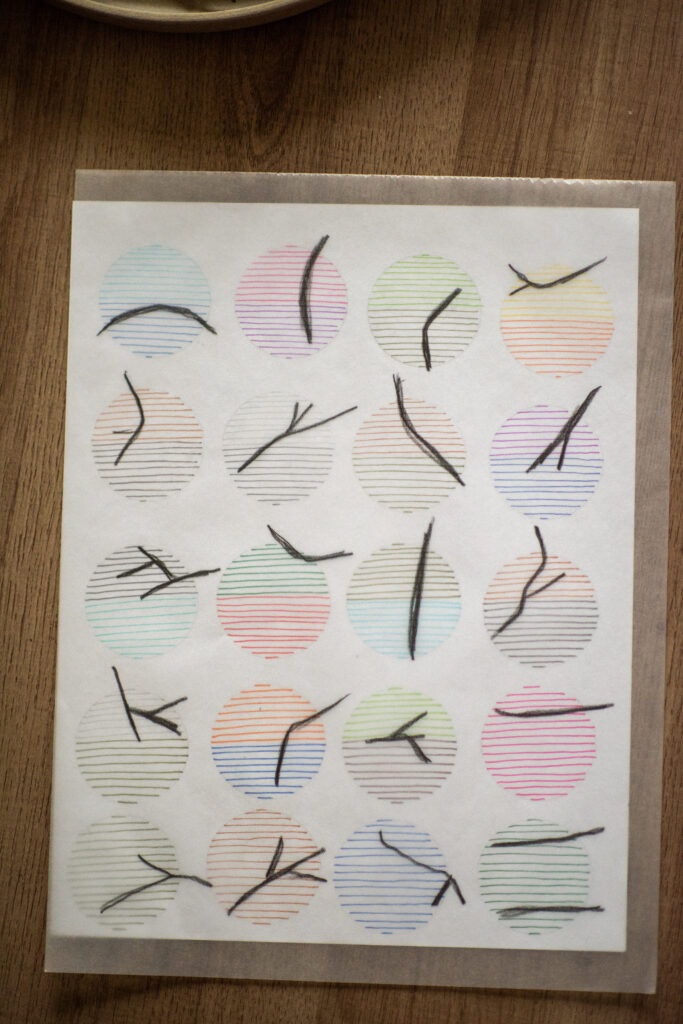
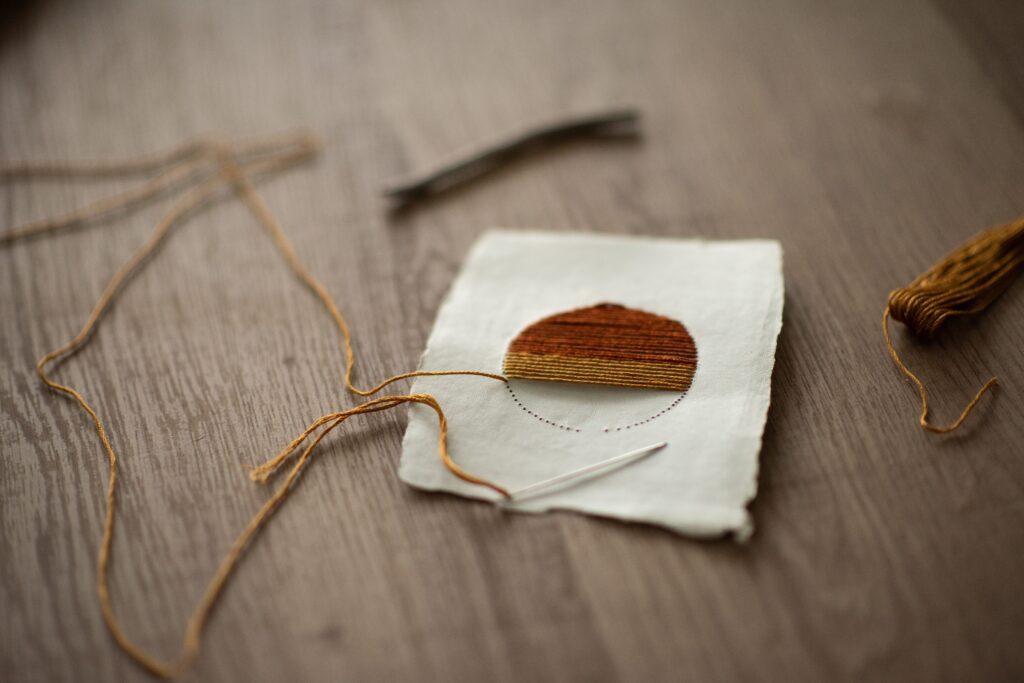
In that distance, I turned to what was near. During a solo overnight backpacking trip to Joffre Lakes, I carried branches back from the alpine terrain. Back home, I began embroidering those fragments onto handmade paper. Thread, wood, and pulp met slowly by hand. These studies were not assigned deliverables. They were quiet geometries of return, touch, and becoming.
Looking back, this work echoes what sustainability scholar and design researcher Kate Fletcher articulates in Earth Logic (2019): that design must shift from extraction and speed toward ecological awareness and relational responsibility. Working with gathered branches, thread, and handmade paper became a way of listening to material rather than directing it. Form emerged through limitation, proximity, and care. Before I had language for tension as methodology, I was already practicing an earth-centered logic, one that understands making as participation within living systems rather than production outside them (Fletcher, Tham, 2019).
The work remains intentionally situated. Rather than proposing universal frameworks, I engage practice-based inquiry that foregrounds weaving as method, intergenerational knowledge as insight, and tension as ethical awareness. Research Ethics Board approval and OCAP training shape how I approach consent, participation, and accountability. My position as a communication designer informs both the methods and limits of this work, grounding it in responsiveness to material, community, and place.
05–alpine practice
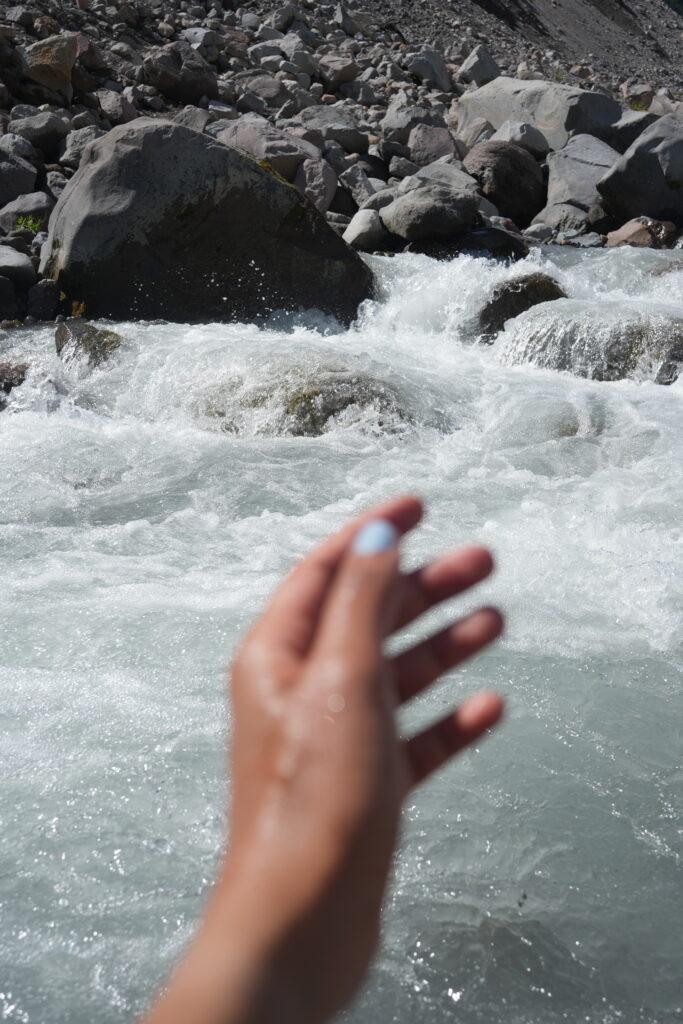
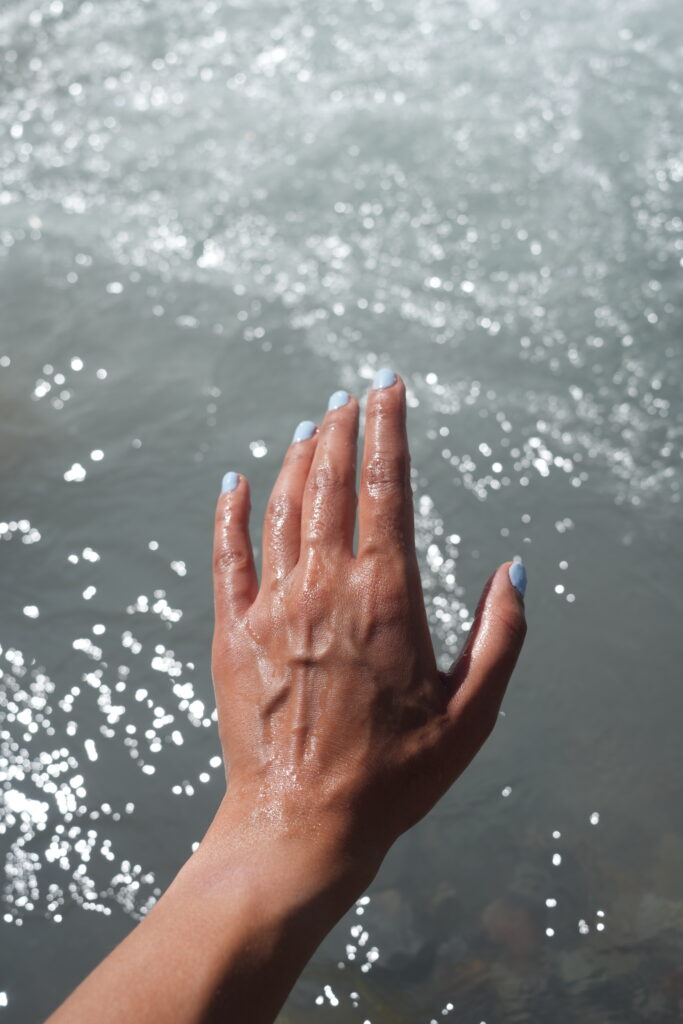
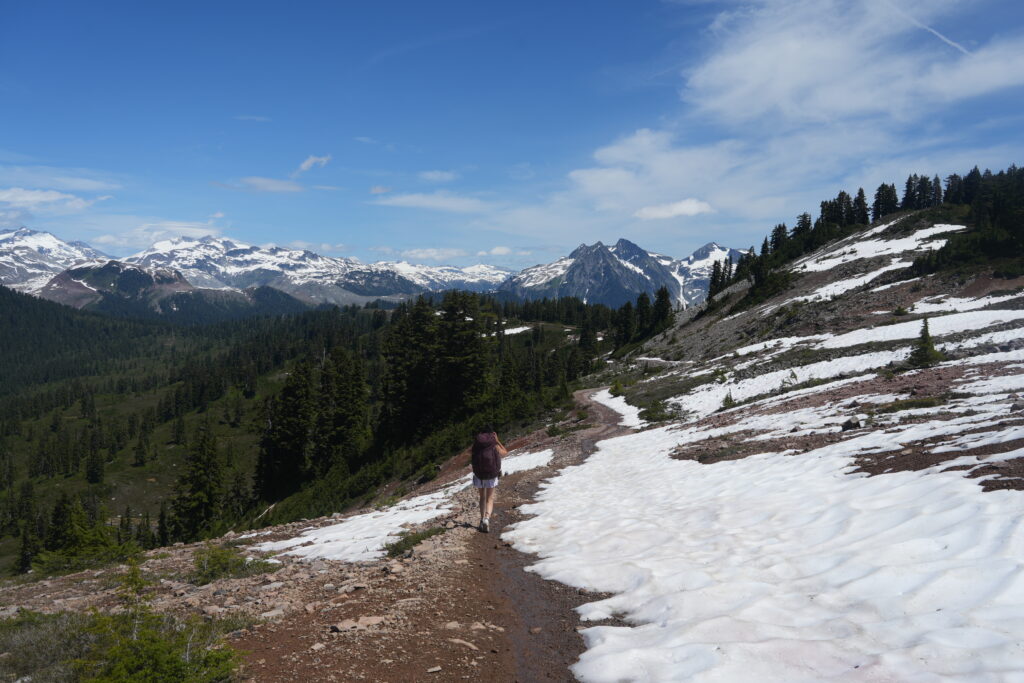
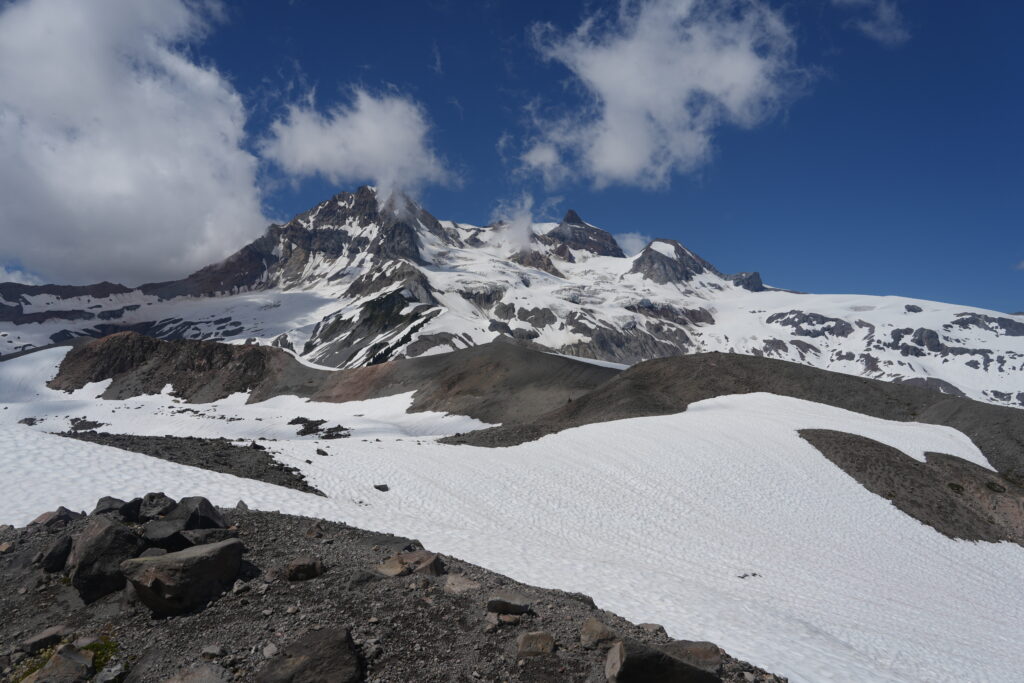
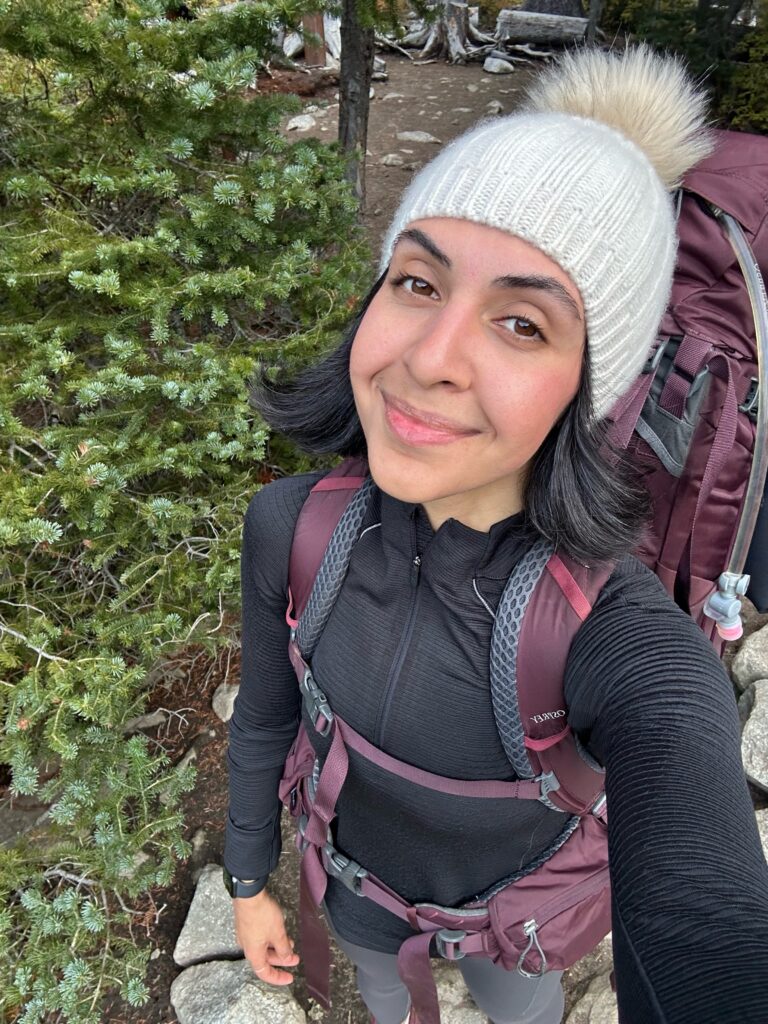
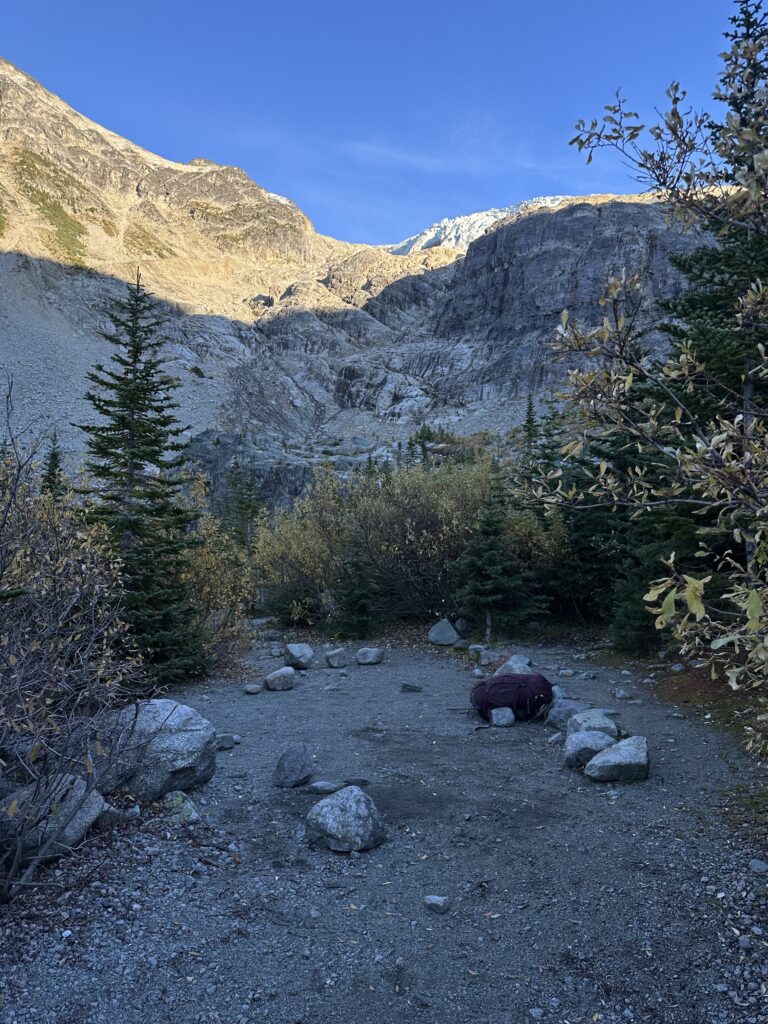
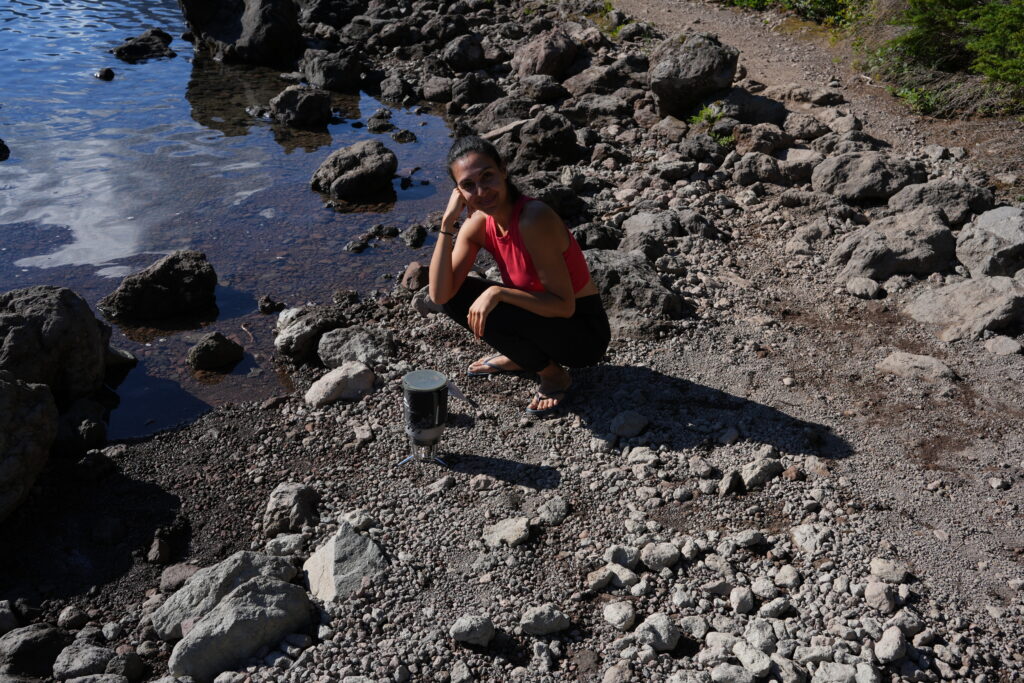
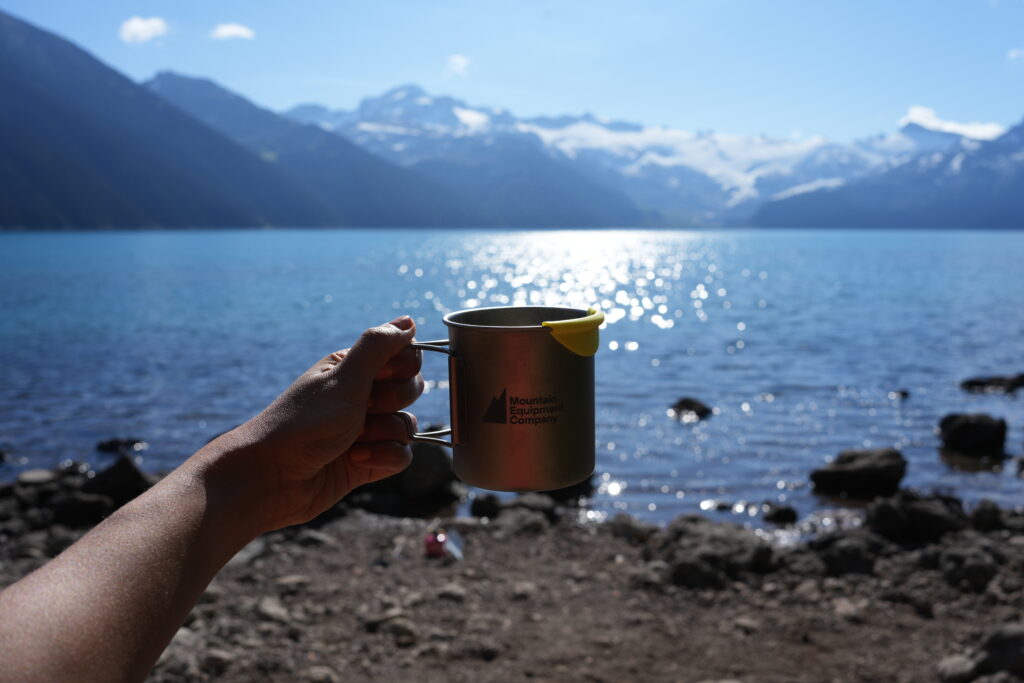
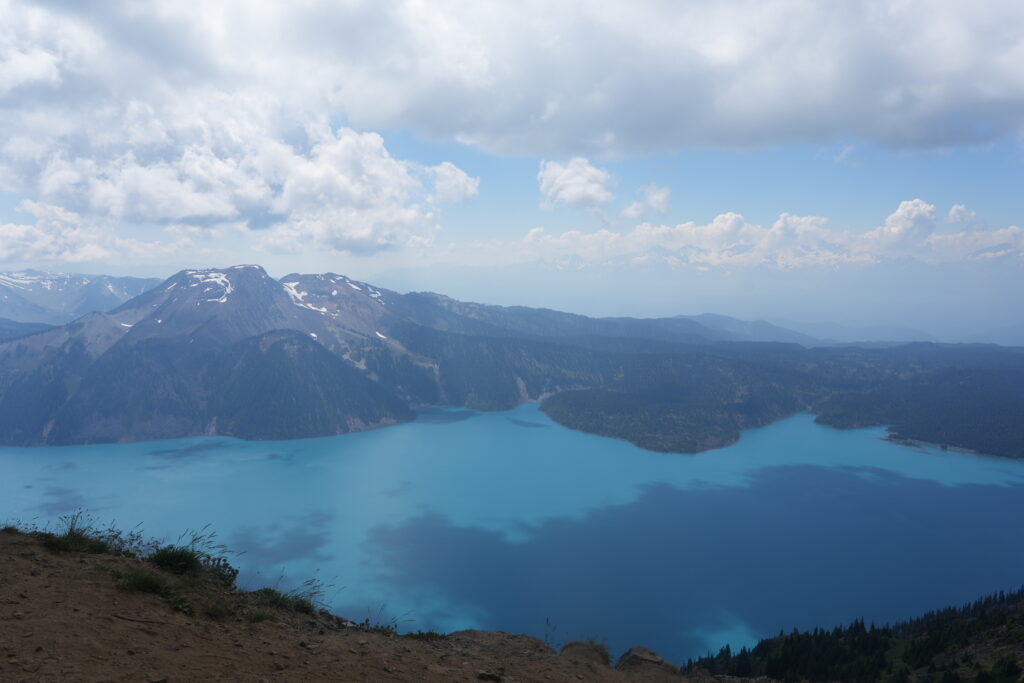
If walking attunes my body to land, weaving lets me carry that attunement into structure. I have spent many nights alone in the alpine, unzipping a small tent at first light, the air sharp and clean against my face. Mornings begin quietly. The hiss of a small stove. Coffee blooming in cold air. Steam rising against a backdrop of rock and glacier. The kind of silence that feels earned.
My body knows this terrain. The weight of a pack settling into hips. The steady rhythm of ascent. The way breath adjusts above tree line. Hiking has shaped me for years without announcement. It taught me pacing, humility, and how to move with slope rather than against it.
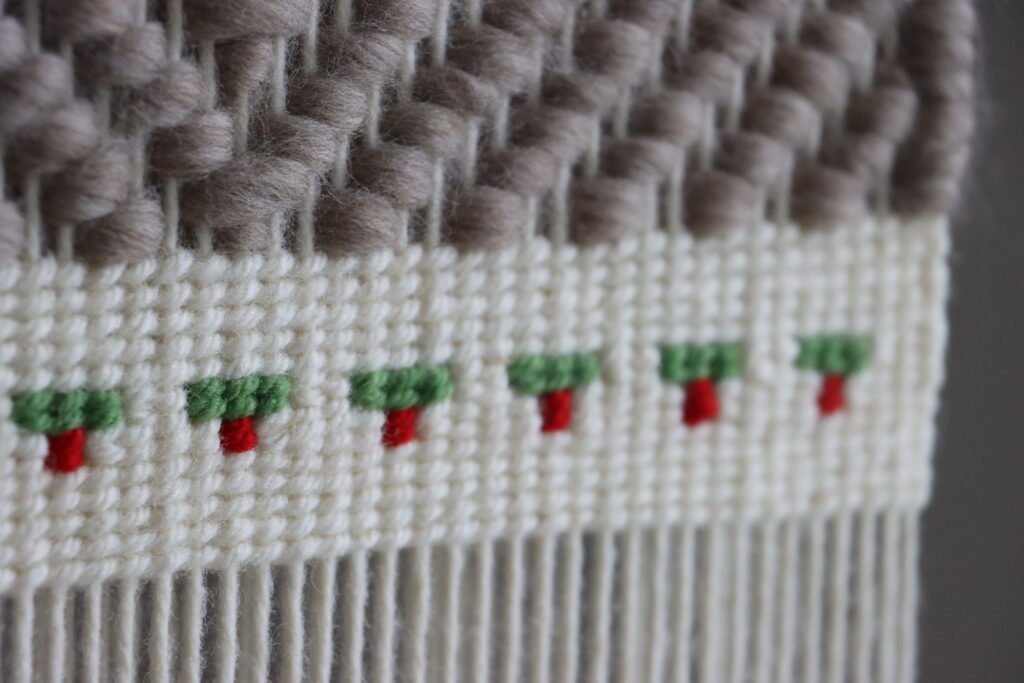
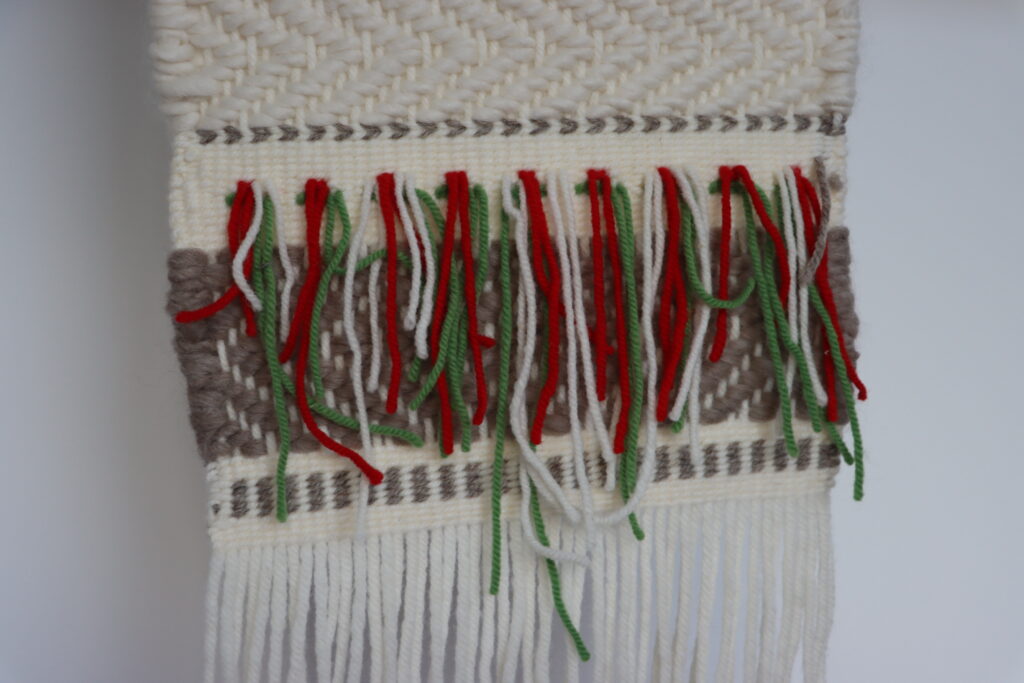
At the loom, that rhythm returns. Fibre crosses fibre like trail across ridge. The diagonal of twill holds incline. The diamond asks for steadiness. Interlacing becomes a way of studying connection and reciprocity through touch. This is not landscape illustration. It is relational record.
The weaving holds crisp mornings, wind against nylon, coffee in a metal cup, the ache of climb, classroom stories, the turning of wool around the rod, the careful cutting of fringe. The mountain is not distant scenery. It rests on the shoulder, close to the spine. Walking and weaving meet here, not as representation, but as participation.
06–walking with the land
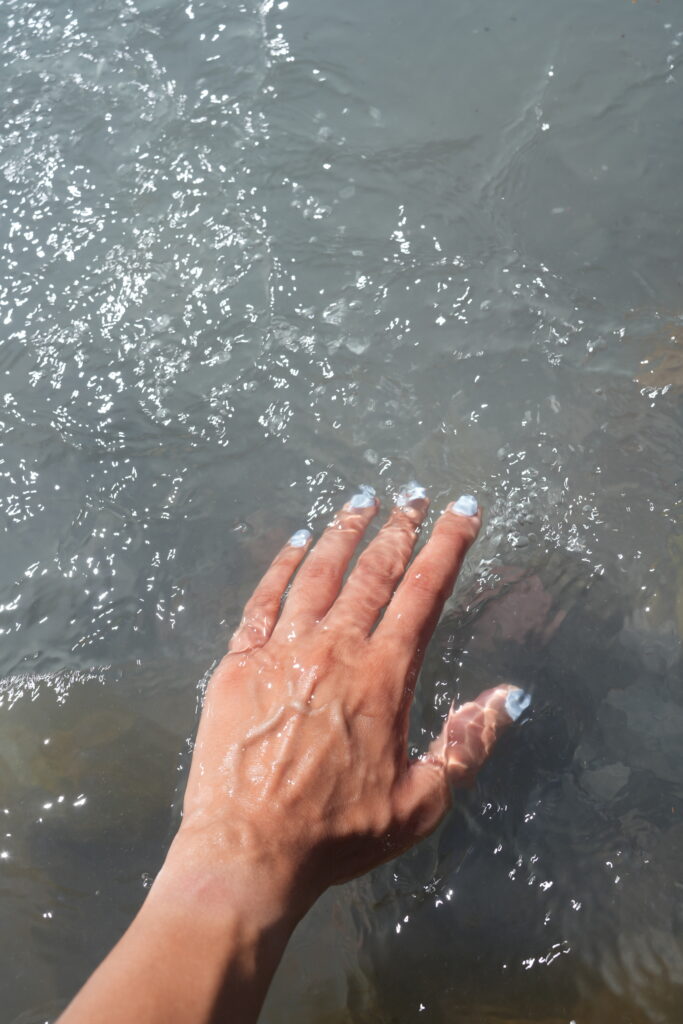
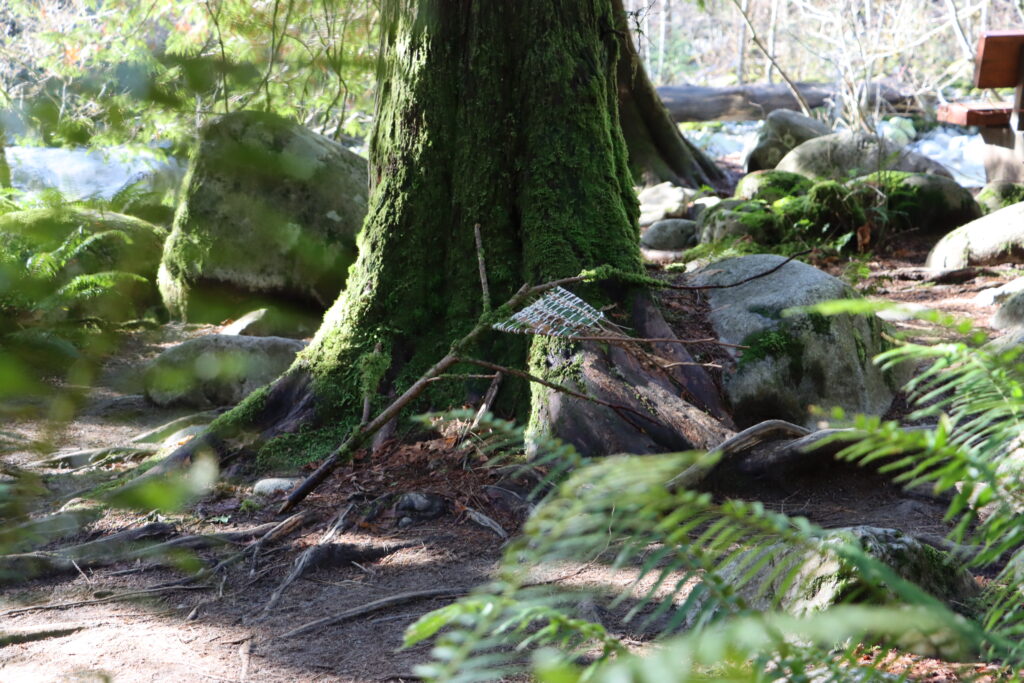
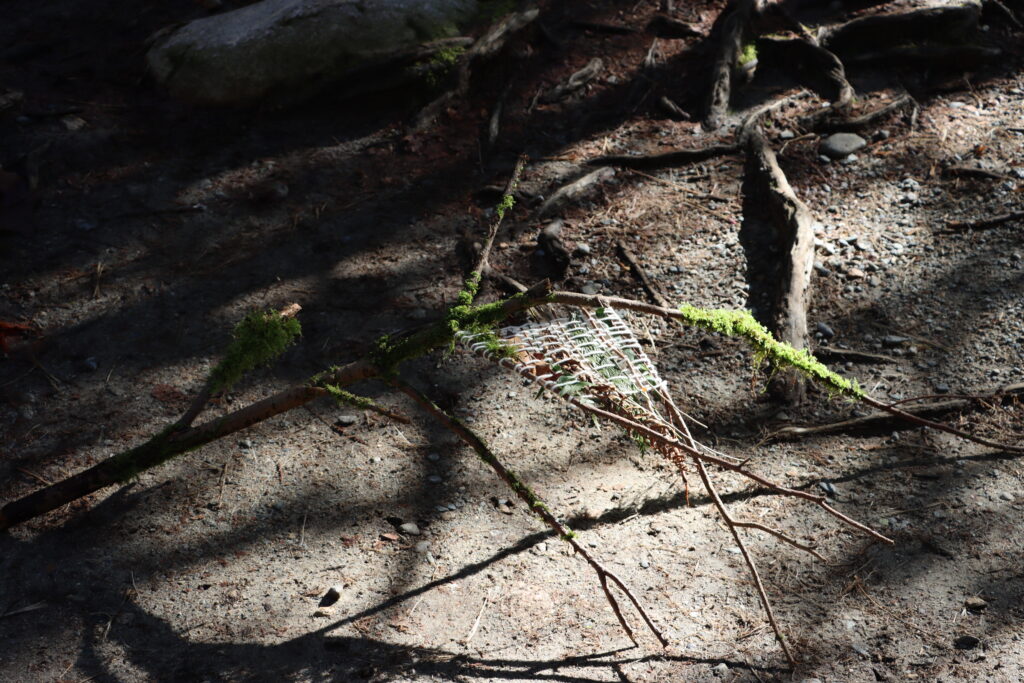
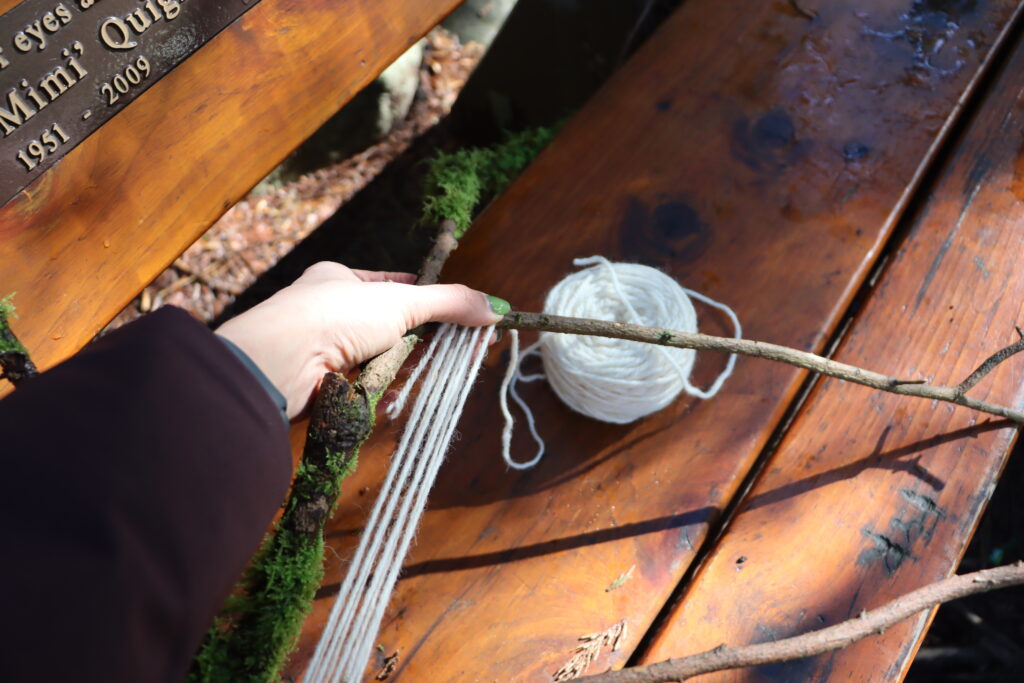
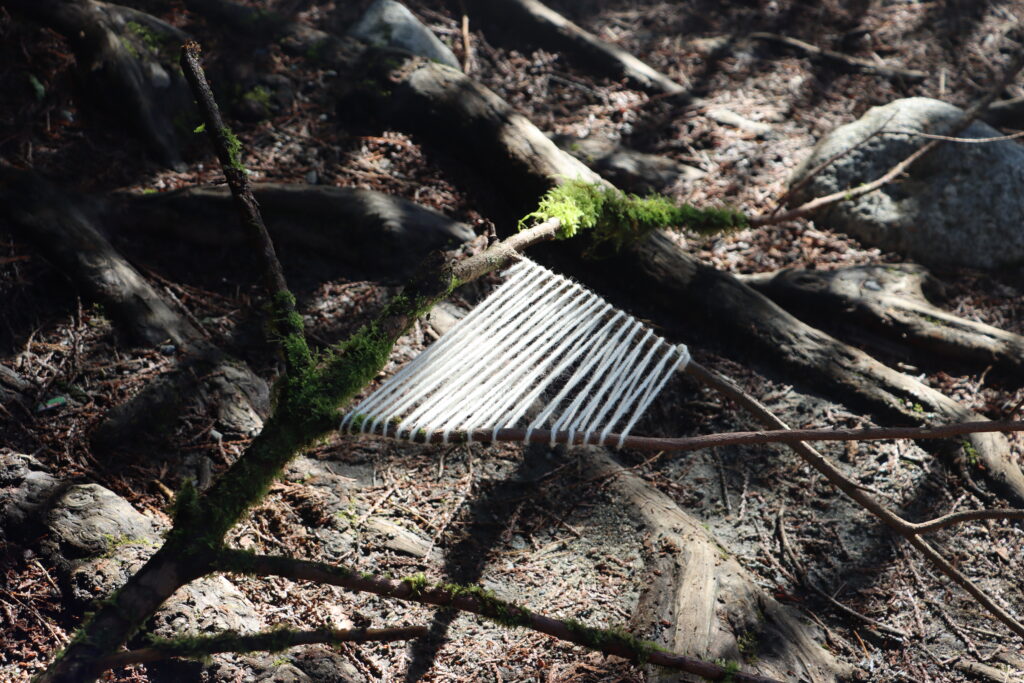
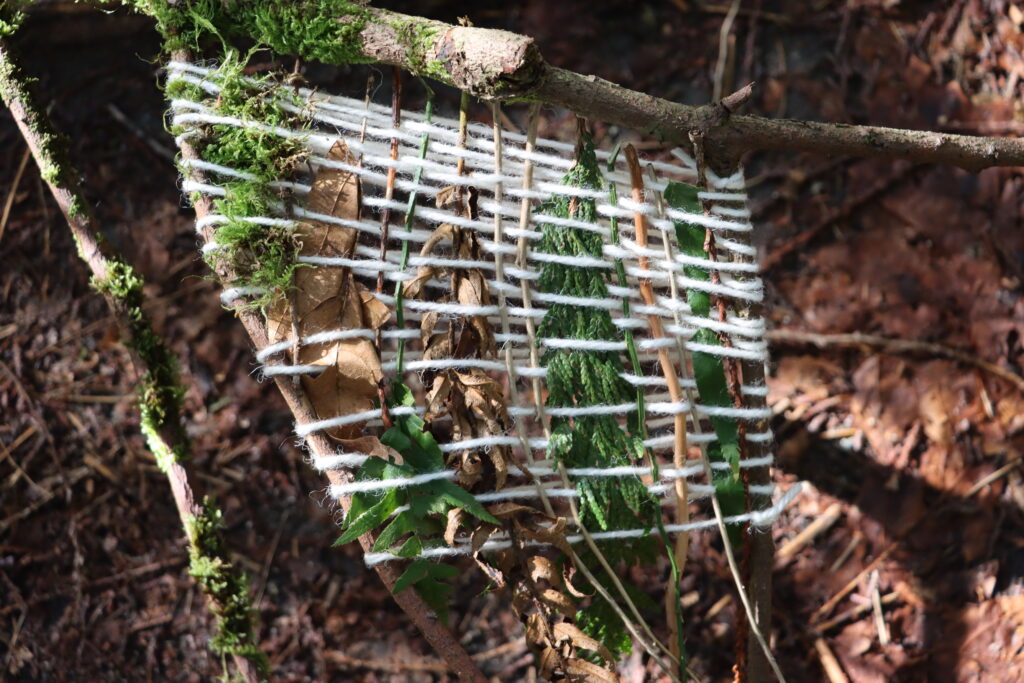
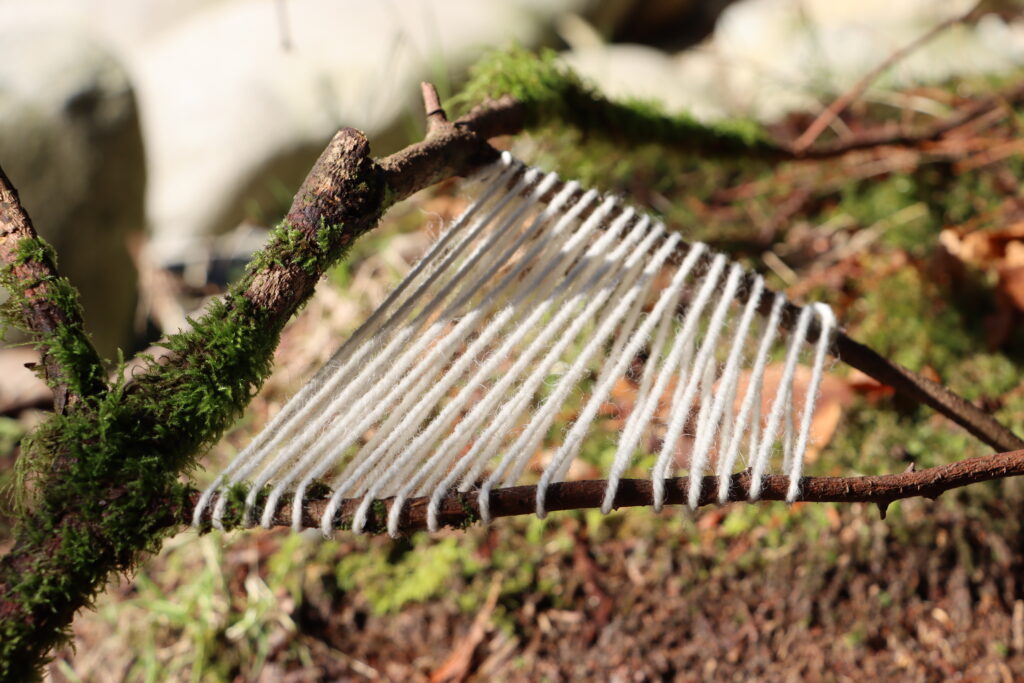
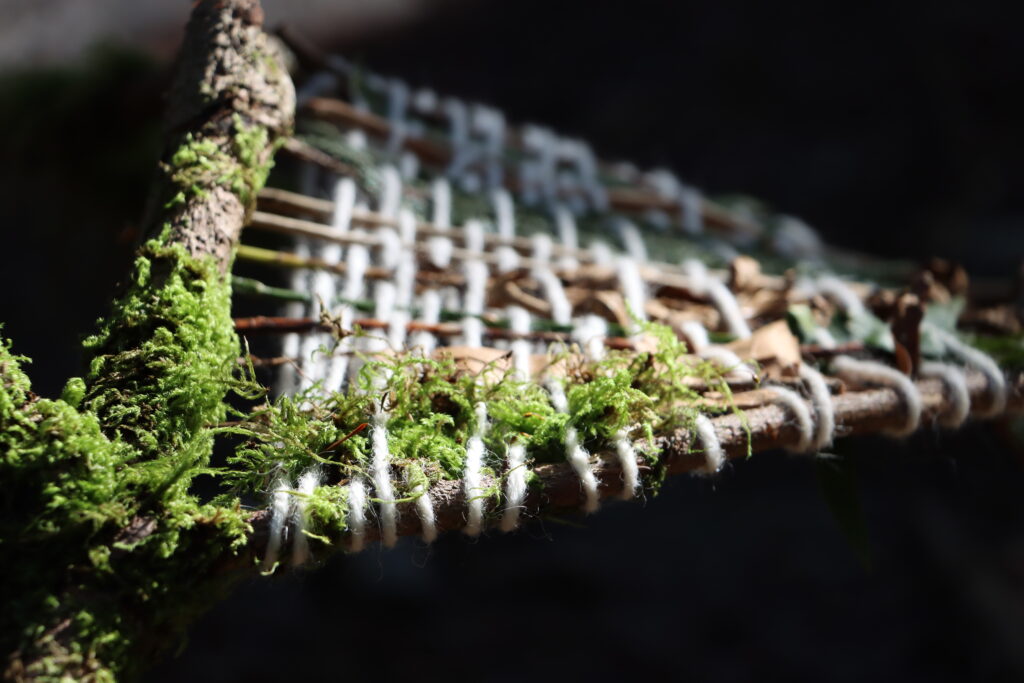
In February 2026, I carried this practice into the forest in Lynn Valley, North Vancouver. During a winter walk beside the river, I gathered only what the ground had already released: fallen branches, small twigs, and moss. Wool thread stretched between two branches became a temporary warp, and the forest offered the rest. After weaving, I placed the piece beside a tree and later moved it closer to the river, watching as water passed beneath it and light shifted across the fibres. The work remained small and temporary, returning quietly to the land that shaped it.
Walking made the structure possible. The pace of the trail, the dampness of soil, the sound of water moving over stone all entered the weave. Nothing was taken that was still living. The forest determined scale, tension, and duration. For a moment, wool, branch, river, and body held a brief relation before the work disappeared back into the landscape.
07–weaving lichen + rock
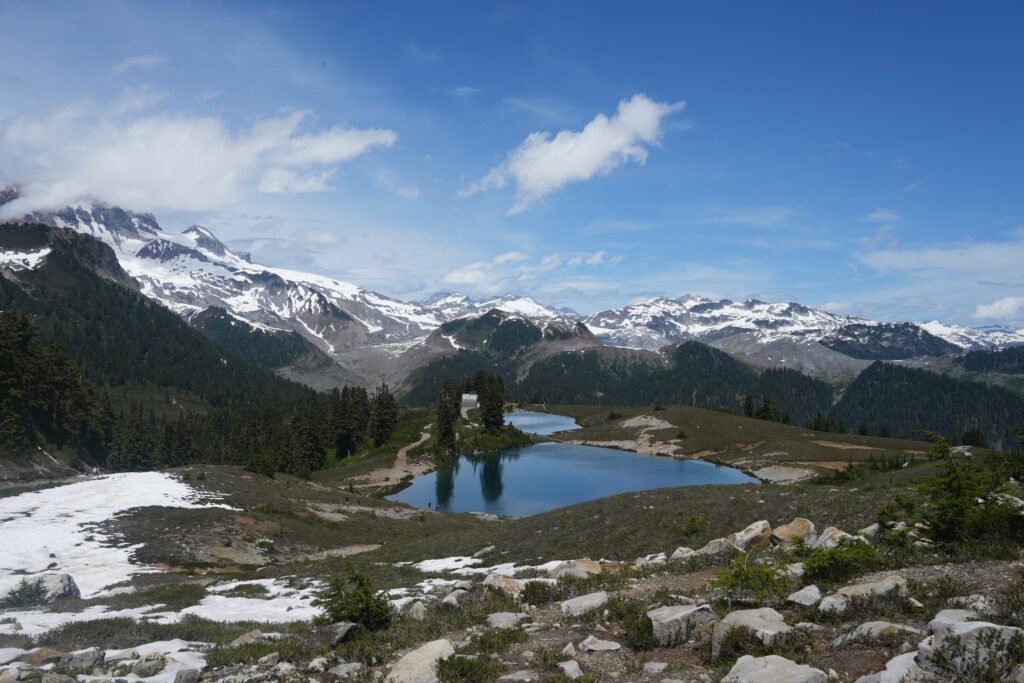
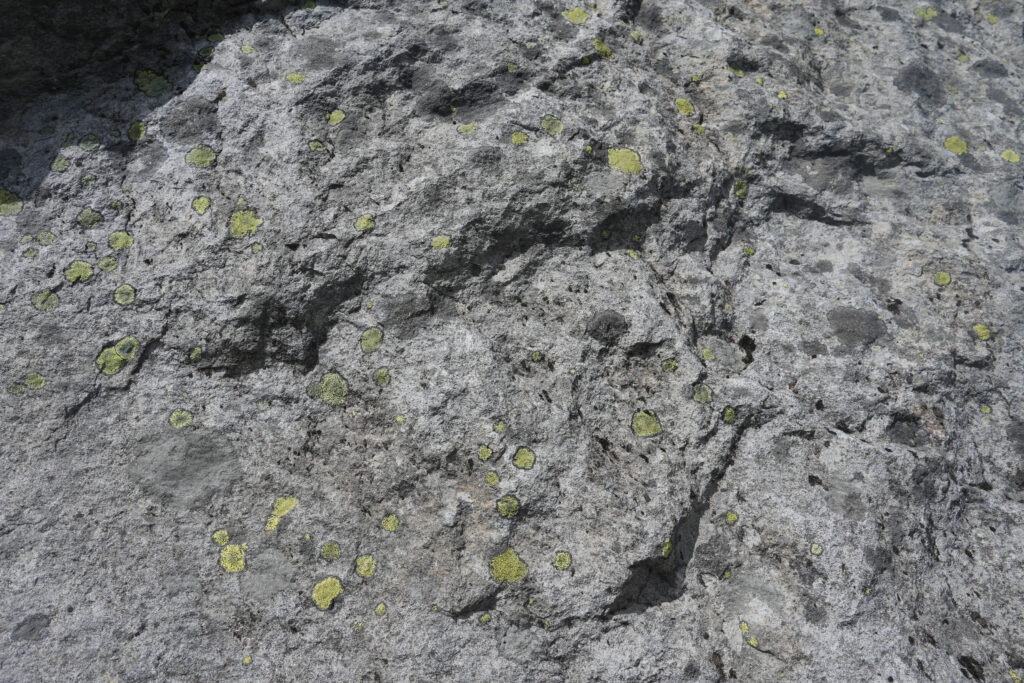
Lichen + Rock began during a hike to Elfin Lakes in the summer of 2025. The ascent was steady. Gravel shifted underfoot. Air cooled as elevation increased. Lichen held moisture against stone. Lichen traced pale constellations across mineral surfaces. The rock I photographed was not monumental. It was textured, quiet, persistent. Green softened grey. Time had inscribed itself slowly.
Back in the studio, that photograph was translated into digital weave structure. Pixel became interlacement. Light and shadow were recalibrated into warp and weft. The loom lifted threads in binary sequence, yet the image retained softness. Even within code, tension had to be managed. The structure had to hold evenly across the field.
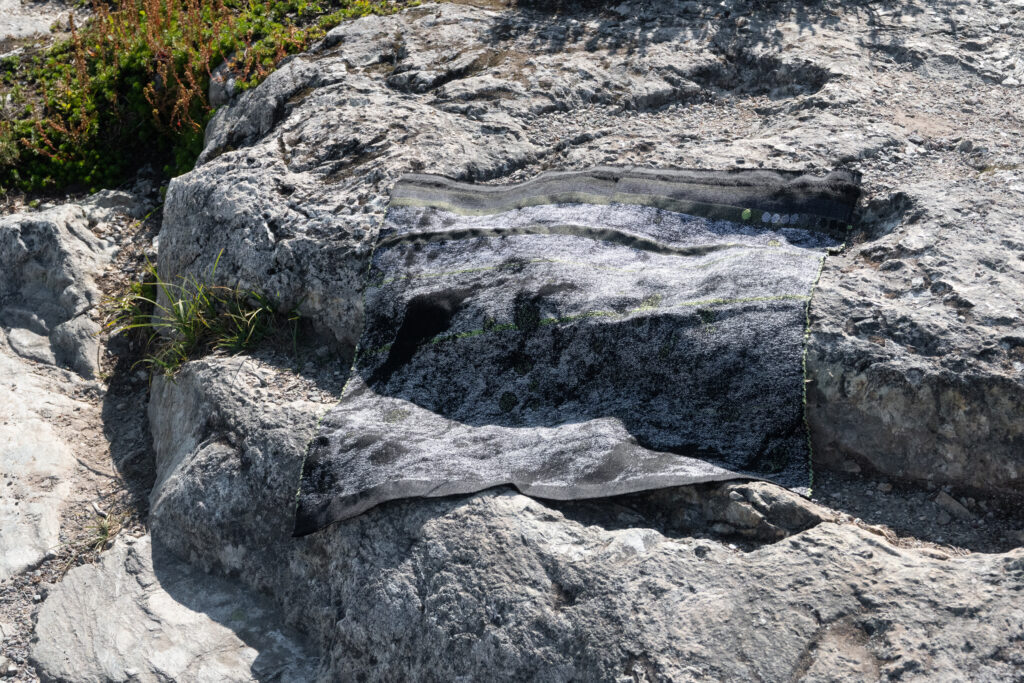
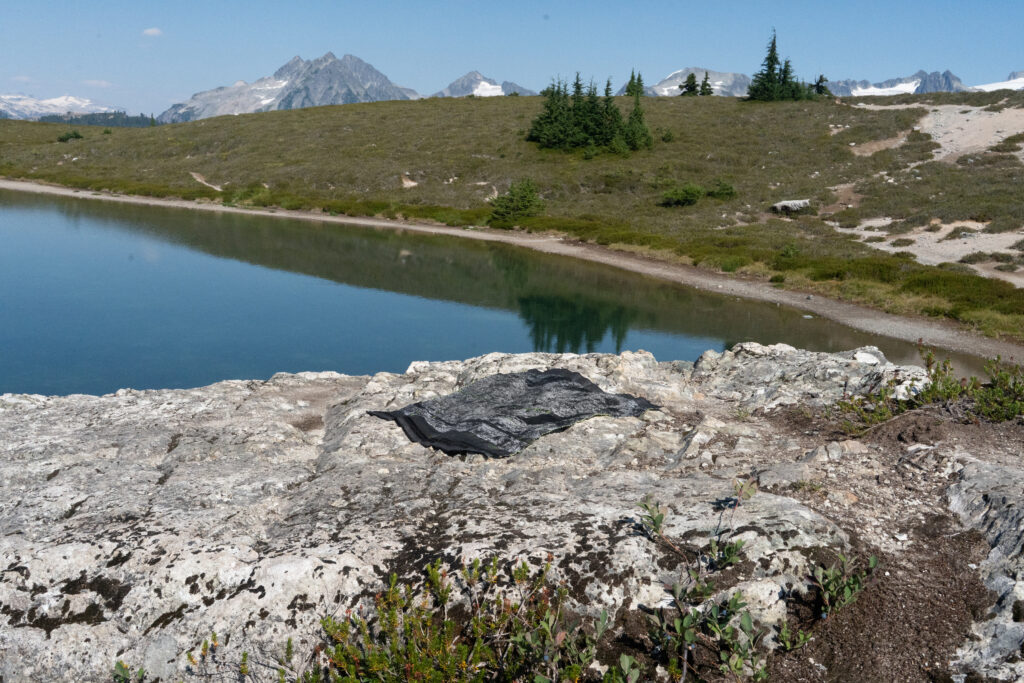
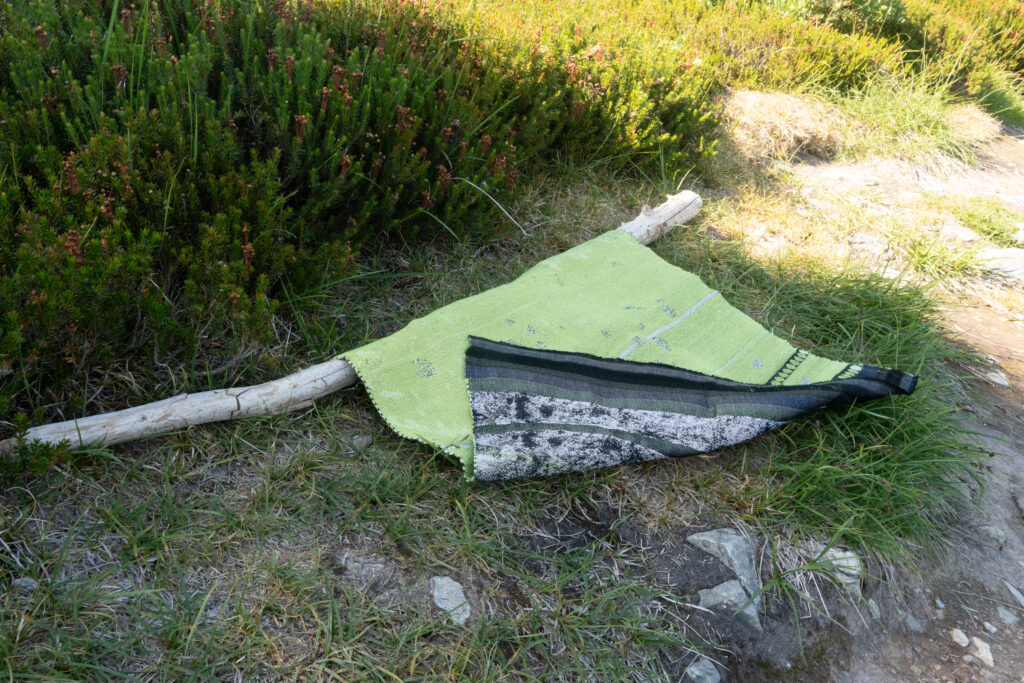
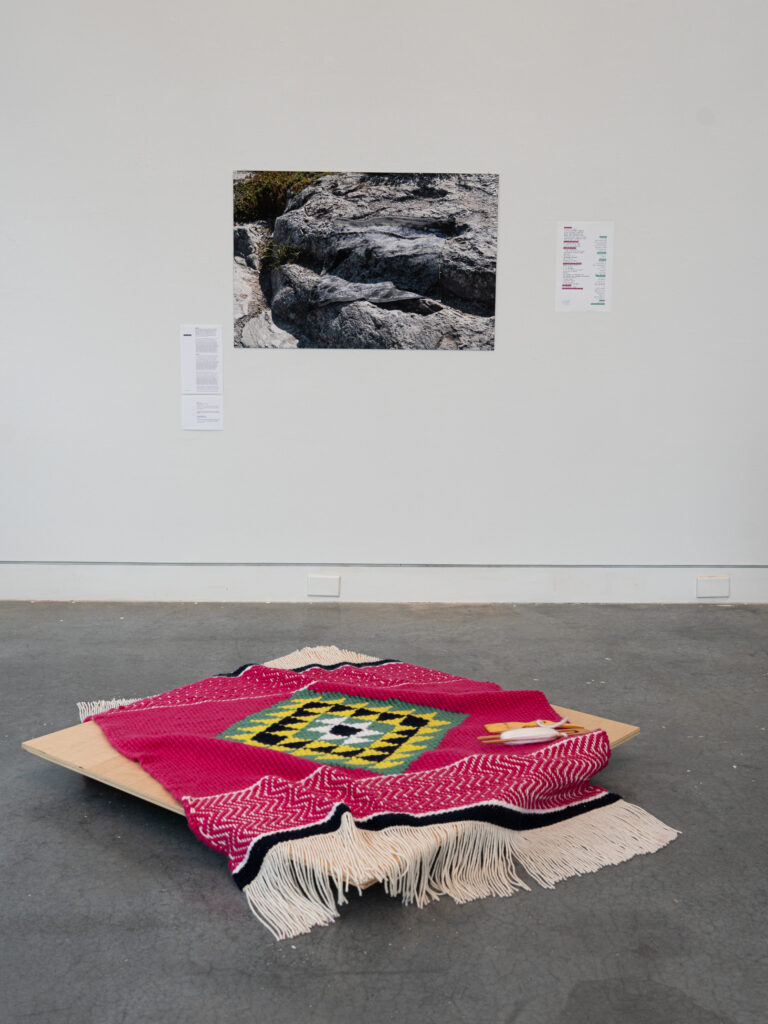
After weaving the piece, I returned to Elfin Lakes and placed the textile onto the same rock from which the image was first taken. The fabric rested lightly against stone. Its woven texture echoed the granular face beneath it. It did not assert itself. It blended. The mountain had offered pattern. The weaving returned presence.
The photograph taken of the woven piece resting on that rock was later printed at large scale through the Digital Output Centre and Media Centre at Emily Carr University of Art + Design. Enlarged, the surface became immersive. The grain of stone and thread expanded into a field the body could enter. That printed photograph was gifted to Keith Doyle, Associate Dean and Associate Professor at Emily Carr University of Art + Design whose research explores collaborative design practices, textiles, and material-based inquiry, and whose encouragement to explore scale reshaped how I understood surface, immersion, and translation across mediums. The work moved from mountain to loom, from loom back to mountain, from mountain to photograph, and from photograph to print. It carried its origin each time.
08–pluriversality & indigenous thought
Pluriversal design informed how I approached difference. Following Escobar (2018), I understand design as world-making rather than neutral problem-solving. Weaving is not a transferable method, but a situated practice rooted in lineage and land.
Indigenous knowledge systems, particularly those rooted in Coast Salish teachings, informed this work not as theoretical frameworks to be synthesized, but as living, place-based ways of knowing grounded in land, story, and relational accountability (Michell, 2005; Salmón, 2000). Knowledge is held within community and shared through responsibility rather than ownership. Learning unfolds through observation, repetition, and relationship rather than abstraction.
This became clear in my apprenticeship with Qʷənat Angela Paul, a Coast Salish weaver and cultural practitioner from the Sḵwx̱wú7mesh and Sts’ailes Nations, whose teachings emphasize attentiveness, patience, and relational responsibility within weaving practice. Much of what I learned came not through explanation, but through watching her hands. I observed how she adjusted warp tension almost imperceptibly, how her body leaned toward the loom at certain moments and withdrew at others, how pauses were as instructive as movement. When I asked questions, responses did not always arrive immediately.
Silence was not dismissal. It was consideration. I learned that waiting was part of the method.
Rather than synthesizing Iranian cultural memory and Coast Salish teachings into a unified framework, I hold these knowledge systems alongside one another. Their coexistence is intentional. Differences are not reconciled; they are maintained through attentiveness and respect. As scholars of Indigenous cosmopolitics remind us, ontological difference cannot be flattened into shared categories without loss.
My approach therefore resists comparison that would instrumentalize either system. Instead, the research practices staying with difference.
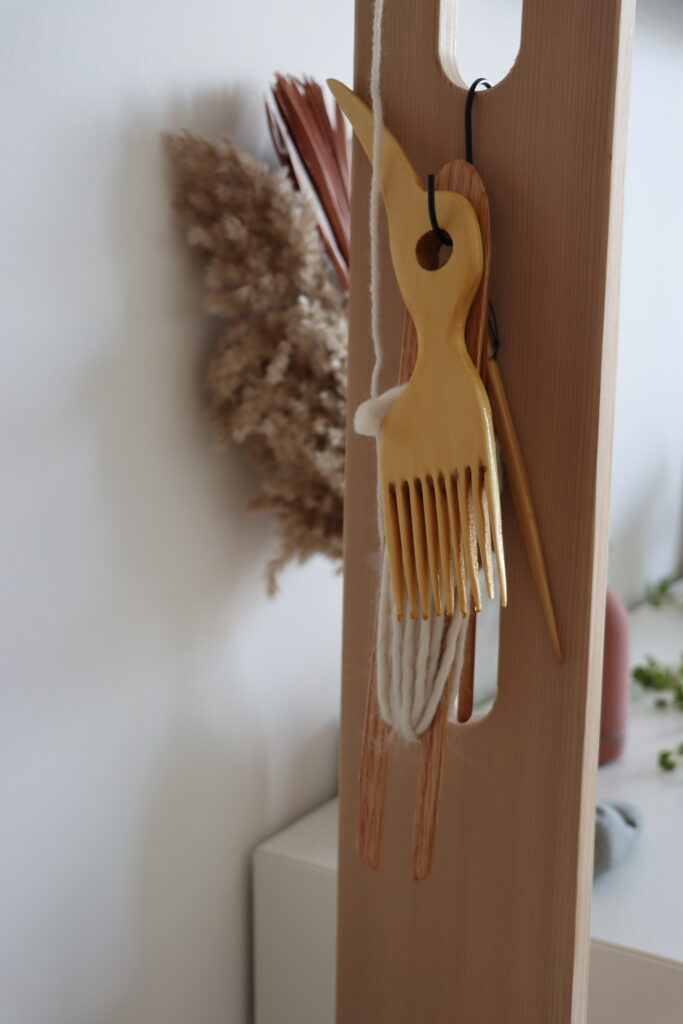
This orientation shaped how I interpreted material and story. The Coast Salish loom was not a neutral tool but a relational structure tied to lineage and territory. The loom I worked on was built by Shane Jackson and offered by Aaron “Splash” Nelson-Moody, situating my learning within relations I did not inherit but was entrusted to enter with care. My first weaving was an offering, not a product; its irregularities marked apprenticeship, and the back of the rug remained visible as evidence of relation. Participatory work with immigrant elders was not data collection. Stories were received as offerings, intentionally partial. Observation, listening, and waiting became research acts, aligned with Indigenous methodologies that privilege relational accountability (Datta, 2017; Tachine et al., 2016; Wilson, 2008) and heuristic inquiry grounded in lived immersion (Moustakas, 1990).
Knowledge remained situated and partial, in the spirit of response-ability and braided difference. Participants were knowledge holders, not data. I did not equate Iranian textile memory with Coast Salish teachings. Their tension is maintained, not resolved.
I am accountable to difference.
09–return, continuation, & future practice
This work began with tension, not as a problem to solve, but as a condition to live with. Through weaving, walking, teaching, exhibiting, and listening, tension became teacher. Walking, for me, has always been more than movement. From alpine hikes with my father in Iran to solo ascents in British Columbia, it has trained my body in rhythm, endurance, and humility. The mountain does not respond to urgency. It requires pacing, breath, and return. In this way, walking shaped how I understand tension: not as obstruction, but as terrain to move through with attentiveness. It asked for patience over control and relation over resolution. What emerged was not an answer, but a way of becoming.
As I move into my PhD in Arts Education at Simon Fraser University in Fall 2026, I carry this work forward not as a finished project, but as a way of working. I’m interested in how learning happens through the body, through material, and through relation.
And this reshapes how I understand communication design.
I no longer see design as delivering answers. I see it as holding space. As creating conditions for relation, for attention, and for meaning to emerge over time. This extends into how I approach design.
My thesis is designed as a publication, where I bring my grounding in information design into book form, treating the book itself as a space where material, narrative, and relation come together.
Moving forward, my practice will continue between design, making, teaching, and research.