BREADCRUMBS
Jolie Stothert
The (Possible) Side Effects of Making and Breaking Bread
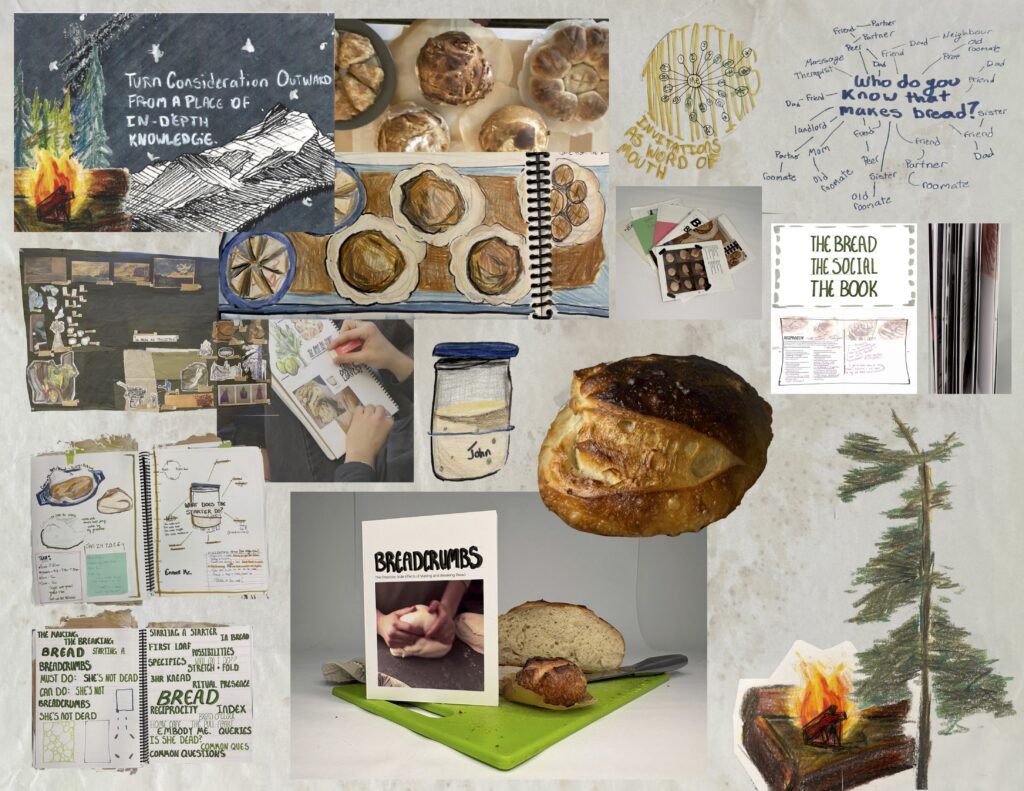
This is a project of community nourishment, embodied relationships, and
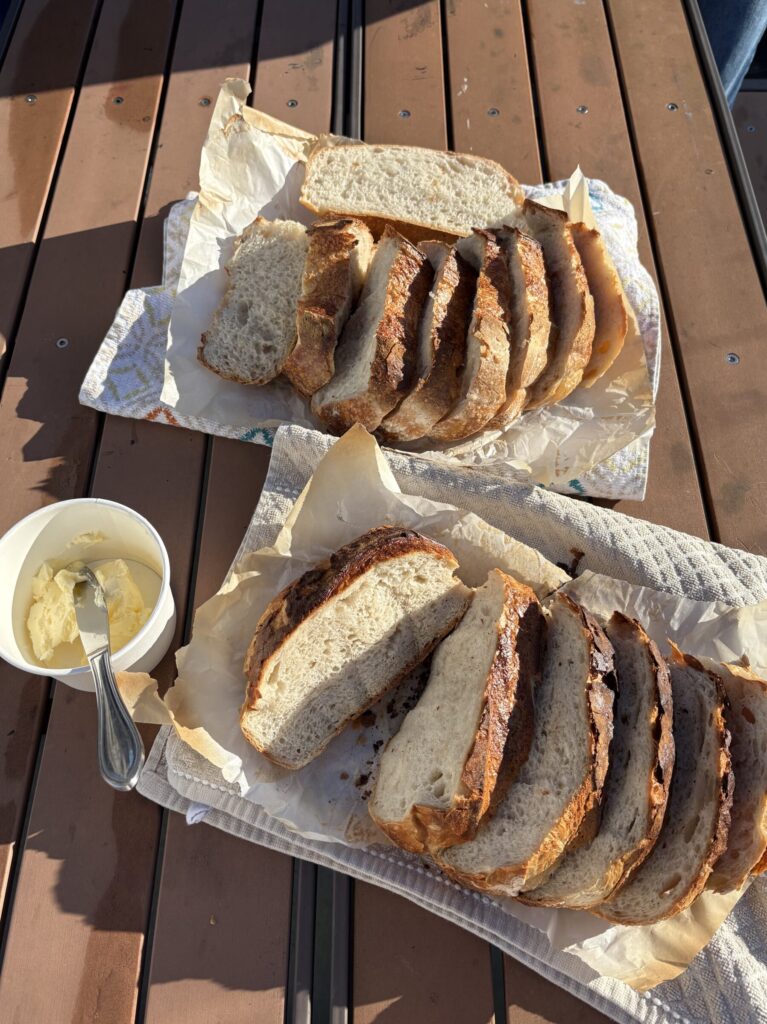
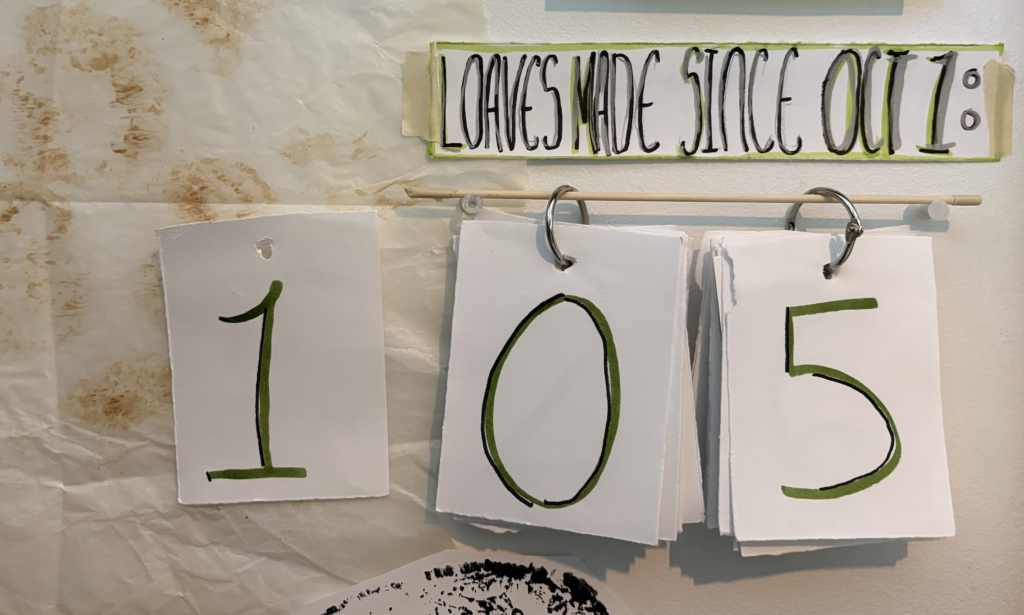
Making 108 loaves of bread between October 1 2025 and April 20 2026.
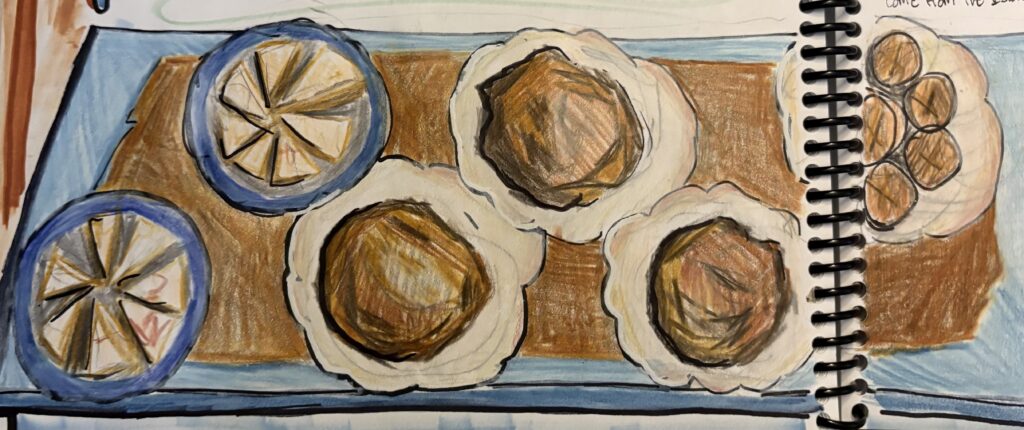
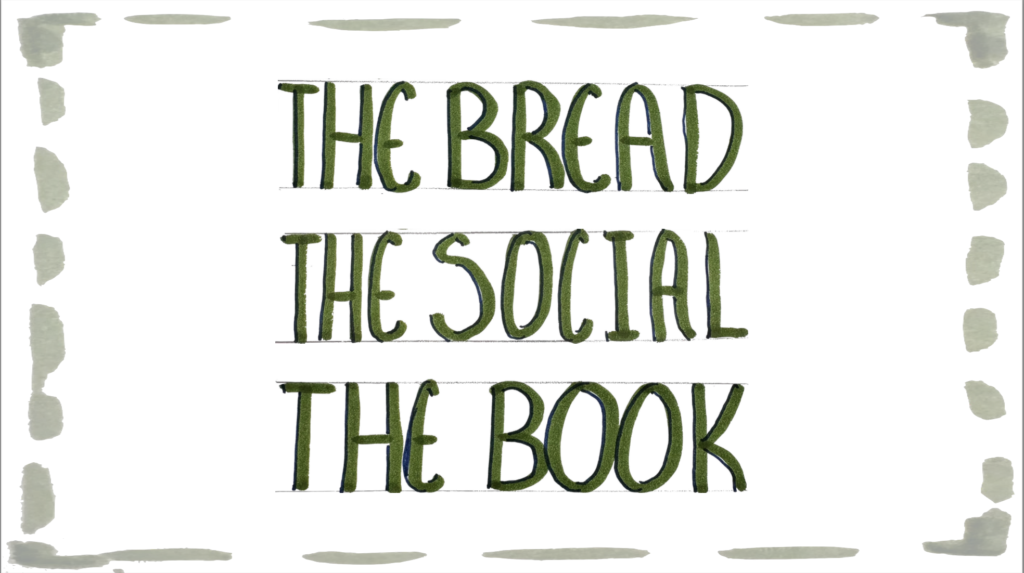
This work is at the intersection of three practices:
01. The Bread
02. The Social
03. The Book
From personal ritual and relationship to social gathering, the practices spans The Making to The Breaking Spectrum.

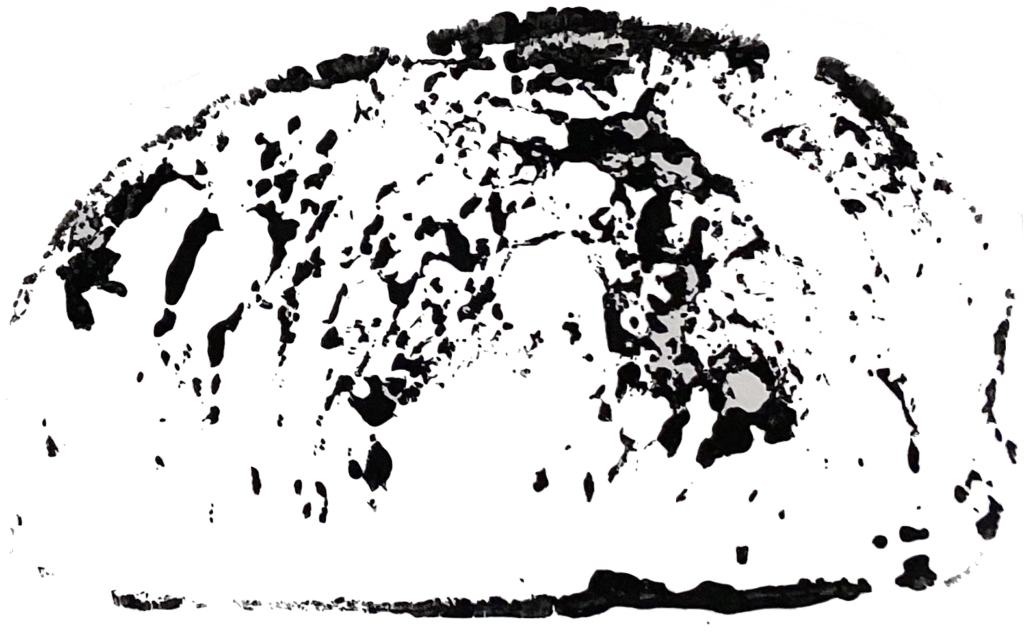
01. The Bread Practice: a material study of a medium that talks back, embodying a relationship with understanding her needs and personality. This involved starting my starter, John (she/her), and working through learning the craft of sourdough. This quickly became Making bread in ritual, every Thursday in my home, to bringing it to the shared space of peers.
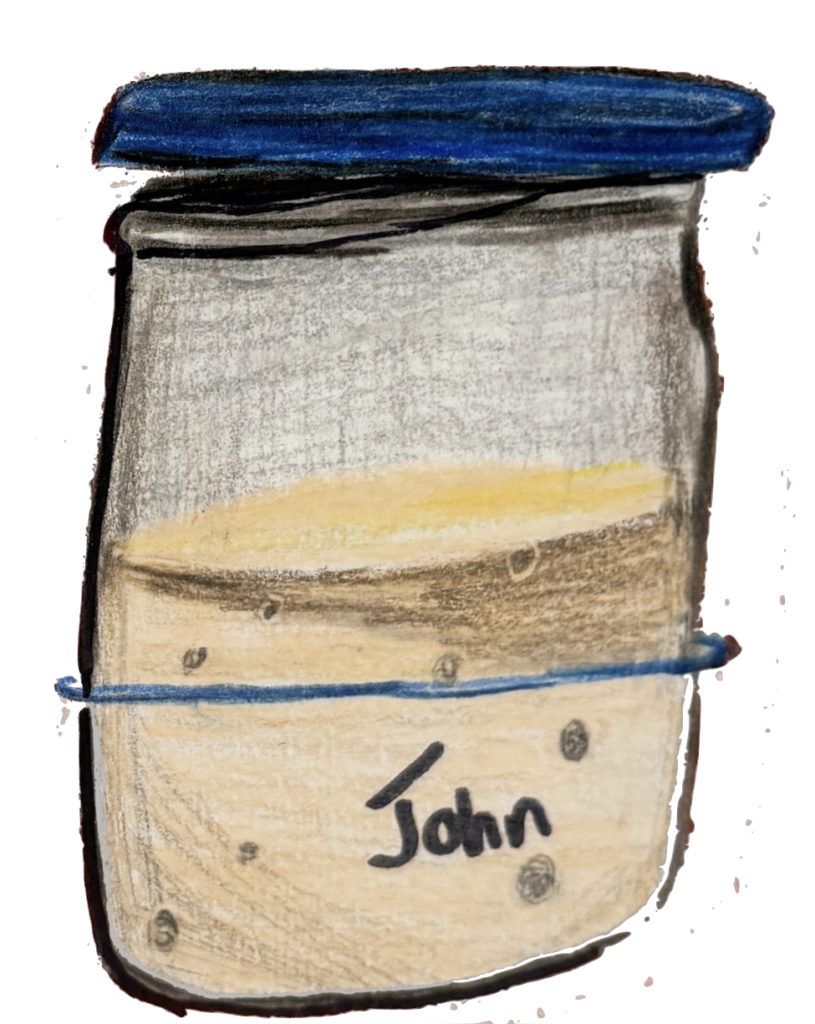
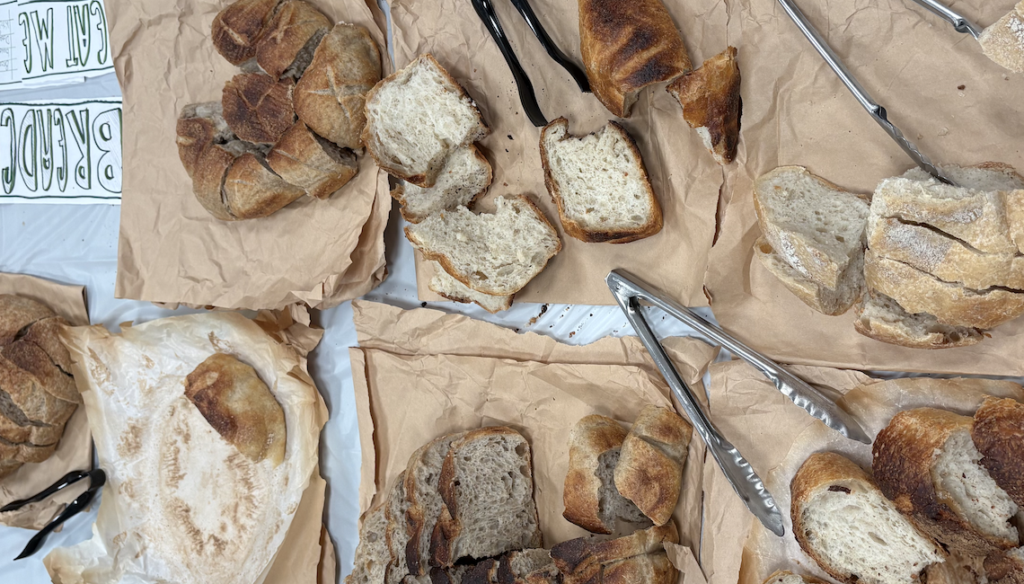
02. The Social Practice: developing ritual within community, and being surprised and grateful for the moments of reciprocity that emerged. This was about facilitating gathering around an edible medium, about allowing bread to Break and to nourish the community as food and shared experience.
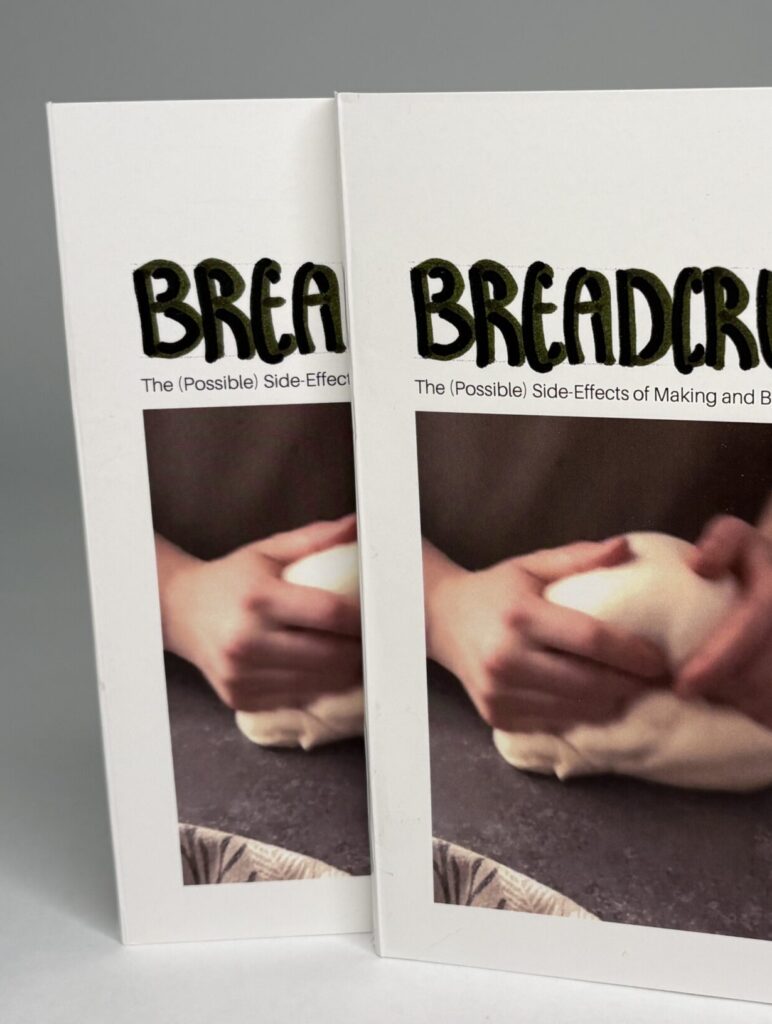
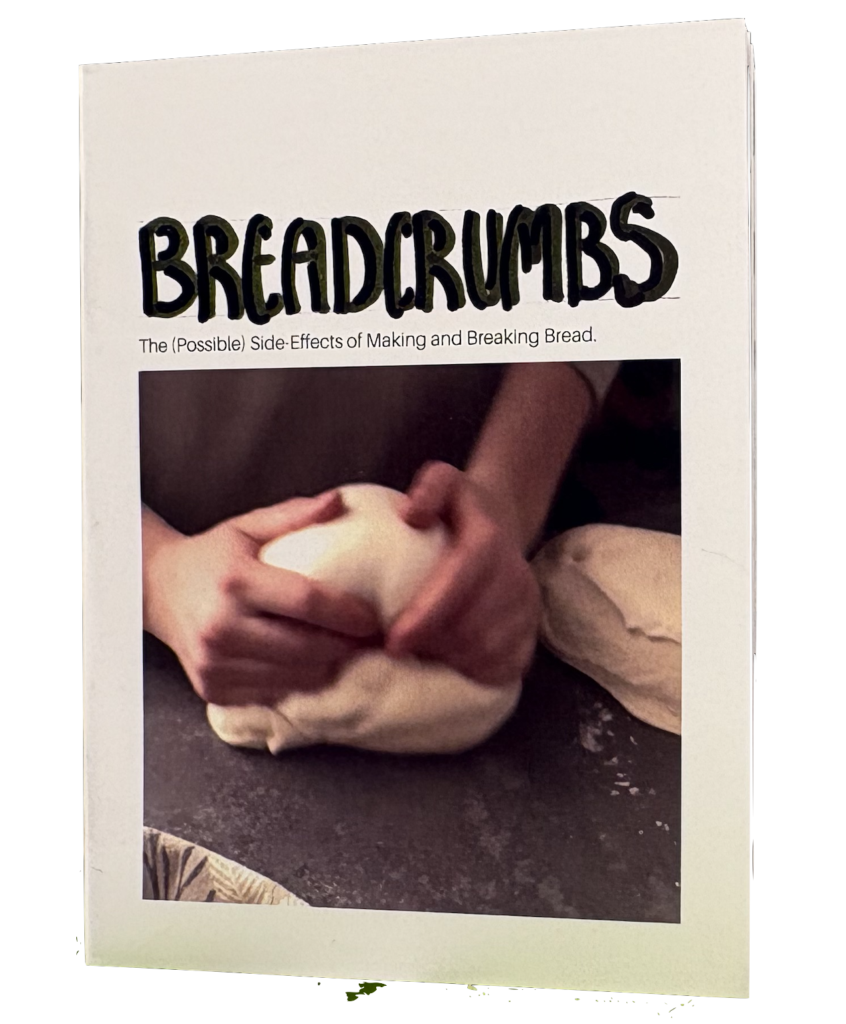
03. The Book Practice: recognizing the ways bread creates social geometry of belonging, knowing, and connecting. The goal of this publication was to create a guide from the centre of the project that makes discovering The (Possible) Side Effects of Making and Breaking Bread possible in your Everyday and your communities.
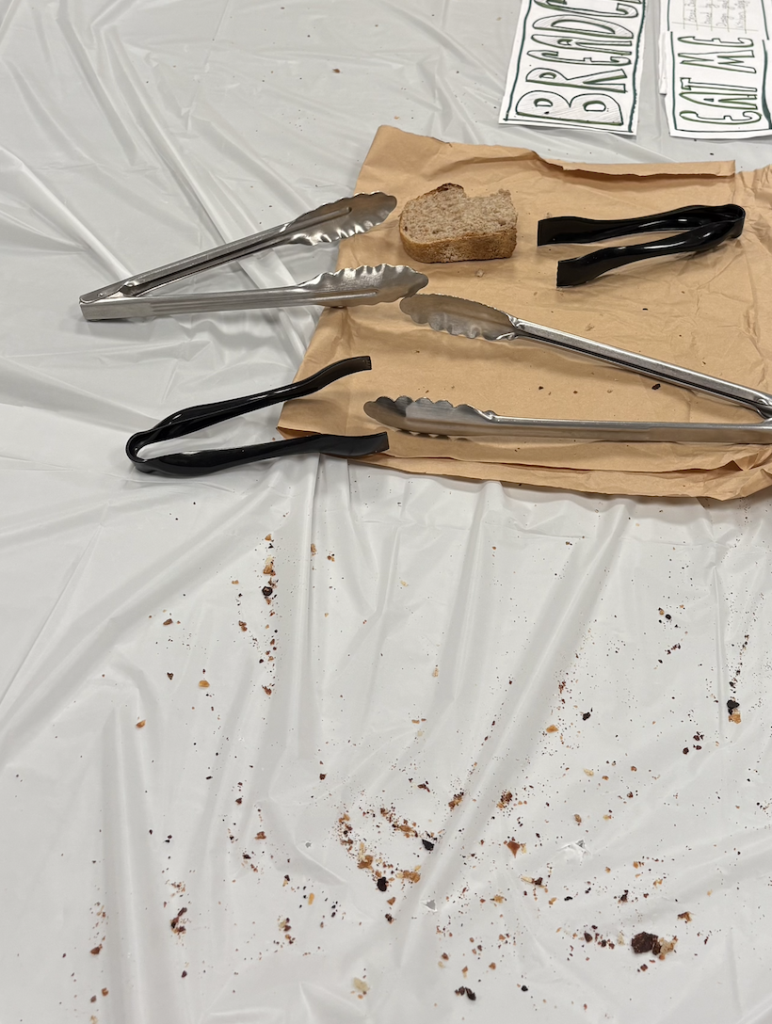
Bread O’Clock brings the community in to the Making process by engaging as facilitators. They take home loaves I’ve prepared to the cold-proofing (or fridge) stage, and bake them and bring them back to share in the morning. Over the course of this semester, we did two Bread O’Clocks.
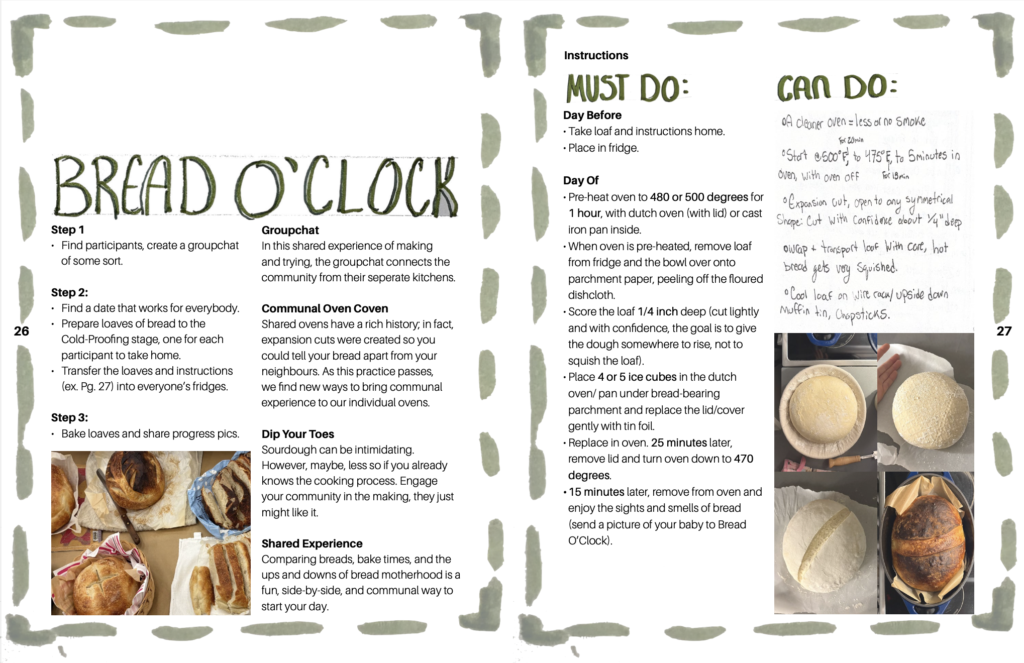
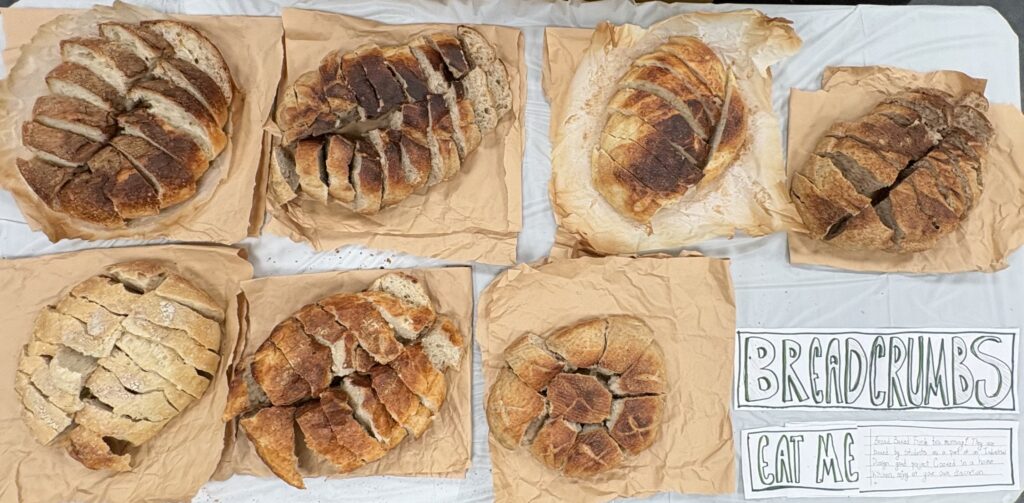
- February 5, was prepared to have food to share for the Industrial Design Open Studio. It provided an approachable intro to the project and a shared experience for guests.
- March 19, was prepared to give back to the Emily Carr Wellness kitchen. 9 loaves, or 98 slices, were baked across Vancouver and Burnaby that morning and brought back to one of it’s tables.
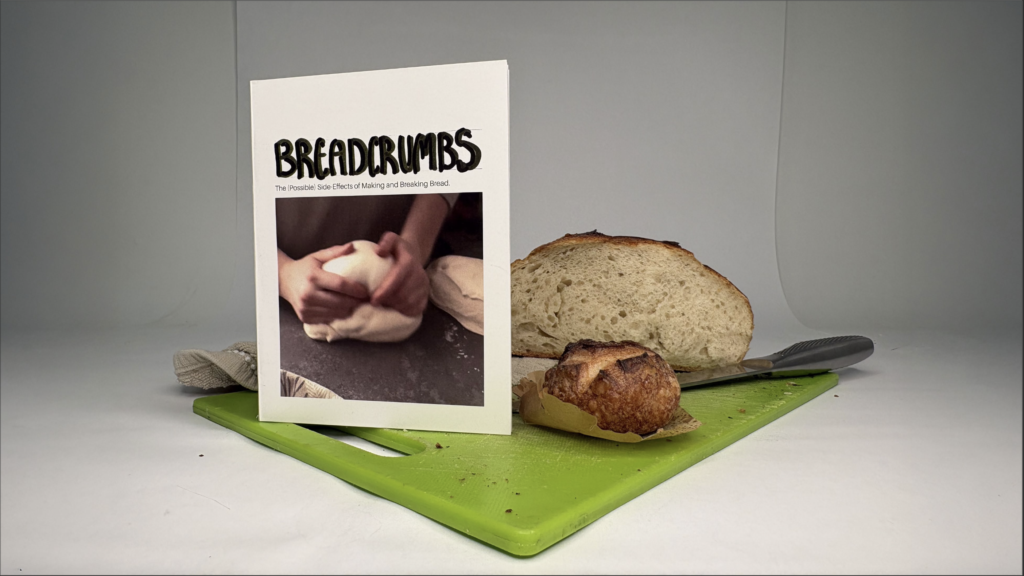
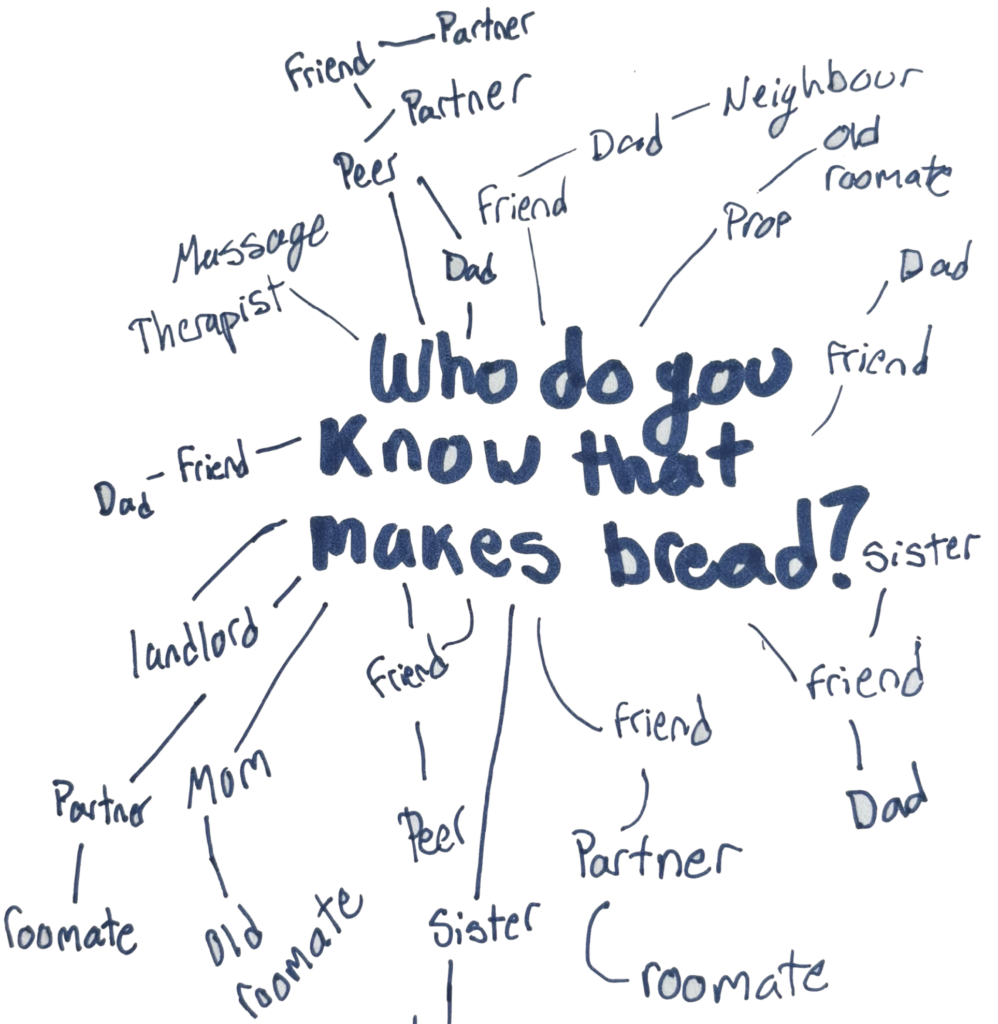
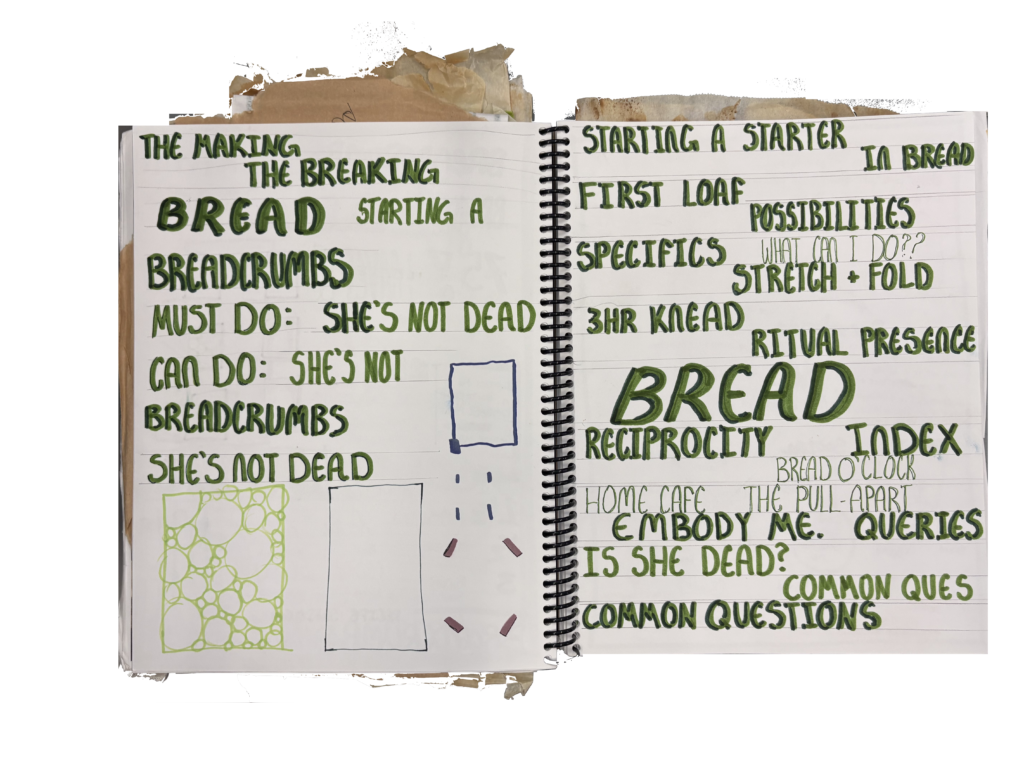
The Book was made because I continued to find webs (or breadworks) in this project, and I kept finding that, as the facilitator, they held me in the centre. The book began as a guide to provide someone with the processes, structures, and skills they needed to practice BREADCRUMBS in their Everyday, in their communities, and experience The (Possible) Side Effects of Making and Breaking Bread for themselves.
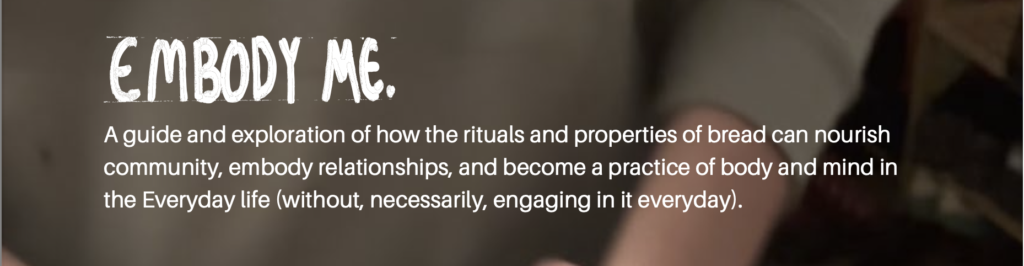
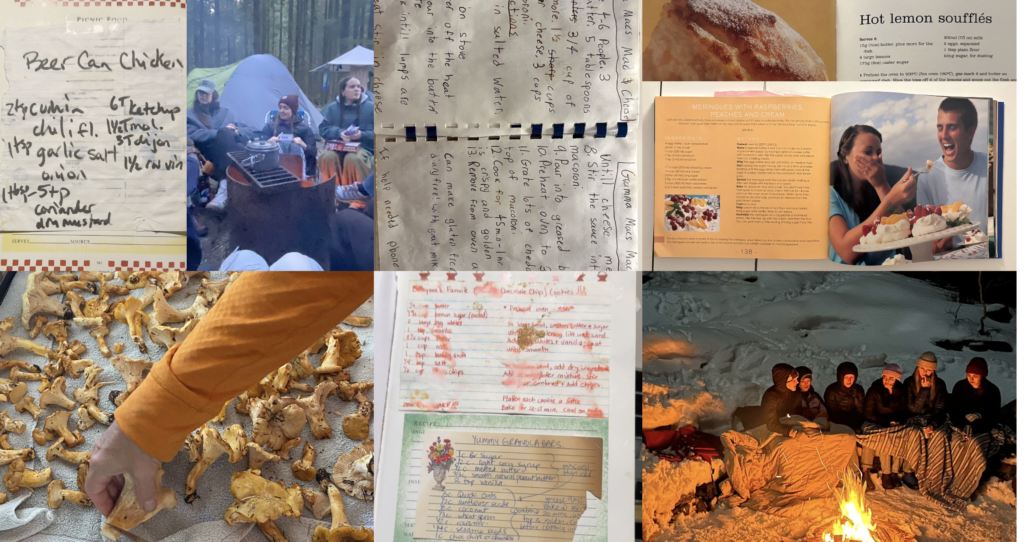
The visual language is inspired by the warmth of gatherings of people, the presence of harvesting of material, and the trust we hold in cookbooks and family recipe pages. Together they blend project and cookbook and colloquial speech and instructional steps to engage, guide, and adapt to the user and the ways we inhabit our kitchens and communities.
Based off of the Self-Determination theory’s framework of autonomy, competency, and relevancy, and backed by the importance of engaging in activities we’re passionate about for whole, well-being (or Salugenology), the book is designed to guide another in using the design processes, structures, and skills I’ve learned and explored through this project, in a way that suits their own Everyday and their own communities.