Conversations with Matter
Ella Mae Fortin
ECU Award Recipient
Honourable Mention, The Wood Co-Op/Forestry Innovation Investment in Wood Design Industrial Design Graduation Award
I acknowledge that I live, work and create on the ancestral and unceded territories of the xʷməθkʷəy̓əm (Musqueam), Sḵwx̱wú7mesh (Squamish), and səlilwətaɬ (Tsleil-Waututh) Nations.
I am eternally grateful for their stewardship and care for these lands for time immemorial and it is my intention in my life and in my work, to continue the care for this place and be an active part in truth and reconciliation.
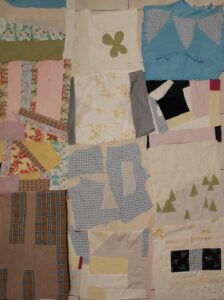
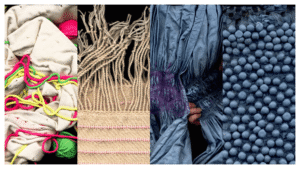
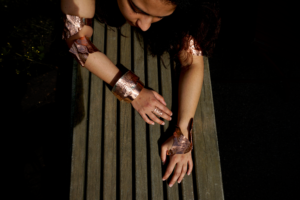
Conversations with Matter is a place-based making practice rooted in southwestern British Columbia that explores how local materials like wool, wood, and clay can be engaged with care, attention, and respect. Rather than focusing on producing objects, the project centers on building relationships with materials, land, and their layered histories.
Through slow, hands-on processes, this project emphasizes attentiveness, reciprocity, and responsibility, offering an alternative approache to making. The work reflects an ongoing personal exploration of how thoughtful engagement with materials can deepen one’s connection to place and reshape the way making is understood.
Reflecting on this work I know that I have found a way of making that feels care-full and good. As moving intuitively through making became more natural, the materials began to guide the work, carrying traces of land, place, and hand. I followed what emerged through the process, allowing the conversations between material, technique, and gesture to unfold.
Contents
Lynn Creek runs cold and clear, moving sediment, carrying fish, nutrients and sometimes in the summer a swimmer (like me). On the other bank there’s a place where the rock turns smooth and silky, water drips in miniature caves – clay.
I crossed the river this summer to the clay spot where I used to play as a kid, this time I collected the clay with utter wonder, imagining the things we could create together.
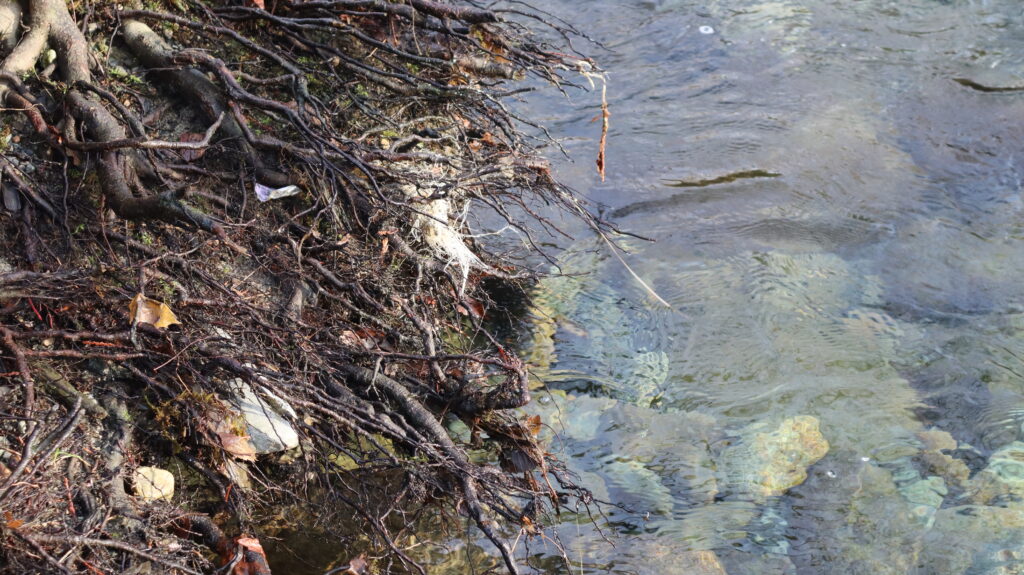
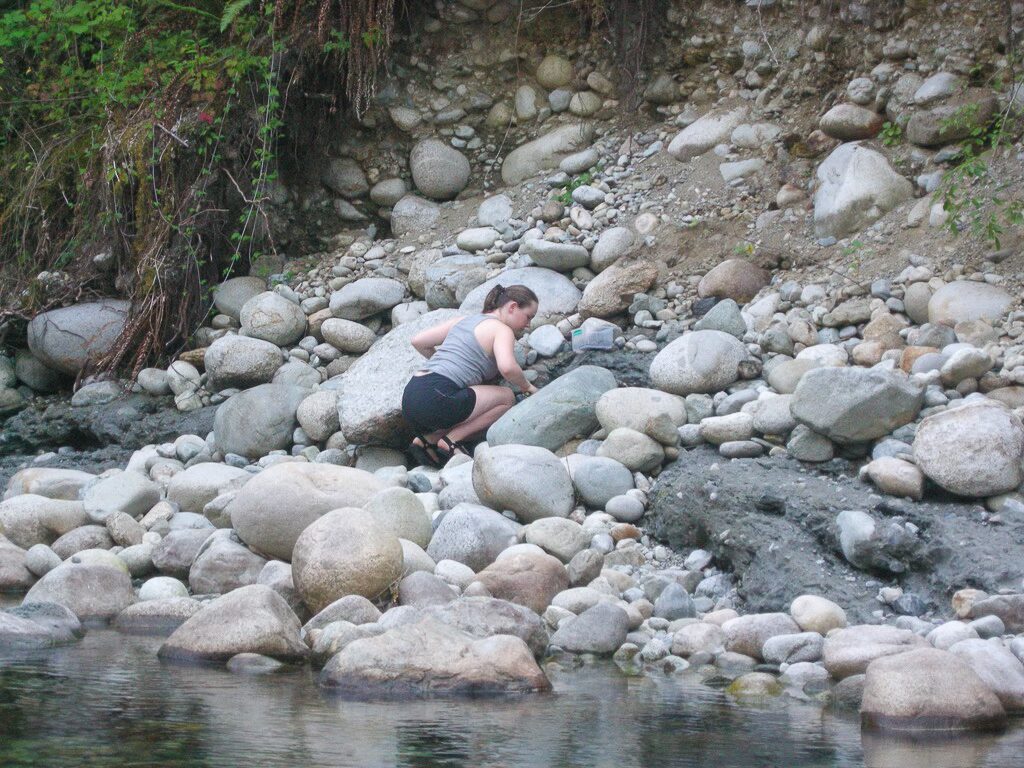
This moment led to these past months of making, learning, connecting and collaborating
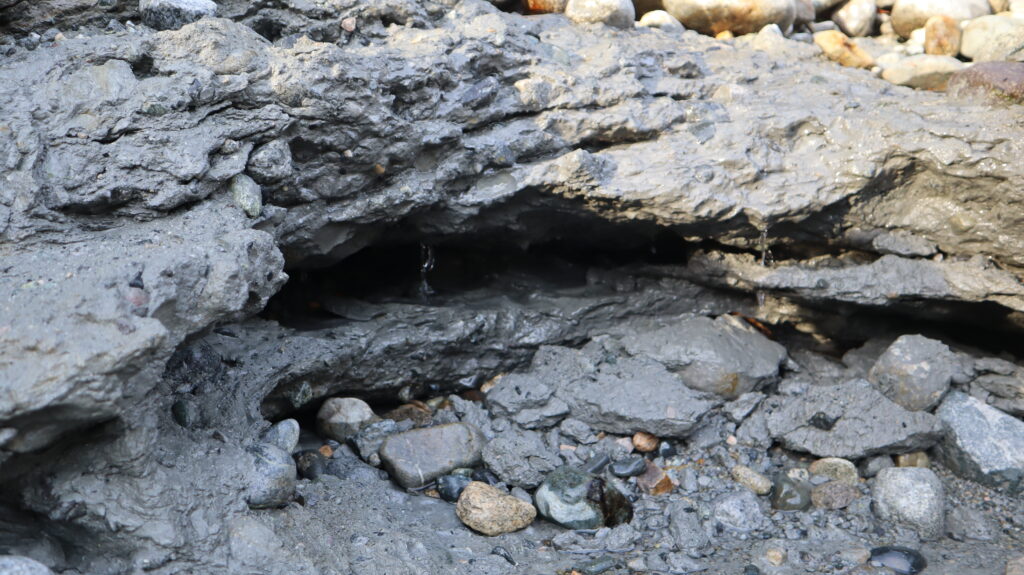
This project stems from a desire and curiosity to learn holistically about the land I create on and create with, to know materials from their beginnings and to be an active part in that process.
I decided to focus on making with the three materials that seem to recur throughout my design practice so far: wood, wool, and clay. My interest in and love for these materials stems from being surrounded by them throughout my life. They also each carry deep historical significance in the traditions of makers and material culture in British Columbia.
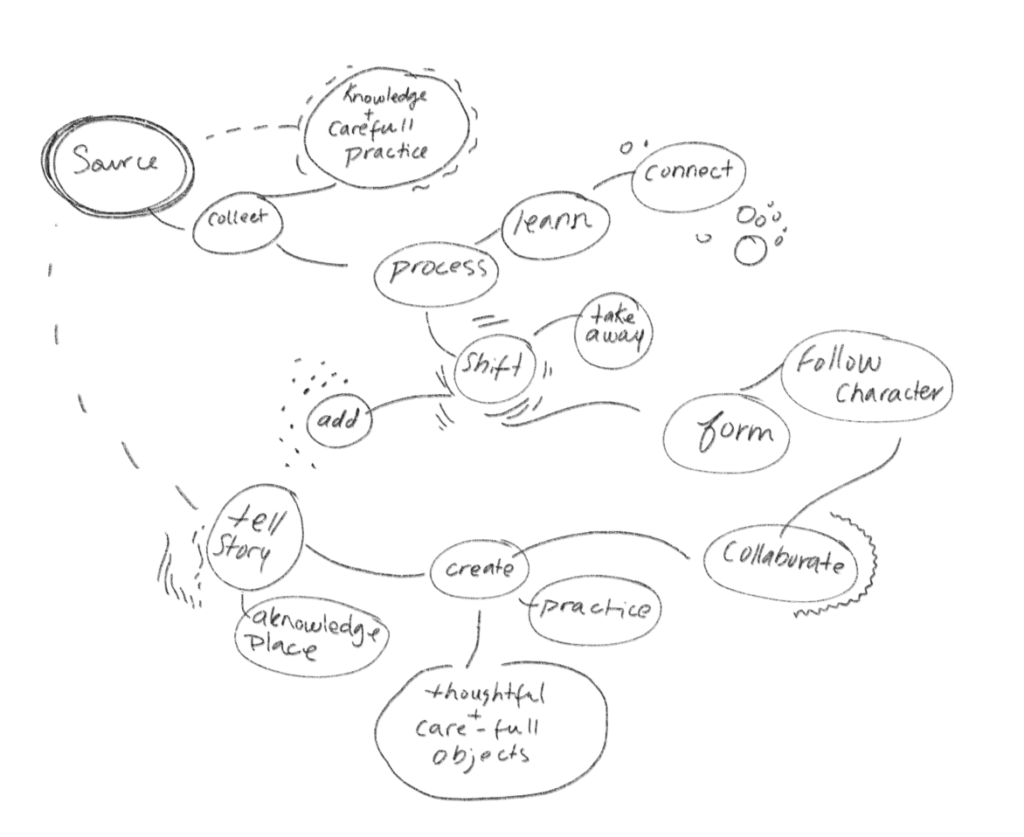
At the start of this project, secondary research and mind mapping helped me establish its context and grounding, while connecting with experts and community initiatives like Fibreshed clarified the path I wanted to take. Most importantly, however, my learning came through hands-on exploration with the materials themselves.
CLAY
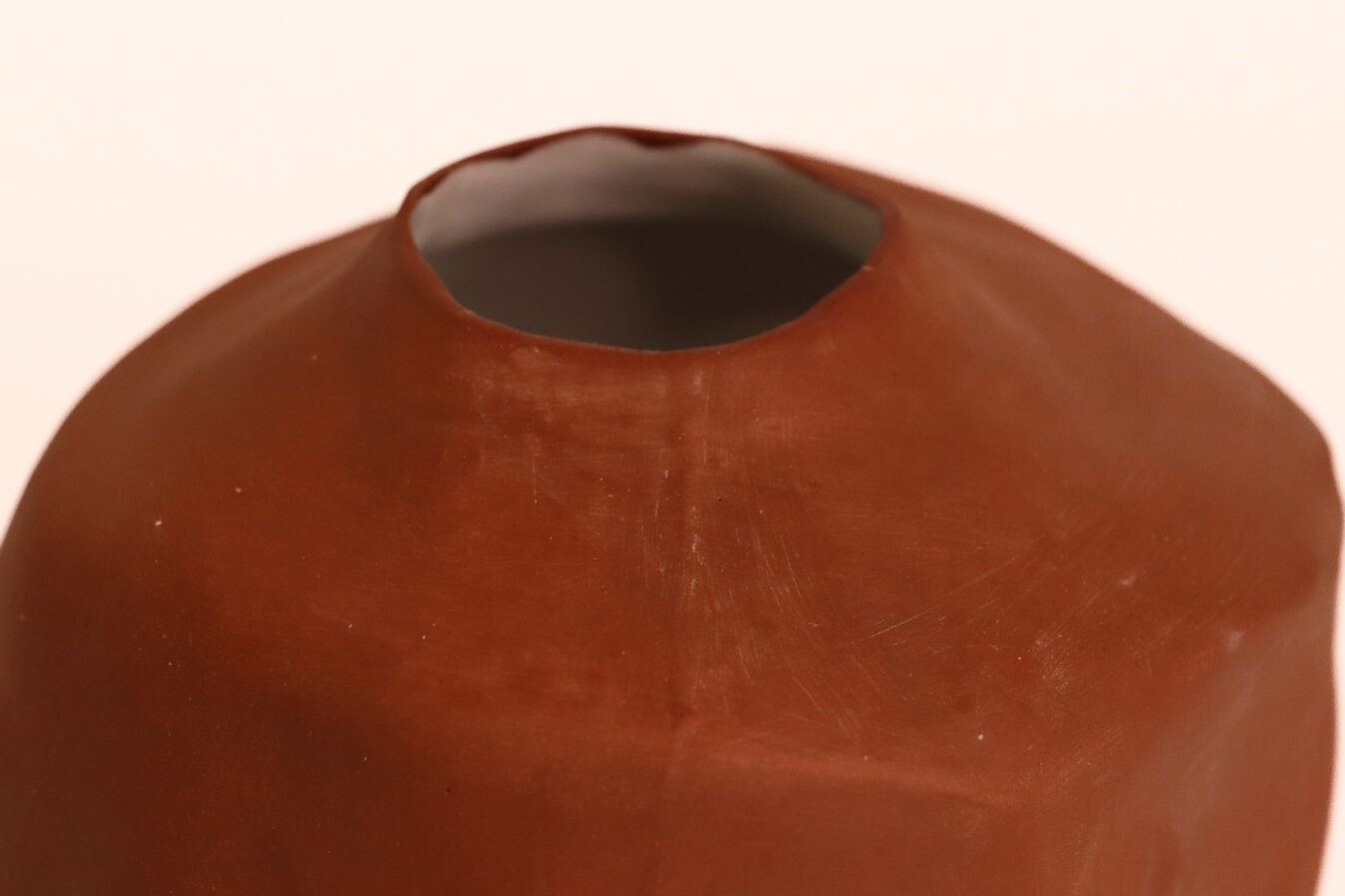
river clay
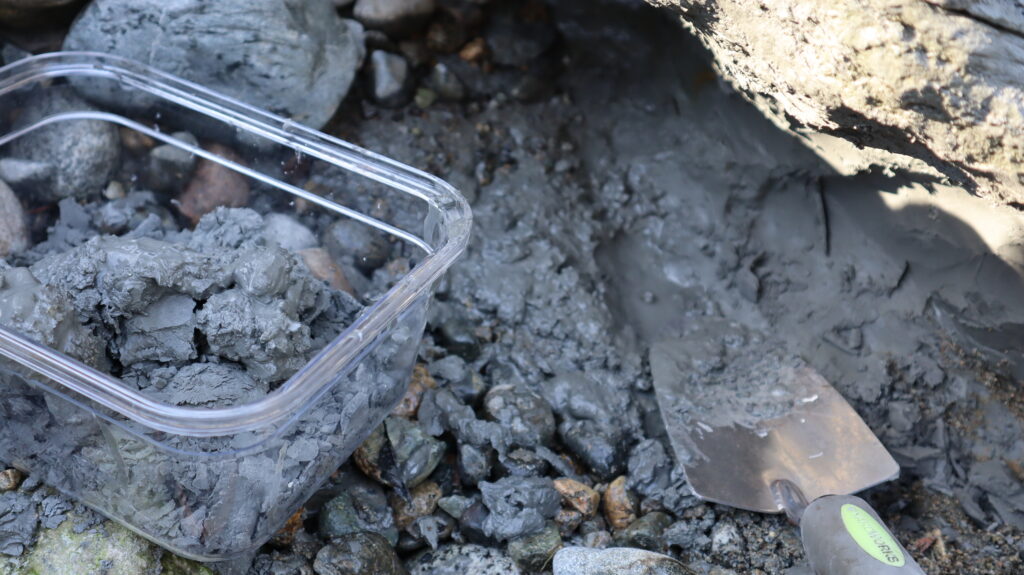
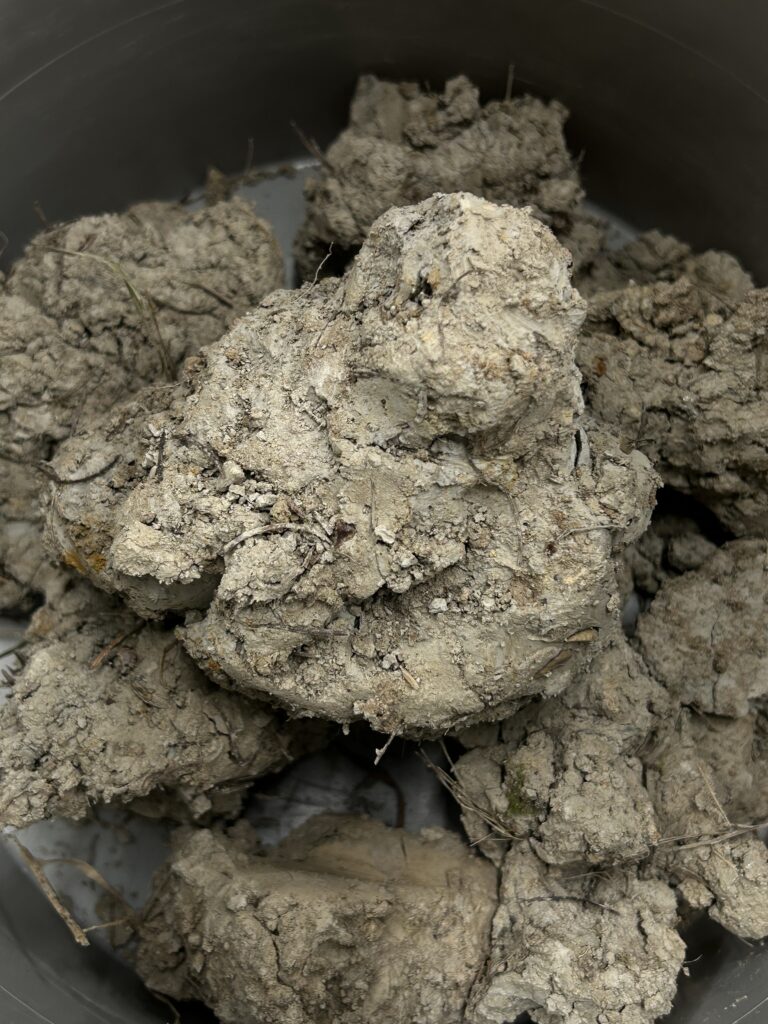
In September, I crossed the river and began to collect a tuperware of clay. The clay was soft and quite fine. I brought it back to the studio and processed it by diluting the mixture, sieving the larger rocks out and sieving it to a higher mesh.
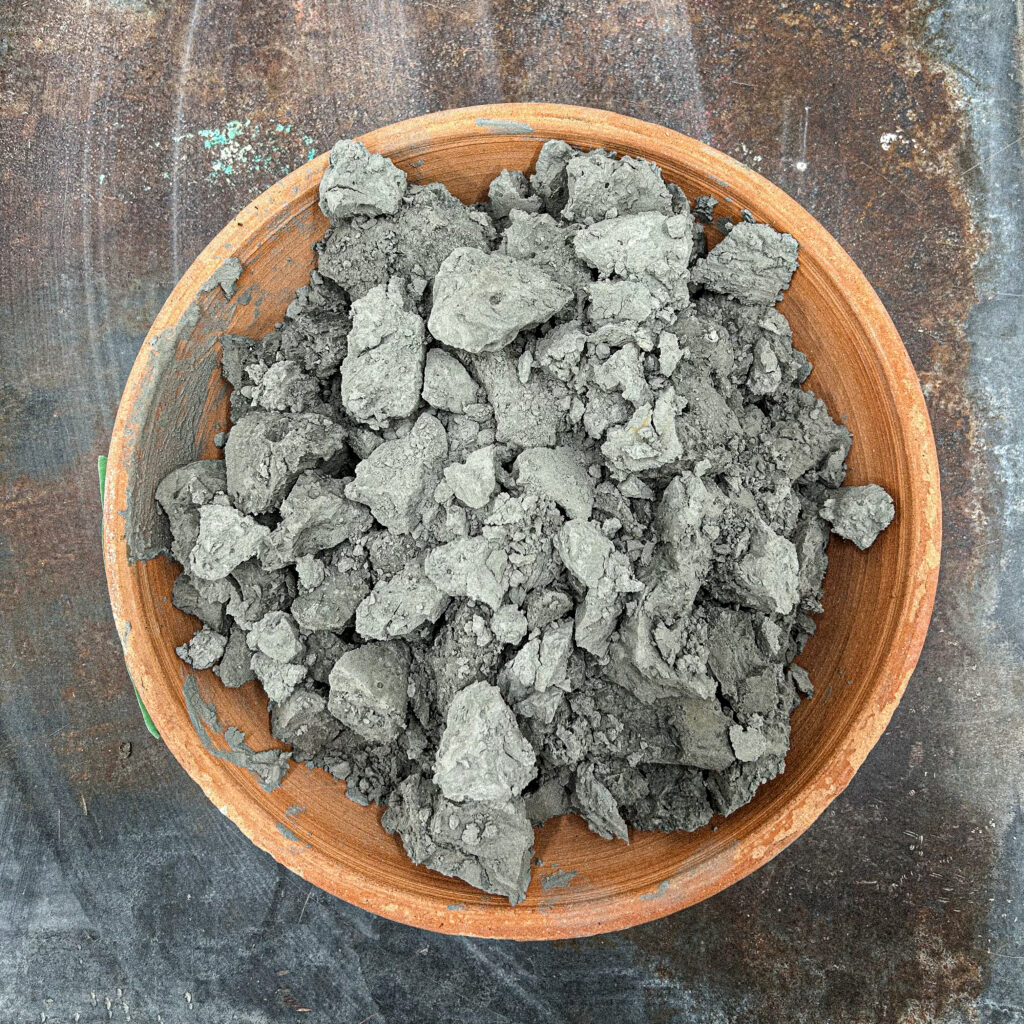
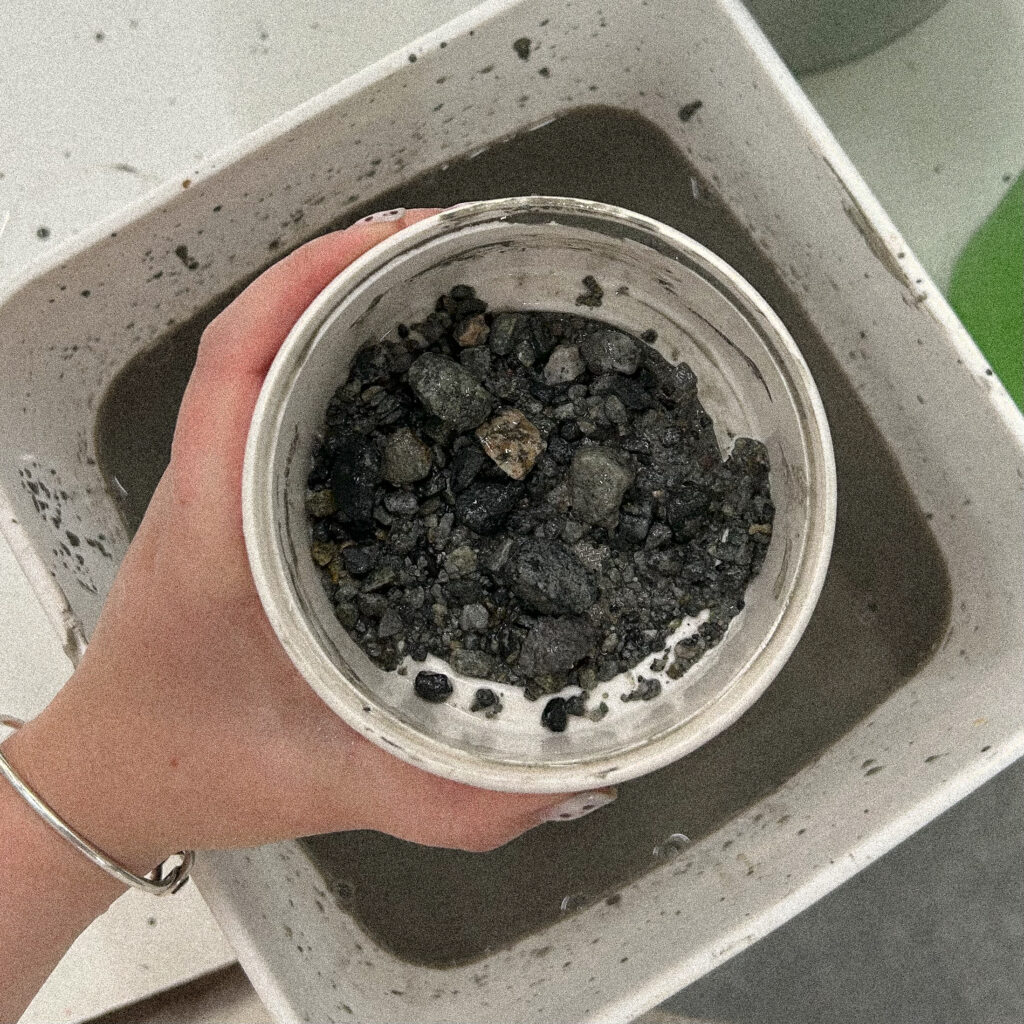
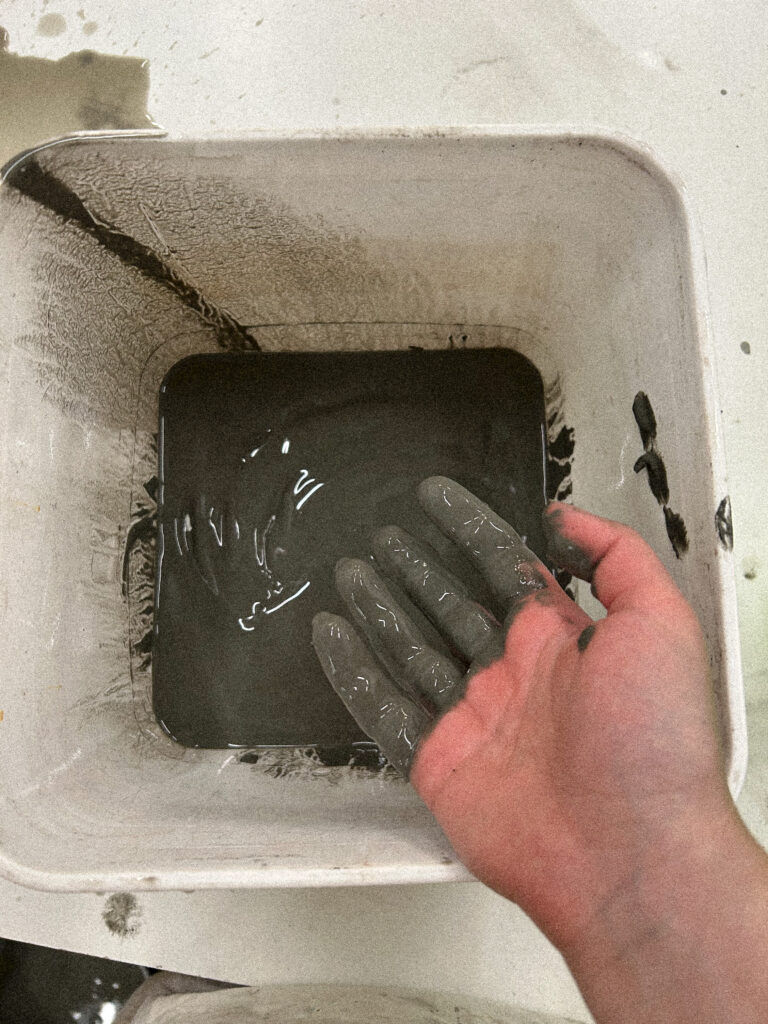
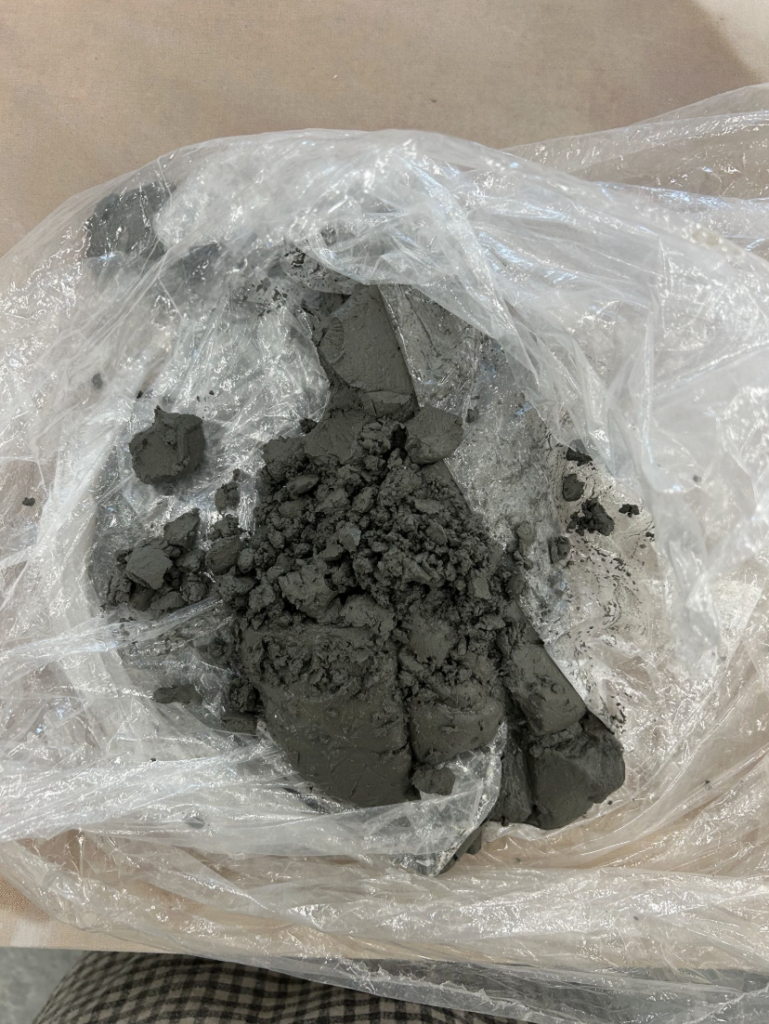
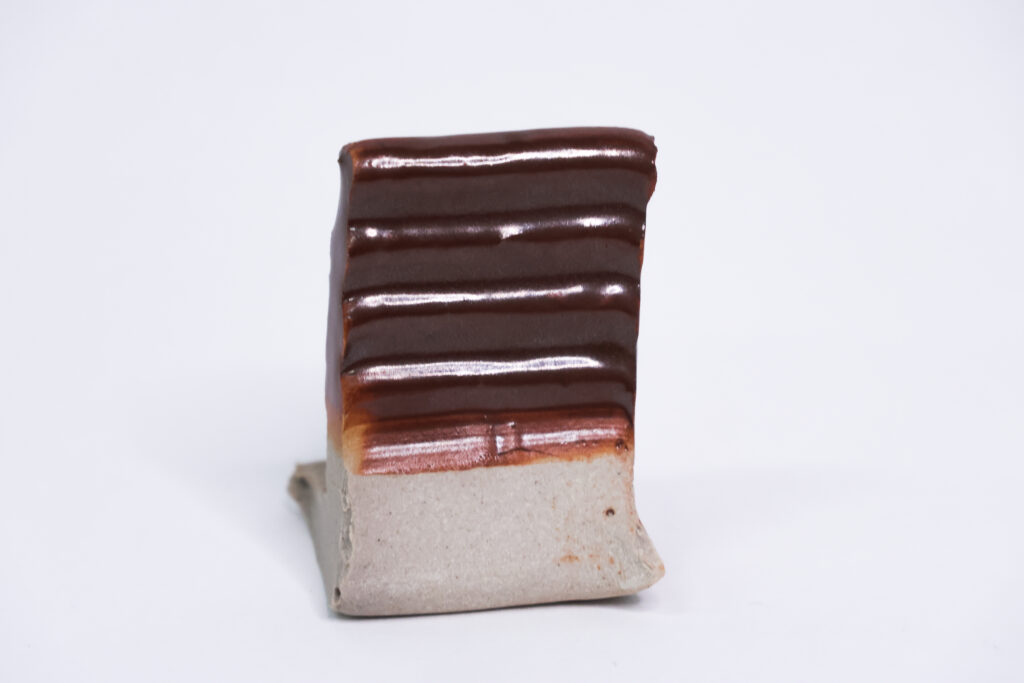
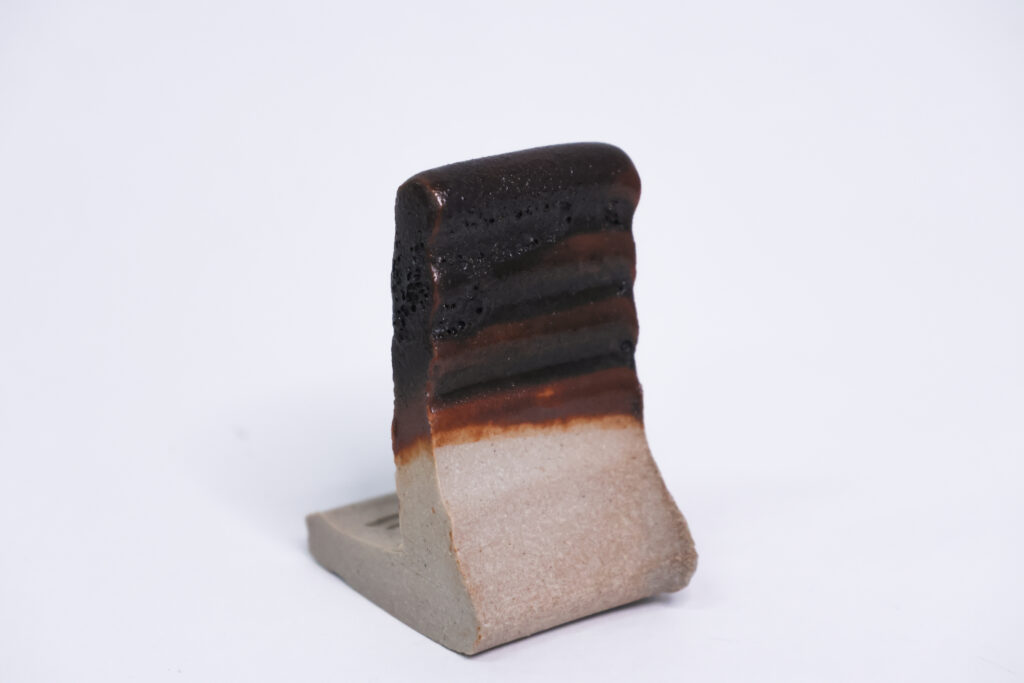
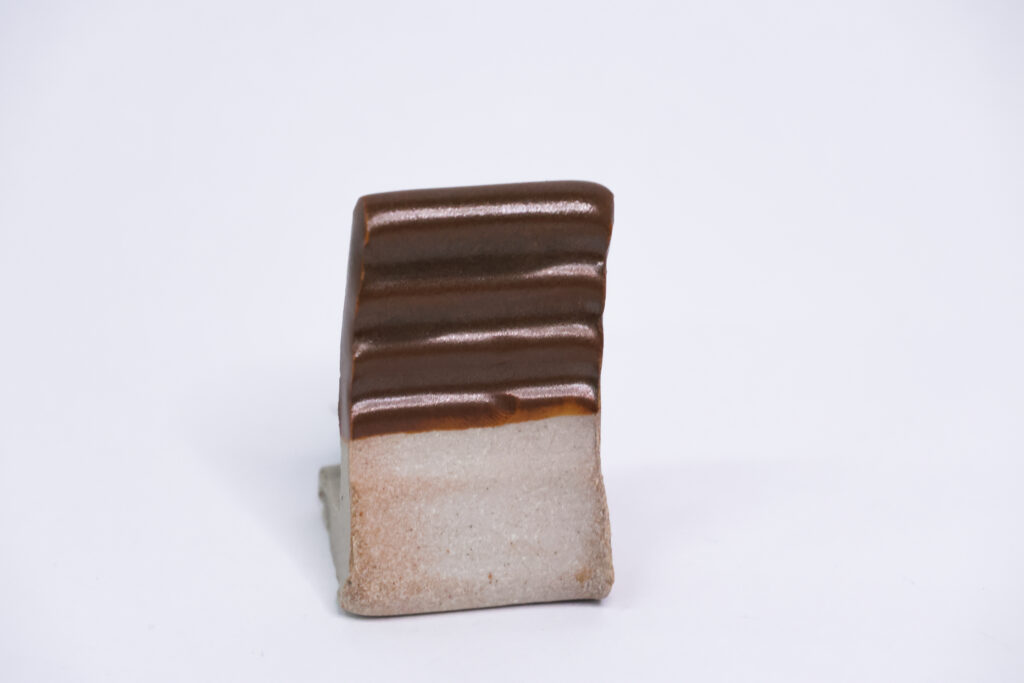
The river clay, which I had intended to use as a clay body to build and wheel throw with, did not have enough plasticity to hold as a clay body but instead wanted to be a glaze instead and a wonderful glaze it is!
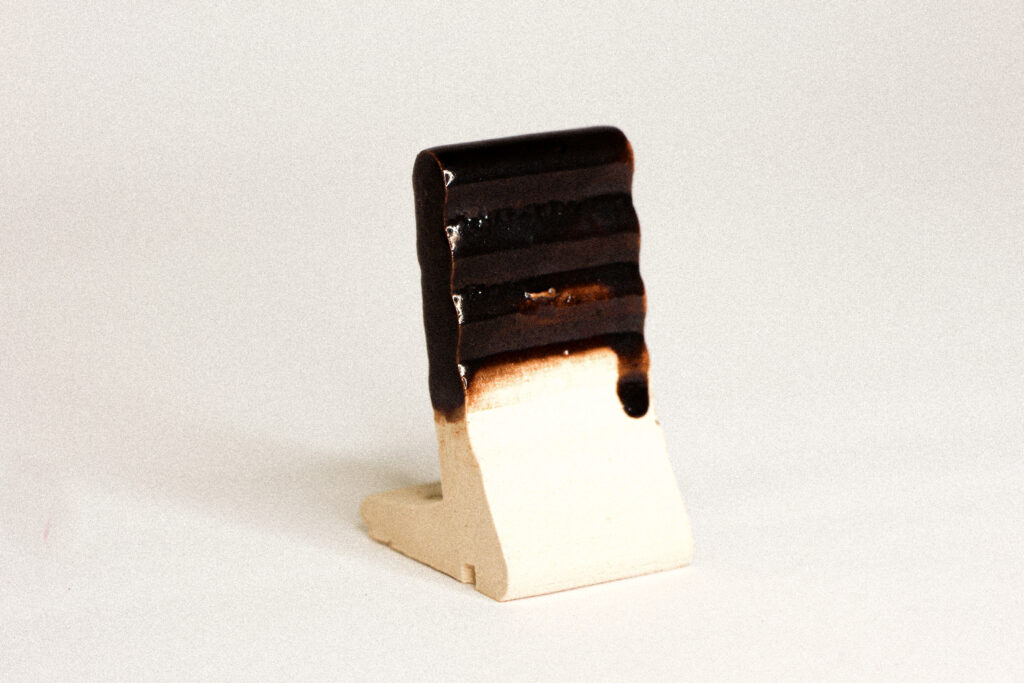
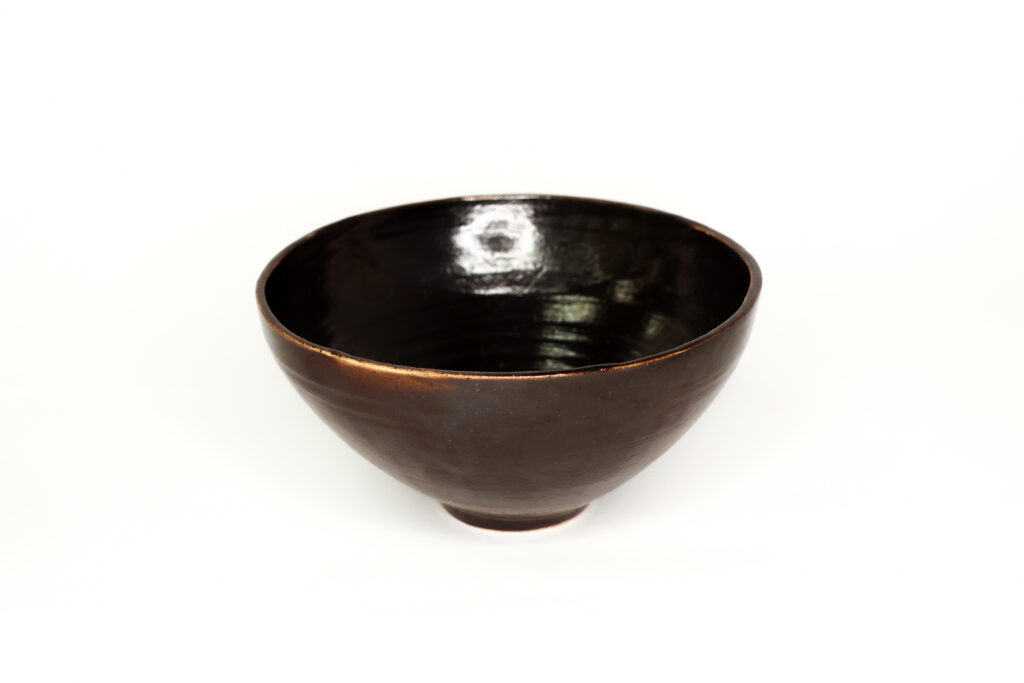
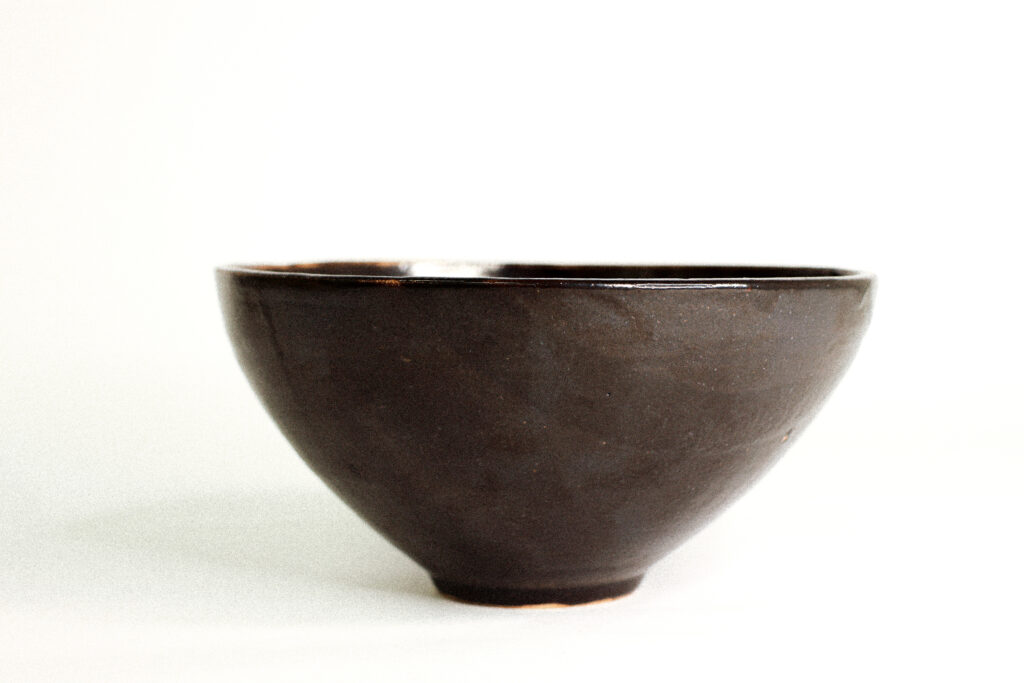
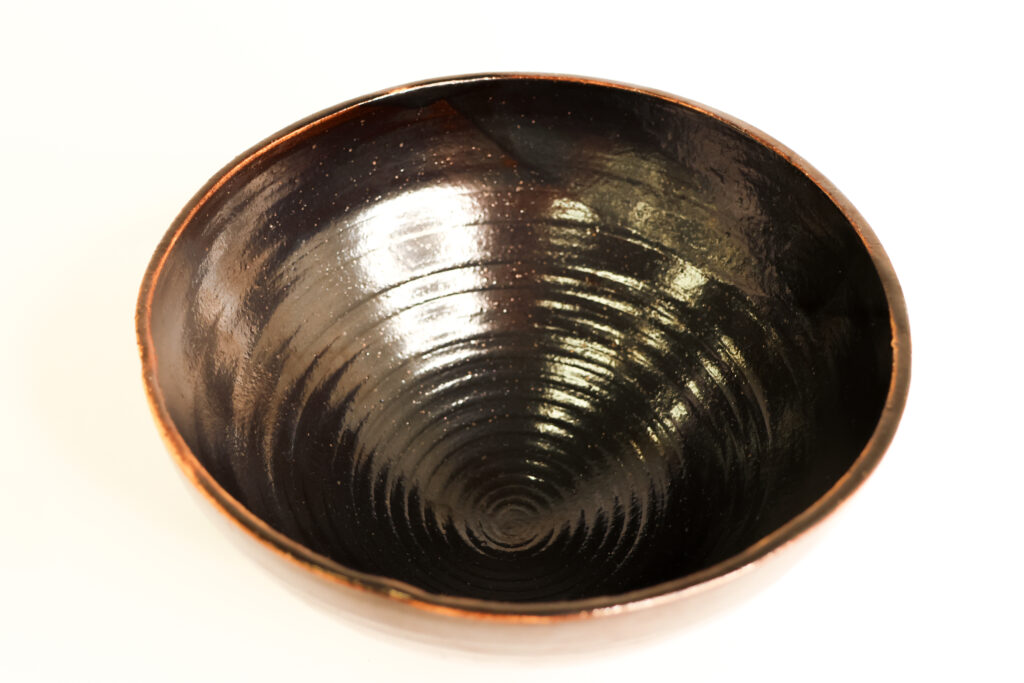
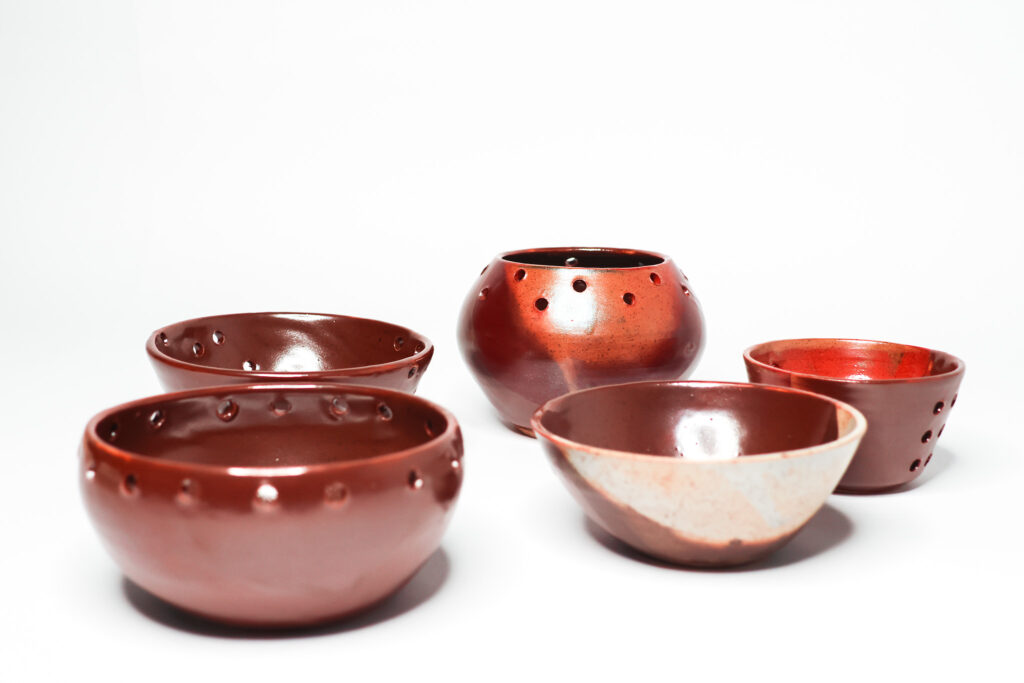
The bowls that I created were the first surfaces to be glazed in the river glaze, shimmery black, that breaks on peaks, just like the river.
River Clay Galze – CONE 10
Starved of oxygen in the reduction kiln, the iron in the wild glaze reached its ferrous state, resulting in a rich redish caramel metallic glaze.
Vessels
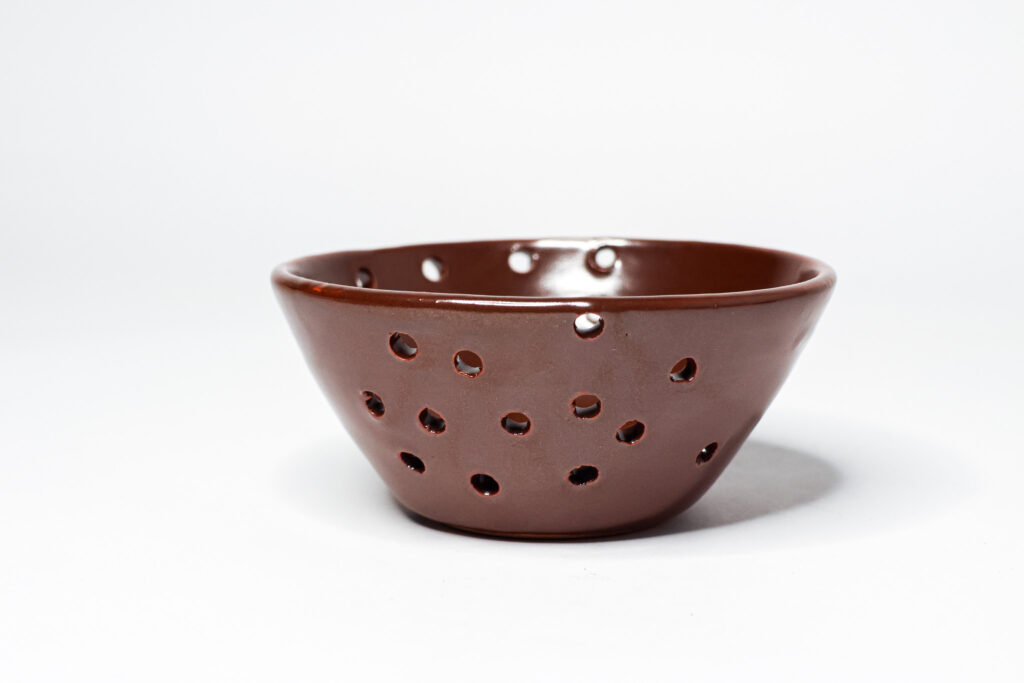
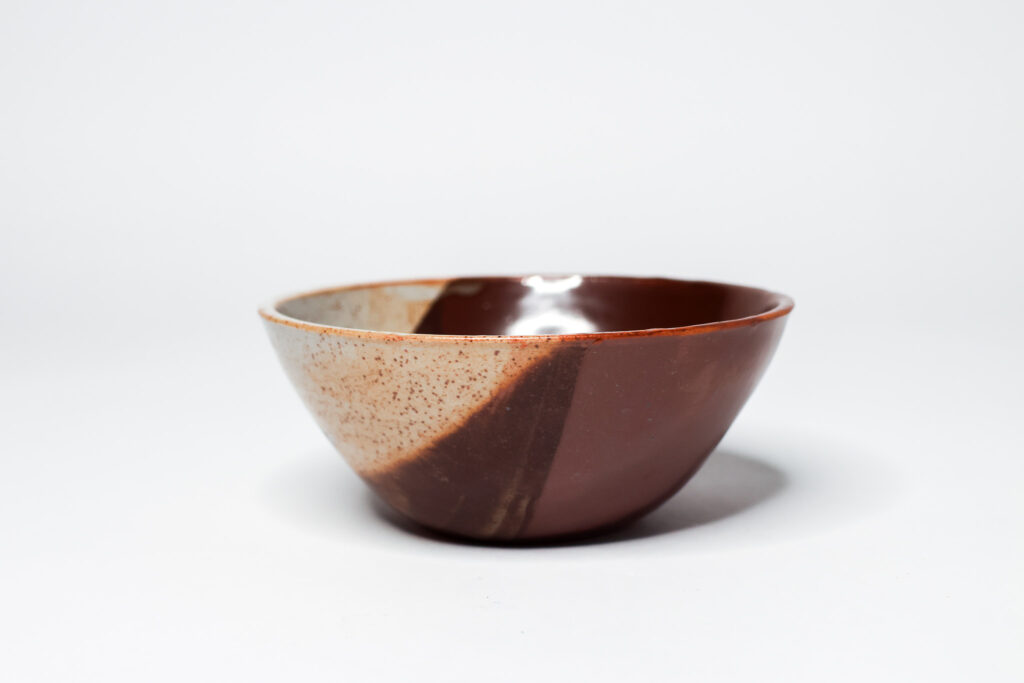
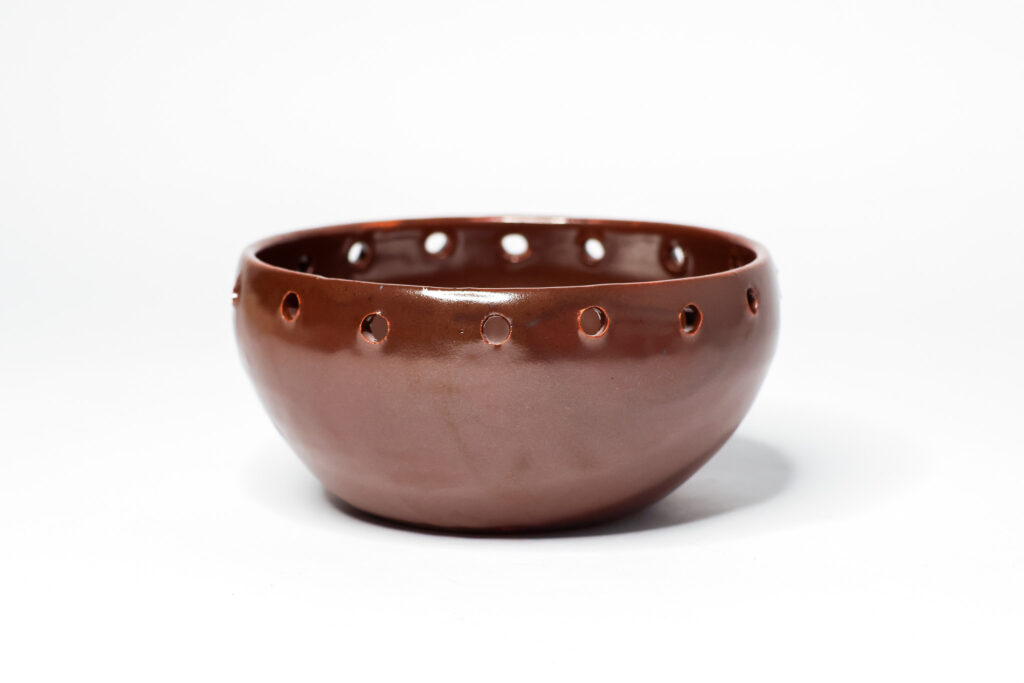
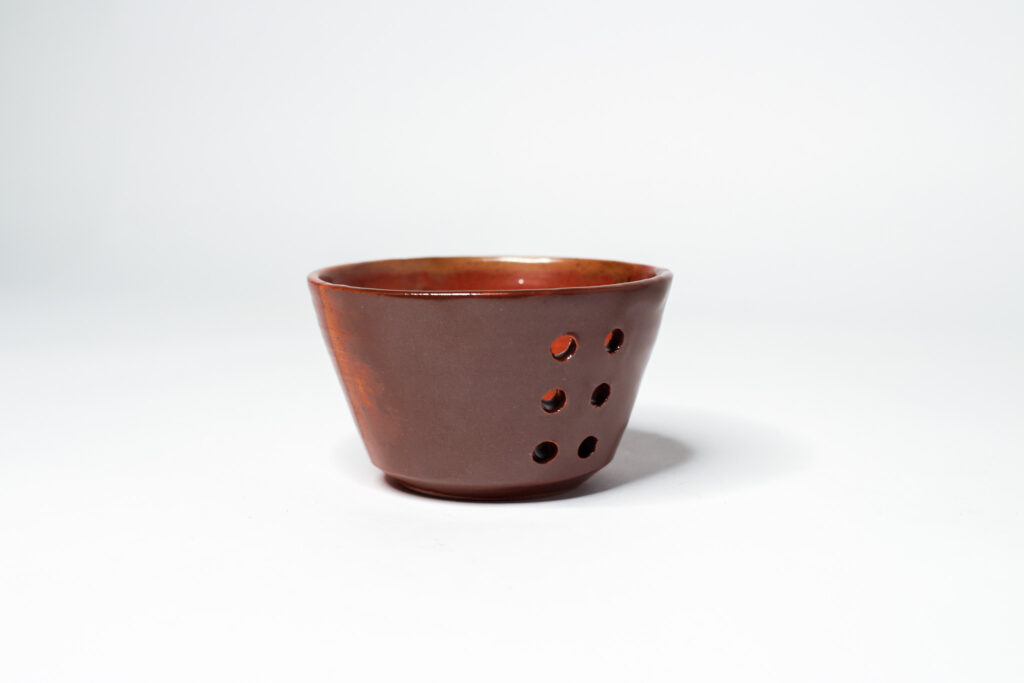
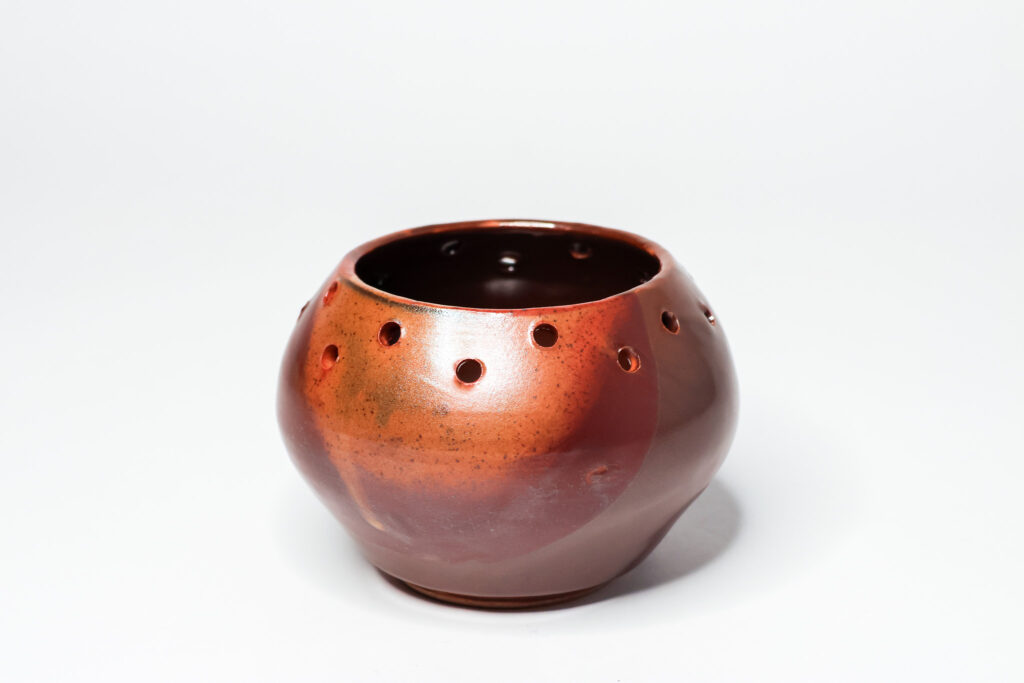
langely clay
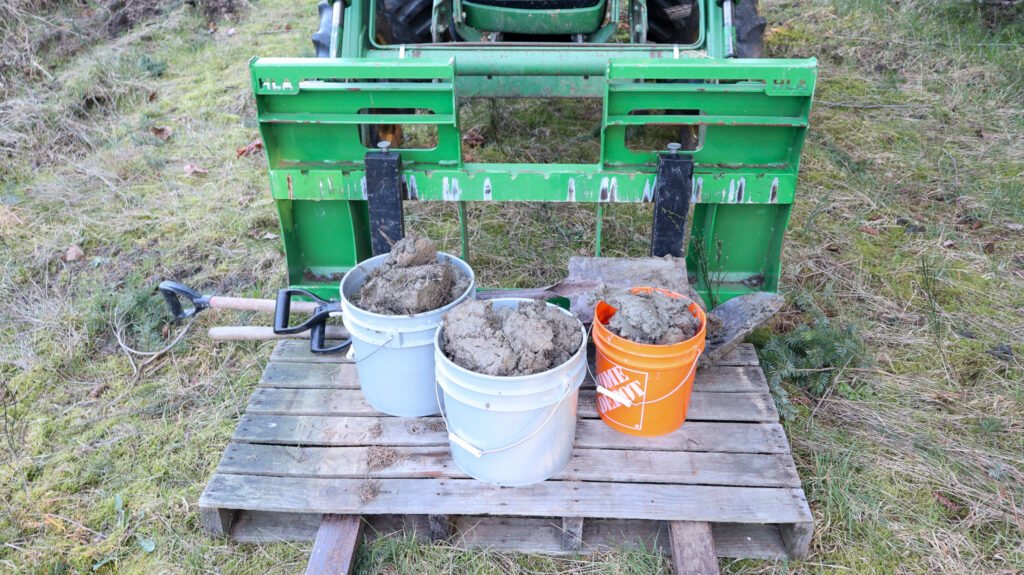
I was invited to collect clay from behind a private property in Langley. The clay had been deposited there after being excavated during renovations to Highway 1. This deposit carries traces of the land’s natural pathways — layers of mineral history displaced by the construction of the highway. The clay holds a geological and cultural record of the terrain, preserving fragments of movement, extraction, and transformation embedded within the land itself.
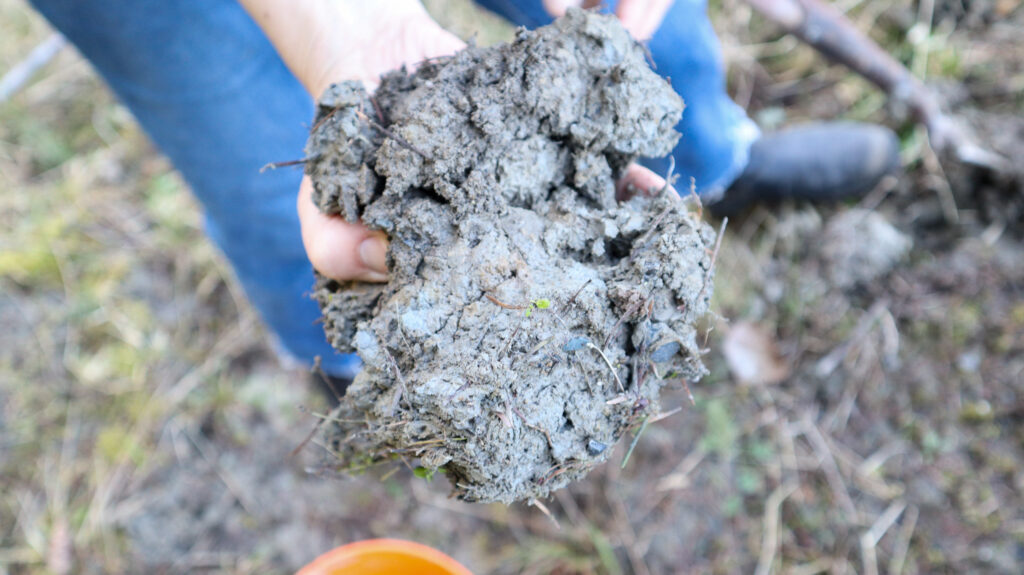
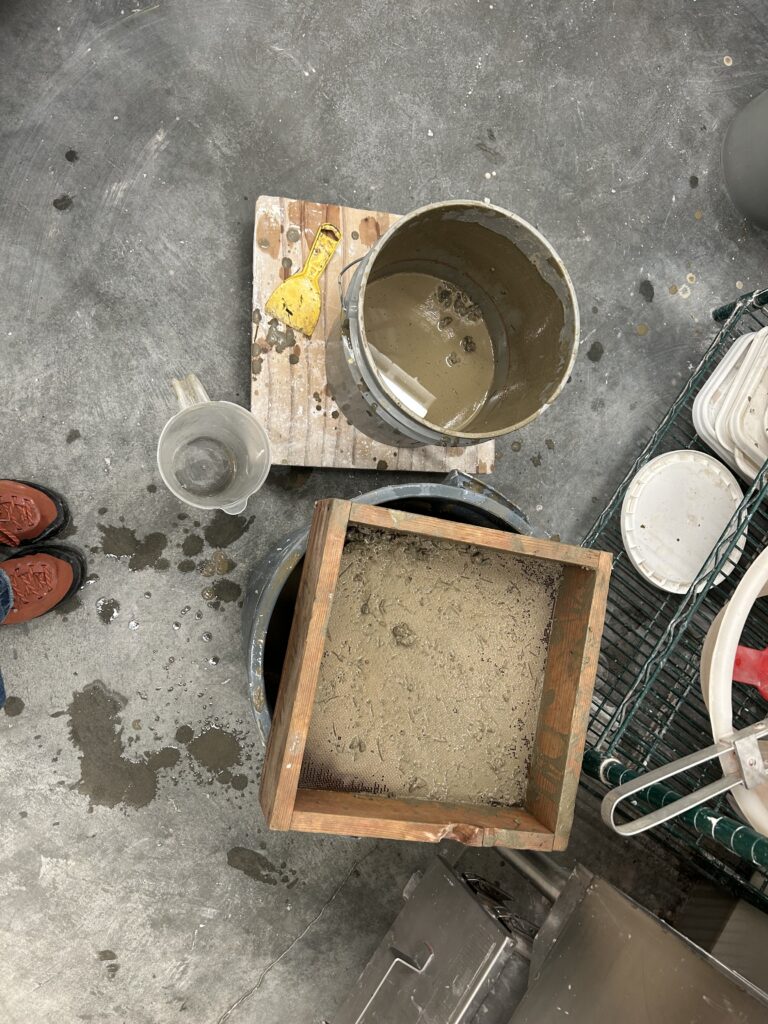
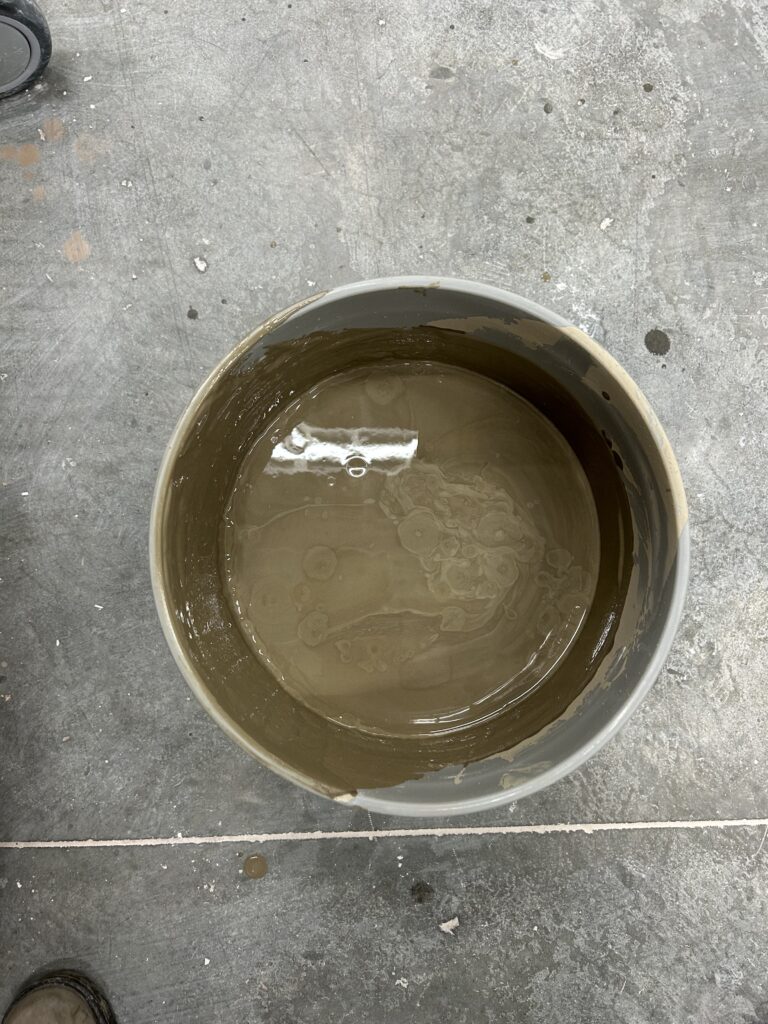
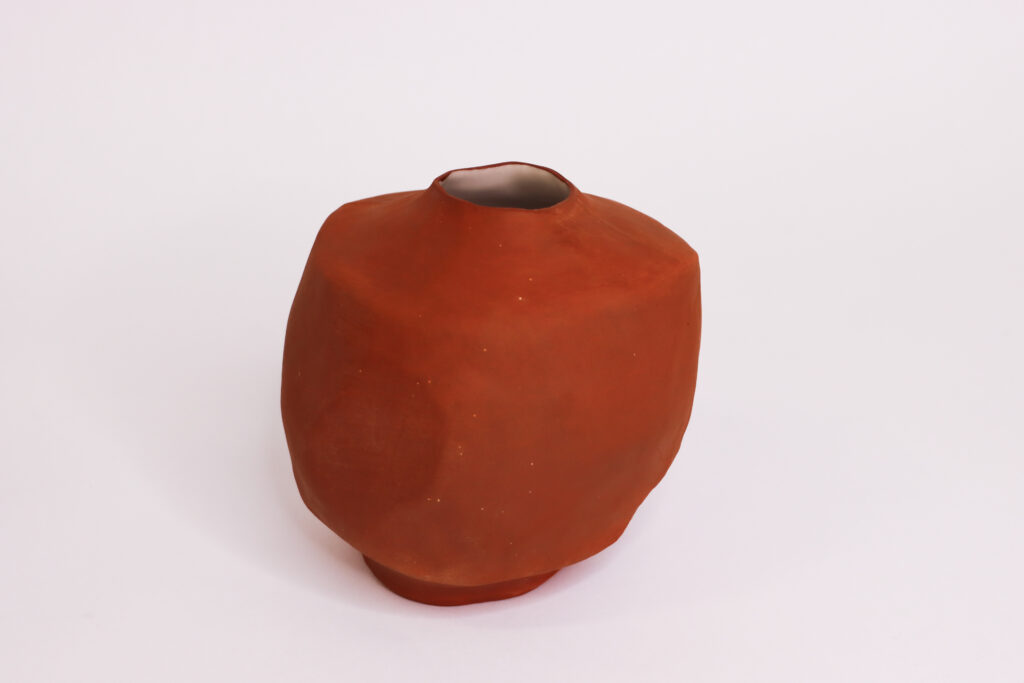
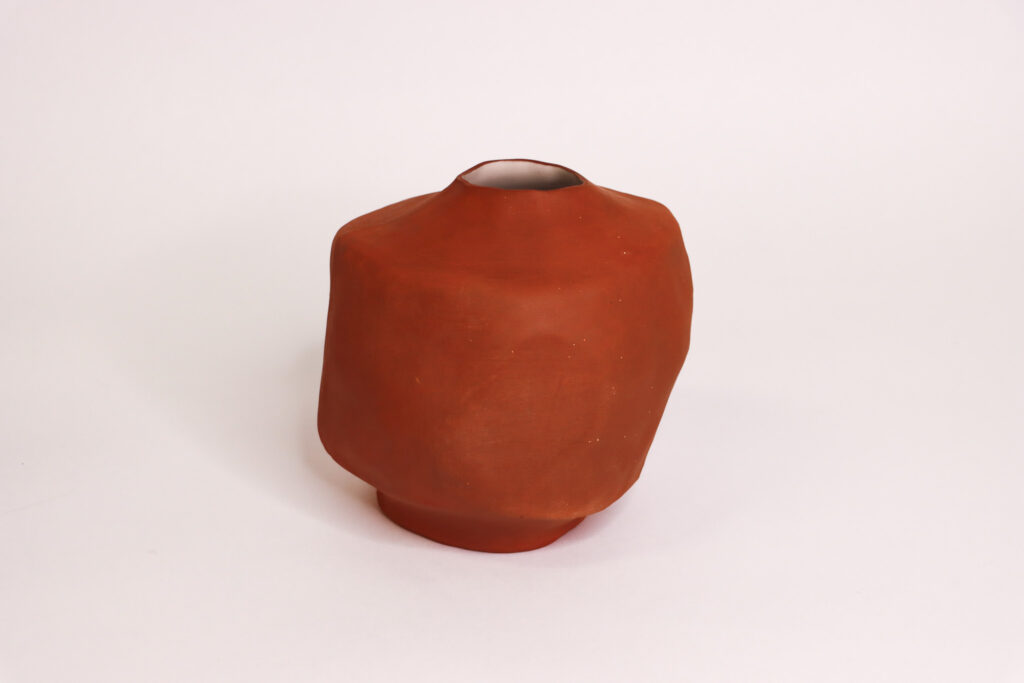
Once the clay had been processed I dried out some of it enough to use it for hand-building and wheel throwing. I also made a casting slip by adding darvan to the slippy mix of clay. After a long journey of testing and working with this material, this clay body held and allowed me to move forward with building form as a way of conversing with the material.
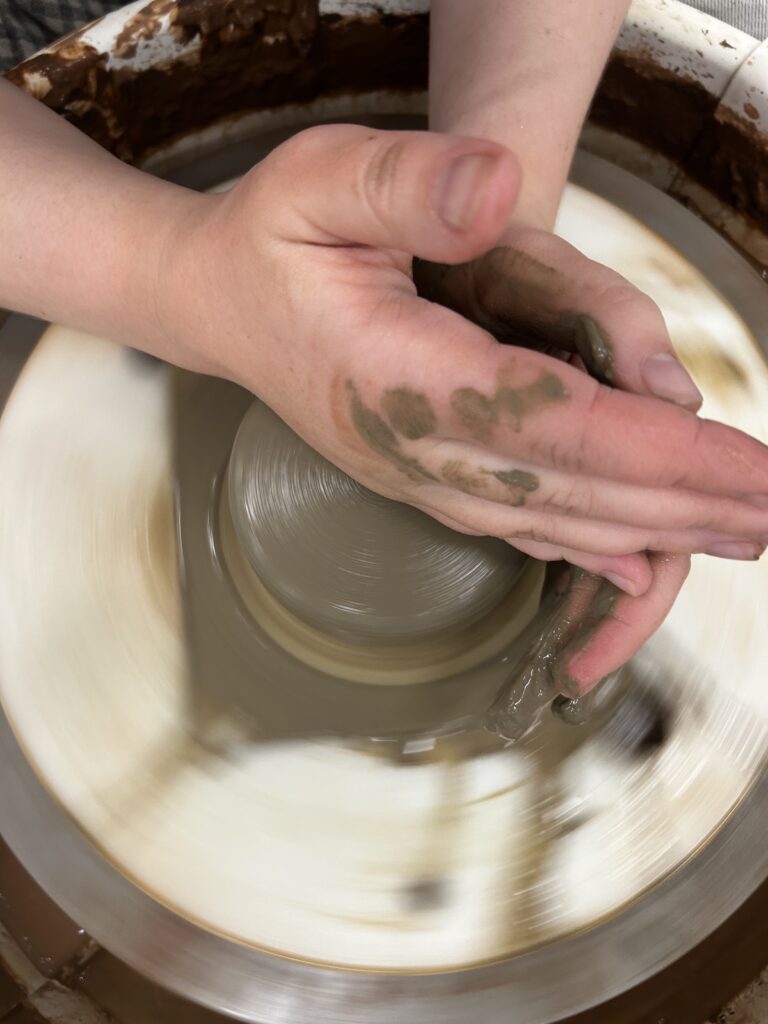
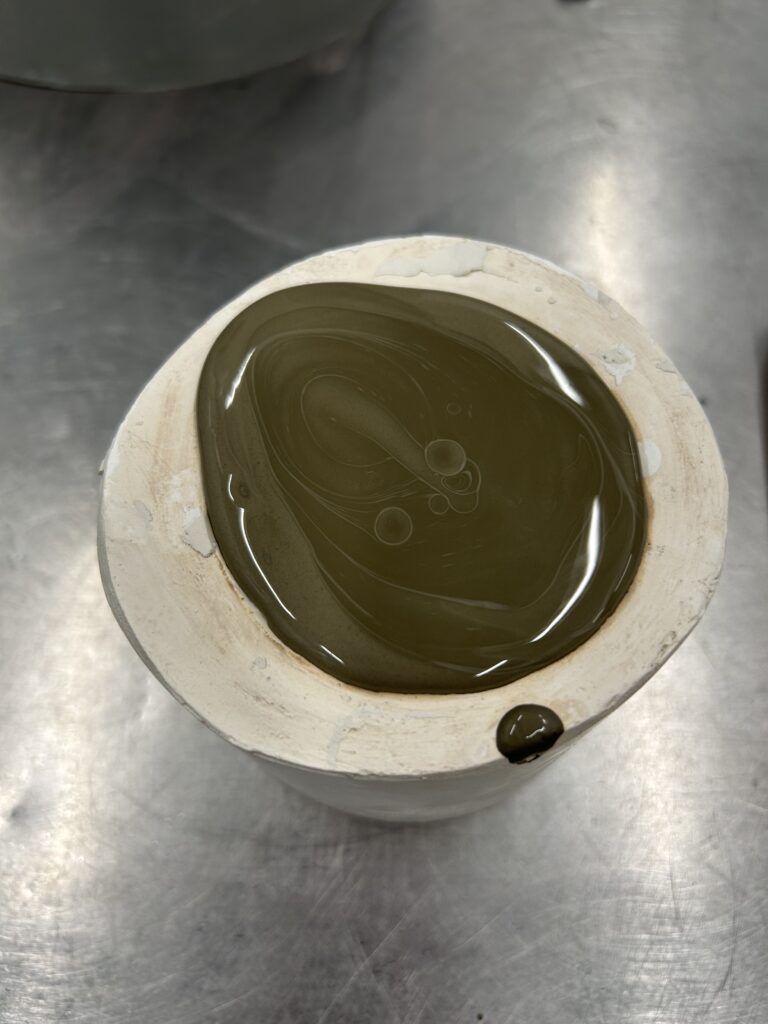
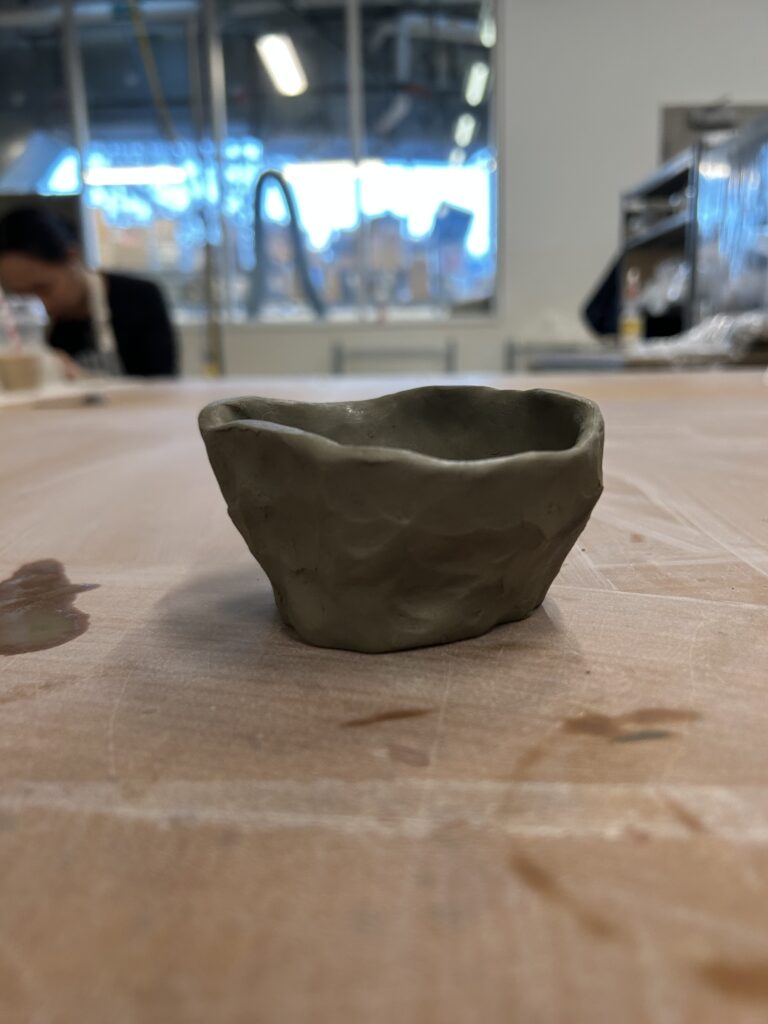
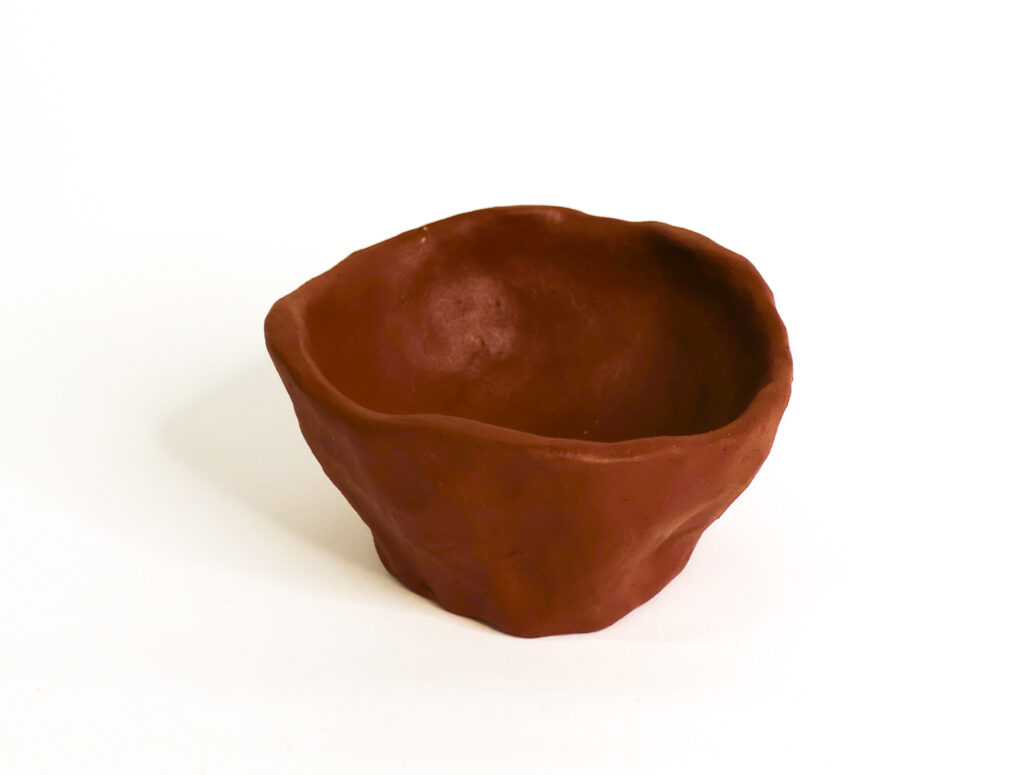
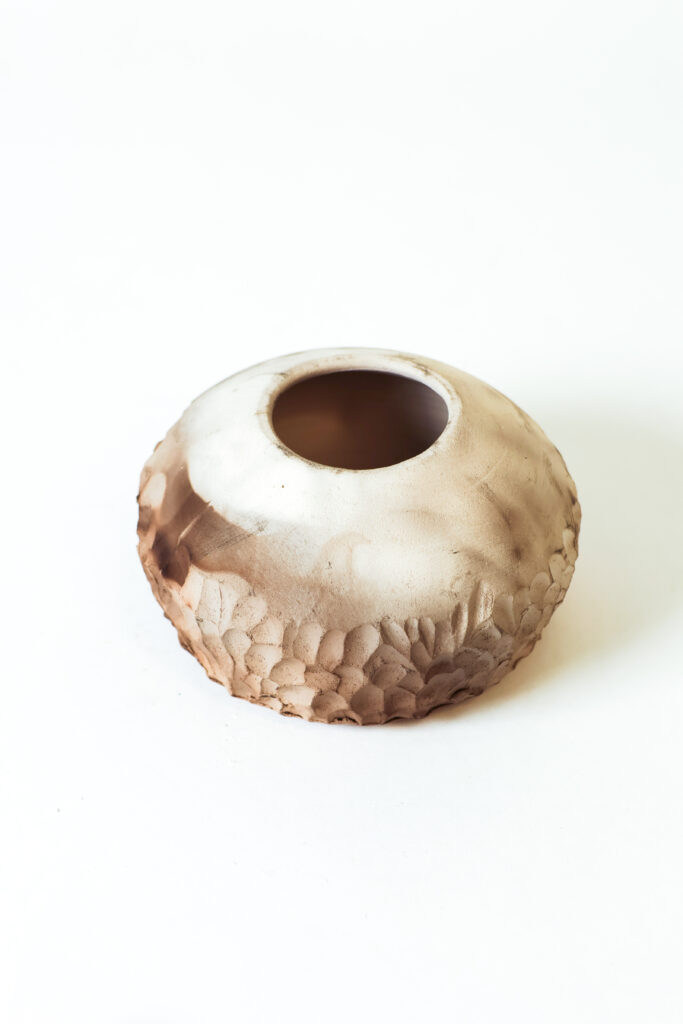
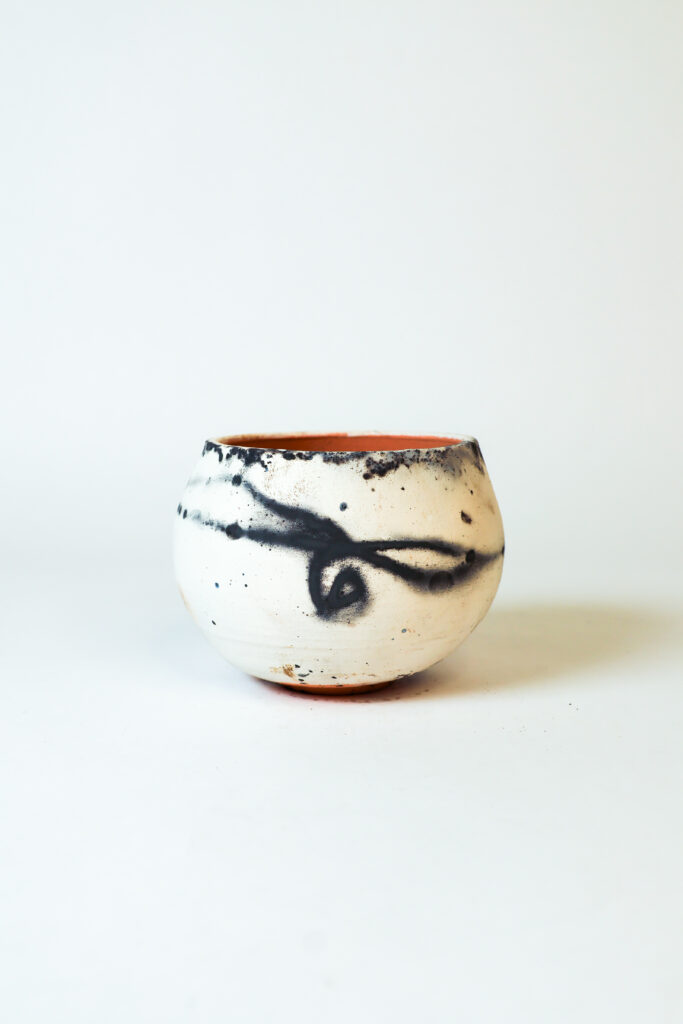
Hand-built, wheel thrown and slip casted vessels fired to varying temperatures.
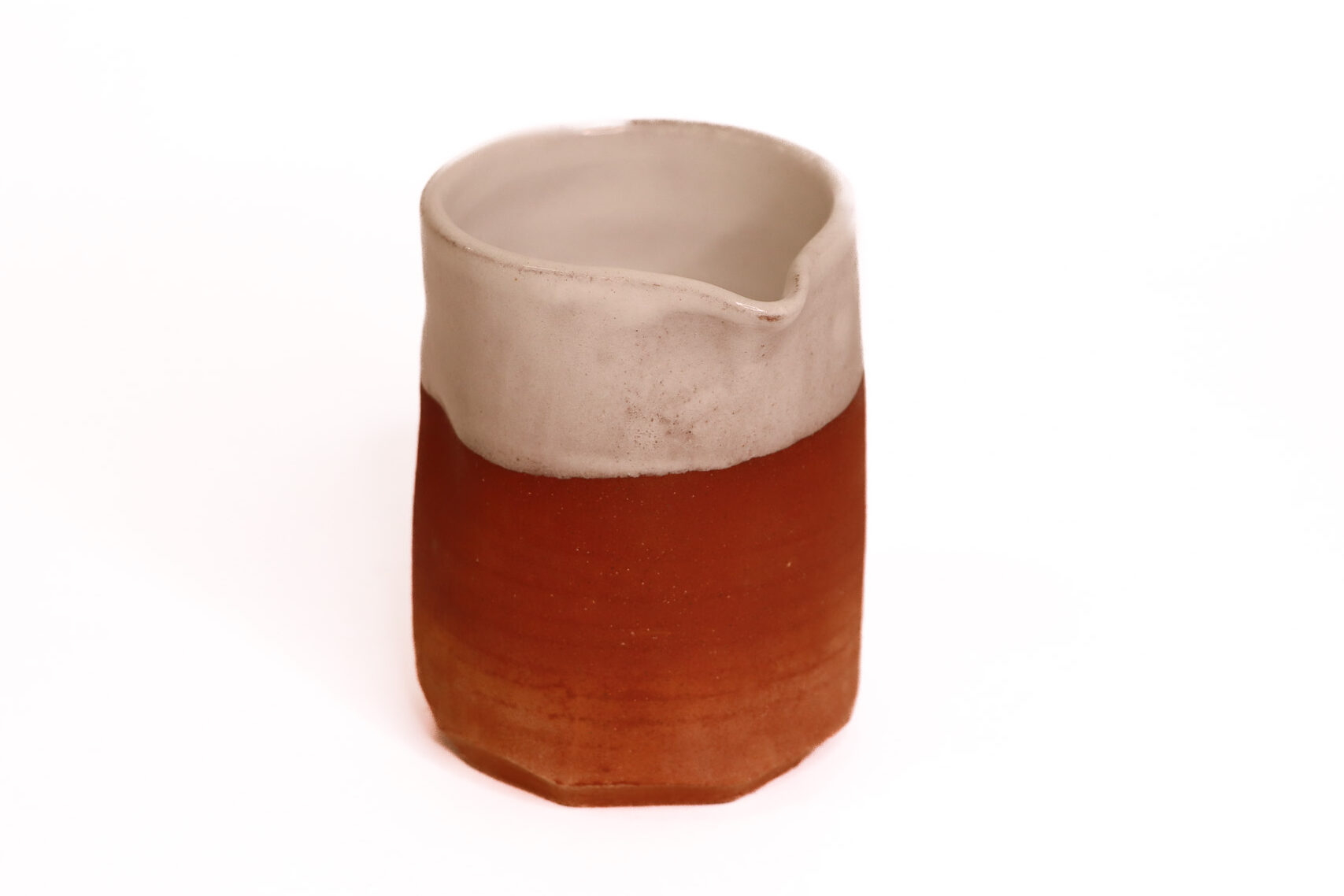
form making
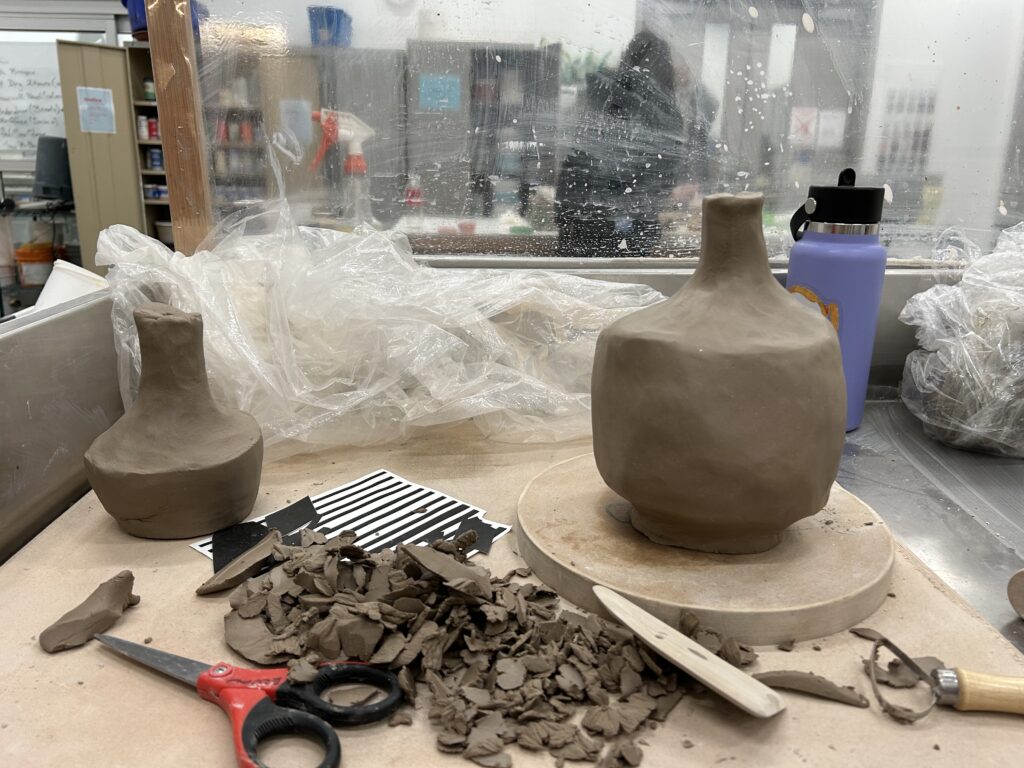
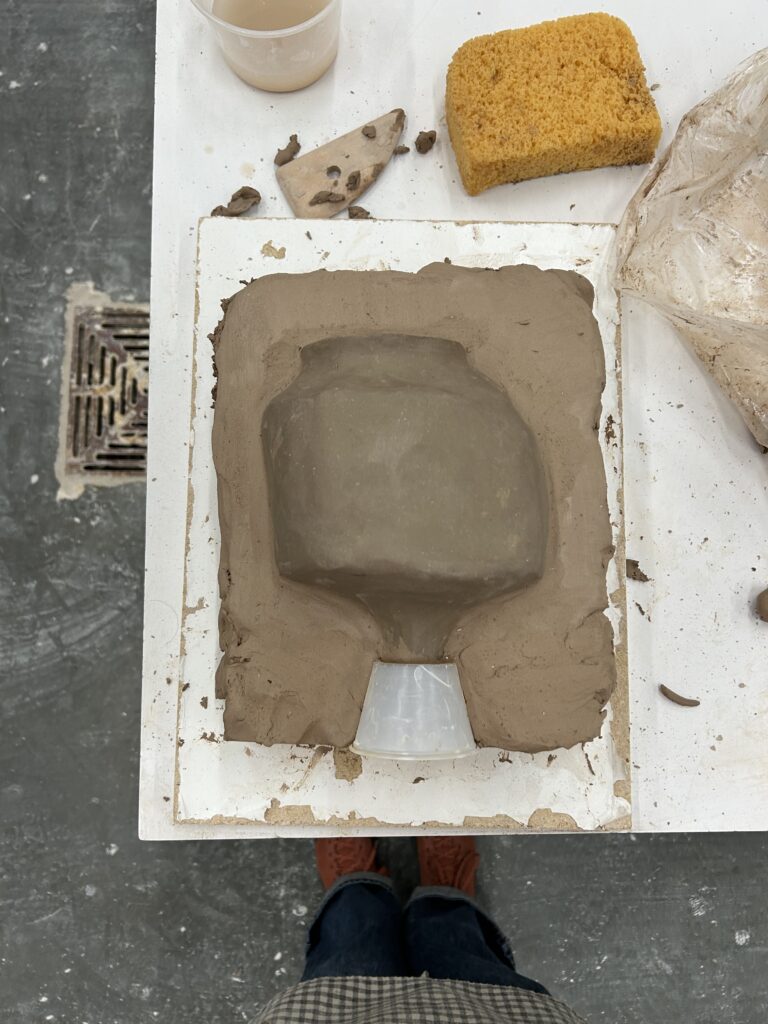
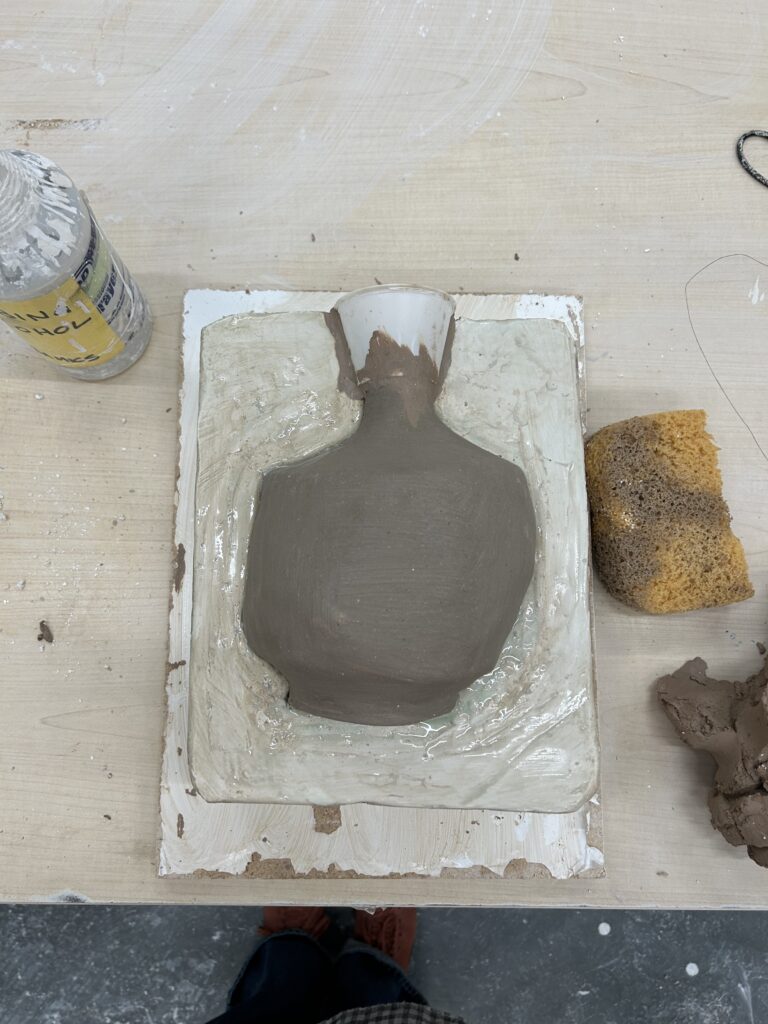
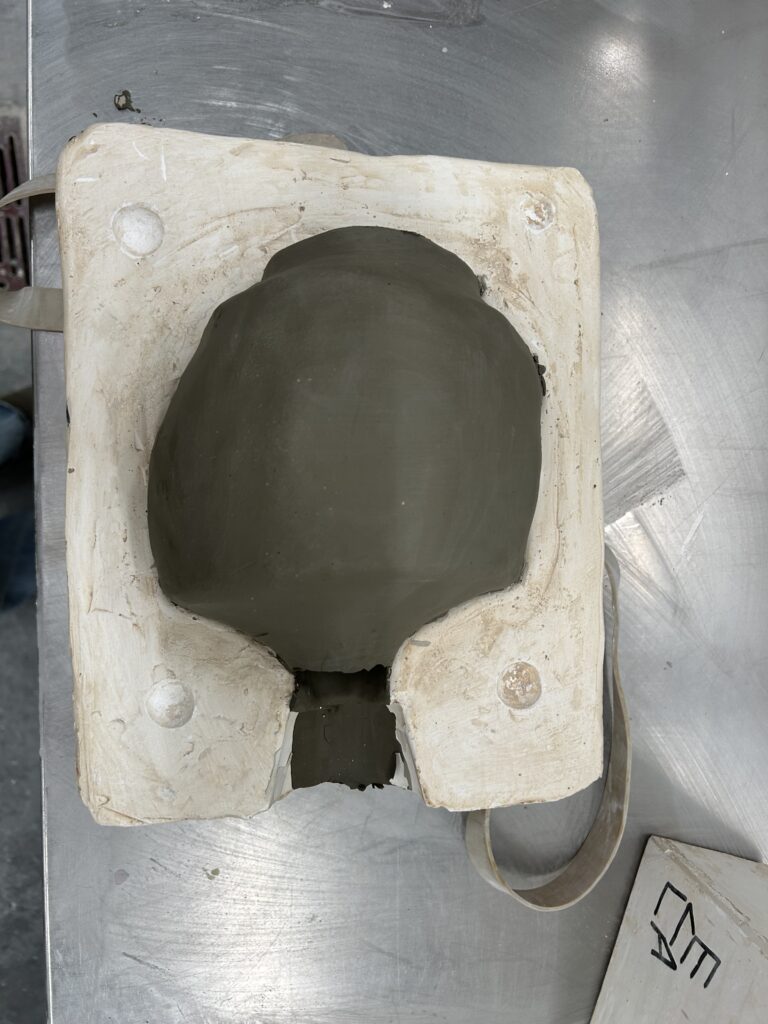
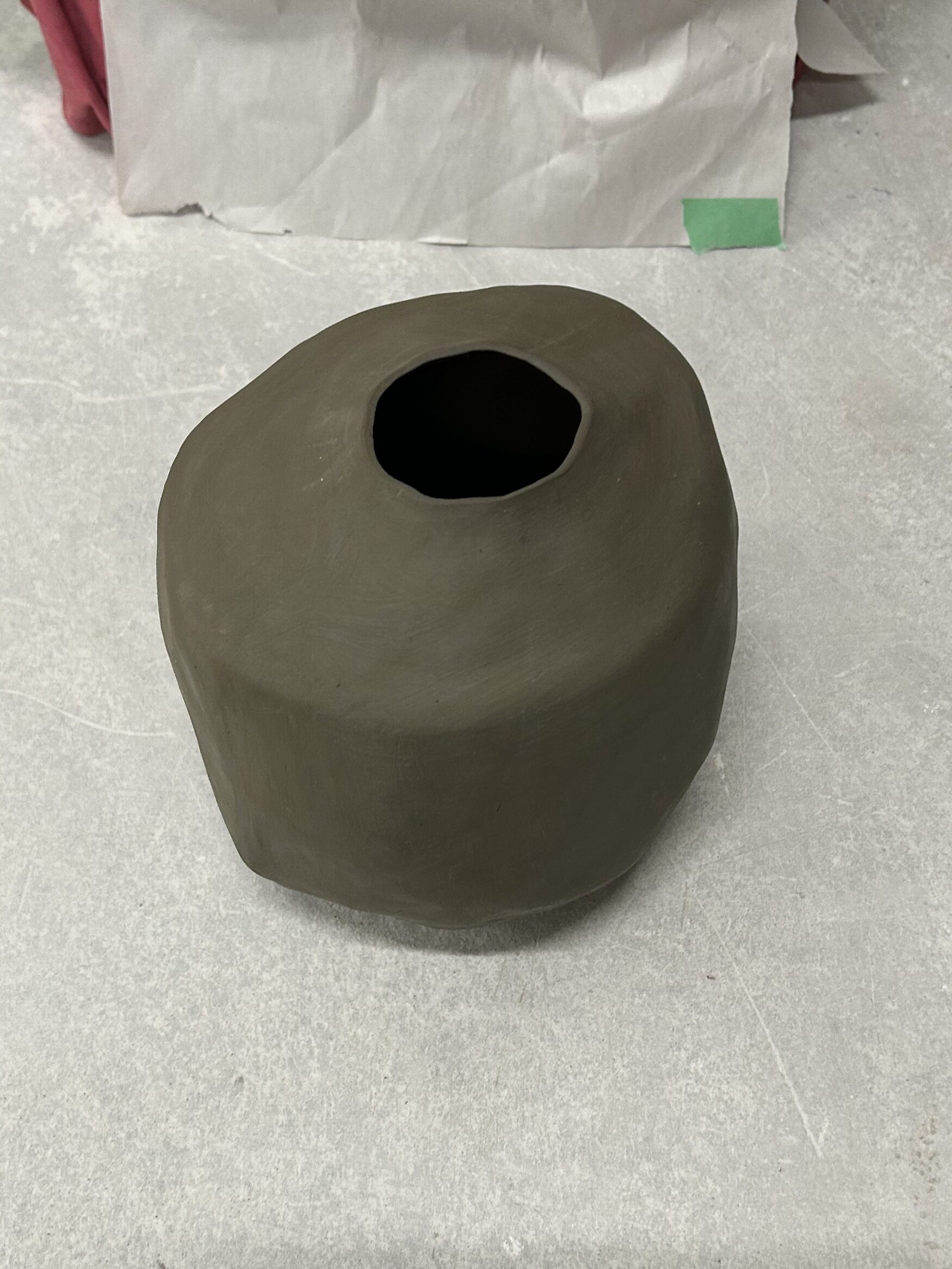
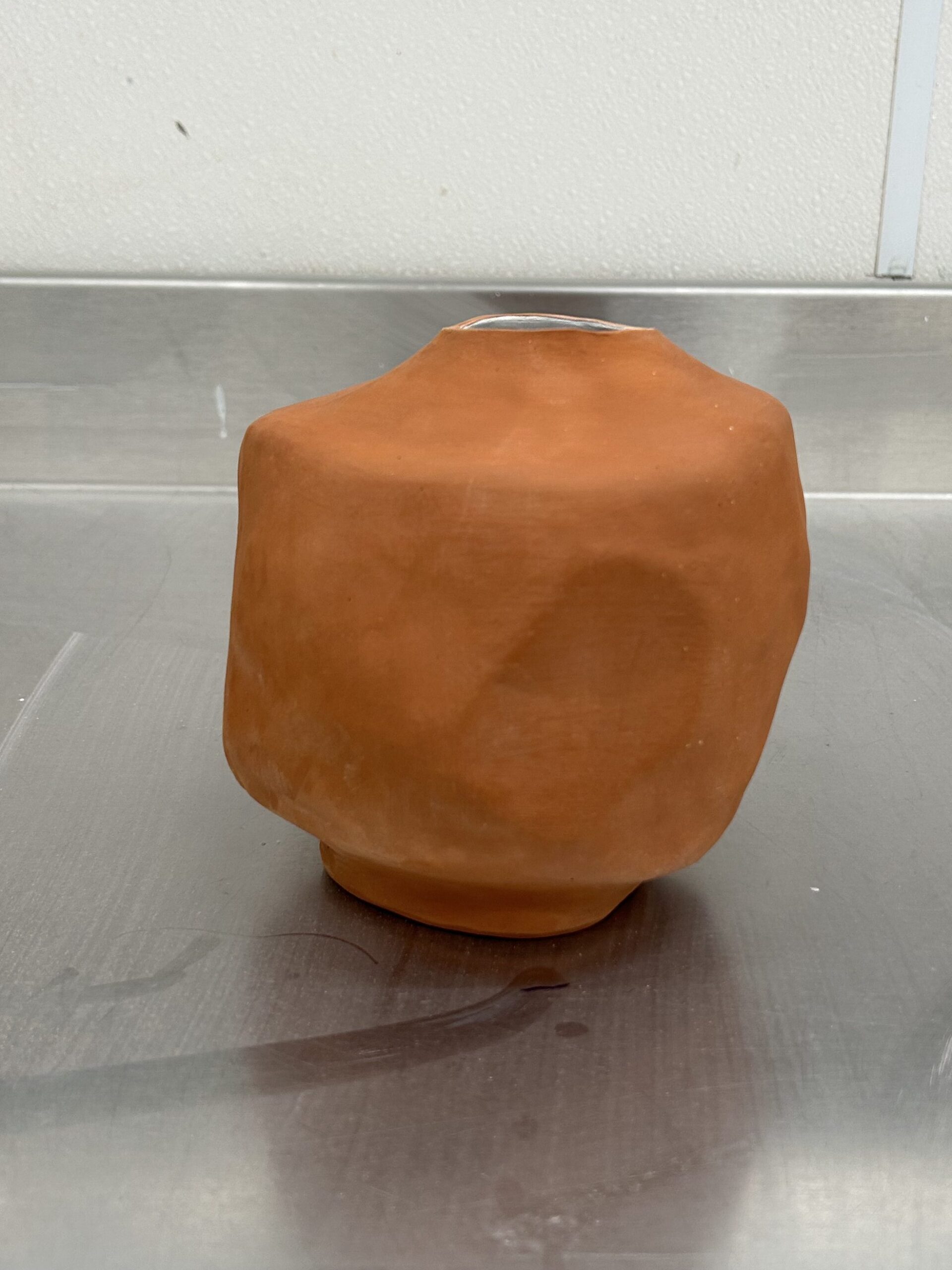
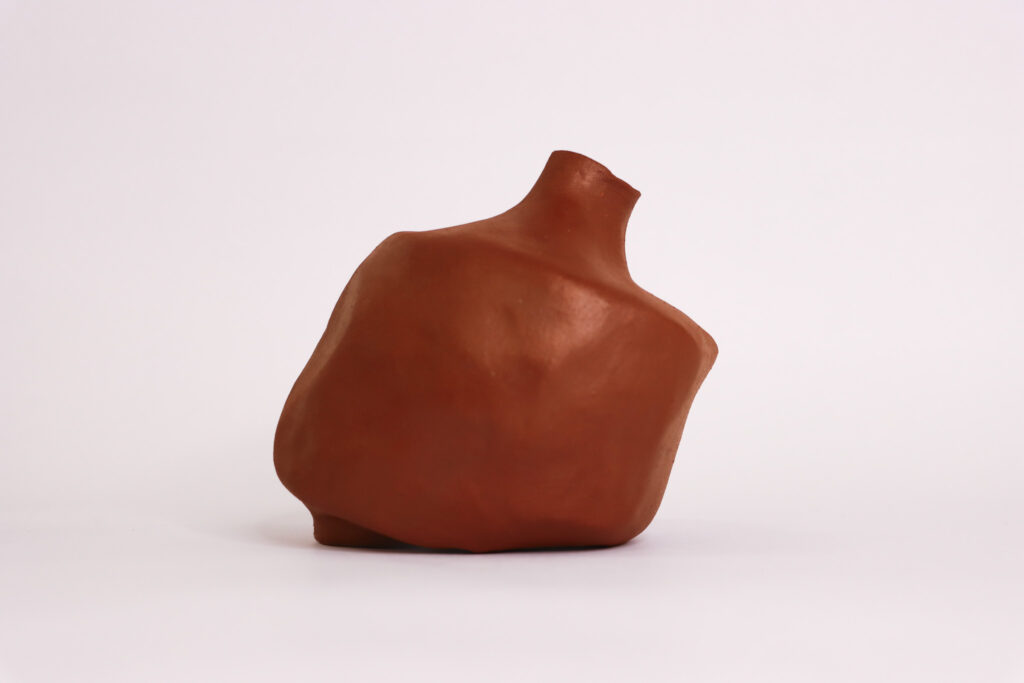
Taking inspiration from the very rocks that I walked on to the clay spot by the river, I began to build a form out of reclaimed clay—a solid form, one to create a mould off of.
potter bot
To further explore the opportunities and limitations of this clay body, I decided to try it in the Potter Bot – a clay 3D printer. I enjoy the dialogue that happens when combing a hand collected and processed material that I know so well with the digital form making.
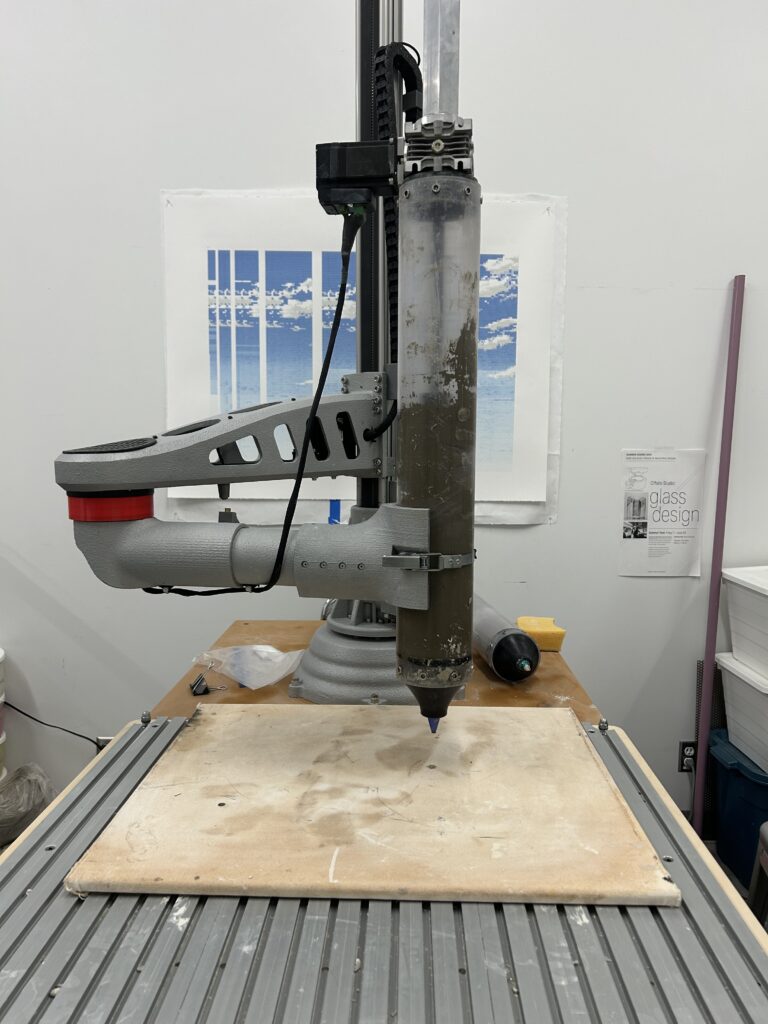
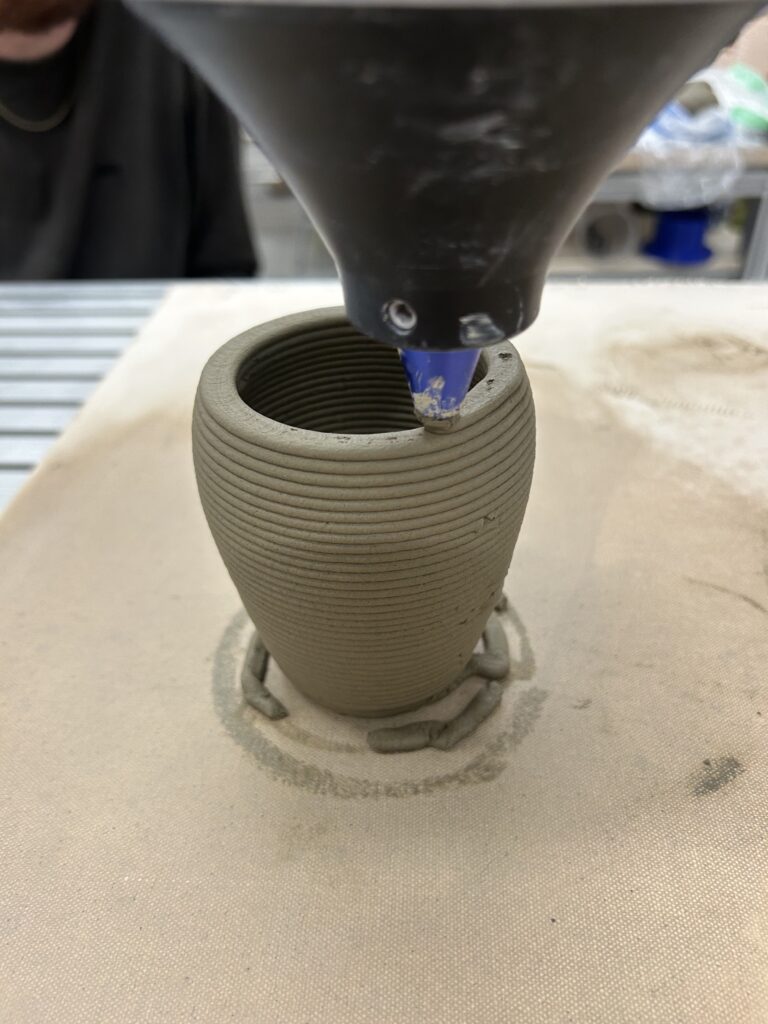
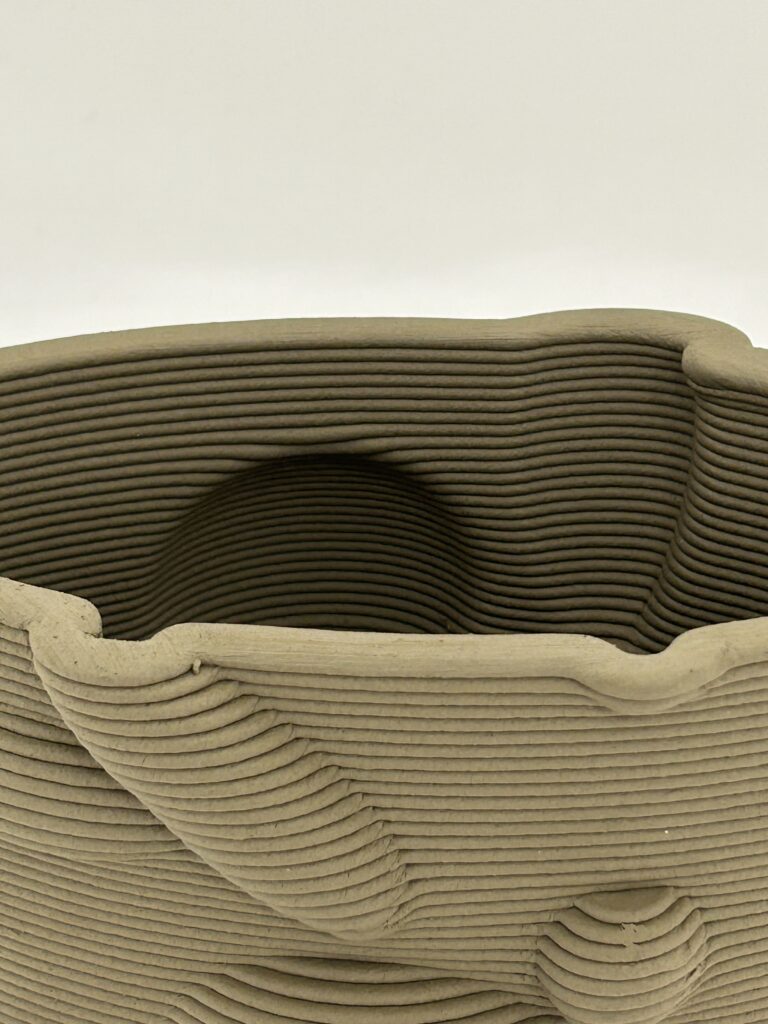
It worked so well and I had a wonderful time exploring what forms I could create. This was a great proof of concept that I plan to explore further.
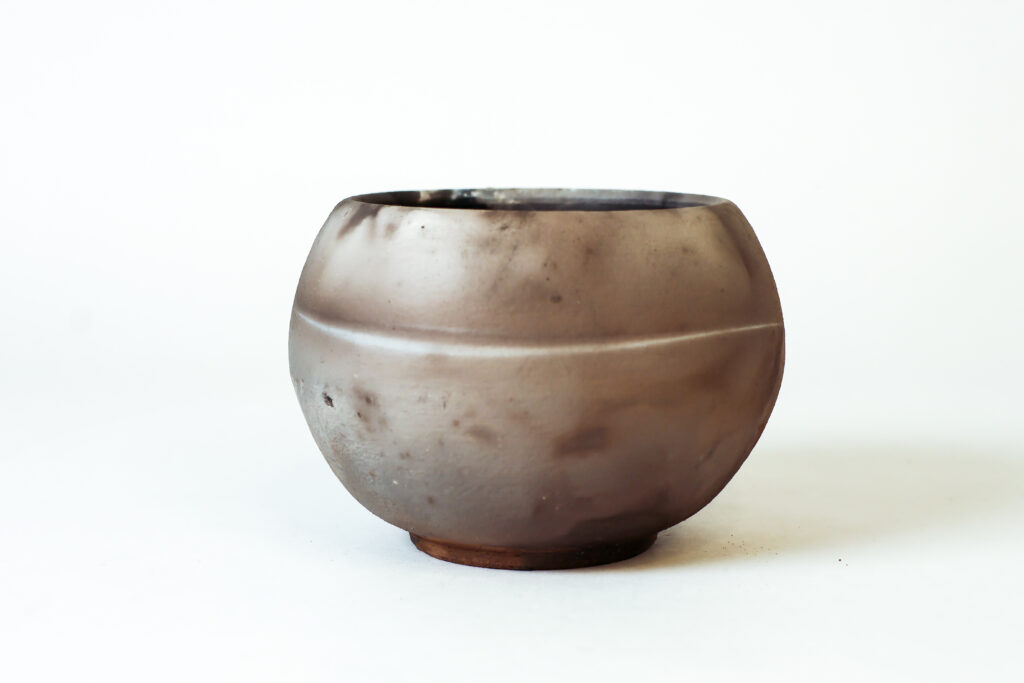
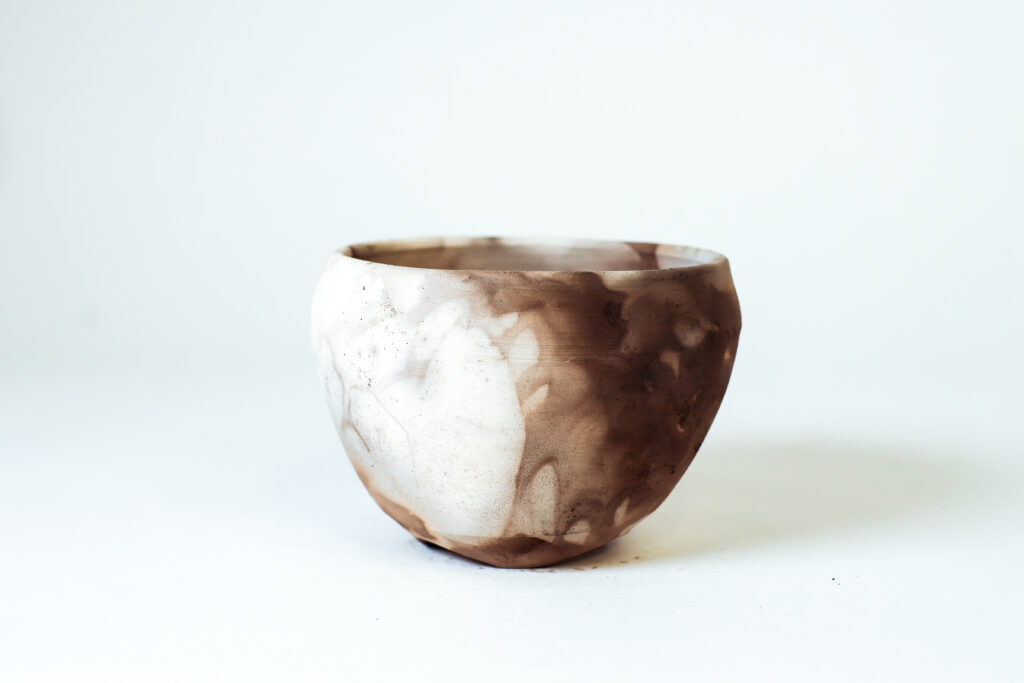
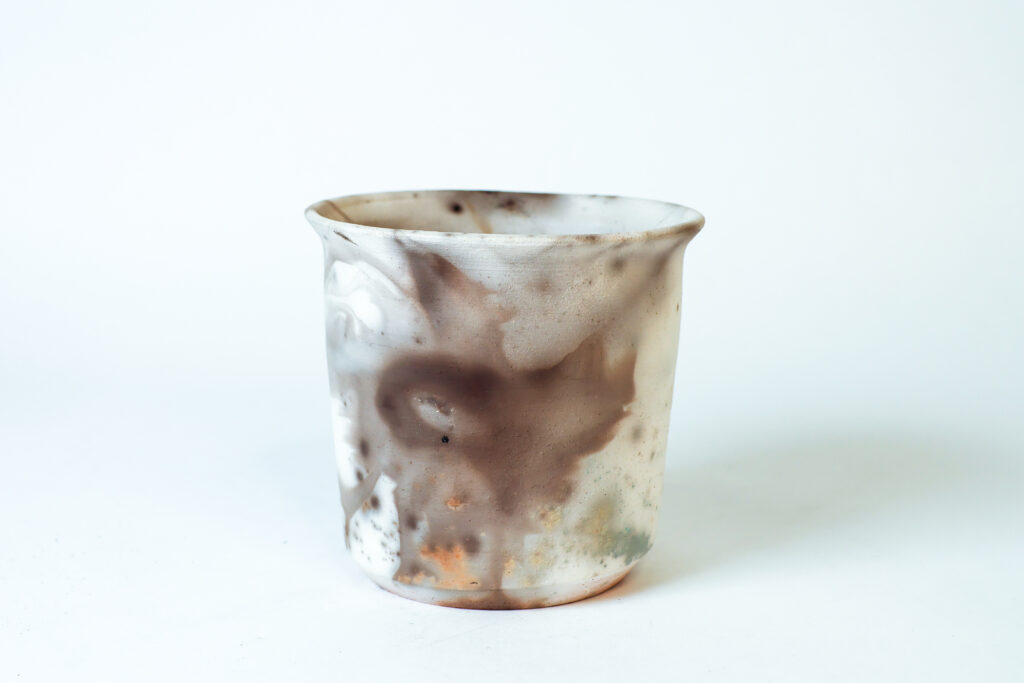
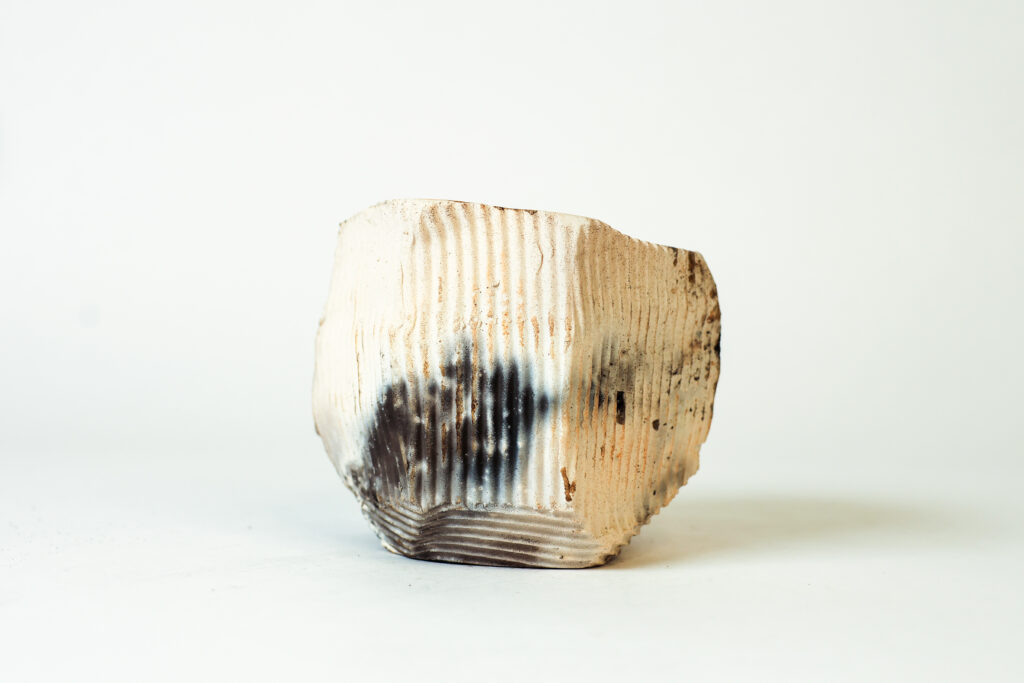
pit firing
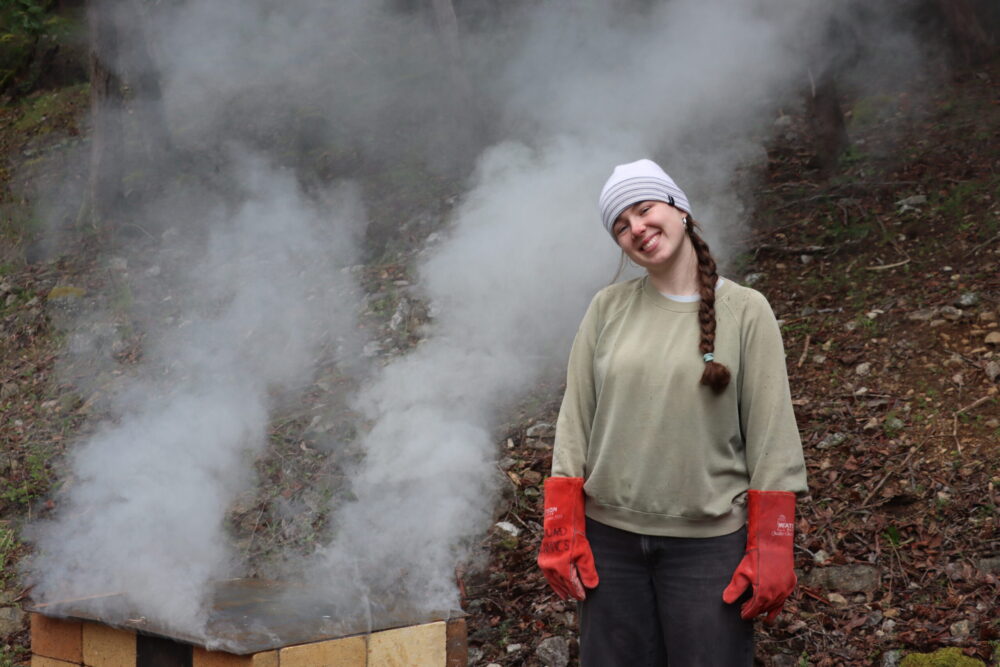
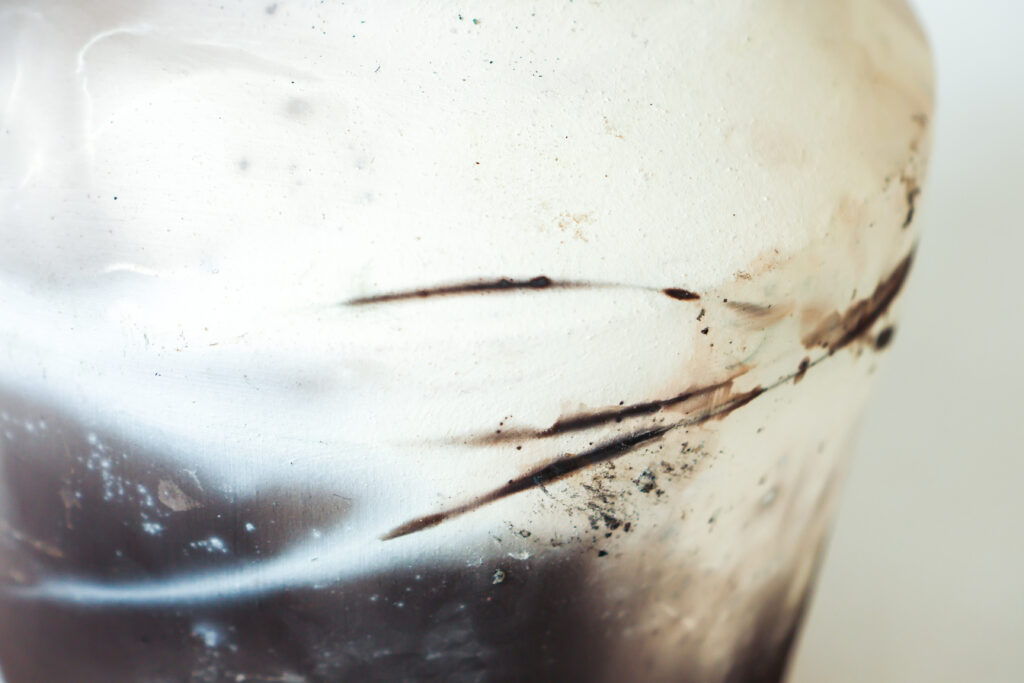
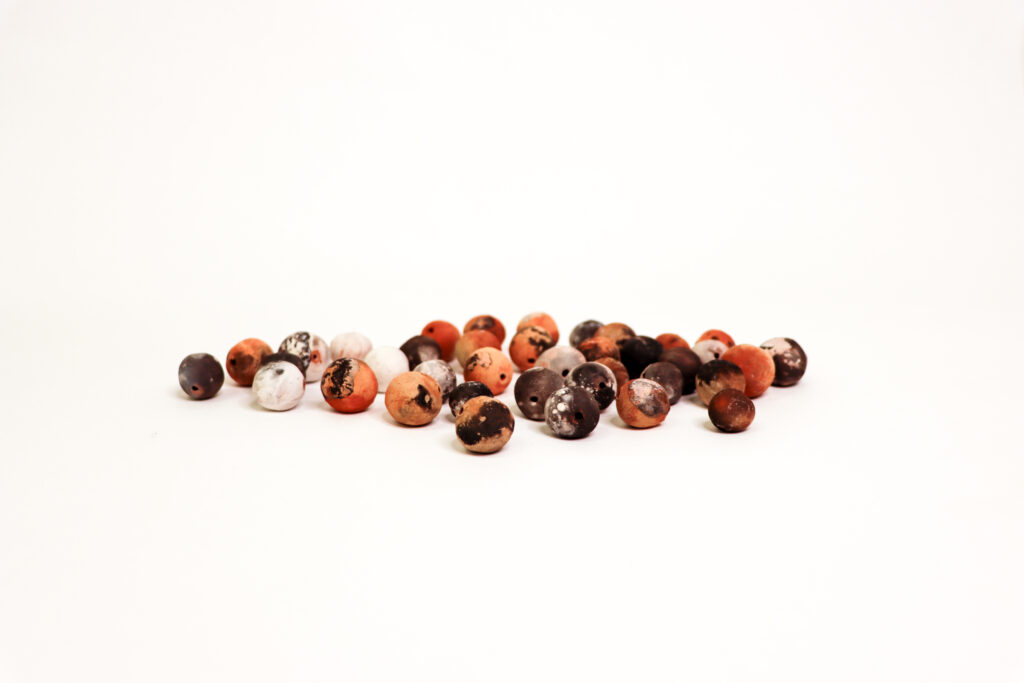
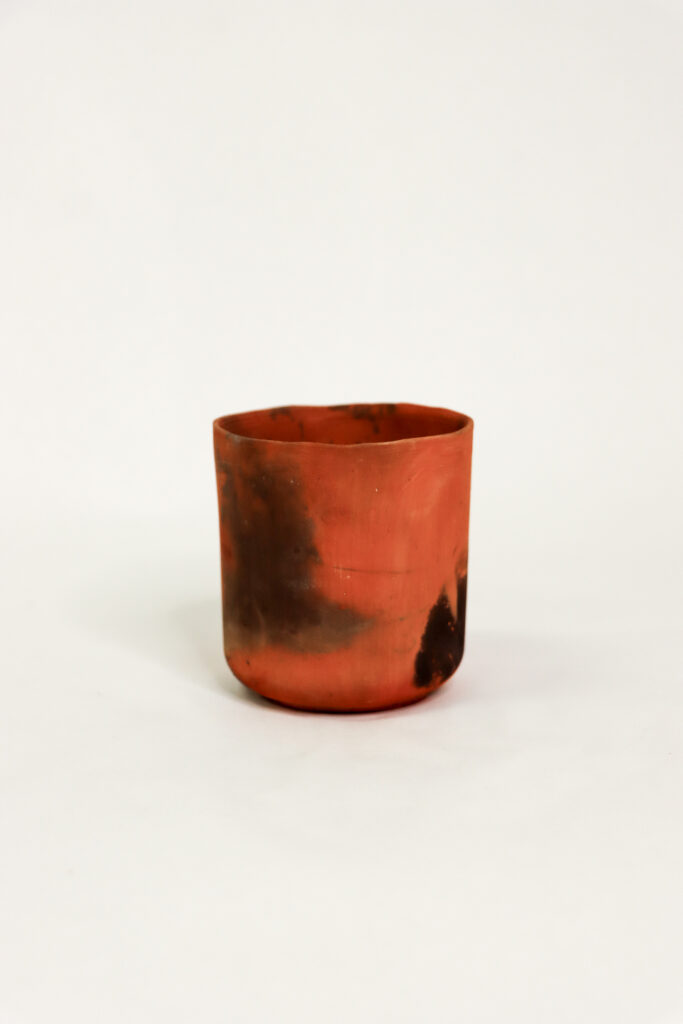
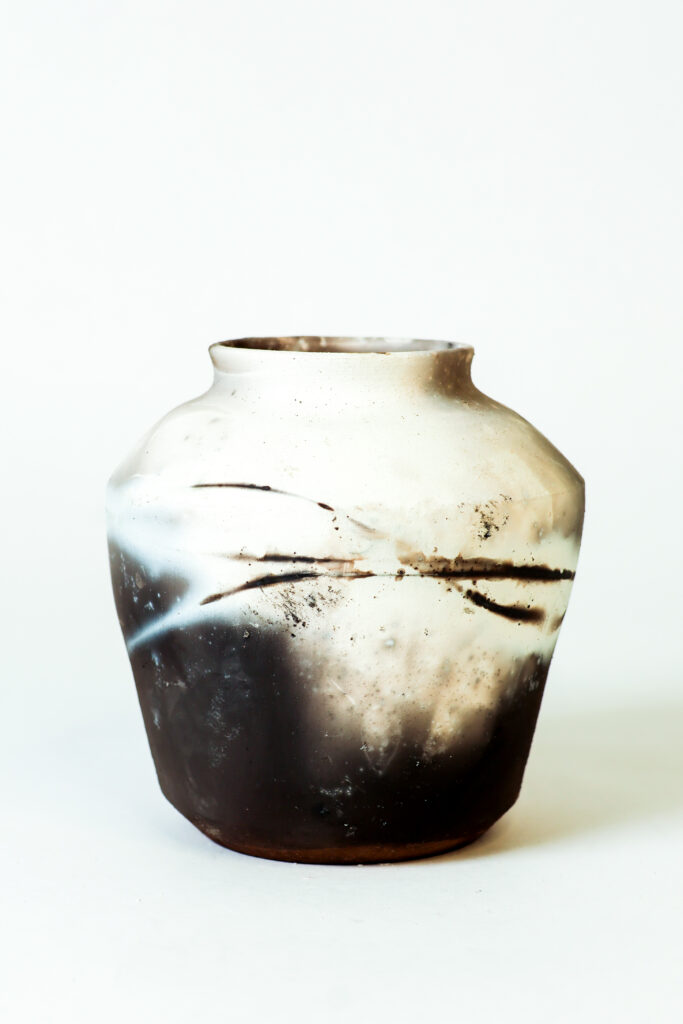
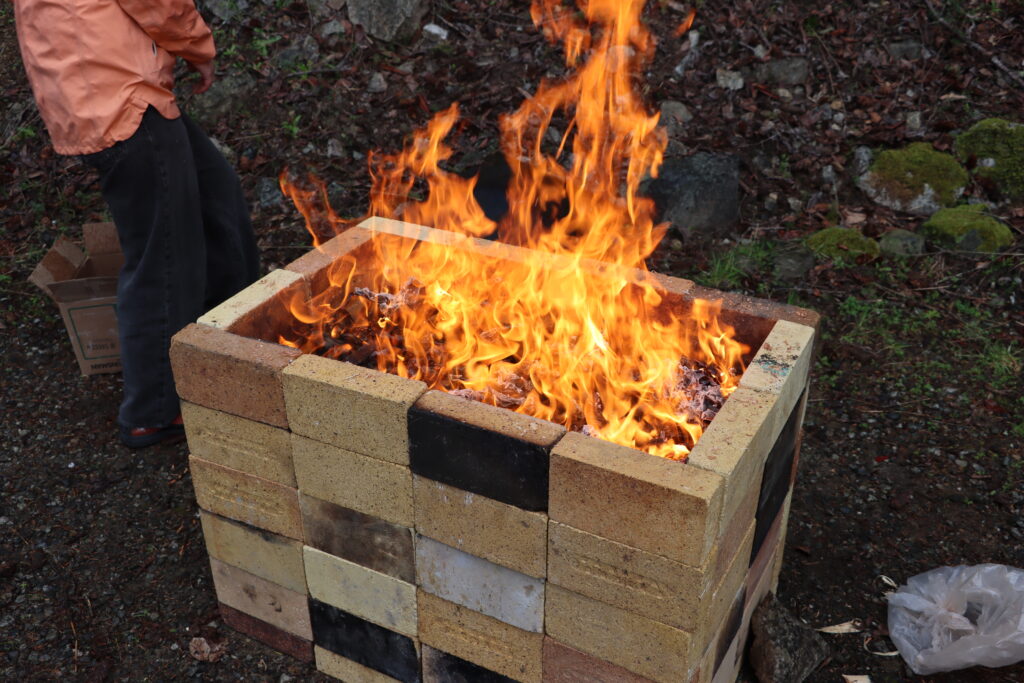
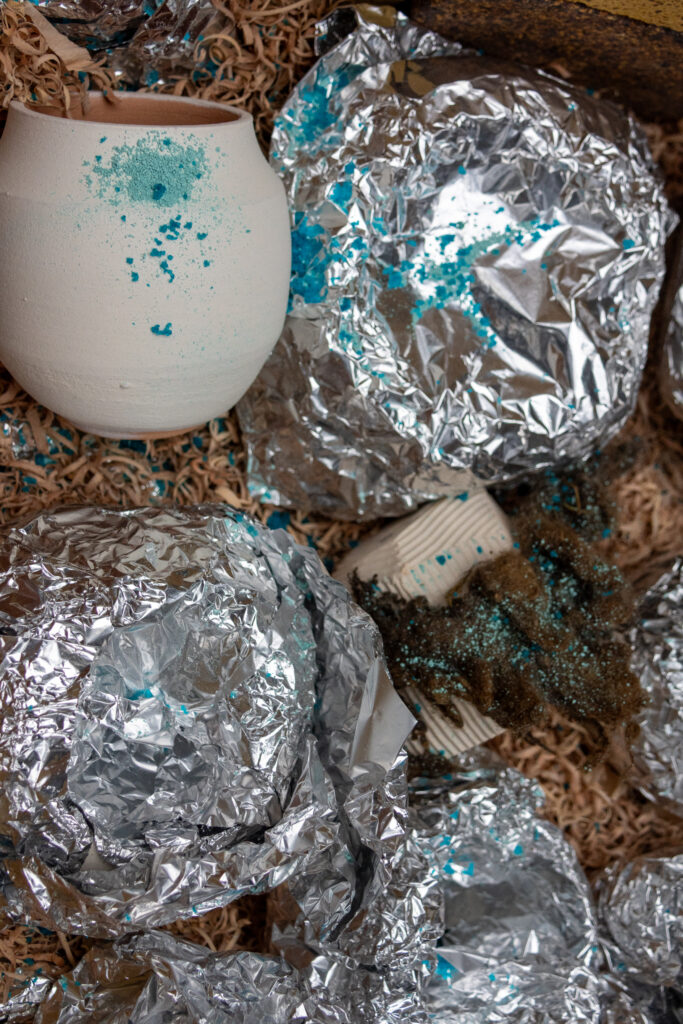
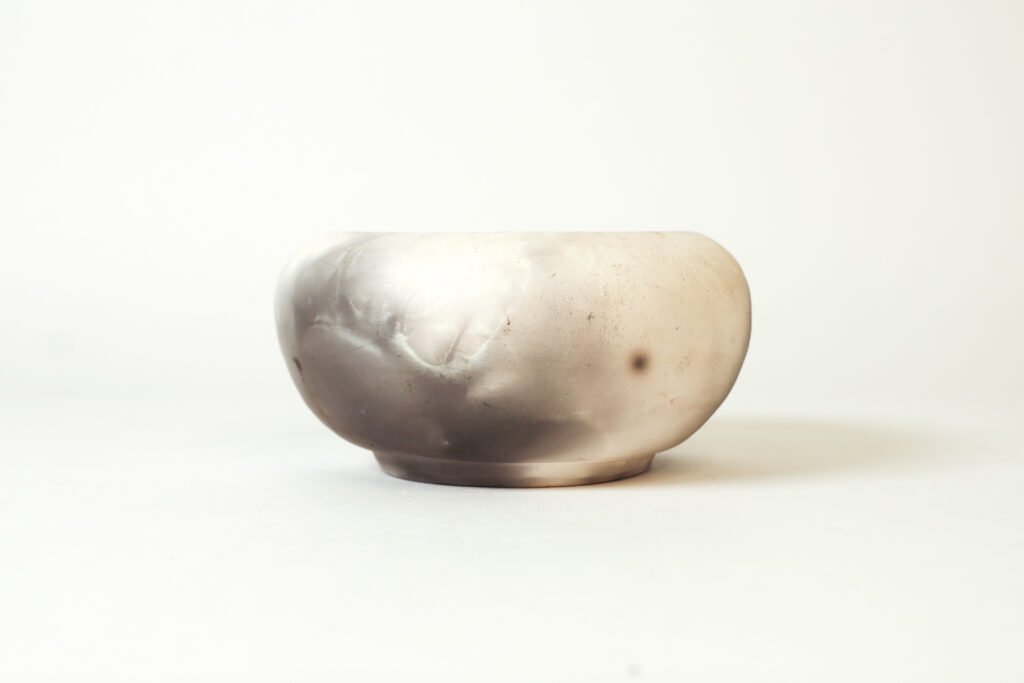
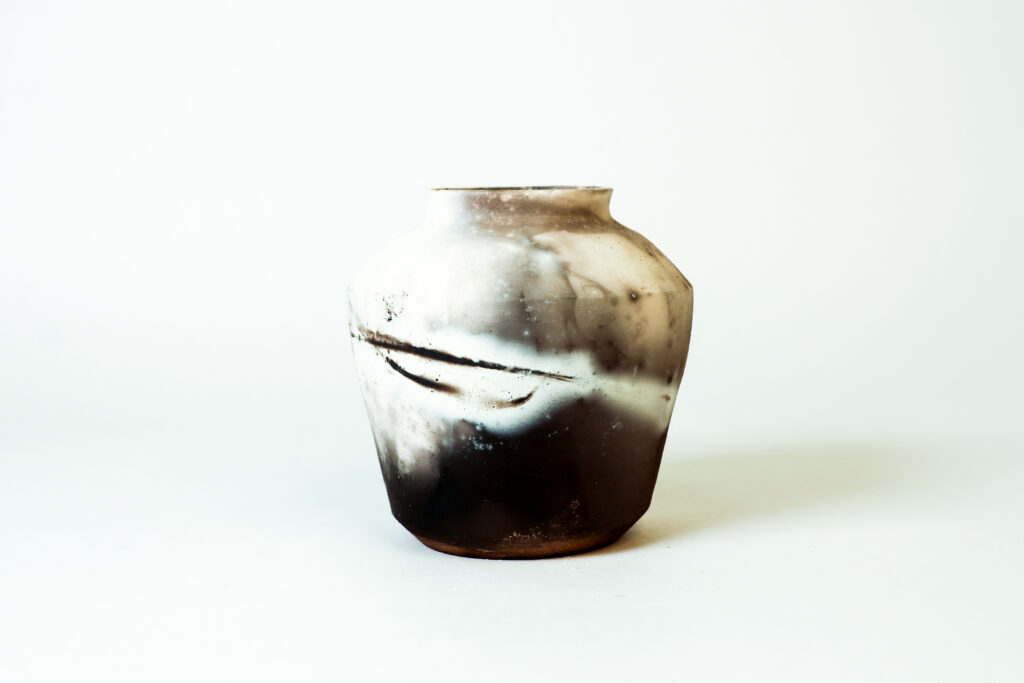
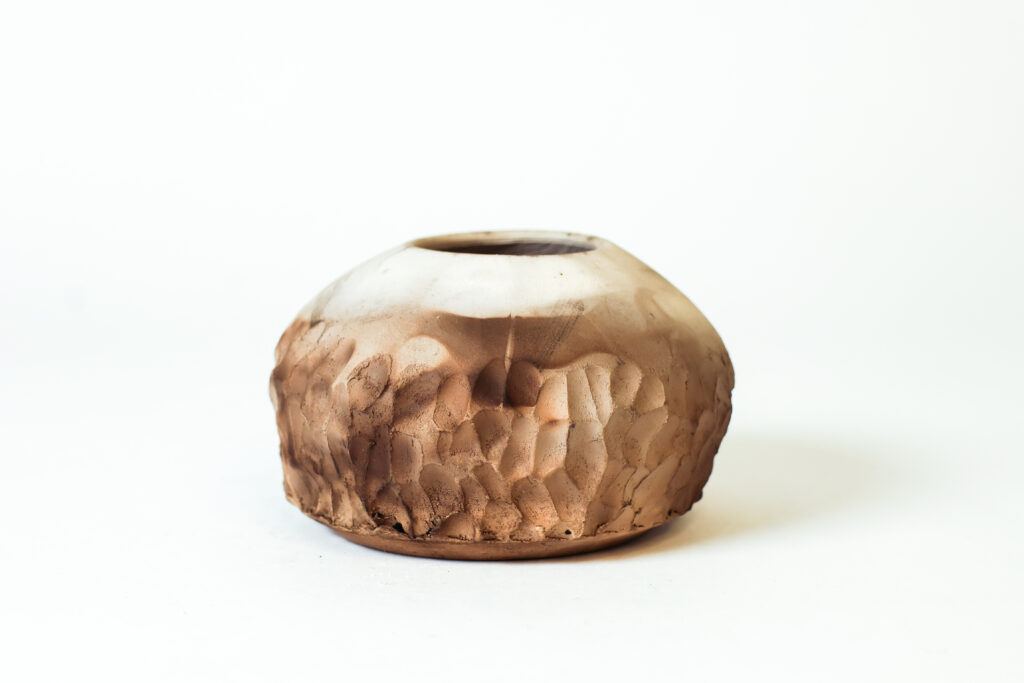
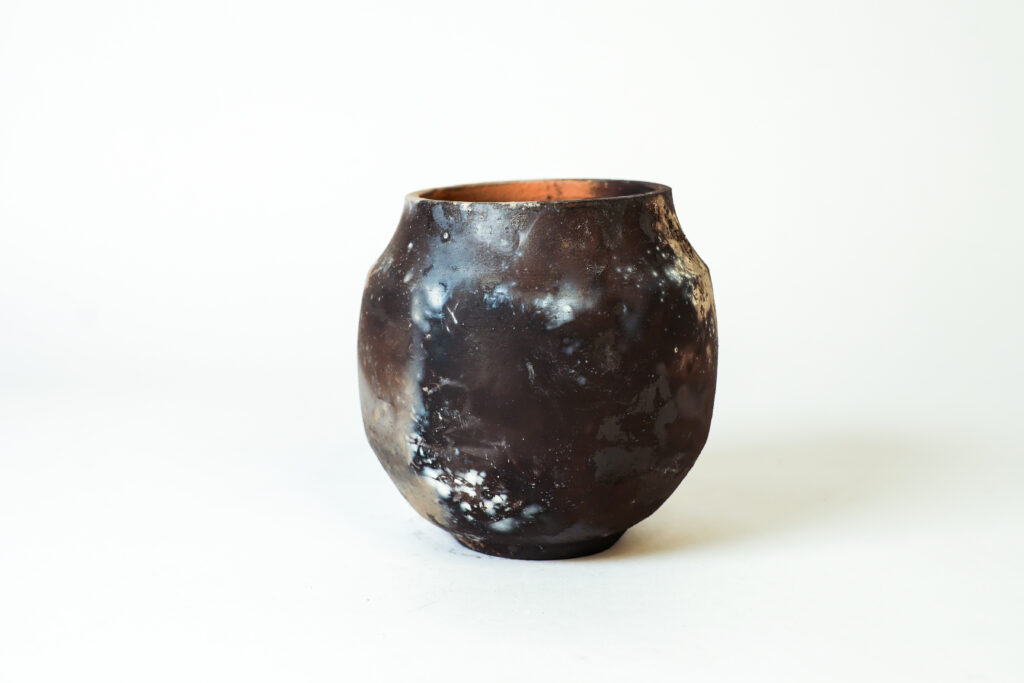
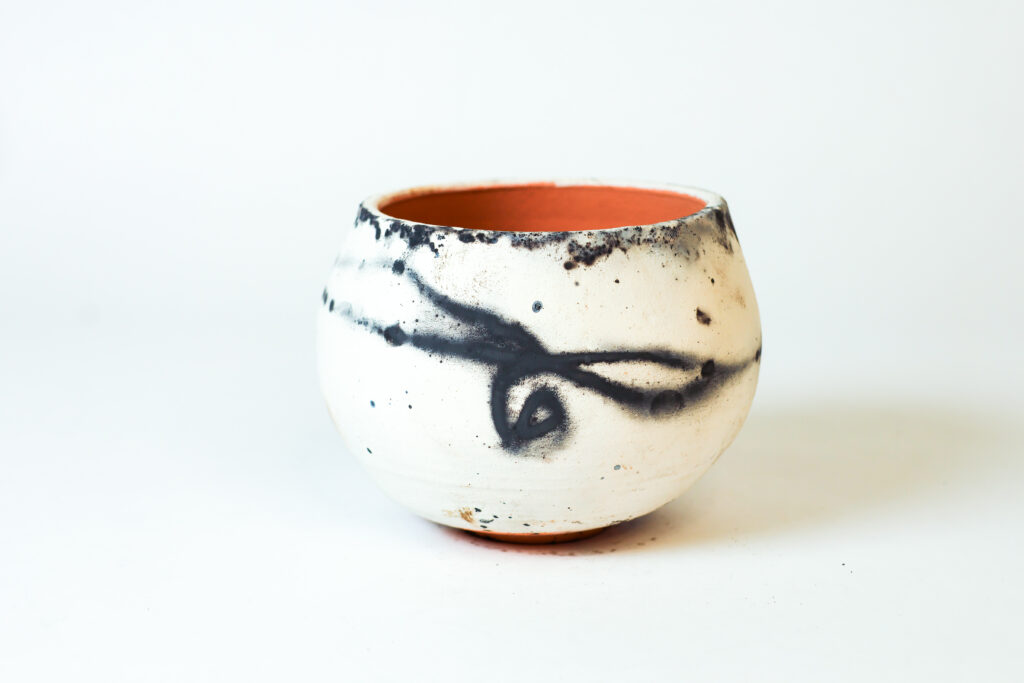
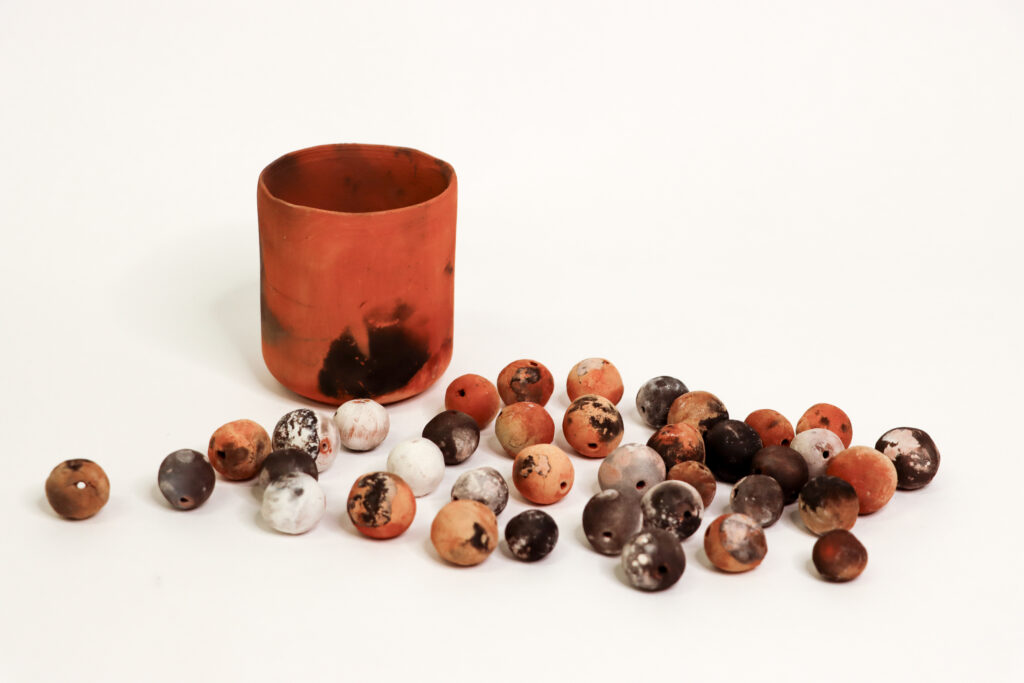
Pit firing or sawdust firing is a method of ceramic firing where porous pots are placed in a fire with a plethora of materials – while the fire burns, the fumes and carbon gets trapped in the shrinking pores of the pots, capturing what looks to me like the movement of the fire itself.
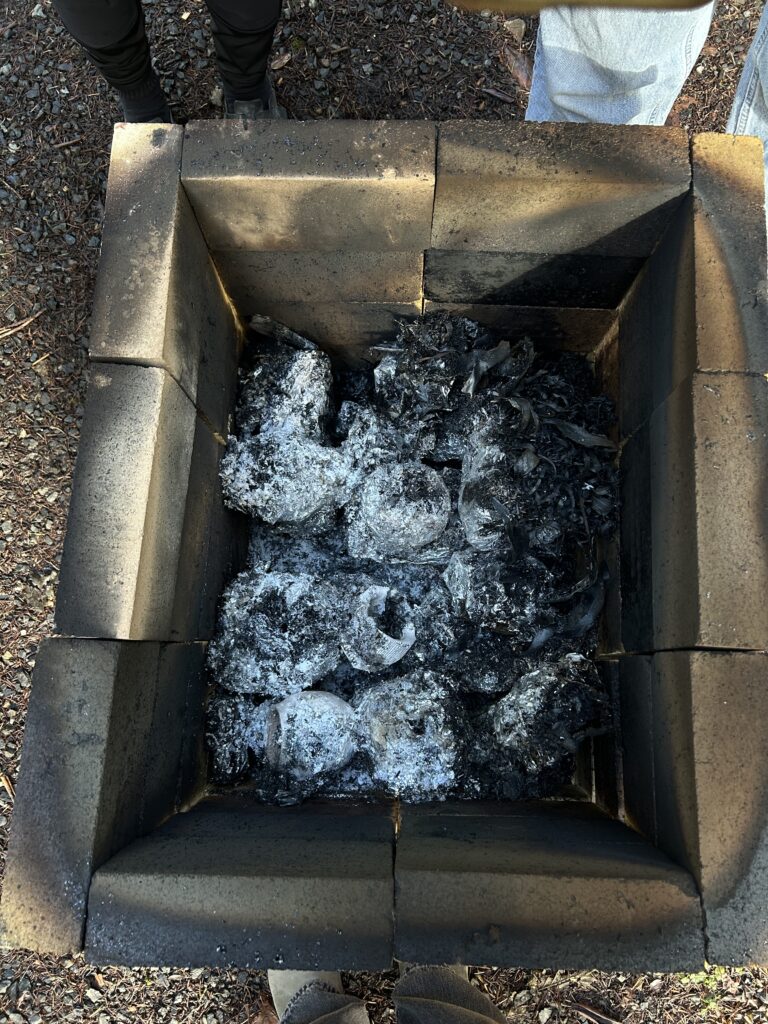
This process feels deeply natural within the context of the project — a conversation between material, process, and maker. There is a necessary relinquishing of control once the pots enter the fire; your intentions are absorbed, altered, and transformed by heat, atmosphere, and chance. When the fire finally burns down to ash, you unwrap the vessel as though receiving an answer to a question you had asked the material.
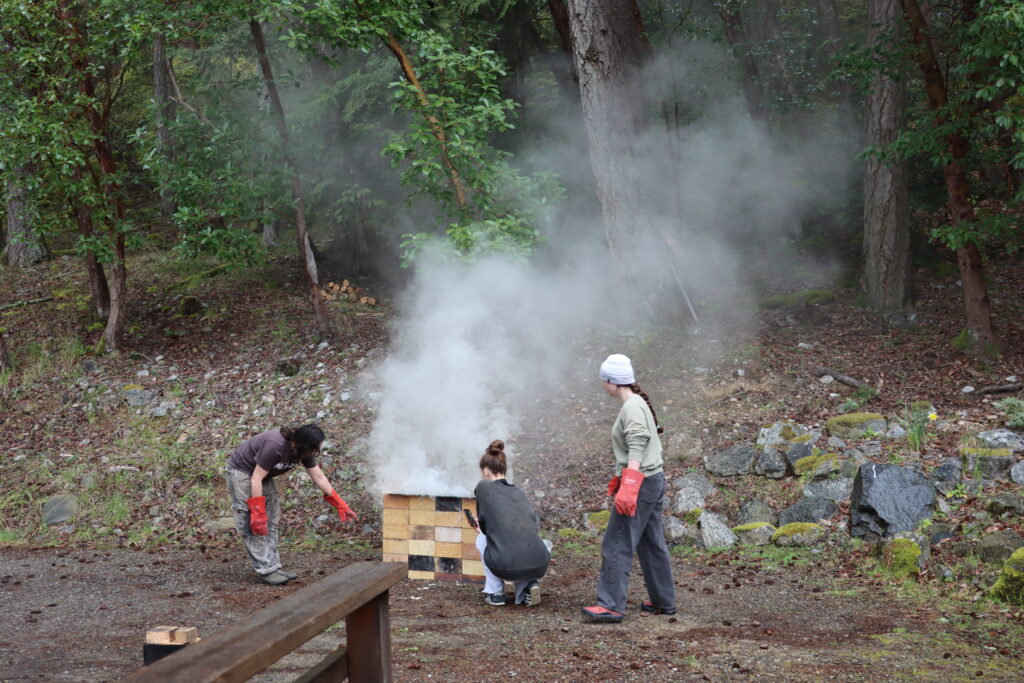
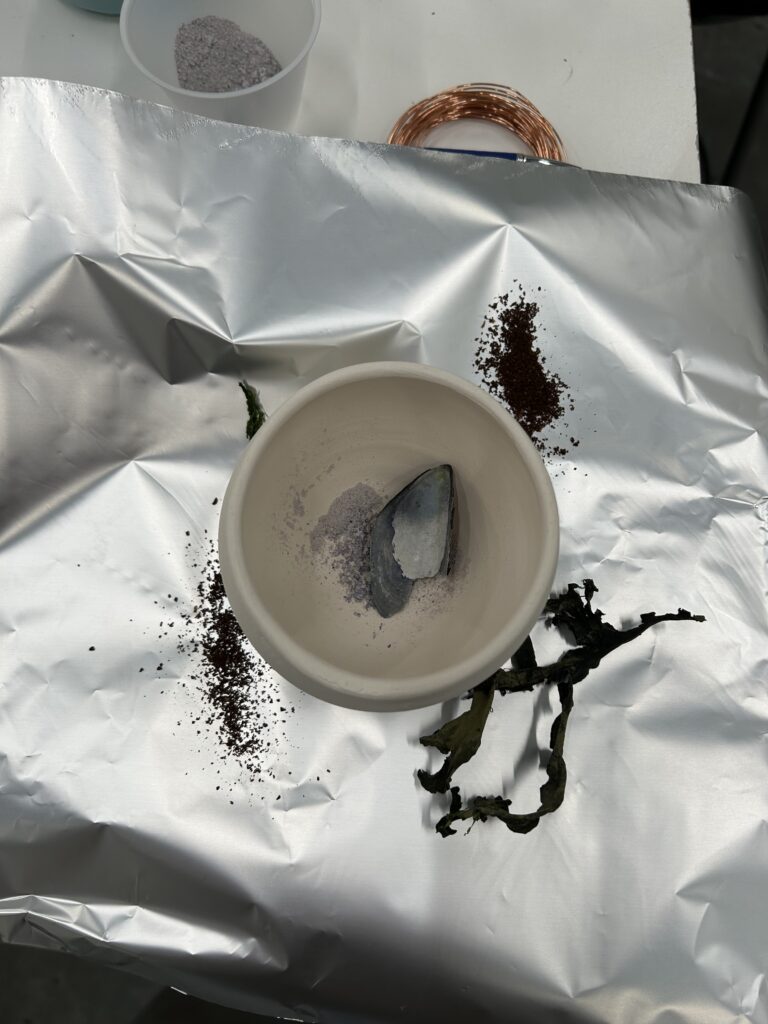
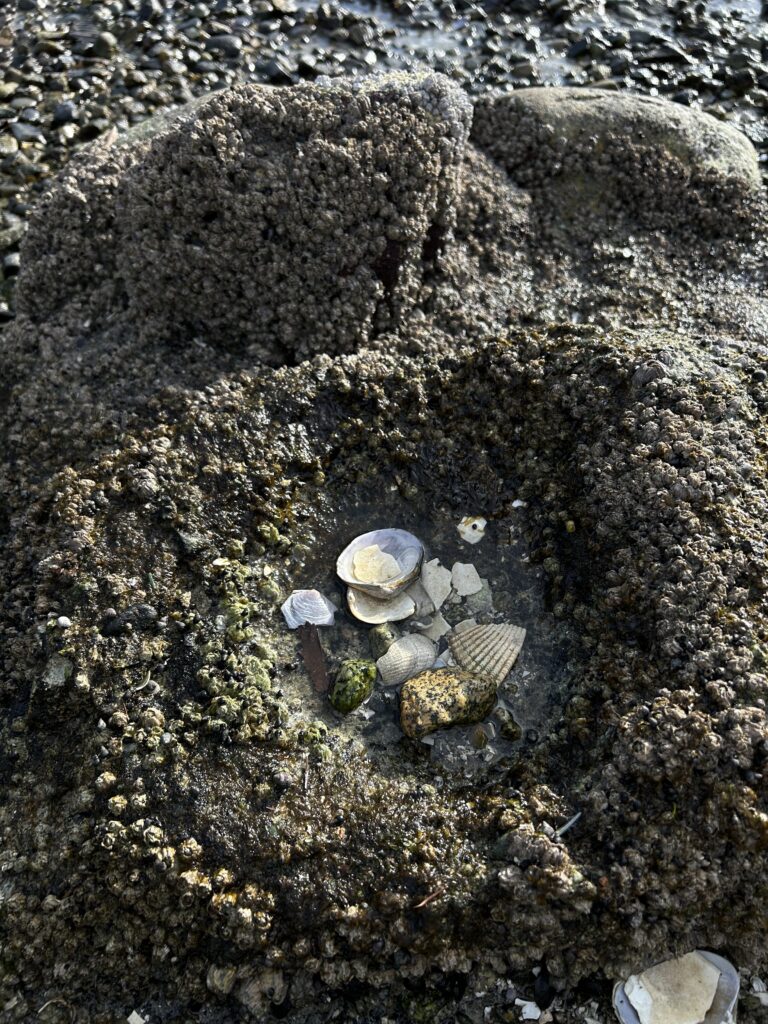
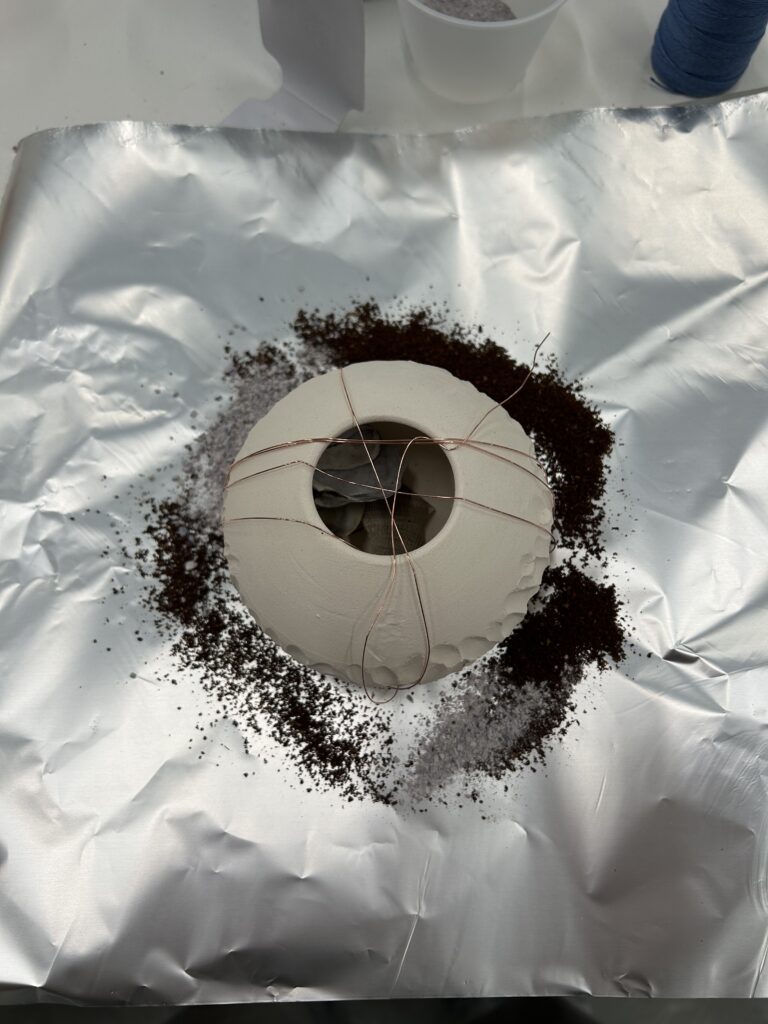
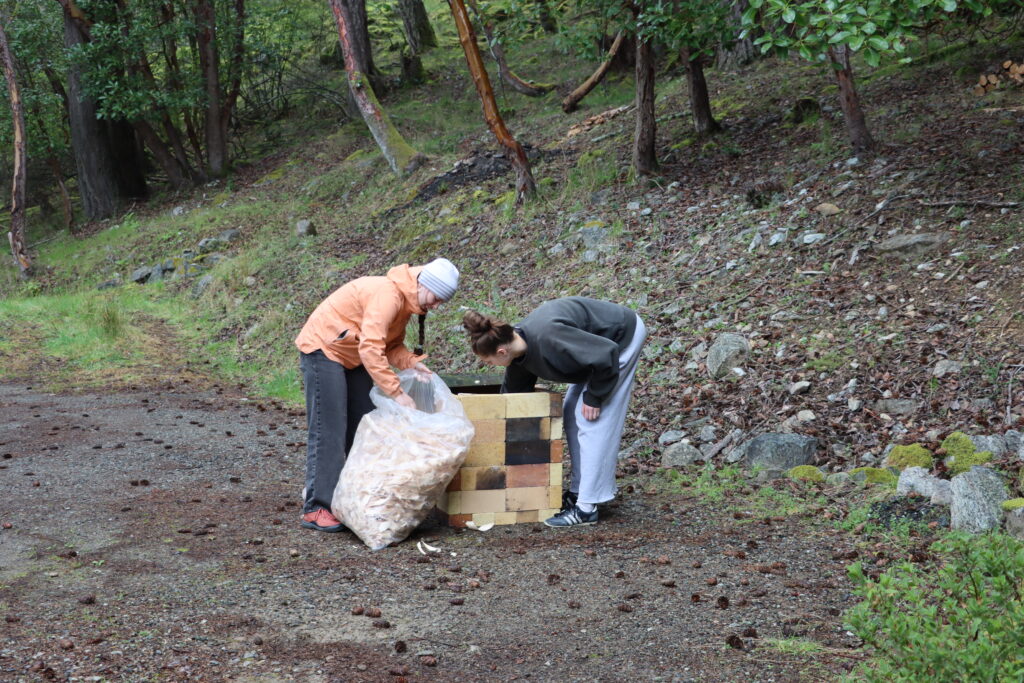
Filling the kiln (above ground pit) with cedar and arbutus chips as well as the pots, some wrapped in material and tinfoil and others left bare in the fire.
results
WOOL
morningstar woolen
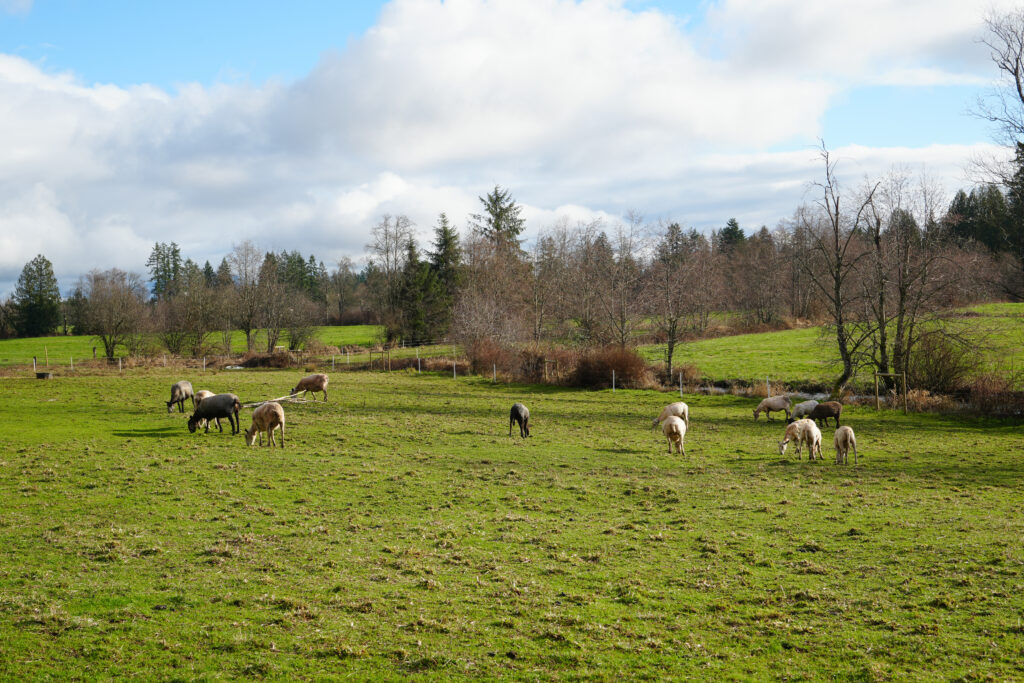
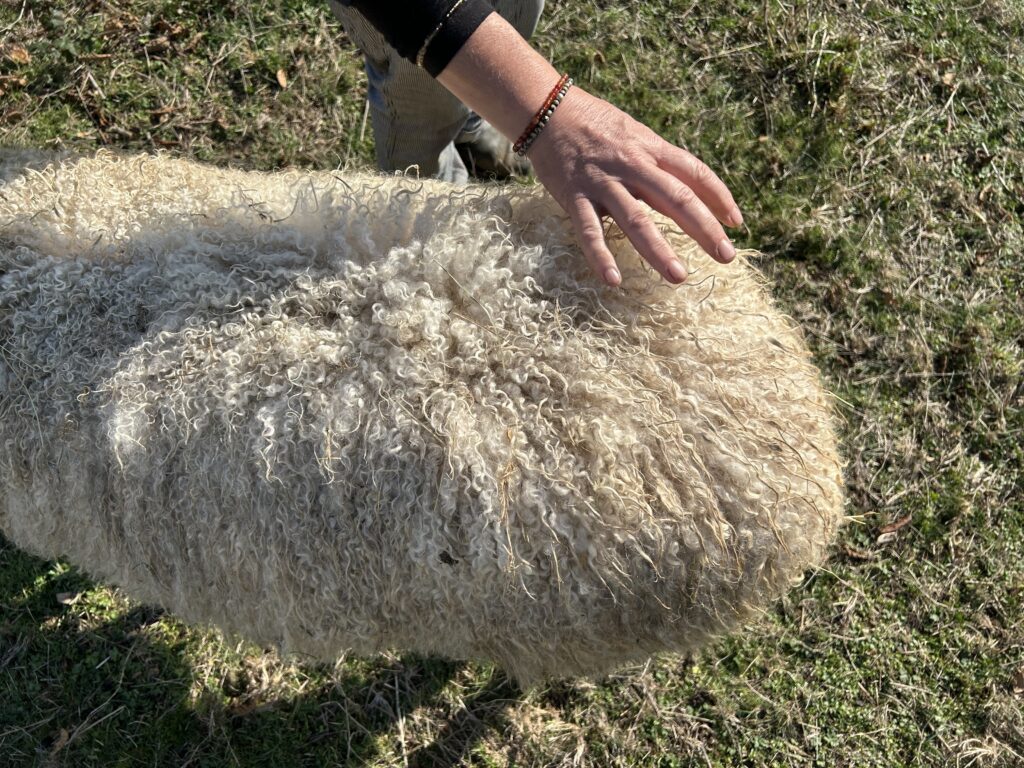
I visited Star Hoerouf at Morningstar Farm twice over the course of this project, and both visits were incredibly meaningful and insightful. During the second visit, I was able to witness the flock being sheared and helped with skirting the fleeces — removing green matter, manure, and damaged fibres in preparation for processing.
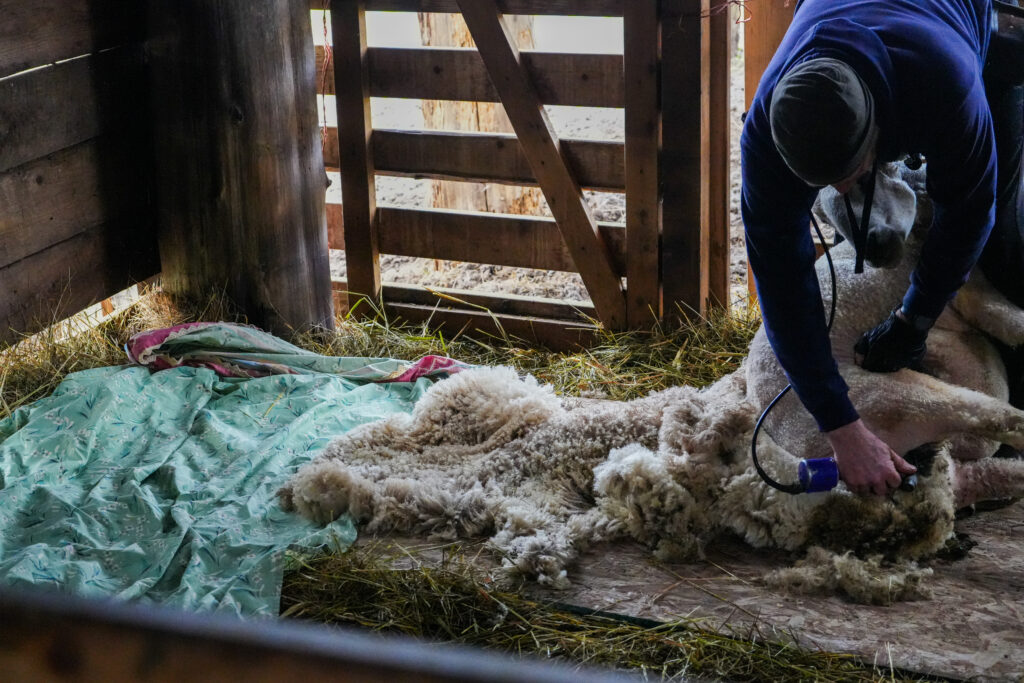
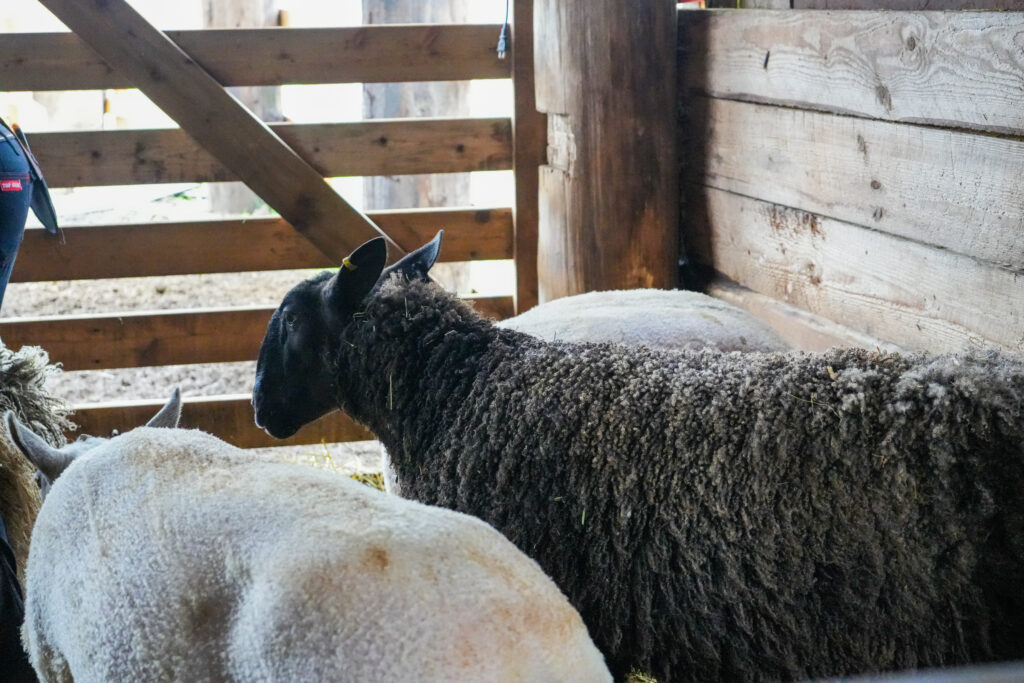
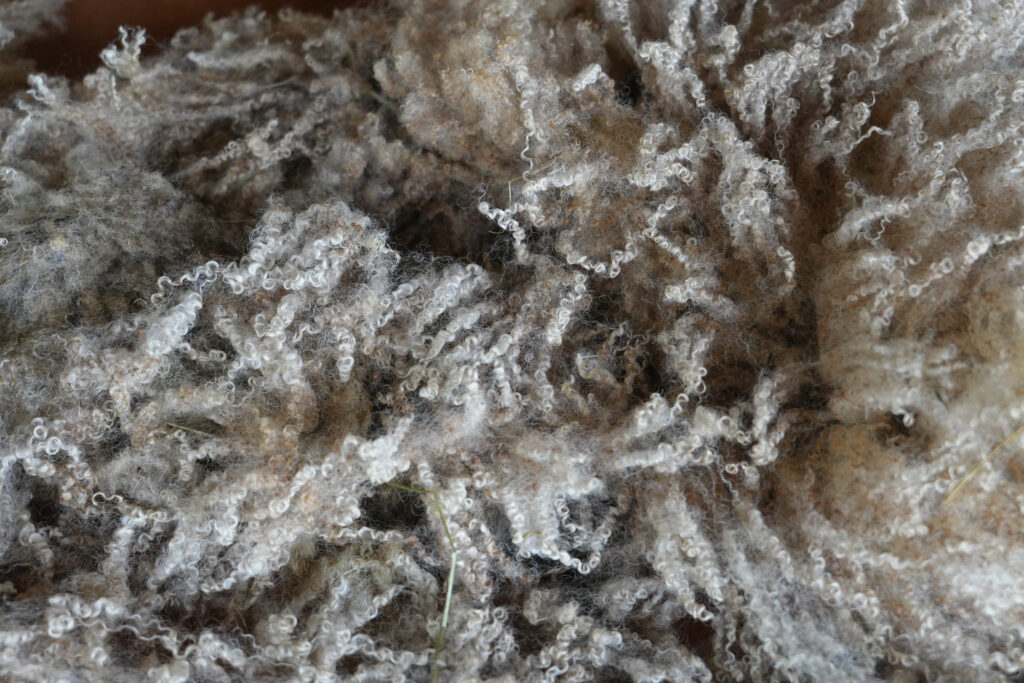
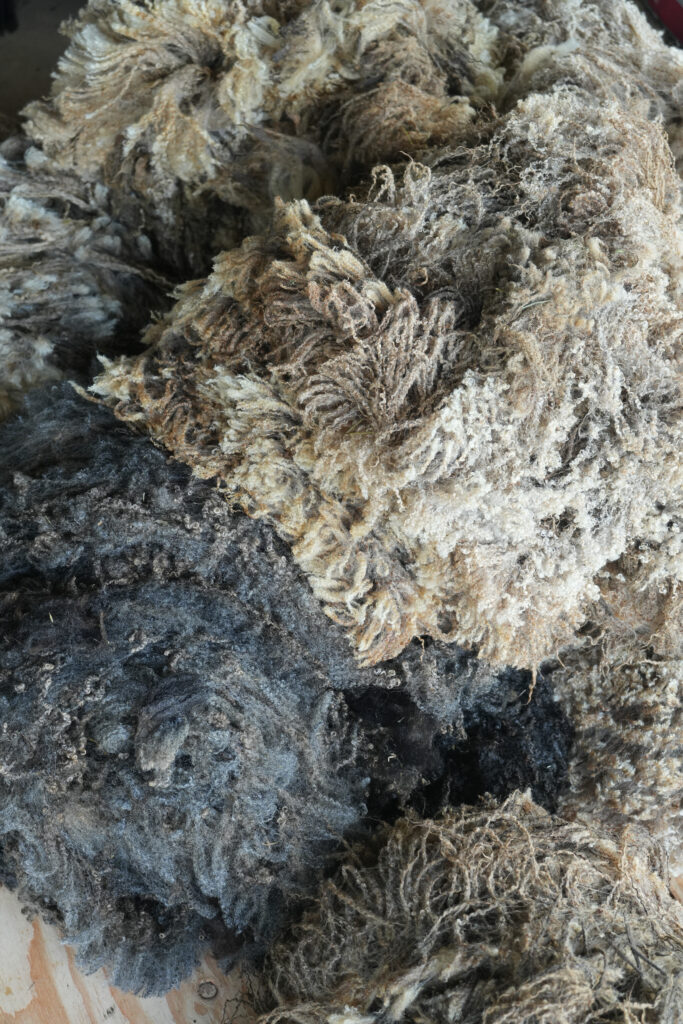
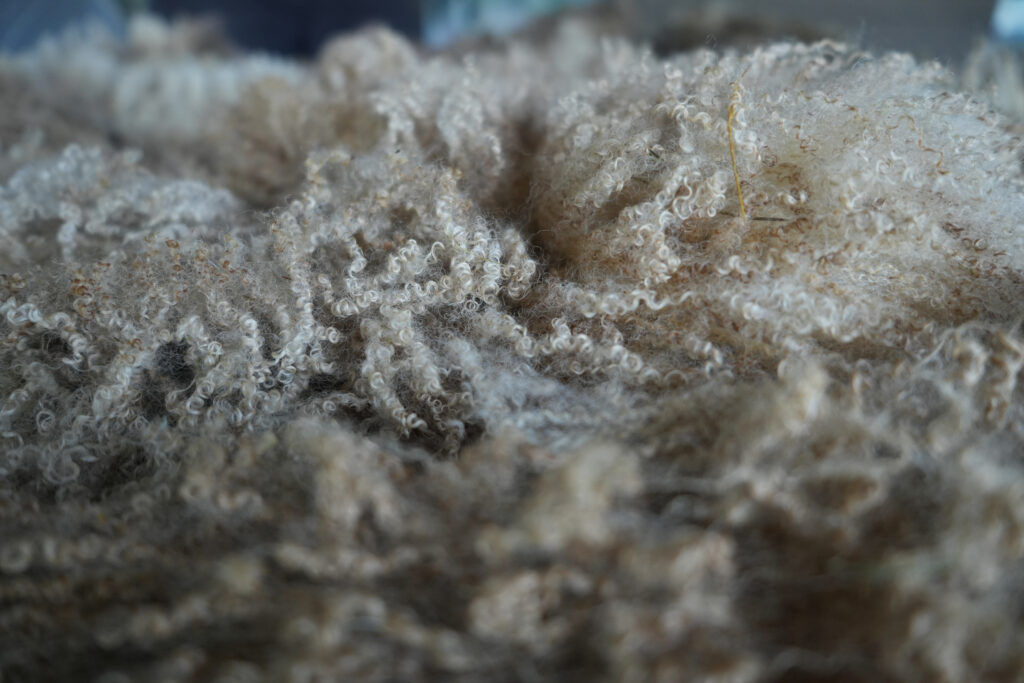
I was warmly welcomed into the fibre-shed community, whose members were generous in sharing their knowledge and eager to teach those of us encountering these processes for the first time. By the end of the visit, I was able to take home some wool offcuts as well as several cleaner fleeces, materials that carried with them not only texture and utility, but also the memory of the labour, care, and community involved in their preparation.
methods of process
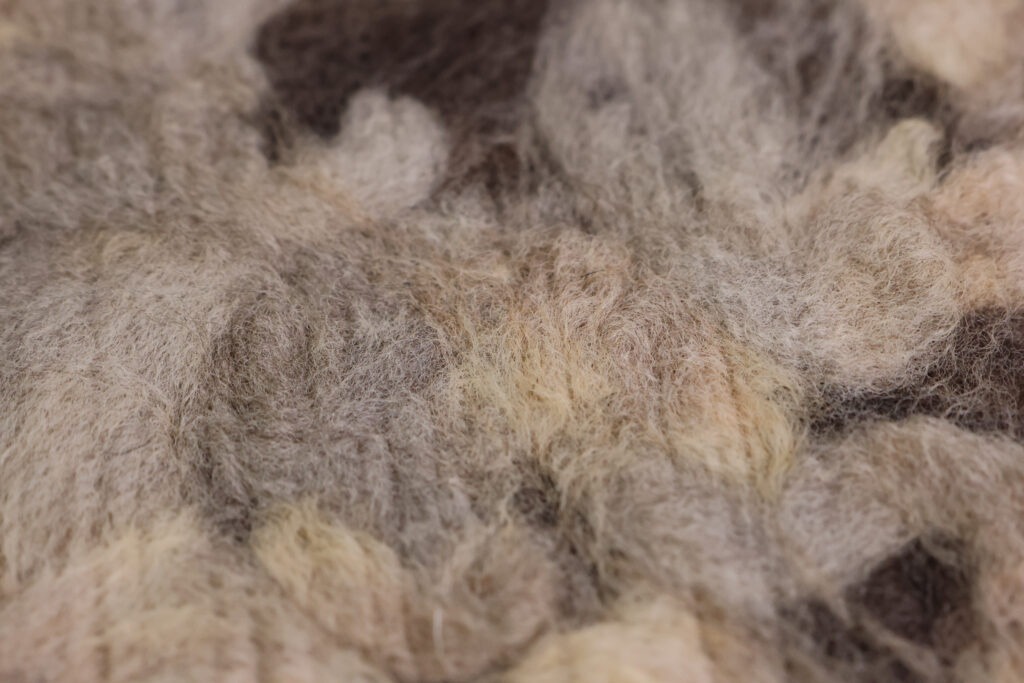
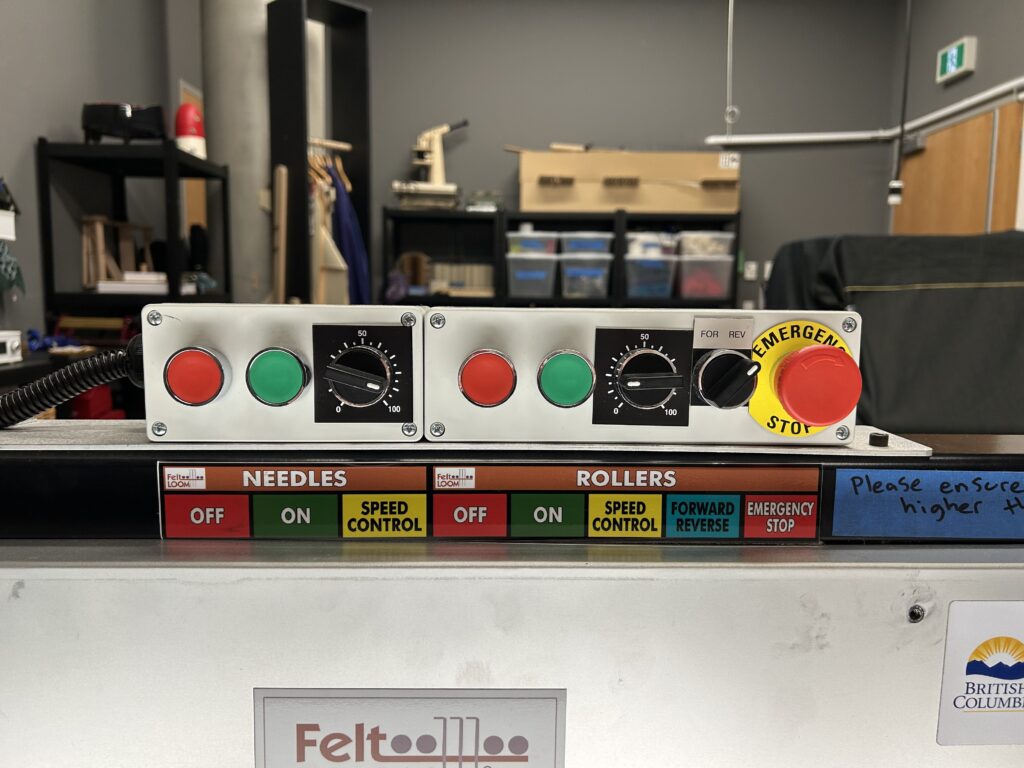
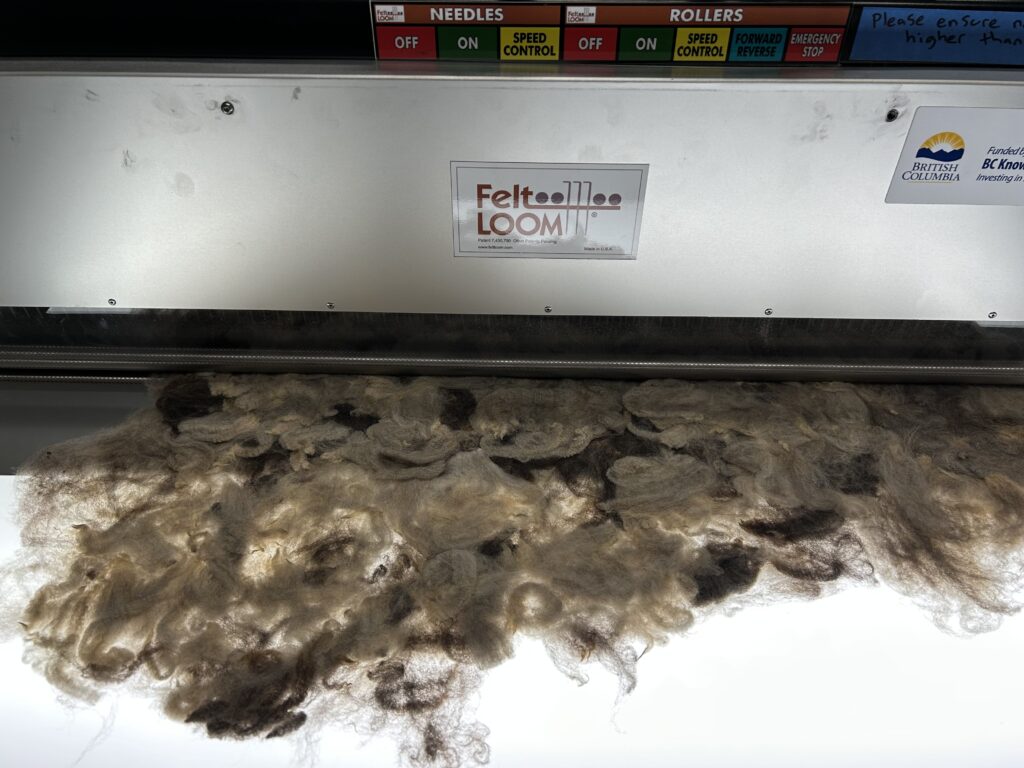
felting
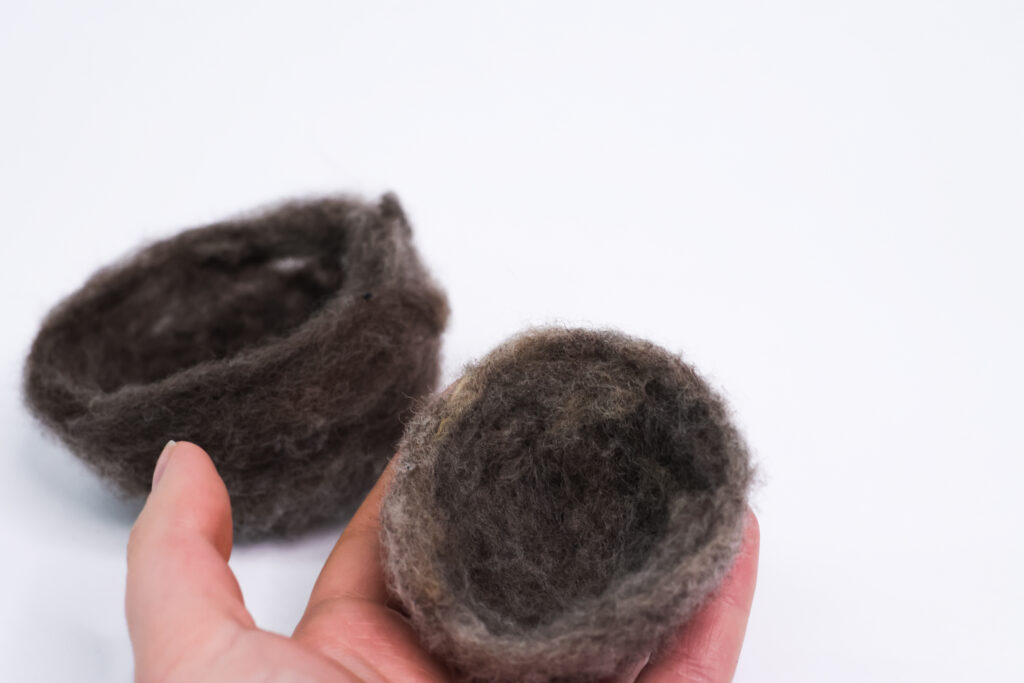
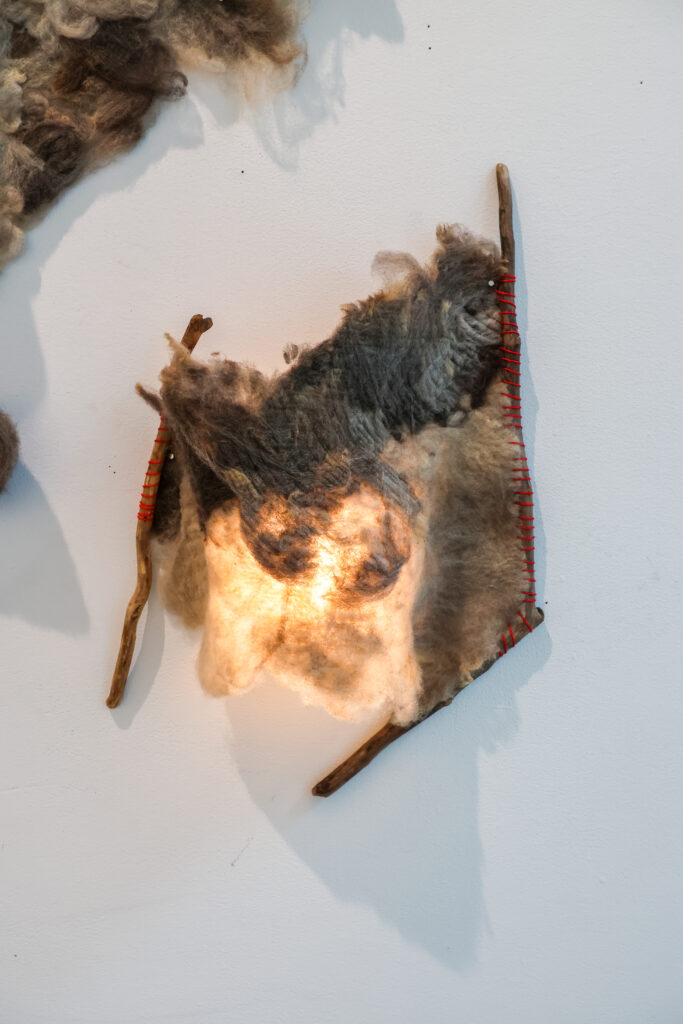
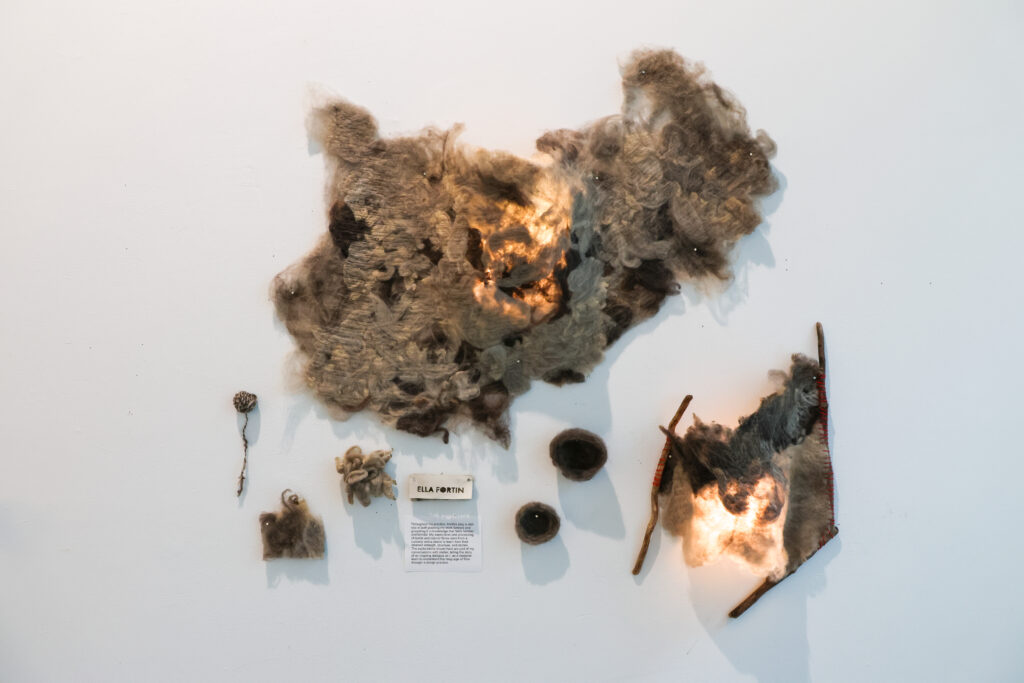
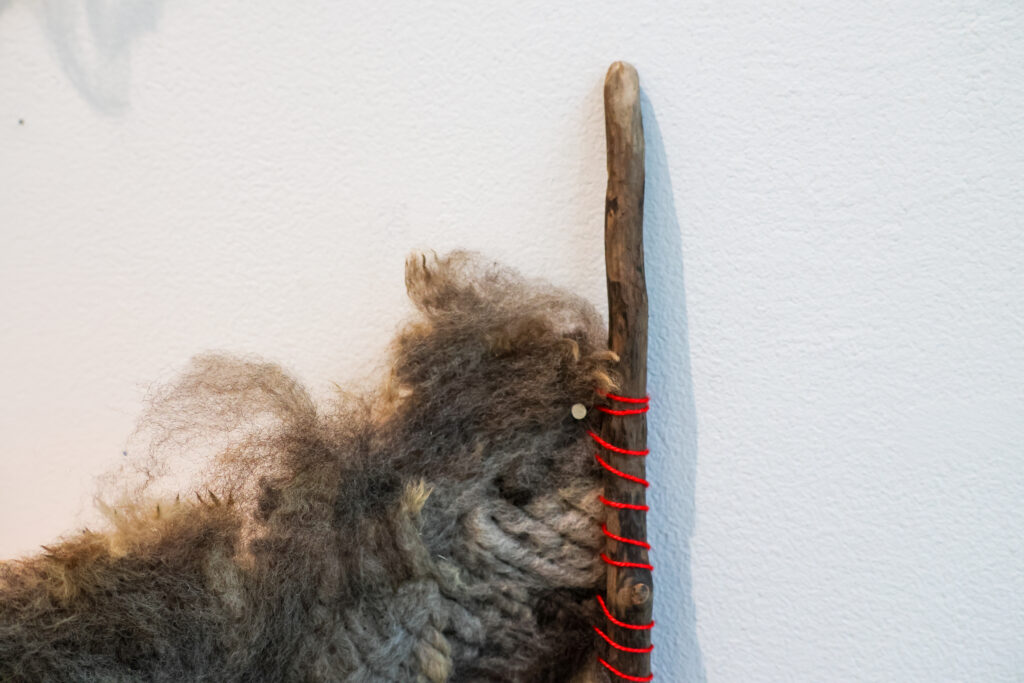
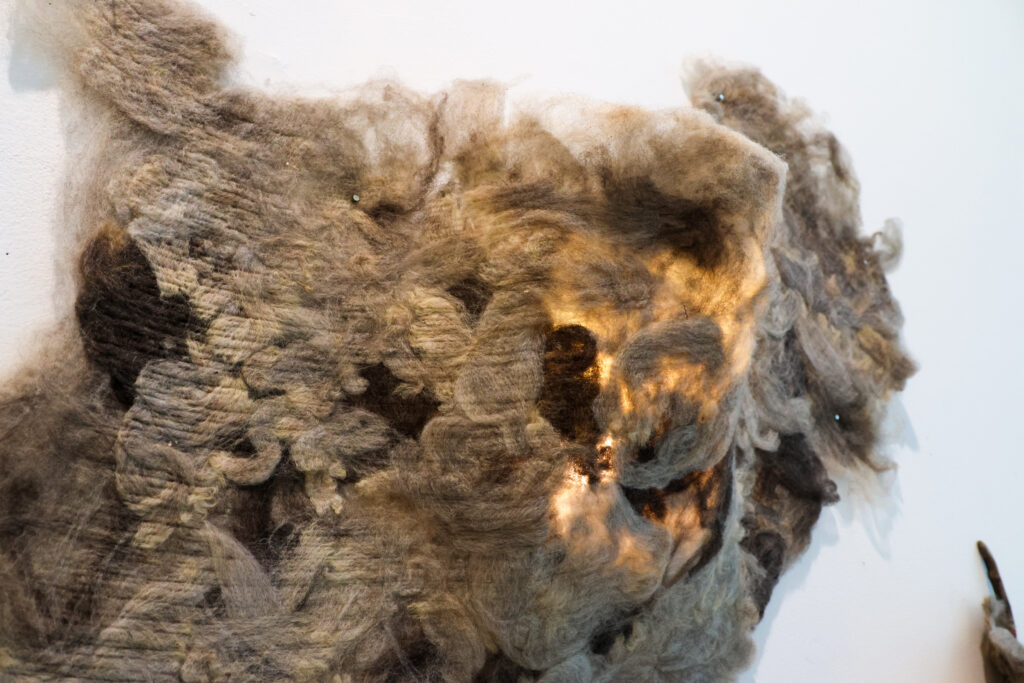
spinning
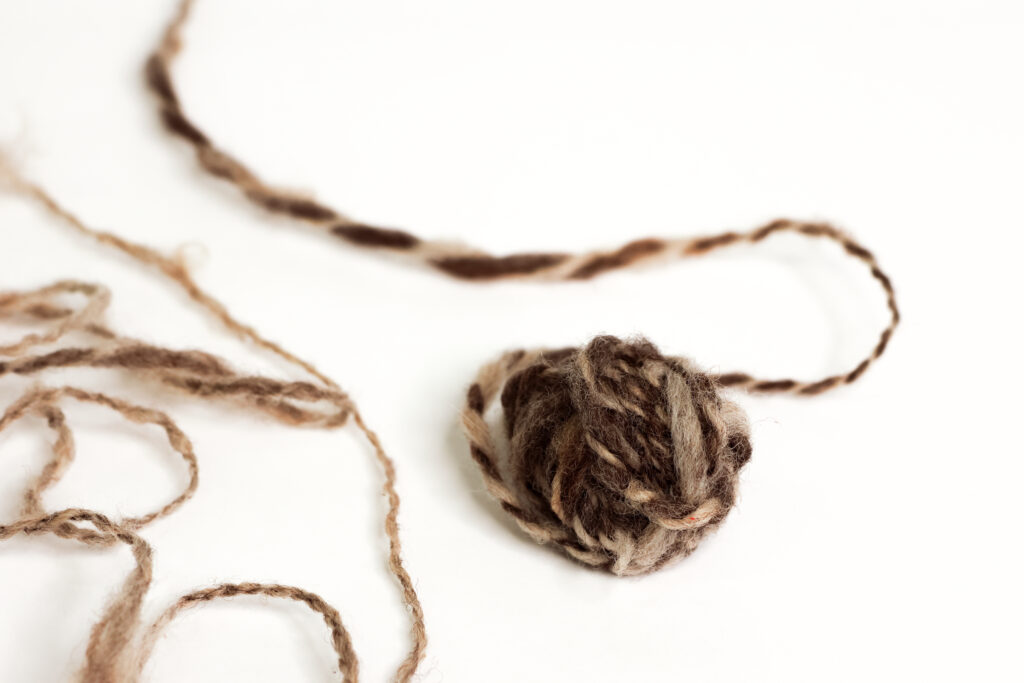
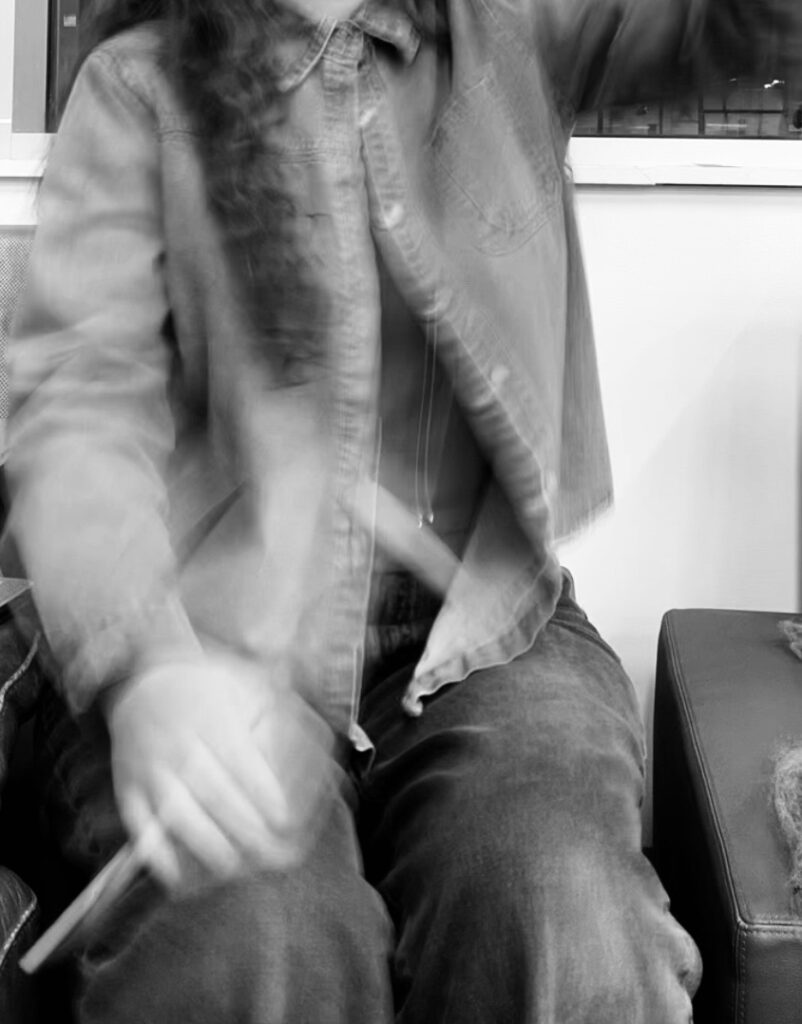
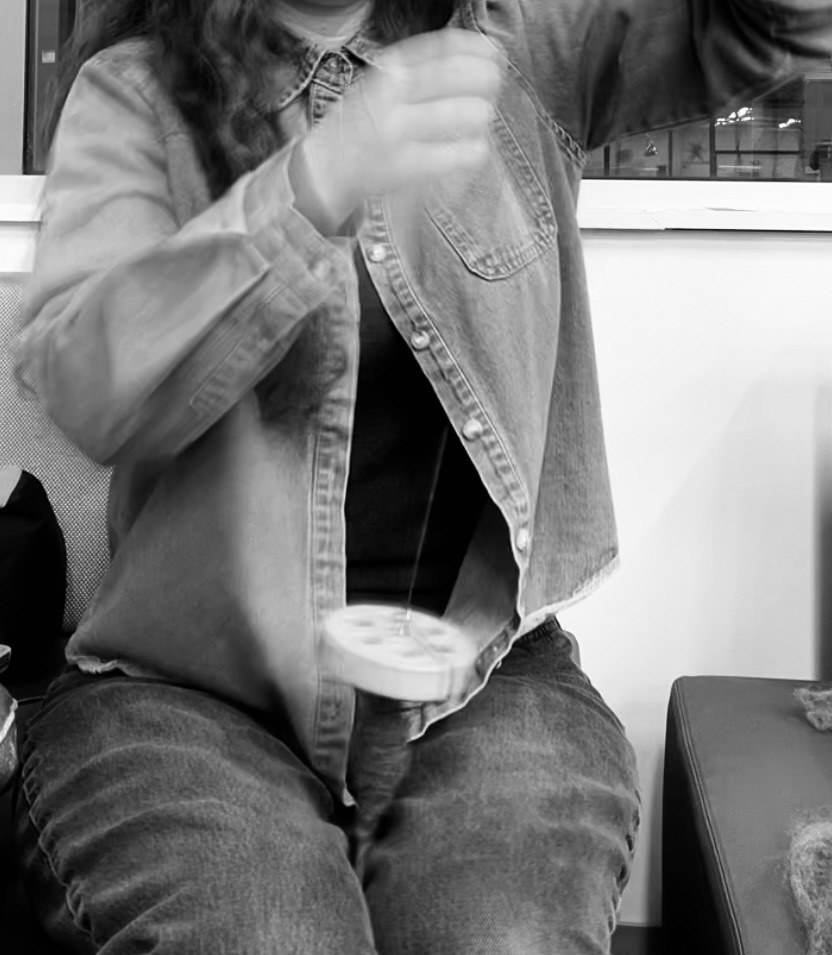
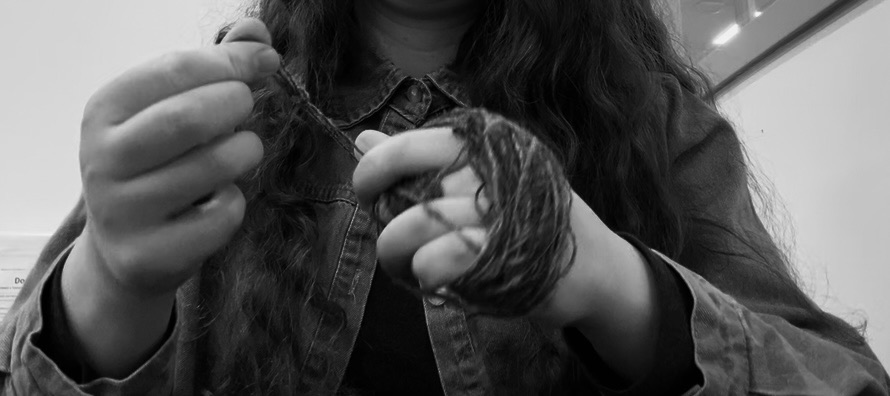
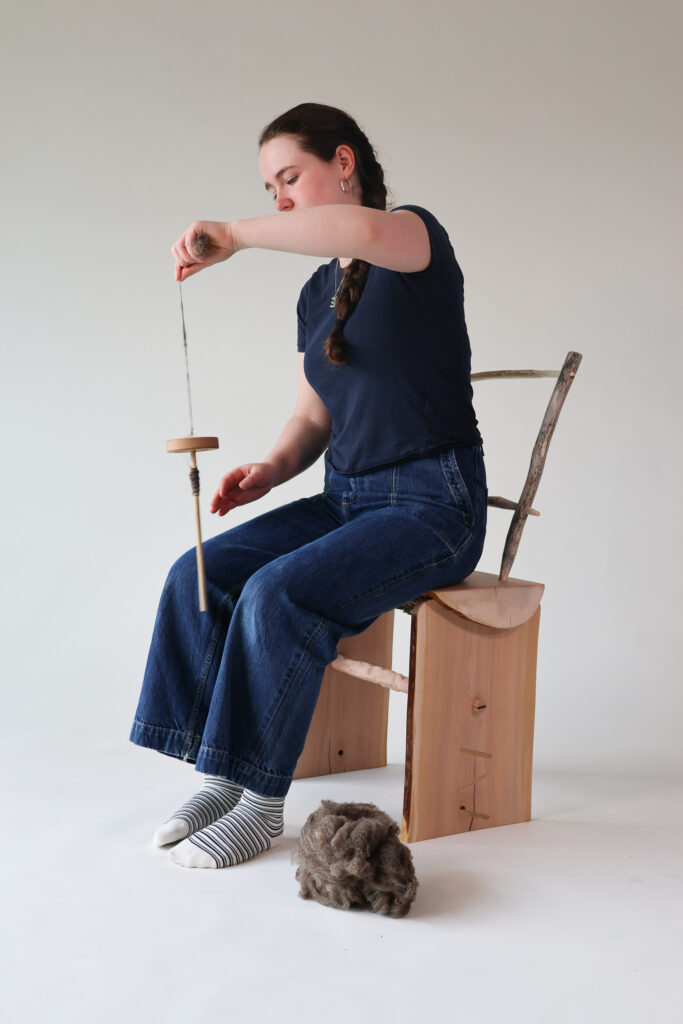
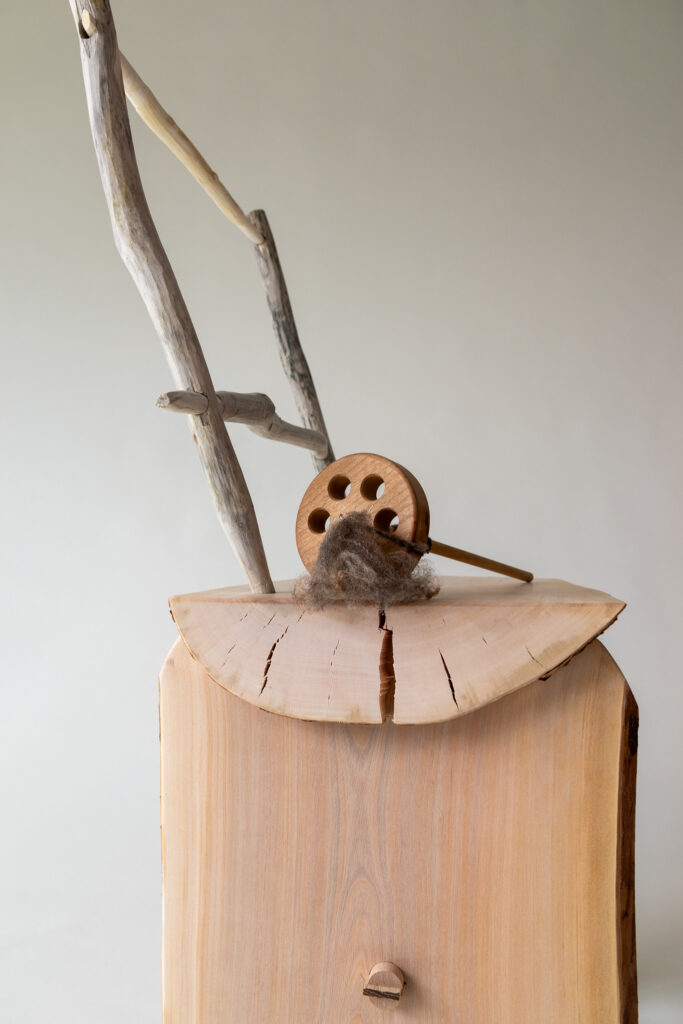
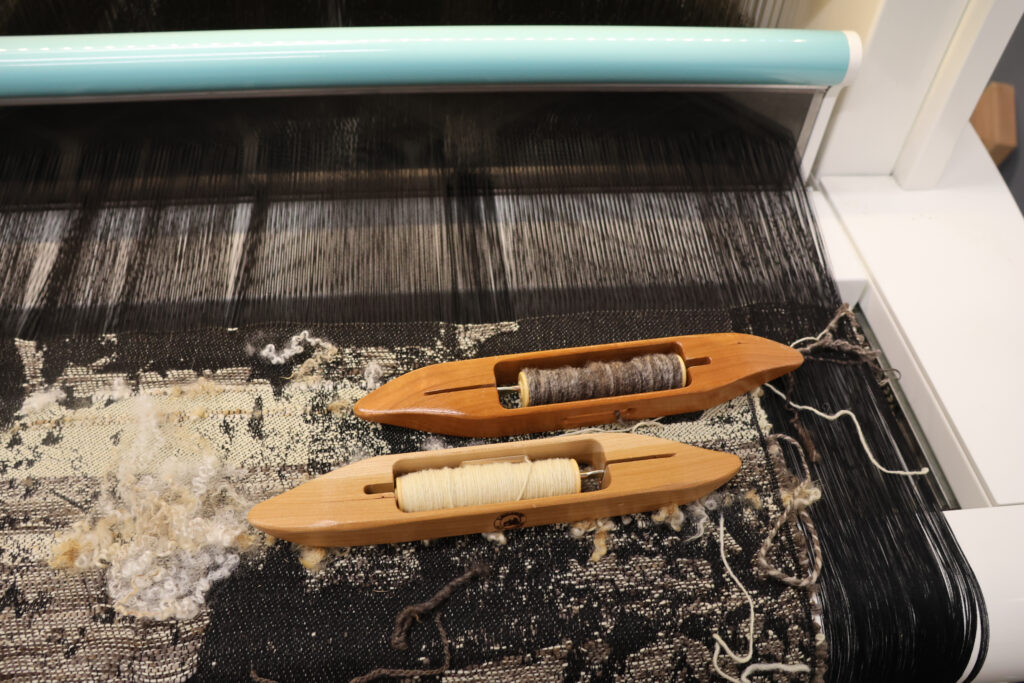
I used a drop spindle for spinning, and the process quickly became both calming and intuitive. I appreciate the natural inconsistencies of the yarn — the subtle variations in thickness and texture that preserved its hand-spun character. These irregularities allowed the qualities of the fleece to remain visible, highlighting the richness of its colour, softness, and organic variation rather than concealing them behind uniformity.
weave
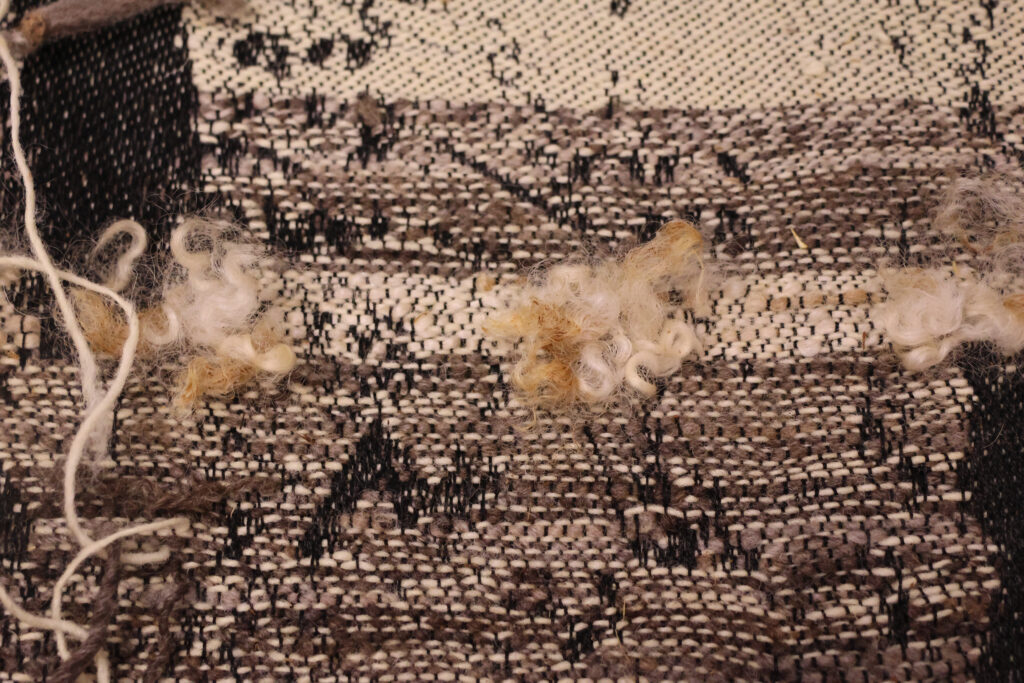
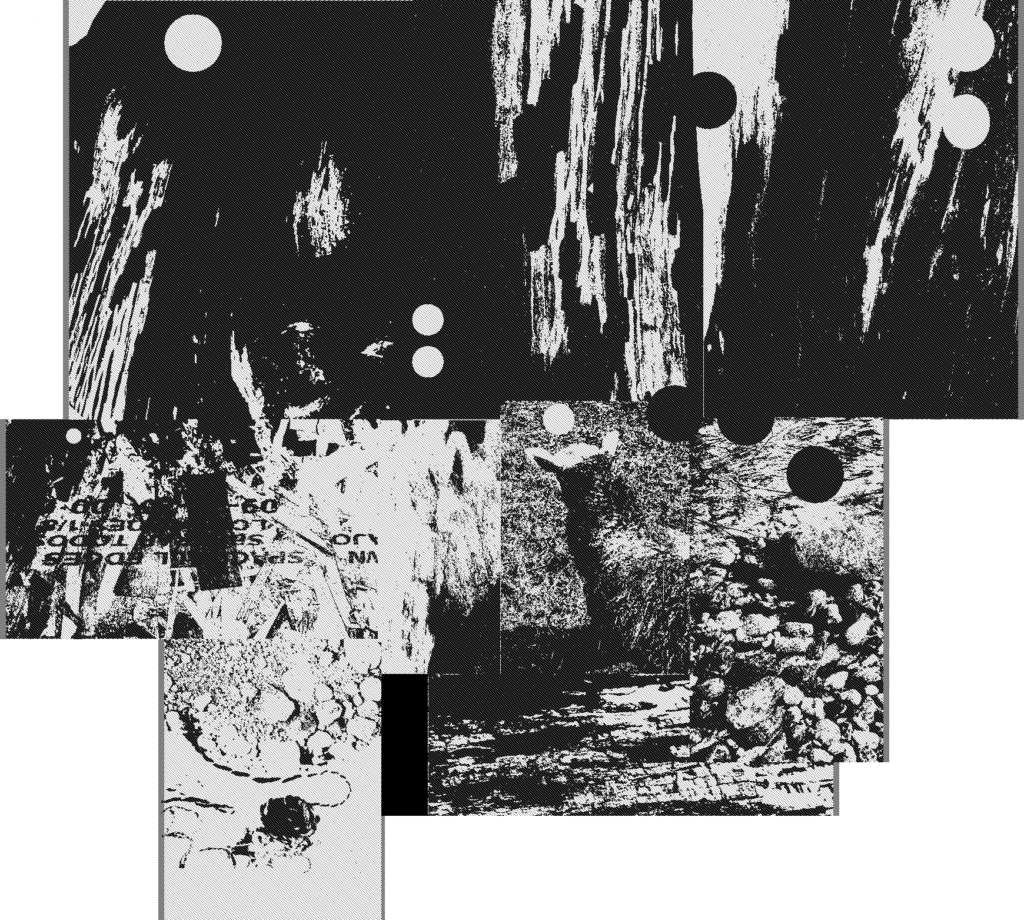
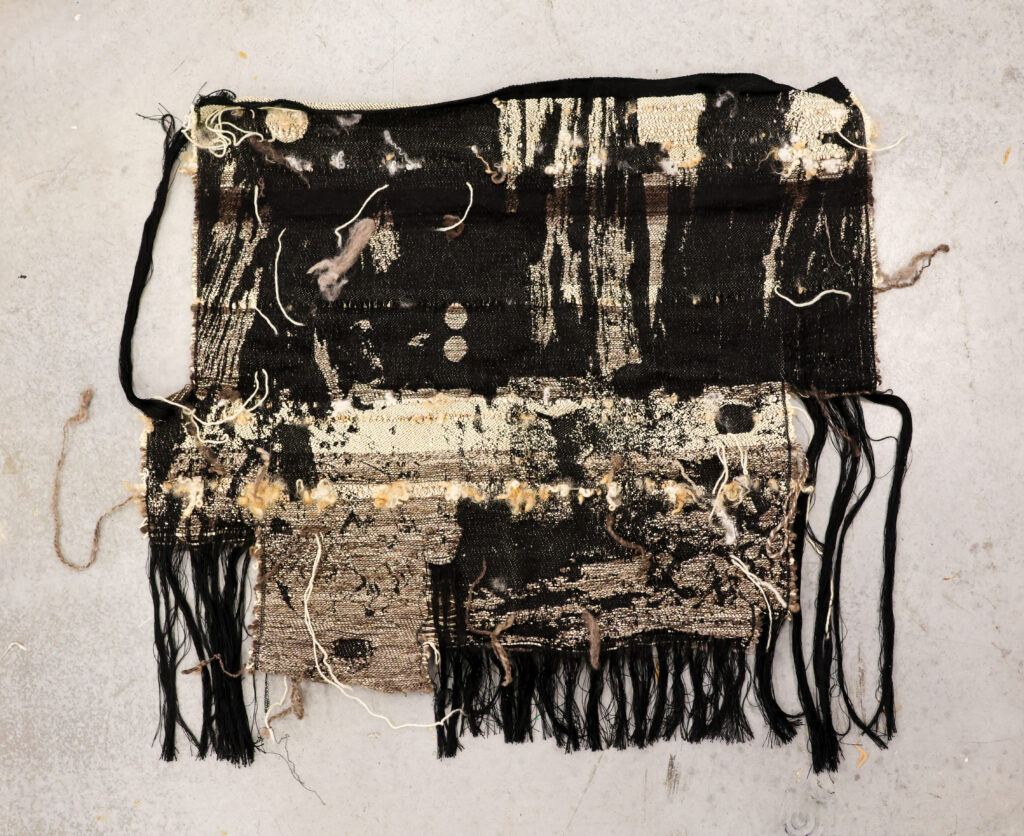
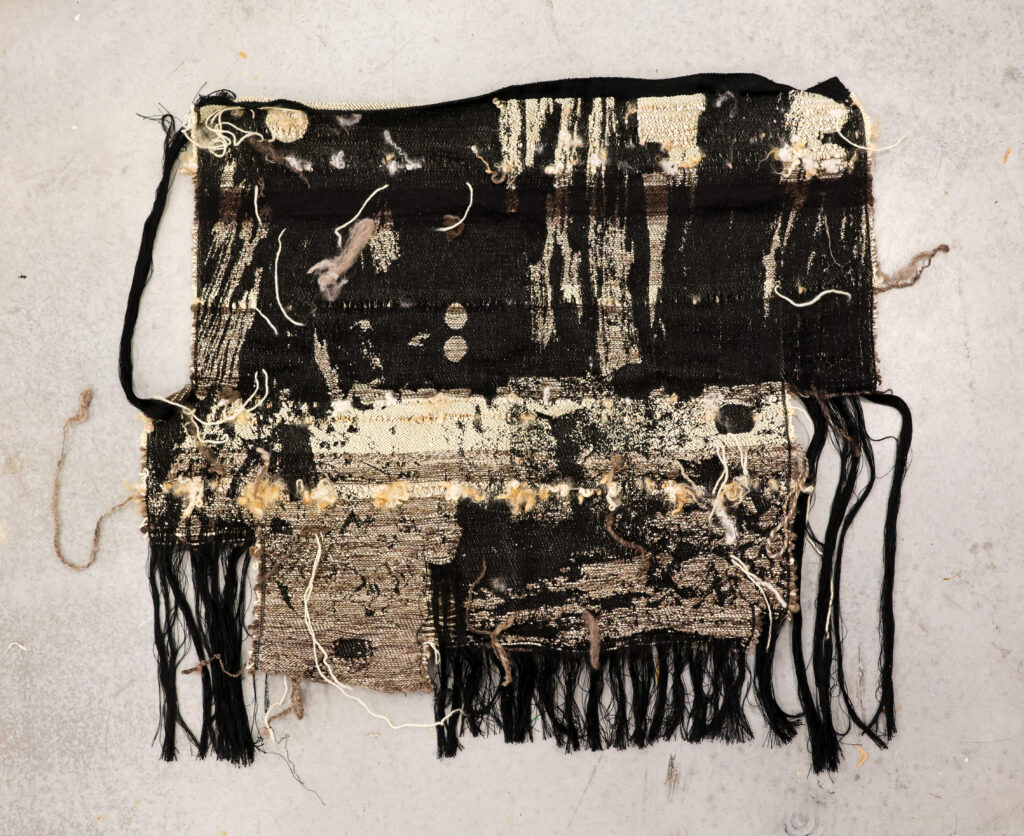
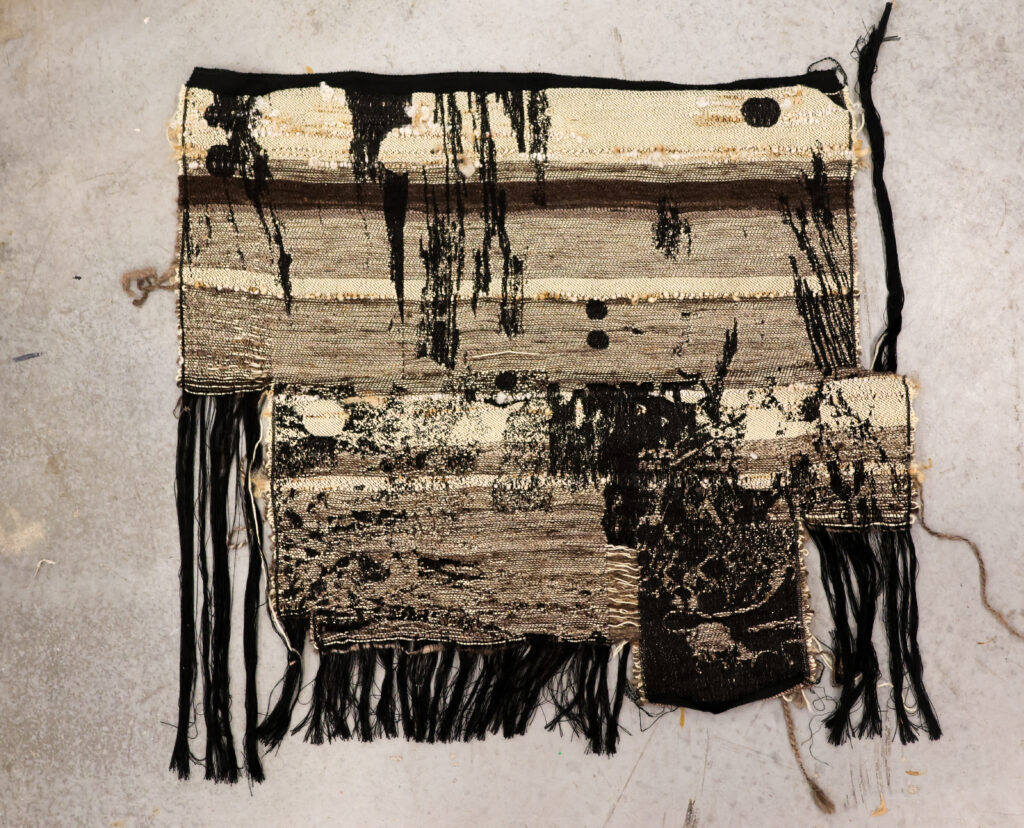
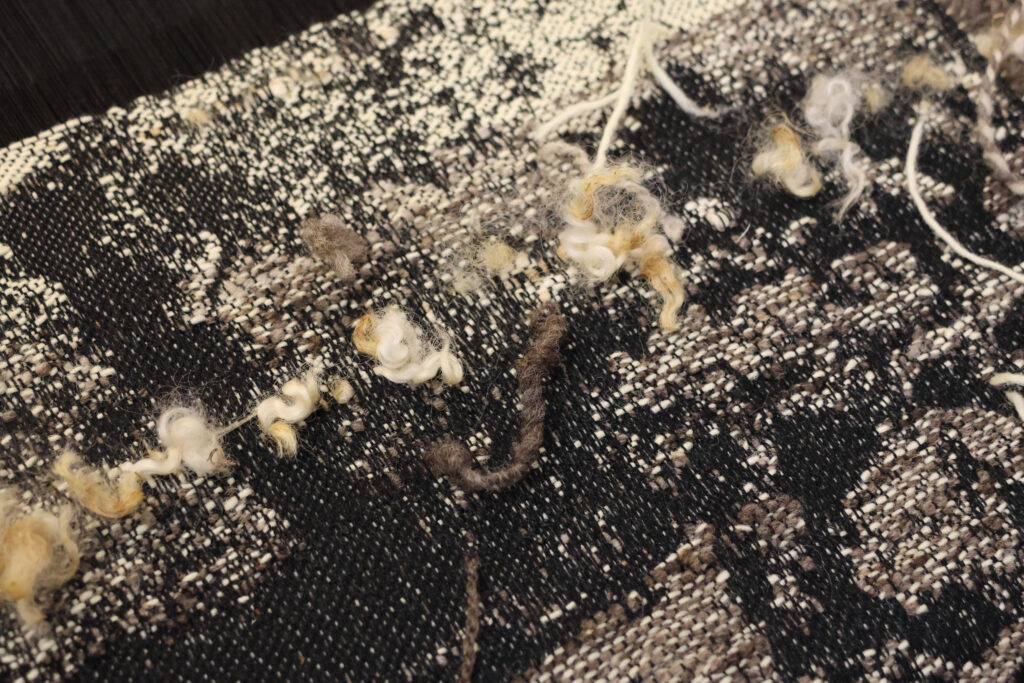
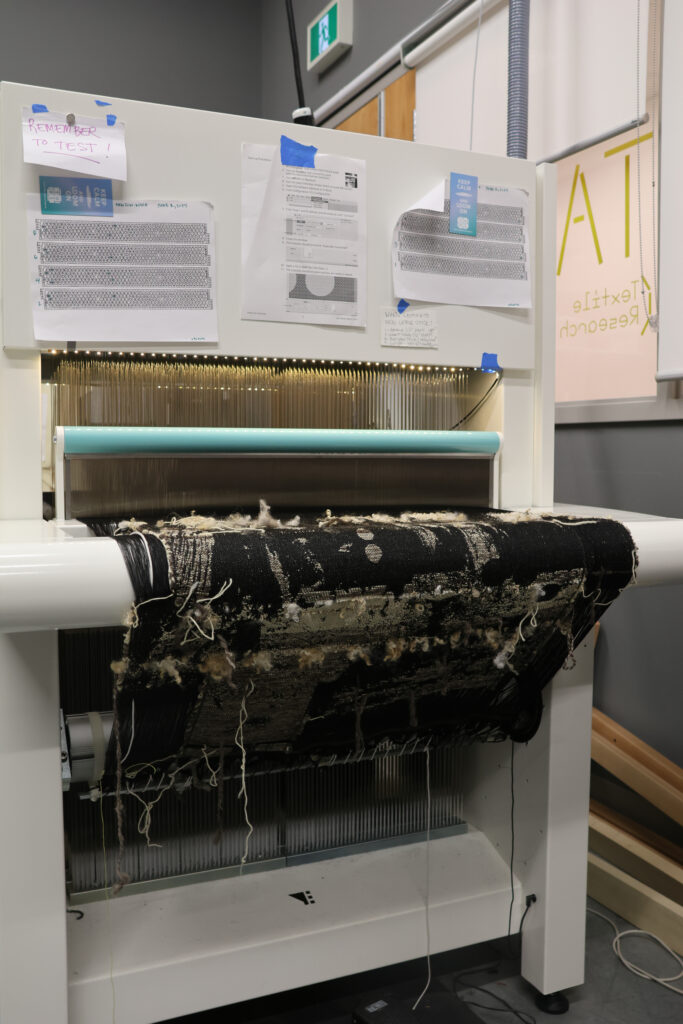
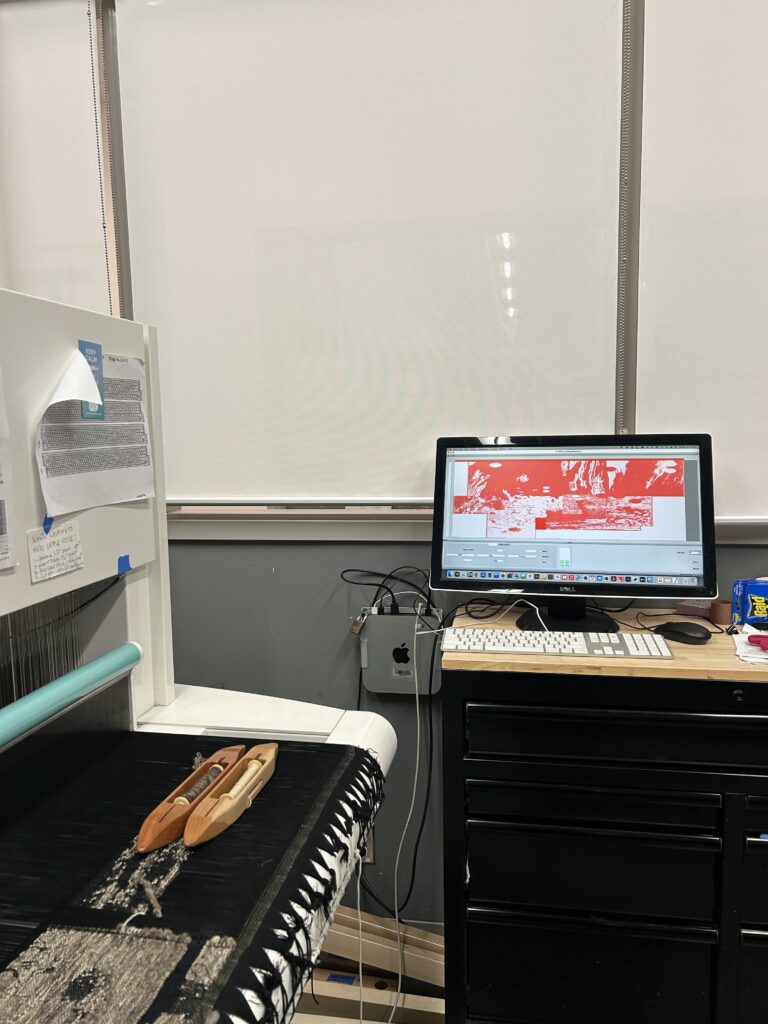
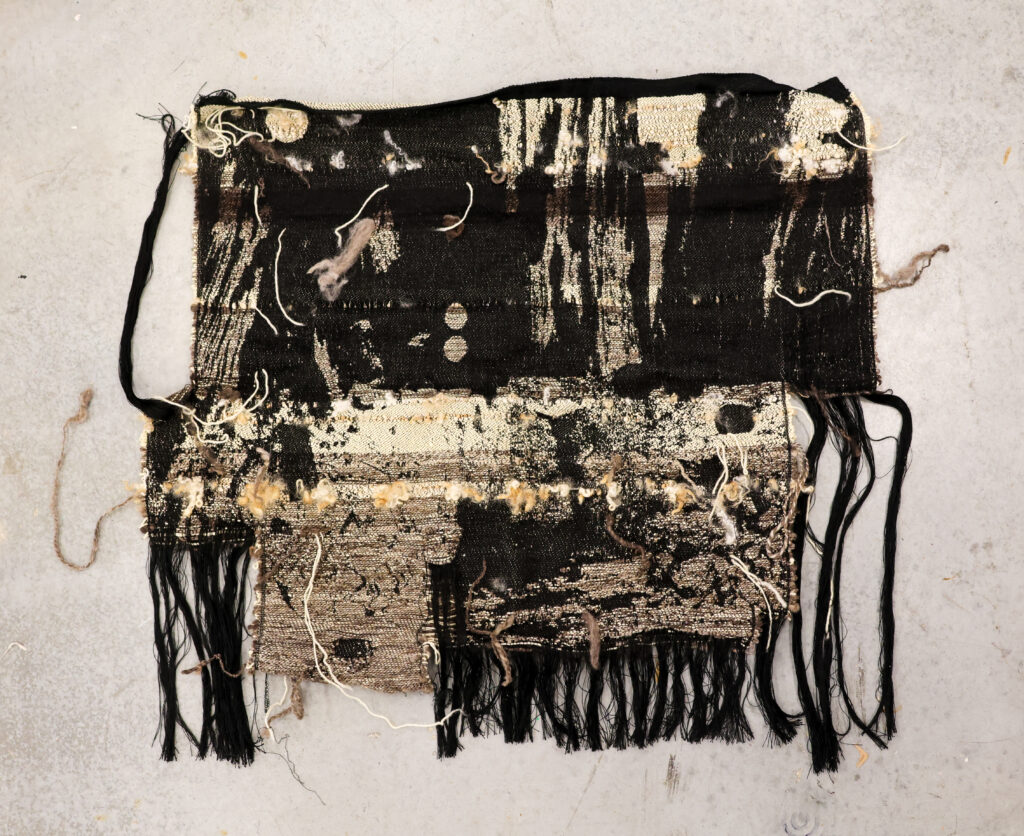
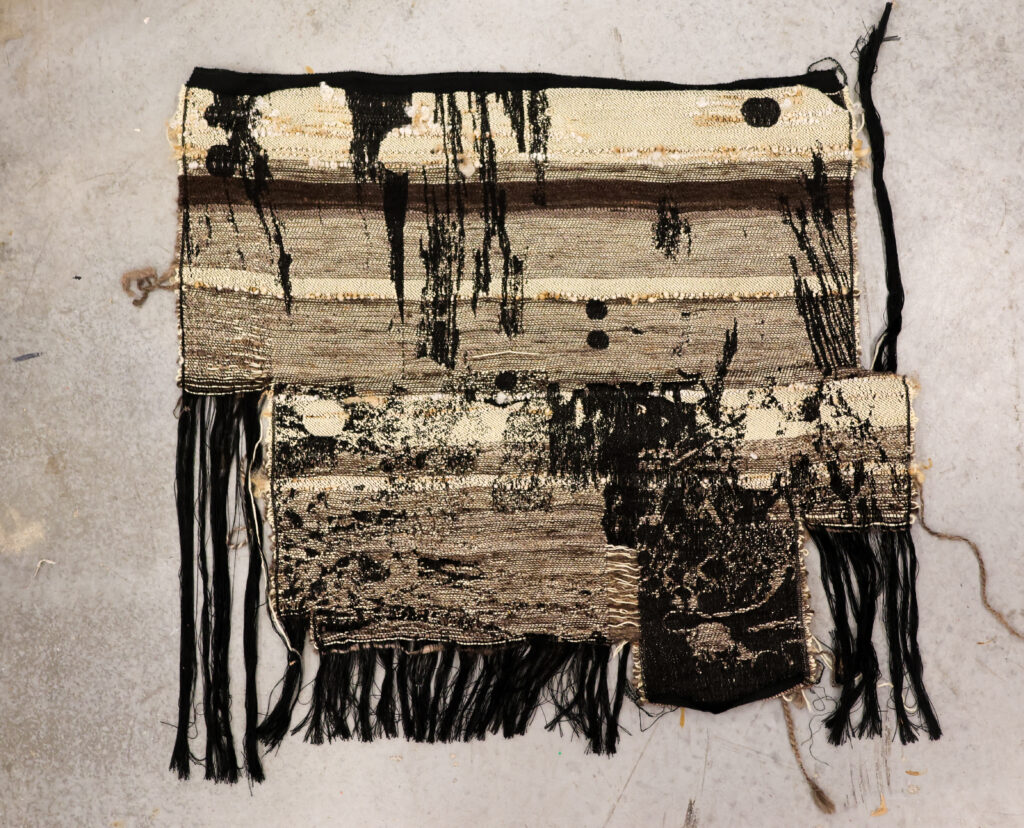
I decided to explore working with wool using the TC2 Loom — a loom that reads a digital file and raises or lowers the warp threads according to the programmed pattern. Similar to my work with the clay 3D printer, I am drawn to the intersection of digital processes and mechanical craft. This exploration became a meaningful investigation into the relationship between handcraft and digital technology, revealing exciting new textural possibilities and qualities of the wool that I was unaware of before.
WOOD
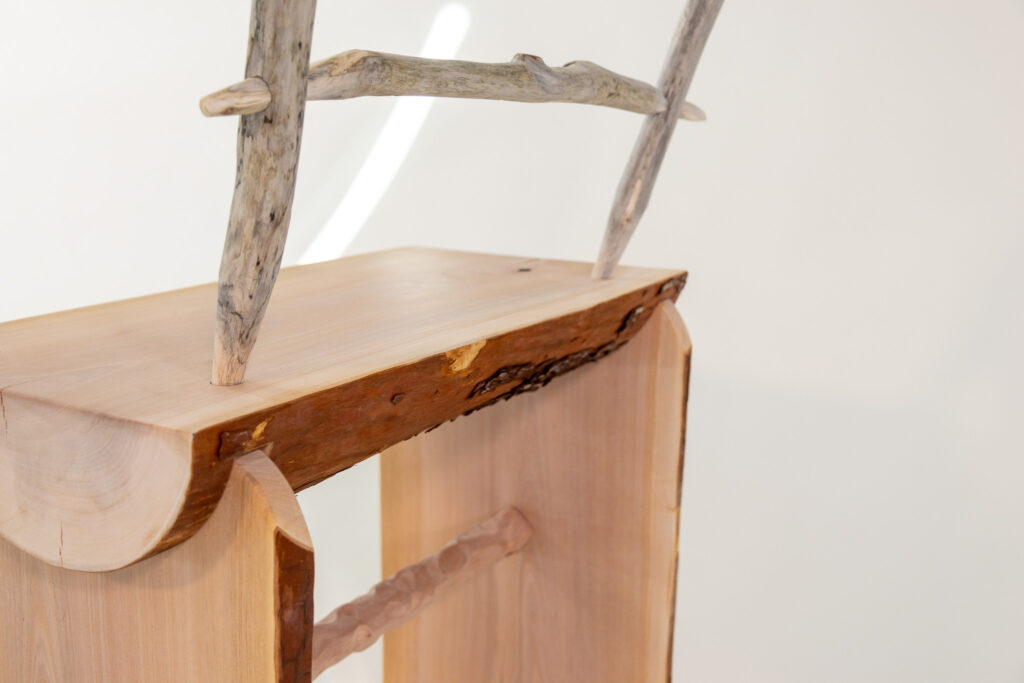
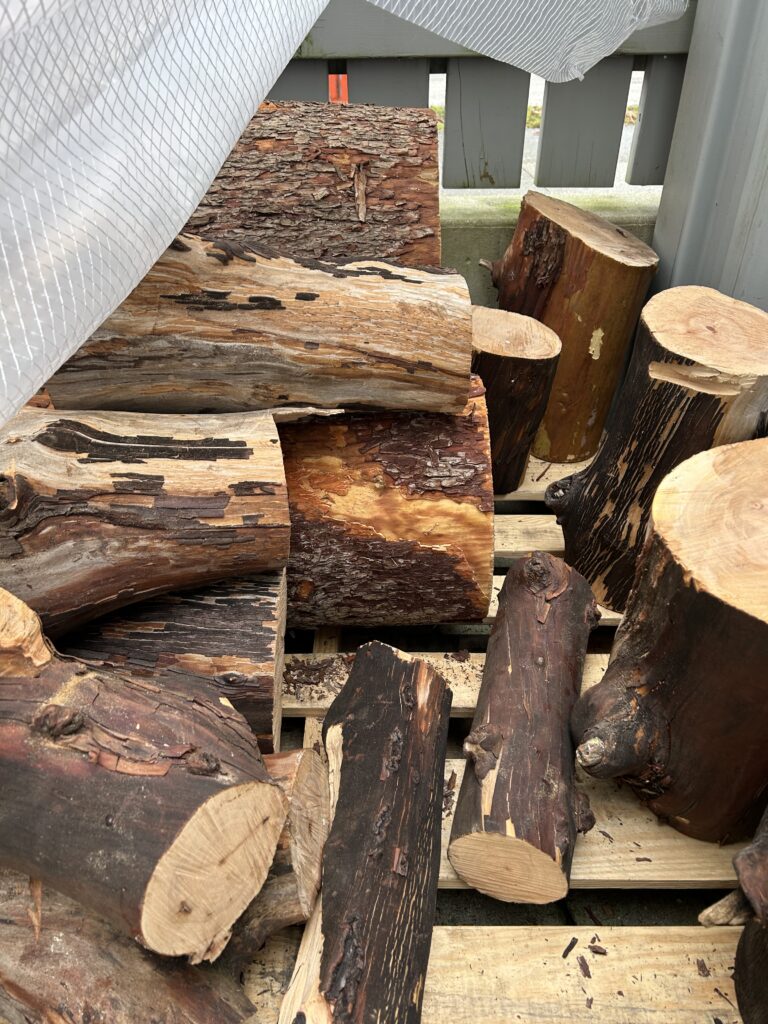
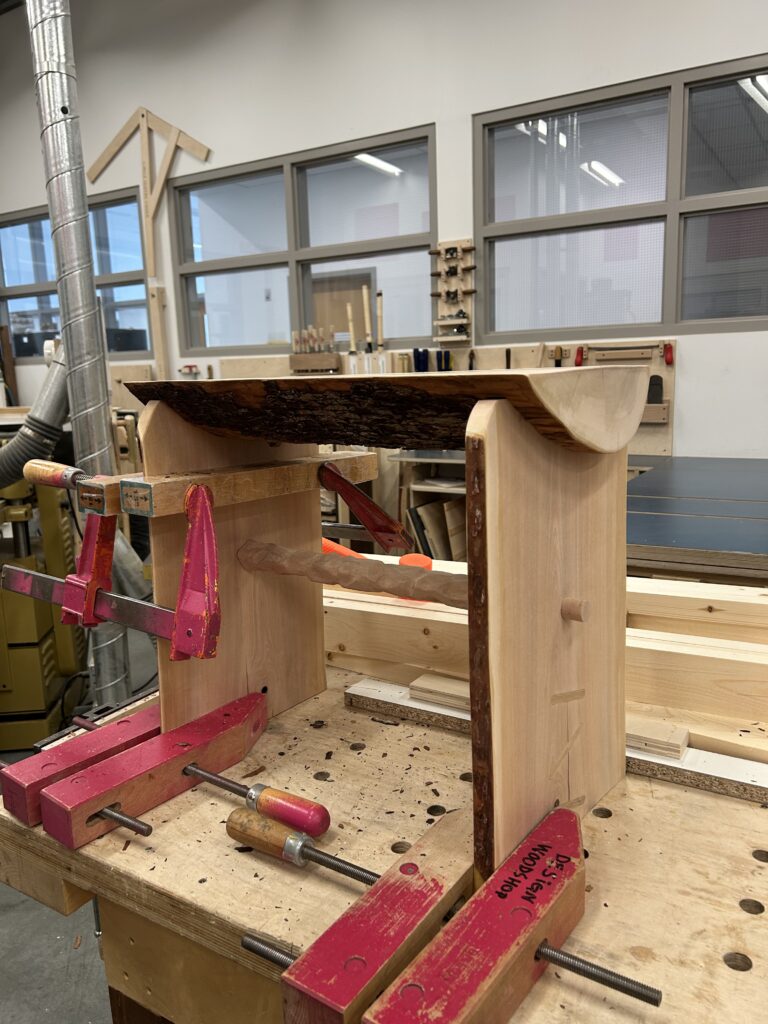
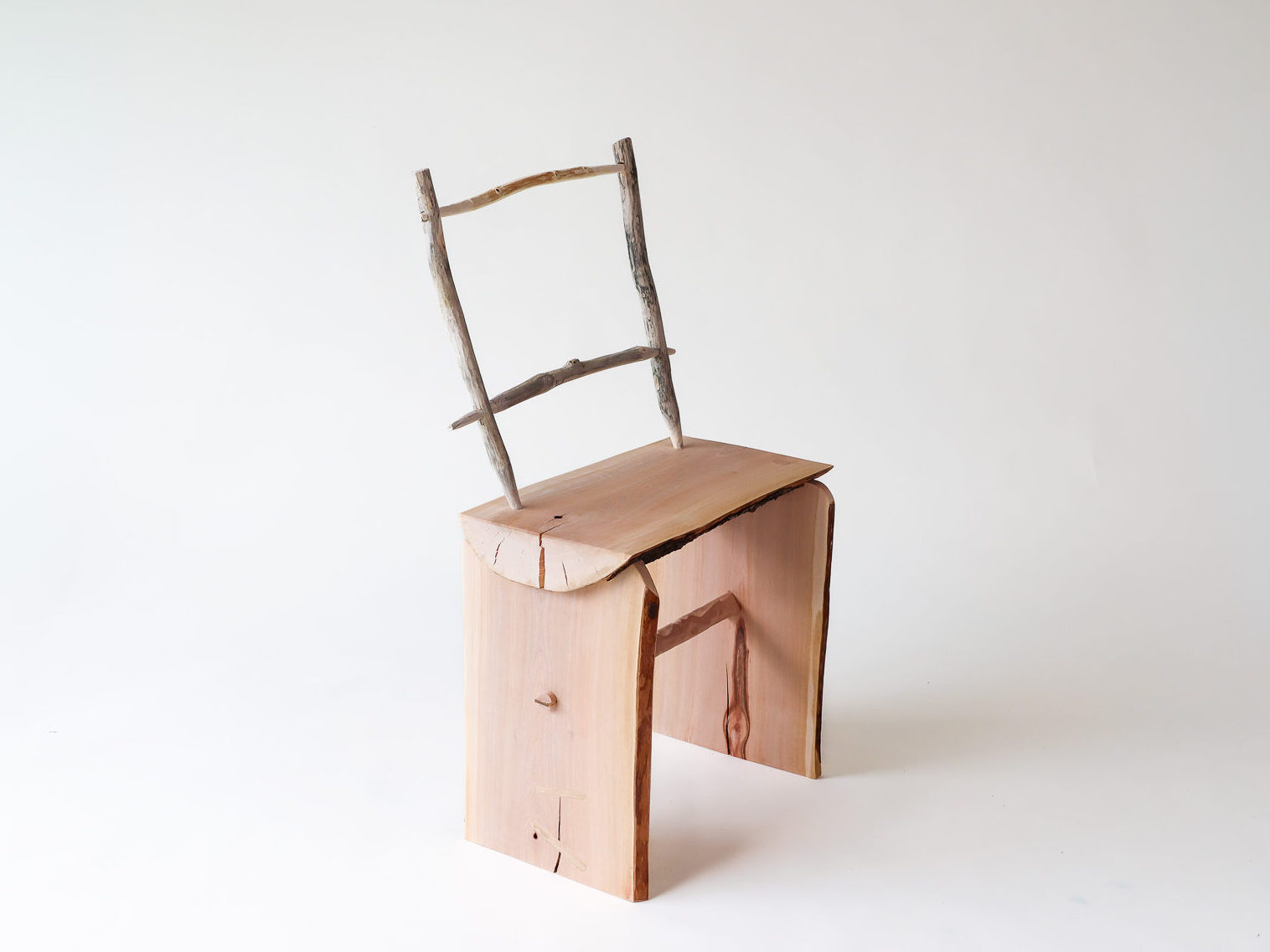
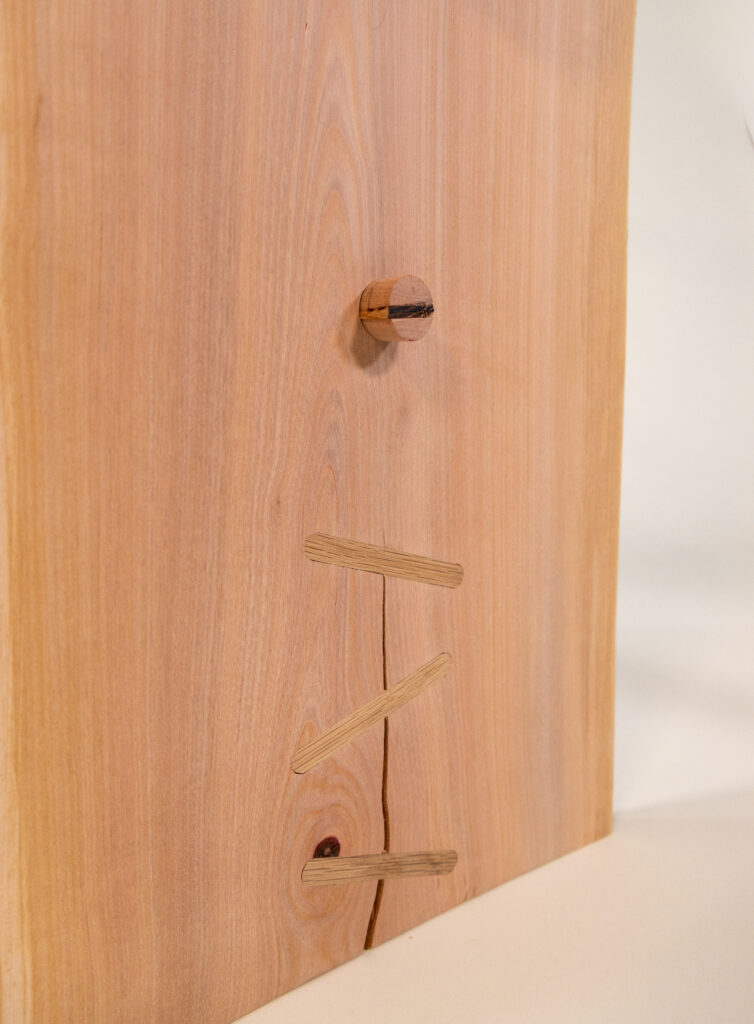
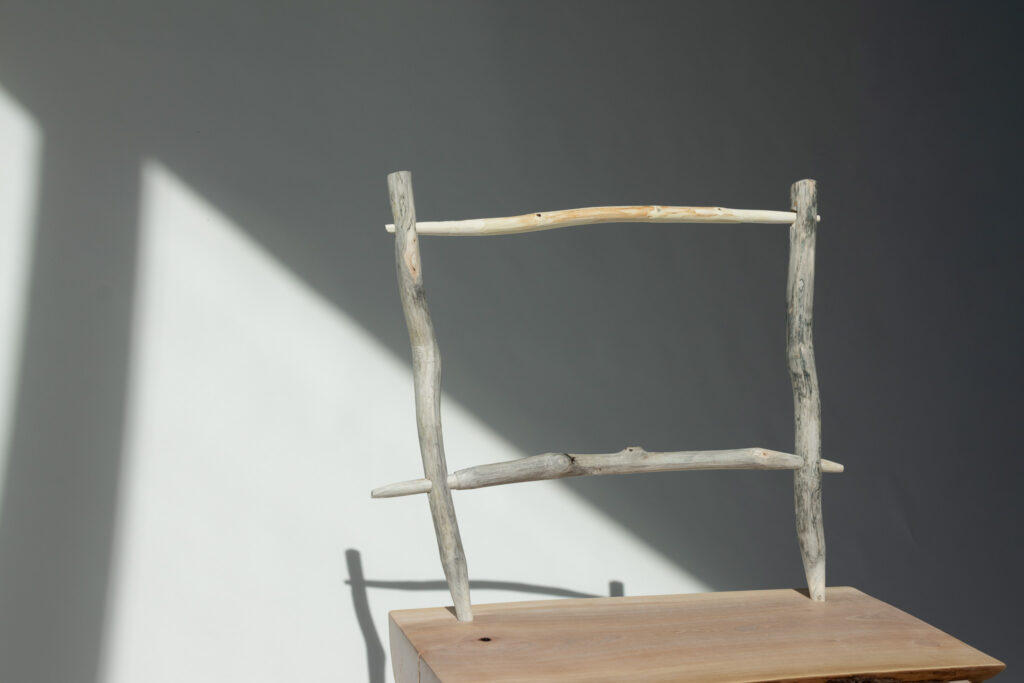
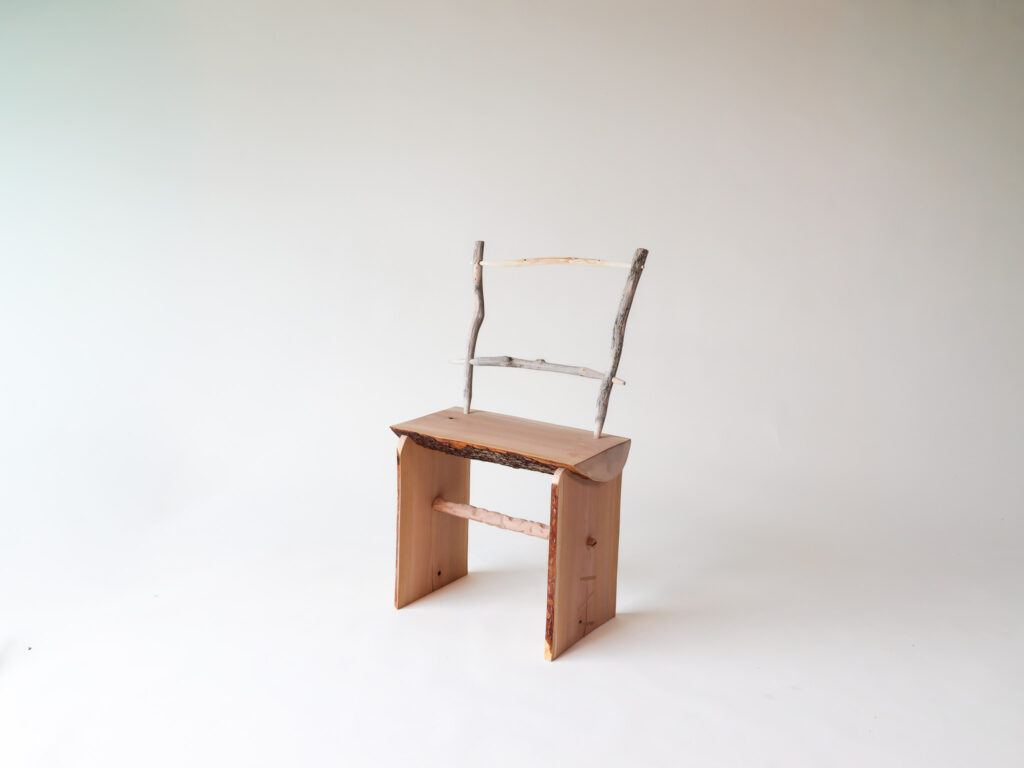
While wood did not yet hold the same depth of understanding for me as wool and clay, it remained part of the context of this place and work. Simpler in its role, it formed an armature that supported and connected the clay and wool.
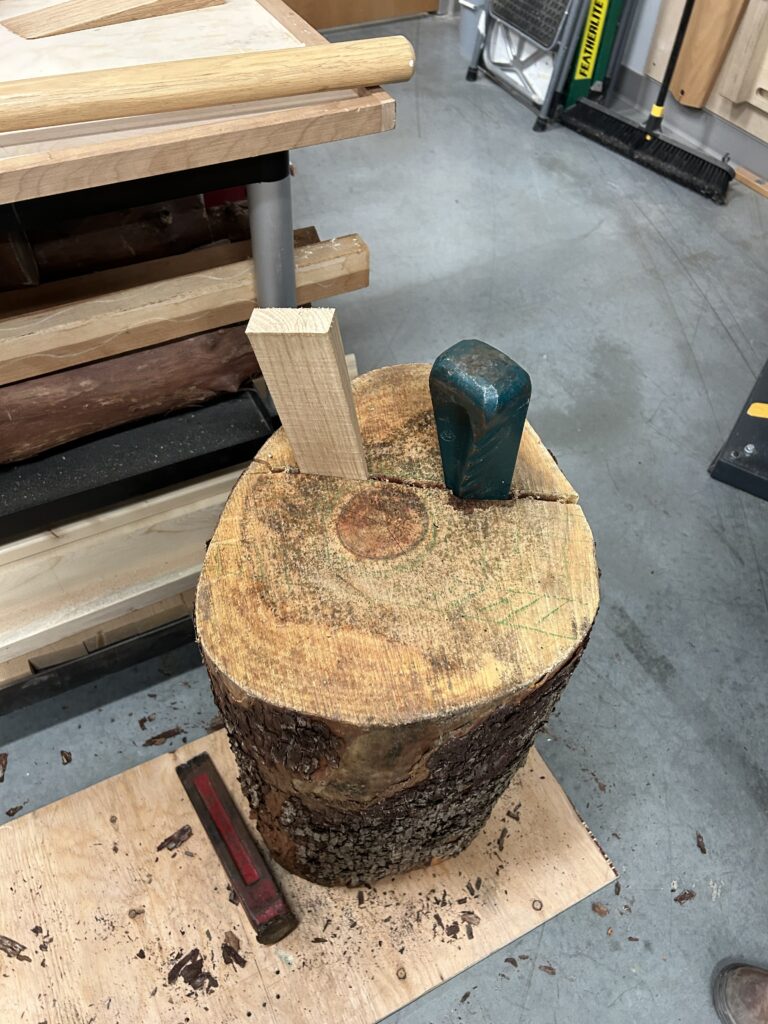
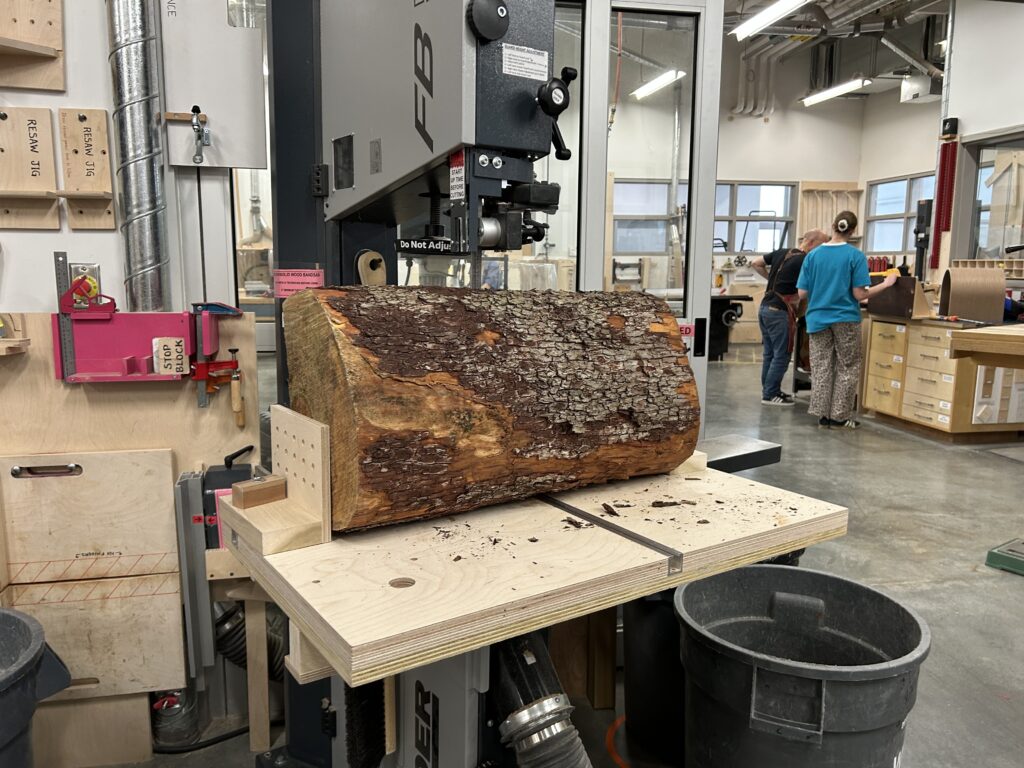
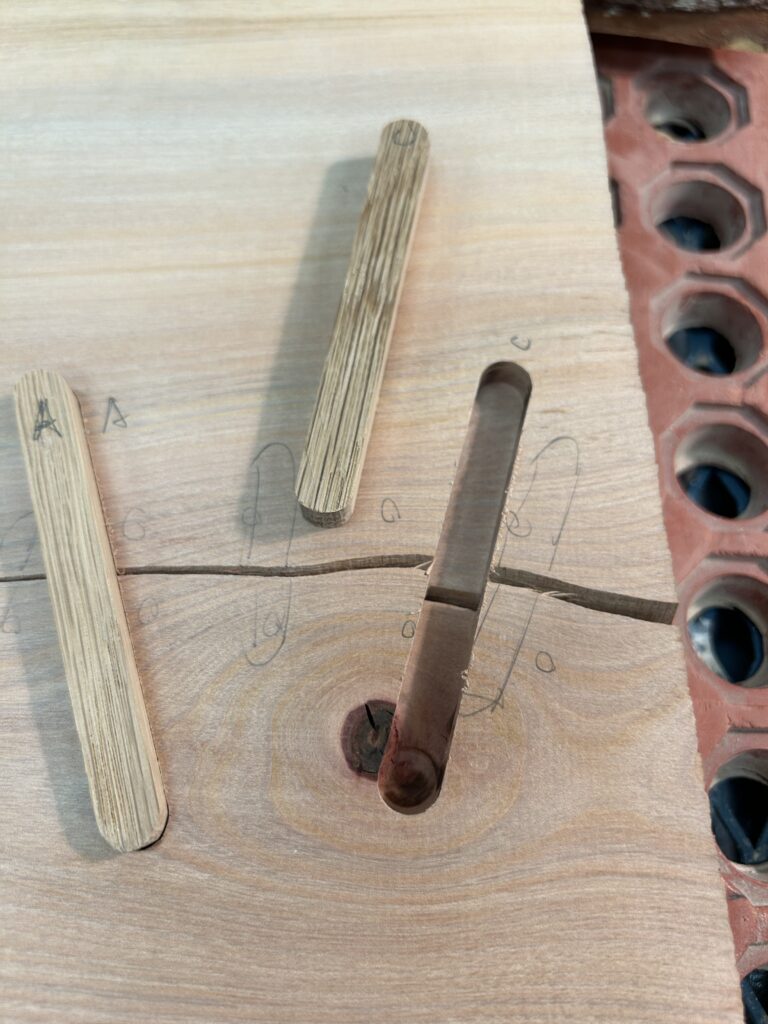
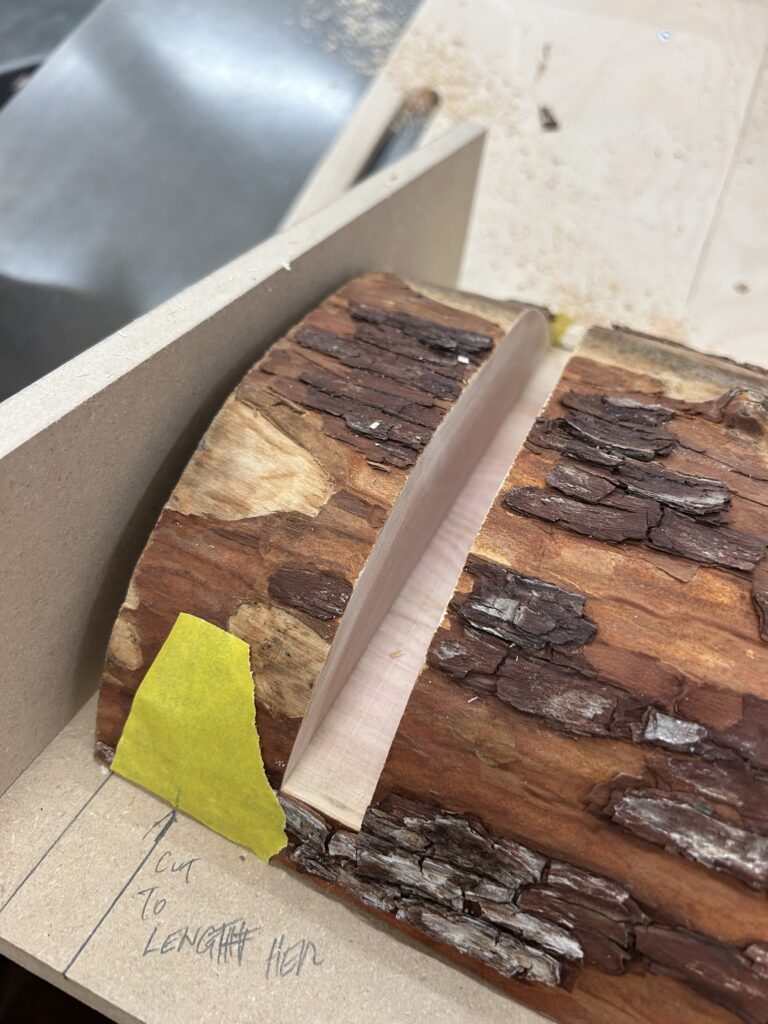
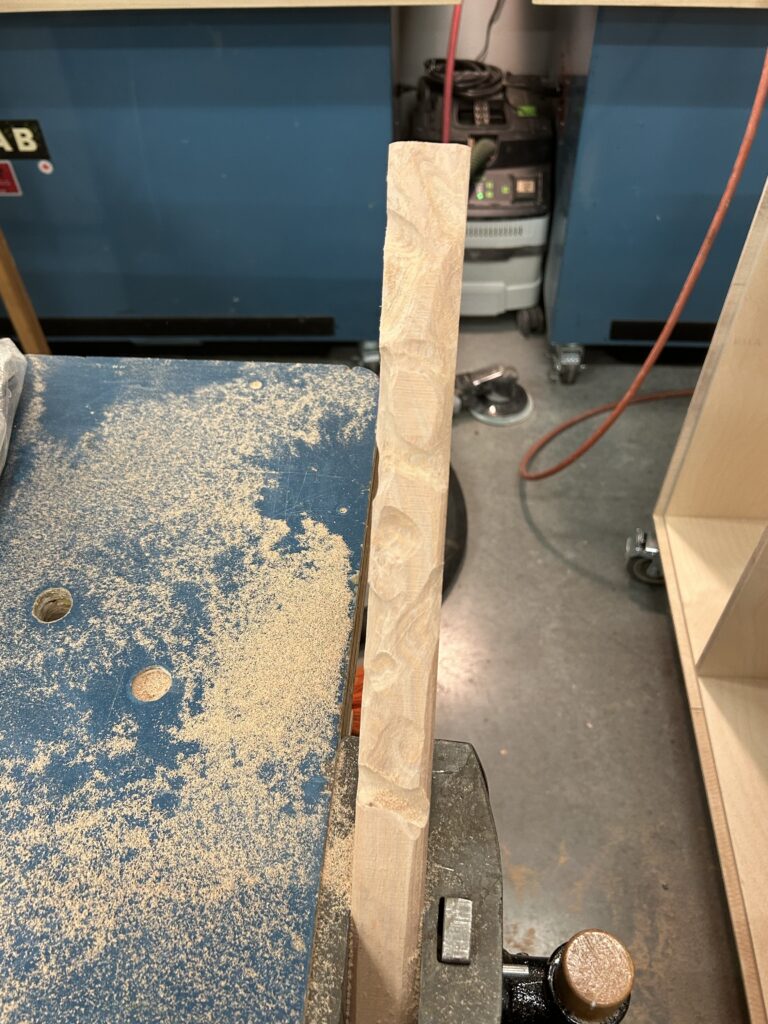
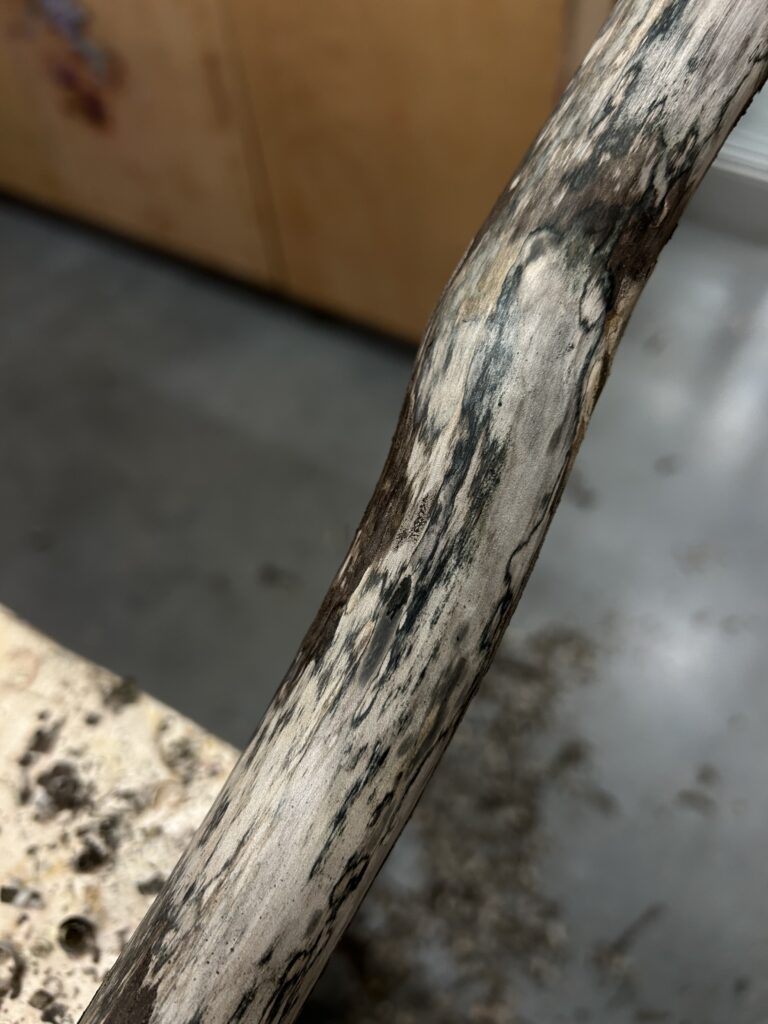
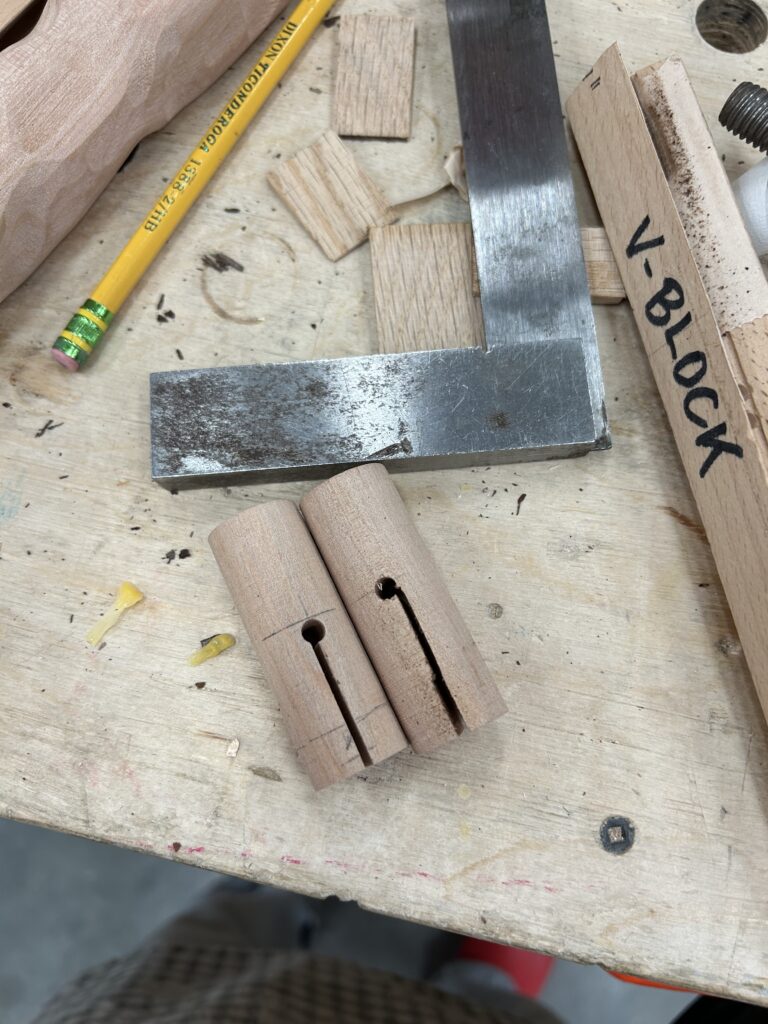
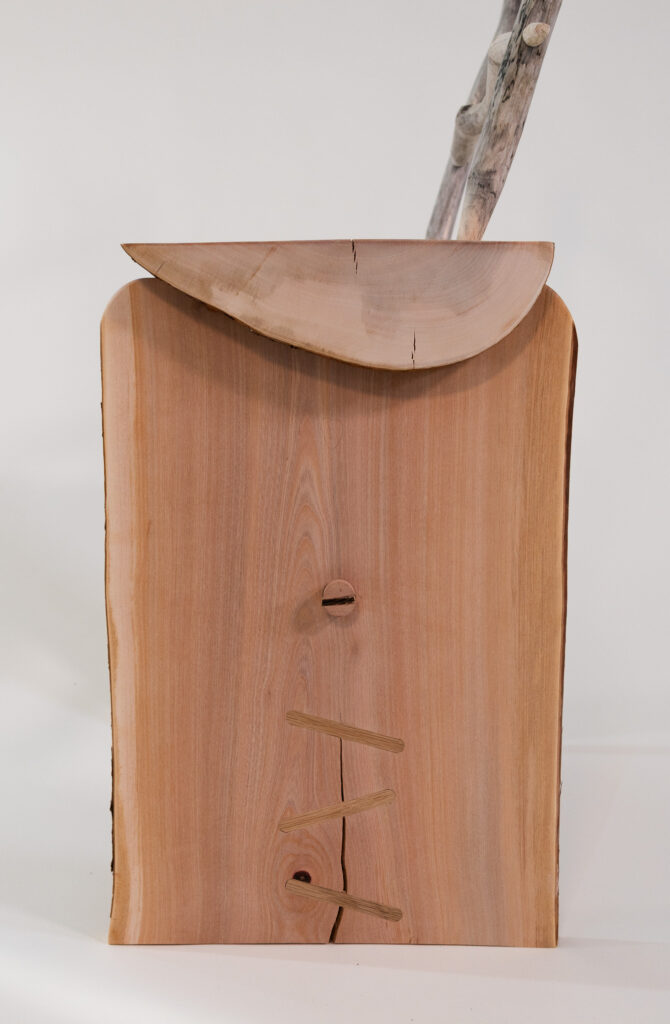
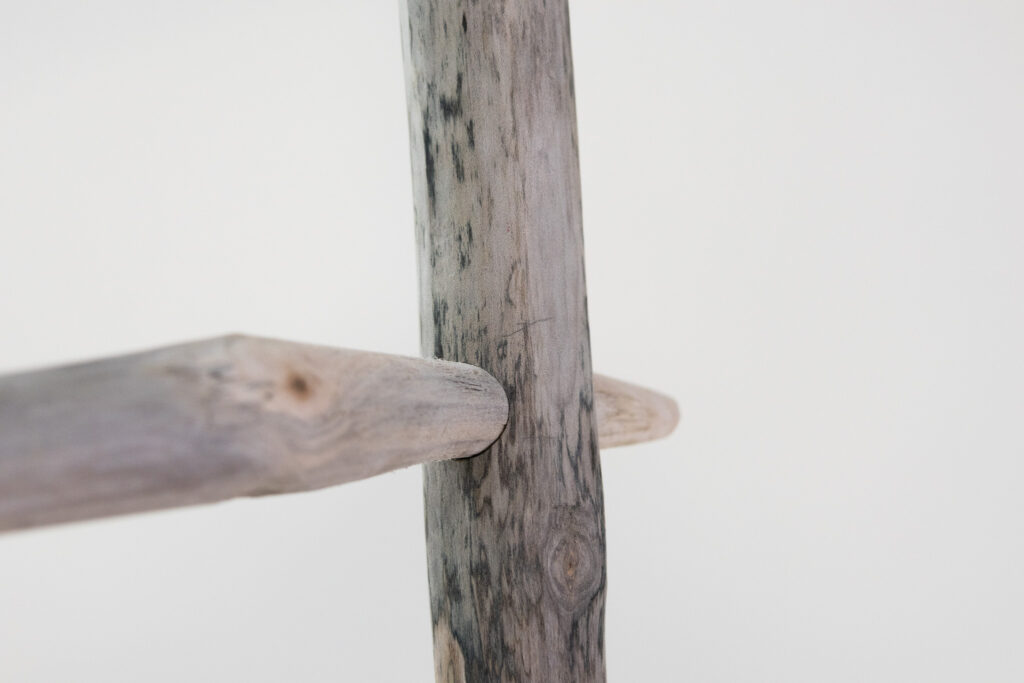
Embracing time, drying, cracking, and warping, I began making a seat for spinning wool using both traditional and contemporary techniques for working with green wood, relying on joinery rather than glue. I joined, drilled, planed, smoothed, carved, and connected.