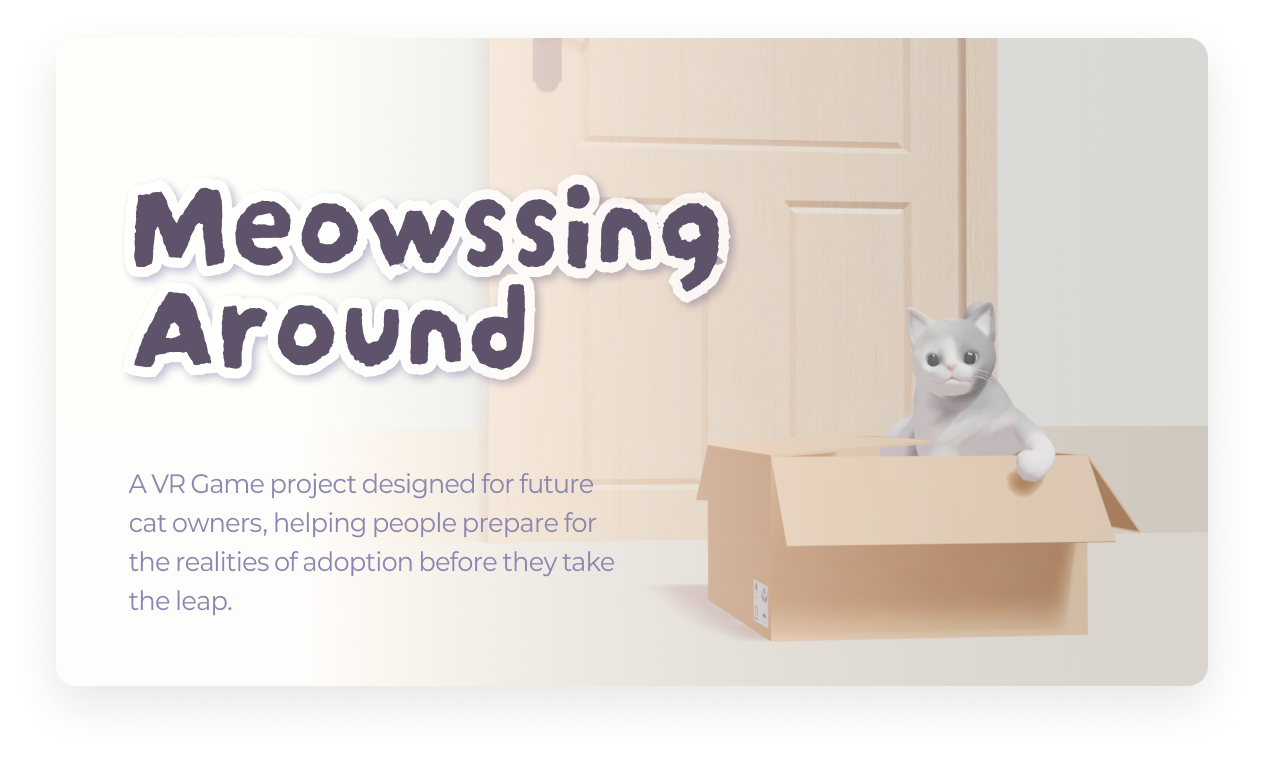
Meowssing Around
Chloe Jun
Background
Where It All Began
When I was in elementary school, I joined an afterschool life science club where we sometimes took small animals home to care for.
As a kid, I was simply excited. But because I had no real preparation, many of them often became sick or even died.
This experience made me realize how much tragedy can come from “unprepared adoption.” It also led me to believe that the root cause of today’s global pet abandonment issue is, ultimately, a lack of proper preparation.
Problem Statement
Why Cats Get Abandoned
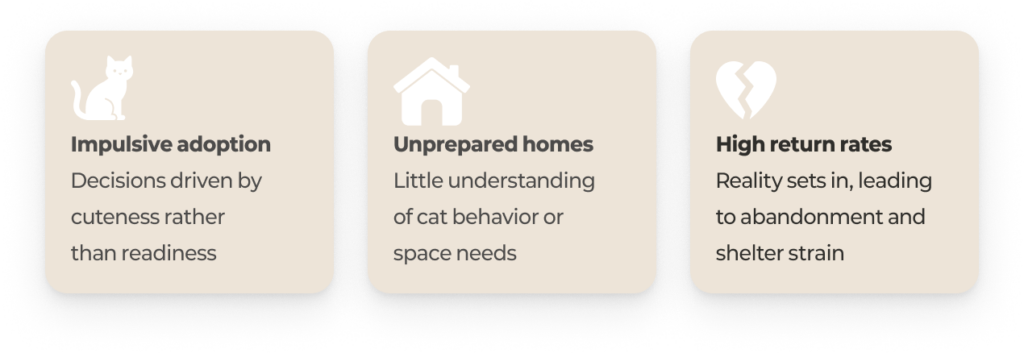
Pet abandonment has been a significant global issue for decades. In Korea, 17% of people reported having abandoned a pet, and 48% said it was due to unexpected behavioral issues. The rapid increase in stray cat populations has begun to affect local ecosystems.
People often romanticize life with a cat, cuddling, purring, and cozy moments. What they don’t anticipate are the real responsibilities: behavioral quirks, environmental needs, and the commitment it takes to be a good owner.
“Potential cat adopters often make impulsive decisions because of a lack of realistic pre-adoption experience, leading to high pet abandonment rates and increased stress on animal welfare systems.”
“So How can we help people truly feel a cat’s emotions in a fun way, leading them to respect cats as living beings with feelings, not just pets?”
Research & Insights
Learning About Cats
Primary research was conducted through:
- Online Surveys: General habits & ownership data
- In-depth Interviews: Perception vs. Reality
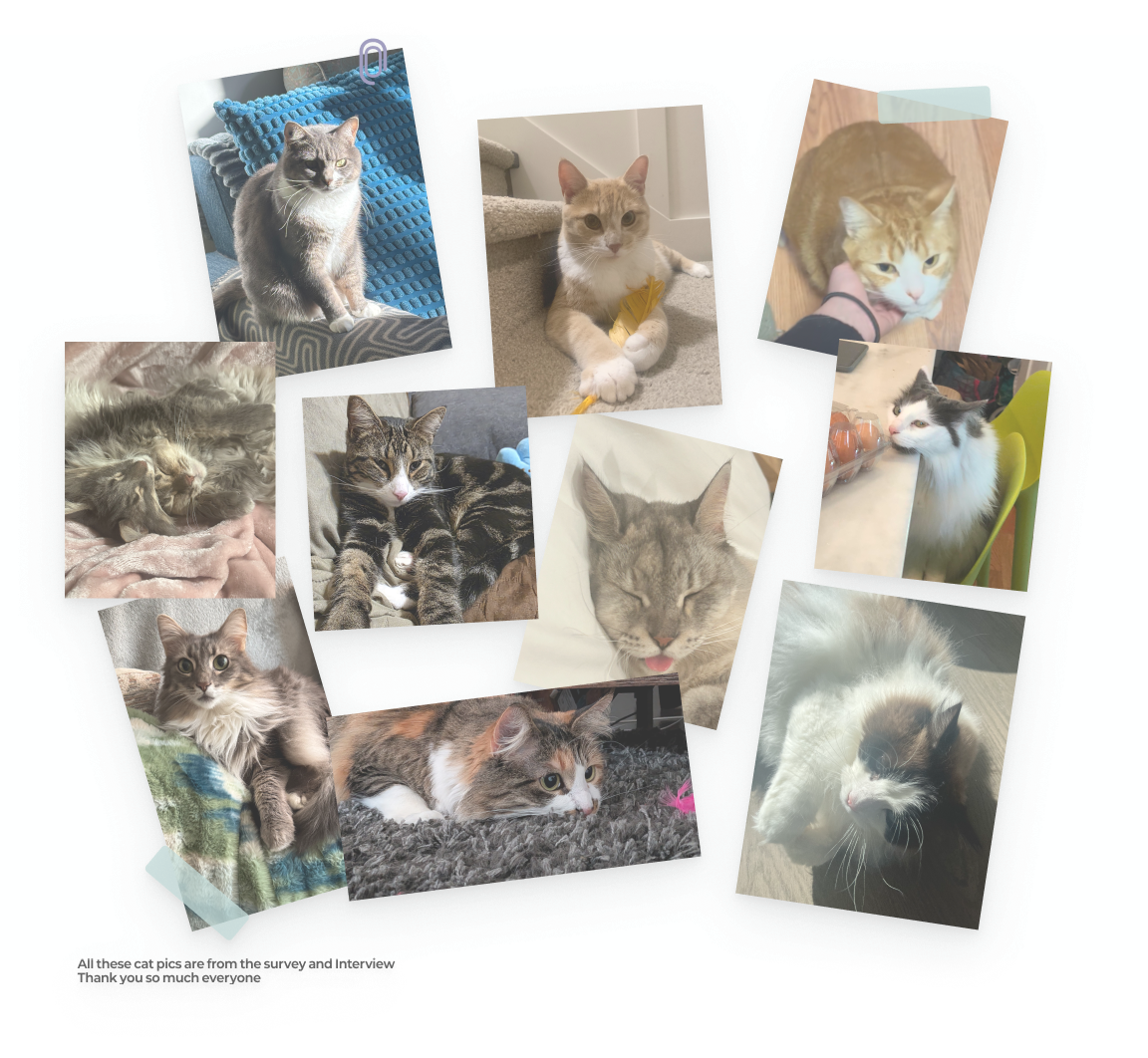
- Home Visits: Observing cats in real living spaces
Diverse Personality
Every cat has a completely different personality. The key isn’t following a basic guide. It’s learning to understand and communicate with your own cat.
Unexpected Events
Unexpected incidents can happen because of different personalities and behaviours. It’s important for adopters to know how to prepare and respond appropriately.
Research & Preparation
Can prevent unexpected incidents, help owners better understand their cats, and feel more connected to them as a family member.
game plan
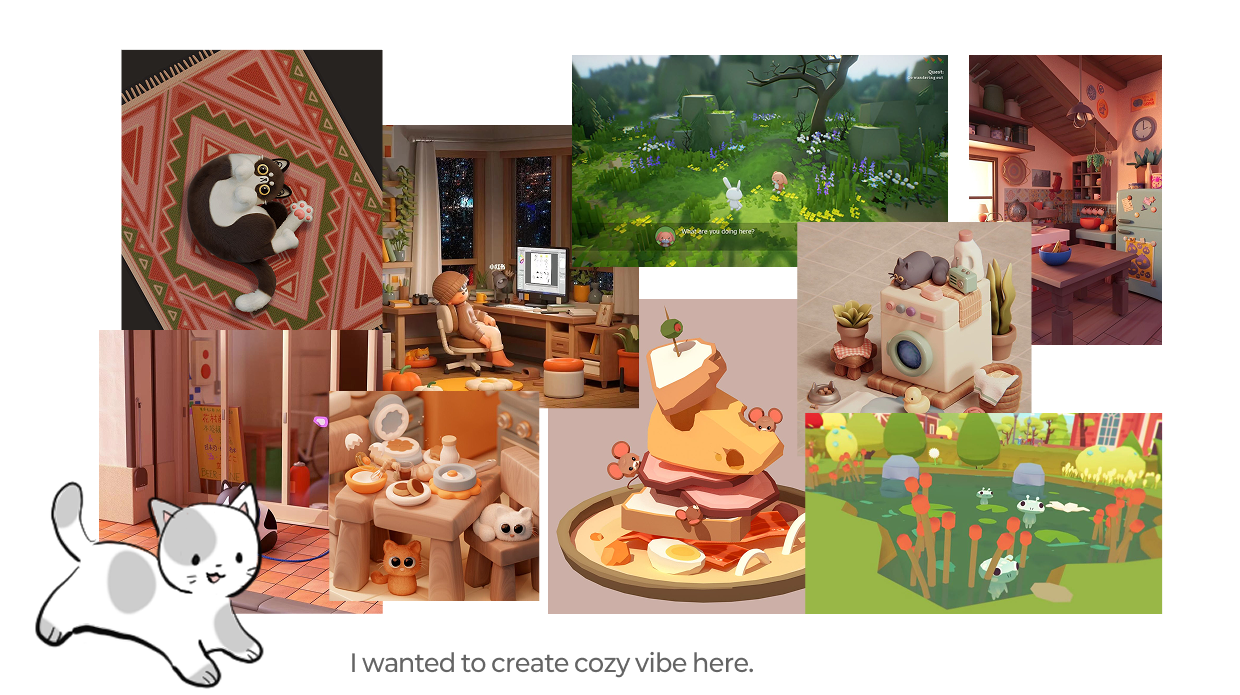
MOODBOARD
Character design
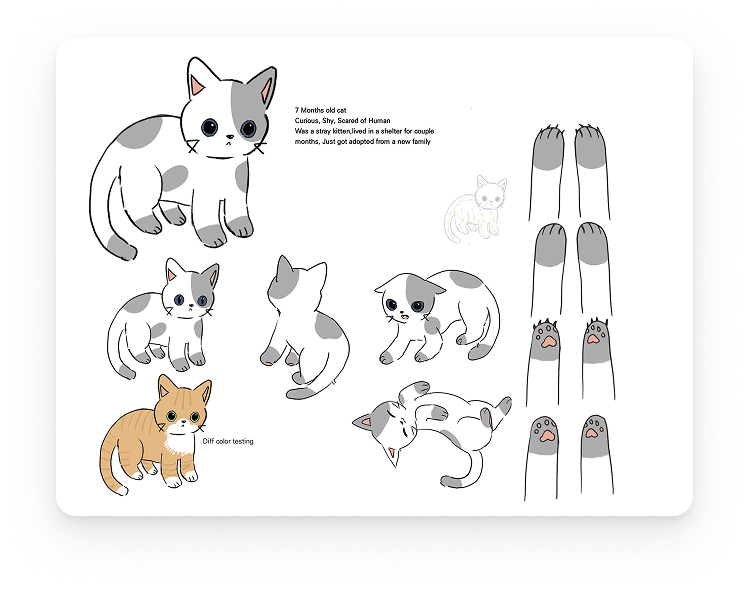
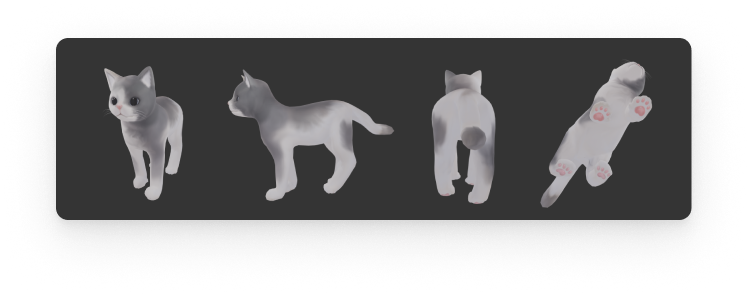
Meet Pebble!
Pebble, 7 months old
A stray who spent months in a shelter before being adopted into a new home. Curious but shy, easily overwhelmed. Pebble hides when scared, but slowly finds the courage to explore. Players see the world through Pebble’s eyes.
Final prototype
Meowssing Around
A kitten has just been adopted into a new home.
Overwhelmed by an unfamiliar environment, the kitten seeks safety in hidden spots to avoid stress.
To find happiness, the kitten must overcome its fears.
It gradually learns how to eat, play, and interact, slowly turning the scary house into a home.
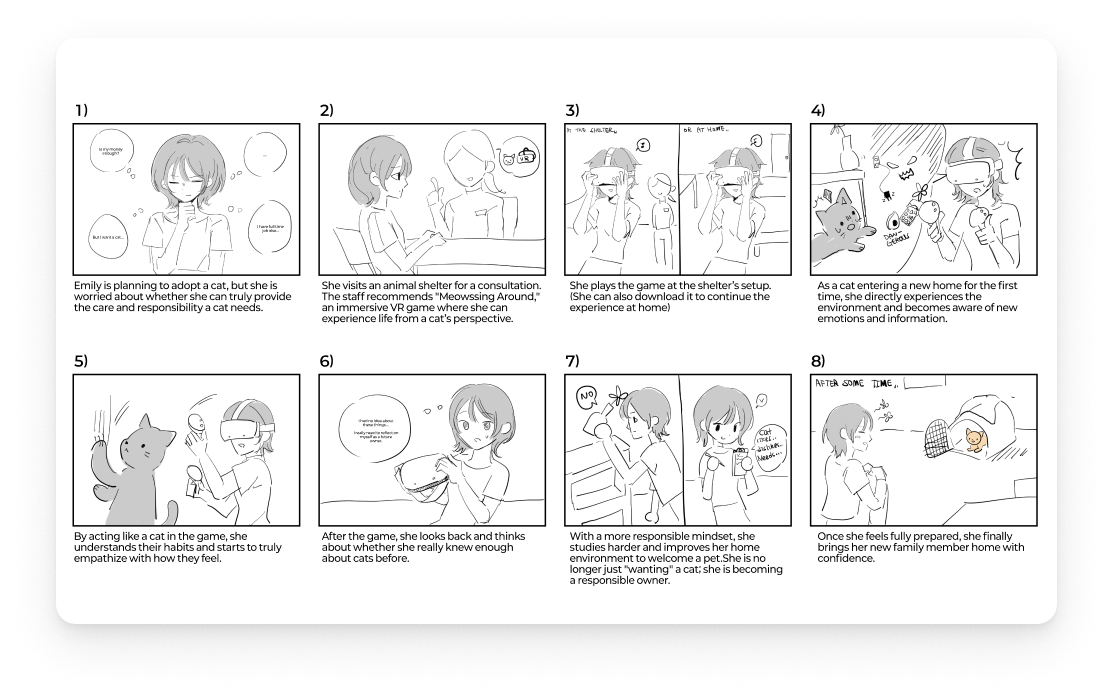
System-Level Storyboard
Impact on the System
Conclusion
Outcomes
1. Cultivating Deep Empathy through Immersive Experience
2. Enhancing Animal Welfare Awareness in the Community
3. Promoting Responsible Adoption and Reducing Return Rates
Key Learnings
From “User Experience” to “Animal Welfare”
This project made me realize that I don’t just want to design experiences that feel good to use. I want to design things that change how people think about animals, about responsibility, and about who we’re really designing for.